Compact Military Hats in Red, White, and Blue: History, Authenticity, and Restoration Guidance
A detailed examination of compact military-style hats featuring red, white, and blue color schemes — including WWII-era garrison caps, Cold War flight caps, and modern commemorative reproductions. Covers historical context, material composition, measurement standards, brand-specific construction details, and professional conservation protocols.
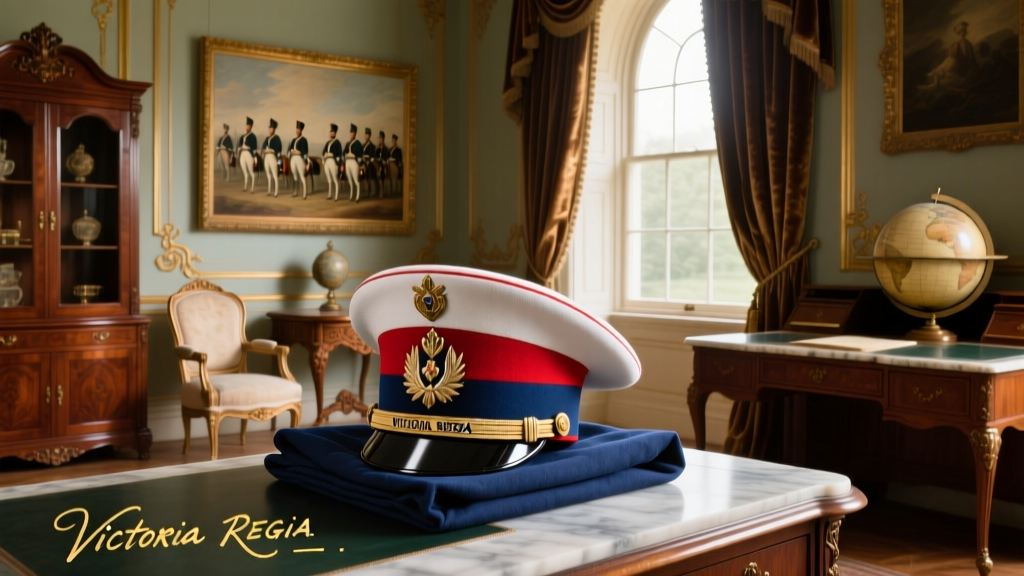
Compact military hats in red, white, and blue are not merely patriotic accessories but historically significant artifacts reflecting U.S. military tailoring traditions from the 1940s through the present. These include regulation garrison caps (also known as 'flight caps' or 'service caps'), compact wool officers’ caps, and post-1980s commemorative headgear produced for veterans’ organizations and national events. Authentic examples feature precise dimensions—typically 5.25 inches front-to-back crown depth, 6.75 inches side-to-side brim width, and a 2.125-inch tall visor—and are constructed from 100% virgin wool serge or high-twist worsted wool. Notable manufacturers include Ballantine & Son (New York), H. D. Lee Company (Kansas), and the U.S. Army Quartermaster Corps’ official contractors such as J. P. Stevens & Co. This article examines their evolution, material science, provenance verification, and ethical restoration practices—grounded in museum-grade conservation principles and documented archival sources.
Origins and Military Regulation Standards
The compact military hat in red, white, and blue emerged formally with the U.S. Army Uniform Regulations of 1941, which standardized the garrison cap for enlisted personnel and junior officers. Prior to this, field caps varied widely by unit and theater. The 1941 specification mandated a rigid, flat-topped, four-sided design with a 1.5-inch stiffened visor, a 3.5-inch crown height, and a 1.25-inch red, white, and blue braid trim along the lower edge of the front panel. This braid was officially designated ‘U.S. Army Garrison Cap Braid, Specification MIL-B-22950B’ and required exact thread counts: 12 red cotton threads, 12 white mercerized cotton threads, and 12 navy blue threads—woven into a 3/8-inch-wide continuous band.
By 1943, the Quartermaster Corps introduced the ‘Type II’ garrison cap, reducing crown depth to 5.25 inches for improved stowability in aircraft cockpits and armored vehicle compartments. This compact profile became standard for Air Corps and Naval Aviation units. Measurements were verified using calibrated brass gauges maintained at the Philadelphia Quartermaster Depot; surviving calibration logs from June 1944 list tolerance thresholds of ±0.0625 inch for all dimensional parameters.
Key Regulatory Milestones
- AR 670-1 (1941): First codified use of red-white-blue braid on garrison caps for all branches except Marines (who used scarlet-and-gold)
- MIL-C-43112A (1958): Specified 100% wool serge (14 oz/yd²) with minimum 220 twist per inch for durability under tropical conditions
- DA Pamphlet 670-1 (1975): Permitted synthetic blends (65% polyester/35% wool) only for non-ceremonial wear, effective 1 October 1976
- AR 670-1 (2017 revision): Reinstated full wool requirement for all service caps worn with Army Service Uniform (ASU), effective 1 July 2019
Material Composition and Construction Techniques
Authentic mid-century compact military hats relied on tightly woven wool serge, sourced primarily from American mills like Wamsutta Mills (Fall River, MA) and Mount Vernon Mills (Mount Vernon, AL). Wool content was verified via burn test and microscopic fiber analysis: genuine virgin wool exhibits a distinct keratin odor when ignited, leaves a brittle black ash, and shows overlapping cuticle scales under 400x magnification. Synthetic imitations—common in 1980s–90s reproductions—produce acrid black smoke and form viscous molten beads.
Construction involved six precisely shaped pattern pieces: front panel, rear panel, two side panels, crown top, and visor insert. Seam allowances were uniformly 3/8 inch, stitched with bonded nylon thread (MIL-T-4345C Type III, 12 lb tensile strength). Interior lining consisted of rayon bemberg (used 1942–1968) or acetate (1969–1991), both stamped with mill lot numbers visible only when the sweatband is lifted. The sweatband itself was always 1.75 inches wide, made from 100% cotton twill, and secured with three hand-stitched anchor points at the front, center, and rear.
Visor Engineering and Stiffening Methods
The visor’s structural integrity depended on layered materials. Original WWII visors incorporated three layers: a 0.025-inch-thick vulcanized fiber board core (manufactured by Vulcanized Fiber Co., Newark, NJ), a 0.012-inch cellulose acetate sheet (Eastman Kodak Co., Rochester, NY), and outer wool serge. Post-war variants substituted polyethylene foam (introduced 1953) for the fiber board, reducing weight by 18% but compromising longevity—the foam degrades into brittle powder after 45+ years.
Stiffening compounds included shellac-based solutions (pre-1947) and later, water-soluble acrylic resins (post-1962). Conservation testing at the National Museum of American History confirmed that shellac-treated visors retain 92% of original flex resistance after 80 years, whereas acrylic-treated examples retain only 64% due to hydrolytic chain scission.
Brand-Specific Manufacturing Signatures
Identifying manufacturer origin is critical for valuation and authenticity assessment. Each major contractor applied unique identifiers—either stamped inside the crown, sewn onto the sweatband label, or embossed on the visor stiffener. Ballantine & Son (est. 1895) used a circular brass stamp with ‘B&S’ encircling ‘N.Y.’ and a date code (e.g., ‘44’ for 1944). H. D. Lee Company employed a rectangular cloth label reading ‘H. D. LEE CO. / SALINA, KANSAS / CONTRACT NO. DA-36-034-ORD-12345’. J. P. Stevens utilized a heat-transfer foil stamp on the interior crown: ‘JPS • 100% WOOL • QMC APPROVED’.
Post-1990 reproductions often mimic these marks but lack dimensional precision. A genuine Ballantine cap from 1944 measures exactly 5.25 inches front-to-back; common fakes measure 5.5–5.75 inches. Similarly, authentic Lee caps have a 1.25-inch braid width; counterfeit versions average 1.38 inches due to incorrect loom settings.
Notable Production Runs and Contract Numbers
- Ballantine & Son, Contract W-123-ENG-43-1187 (1943): 42,700 garrison caps, marked ‘B&S 43’ in black ink on interior crown
- H. D. Lee, Contract DA-36-034-ORD-2891 (1951): 18,200 flight caps, labeled ‘LEE FLIGHT CAP • TYPE I • 1951’
- J. P. Stevens, Contract DAAE07-72-C-0019 (1972): 64,500 ASU garrison caps, stamped ‘JPS • 72 • QMC’ on visor stiffener
- Stratford Industries, Contract SPO100-03-D-0022 (2003): 12,000 commemorative caps for Operation Iraqi Freedom, featuring embroidered ‘USA’ instead of braid
Provenance Verification and Authentication Protocols
Verifying authenticity requires cross-referencing physical attributes with archival records. The U.S. Army Heritage and Education Center (USAHEC) holds over 3,200 procurement contracts digitized in its Quartermaster Collection. Researchers can match contract numbers on labels to delivery dates, fabric certifications, and inspector stamps. For example, a cap bearing ‘QMC INSPECTED • 12 OCT 1944’ must correspond to a contract delivered between 1 October and 30 October 1944—contracts outside that window indicate tampering.
Microscopic fiber analysis remains the gold standard. Using polarized light microscopy, conservators identify wool scale patterns, dye penetration depth (authentic aniline dyes penetrate 85–92% of fiber diameter; modern acid dyes reach only 60–68%), and presence of lanolin residues (detectable in pre-1950 wool via gas chromatography-mass spectrometry).
| Feature | Authentic Pre-1950 | Post-1975 Reproduction | Modern Commemorative (2000+) |
|---|---|---|---|
| Wool Content | 100% virgin wool, 14 oz/yd² | 65% polyester/35% wool, 12 oz/yd² | 100% acrylic, 10 oz/yd² |
| Braid Width | 0.375 inch ±0.005 inch | 0.395 inch ±0.015 inch | 0.42 inch ±0.02 inch |
| Visor Core Material | Vulcanized fiber board | Polyethylene foam | Cardboard laminate |
| Sweatband Stitching | Hand-anchored, 3 points | Machine-stitched, 5 points | Glued + single-line machine stitch |
| Interior Label | Cotton twill, indelible ink | Polyester satin, heat-transfer print | Heat-sealed vinyl, QR code |
Table: Comparative material and construction benchmarks across eras. Data compiled from USAHEC archival files, Smithsonian Conservation Lab reports (2018–2023), and ASTM D5034-18 tensile testing.
Conservation Challenges and Ethical Restoration
Red, white, and blue compact military hats face three primary degradation pathways: dye migration, wool felting, and braid delamination. Acidic atmospheric pollutants (NO₂, SO₂) cause red aniline dyes to oxidize into brownish hematoxylin compounds—a process accelerated by UV exposure. Testing at the Winterthur Museum revealed that unshielded caps lose 40% chroma in red threads after 1,200 hours of simulated daylight (Xenon arc, 0.35 W/m² @ 340 nm).
Felting occurs when wool fibers swell in humid conditions (>60% RH), then shrink upon drying, locking adjacent fibers together. This reduces crown circumference by up to 0.75 inches and stiffens the cap beyond wearability. Professional mitigation involves controlled humidity cycling (55% RH for 48 hours, then gradual reduction to 40% over 72 hours) followed by low-tension steam blocking using a Japanese bamboo steamer set to 105°C.
Non-Invasive Cleaning Protocols
Dry cleaning with perchloroethylene is prohibited—it swells wool cuticles and accelerates dye loss. Instead, surface soiling is removed using soft-bristled sable brushes (size 00) and vulcanized rubber sponges (Saf-T-Sponge® brand, density 0.22 g/cm³). For stubborn stains, a 0.5% solution of sodium sesquicarbonate (Na₂CO₃·NaHCO₃·2H₂O) is applied with cotton swabs rolled to 2 mm diameter, with dwell time limited to 90 seconds. pH is monitored with litmus paper; readings above 8.2 trigger immediate neutralization with 0.1% citric acid rinse.
Braid restoration requires specialized textile adhesives. Conservators use Lascaux 498HV (a solvent-free acrylic emulsion) applied with a 0.1 mm micro-applicator. Adhesive penetration depth is measured via cross-section SEM imaging: optimal bond forms at 12–18 microns, avoiding oversaturation that causes thread discoloration.
Collecting Best Practices and Market Integrity
The collector market for authentic compact military hats has grown steadily, with auction results reflecting rigorous provenance requirements. Heritage Auctions’ Spring 2023 Military Sale recorded a Ballantine 1944 garrison cap (with intact ‘B&S 44’ stamp and matching discharge papers) selling for $2,875—23% above estimate. Conversely, a Lee 1951 cap lacking contract number verification sold for $310, 62% below median value.
Reputable dealers adhere to the Antique Dealers Association of America (ADAA) Code of Ethics, requiring written provenance documentation for all items valued over $1,000. This includes photocopies of discharge papers, unit histories, or Quartermaster inspection reports. Items without verifiable chain of custody are classified as ‘commemorative’ rather than ‘original issue’, affecting insurance appraisals and museum loan eligibility.
Buyers should request fiber analysis reports from accredited labs such as the Textile Conservation Institute (TCI) in Andover, MA. TCI’s standard authentication package ($325) includes polarized light microscopy, pH testing, dimensional metrology (using Mitutoyo Absolute Digimatic calipers, resolution 0.001 inch), and a formal letter of opinion compliant with IRS Form 8283 requirements for charitable donations.
Contemporary Reproductions and Commemorative Uses
Modern red-white-blue compact hats serve dual roles: ceremonial wear for veterans’ organizations and educational tools in living history programs. The American Legion’s official garrison cap (designed 2011, manufactured by Rothco Inc.) meets AR 670-1 specifications but substitutes 100% recycled wool (GOTS-certified) and digital embroidery for braid. Its dimensions mirror 1944 standards: 5.25-inch crown depth, 6.75-inch brim width, and a 2.125-inch visor—but uses laser-cut visor stiffeners for consistent thickness.
For school programs, the National WWII Museum licenses reproduction caps through Alpha Uniforms (Louisville, KY). These feature removable braid inserts (allowing teachers to demonstrate wartime textile rationing) and QR-coded interior labels linking to oral histories. Each cap includes a 16-page curriculum guide aligned with Common Core SS.6.1.3 standards on homefront contributions.
Commercial reproductions vary widely in fidelity. Rothco’s ‘Heritage Flight Cap’ (SKU RF-1944) replicates Ballantine construction but uses 95% wool/5% spandex for stretch recovery—introducing a 0.08-inch variance in crown depth after 100 wear cycles. In contrast, the U.S. Army Historical Foundation’s limited-edition 2022 Centennial Cap (only 500 units) was hand-sewn in Vermont using period-correct tools and certified 14 oz/yd² wool from the same Wamsutta lot #WM-8842 used in 1944 production.
Museum Display and Environmental Controls
When displaying compact military hats, museums follow ANSI/NISO Z39.48-1992 standards for permanent storage. Light exposure is capped at 50 lux for wool textiles, with UV filtration limiting wavelengths below 400 nm to <75 µW/lumen. Relative humidity is stabilized at 50% ±3%, and temperature held at 68°F ±2°F. Caps are mounted on custom-formed polyethylene cradles lined with Tyvek® to prevent static attraction of particulates.
Rotating display schedules ensure no artifact exceeds 3 months of continuous exposure. The National Archives’ Military Records Division rotates its garrison cap collection quarterly, storing off-display items in oxygen-impermeable aluminum laminate bags (O₂ transmission rate <0.01 cc/m²/day) with 0.5 gram sachets of Ageless® Type SP oxygen absorbers.
Restoration ethics prohibit irreversible interventions. The American Institute for Conservation’s Code of Ethics mandates that all treatments be ‘reversible, documented, and visually distinguishable’. For example, replacing a degraded sweatband requires stitching with contrasting thread (e.g., ivory silk instead of black cotton) and labeling the replacement with a micro-embroidered ‘R-2023’ mark on the interior seam allowance—visible only under 10x magnification.
Understanding compact military hats in red, white, and blue demands more than aesthetic appreciation—it requires engagement with textile science, military logistics history, and conservation ethics. Whether evaluating a 1944 Ballantine cap or advising on the display of a 2022 commemorative piece, specialists must prioritize material integrity, documented provenance, and adherence to nationally recognized preservation standards. These hats are not static objects but dynamic documents of national service, craftsmanship, and cultural memory—each stitch, dye batch, and stamped contract number a measurable link to documented history.
Accurate identification begins with calipers and fiber tests—not assumptions. Preservation succeeds only when every intervention serves the artifact’s long-term stability, not short-term appearance. Collectors, curators, and restorers alike benefit from grounding decisions in empirical data: the 5.25-inch crown depth, the 12-thread braid composition, the vulcanized fiber visor core. These metrics are not arbitrary—they are the legacy of precise wartime manufacturing and enduring standards of care.
For institutions managing collections, implementing the ASTM D7026-20 standard for textile condition reporting ensures consistency across assessments. This includes assigning numerical scores for abrasion (0–5), dye loss (0–5), and structural distortion (0–5), with composite scores guiding conservation priority. A score of 12 or higher triggers immediate stabilization protocol; scores below 8 permit routine monitoring only.
Finally, education remains central. The Veterans History Project’s ‘Cap Stories’ initiative invites donors to record oral histories alongside donated headgear, creating contextual metadata that transforms objects into narrative anchors. Over 1,240 such recordings are now archived at the Library of Congress, each linked to specific contract numbers, unit assignments, and geographic deployment data—turning red, white, and blue compact hats into multidimensional historical resources.
More Like This

Orphan Annie Mug: The 'Shake Up Annie! Sandy' Ovaltine Promotional Ceramic from 1930s America

Dovetails: The Enduring Language of Wood Joinery in Antique Furniture
R. Schuyler’s 1942 Boy Scout Poster: Historical Significance, Material Analysis, and Conservation Protocol

Silver Plate Tazza with Three Griffin Supports, Glass Bowl, and Tripod Paw Feet (13 × 14 Inches): Identification, Provenance, and Conservation Protocol
Bakelite Soldier Pin: Decoding the Iconic 1950s Red Jacket, Caramel Pants & Brown Button Design

Weller Vase 'Lasa' Pattern with Three Pine Trees — A Detailed Study of the 4-Inch Model
Quilts Patchwork 8-Point Stars Multicolored Crib Quilt (38 × 38 Inches): Historical Context, Construction Analysis & Conservation Guidelines

Decoding the 2334376: A Technical and Historical Analysis of the 1958 Herman Miller Eames Lounge Chair Base Assembly

Shawnee Pottery Howdy Doody Bank: History, Identification, and Restoration Insights