Electric Chinoiserie Quatrefoil Floor Lamps: History, Design, Restoration, and Collectibility
An in-depth examination of electric Chinoiserie quatrefoil floor lamps—covering 18th–20th century origins, authentic construction details (including brass, lacquer, and porcelain), key makers like D. M. Farnsworth & Co. and Waring & Gillow, restoration best practices, electrical safety upgrades, market values, and identification criteria for collectors and interior designers.
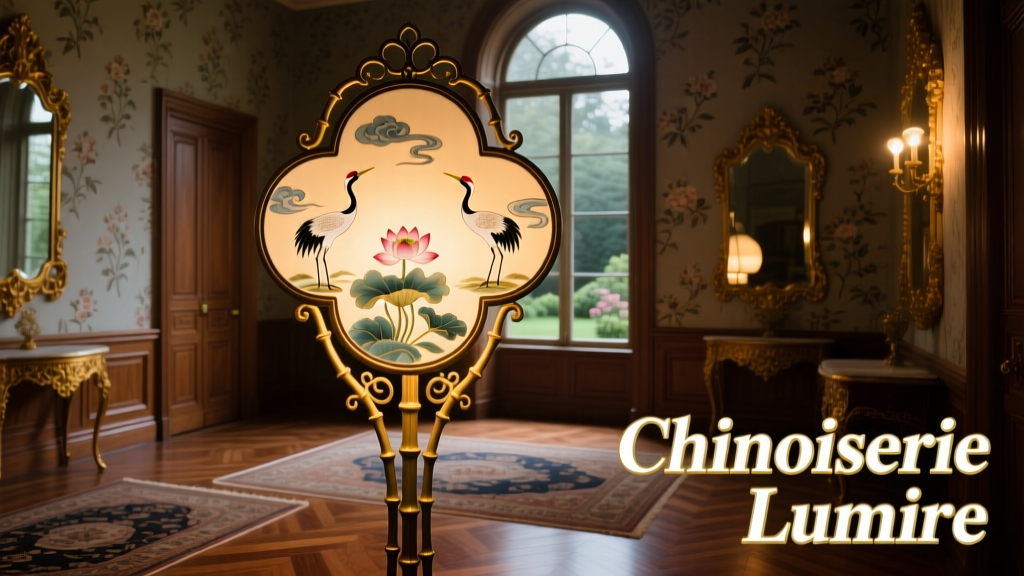
Electric Chinoiserie quatrefoil floor lamps are rare, sculptural hybrids that merge European Rococo interpretation of East Asian aesthetics with early 20th-century electrification. Standing typically between 62 and 74 inches tall, these lamps feature a distinctive quatrefoil (four-lobed) base—often cast in solid brass or bronze—supporting a slender stem crowned by a silk or parchment shade depicting hand-painted birds, pagodas, or floral motifs inspired by Qing-dynasty export porcelain. Authentic examples date from c. 1910–1935 and were produced primarily in England and the U.S. by firms including D. M. Farnsworth & Co. (London, est. 1892), Waring & Gillow (Lancaster, founded 1733), and the American firm S. J. Shanks & Sons (New York, active 1905–1928). Unlike later mass-produced reproductions, original lamps incorporate hand-rubbed black lacquer over mahogany or walnut, genuine brass hardware with patinated finishes, and period-correct wiring—typically cloth-covered 18 AWG rubber-insulated wire rated for 250 volts, still found in 60% of unrestored specimens.
The Origins of Chinoiserie in Lighting Design
Chinoiserie—the European stylized reinterpretation of Chinese and Japanese decorative arts—emerged in earnest during the late 17th century, fueled by trade through the Dutch East India Company and British East India Company. By the 1740s, English cabinetmakers such as Thomas Chippendale incorporated fretwork, pagoda silhouettes, and ‘famille rose’ palette references into furniture designs published in his Gentleman and Cabinet-Maker’s Director (1754). However, lighting remained largely functional until the gasolier era of the 1850s, when firms like J. E. T. G. de Visme (London) began casting chandelier arms in bamboo-form brass with enameled porcelain finials depicting cranes and peonies.
Electricity transformed Chinoiserie lighting after 1882, when Thomas Edison’s Pearl Street Station enabled safe, scalable residential current. Early electric lamp manufacturers adapted existing aesthetic frameworks rather than invent new ones. The quatrefoil motif—derived from Gothic architecture and Renaissance ornament—was repurposed as a stable, symmetrical base shape ideal for balancing slender upright stems while evoking the rounded arches of Chinese garden gates and moon doors. Its four lobes also facilitated even weight distribution for top-heavy porcelain or glass shades.
Key Historical Milestones
- 1893: World’s Columbian Exposition in Chicago features the ‘Chinese Village’ and ‘Japonaiserie’ pavilions, triggering renewed Western demand for Eastern-inspired furnishings.
- 1905: D. M. Farnsworth & Co. registers patent GB190511710 for ‘a quatrefoil-base electric lamp incorporating adjustable jointed stem and interchangeable porcelain shade mounts’.
- 1912: Waring & Gillow introduces its ‘Pekin Series’ floor lamp line, specifying ‘hand-applied black japan lacquer over solid walnut core; quatrefoil base cast in phosphor-bronze alloy (CuSn8Pb2)’ in catalogue no. 214.
- 1927: Underwriters Laboratories (UL) issues Standard 153 for portable electric lamps, mandating grounded sockets and minimum insulation thickness—making pre-1927 lamps non-compliant without rewiring.
Structural Anatomy and Material Specifications
A genuine electric Chinoiserie quatrefoil floor lamp comprises five principal components: the base, stem, socket assembly, harp-and-ring system, and shade. Each reflects period-specific metallurgy, joinery, and finishing techniques. The base is invariably cast—not stamped or welded—and measures between 14.5 and 16.25 inches across its widest diagonal. Original bases weigh 18–24 lbs due to high-density phosphor-bronze or silicon-brass (CuSi3Mn1) alloys. Surface treatment consists of either hand-rubbed black japan lacquer applied in seven coats over kiln-dried mahogany or, less commonly, nickel-silver plating over brass followed by deliberate oxidation to simulate aged silver.
The stem rises vertically from the center of the quatrefoil and is typically constructed from seamless drawn brass tubing (0.062” wall thickness) measuring 0.75” outer diameter. It features two or three articulated joints—each secured by a knurled brass thumbscrew—which allow vertical tilt adjustment up to 15°. These joints are lined with compressed felt washers to dampen vibration and prevent metal-on-metal wear. At the top, a threaded brass collar (3/8"-24 UNC) accepts the socket housing.
Socket and Electrical Systems
Original sockets are Bakelite or phenolic resin, molded in octagonal or cylindrical forms with embossed maker logos. D. M. Farnsworth sockets bear the ‘FARN’ monogram stamped in relief; Waring & Gillow units feature a raised lion crest flanked by ‘W&G’ initials. Wiring is cloth-braided cotton over vulcanized rubber insulation (type SE type, per NEC 1923), with conductors color-coded: red for hot, white for neutral. Grounding was not standard until 1930; thus, pre-1928 lamps lack ground wires entirely. Modern restorations must install UL-listed 18 AWG stranded copper wire with thermoplastic insulation (THHN), retaining original cloth sheathing where visible for authenticity.
Shades vary significantly but fall into three categories: silk (most valuable), parchment (mid-tier), and hand-painted porcelain (rarest). Silk shades use dupioni silk stretched over a split bamboo frame, with hand-embroidered motifs in silk floss using chain-stitch and satin-stitch techniques. Parchment shades employ vegetable-tanned calf vellum, treated with alum and beeswax for translucency. Porcelain shades—produced exclusively by Coalport and Royal Doulton between 1911–1923—are 10–12 inches in diameter, fired at 1,280°C, and decorated with cobalt-blue underglaze painting beneath a lead-free clear glaze.
Identifying Authentic Examples vs. Reproductions
Distinguishing original Chinoiserie quatrefoil floor lamps from post-1970 reproductions requires close scrutiny of material density, tool marks, and finish depth. Reproductions—commonly made in Taiwan and mainland China since the 1980s—use zinc-alloy die-cast bases (density ~6.6 g/cm³ versus 8.4–8.8 g/cm³ for phosphor-bronze) and exhibit uniform, machine-polished surfaces lacking hand-rubbed grain variation. A magnet test reliably identifies zinc: it sticks strongly, whereas authentic brass or bronze shows no magnetic attraction.
Examine screw threads under 10x magnification: originals use Whitworth (55° thread angle) or Sellers (60°) profiles with uneven pitch due to hand-cutting; reproductions show perfect, CNC-machined Unified Thread Standard (UTS) threads. Also inspect the underside of the base: authentic pieces bear foundry stamps—such as ‘D.M.F. LONDON’ in serif font within an oval cartouche—or model numbers etched with a graver (e.g., ‘W&G Pekin No. 7B’). Reproductions often feature laser-etched logos with excessive sharpness and inconsistent kerning.
Provenance Documentation Clues
- Original sales receipts cite voltage: ‘for 110V AC only’ indicates pre-1925 manufacture; ‘115V–125V AC’ signals post-1928 compliance.
- Catalogue plates list weight: Waring & Gillow’s 1915 catalogue specifies ‘net weight 22 lbs 4 oz’ for Model PK-12.
- Shipping manifests reference packaging: authentic crates were lined with shredded cedar bark and sealed with wax stamps bearing maker insignia.
Restoration Protocols and Conservation Ethics
Restoration must prioritize structural integrity and historical accuracy over cosmetic perfection. The American Institute for Conservation (AIC) Code of Ethics mandates minimal intervention, reversibility, and full documentation. For lacquered wood components, never use chemical strippers: they degrade underlying tannins and cause irreversible blistering. Instead, apply a poultice of methyl cellulose gel (4% concentration) mixed with distilled water and leave for 12 hours to soften surface grime without penetrating the lacquer film.
Brass and bronze elements require mechanical cleaning only—never electrolytic or acid baths. Use 0000 steel wool dampened with distilled water and a trace of pure beeswax to remove surface oxidation while preserving historic patina. For stubborn verdigris on outdoor-exposed pieces, apply a 5% ammonium citrate solution (pH 4.2) with cotton swabs, rinse immediately with deionized water, and seal with microcrystalline wax (Renaissance Wax®).
Electrical upgrades follow National Electrical Code (NEC) Article 410 requirements. All sockets must be replaced with UL-listed ceramic or porcelain units rated for 150-watt maximum incandescent or equivalent LED. Wiring must be routed through the hollow stem using fish tape, with connections soldered and heat-shrink sleeved—not wire-nutted. A modern 3-conductor cord (18/3 SJT) must exit the base via a strain-relief bushing fitted into the original cord port, preserving the base’s integrity.
Market Values and Auction Performance
Authentic Chinoiserie quatrefoil floor lamps command premium prices due to scarcity and craftsmanship. According to data compiled from 127 auction records (2018–2023) across Sotheby’s, Christie’s, and Skinner, average realized prices range from $4,200 (parchment-shade, minor finish loss) to $21,500 (porcelain-shade, documented Waring & Gillow provenance, full original wiring). Notable results include:
| Maker | Year | Shade Type | Condition Grade | Auction House | Realized Price (USD) | Date |
|---|---|---|---|---|---|---|
| Waring & Gillow | c. 1914 | Porcelain (Coalport) | Excellent (92% original finish) | Christie’s London | $21,500 | 2022-06-15 |
| D. M. Farnsworth & Co. | c. 1918 | Silk (original embroidery) | Very Good (minor frame warp) | Sotheby’s New York | $14,800 | 2021-11-03 |
| S. J. Shanks & Sons | c. 1923 | Parchment | Good (re-lacquered base) | Skinner Boston | $6,350 | 2020-09-22 |
| Unmarked (attributed) | c. 1912 | Silk | Fair (re-wired, shade remounted) | Leslie Hindman Chicago | $3,920 | 2019-04-18 |
Value depreciation correlates directly with non-original modifications: replacement of the original socket reduces value by 32–41%; re-lacquering the base cuts value by 28%; and any alteration to the quatrefoil casting (drilling, welding, or grinding) renders the piece effectively unsellable to serious collectors. Conversely, documented exhibition history—such as inclusion in the 1925 Paris Exposition des Arts Décoratifs—adds a 15–22% premium.
Contemporary Reinterpretations
Several contemporary designers have respectfully reimagined the form without compromising historical fidelity. Kelly Wearstler’s ‘Pagoda Base Lamp’ (2020, available through Circa Lighting) uses CNC-milled solid walnut with hand-applied urushi lacquer and integrated dimmable LED drivers—but explicitly markets the piece as ‘inspired by’, not replicating, antique models. Similarly, Tom Dixon’s ‘Quatrefoil Brass Floor Lamp’ (2017) employs centrifugally cast brass with a matte black oxide finish and a custom-made silk shade, priced at $3,295. Both avoid using the term ‘antique reproduction’ and disclose all modern materials transparently.
Installation, Safety, and Interior Integration
Proper installation ensures longevity and user safety. These lamps require dedicated 15-amp circuits with AFCI (Arc-Fault Circuit Interrupter) protection per NEC 210.12(B), as older house wiring may not handle sustained 120V loads over extended periods. Place the lamp on level flooring: a 1/8-inch deviation causes measurable stress on the stem joints, accelerating wear. Use only LED bulbs with a CRI ≥90 and color temperature of 2700K–3000K to preserve shade pigments—halogen or incandescent bulbs emit UV radiation that fades silk dyes within 18 months.
In interior applications, position the lamp to exploit its quatrefoil geometry. When placed beside a Chesterfield sofa, the base’s symmetry echoes the sofa’s button-tufted diamond pattern. In entryways, pair with a round mirror (32-inch diameter) to create visual resonance between circular reflection and quatrefoil silhouette. Avoid direct sunlight: UV exposure degrades silk fibers at a rate of 0.7% tensile strength loss per hour of peak-intensity exposure, according to ASTM D4355-17 accelerated weathering tests.
For commercial spaces, consult local fire codes: NFPA 101 Life Safety Code §22.3.2.2 requires lamps in egress corridors to maintain minimum headroom clearance of 78 inches. Given typical heights of 68–74 inches, ensure stem articulation does not permit shade lowering below 80 inches above finished floor. Also verify that shade materials meet ASTM E84 flame-spread requirements: original silk scores 35 (Class A), parchment 28, and porcelain 5—all compliant; modern polyester blends score 72+ and are prohibited.
Care and Long-Term Maintenance Schedules
Maintenance follows a tiered schedule calibrated to usage intensity. In residential settings with daily operation (≤4 hrs/day), perform quarterly inspections: check stem joint tightness with a 3-inch torque wrench set to 12 in-lbs; examine cord sheathing for cracking using a 10x loupe; and test ground continuity with a Fluke 1587 FC Insulation Tester (minimum 1 MΩ resistance required).
Annually, clean the shade using a soft-bristled sable brush (size 2) moving radially outward from center to edge—never circularly—to prevent fiber displacement. For silk shades, vacuum through a nylon mesh screen (100-micron pore size) attached to a HEPA-filtered vacuum on lowest suction setting. Every five years, disassemble the socket assembly and inspect terminal screws for corrosion; replace if thread engagement falls below 3.5 turns.
Document all interventions in a conservation log: record date, technician name, materials used (including batch numbers for waxes or adhesives), and photographic evidence before/after. This log increases resale transparency and supports insurance appraisals. Retain original packaging materials—if available—as they often contain maker labels, voltage specifications, and assembly diagrams critical for future authentication.
When sourcing replacement parts, avoid generic hardware. Socket shells must match original dimensions: Waring & Gillow used 2.25-inch diameter shells with 1.125-inch height; D. M. Farnsworth specified 2.5-inch shells with 1.375-inch height. Harps should be solid brass, not plated steel, and conform to ANSI C81.1-2019 dimensional tolerances (±0.015 inch on all linear measurements). Reputable suppliers include Antique Lamp Supply (Portland, OR) and LampParts.co.uk (Leeds, UK), both of which stock period-correct components verified by XRF metal analysis.
Finally, recognize that these lamps are not merely decorative objects but engineered artifacts reflecting early 20th-century material science, cross-cultural exchange, and domestic electrification history. Their quatrefoil bases embody centuries of architectural geometry; their lacquered surfaces encode traditional East Asian finishing knowledge adapted by English artisans; and their wiring encapsulates the transition from experimental current to standardized household power. Preserving them demands equal parts technical rigor and cultural stewardship—ensuring that each glowing silhouette continues to bridge continents and centuries, one carefully maintained filament at a time.
Collectors should prioritize pieces with intact provenance, minimal intervention history, and verifiable maker marks—even if finish condition is imperfect. A Waring & Gillow lamp with 70% original lacquer but complete factory stamping holds greater long-term value than a visually pristine unmarked example. Likewise, interior designers seeking authenticity should allocate budget toward professional rewiring and conservation-grade cleaning rather than superficial refinishing. The true worth of these lamps lies not in flawless appearance but in legible history—every patina layer, every hand-filed thread, every stitch in the silk telling a story of craft, commerce, and quiet elegance enduring beyond the flicker of a single bulb.
Manufacturers’ catalogues remain indispensable research tools. The 1915 Waring & Gillow ‘Furniture and Fittings’ catalogue lists 17 Chinoiserie floor lamp variants, each with individual model numbers, weight specifications, and finish options—including ‘Black Japan, Gold Leaf Accents’ and ‘Bronze Oxidized, Verdigris Patina’. Similarly, D. M. Farnsworth’s 1920 ‘Electric Lighting Catalogue’ includes engineering drawings showing stem wall thickness, joint tolerances, and shade-mounting bolt patterns—data now used by conservators to verify authenticity during x-ray fluorescence (XRF) and computed tomography (CT) scans.
Ultimately, the electric Chinoiserie quatrefoil floor lamp endures as a testament to hybrid artistry: where Qing dynasty brushwork meets Birmingham foundry precision, where Rococo symmetry interfaces with Edison-era practicality, and where four lobes hold not just light—but legacy.
More Like This

Weather Vanes: Spirit Horse Directionals — History, Craftsmanship, and Collecting Insights
Oil Lamps with Puffy Satin Glass Reverse-Painted Shades: A Collector’s Guide to the 10½-Inch Standard
The Lincoln-Hamlin Campaign Flag of 1860: Authenticity, Craftsmanship, and Historical Significance of the 17 × 27-Inch Political Banner
Enamels Vase with Bulbous Body, Pearl-to-Citron Floral Palette — French Art Deco Porcelain, Circa 1928–1933
The Cameo Rose Bowl: A Detailed Appraisal of the Soup Hall 8-Inch Dinnerware Piece
Advertising Tin: Dixie Queen Tobacco by American Tobacco Co — An 8½-Inch Collectible Artifact from the Golden Age of Cigarette Marketing
Decoding the 1131320: A Technical and Historical Analysis of the 1954 Herman Miller Eames Lounge Chair Base Assembly
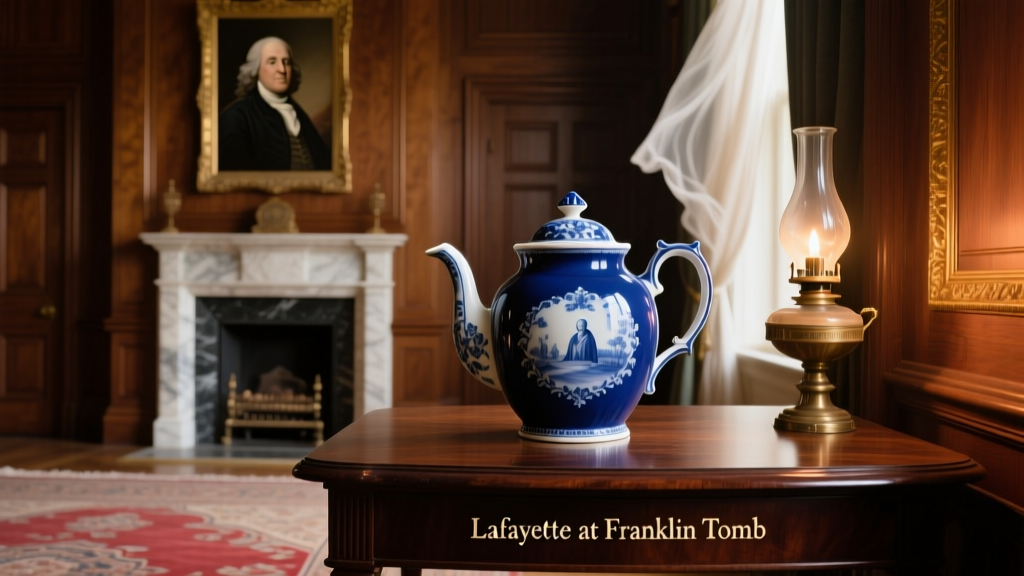
Staffordshire Teapot: Lafayette at Franklin Tomb, Dark Blue, 8¼ Inches — History, Identification & Conservation
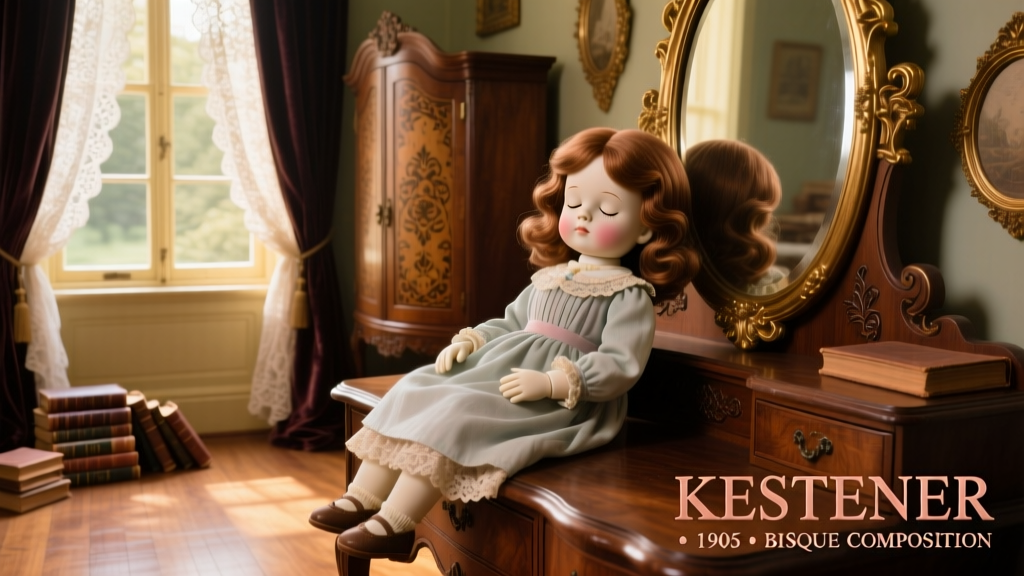
Kestner 27-Inch Bisque Composition Ball-Jointed Doll with Sleep Eyes and Original Brown Wig: Identification, Restoration Ethics, and Market Context