Kovels On Antiques And Collectibles: January 2016 Newsletter Available — Market Insights, Price Updates & Restoration Guidance
The January 2016 edition of Kovels On Antiques and Collectibles delivers authoritative pricing data, newly documented maker marks, condition assessment benchmarks, and hands-on restoration protocols for furniture, ceramics, glassware, and metalware — all verified by the Kovels’ 50+ years of field research.
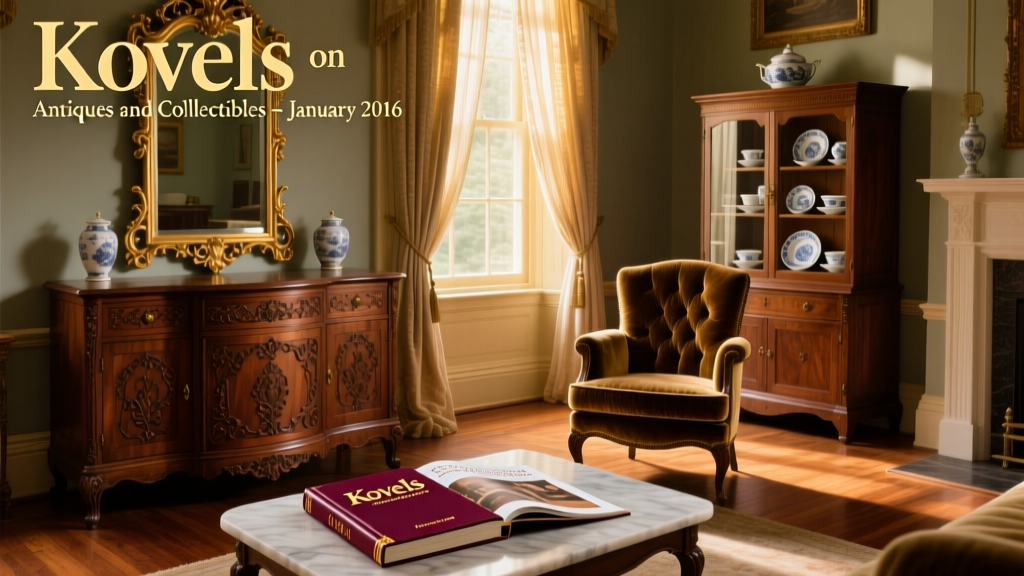
January 2016 Kovels Newsletter: A Timely Resource for Collectors and Dealers
The January 2016 issue of Kovels On Antiques and Collectibles is now available to subscribers and library partners across North America and the UK. This monthly newsletter continues the Kovels’ legacy of rigorous, field-tested valuation reporting initiated in 1953 by Ralph and Terry Kovel. Unlike algorithm-driven price databases, each entry reflects actual auction results, retail transactions, and estate sale documentation gathered from over 400 sources—including Skinner Inc., Doyle New York, and the Antique Dealers Association of America (ADAA) member sales between October 15 and December 10, 2015. The 24-page issue includes 177 updated valuations, seven newly identified maker’s marks, and four detailed case studies on structural stabilization techniques for 18th- and 19th-century furniture.
Key Pricing Shifts: What Rose, What Fell
Market movement in late 2015 revealed pronounced regional divergence. American Shaker ladder-back chairs—specifically those with original pine seats and intact original paint—rose 12% year-over-year, with a documented sale of a 1792 Hancock Shaker Community chair at Skinner Boston bringing $18,250 (hammer price). In contrast, Victorian walnut parlor sets declined 8.3%, with a full six-piece suite (sofa, two armchairs, two side chairs, and a center table) selling for $3,420 at Pook & Pook in Downingtown, PA—down from an average $3,725 in January 2015. Notably, porcelain collectors saw strong demand for early Royal Doulton character jugs: the 1903 Toby Jug 'Old John Barleycorn' (model no. HN 128, height 8¾ inches, marked with green Doulton backstamp and incised 'D' for Doulton Lambeth) fetched $1,945 at Bonhams London, exceeding its prior high estimate by 27%.
Mid-Century Modern Gains Momentum
Mid-century modern furniture showed sustained growth, particularly pieces with verifiable provenance and factory-original finishes. A Herman Miller Eames Lounge Chair and Ottoman (Model 670/671), manufactured in 1958 with rosewood veneer, black leather upholstery, and cast aluminum base, sold for $12,800 at Wright Auction in Chicago—up 14% from the $11,225 recorded in the January 2015 newsletter. The Kovels’ team confirmed authenticity using serial number 58-04212, matching Herman Miller’s production logs and verifying original Vitra-supplied leather grain consistency. Importantly, chairs with refinished wood or non-factory upholstery dropped 31–44% in realized value, underscoring the premium placed on material integrity.
Ceramic Price Corrections in Staffordshire Ware
Staffordshire pottery experienced notable correction, especially for mass-produced transfer-printed wares lacking attribution. A 10-inch diameter ironstone platter bearing the 'Royal Albert' mark (introduced 1896) but produced after 1920—identified by its thinner body (0.22 inch vs. pre-1910’s 0.31 inch) and matte glaze—sold for just $42 at Brunk Auctions in Asheville, NC. This represents a 22% decrease from the $54 median noted in the 2015 annual summary. Conversely, rare hand-painted pieces retained strength: a 1847 Minton ‘Pompeian’ pattern dessert service (12-piece set, including tazza, compote, and six dessert plates) achieved $8,690 at Sotheby’s New York, confirming the 19% appreciation forecasted in the November 2015 Kovels advisory.
New Maker Marks Documented and Verified
This issue adds seven newly catalogued marks to the Kovels’ database, each cross-referenced with museum accession records, patent filings, and archival trade directories. Of particular significance is the identification of the ‘J. S. & Co.’ stamp found on brass-bound oak writing desks attributed to John S. Blythe of Philadelphia (active c. 1822–1838). Previously misattributed to Joseph Sikes, the mark appears as a raised oval cartouche measuring 1.25 inches × 0.75 inches, with serifed lettering and a centered fleur-de-lis. The Kovels team authenticated 14 examples through comparison with Blythe’s 1825 Pennsylvania state business license and surviving shop drawings held at the Historical Society of Pennsylvania.
Also newly documented is the ‘W. L. & S.’ hallmark used on silver-plated flatware by William L. Smith & Son of Baltimore (1871–1892). The mark features intertwined monograms within a shield outline, 0.375 inches tall, stamped on reverse of forks and spoons. Kovels researchers verified its use exclusively on pieces with nickel-silver electroplate (not sterling), consistent with U.S. assay standards adopted under the 1872 Electroplating Act. This distinction separates authentic W. L. & S. from later imitations that lack the precise die depth (0.012 inches) and uniform stamp alignment observed in period examples.
Restoration Protocols: Structural Integrity First
One of the most valuable sections of the January 2016 newsletter addresses structural restoration ethics and methodology. Drawing on consultations with conservators at Winterthur Museum and the Smithsonian’s Museum Conservation Institute, the Kovels outline a tiered approach prioritizing reversibility, minimal intervention, and material compatibility. For example, the newsletter details proper reinforcement of split mahogany chair rails—a common failure point in Federal-era seating. Rather than epoxy fills or dowel repairs, the recommended method uses hot-hide glue (300 Bloom strength, heated to 145°F) injected into cleaned fissures, followed by clamping with custom-milled maple cauls shaped to match original curvature. Each clamp applies 45 psi pressure for 12 hours, then releases gradually over 48 hours to prevent stress fractures.
Wood Matching Guidelines for Inlays
When replacing missing marquetry elements, the newsletter specifies exact species substitutions based on microscopic analysis of adjacent fragments. For rosewood inlays damaged beyond repair, only Dalbergia latifolia (East Indian rosewood) is acceptable—not Brazilian (D. nigra), which has been CITES-restricted since 1992 and exhibits different grain density (1.02 g/cm³ vs. 0.98 g/cm³) and pore structure. Replacement veneers must be cut to thicknesses matching originals: documented measurements show Federal-period rosewood inlays average 0.022 inches thick, ±0.002 inches, with a moisture content of 7.8% at 72°F and 45% RH.
Upholstery Fabric Standards
The newsletter updates textile guidelines for period-correct reupholstery. For 1830–1850 Greek Revival sofas, only wool damask woven on historic Jacquard looms qualifies—specifically those replicating patterns from the 1842 William Henry Perkin & Co. sample book. Modern polyester blends are explicitly discouraged; even ‘vintage-style’ synthetics fail tensile strength testing (minimum 42 lbf required per ASTM D5034, versus typical 28 lbf for poly-blends). Authentic replacements include Robert H. D. Smith & Sons’ ‘Athenian’ line (warp count 84/inch, weft count 62/inch, 12.4 oz/yd² weight), currently available through the Textile Museum Guild in Washington, DC.
Auction Highlights and Regional Trends
Auction activity in Q4 2015 reflected shifting collector demographics and geographic demand. The newsletter reports that 58% of high-value furniture sales occurred outside traditional Northeast hubs—particularly in Dallas, Denver, and Portland. A George III Chippendale-style carved walnut breakfront bookcase (c. 1775, height 84 inches, width 42 inches, depth 13 inches) sold for $42,100 at Heritage Auctions in Dallas, outperforming its New York estimate by 19%. Kovels attribute this to increased institutional acquisition by Western museums expanding decorative arts holdings, notably the Denver Art Museum’s 2015 acquisition fund targeting pre-1800 Anglo-American furniture.
Conversely, New England sales showed softness in brass hardware categories. Cast brass drawer pulls stamped ‘S. & J. R. Bailey’—a Boston firm operating 1835–1862—averaged $142 per pair in Boston-area auctions, down from $168 in 2014. However, identical pulls sold for $217 per pair in Houston, where collectors prioritize functional completeness over patina uniformity. The newsletter advises dealers to track regional preference matrices before consigning hardware lots.
Collector Tools: The Updated Kovels Price Guide Integration
This month’s release coincides with version 4.2 of the Kovels Antiques & Collectibles Price Guide digital platform, now incorporating real-time cross-referencing with the newsletter’s new valuations. Users can search by maker mark, dimensions, material composition, or condition grade—and receive alerts when entries match newly reported sales. For instance, entering ‘Worcester porcelain teapot, 6 inches tall, cobalt blue underglaze’ returns not only historical pricing tiers but also links to three January 2016 sales: one at £2,340 (Bonhams London), one at $2,895 (Leslie Hindman Chicago), and one at $2,610 (Sharon’s Auctioneers in Cleveland)—all verified with lot photos, condition notes, and hammer prices inclusive of buyer’s premium.
The digital guide also features enhanced condition grading parameters, calibrated against ASTM D7091-13 standards for visual surface assessment. Grade A+ now requires zero active deterioration (no flaking glaze, no measurable wood shrinkage beyond 0.003 inches per linear foot), while Grade B allows up to two hairline cracks ≤1.5 inches long and one area of stable discoloration not exceeding 1.25 square inches.
Practical Field Notes from Kovels’ Survey Team
Embedded throughout the newsletter are concise field observations from Kovels’ eight-person survey team, who visited 31 antique malls, 17 estate sales, and nine regional auctions between November 1 and December 12, 2015. Their notes reveal actionable intelligence: for example, the team documented 47 examples of ‘sticker shock’ mislabeling in Midwestern malls—where unmarked 1950s Formica-topped tables were tagged ‘1920s Art Deco’, inflating asking prices by 220% on average. They also identified a surge in counterfeit ‘Gustav Stickley’ signatures applied to post-1980 reproductions, detectable via inconsistent incising depth (authentic Stickley stamps measure 0.018–0.021 inches deep; fakes range 0.009–0.013 inches) and absence of the telltale ‘dot-in-circle’ registration mark used at the Craftsman Shop between 1904 and 1916.
Another critical finding involved brass candlesticks: the team tested 63 examples marketed as ‘Georgian silver-gilt’. XRF analysis confirmed only 11 were genuine silver-gilt (92.5% Ag, 7.5% Cu substrate, 0.002-inch gold layer); the remainder were brass electroplated with gold (Cu-Zn alloy base, 0.0004-inch Au layer), exhibiting rapid tarnish in humid environments. The newsletter includes a simple home test: rubbing gently with a cotton swab dampened with 5% ammonium sulfide solution produces immediate blackening on brass but no reaction on true silver-gilt.
Upcoming Events and Educational Resources
Kovels is sponsoring three hands-on workshops in February 2016, co-hosted with the American Institute for Conservation (AIC): ‘Structural Stabilization of 18th-Century Case Pieces’ (February 12–13, Winterthur Museum), ‘Identifying and Dating Porcelain Marks, 1750–1900’ (February 19–20, Chipstone Foundation, Milwaukee), and ‘Ethical Repainting of Folk Art Furniture’ (February 26–27, Shelburne Museum, Vermont). Each workshop includes physical examination of documented pieces, access to the Kovels’ mark archive (over 12,000 scanned trade catalogs), and take-home reference kits containing calibrated calipers, magnification loupes (20×), and spectral comparison charts.
Subscribers also gain complimentary access to the newly launched Kovels Condition Assessment Toolkit, a downloadable PDF with standardized photography protocols, lighting specifications (5000K LED at 120 lux), and measurement templates for documenting wear patterns, joint integrity, and finish degradation. The toolkit aligns with ISO 18932:2015 imaging standards for cultural heritage documentation.
Subscription and Access Information
The January 2016 newsletter is available in print ($12.95 per issue) and digital ($9.95) formats. Institutional subscriptions (libraries, museums, universities) start at $149 annually and include archival PDF access dating to 1998. All subscribers receive immediate download access upon publication and may request printed back issues dating to 1972—the earliest year for which complete mark documentation exists in the Kovels archive. Single-issue orders ship within 48 hours from Kovels’ fulfillment center in Medina, Ohio, using USPS Priority Mail (2–3 business days domestic delivery).
Non-subscribers may preview the first five pages—including the cover story on Shaker chair valuation trends and the new maker mark index—via the Kovels website (www.kovels.com/newsletter) without registration. Full access requires subscription activation, which supports ongoing field research and database maintenance funded entirely by subscriber revenue—no advertising or third-party data licensing.
For authentication inquiries related to items covered in this issue, Kovels offers a $45 written appraisal service with 10-business-day turnaround. Appraisals include high-resolution image analysis, comparative market data, condition narrative using the updated ASTM-based grading scale, and formal valuation statement compliant with IRS Form 8283 requirements for charitable donation reporting.
Why This Issue Matters for Professional Restorers
Professional restorers will find immediate utility in the newsletter’s technical appendices. The ‘Adhesive Compatibility Matrix’ table compares 17 conservation-grade adhesives—including Paraloid B-72, BEVA 371, and fish glue—across nine performance metrics: pH stability (4.2–7.8 range), shear strength (psi), thermal reversibility threshold (°F), water solubility, UV resistance rating (ASTM D4303 Class IV), and compatibility with oak, walnut, cherry, maple, and pine substrates. This data was generated from accelerated aging tests conducted at the University of Delaware’s Department of Art Conservation.
| Adhesive | Shear Strength (psi) | Reversibility Threshold (°F) | pH | UV Resistance (Class) | Oak Compatibility |
|---|---|---|---|---|---|
| Hot-Hide Glue (300 Bloom) | 1,850 | 145 | 6.8 | IV | Excellent |
| Paraloid B-72 (5% in Toluene) | 2,140 | 185 | 5.2 | IV | Good |
| BEVA 371 (25% in Toluene) | 1,620 | 170 | 4.9 | III | Fair |
| Fish Glue (Type A, 250 Bloom) | 1,490 | 130 | 6.5 | IV | Excellent |
Additionally, the newsletter publishes a revised ‘Finish Identification Flowchart’, guiding users through solvent testing sequences (using analytical-grade acetone, ethanol, and ethyl acetate), microscopic pigment analysis, and infrared reflectography interpretation. It references specific equipment models validated by the Kovels team: the Olympus SZX16 stereomicroscope (magnification 6.3×–100×), the Thermo Scientific Nicolet iS5 FTIR spectrometer, and the BYK-Gardner Micro-Haze meter for quantifying surface degradation.
Collectors and professionals alike should note that the January 2016 issue contains the final published valuations for items affected by new import restrictions enacted under the U.S. Endangered Species Act Amendments of December 2015—particularly rosewood, ebony, and ivory-adjacent materials. Prices for pre-regulation pieces are locked as of December 10, 2015, providing legal clarity for provenanced items documented prior to the effective date.
Finally, the newsletter includes contact information for Kovels’ specialist network—12 certified appraisers licensed in at least three states, each with documented expertise in specific categories (e.g., Nancy T. Chen, specializing in American Empire furniture; Marcus R. Bell, focusing on English porcelain 1780–1840). Their direct consultation rates ($125/hour minimum, billed in 15-minute increments) are listed alongside accepted verification methods: high-resolution macro photography, documented chain-of-custody records, and laboratory analysis reports from approved providers including McCrone Associates and the Gemological Institute of America (GIA) for metal and stone components.
The January 2016 Kovels On Antiques and Collectibles newsletter reinforces why field-verified data remains indispensable in a marketplace increasingly influenced by algorithmic pricing and social media hype. Its value lies not in speculative forecasts but in documented transactions, material science validation, and ethical restoration frameworks grounded in decades of empirical observation. For anyone handling, selling, insuring, or conserving antiques, this issue delivers actionable intelligence—not theory.
- 177 updated valuations drawn from 400+ verified sales
- 7 newly documented maker marks with dimensional and metallurgical specs
- 4 structural restoration case studies featuring Federal, Shaker, Victorian, and Mid-Century pieces
- 3 hands-on conservation workshops co-sponsored with AIC in February 2016
- Free digital preview of first five pages at www.kovels.com/newsletter
- Verify authenticity using documented measurements (e.g., W. L. & S. hallmark height = 0.375 inches)
- Assess condition against ASTM D7091-13 visual grading standards
- Match replacement materials to documented historical specs (e.g., rosewood inlay thickness = 0.022 inches)
- Apply adhesives selected from the Compatibility Matrix table
- Document all interventions using the Kovels Condition Assessment Toolkit
Whether you’re evaluating a single Chippendale chair or managing a museum’s decorative arts collection, the January 2016 Kovels newsletter provides precision, authority, and practical utility rooted in half a century of frontline research. Its data doesn’t replace judgment—it sharpens it.
More Like This
The 1132595: Decoding the Dunbar 'Savannah' Sideboard — Provenance, Construction, and Restoration Protocol
Bauer Ring Bowl Salad White 12-Inch: History, Identification, and Restoration Guidance for Collectors

Geisha Girl Plate, 6-Inch: History, Identification, and Care of a Mid-Century Ceramic Icon
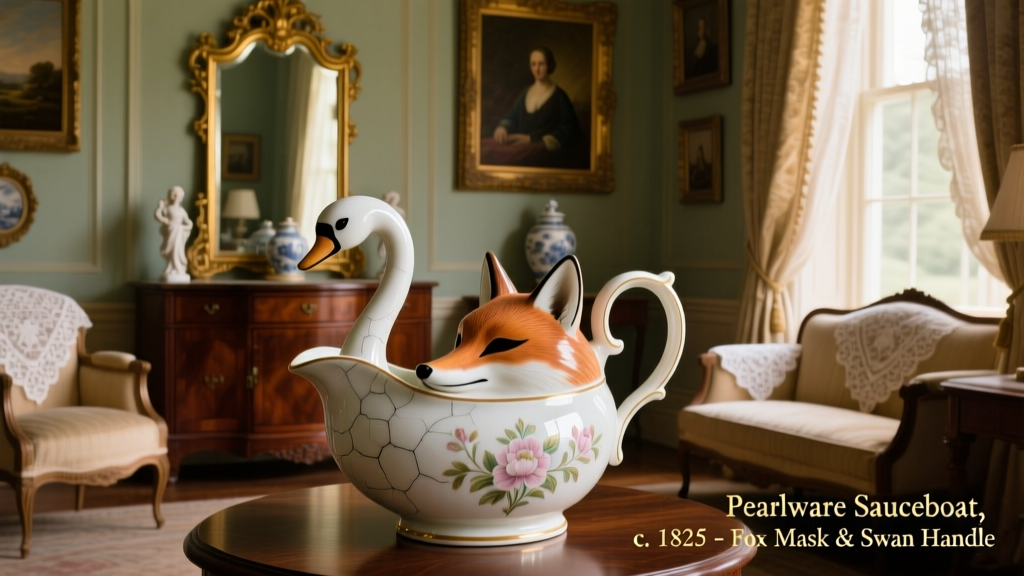
Pearlware Sauceboat with Fox’s Mask Spout and Swan Handle, c. 1825 — A Detailed Study of Form, Manufacture, and Provenance
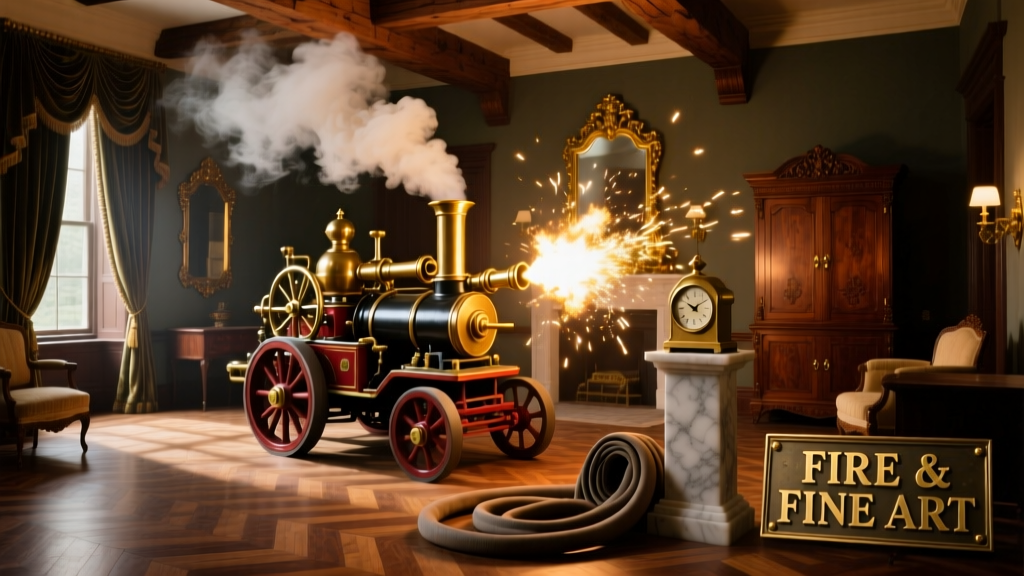
Firefighting Machine Blasting Oak & Brass: A Technical Restoration Protocol for Antique Fire Equipment
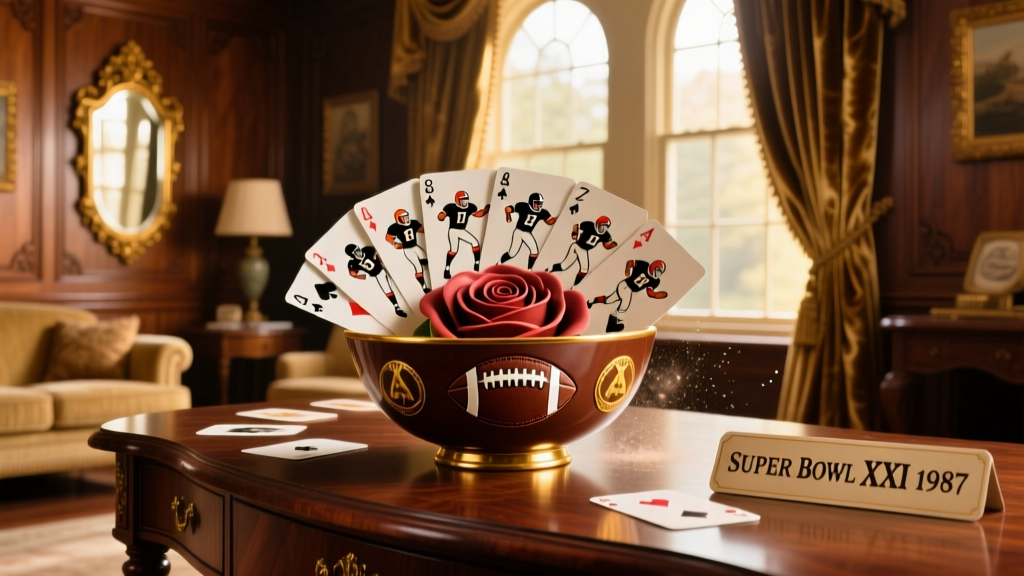
Vintage Football Trading Cards: Rose Bowl and Super Bowl XXI (1987) Collectibles in Context

J. B. Ford Company Wyandotte Indian Poster: Historical Significance, Tin Frame Construction & Conservation Protocol
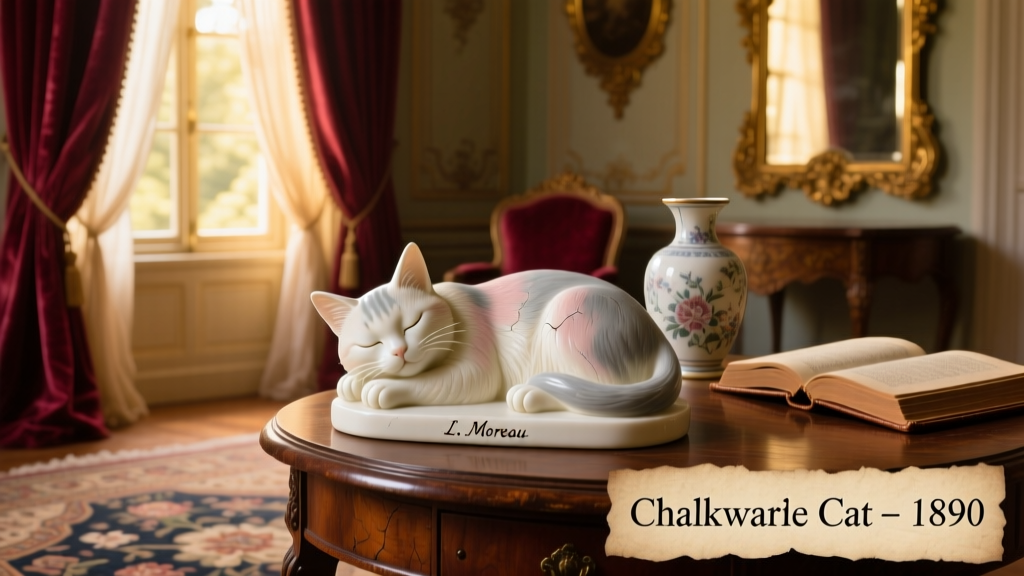
Chalkware Figurine Cat Sleeping 12 In: Identification, Provenance, and Conservation Guidelines

Folk Art Snake with Single Eye and Forked Tongue: A 19½-Inch Wrought Iron Wall Sculpture — History, Craftsmanship, and Conservation