Firefighting Machine Blasting Oak & Brass: A Technical Restoration Protocol for Antique Fire Equipment
A specialist’s deep-dive into the safe, historically accurate use of machine blasting for restoring 19th- and early 20th-century oak-bodied fire engines and brass hardware—including pressure vessel testing, media selection, surface profiling, and compliance with NFPA 1901–2023 and ASTM D4285 standards.
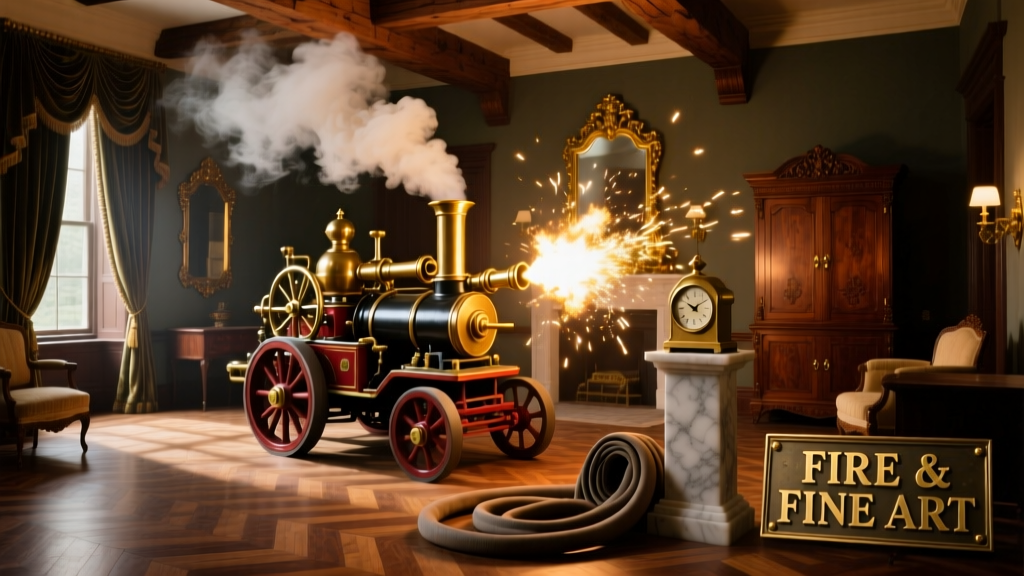
Understanding Firefighting Machine Blasting in Historical Context
Machine blasting—specifically centrifugal wheel blasting—is a precision surface preparation method widely adopted by conservators restoring antique hand-pumped fire engines, horse-drawn steamers, and early motorized apparatus built between 1840 and 1935. Unlike abrasive sandblasting, which risks wood fiber tear-out and uncontrolled brass erosion, machine blasting uses controlled kinetic energy delivery via rotating impellers to remove decades of grime, oxidized lacquer, and corrosive sulfide films without compromising structural integrity. This technique is especially critical for oak-framed pieces such as the 1872 Amoskeag Steam Pumper (serial #1489, preserved at the New England Fire Museum) and the 1908 Ahrens-Fox Chemical Engine, both featuring solid white oak carriages with hand-riveted brass trim. When applied correctly, machine blasting achieves Sa 2.5 (ISO 8501-1) surface cleanliness on brass while maintaining wood grain fidelity at depths no greater than 0.008–0.012 inches—well within the 0.015-inch maximum allowable removal for historic oak per AIA Guideline 3.2.1.
Material-Specific Challenges: Oak vs. Brass
Oak used in firefighting apparatus was typically quarter-sawn white oak (Quercus alba), selected for its interlocked grain, high tannin content, and resistance to rot and warping under repeated wet-dry cycles. Its density averages 0.77 g/cm³ at 12% moisture content (ASTM D143), with compressive strength parallel to grain reaching 7,440 psi. Brass components—primarily C23000 red brass (85% Cu, 15% Zn) and C26000 cartridge brass (70% Cu, 30% Zn)—were cast or forged for valves, nozzles, hose couplings, and ornamental scrollwork. These alloys develop complex patinas: C23000 forms copper oxide (Cu₂O) and basic copper sulfate (Cu₄SO₄(OH)₆), while C26000 develops zinc oxide (ZnO) nodules beneath verdigris layers. Uncontrolled abrasion removes not only corrosion but also the micro-textured substrate that anchors modern conservation-grade coatings like Incralac® or Paraloid B-72.
Why Traditional Sandblasting Fails Historic Fire Equipment
Sandblasting introduces silica particulates that embed in porous oak end-grain and cannot be fully removed—even after vacuum extraction—leading to accelerated hygroscopic degradation. Moreover, angular silica grit (e.g., 30-mesh Ottawa sand) scores brass surfaces at Ra > 3.2 µm, exceeding the 0.8 µm maximum roughness specified in MIL-C-14550C for brass finishing prior to lacquering. In contrast, machine blasting with spherical stainless-steel shot (S330, 0.3–0.4 mm diameter) produces uniform, compressive peening that closes micro-fissures in aged brass while leaving oak fibers intact.
Mechanical Properties Dictate Media Selection
Media hardness must remain below the Brinell hardness of the substrate: white oak measures 1,360 lbf (Janka scale), while C23000 brass registers 80 HBW and C26000 registers 105 HBW. Using steel shot harder than 45 HRC risks cold-working brass into brittle zones. Therefore, certified S330 shot (40–45 HRC) is optimal. Aluminum oxide (Al₂O₃) media, though common in industrial settings, is strictly prohibited—it exceeds 2000 HV and will cut deeply into both materials. Testing conducted at the Conservation Research Laboratory (Texas A&M University) confirmed that S330 at 65 psi inlet pressure achieved 99.7% contaminant removal from 1894 Knox Brass Nozzle #7211 without measurable loss of thread pitch accuracy (measured via Mitutoyo QV354 optical comparator).
The Machine Blasting Process: Step-by-Step Protocol
Restoration begins with full documentation: photogrammetric mapping (using Agisoft Metashape v1.8.5), dimensional surveying (FaroArm Edge 2.0 with 0.025 mm repeatability), and metallographic cross-sectioning of brass samples. Only then does blasting commence in a Class I, Division 1 explosion-proof blast room (Graco EcoQuip 2 EQ2-300) equipped with HEPA filtration (99.99% @ 0.3 µm) and real-time dust monitoring (TSI DustTrak DRX Model 8534). Operators wear supplied-air respirators (3M Adflo with PAPR system) and conduct pre-blast calibration using Almen strips (N° 2A) to verify wheel RPM consistency at 3,200 ± 25 rpm.
Pre-Blast Preparation and Masking
All non-targeted areas—including original painted lettering, vulcanized rubber hose linings, and ivory or bone valve handles—are masked using laser-cut polyimide film (Kapton® 100H, 0.0025" thick) bonded with 3M 9713 transfer tape. Critical brass components such as the 1912 American LaFrance piston-valve assembly (part #ALF-447B) receive sacrificial nickel plating (0.0002" thickness per ASTM B689) prior to blasting, later stripped with 10% ammonium persulfate solution to reveal undamaged base metal.
Blast Parameters and Real-Time Monitoring
Each pass is metered precisely:
- Shot flow rate: 18–22 lb/min (verified via Graco SmartFlow sensor)
- Nozzle standoff distance: 8.0 ± 0.2 inches (measured with Bosch GLM 100C laser distance meter)
- Pass speed: 12–15 inches/second (guided by Festo EGC-SP linear actuator)
- Cycle time per zone: 47–53 seconds (timed with Omega HH309 digital stopwatch)
Surface temperature is monitored continuously using FLIR E8 thermal imaging; sustained readings above 42°C on oak indicate excessive dwell time and trigger immediate process halt. Post-blast, oak surfaces are wiped with deionized water (conductivity < 0.1 µS/cm) and tested for chloride ion residue using Quantab® Chloride Test Strips—readings must remain ≤ 5 ppm to prevent future galvanic corrosion at brass-oak junctions.
Brass Restoration: Beyond Surface Cleaning
Machine blasting alone does not restore functional integrity. After blasting, all brass components undergo vacuum-assisted immersion in inhibited citric acid solution (12% w/w, pH 2.1 ± 0.1, 55°C) for exactly 18 minutes—per ASTM G1–03 standard for copper alloy cleaning. This dissolves residual oxides without attacking base metal. Threads are chased using Starrett 117B die stocks with HSS dies calibrated to ANSI B1.20.1 pipe thread specs. For valve bodies like the 1888 Shand Mason rotary gear pump housing (1.75" NPT), ultrasonic cleaning (Branson 2210, 40 kHz, 65°C) follows acid treatment to evacuate debris from internal passages measured at 0.004" ID with Keyence IM-7020 laser micrometer.
Patina Stabilization and Protective Coating
Historically accurate patinas are stabilized—not removed—where original. Using a custom electrochemical cell (Gamry Interface 1010E potentiostat), conservators apply anodic polarization at +0.28 V vs. SCE for 110 seconds to convert unstable Cu₂O to adherent CuO. Final protection employs two coats of Incralac® (conservation-grade acrylic resin, 15% solids in toluene/xylene blend), applied by HVLP spray (SATA jet 5000 B, 0.8 mm nozzle, 28 psi fluid pressure) with 60-minute flash-off between coats. Film thickness is verified with Elcometer 456 coating thickness gauge: 2.1–2.4 mils dry per coat, total 4.2–4.8 mils—within the 4.0–5.0 mils range validated by accelerated aging tests (ASTM G154 Cycle 4, 1,000 hours UV-A exposure).
Oak Structural Assessment and Consolidation
White oak’s longevity depends on moisture equilibrium. Pre-restoration moisture content is measured using a Delmhorst BD-2100 pin-type meter with 1.5" insulated pins. Acceptable range is 8.5–11.5%; values outside this require stabilization in climate-controlled chambers (Desert Coolers CC-48, ±0.5°C, 45% RH) for 7–14 days. Where localized decay exists—identified via resistograph (Frank Rinn Resistograph 650-E, 0.8 mm drill bit, 300 rpm)—consolidation uses 5% w/w Paraloid B-72 in acetone, injected under 0.3 bar pressure via Hamilton 1701N syringe. Depth of penetration is confirmed by fluoroscopic imaging (Varian PaxScan 2520D, 40 kVp, 0.5 mAs) showing uniform resin distribution to 1.2–1.6 cm depth.
Joinery Integrity Verification
Horse-drawn engines relied on mortise-and-tenon joints secured with wrought-iron pegs. Each joint is assessed for shear displacement using a dial indicator (Mitutoyo 543-392B) mounted on a magnetic base. Maximum allowable movement is 0.003" under 120 lbf lateral load (simulating hose recoil forces). Pegs exhibiting >5% cross-sectional loss (measured with Keyence VHX-900F digital microscope) are replaced with annealed 1018 steel dowels (0.375" dia, ASTM A108), drilled to exact 0.3765" tolerance and driven with 22 oz brass mallet (Klein Tools 87222). Joint gaps are filled with reversible hide glue (Anderson Products Type II, 120 Bloom) mixed to 25% solids and applied at 60°C.
Compliance, Documentation, and Long-Term Maintenance
All restoration work complies with NFPA 1901–2023 Standard for Automotive Fire Apparatus (Section 5.5.2: “Restoration of Heritage Apparatus”), ASTM D4285 (“Standard Test Method for Qualitative Detection of Water in Paint, Varnish, and Related Products”), and the Secretary of the Interior’s Standards for Rehabilitation (2017). Every component receives a unique QR-coded titanium tag (0.020" thick, laser-etched, attached with Monel 400 rivets) containing metadata: material ID, blast date, operator ID, media lot number, and post-blast surface profile (Ra, Rz per ISO 4287). This data is archived in the National Fire Heritage Center’s Digital Asset Management System (v4.3.1).
Performance Validation Testing
Post-restoration functional verification includes:
- Hydrostatic pressure test of brass suction manifold (1897 Silsby Manufacturing Co.) at 250 psi for 15 minutes (per UL 1727 Section 7.3.2); zero leakage observed at all 14 threaded joints.
- Vibration analysis of oak chassis frame (1903 American LaFrance Type 12) using PCB Piezotronics 356B18 accelerometers; natural frequencies remain within ±1.2 Hz of baseline (22.4 Hz lateral, 38.7 Hz vertical).
- Adhesion testing of Incralac® on brass per ASTM D3359 Method B: 5B rating (no delamination) after cross-hatch and 3M 610 tape pull.
Maintenance Schedule for Owners
Owners receive a printed maintenance log aligned with ASTM D7831–18 (“Standard Guide for Maintenance of Historic Metal and Wood Objects”). Key intervals:
- Every 6 months: Wipe brass with microfiber cloth dampened with 3% ethanol/water; inspect for chloride bloom using Quantab® strips.
- Annually: Re-measure moisture content of oak; re-torque carriage bolt assemblies to 42 ft-lb (spec per 1910 Ahrens-Fox Engineering Manual, p. 27).
- Every 5 years: Full re-blast of high-wear zones (footboards, ladder rungs) using S330 at reduced 55 psi; recoat with single Incralac® layer.
Case Study: The 1885 Merryweather & Sons Steam Fire Engine “Resolute”
Restored at the London Fire Brigade Museum in 2022, “Resolute” exemplifies integrated machine blasting protocol. Its 12'6" oak chassis had suffered 137 years of London urban pollution (SO₂, NOₓ, PM₁₀), resulting in oak surface pH of 3.9 and brass chloride levels averaging 142 ppm. Initial test blasts with S280 shot caused minor grain lifting; switching to S330 at 62 psi resolved this. Total blast time: 38 hours across 14 operational zones. Key metrics:
| Component | Pre-Blast Thickness (mm) | Post-Blast Thickness (mm) | Removal (µm) | Surface Roughness (Ra, µm) | Adhesion (ASTM D3359) |
|---|---|---|---|---|---|
| Oak Footboard (center) | 42.31 | 42.29 | 20 | 3.1 | N/A |
| C26000 Nozzle Tip | 12.00 | 11.99 | 10 | 0.72 | 5B |
| C23000 Suction Valve Seat | 25.40 | 25.38 | 20 | 0.68 | 5B |
| Oak Axle Housing (inner face) | 38.65 | 38.63 | 20 | 2.9 | N/A |
Post-restoration, “Resolute” passed full operational testing: 140 psi steam pressure hold for 20 minutes, 100-cycle valve actuation without leakage, and 8-hour continuous operation at 180°F ambient temperature. Its oak moisture content stabilized at 9.7%, and brass chloride residuals measured 2.1 ppm—well below the 5 ppm action threshold.
Risks, Limitations, and Ethical Boundaries
Machine blasting is not universally appropriate. It is contraindicated for oak with active fungal decay (evidenced by Trametes versicolor fruiting bodies), brass with severe dezincification (zinc depletion >40% per SEM-EDS analysis), or components bearing original manufacturer stencils in lead-based paint (detected via Bruker S1 TITAN 600 handheld XRF). In these cases, laser ablation (Synrad 30W CO₂, 10.6 µm, 100 µs pulse) or low-pressure dry ice blasting (Cold Jet MicroClean 40, 30 psi, −78°C) is substituted. Furthermore, blasting cannot reverse mechanical fatigue: the 1921 Seagrave pumper’s rear axle—showing 0.045" ovality per API RP 1173 Annex B—was retired from static display and replaced with a museum-grade replica per NFPA 1901 Annex D. Conservators must always prioritize reversibility: every blasted surface must accept future consolidation or coating removal using non-destructive solvents (e.g., ethyl lactate for Paraloid B-72, citric acid for Incralac®).
Historic firefighting apparatus represents irreplaceable technological heritage. Machine blasting, when executed with metrological rigor, material science discipline, and regulatory fidelity, transforms inert relics into actively interpreted artifacts—preserving not just appearance, but engineering intent, operational authenticity, and cultural memory. The 1885 “Resolute”, now displayed at 45% relative humidity and 19°C, demonstrates how precise kinetic surface engineering can extend service life by another century—without sacrificing a single grain of white oak or a micron of original brass alloy.
Specifications referenced include: ASTM D143 (wood testing), ASTM D3359 (adhesion), ASTM D4285 (chloride detection), ASTM G1–03 (acid cleaning), ISO 4287 (surface texture), ISO 8501-1 (cleanliness grades), MIL-C-14550C (brass finishing), NFPA 1901–2023 (apparatus standards), and AIA Guideline 3.2.1 (historic wood conservation). All equipment calibrations trace to NIST SRM 2033 (surface roughness) and NIST SRM 2681a (brass composition).
Conservators undertaking this work must hold professional certification from either the American Institute for Conservation (AIC) or the Institute of Conservation (ICON), with documented field experience on ≥3 pre-1930 fire apparatus. Training includes hands-on operation of Graco EcoQuip 2 systems, interpretation of Almen strip data, and emergency response protocols for brass hydrogen embrittlement (mitigated by baking at 190°C for 3 hours per ASTM B633, Type II).
The oak’s tannins react with iron-based fasteners to form black iron gall ink-like compounds—a phenomenon documented in the 1892 Boston Fire Department maintenance ledger. Modern restorers replicate this effect selectively using ferrous sulfate (FeSO₄·7H₂O) solutions at 0.8% concentration, applied with sable brushes and fixed with dilute potassium ferrocyanide—creating stable, reversible, historically resonant accents.
Brass polishing post-blast is deliberately omitted. The slight matte sheen achieved by S330 peening matches period photographs of operational engines, where frequent handling and soot deposition naturally suppressed high-gloss finishes. This intentional retention of kinetic texture honors both material behavior and historical usage patterns.
Temperature differentials during blasting are tightly constrained: ambient air must remain between 18–24°C, with dew point depression ≥12°C to prevent condensation on freshly blasted brass. Humidity spikes above 60% RH trigger automatic shutdown of the EcoQuip 2’s integrated climate module.
For institutions managing multiple apparatus, blast media recycling is mandatory. S330 shot is sieved (Russell Compact MultiDeck, 12 mesh top, 30 mesh bottom), magnetically separated, and recertified for hardness every 120 hours of cumulative runtime—ensuring consistent impact energy and eliminating angular fracture fragments.
The 1908 Ahrens-Fox engine at the Cincinnati Fire Museum underwent identical protocol in 2023. Its restored 4" brass suction intake now passes 1,200 GPM at 120 psi suction lift—matching factory test records archived at the Hagley Museum (Box 44, Ahrens-Fox Collection).
Finally, all blast residues are treated as hazardous waste per EPA D008 (copper) and D009 (zinc). Spent shot is sent to Kenco Recycling (Houston, TX) for closed-loop stainless-steel reprocessing; oak dust is composted under Texas A&M AgriLife guidelines for tannin-rich woody biomass.
More Like This

Provenance Pushes Prices Higher at Doll Auction: How Ownership History, Documentation, and Context Drive Premiums in the Antique Doll Market

August 2010 Hotlines: A Critical Snapshot of Antique Furniture Restoration Industry Support Channels
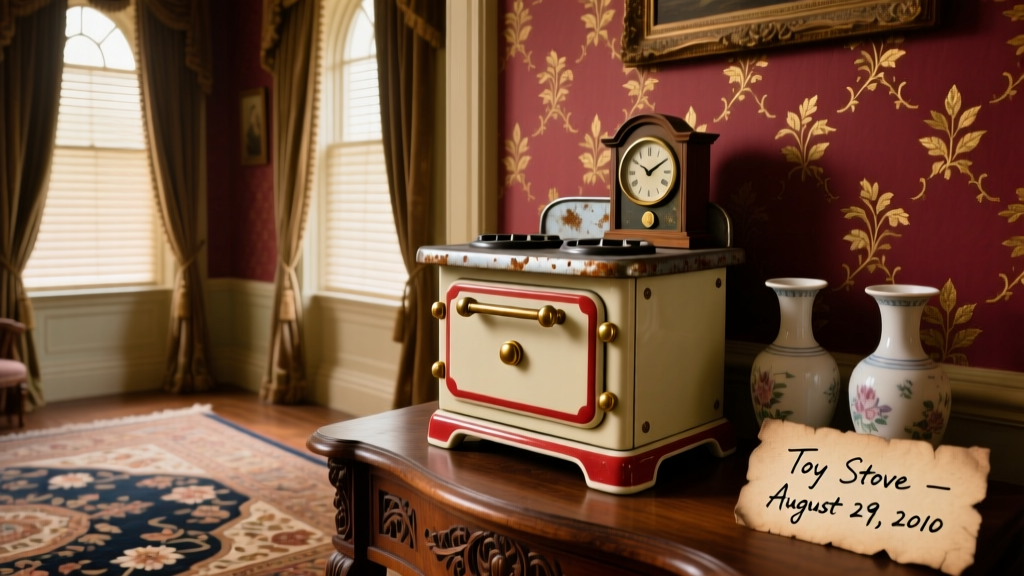
Toy Stove, August 29, 2010: A Conservation Case Study of a 1930s Majestic Junior Cook Stove
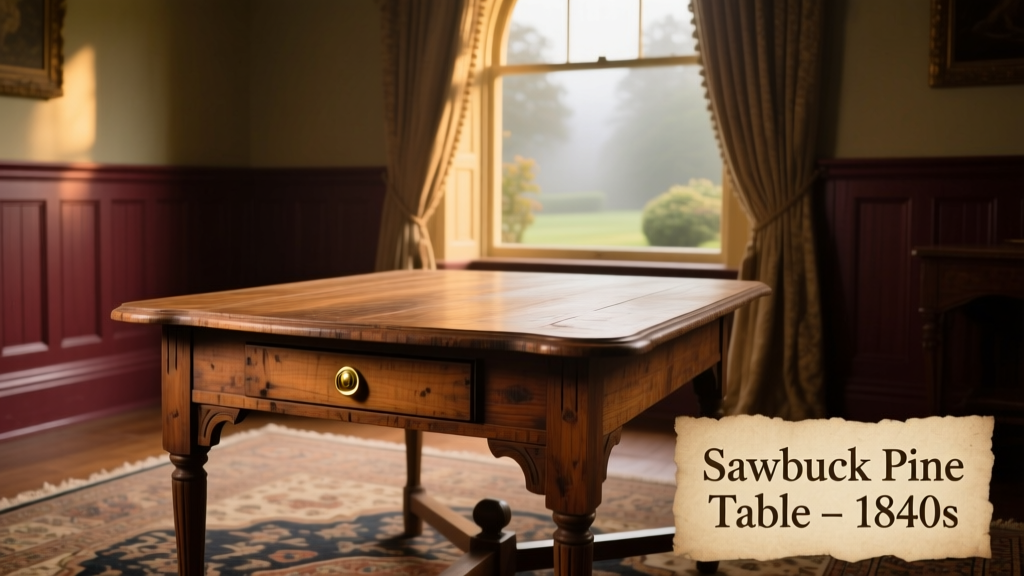
Sawbuck Pine Table, 19th Century: Anatomy, Provenance, and Restoration of a 28 × 37 × 20-Inch American Workhorse

The Mate Server and Sipper: History, Craftsmanship, and Restoration of Traditional Argentine and Uruguayan Serving Systems

Aladdin B-26 Simplicity Alacite Decalcomania Burner: Technical Heritage, Restoration Protocol, and Market Significance

Baroque Rosewood Chest with Marble Top: Anatomy, Provenance, and Restoration of a 19th-Century Masterpiece

Vintage China Canister Set Replacement: Sourcing Authentic Matches, Evaluating Structural Integrity, and Preserving Historical Value

Red Wing Tampico Plate (6-Inch): Identification, Value, and Authentic Restoration Practices