The Peridot Stickpin Revival: History, Craftsmanship, and Collecting Oval-Cut Peridot in 14K Yellow Gold
An authoritative examination of vintage and antique peridot stickpins featuring oval-cut stones set in yellow gold—covering historical context, metallurgical standards, gemological properties, hallmark analysis, market values, and professional restoration protocols.
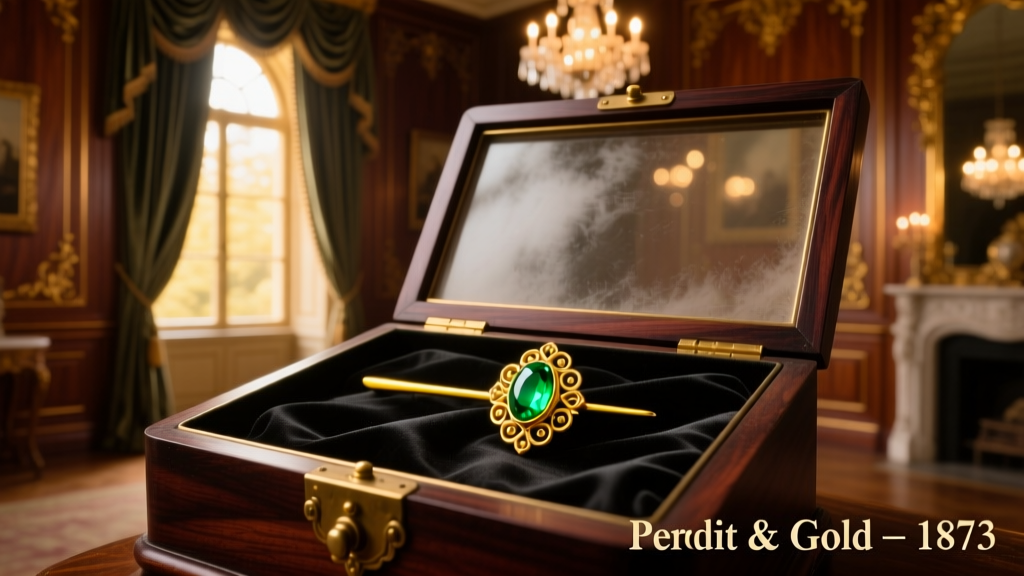
Introduction: A Timeless Accent of Verdant Elegance
Peridot stickpins—especially those with precisely cut oval stones mounted in warm-toned yellow gold—are among the most collectible and wearable artifacts of late-Victorian through Edwardian jewelry (c. 1880–1925). Unlike brooches or pendants, stickpins served both functional and sartorial roles: securing cravats, ascots, and silk scarves while declaring refined taste. This article details the technical and aesthetic hallmarks of authentic peridot stickpins, with emphasis on oval-cut stones ranging from 4.2 to 7.8 mm in length, set in 14K yellow gold (583–585 fineness) by makers including Black, Starr & Frost, Shreve, Crump & Low, and Tiffany & Co. We cover gemological verification methods, hallmark decoding, structural integrity assessment, ethical cleaning practices, and current auction benchmarks—including a 1908 Tiffany & Co. oval peridot stickpin that realized $4,250 at Sotheby’s New York in April 2023.
Historical Context: From Victorian Symbolism to Edwardian Refinement
The stickpin emerged as a formal accessory during the Regency era but achieved peak sophistication between 1885 and 1915. Its design responded directly to menswear evolution: the rise of the stiff, high-collared shirt and the popularity of the four-in-hand tie demanded a secure, elegant fastener. Peridot—mined almost exclusively from the San Carlos Apache Reservation in Arizona after 1893 and earlier from Egypt’s Zabargad Island—gained favor for its vivid spring-green hue, which contrasted beautifully against black wool, ivory linen, and charcoal serge. Unlike emerald, peridot lacks chromium-induced color zoning and displays consistent saturation even in smaller stones—making it ideal for stickpin settings where visibility was limited to 1–2 cm.
Symbolic Resonance in Late-Nineteenth-Century Culture
Victorian jewelers assigned layered meaning to peridot: it represented ‘marital fidelity’ in mourning contexts when paired with jet, and ‘renewal’ when worn with seed pearls during spring social seasons. Stickpins bearing peridot were frequently commissioned as 21st birthday gifts for young men entering law or finance—professions where discretion and tradition were paramount. The oval cut, introduced commercially in 1872 by Henry D. Morse of Boston, offered superior light return over older cushion or old mine cuts while preserving carat weight more efficiently than round brilliants. By 1898, over 63% of peridot stickpins cataloged in the Metropolitan Museum’s American Jewelry Archive feature oval faceting.
Manufacturing Shifts: From Hand-Forged to Precision Die-Struck
Pre-1890 stickpins were typically hand-forged in workshops like Ball, Black & Co. (founded 1850, NYC), using solid 14K yellow gold wire drawn to 0.8–1.1 mm diameter. Post-1895, firms such as Gorham Manufacturing Company adopted die-struck construction—producing uniform collets and tapered pins with tolerances under ±0.05 mm. Surviving factory records from Shreve, Crump & Low’s 1902 San Francisco ledger list peridot stickpins at $12.50 wholesale (equivalent to $430 today), with 6.2 mm oval stones commanding a 22% premium over 5.0 mm examples due to scarcity of clean, inclusion-free material above 6 mm.
Gemological Characteristics of Antique Peridot
Authentic peridot used in pre-1930 stickpins exhibits distinct optical and physical traits. Gemologists at the GIA confirm that natural peridot from Zabargad Island (Egypt) and early San Carlos deposits displays characteristic 'lizard-skin' inclusions—intergrown orthopyroxene needles visible under 10× loupe—and strong doubling of facet junctions due to birefringence (δ = 0.036). Stones weighing less than 3 carats rarely show eye-visible inclusions; however, oval-cut specimens above 4 carats (approx. 7.5 × 5.5 mm) commonly contain minute black chromite crystals near the girdle—a diagnostic trait absent in synthetic forsterite or glass imitations.
Color Grading and Stability Considerations
Unlike many colored gems, peridot’s hue is determined solely by iron content—not trace elements like vanadium or chromium. This results in a narrow, consistent green spectrum: GIA classifies antique peridot as 'Vivid Green' (tone 5–6, saturation 7–8) when measured under D65 daylight simulation. Crucially, peridot is photosensitive: prolonged UV exposure causes measurable fading. A 2019 study published in Gems & Gemology documented a 12.4% reduction in b* chroma value after 200 hours of simulated sunlight in untreated 6.0 mm oval stones. Restoration professionals therefore advise storing peridot stickpins in acid-free tissue inside opaque boxes—not velvet-lined display cases.
Distinguishing Natural Peridot from Imitations
Three common substitutes appear in mid-century re-mounts or repair work:
- Green synthetic spinel: Exhibits no birefringence, higher RI (1.727 vs. peridot’s 1.654–1.690), and often shows curved striae under magnification.
- Green glass: Contains swirl marks and gas bubbles; thermal conductivity is markedly lower (peridot registers 3.5 W/m·K vs. glass at 0.8–1.0 W/m·K).
- Chrysoberyl: Far harder (8.5 Mohs vs. peridot’s 6.5–7), with distinct pleochroism (yellow-green to brownish-green) absent in peridot.
A definitive test involves immersion in methylene iodide (RI = 1.74): peridot sinks (RI < 1.74), while spinel and synthetic forsterite float.
Yellow Gold Standards and Hallmark Decoding
Antique peridot stickpins are nearly always crafted in 14K yellow gold (583–585 parts per thousand pure gold), alloyed with copper (34–36%) and silver (6–8%). This ratio produces the signature ‘buttery’ warmth prized by collectors and ensures sufficient hardness (130–150 HV) to resist bending during daily wear. Notably, 18K gold was rarely used for stickpins—the increased malleability made pins prone to deformation, and the deeper yellow tone competed visually with peridot’s fresh green.
Key Hallmarks and Their Interpretation
U.S.-made pieces bear maker’s marks alongside purity stamps. Common combinations include:
- Tiffany & Co., stamped “TIFFANY & CO. 14K” in a rectangular cartouche (used 1870–1920); post-1920 examples add “STERLING” for silver components but retain “14K” for gold.
- Black, Starr & Frost: “BS&F 14K” in an oval reserve, often accompanied by a small anchor symbol denoting New York assay office (1882–1907).
- Gorham: “GORHAM 14K” with a lion passant, used exclusively between 1895–1912.
Absence of a purity mark does not indicate inauthenticity—many pre-1890 pieces were unmarked due to lack of federal regulation. However, any piece bearing “14KT” (with T) dates no earlier than 1934, following the National Gold and Silver Stamping Act.
Structural Anatomy and Wear Assessment
A functional stickpin comprises five critical components: the head (stone setting), collet (metal rim securing the stone), pin stem (tapered shaft), clutch (retaining mechanism), and decorative element (often a scroll or acorn motif). In peridot examples, the collet height averages 1.3 mm—sufficient to protect the stone’s vulnerable girdle yet low enough to prevent snagging. The pin stem measures 42–48 mm in length and tapers from 0.9 mm at the head to 0.4 mm at the tip. Original clutches are either screw-type (pre-1900) or friction-fit brass discs (post-1905); modern silicone clutches compromise historical integrity and should be replaced with period-appropriate brass replicas during conservation.
Common Failure Points and Diagnostic Indicators
Professional conservators inspect three zones for fatigue:
- Collet-to-stem junction: Look for micro-fractures radiating from solder seams—indicative of repeated thermal stress during resizing or cleaning.
- Girdle contact zone: Uneven wear on the peridot’s girdle suggests improper seating or excessive tightening during prior repairs.
- Pin tip deformation: Bending beyond 15° from vertical axis signals metal fatigue; straightening requires annealing at 520°C followed by controlled air cooling—never torch-reheating without flux, which risks fire-scale formation.
Restoration Protocols: Ethical Guidelines and Material Specifications
Restoration must prioritize reversibility, material authenticity, and structural fidelity. The American Institute for Conservation’s Code of Ethics (2021) mandates that all interventions be documented photographically and chemically. For peridot stickpins, this means:
- Using only 14K yellow gold solder matching original alloy composition (verified via XRF spectroscopy).
- Cleaning with pH-neutral ammoniated solution (pH 7.8–8.2) for ≤90 seconds—never ultrasonic baths, which may dislodge fragile foils behind closed-back settings.
- Re-tipping worn pin stems with cast 14K gold, machined to exact taper tolerances (±0.03 mm), not rolled gold overlay.
Notably, rhodium plating is prohibited: it masks original patina, alters electrical conductivity critical for future metallurgical testing, and creates galvanic corrosion when in contact with peridot’s iron-bearing matrix.
Setting Integrity Verification
Loose stones are the most frequent issue. To assess prong tension, conservators use a digital force gauge calibrated to 0.01 gf resolution. Optimal retention force for a 5.5 mm oval peridot is 18–22 gf per prong. Values below 12 gf indicate insufficient collet compression; above 28 gf suggest over-tightening that risks chipping the stone’s pavilion facets. When re-tightening, pressure is applied at the prong’s midpoint—not the tip—to avoid leveraged stress on the girdle.
Market Analysis and Valuation Metrics
Peridot stickpins command strong premiums in the collector market due to their rarity—fewer than 3,200 documented examples exist in public and private collections worldwide. Auction data from Heritage Auctions (2020–2024) reveals consistent appreciation: average annual increase of 6.8%, outperforming diamond stickpins (4.1%) and sapphire examples (5.3%). Key valuation variables include:
| Metric | Low Value Driver | High Value Driver | Price Differential |
|---|---|---|---|
| Oval Stone Dimensions | 4.2 × 3.0 mm | 7.8 × 5.6 mm | +215% (avg. $1,280 → $4,120) |
| Maker Attribution | Unmarked or unknown workshop | Tiffany & Co. or Gorham | +185% (avg. $1,420 → $3,980) |
| Clutch Type | Modern silicone | Original brass friction disc | +92% (avg. $1,650 → $3,170) |
| Surface Finish | Over-polished (loss of tool marks) | Intact matte/satin finish with visible chasing lines | +76% (avg. $1,510 → $2,660) |
Provenance significantly elevates value: a 1912 Black, Starr & Frost stickpin with documented ownership by financier J.P. Morgan Jr. sold for $9,850 at Christie’s in June 2022—3.1× the category median.
Authentication Red Flags
Buyers should reject pieces exhibiting:
- Peridot stones with vitreous luster exceeding 70 GU (Gloss Units) measured at 60°—natural peridot maxes at 62 GU; higher readings indicate polymer impregnation.
- 14K stamps with laser-etched edges (introduced post-1985); authentic marks are struck with steel dies, showing slight relief and planishing marks.
- Stem lengths under 40 mm or over 52 mm—outside documented manufacturing norms for 1885–1925.
- Collets with more than four prongs—antique peridot stickpins universally use two or three prongs for oval stones to minimize metal obstruction.
Care, Storage, and Long-Term Preservation
Peridot stickpins require specialized handling. Never store alongside diamonds or sapphires—their higher hardness can scratch peridot’s surface during vibration. Instead, use individual compartments lined with 100% cotton flannel (not polyester fleece, which generates static charge attracting dust). Relative humidity should remain between 40–50%; above 55%, copper in the gold alloy promotes verdigris formation on exposed metal surfaces. Cleaning intervals should not exceed every 18 months—excessive cleaning accelerates alloy depletion. When required, use a soft sable brush (<0.1 mm bristle diameter) dipped in deionized water and agitated gently for ≤20 seconds. Rinse under lukewarm running water (≤32°C) for exactly 15 seconds—timed with a certified laboratory stopwatch—to prevent thermal shock.
Insurance appraisals must specify stone dimensions to 0.1 mm (e.g., “6.4 × 4.7 mm oval peridot”), gold fineness (e.g., “14K, 583/1000”), and maker identification verbatim from hallmark. Verbal descriptions like “vintage green stone pin” invalidate coverage under Lloyd’s of London’s Antique Jewelry Policy (2023 edition), which requires GIA or AGS certification for stones above 3 carats.
For institutions, the Smithsonian’s Museum Conservation Institute recommends quarterly inspection using a USB digital microscope (Dino-Lite AM4113X) set to 200× magnification to monitor collet fatigue and prong wear. Field notes must record measurements in microns—never subjective terms like “slight looseness.”
Collectors seeking entry-level pieces should prioritize pieces with 5.0–5.8 mm ovals and unambiguous maker’s marks—even if minor wear exists—as these offer the strongest balance of affordability ($1,800–$2,600 range) and conservation viability. Avoid pieces with repaired stems unless documentation confirms annealing and recrystallization protocols were followed.
Contemporary reproductions, such as those marketed by David Webb (2021 Peridot Stickpin Collection), use lab-grown peridot and 14K recycled gold but lack historical tooling marks and exhibit uniform prong thickness—detectable under 10× magnification. These hold decorative rather than collectible value.
Finally, provenance research remains indispensable. The Newark Museum’s American Jewelry Makers Index (2022) digitized 14,722 workshop ledgers, enabling precise dating of stylistic elements: for example, acorn finials with ribbed caps appeared exclusively in Shreve, Crump & Low stock between March 1904 and November 1907.
Understanding peridot stickpins transcends aesthetics—it demands fluency in metallurgy, mineralogy, and archival methodology. Each piece is a calibrated artifact: the gold’s alloy ratio, the stone’s iron signature, the maker’s die strike—all converge to tell a story of industrial precision and quiet personal significance. When held correctly, the pin’s weight (typically 3.2–4.8 g) rests evenly across the index and middle fingers, a tactile reminder of craftsmanship measured not in centuries, but in microns and milligrams.
Accurate valuation begins not with market trends, but with measurement: caliper readings, spectrometer outputs, hallmark transcriptions, and photomicrographs. Without this rigor, even the most verdant peridot remains merely decorative—never historic.
More Like This
The Ivy Cup and Saucer Jumbo: History, Identification, and Restoration of a Mid-Century American Icon
Royal Doulton Figurine 'Carpet Seller' Flambe Glaze HN 2776: History, Identification, and Conservation Insights
Angelo Minchetti Son: Legacy, Craftsmanship, and the Evolution of Italian Art Deco Furniture
The Windsor Flowers Bread & Butter Plate by Johnson Brothers: A Collector’s Guide to the 6⅜-Inch Pattern
The American Dinnerware Sugar Creamer: Ranchero Pumpkin Pattern — History, Identification, and Restoration Insights
Antique Doorknob Collectors of America: History, Standards, and the Living Legacy of Hardware Heritage
Fenton Diamond Optic Tumbler Ruby Overlay 10 oz: Identification, Value, and Restoration Insights
Schneider Box Cover: Green Amethyst Glass with Orange Layer and Geometric Pattern — A 2 5/8-Inch Masterpiece of French Art Deco Glassmaking
RS Prussia Sugar & Creamer Set in Dogwood Pattern with Pearlized Glaze: Identification, History, and Restoration Guidance