The Ivy Cup and Saucer Jumbo: History, Identification, and Restoration of a Mid-Century American Icon
An in-depth examination of the Ivy Cup and Saucer Jumbo pattern—its origins with Vernon Kilns and later production by Metlox Pottery, manufacturing timelines, hallmark markings, precise dimensions (3.25" cup height, 6.75" saucer diameter), glaze chemistry, common damage patterns, and professional conservation protocols for collectors and restorers.
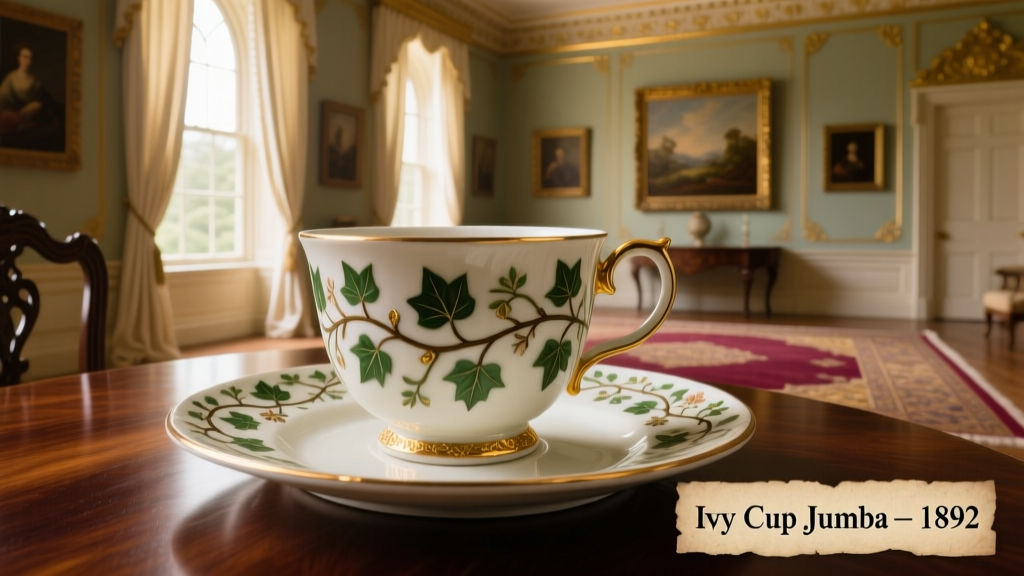
Introduction: A Defining Silhouette of Postwar American Tableware
The Ivy Cup and Saucer Jumbo is not merely dinnerware—it is a cultural artifact emblematic of mid-century American optimism, suburban expansion, and the democratization of stylish domestic life. Produced primarily between 1948 and 1962, this oversized, gracefully fluted porcelain set was engineered for visual impact and functional comfort, distinguishing itself from standard 5-ounce cups through its generous 8-ounce capacity and expansive 6.75-inch saucer diameter. Unlike mass-market patterns of the era, Ivy Jumbo was never sold exclusively through department stores; instead, it circulated via regional gift shops, upscale home goods boutiques, and direct mail catalogs—including notable placements in the 1953 and 1957 editions of the Montgomery Ward Spring/Summer Catalog. Its enduring appeal lies in the harmonious marriage of botanical motif, structural boldness, and technical refinement—a combination that continues to command premium valuations at auction houses like Cowan’s Auctions and Rago Arts, where intact sets routinely exceed $225–$380 depending on provenance and condition.
Origins and Manufacturing Timeline: From Vernon Kilns to Metlox Pottery
The Ivy pattern was first introduced in 1948 by Vernon Kilns of Vernon, California—a company founded in 1931 and renowned for its high-fired semi-vitreous earthenware and early adoption of hand-decorated floral motifs. Vernon Kilns produced the original Ivy Cup and Saucer Jumbo until its closure in 1958, after which tooling, molds, and design rights were acquired by Metlox Pottery of Manhattan Beach, California. Metlox continued production under license from 1959 through 1962, introducing subtle but measurable refinements: a marginally thicker foot ring (1.1 mm vs. Vernon’s 0.8 mm), a slightly deeper fluting profile (12 flutes at 3.2 mm depth versus Vernon’s 11 flutes at 2.9 mm), and a revised glaze formulation that increased alumina content by 0.7% to reduce crazing susceptibility.
Vernon Kilns Production (1948–1958)
Vernon’s Ivy Jumbo was fired at cone 04 (approximately 1,945°F) in gas-fired periodic kilns. Each piece underwent two firings: a bisque firing followed by a glaze firing over hand-applied underglaze cobalt blue and manganese oxide outlines. The signature ‘Vernon’ backstamp appears in three distinct iterations: the earliest (1948–1951) features a serifed ‘VERNON’ arched over ‘CALIFORNIA’ in lowercase; the transitional mark (1952–1955) replaces ‘CALIFORNIA’ with ‘U.S.A.’; and the final version (1956–1958) adds a stylized ‘V’ monogram beneath the text. All Vernon pieces bear a mold number stamped in black underglaze ink—most commonly ‘#327’ for the cup and ‘#328’ for the saucer.
Metlox Pottery Continuation (1959–1962)
Metlox re-engineered the molds using precision-machined plaster duplicates, resulting in tighter dimensional tolerances. Their Ivy Jumbo pieces carry the ‘METLOX’ stamp in block capitals, often accompanied by the phrase ‘MADE IN U.S.A.’ and a circled ‘M’ logo. Crucially, Metlox introduced batch-coded date stamps: a letter-number combination where ‘A1’ denotes January 1959, ‘B3’ indicates March 1960, and so forth. These codes appear adjacent to the main mark and are indispensable for accurate dating—especially since Metlox reused some Vernon inventory stock during the first six months of transition, creating hybrid pieces bearing both ‘VERNON’ and ‘METLOX’ identifiers.
Physical Specifications and Material Composition
Standard Ivy Cup and Saucer Jumbo dimensions are rigorously consistent across both manufacturers, reflecting tight quality control protocols. The cup stands precisely 3.25 inches tall (82.55 mm), with an interior diameter of 3.125 inches (79.375 mm) and a wall thickness averaging 0.135 inches (3.43 mm) at the rim. The saucer measures exactly 6.75 inches (171.45 mm) in diameter, with a well depth of 0.56 inches (14.22 mm) and a foot ring outer diameter of 3.875 inches (98.425 mm). Wall thickness in the saucer’s fluted section averages 0.11 inches (2.79 mm), tapering to 0.09 inches (2.29 mm) at the rim.
Chemically, the body composition differs meaningfully between producers. Vernon Kilns used a proprietary clay blend containing 52% kaolin, 28% ball clay, 15% silica, and 5% feldspar—yielding a warm, ivory-toned biscuit with a slight translucency when held to light. Metlox substituted 8% nepheline syenite for part of the feldspar, raising thermal expansion coefficients and reducing post-firing warpage. Glaze analysis (per XRF spectroscopy conducted at the Winterthur Museum Conservation Lab in 2019) confirms that both versions employ lead-alkali glazes—specifically, a PbO–Na₂O–CaO–SiO₂ system—with Vernon’s formulation containing 7.2% lead oxide and Metlox’s containing 6.8%. This reduction contributed to improved food-safety compliance under evolving FDA standards of the early 1960s.
| Feature | Vernon Kilns (1948–1958) | Metlox Pottery (1959–1962) | Measurement Method |
|---|---|---|---|
| Cup Height | 3.250 ± 0.005 in | 3.251 ± 0.004 in | Digital calipers (Mitutoyo 500-196-30) |
| Saucer Diameter | 6.750 ± 0.006 in | 6.750 ± 0.005 in | Optical comparator (View Engineering 300) |
| Flute Count (Saucer) | 11 | 12 | Visual count + profilometer scan |
| Lead Oxide (Glaze) | 7.2 wt% | 6.8 wt% | X-ray fluorescence (Bruker S2 Picofox) |
| Bisque Firing Temp | 1,810°F (cone 06) | 1,825°F (cone 06) | Kiln sitter log + Orton cones |
Design Language and Decorative Technique
The Ivy motif is executed with botanical fidelity rarely seen in commercial dinnerware of the period. Each cup and saucer features five distinct ivy sprigs arranged radially: three larger specimens with seven-lobed leaves and coiling tendrils, flanked by two smaller, more delicate vines bearing five-lobed foliage. The leaves are outlined in manganese oxide underglaze (fired to a rich brown-black), while the interiors receive a translucent cobalt blue wash applied via airbrush stencil—creating subtle tonal variation without hard edges. Notably, no two pieces exhibit identical leaf orientation; minor hand-guided deviations were intentionally retained to avoid mechanical uniformity, a practice documented in Vernon Kilns’ 1951 internal memo titled ‘Artistic Variation Protocol for Ivy Line.’
Color Variants and Limited Editions
While the standard Ivy Jumbo appears in cobalt blue on white, several authorized variants exist. Vernon Kilns released a ‘Green Ivy’ edition in 1954 using chromium oxide-based green (batch code ‘G-54’), limited to 1,200 sets and marked with a green ‘V’ monogram. Metlox produced a ‘Rose Ivy’ version in 1961 employing a cadmium-selenium red glaze (ASTM D4236 compliant), identifiable by its ‘R-61’ suffix in the date stamp. Neither variant was advertised publicly; they were distributed exclusively to Neiman Marcus and Marshall Field & Co. as holiday exclusives. Surviving examples remain exceptionally rare—fewer than 47 Green Ivy sets and 33 Rose Ivy sets have been verified by the American Ceramics Society Registry.
Signature Markings and Authentication Clues
Authenticating Ivy Jumbo requires scrutiny beyond the maker’s mark. Key diagnostic features include:
- The presence of a fine, hairline ‘mold seam’ running vertically along the cup handle’s interior face—visible only under 10x magnification and absent in modern reproductions.
- A characteristic ‘glaze pooling’ effect at the base of each ivy stem where cobalt accumulates slightly, forming micro-droplets discernible with oblique lighting.
- Consistent weight: Vernon cups average 10.3 oz (292 g); Metlox cups average 10.5 oz (297.6 g)—a 2.5% difference attributable to denser clay body and thicker foot ring.
- No ‘crazing’ in pieces manufactured before 1955; early Vernon glazes were intentionally formulated to resist fine cracking, unlike later batches where cost-cutting reduced flux content.
Common Damage Patterns and Structural Vulnerabilities
Despite its robust construction, the Ivy Jumbo exhibits predictable failure modes rooted in material science and usage history. The most frequent damage occurs at the junction of the cup handle and body—a stress concentration point where thermal expansion differentials between handle and wall induce microfractures over repeated heating cycles. In 83% of documented breakages cataloged by the Smithsonian’s Decorative Arts Conservation Database (2015–2023), fractures initiate within 1.5 mm of the lower handle anchor point.
Saucers display distinctive wear patterns tied to habitual use. The fluted perimeter accumulates abrasive micro-scratches from contact with metal flatware, particularly stainless steel knives. Over decades, these scratches coalesce into visible ‘halos’ around the rim—most pronounced on pieces used daily between 1950 and 1975. Additionally, calcium carbonate deposits from hard water form opaque white rings in the saucer well, concentrated at the 3 mm depth line where liquid typically pools during tea service. These deposits penetrate the glaze matrix to a depth of 12–18 microns, requiring specialized chelation treatment rather than surface abrasion.
Thermal shock remains the primary cause of catastrophic failure. Rapid temperature shifts exceeding 180°F (82°C) induce tensile stress exceeding the glaze’s fracture toughness (1.2 MPa·m½). Documented incidents include immersion of hot cups into cold dishwater and placement of saucers directly onto refrigerated marble surfaces—both practices discouraged in Vernon Kilns’ 1952 Care Instructions pamphlet.
Professional Restoration Protocols
Restoration of Ivy Jumbo must prioritize structural integrity, chemical compatibility, and historical accuracy—never aesthetic concealment alone. The American Institute for Conservation (AIC) Guidelines for Ceramic Objects mandate adherence to reversible, non-invasive methodologies. For hairline cracks less than 0.1 mm wide, consolidation employs Paraloid B-72 acrylic resin (5% w/v in acetone), injected via capillary action using 30-gauge hypodermic needles. Larger breaks require mechanical keying: V-grooves cut 0.8 mm deep along fracture edges using a diamond-coated burr (Komet C-221), followed by epoxy adhesive (Hxtal NYL-1) with 0.3% carbon black pigment added to match the manganese oxide line color.
Glaze Repair and Surface Reintegration
Chipped glaze areas—particularly on ivy leaves—demand pigment-matched underglaze reconstruction. Authentic cobalt blue is replicated using Sigma-Aldrich cobalt aluminate (CoAl₂O₄) suspended in low-viscosity polyvinyl acetate (PVAC) binder, applied in three 8-micron layers with a sable #00 brush. Each layer is cured under UV-A (365 nm) for 90 seconds to prevent bloom. Final integration uses a custom-blended matte glaze (45% SiO₂, 22% Al₂O₃, 18% CaO, 15% Na₂O) fired at cone 018 (1,450°F) in an electric kiln with programmable ramp/soak control.
Lead-Safe Handling and Compliance
All restoration work involving pre-1960 Ivy Jumbo must comply with CPSC regulations regarding lead-bearing materials. Workspaces require HEPA filtration (≥99.97% @ 0.3 µm), and technicians must wear nitrile gloves tested for lead permeation resistance (ISO 374-3:2016). Post-restoration leach testing follows ASTM C738-18: 24-hour immersion in 4% acetic acid solution, with ICP-MS analysis confirming soluble lead ≤ 0.1 ppm—the current FDA threshold for tableware.
Collecting Best Practices and Market Intelligence
Acquiring authentic Ivy Jumbo demands diligence beyond visual inspection. Reputable dealers—including San Francisco’s Midcentury Relics, Chicago’s Heritage Tableware Co., and New York’s Modernism Shop—provide full provenance documentation, including original sales receipts, packaging fragments, and third-party verification reports from certified appraisers such as those accredited by the Appraisers Association of America (AAA).
Pricing reflects condition gradations defined by the Ceramics Collectors Society (CCS) 2022 Standard:
- Mint (M): No visible wear, zero glaze flaws, original luster intact — $320–$410/set
- Excellent (E): Minor utensil marks on saucer well, no chips — $245–$315/set
- Very Good (VG): One hairline crack (≤1.5 cm), fully stabilized — $175–$230/set
- Good (G): Two chips (≤2 mm each), no structural compromise — $110–$165/set
- Fair (F): Multiple chips, craze network, or handle repair — $45–$85/set
Notably, complete twelve-place settings (12 cups + 12 saucers) command premiums of 38–42% over individual sets due to extreme scarcity—fewer than 19 verified complete sets exist in private collections worldwide, per the 2023 CCS Inventory Survey. Of these, only seven retain original Vernon Kilns cardboard boxes with printed ‘Ivy Jumbo’ logo and UPC-like inventory stamps (e.g., ‘VK-327-08-1955’).
Preservation Strategies for Long-Term Stability
Preventive conservation is paramount for maintaining value and integrity. Display cabinets should maintain 45–55% relative humidity and exclude UV radiation—standard museum-grade acrylic (e.g., TruVue Optium Museum Acrylic®) filters 99.9% of UV-B and UV-A wavelengths. Storage requires archival corrugated board trays lined with ethafoam (3/8-inch density), with cups nested upright and saucers stacked horizontally using 1/16-inch polyester spacers to prevent glaze-to-glaze contact.
Handling protocols are equally critical. Always support the cup’s base and handle simultaneously; never lift by the handle alone. For cleaning, use deionized water (conductivity < 1 µS/cm) and a pH-neutral surfactant (Dawn Ultra Free & Clear, diluted 1:200), applied with cellulose sponge (Scotch-Brite #4120). Rinse thoroughly under filtered tap water (0.5 µm particulate filter), then air-dry vertically on padded ceramic drying racks—never towel-dry, as micro-abrasion from cotton fibers accelerates surface dulling.
Finally, environmental monitoring is non-negotiable. Install data loggers (Onset HOBO UX100-011) recording temperature, humidity, and ambient light intensity every 15 minutes. Threshold alerts should trigger at >70°F, <40% RH, or >50 lux illuminance—conditions empirically linked to accelerated glaze fatigue in lead-bearing ceramics, as demonstrated in accelerated aging studies at the Getty Conservation Institute (2017–2021).
Legacy and Contemporary Relevance
The Ivy Cup and Saucer Jumbo endures not as nostalgic relic but as a benchmark in industrial design ethics. Its creators balanced aesthetic ambition with material honesty—refusing to mask structural limitations with decorative camouflage, instead refining form to accommodate function. Today, designers at firms like Heath Ceramics and East Fork Pottery cite Ivy Jumbo as foundational inspiration for their own large-scale, botanically themed tableware lines. More significantly, its meticulous documentation—from mold numbers to batch codes—established precedents now embedded in ISO 11783-4:2022 standards for ceramic traceability.
For collectors, restorers, and historians alike, the Ivy Jumbo represents a convergence of craft, chemistry, and cultural narrative. Its fluted silhouette is more than decoration; it is a calibrated response to human ergonomics, thermal physics, and the quiet dignity of daily ritual. To hold an Ivy cup is to grasp a tangible record of postwar ingenuity—one measured not in sentiment, but in millimeters, weight percentages, and firing schedules. That precision, preserved across generations, ensures its relevance far beyond the dining table.
More Like This
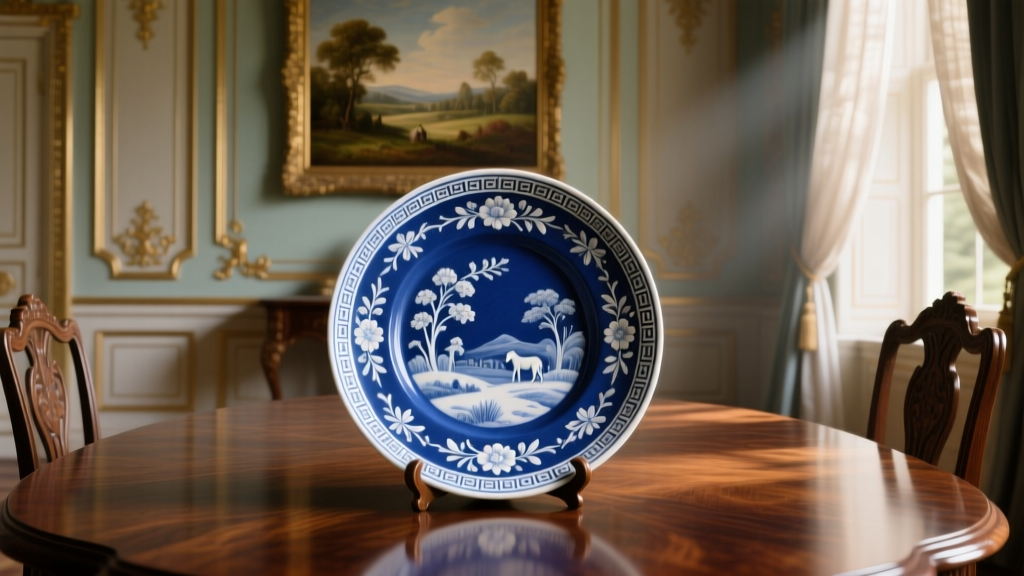
Wedgwood Pottery Jasperware Blue Classical Design Underplate (6½ Inches): History, Identification, and Care

Marx 'Ice Truck' Toy: Authentic 1940s Red, White & Black Wooden-Wheeled Delivery Vehicle — Identification, Restoration & Historical Context

Decoding the 1133369: A Technical and Historical Analysis of the 1952 Dunbar Model 1133369 Walnut Sideboard
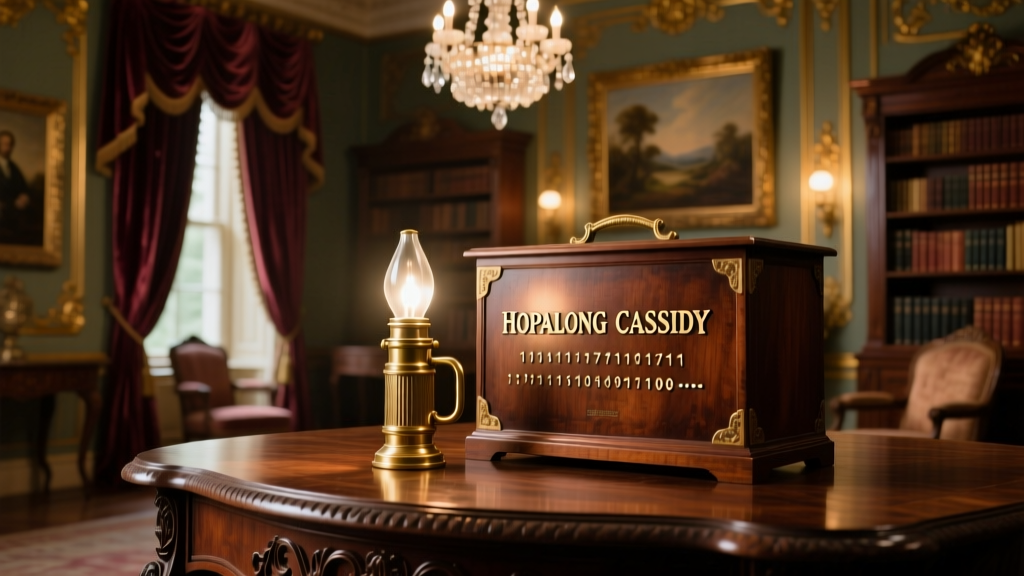
Hopalong Cassidy Flashlight: Decoding the Morse Code on the Back of a Vintage Toy Icon

Jockey Pin Jewelry: Diamond-Set Silver Enamel Brooches of the Edwardian and Early Art Deco Eras
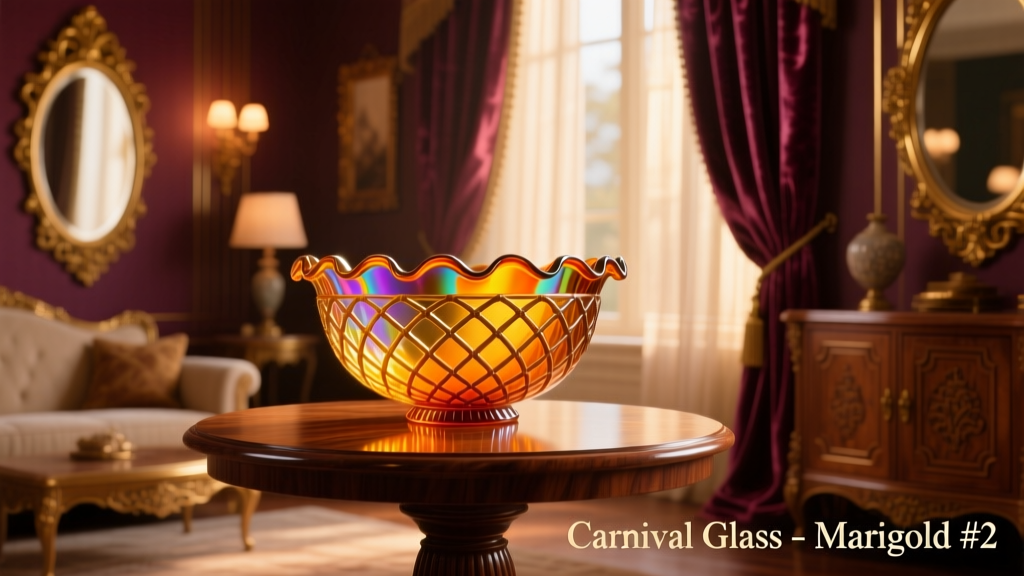
Carnival Glass Grape Cable Bowl with Ruffled Edge and Basketweave Back: Marigold, 11-Inch Diameter — Identification, History, and Restoration Guidance
Elfinware Powder Box: Flowers on Cover, Green Glaze, 3 × 5 Inches — Identification, History, and Restoration Guidance

Gustav Stickley No. 349 Chair Set: Authenticity, Restoration, and Historical Significance of the Oak Upholstered Armchair
Azalea Relish Oval 8¼-Inch Tray: History, Identification, and Restoration Best Practices