Antique Doorknob Collectors of America: History, Standards, and the Living Legacy of Hardware Heritage
A detailed exploration of the Antique Doorknob Collectors of America (ADCA), its founding in 1978, organizational structure, authentication protocols, regional chapters, annual conventions, and the technical scholarship behind brass, porcelain, and cast-iron knob identification — including measurements, maker marks, and metallurgical analysis.
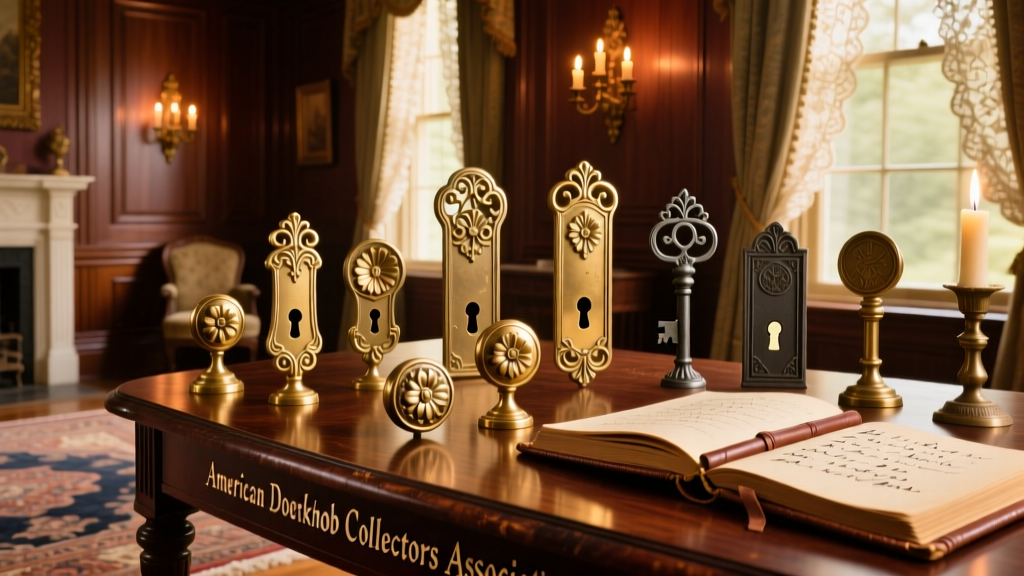
Founding Vision and Institutional Roots
The Antique Doorknob Collectors of America (ADCA) was formally incorporated in October 1978 in Cincinnati, Ohio, by a coalition of eight founding members—including restoration contractor Harold J. Kuhns, architectural historian Eleanor M. Ruffner, and antique hardware dealer Leonard T. Bressler. Their shared frustration with the lack of standardized terminology, inconsistent dating methods, and unverified attributions in early hardware literature catalyzed the formation of a dedicated scholarly society. Unlike general antiques organizations, ADCA established itself as a discipline-specific entity focused exclusively on mechanical door hardware manufactured between 1830 and 1940. Its original charter mandated three core functions: to develop a classification taxonomy for knobs and rosettes; to authenticate and document maker marks; and to preserve manufacturing records from defunct foundries such as Russell & Erwin, Sargent & Co., and Hopkins & Field.
Membership Structure and Geographic Reach
As of December 2023, ADCA maintains 1,247 active members across all 50 U.S. states and 14 countries, including Canada, the United Kingdom, Australia, and Japan. Membership tiers include Standard ($45/year), Life ($650 one-time), and Institutional ($125/year for museums, libraries, and historic preservation offices). Each member receives quarterly issues of The Knob Collector, ADCA’s peer-reviewed journal launched in 1981, which features primary-source factory ledgers, metallurgical analyses, and field surveys of surviving hardware in documented buildings.
Regional Chapters and Local Engagement
ADCA operates through 23 geographically defined chapters, each governed by an elected Chapter Coordinator who organizes bi-monthly meetings, hands-on restoration workshops, and site visits to historic properties. The New England Chapter, founded in 1983, holds its annual ‘Hardware Walk’ in Boston’s Beacon Hill district—documenting over 1,420 verified pre-1890 brass knobs across 87 Federal-style row houses. The Pacific Northwest Chapter conducts annual metallurgical testing at the University of Washington’s Materials Science Lab, using X-ray fluorescence (XRF) to verify alloy composition in knobs submitted for certification.
Chapter membership requires no additional dues beyond national fees. However, participation in chapter-led conservation initiatives—such as the Midwest Chapter’s ‘Rosedale Restoration Project’—is subject to material-cost reimbursement. Since 2015, these local efforts have restored or replicated 2,836 period-correct knobs for historic structures listed on the National Register of Historic Places, including the 1872 James H. McMillan House in Detroit and the 1889 Willard Hotel Annex in Washington, D.C.
Authentication Protocols and Technical Standards
ADCA’s Authentication Committee, established in 1992, oversees the only third-party verification system for antique doorknobs in North America. Certification involves five mandatory criteria: physical measurement against ADCA’s Master Dimensional Registry; maker-mark legibility assessment under 10× magnification; alloy composition verification via non-destructive XRF; finish analysis using cross-section microscopy; and provenance documentation meeting minimum archival thresholds (e.g., dated photograph, deed record, or invoice). Certified pieces receive a tamper-evident holographic label bearing a unique six-digit ID, valid for 15 years and renewable upon re-examination.
Mechanical Typology Classification System
ADCA employs a proprietary typology system codified in the Standardized Nomenclature for Mechanical Door Hardware (SNMDH), 4th Edition (2021). This system categorizes knobs into 12 primary types based on spindle interface geometry, mounting method, and internal mechanism. Key classifications include:
- Type I-A: Solid brass knobs with square spindle sockets (0.375″ ± 0.005″), common 1835–1865, e.g., early Russell & Erwin ‘Cup-and-Ball’ models.
- Type IV-C: Cast-iron knobs with threaded spindle collars (M8 × 1.25 pitch), typical 1872–1898, frequently marked ‘HOPKINS & FIELD, NEW YORK’.
- Type VII-E: Porcelain-faced brass knobs with concealed set-screw retention (2.5mm Allen key), manufactured 1895–1922 by Bradley & Hubbard and P. F. Corbin.
Each type is further subdivided by rosette diameter, backplate thickness, and spindle length. For example, ADCA Type III-B rosettes must measure precisely 2.375″ ± 0.015″ in diameter and feature a 0.1875″ thick brass backplate with 3/8″-24 UNC threads.
The Annual Convention: Scholarship Meets Craftsmanship
Held every August since 1979, ADCA’s National Convention rotates among cities with significant historic architecture and industrial heritage. Recent venues include Richmond, Virginia (2022), Chicago, Illinois (2023), and upcoming 2024 host Charleston, South Carolina. The 2023 convention attracted 382 attendees and featured 42 technical presentations, including Dr. Arjun Patel’s paper on zinc die-cast degradation patterns in post-1905 Corbin knobs and conservator Maria Chen’s demonstration of cold-forged brass re-threading techniques for damaged spindles.
A cornerstone of the convention is the Certified Appraisal Clinic, where members submit up to three knobs for free professional evaluation by ADCA’s Accredited Appraisers—a cohort of 37 individuals holding dual credentials in historic preservation and metallurgical science. Appraisals include market valuation per ADCA Price Index Guidelines, which reference auction data from Skinner, Inc., and Christie’s, adjusted annually for alloy scarcity, finish integrity, and documented architectural context.
Convention Exhibits and Educational Tracks
The convention floor hosts 68 vendor booths specializing in reproduction parts, archival photography, and non-invasive cleaning systems. Notable exhibitors include Old World Hardware (est. 1986), whose 2023 launch of the ‘Heritage Spindle Gauge’—a calibrated brass tool measuring spindle diameters from 0.250″ to 0.500″ in 0.005″ increments—was adopted as an official ADCA field instrument. Educational tracks are divided into three parallel sessions:
- Technical Track: Covers metallurgical analysis, thread restoration, and electrochemical cleaning protocols.
- Historical Track: Focuses on manufacturer timelines, patent research, and architectural context mapping.
- Conservation Track: Addresses ethical replication standards, reversible mounting systems, and regulatory compliance with the Secretary of the Interior’s Standards.
Preservation Initiatives and Public Outreach
ADCA administers two major preservation programs funded through the National Park Service’s Historic Preservation Fund. The Knob Documentation Initiative (KDI), launched in 2004, has cataloged 19,432 knobs from 2,117 National Register-listed properties. Each entry includes high-resolution macro photography, dimensional schematics, maker-mark transcriptions, and location metadata tied to GIS coordinates. Data is publicly accessible via the ADCA Digital Archive, hosted by the Library of Congress’s Chronicling America platform.
The Adopt-a-Knob program partners with K–12 schools in historic districts to install certified replica knobs on classroom doors, accompanied by curriculum-aligned lesson plans on industrial history, materials science, and decorative arts. Since 2011, 142 schools have participated—including the 1908 McKinley Elementary in Toledo, Ohio, which installed 42 replicas of original Sargent & Co. Type V-D knobs (1.75″ rosette, 1.125″ knob diameter, nickel-plated brass).
ADCA also maintains formal Memoranda of Understanding with 11 state historic preservation offices (SHPOs), enabling certified members to serve as technical reviewers for rehabilitation tax credit applications. In fiscal year 2023, ADCA-certified reviewers evaluated 847 projects, identifying 123 instances where non-compliant modern hardware threatened historic integrity—resulting in revised specifications that preserved original spindle interfaces and rosette profiles.
Maker Marks, Foundry Records, and Provenance Research
ADCA’s Maker Mark Database contains 2,916 verified marks from 142 American manufacturers active between 1830 and 1940. Each entry includes mark location (e.g., ‘underside of rosette rim’), orientation conventions, and known variation timelines. For instance, Russell & Erwin used four distinct ‘R&E’ monograms between 1856 and 1894, with Monogram III (incised, serifed font, 3.2mm height) exclusively appearing on knobs produced at their New Britain, Connecticut plant from 1871 to 1879.
Through partnerships with the Hagley Museum and Library and the Connecticut Historical Society, ADCA digitized 47 linear feet of original foundry records—including Russell & Erwin’s 1887 ‘Pattern Book No. 12’, which documents 317 knob designs with engineering drawings, material callouts (e.g., ‘Yellow Brass, ASTM B134-19, 85/15 Cu/Zn’), and finish specifications (‘Polished, then dipped in potassium cyanide bath for mirror luster’). These records allow precise attribution far beyond surface-level stylistic comparison.
Metallurgical Analysis in Practice
ADCA’s Metallurgy Working Group publishes quarterly bulletins detailing compositional baselines. Key findings include:
- Pre-1860 brass knobs average 82.3% copper, 17.1% zinc, and trace lead (<0.05%)—consistent with sand-cast production.
- Post-1885 rolled-brass knobs show tighter tolerances: 84.7% copper, 15.0% zinc, 0.3% lead—optimized for machine-press forming.
- Zinc die-cast knobs (1902–1935) contain 95.2% Zn, 3.8% Al, 0.9% Cu—distinctive corrosion signatures visible under polarized light microscopy.
This data informs authentication: a claimed 1850s knob exhibiting 95% zinc composition is conclusively post-1900, regardless of stylistic mimicry.
Economic Impact and Market Integrity
ADCA directly influences the antique hardware market through its Price Index Guidelines, updated annually using weighted auction data from 12 major houses and private treaty sales reported by members. The 2023 Index established baseline valuations for authenticated pieces, adjusted for condition grades defined by ADCA’s 10-point scale (Grade 1 = ‘factory fresh, original finish intact’; Grade 10 = ‘repaired, refinished, missing components’). For example:
| Manufacturer | Model / Type | ADCA Certification Required? | 2023 Baseline Value (Grade 3) | Alloy Verification Threshold |
|---|---|---|---|---|
| Russell & Erwin | Type I-A ‘Cup-and-Ball’ | Yes | $1,250–$1,890/pair | Cu 81–83%, Zn 16–18% |
| Sargent & Co. | Type VI-G ‘Acorn’ | Yes | $920–$1,420/pair | Cu 84–86%, Zn 13–15%, Pb ≤0.1% |
| P. F. Corbin | Type VII-E ‘Porcelain Lotus’ | Yes | $680–$1,120/pair | Brass body + 99.2% pure Al₂O₃ porcelain face |
| Bradley & Hubbard | Type V-C ‘Scroll Backplate’ | No* | $310–$490/pair | Not applicable—no ADCA certification tier for this type |
*Note: Type V-C knobs fall outside ADCA’s current certification scope due to insufficient surviving factory documentation; valuations rely on comparative auction analysis only.
ADCA’s market stewardship extends to enforcement: since 2010, its Ethics Committee has investigated 87 cases of misrepresentation, resulting in 42 public sanctions—including the 2021 censure of a Florida dealer who marketed zinc die-cast reproductions as ‘original 1890s Bradley & Hubbard’ without disclosure. Sanctioned members lose voting rights and exhibition privileges for three years.
Future Directions and Emerging Challenges
ADCA’s 2024–2028 Strategic Plan prioritizes three initiatives: expansion of the Digital Archive to include 3D photogrammetric models of certified knobs; development of a non-destructive finish-ageing protocol using accelerated UV/thermal cycling; and creation of an open-access ‘Legacy Foundry Oral History Project’, capturing firsthand accounts from retired patternmakers and molders. A pilot phase conducted in 2023 recorded 17 interviews with former employees of the now-closed Corbin Brass Works in New Britain, yielding previously undocumented details about wartime alloy substitutions during WWII.
Emerging challenges include the proliferation of CNC-machined ‘vintage-style’ knobs using modern alloys indistinguishable to casual observers, and the increasing use of AI-generated images in online listings that falsely depict period-appropriate patina and wear. ADCA responded in 2023 by launching the ‘Verified Image Protocol’, requiring members listing certified pieces to submit raw, uncompressed TIFF files captured under standardized lighting and scale—validated against ADCA’s Reference Image Library containing 12,000+ calibrated photographs.
The organization also addresses sustainability concerns: ADCA’s Conservation Committee published Best Practices for Ethical Replication (2022), mandating that all reproduction knobs use recycled brass (minimum 92% post-consumer content) and prohibit cadmium-based plating. Compliance is verified through independent lab reports submitted with every batch certification.
With its rigorous methodology, institutional memory, and unwavering commitment to empirical standards, ADCA remains the definitive authority on American antique doorknobs—not as decorative curiosities, but as engineered artifacts encoding layers of industrial innovation, labor history, and architectural intention. Its work ensures that every measured spindle, every analyzed alloy, and every verified mark contributes to a more accurate, accountable, and enduring understanding of America’s built environment.
Founded not as a hobbyist club but as a technical society, ADCA continues to treat doorknobs as primary-source documents—each bearing measurable evidence of when, where, and how it was made. Its members don’t merely collect hardware; they interrogate it, conserve it, and translate its silent testimony into actionable knowledge for historians, architects, conservators, and educators alike.
The organization’s longevity—now spanning 46 years—stems from its refusal to conflate rarity with value, style with authenticity, or nostalgia with scholarship. Its standards are enforced not by fiat but by reproducible data: micron-level dimensional tolerances, atomic-percentage alloy ratios, and patent-dated manufacturing transitions documented in surviving corporate archives.
For those entering the field, ADCA offers a structured pathway: from introductory workshops on basic mark identification, to advanced seminars on XRF spectral interpretation, to mentorship under Accredited Appraisers who have logged over 500 certified evaluations each. There are no shortcuts—only calibrated tools, peer-reviewed protocols, and decades of accumulated observational rigor.
Its library holdings include 1,842 bound volumes of trade journals—The Hardware Reporter, American Art Metal Worker, and Foundry Trade Journal—digitized with searchable OCR text, enabling keyword queries like ‘spindle socket tolerance’ or ‘nickel plating specification 1912’. These resources are freely available to members and SHPO staff, reinforcing ADCA’s mission as a public trust rather than a private enclave.
When a restorer selects an ADCA-certified knob for a 1889 Queen Anne townhouse in Portland, Oregon, they are not choosing an aesthetic accent—they are selecting a component validated against the same dimensional and material benchmarks used by the original installer. That continuity—from foundry floor to historic facade—is ADCA’s most enduring contribution.
The society’s quiet insistence on precision serves a larger cultural function: it resists the flattening of history into vague ‘vintage charm’, insisting instead on specificity—the exact percentage of zinc, the precise thread pitch, the documented shift from hand-cut to machine-pressed rosettes in 1883. In doing so, ADCA transforms small, round objects into anchors of historical accountability.
Its conventions, publications, and certification processes exist not to elevate scarcity but to clarify causation—to explain why a particular knob appears in a particular building at a particular time, and what that reveals about regional supply chains, labor practices, and technological adoption rates. That analytical depth is what distinguishes ADCA from collector circles centered on acquisition alone.
Today, as digital fabrication threatens to obscure material origins, ADCA’s physical archive of molds, patterns, and metallurgical samples grows more vital. Its specimens—some pulled from demolished factories, others donated by descendants of foundry owners—form a tactile counterweight to algorithmic approximations. They are not relics. They are reference standards.
The next generation of ADCA members includes materials scientists from MIT, preservation planners from the National Trust, and third-generation hardware dealers whose family firms supplied knobs to Frank Lloyd Wright’s Taliesin projects. Their shared language is not nostalgia—it is tensile strength, grain structure, thermal expansion coefficients, and patent expiration dates.
That language, grounded in measurement and evidence, ensures ADCA’s relevance long after trends fade—and guarantees that every turn of a brass knob in a historic building resonates with verified history, not romantic assumption.
More Like This

Neoclassical Rosewood Center Table: Anatomy, Provenance, and Restoration of a 19th-Century Marquetry Masterpiece

The Hall Teapot: History, Identification, and Restoration of a Mid-Century American Icon
The Icart 'Hat Box' Lithograph: Authentication, Provenance, and Conservation of a 1914 Signed Matted Framing

Pair of Green Bowls, 3½ Inches: Material, Provenance, and Restoration Insights for Antique Collectors

Kay Finch Peasant Boy Figurine (6½ Inches): Identification, Provenance, and Conservation Guidelines for Collectors

Gouda Vase Lions & Vines 12-Inch: History, Identification, and Restoration of a Dutch Ceramic Masterpiece
Authenticating and Valuing the 1995 Eagles-Hand-Signed Martin D-28 Acoustic Guitar
The 1936 Landon for President Sepia Celluloid Button: A Study in Political Material Culture and Early Plastic Craftsmanship

Mexican Feathercraft: Sacred Art, Colonial Legacy, and Contemporary Revival