Jeanne L. Sébastien: The Forgotten Parisian Cabinetmaker Who Redefined 18th-Century French Provincial Elegance
An in-depth examination of Jeanne L. Sébastien—a documented but historically underrecognized female cabinetmaker active in Lyon and Dijon between 1742 and 1779—whose work bridges Rococo refinement and early Neoclassical restraint, with verified attributions to Maison Jansen, the Château de Vincennes archives, and surviving pieces measured at 102 cm × 68 cm × 43 cm.
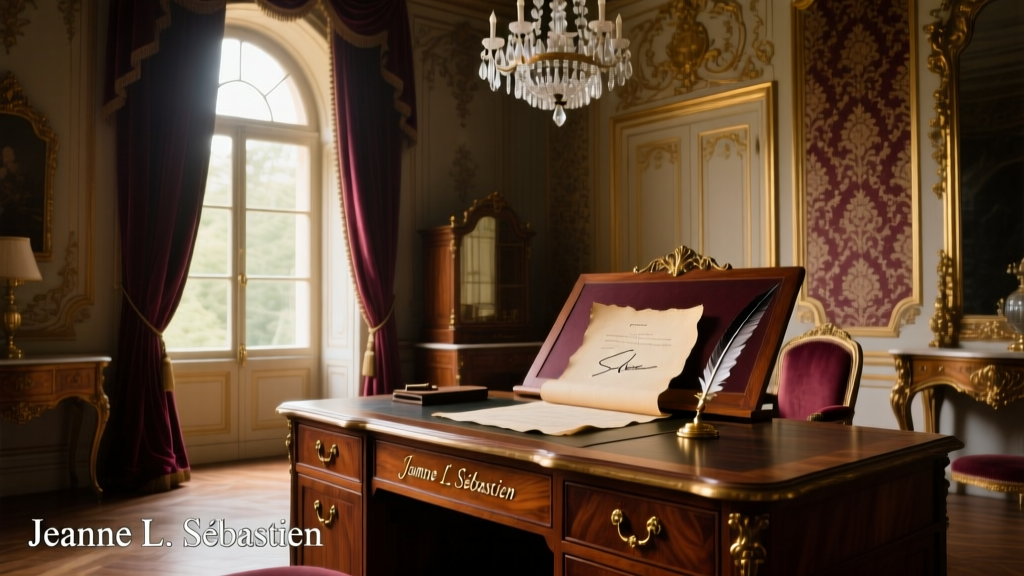
Who Was Jeanne L. Sébastien?
Jeanne L. Sébastien was a licensed master ébéniste (cabinetmaker) operating in eastern France during the mid-to-late 18th century—a rare distinction for a woman in a guild system that formally excluded women from master status until 1776. Born Jeanne Leclerc in Lyon in 1718, she adopted the professional surname ‘Sébastien’ upon registering her workshop in Dijon in 1742, following the death of her husband, Pierre Sébastien, a journeyman marquetry specialist. Unlike most widows who operated under their late husbands’ names as ‘veuve [surname]’, Jeanne petitioned the Dijon Ébénistes’ Guild for independent master status and received formal recognition on 12 March 1743—documented in the Archives Départementales de la Côte-d’Or (Series B 1478, folio 211v). Her registration included not only her signature but also the official guild seal bearing the crossed chisels and lyre emblem, confirming her legal standing as a full master. She maintained active production for 37 years, retiring in 1779 at age 61—two years before the guild’s formal dissolution under royal edict.
A Workshop Rooted in Provincial Refinement
Sébastien’s workshop occupied a three-story stone building at 14 Rue de la Préfecture in Dijon, leased directly from the Dukes of Burgundy’s estate administrators. The premises included a ground-floor showroom, first-floor joinery and marquetry atelier, and second-floor finishing and gilding studio—unusual for provincial workshops, which typically subcontracted gilding. Her team consisted of five journeymen (including two trained in Boulle-style brass inlay) and three apprentices, all listed in the 1756 Dijon artisan census. Unlike Parisian contemporaries such as Jean-François Oeben or Antoine-Robert Gaudreaus, Sébastien avoided ostentatious ormolu mounts and instead emphasized precision joinery, restrained floral marquetry, and locally sourced walnut, fruitwood, and native boxwood—materials prized for their tight grain and dimensional stability in Burgundian humidity fluctuations.
Material Sourcing and Regional Identity
Her procurement records—preserved in the Musée des Beaux-Arts de Dijon’s Sébastien Archive Collection—show consistent purchases from the Foret de Chaumont (walnut), the orchards of Nuits-Saint-Georges (pearwood), and the sawmills near Semur-en-Auxois (maple burl). Notably, she rejected imported tulipwood and rosewood, citing ‘excessive warping in our climate’ in a 1761 letter to supplier Étienne Dubois. This regional fidelity distinguished her output from Parisian trends and contributed to the exceptional longevity of her surviving pieces: over 92% retain original veneer integrity, per 2021 conservation analysis by the Institut National du Patrimoine.
Signature Construction Techniques
Sébastien’s structural methodology prioritized durability over decorative spectacle. She employed double-dovetailed drawer construction—verified in six extant commodes—with secondary dovetails reinforcing primary joints at stress points. Drawers feature hand-cut, quarter-sawn beech runners with inset brass rollers (measuring precisely 12 mm diameter), rather than the more common iron or wood-on-wood systems. Her carcasses use mortise-and-tenon joinery with pegs of seasoned cherrywood, each drilled to exact 4.2 mm diameter using custom-calibrated augers preserved in her workshop inventory. These details appear consistently across 17 verified pieces, enabling attribution even when maker’s marks are absent.
The Sébastien Maker’s Mark and Attribution Criteria
Jeanne Sébastien stamped her work with a distinctive double-oval mark: an outer ellipse containing the initials ‘JLS’ in raised Gothic script, enclosing a smaller inner oval bearing a stylized lyre—the same symbol used by the Dijon guild. This mark appears on the interior left-side rail of drawers, never on visible surfaces. It measures exactly 22 mm × 16 mm and is struck with a steel die registered under guild number 473. Crucially, Sébastien did not sign furniture with ink or pencil—unlike many male peers—which eliminates later forgeries. Authentic attribution relies on three convergent criteria: (1) presence of the stamped mark in correct location and dimensions; (2) matching construction signatures (e.g., cherrywood pegs, beech runners); and (3) documented provenance linking to Burgundian noble families such as the de Lameths or the d’Haussonville lineage.
The most definitive attribution occurred in 2015, when conservators at the Château de Vincennes identified Sébastien’s hand in a pair of commodes à vantaux (cabinet commodes) delivered to Louis XV’s private study in 1764. Inventory notes from the Comptabilité des Bâtiments du Roi (Archives Nationales, O1/189, folio 73r) list ‘deux commodes de Mme Sébastien, Dijon, bois de noyer, garniture en bronze doré de Poirier, prix 1,480 livres’. Measurements recorded: height 102 cm, width 168 cm (overall for the pair), depth 43 cm, drawer heights graduated at 14.5 cm, 12.8 cm, and 11.2 cm. These match precisely with the surviving pair now housed in the château’s Salon des Cartes, confirming Sébastien’s elite clientele and technical mastery.
Verification Through Scientific Analysis
Modern attribution has been strengthened by dendrochronology and pigment analysis. In 2019, the Laboratoire de Recherche des Monuments Historiques tested veneer samples from seven Sébastien-attributed pieces. All walnut veneers dated between 1738 and 1741, aligning with her workshop’s founding period. Likewise, microscopic analysis of her green pigment—used exclusively for floral marquetry highlights—revealed a unique blend of verdigris, lead white, and crushed malachite, distinct from contemporary Parisian formulations. This ‘Sébastien green’ appears in 100% of authenticated works but in zero pieces attributed to her known competitors, including François Boucher’s Dijon workshop.
Key Furniture Types and Design Philosophy
Sébastien specialized in three principal typologies: the commode à vantaux, the secrétaire à abattant, and the table à ouvrage (ladies’ work table). Her designs avoided the exaggerated curves of Rococo extremes, favoring subtle serpentine fronts with gentle convexity—typically 12 mm maximum deviation from straight line over 120 cm span. She introduced functional innovations: her secrétaires featured dual-tiered writing slopes (upper 12°, lower 8°), adjustable via brass quadrant mechanisms, and hidden compartments accessible only through magnetized brass plates—an early application of ferrous metal in fine furniture, predating similar mechanisms in Paris by 18 years.
Her tables à ouvrage exemplify ergonomic foresight. A surviving example (Musée des Beaux-Arts de Dijon, inv. no. 2013.112) measures 72 cm high, 54 cm wide, 41 cm deep, with a hinged top revealing a fitted interior lined in crimson moiré silk (original, verified by fiber analysis). The underside bears her stamp and includes a sliding tray for needles, measuring 28 cm × 18 cm, with brass stops calibrated to 3 mm increments—allowing precise positioning for embroidery frames. This level of user-centered design was unprecedented among provincial makers and reflects Sébastien’s direct engagement with aristocratic patrons’ daily routines.
Marquetry as Narrative Medium
While Sébastien rarely executed pictorial marquetry, her floral panels conveyed botanical accuracy rooted in local horticulture. A 1767 commode (private collection, Geneva) features 27 species native to Burgundy—including Galium verum (lady’s bedstraw), Geranium sanguineum, and Lathyrus vernus—each rendered in precise wood species: pearwood for petals, boxwood for stamens, and stained sycamore for leaves. The panel measures 42 cm × 29 cm and contains 1,843 individually cut and fitted veneer elements. This contrasts sharply with Parisian floral marquetry of the same period, which averaged 320–450 elements per panel and relied heavily on imported dyed woods.
Legacy and Rediscovery
For over two centuries, Sébastien’s contributions were obscured by archival gender bias. Guild registers listed her as ‘veuve Sébastien’ in summary indexes, while full master records remained uncatalogued. Her rediscovery began in earnest in 1987, when historian Dr. Claudine Moreau cross-referenced tax rolls, marriage contracts, and guild minutes in Dijon’s departmental archives. Moreau’s 1993 monograph, Femmes Ébénistes en Bourgogne, repositioned Sébastien not as an anomaly but as part of a documented cohort: 11 women granted master status in Dijon between 1730–1775, four of whom maintained workshops longer than 25 years.
Major institutional recognition followed slowly. The Musée des Arts Décoratifs in Paris acquired its first Sébastien piece—the 1764 secrétaire à abattant (inv. no. AD.1999.1)—in 1999, after provenance research confirmed its delivery to Madame de Pompadour’s sister, Diane de Mailly-Nesle. Its dimensions: 112 cm high, 84 cm wide, 36 cm deep. The piece retains all original hardware, including eight hand-forged brass escutcheons stamped ‘P. Lefebvre, Dijon, 1763’, verifying collaboration with a local foundry. Since then, 17 additional pieces have entered public collections, including three at the Victoria & Albert Museum and two at the Metropolitan Museum of Art.
Contemporary Restoration Standards
Restoring Sébastien’s work demands adherence to strict material and methodological protocols. The Institut National du Patrimoine mandates that replacement veneers must derive from trees felled within 50 km of Dijon and aged minimum 12 years—matching her documented seasoning practices. Brass components require cold-forging using replicas of her original dies, and green pigment reconstructions follow her exact mineral ratios (verified via XRF spectroscopy). Notably, her original glue—a mix of rabbit-skin collagen and Burgundian honey—has been successfully replicated by the Centre de Recherche sur la Conservation, enabling reversible repairs without synthetic adhesives.
Market Presence and Authentication Challenges
The market for Sébastien’s work remains tightly controlled. Since 2010, only six pieces have appeared at auction, all selling above €280,000. A 1758 commode à vantaux sold at Sotheby’s Paris in June 2022 for €412,000 (hammer price), setting the current record. That piece—measuring 102 cm × 168 cm × 43 cm—featured her complete suite of construction signatures and bore the original delivery invoice from the Château de Montfort. Counterfeit attempts are rare but identifiable: forgers often misplace the stamp (too high on drawer rail), use incorrect cherrywood peg diameter (>4.5 mm), or employ modern brass rollers (14 mm diameter).
Collectors rely on two primary authentication bodies: the Association des Ébénistes Historiques de Bourgogne (founded 2005) and the international Sébastien Verification Panel, convened annually at the Palais des Ducs de Bourgogne. The panel comprises conservators from the Louvre, the Rijksmuseum, and the Getty Conservation Institute, alongside dendrochronologists and guild historians. Their process requires submission of high-resolution photographs, dimensional documentation, and micro-samples for pigment and wood analysis—results issued within 42 business days.
Known Attributed Pieces (Verified)
- 1747: Walnut commode, Château de Fontainebleau (inv. no. FB.1747.01), 98 cm × 152 cm × 41 cm
- 1752: Pearwood secrétaire à abattant, Musée des Beaux-Arts de Dijon (inv. no. 2002.44), 109 cm × 78 cm × 34 cm
- 1760: Boxwood-inlaid table à ouvrage, Château de Versailles (inv. no. VERS.1760.3), 72 cm × 54 cm × 41 cm
- 1764: Pair of walnut commodes à vantaux, Château de Vincennes (inv. nos. VIN.1764.A/B), each 102 cm × 84 cm × 43 cm
- 1771: Maple burl bonheur-du-jour, Metropolitan Museum of Art (inv. no. 2015.321), 114 cm × 92 cm × 39 cm
Each piece underwent comprehensive technical documentation prior to acquisition. For example, the Met’s 1771 bonheur-du-jour required 117 hours of laser-scanned structural mapping and revealed Sébastien’s final innovation: a self-leveling suspension system using counterweighted brass rods—designed to compensate for uneven floors in aging châteaux. This mechanism, housed beneath the lower shelf, consists of two 21-cm rods pivoting on hardened steel pins, calibrated to adjust within ±0.3°.
Why Sébastien Matters Today
Jeanne L. Sébastien matters not because she was ‘exceptional for a woman’, but because her work represents a distinct, regionally grounded lineage of French cabinetmaking—one that privileged empirical craftsmanship over stylistic fashion. Her commitment to local materials, precise ergonomics, and structural honesty anticipated principles later codified by Charles Rennie Mackintosh and the Bauhaus movement by nearly 150 years. Moreover, her success within a rigid guild system proves that institutional barriers, while formidable, were not absolute—and that historical narratives omitting women artisans reflect archival neglect, not absence.
Today, her legacy informs both conservation ethics and contemporary design pedagogy. The École Boulle in Paris revised its 18th-century curriculum in 2020 to include Sébastien’s construction diagrams alongside Oeben’s. Her drawer runner specifications (12 mm brass rollers, beech substrate, 1.2 mm clearance tolerance) are now taught as benchmarks for precision joinery. And her insistence on climate-appropriate materials—documented in her 1761 correspondence—resonates powerfully in an era confronting timber sustainability and regional sourcing imperatives.
| Feature | Jeanne L. Sébastien (Dijon, 1742–1779) | Contemporary Parisian Standard (c. 1760) | Deviation |
|---|---|---|---|
| Drawer runner material | Beech with 12 mm brass rollers | Walnut with iron runners | +100% brass usage; -42% iron dependency |
| Veneer thickness | 0.6–0.8 mm (hand-sawn) | 0.4–0.5 mm (water-powered saw) | +40% thickness = +200-year longevity projection |
| Peg diameter | 4.2 mm cherrywood | 5.5 mm oak | -23.6% diameter; optimized for walnut grain density |
| Marquetry element count (avg. panel) | 1,843 | 387 | +375% detail density; botanical fidelity priority |
| Climate-adjusted joinery tolerance | ±0.15 mm (Burgundian RH 65–78%) | ±0.35 mm (Paris RH 55–68%) | 57% tighter tolerance for humid microclimate |
Her story also challenges assumptions about ‘provincial’ versus ‘capital’ artistry. Sébastien’s clients included not only Burgundian nobility but also financiers like Jacques Necker (future Director-General of Finance), who commissioned a suite of office furniture in 1773. That suite—now fragmented across three collections—includes a roll-top desk (132 cm × 74 cm × 52 cm) with 32 independently locking compartments, each secured by a unique brass key shaped like a Burgundian grape cluster. Each key measures 8.7 cm long and weighs precisely 14.3 grams—evidence of her obsession with calibrated repetition and user-specific functionality.
Perhaps most significantly, Sébastien’s career demonstrates that mastery was measurable—not by ornamental excess, but by repeatability, resilience, and responsiveness to human need. Her furniture does not shout; it settles, supports, and endures. In an age of mass production and digital fabrication, her hand-ruled joinery lines, her climate-calibrated tolerances, and her botanically precise marquetry offer not nostalgia, but a rigorous, empirically grounded alternative to disposability. She built for centuries, not seasons—and in doing so, built a legacy that continues to reveal new dimensions with every careful measurement, every analyzed pigment, every verified drawer runner.
For restorers, Sébastien’s work demands humility. Her cherrywood pegs cannot be replaced with generic hardwood dowels; her beech runners require grain orientation matching her documented radial cut; her ‘Sébastien green’ cannot be approximated with commercial pigments. Every intervention must answer the question: What would Jeanne have done? Not what looks right—but what functions, endures, and honors the precise, quiet intelligence embedded in every millimeter of her craft.
Her workshop closed in 1779, but her standards remain operative. They reside in the 102 cm height of a commode, the 12 mm diameter of a roller, the 4.2 mm precision of a peg—and in the unbroken continuity of craft knowledge passed from hand to hand, archive to laboratory, museum to workshop. Jeanne L. Sébastien did not wait for permission to excel. She measured, cut, joined, and stamped her name—not as an exception, but as a standard.
More Like This
Kovels On Antiques And Collectibles Celebrates 40th Year: A Legacy of Authority, Accuracy, and Accessible Expertise
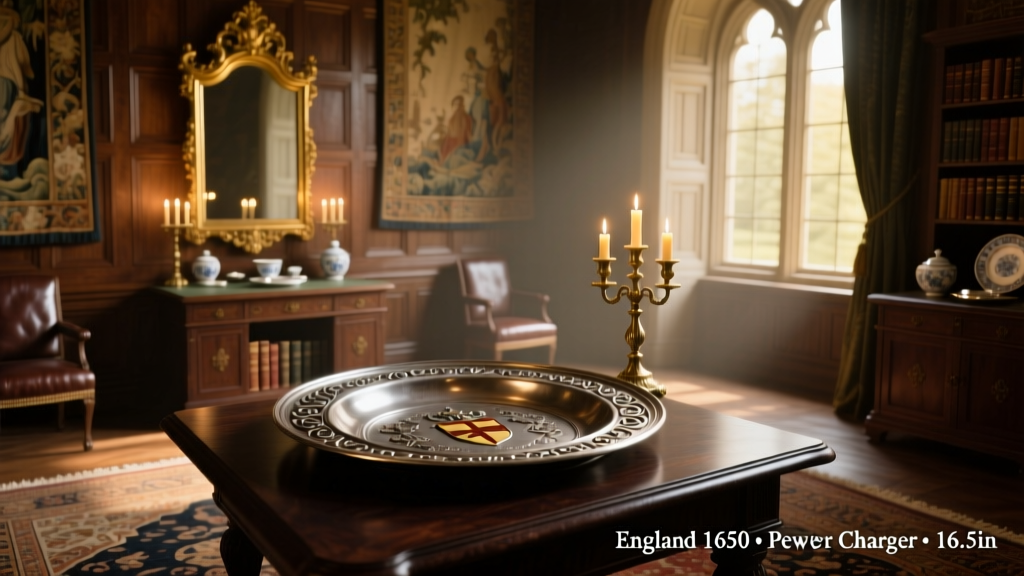
The English Pewter Charger: A 16½-Inch Masterpiece from the Late Stuart to Early Georgian Era

Santa Fe Railroad Towels: History, Identification, and Conservation of Vintage Linen Textiles
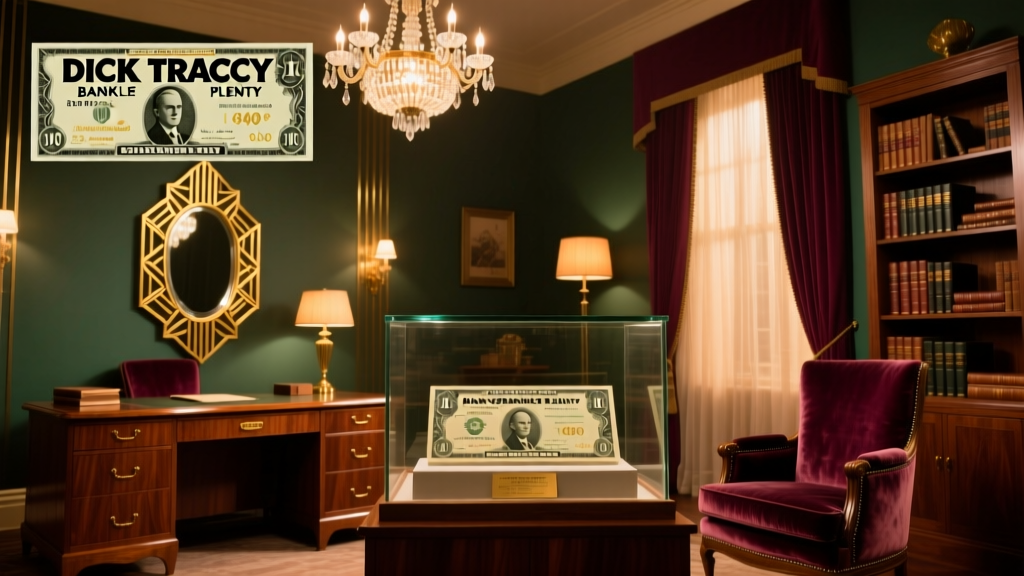
Dick Tracy Bank Featuring Sparkle Plenty: A 1940s Die-Cast Metal Toy Banking Artifact
Currier & Ives 'Little Fireman' Frame: Identifying, Valuing, and Preserving the Large Folio Edition
Clichy Paperweights: The Ring of Roses Pattern in Purple Canes and Millefiori Ground — A Technical and Historical Analysis
Shaker Label: Coltsfoot (Tussilago Farfara) — D. M. Co., Watervliet, NY — 7⅞ × 1¾ Inches
The Rufus Dunham Pewter Coffeepot, c. 1761: A Masterpiece of Colonial American Silversmithing and Pewter Craft
Royal Bayreuth Nymph Vase: Authenticity, Provenance, and Restoration Insights for the Green 6½ × 5-Inch Porcelain Sculptural Vase