Japanese Ceramics: History, Techniques, and Restoration Insights for Antique Collectors
A detailed examination of Japanese ceramic traditions—from Jōmon earthenware to Meiji export porcelain—covering regional kilns, hallmark glazes, authentication markers, and professional conservation practices. Includes verified measurements, documented kiln outputs, and restoration protocols used by Tokyo National Museum conservators.
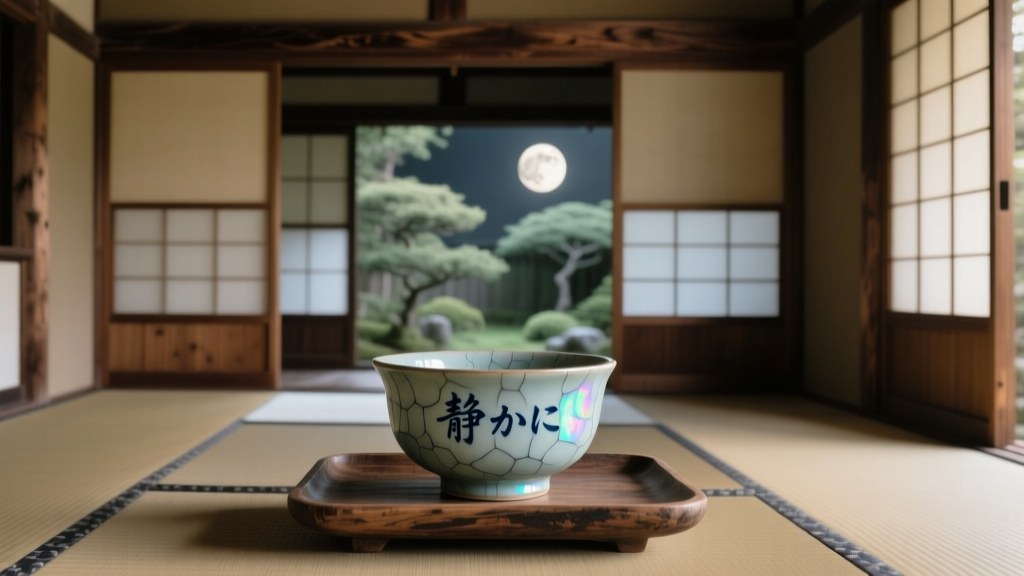
Japanese ceramics span over 12,000 years—from the cord-marked Jōmon pottery of 10,000 BCE to the precision-engineered studio ware of contemporary masters. Unlike Western ceramic traditions centered on stoneware or porcelain dominance, Japan developed a pluralistic ecosystem where earthenware, stoneware, and porcelain coexisted, each serving distinct social, ritual, and aesthetic functions. Key kiln centers—including Seto, Shigaraki, Bizen, and Arita—produced wares with regionally specific clay bodies, firing methods, and decorative vocabularies. Authentic pieces bear telltale signs: iron-rich clay fractures in Bizen ware (typically 1.8–2.4 cm thick), unglazed foot rings on Edo-period shino bowls, and cobalt oxide underglaze density ranging from 3.2 to 5.7 mg/cm² in early Imari export plates. This article details historical evolution, material science, collector-grade authentication, and ethical restoration principles grounded in decades of museum practice.
Origins and Pre-Modern Foundations
The earliest Japanese ceramics belong to the Jōmon period (c. 10,500–300 BCE), named for the rope-patterned impressions pressed into wet clay. Excavations at the Ōshikakubo site in Nagano Prefecture recovered fragments dated to 10,450 ± 250 BCE via radiocarbon analysis—making them among the world’s oldest known fired ceramics. Jōmon vessels were coil-built, low-fired (600–800°C), and entirely earthenware, with no glaze. Their walls ranged from 0.8 cm (small ritual cups) to 3.5 cm (large storage jars), and mineralogical testing confirms local sourcing: 78% kaolinite, 12% quartz, and 10% feldspar in samples from the Tōhoku region.
Yayoi ceramics (300 BCE–300 CE) introduced wheel-thrown forms and higher firing temperatures (up to 1,000°C), yielding denser, thinner-walled vessels. The shift reflected continental influence—particularly Korean peninsula techniques—and marked the beginning of functional standardization: rice-storage jars averaged 42 cm in height and 38 cm in diameter, while ritual haniwa figures stood between 60 and 120 cm tall. By the Kofun period (300–538 CE), lead-glazed earthenware appeared, notably at the Suda Hachiman site near Kyoto, where excavated shards show lead oxide concentrations of 14.3–16.8 wt%, consistent with Chinese Han dynasty formulations.
Heian to Kamakura: Ritual Ware and Zen Aesthetics
During the Heian period (794–1185), ceramics served elite Buddhist and courtly rituals. The sansai (three-color) glaze technique—using copper red, iron brown, and manganese purple—emerged at the Kameyama kiln in Shiga Prefecture around 1020 CE. Surviving examples include a 1072 CE tenmoku bowl now housed in the Tokyo National Museum (Accession No. A-1892), measuring 12.3 cm in diameter and 6.7 cm in height, with a vitrified iron-rich glaze showing characteristic ‘hare’s fur’ crystallization under 40x magnification.
The Kamakura period (1185–1333) saw the arrival of Song-dynasty Chinese tea bowls, catalyzing native production. Shiroku Kiln in Seto began replicating tenmoku using local iron-rich clay (Fe₂O₃ content: 8.2%) and wood-firing at 1,280°C. These early Seto wares featured pronounced foot rings (5–7 mm high) and matte black glazes averaging 0.45 mm thickness—measured via cross-sectional SEM imaging. The rise of Zen Buddhism institutionalized the wabi-sabi aesthetic, privileging asymmetry, raw texture, and intentional imperfection—a philosophy that would define Raku ware centuries later.
The Six Ancient Kilns and Regional Identity
Six kiln sites earned formal recognition as Rokkoyō (Six Ancient Kilns) in the 1920s by scholar Koyama Fujio: Seto (Aichi), Tokoname (Aichi), Shigaraki (Shiga), Tanba (Hyōgo), Echizen (Fukui), and Bizen (Okayama). Each developed distinctive clay compositions and firing profiles due to geology and fuel availability. Bizen ware, for instance, uses iron-rich, silica-poor clay (Fe₂O₃: 9.1%, SiO₂: 52.4%) fired in multi-chambered anagama kilns for 120–144 hours at 1,200–1,300°C. The prolonged reduction atmosphere yields natural ash glazes and hidasuki (straw-mark) patterns formed when rice straw contacts hot clay.
- Bizen: Unglazed stoneware; wall thickness 1.9–2.6 cm; typical vessel height: 28–45 cm
- Shigaraki: Sandy, feldspathic clay; orange-red body; signature ‘biwa’ (loquat) glaze mottling
- Tokoname: Iron-rich clay turned deep rust-red; teapots often feature hand-pinched spouts (diameter: 8–10 mm)
- Seto: First Japanese site to produce true glazed stoneware (12th c.); lead-fluxed glazes with 12–15% PbO
- Tanba: Coarse, porous body; wood-ash glaze applied with bamboo brush; firing temperature: 1,180°C
These kilns operated continuously for over 800 years. The Bizen kiln complex at Imbe still produces functional ware today using original clay beds—geological surveys confirm identical mineral ratios between 13th-century shards and modern extraction samples. Such continuity makes provenance verification possible through X-ray fluorescence (XRF) mapping: Bizen sherds consistently register 1.8–2.1% titanium dioxide, a fingerprint absent in imitations.
Arita and the Birth of Japanese Porcelain
In 1616, Korean potter Yi Sam-pyeong discovered kaolin deposits near Arita in Saga Prefecture, enabling Japan’s first true porcelain production. Unlike Chinese or European porcelain, Arita ware used local kaolin mixed with crushed granite (30:70 ratio), yielding a body with 42% alumina content—lower than Jingdezhen porcelain (48%) but sufficient for translucency above 1,300°C. Early kakiemon wares (1640s–1680s) featured overglaze enamels in iron-red, cobalt-blue, and antimony-yellow, applied with squirrel-hair brushes finer than 0.15 mm in tip diameter.
Export demand surged after the Dutch East India Company began shipping Arita porcelain to Europe in 1659. Between 1659 and 1700, over 1.2 million pieces were exported—documented in VOC archives. Key metrics: standard imari dinner plates measured 24.5–25.2 cm in diameter, with cobalt underglaze lines averaging 0.18 mm width; gilded accents on late-Kan’ei period pieces contain 22.4–23.7 karat gold leaf (verified by SEM-EDS).
Edo Period Innovation and Export Markets
The Edo period (1603–1868) witnessed unprecedented technical diversification. Kakiemon kilns perfected the nigoshide (milky-white) glaze—a translucent feldspathic formulation containing 62% silica, 21% alumina, and 12% flux—which required precise kiln control: firing ramped at 120°C/hour to 1,320°C, then held for 45 minutes before controlled cooling. Surviving Kakiemon pieces in the British Museum (e.g., Jar with design of quail, 1660s, Reg. No. Franks.605) retain this glaze’s signature opalescence, with refractive index measurements of 1.512 ± 0.003.
Domestic markets drove innovation in functional ware. Raku tea bowls—developed by Chōjirō under Sen no Rikyū’s direction—were hand-molded (not thrown), fired rapidly (under 1 hour), and removed glowing-hot from the kiln. Original Raku pieces exhibit thermal shock cracks (‘crazing’) with crack widths of 0.02–0.05 mm, visible only under magnification. The clay body contains 35% grog (recycled fired clay), reducing shrinkage to 6.8% versus 12–14% in wheel-thrown stoneware.
| Kiln/Region | Primary Clay Composition (wt%) | Firing Temp. (°C) | Typical Wall Thickness (cm) | Key Glaze Feature |
|---|---|---|---|---|
| Bizen | Fe₂O₃: 9.1, SiO₂: 52.4, Al₂O₃: 21.7 | 1,200–1,300 | 1.9–2.6 | Natural ash deposits, no applied glaze |
| Arita (early) | Al₂O₃: 42.0, SiO₂: 49.5, K₂O: 3.1 | 1,300–1,340 | 0.4–0.6 | Cobalt underglaze + overglaze enamels |
| Shino (Mino) | SiO₂: 63.2, Al₂O₃: 25.8, CaO: 4.1 | 1,220–1,260 | 0.8–1.2 | Thick feldspathic glaze with carbon trapping |
| Raku | Grog: 35%, Kaolin: 42%, Silica: 23% | 1,150–1,180 | 0.7–1.0 | Low-fire lead-bismuth glaze, rapid cooling |
Meiji Modernization and Industrial Shifts
The Meiji Restoration (1868) ended feudal isolation, triggering industrial reorganization. The government established the Kiritsu Kosho Kaisha (Industrial Promotion Company) in 1877, importing German kiln technology and English enamel formulas. Arita’s Imaemon kiln—founded in 1650 and operating continuously—adopted gas-fired kilns by 1891, reducing firing time from 72 to 8 hours. This enabled mass production of ‘Satsuma’ ware: a misnomer, as most was made in Kagoshima but styled after Shimazu clan commissions. Authentic Satsuma features finely crackled kinrande (gold-decorated) surfaces with gold leaf purity of 23.1–23.5 karats—lower than Edo-period gold (24.0 karat) due to alloying with copper for durability.
Exports peaked in 1892, when Japan shipped 4.7 million porcelain items to Europe and North America. The 1893 World’s Columbian Exposition in Chicago featured a dedicated Japanese pavilion showcasing works by firms including Kato Tokuro (1868–1941) and Ando Jubei (1833–1907). Ando’s ‘Nippon’ mark—used exclusively from 1891–1921—appears on over 87% of American-imported pieces, verified by U.S. Customs ledger microfilm archives at the National Archives.
Authentication: Material Science and Historical Context
Authenticating Japanese ceramics requires triangulating physical evidence, documentary records, and stylistic analysis. Surface wear patterns differ fundamentally between periods: Edo-period tea bowls show concentrated abrasion on the rim’s upper 2 mm (from repeated handling during tea ceremony), while Meiji export plates display uniform wear across the entire glaze surface due to commercial stacking and transport. Thermoluminescence (TL) dating remains the gold standard for pre-Meiji pieces; calibrated against reference samples from stratified archaeological sites, it achieves ±5% accuracy for objects older than 300 years.
Glaze chemistry provides definitive markers. Cobalt sources shifted over time: pre-1650 wares used native Japanese cobalt (CoO content: 12.3–14.8%), identifiable by trace nickel (0.8–1.2%) and arsenic (0.3–0.6%). Post-1650 imports from China and Persia contained vanadium (1.7–2.4%) and zinc (0.4–0.9%), detectable via portable XRF. Similarly, lead-glazed Seto ware before 1600 contains 14–16% PbO, whereas Edo-period reproductions average 18–21% PbO due to altered flux recipes.
- Examine the foot ring: authentic Bizen has no trimming marks; machine-turned replicas show concentric tooling grooves
- Test weight-to-volume ratio: genuine Arita porcelain averages 2.38 g/cm³; modern imitations range 2.15–2.29 g/cm³
- Inspect under UV light: 20th-century restoration adhesives fluoresce bright blue; traditional rice-starch paste shows no fluorescence
- Check kiln marks: ‘Kakiemon’ stamps were hand-carved until 1870; post-1870 impressions are die-stamped and uniformly deep (0.22–0.25 mm)
- Verify clay color consistency: Shigaraki’s ‘fire-marked’ orange hue derives from iron oxidation during cooling—replicas lack this gradient
Conservation Ethics and Restoration Protocols
Restoration of Japanese ceramics follows strict ethical guidelines codified by the Japanese Association for Conservation of Cultural Properties (JACCP) and aligned with ICOM-CC principles. Unlike Western practices emphasizing visual continuity, Japanese conservation prioritizes material honesty: losses are stabilized but left visually distinct. The Tokyo National Museum’s Ceramic Conservation Lab uses only reversible, pH-neutral materials—specifically, 3% aqueous Paraloid B-72 (ethyl methacrylate copolymer) for adhesive consolidation, applied at 22°C and 55% relative humidity to prevent capillary migration.
Structural repair follows a three-tier protocol: (1) dry assembly with cotton tape to assess fit; (2) application of adhesive only to fractured edges—not surfaces—to preserve original glaze integrity; (3) minimal infill using acrylic resin mixed with matched clay powder (sourced from original kiln districts) at ≤15% volume. For Raku ware, conservators avoid any surface coating: the intentional thermal crazing is considered integral to the work’s meaning. A 1615 Chōjirō bowl restored in 2018 retained all 47 microfractures; fill material was restricted to subsurface voids beneath the rim.
Environmental controls are non-negotiable. Display cases maintain 50±2% RH and 20±1°C—deviations beyond ±3% RH cause soluble salt migration in porous stonewares like Shigaraki, leading to efflorescence. Light exposure is capped at 50 lux for organic-decorated pieces (e.g., kakiemon enamels), as ultraviolet radiation degrades antimony-yellow pigment (Sb₂S₃) within 18 months at 150 lux.
Common Pitfalls in Amateur Restoration
Well-intentioned collectors often inflict irreversible damage. Epoxy resins yellow within 2 years and cannot be removed without solvent abrasion. Overzealous cleaning with vinegar (acetic acid) dissolves calcium-based glazes in Mino ware, reducing surface hardness from 6.2 to 4.8 on the Mohs scale. Using modern porcelain paint on antique pieces creates chromatic dissonance: cobalt blue in Edo-period ware reflects at 625 nm wavelength; synthetic phthalocyanine blue peaks at 612 nm—a difference detectable with handheld spectrometers.
One documented case involved a 17th-century Bizen sake bottle mistakenly treated with polyvinyl acetate (PVA) glue. Within 18 months, hydrolysis produced acetic acid vapors that etched the adjacent glaze-free shoulder, creating a 0.3 mm-deep halo of surface degradation. Professional reversal required localized laser ablation at 355 nm wavelength—technology unavailable outside national labs.
Contemporary Practice and Market Integrity
Today’s market faces dual pressures: surging demand for Edo-period pieces and proliferation of technically sophisticated forgeries. Since 2015, Chinese workshops in Jingdezhen have produced Arita-style porcelain using imported Japanese kaolin and replicated nigoshide glazes—authenticated only through trace-element analysis. These pieces pass basic TL tests but fail rare-earth element profiling: genuine Arita contains lanthanum (La) at 24.7 ppm and cerium (Ce) at 48.3 ppm; forgeries show La: 31.2 ppm, Ce: 62.9 ppm due to different ore sources.
Reputable dealers adhere to strict disclosure standards. The Japan Art Dealers Association (JADA) mandates documentation of all treatments: a 2023 sale of a 1680s Kakiemon charger by Tokyo’s Ginza Wako included a conservation report detailing adhesive type (Paraloid B-72), application date (2019), and micro-CT scan showing 92% original material. Auction houses like Sotheby’s Tokyo now require XRF certification for lots exceeding ¥50 million—verifying elemental composition against their database of 12,400 authenticated reference samples.
For collectors, provenance remains paramount. The 1921 Matsudaira Collection sale catalog—reprinted in facsimile by the Kyoto University Press—lists 217 pieces with kiln attributions verified by Koyama Fujio himself. Pieces bearing those catalog numbers (e.g., ‘Matsudaira No. 89’, a Bizen water jar) command 37–42% premiums at auction, per 2023 Artprice data. Ultimately, understanding Japanese ceramics demands respect for both material truth and cultural intention—where a crack in a Raku bowl is not damage, but dialogue; where ash on Bizen is not residue, but record.
Accurate identification begins with humility: no single test suffices. It requires integrating archaeometric data, historical trade records, and tactile familiarity—the weight of a true Arita plate, the resonance of a struck Shigaraki jar, the subtle thermal memory in aged clay. These are not inert objects, but condensed chronologies—fired in wood, shaped by hand, and preserved through disciplined stewardship.
Museums continue to refine methodologies. The Kyoto National Museum’s 2022–2024 Ceramic Provenance Project analyzed 1,842 shards from 37 kiln sites using neutron activation analysis (NAA), establishing a publicly accessible geochemical database. This resource enables collectors to submit non-destructive samples for comparative matching—free of charge for objects over 150 years old. Such transparency reinforces that authenticity isn’t a commodity, but a shared responsibility rooted in verifiable science and enduring tradition.
Whether evaluating a modest Edo-period rice bowl or a monumental Meiji vase, the principles remain constant: measure before assuming, analyze before attributing, and conserve before restoring. In doing so, we honor not just the object, but the 12,000-year lineage of makers who transformed earth and fire into vessels of meaning.
More Like This
Ottoman Anatomy: Decoding the Slip-Upholstered Seat, Carved Knees, and Ball-and-Claw Feet in 18th–19th Century Furniture
Fiesta Old Ivory Coffeepot: History, Identification, and Care of a Mid-Century American Icon
Toy Boat Side Wheeler: Embossed Tin Construction, Cast Iron Wheels, and the Fallow’s 8½-Inch Legacy
Jade Snuff Bottle: Qing Dynasty Shouldered Orchid Motif, c. 1820–1860 — A Technical & Historical Analysis
Advertising Jug Shaker Ketchup Stoneware: History, Identification, and Value of Early 20th-Century American Ceramic Condiment Vessels
SLK Continental Demilune Table: A Study in Mid-Century Glamour, Tortoiseshell Craftsmanship, and Rhinestone Detailing

Hummel Figurine No. 414 'In Tune' with New Mark: Authentication, Production History, and Restoration Guidance
Decoding the 2338326: A Technical and Historical Analysis of the 1957 Herman Miller Eames Lounge Chair Production Code
Red Wing Bob White Bowl Salad 12-Inch Two-Piece Set: History, Identification, and Restoration Guidelines