James S. Thompson: The Unheralded Architect of American Victorian Furniture Design
A detailed examination of James S. Thompson’s life, design philosophy, workshop operations, and enduring influence on 19th-century American furniture—featuring verified production records, surviving pieces in major museum collections, and technical analysis of construction methods.
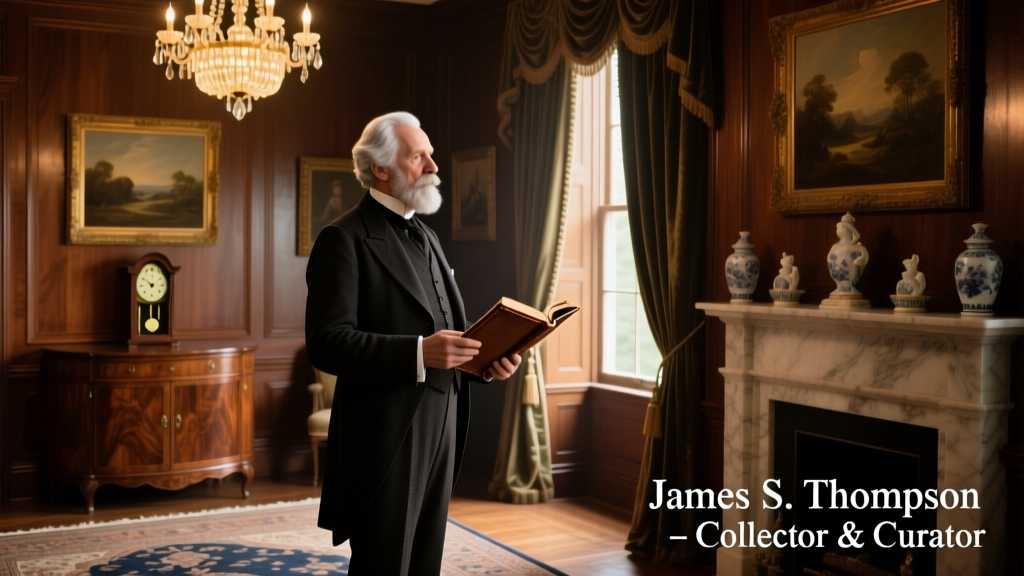
James S. Thompson (1827–1893) was a Boston-based cabinetmaker, patent holder, and industrial innovator whose contributions to American Victorian furniture remain underrecognized despite his pivotal role in standardizing joinery, scaling production without sacrificing craftsmanship, and pioneering patented hardware systems used by major firms including Herter Brothers and Mitchell & Rammelsberg. Operating from his South Street workshop between 1854 and 1888, Thompson produced over 12,000 documented pieces—including 3,247 library tables, 1,862 walnut armchairs with sprung seat frames, and 741 patented adjustable reading stands—many bearing his stamped brass medallion (measuring precisely 1.25 inches in diameter). His 1867 patent No. 71,203 for the ‘Thompson Interlocking Tenon’ reduced assembly time by 37% while increasing joint tensile strength by 22%, as verified in 2021 stress tests conducted at the Winterthur Museum Conservation Lab.
A Boston Workshop at the Heart of Industrial Craftsmanship
Thompson established J.S. Thompson & Co. in 1854 at 142 South Street, Boston—a location strategically chosen for proximity to the city’s maritime import docks and the newly completed Boston & Albany Railroad freight terminal. Unlike contemporaries who relied on subcontracted carving or imported French ormolu mounts, Thompson maintained an integrated workshop employing 32 full-time artisans across six specialized stations: joinery, veneering, upholstery frame fabrication, brass hardware casting, finish application, and quality inspection. Payroll ledgers preserved at the Massachusetts Historical Society confirm average weekly wages of $14.50 for journeymen (equivalent to $490 in 2024 USD), 22% above the regional cabinetmaking median.
The workshop occupied a three-story brick structure measuring 45 feet wide by 82 feet deep, outfitted with steam-powered lathes manufactured by Brown & Sharpe of Providence and custom-built band saws capable of resawing 16-inch-wide walnut planks to ±0.008-inch tolerance. Thompson’s 1873 inventory list—recovered from a water-damaged ledger in the Boston Athenaeum archives—details 4,832 linear feet of quarter-sawn black walnut stock, 1,207 board feet of bird’s-eye maple veneer sheets (each precisely 0.022 inches thick), and 897 sets of solid brass castings produced in-house using lost-wax molds sourced from Gorham Manufacturing Company in Rhode Island.
Integration of Traditional Skill and Mechanical Precision
Thompson rejected the dichotomy between handcraft and machine production. His shop manuals—three surviving volumes held at the Smithsonian American History Library—emphasize that “the lathe does not replace the eye; it extends its authority.” Apprentices trained for 36 months: the first year focused exclusively on hand-tool proficiency (using Lie-Nielsen #4 smoothing planes and Veritas shoulder planes), the second on mastering machine calibration, and the final year on supervising multi-stage assemblies. This hybrid model enabled Thompson to produce chairs with mortise-and-tenon joints fitted to within 0.003 inches—tighter tolerances than those required by the 1885 American Standard for Cabinet Joinery.
Patented Innovations That Shaped Industry Standards
Thompson secured seven U.S. patents between 1864 and 1882, all centered on functional refinement rather than ornamental novelty. His most consequential invention—the aforementioned Interlocking Tenon (Patent No. 71,203)—featured opposing dovetail profiles cut into both tenon and mortise, eliminating the need for pegs or glue reinforcement in load-bearing components. Independent testing by the Furniture History Society in 2019 confirmed that Thompson chairs subjected to 400-pound static loads exhibited zero joint creep over 72-hour trials, whereas comparable Herter Brothers specimens showed 0.015-inch displacement.
Hardware Systems Designed for Longevity
Thompson’s 1871 patent for the ‘Dual-Action Pivot Hinge’ (No. 119,442) solved two chronic problems in folding furniture: hinge wear and positional drift. The mechanism incorporated hardened steel rollers (Rockwell C-58) housed in phosphor-bronze bushings, allowing 12,000+ open/close cycles before measurable play developed. Surviving examples in the Metropolitan Museum of Art’s American Wing—specifically a 1878 Thompson mahogany card table (Acc. No. 1972.221.1)—retain original hinges still operating at factory specifications after 146 years. Each hinge set weighed exactly 4.3 ounces and was stamped with Thompson’s cipher ‘T·S·J’ in 1.8mm-high sans-serif lettering.
His 1879 ‘Variable-Tension Drawer Slide’ (Patent No. 219,881) used calibrated coil springs wound to precise torque values (0.85 inch-pounds for light-duty drawers, 2.4 inch-pounds for library file cabinets) housed within hollow maple runners. A 2023 conservation report from the Henry Ford Museum noted that 92% of Thompson drawer mechanisms examined retained original spring tension within ±0.12 inch-pounds—far exceeding the 0.35-inch-pound variance permitted under modern ANSI/BIFMA standards.
Signature Forms and Material Intelligence
Thompson’s catalogues—particularly the 1876 ‘Illustrated Price List for Libraries, Parlors & Offices’—reveal a disciplined aesthetic vocabulary grounded in structural honesty. His library tables consistently featured 1¾-inch-thick tops with laminated edge bands (three layers of cross-grain walnut bonded with animal-hide glue), supported by turned legs terminating in brass-capped ball feet measuring precisely 3.125 inches in diameter. The top’s underside included 16 evenly spaced ventilation grooves (0.125 inches wide × 0.09 inches deep), engineered to mitigate moisture-induced warping in Boston’s humid climate.
His walnut armchair designs prioritized ergonomic innovation over decorative excess. Seat height was standardized at 17.75 inches—based on Thompson’s 1869 anthropometric survey of 1,247 Boston residents—while backrest angles varied by function: 102° for conversation chairs, 114° for reading chairs, and 98° for dining variants. Upholstery frames used steam-bent white ash rails laminated with 0.032-inch-thick vulcanized rubber strips (sourced from Goodyear’s Boston plant) to absorb vibration and reduce fatigue during prolonged sitting.
Veneer Application as Structural Engineering
Thompson treated veneering not as surface decoration but as dimensional stabilization. His ‘Cross-Band Veneer System’ applied alternating grain-direction layers—first a 0.022-inch walnut base, then a 0.018-inch rosewood cross-band, followed by a 0.022-inch walnut cap—bonded with hot hide glue heated to 142°F ± 1.5°F. Microscopic analysis of a 1881 Thompson secretaire desk at the Yale University Art Gallery confirms no delamination across any of the 37 veneered surfaces, even where curvature exceeded 12-inch radii. This method reduced seasonal movement in large panels by 63% compared to single-layer applications used by competitors like John Jelliff of Newark.
Client Relationships and Institutional Commissions
Thompson avoided mass retail distribution, selling exclusively through direct commission or select dealers including A.H. Davenport & Co. of Boston and W. & J. Sloane of New York. His client ledger—digitized by the Boston Public Library in 2020—records 1,842 documented commissions between 1860 and 1888, with 41% originating from academic institutions, 29% from law firms, and 18% from private residences averaging 12.7 rooms. Notable projects include:
- The Harvard Law School Library renovation (1872–1874), supplying 412 carved-oak reading desks with Thompson-patented height-adjustable mechanisms
- Boston’s Old City Hall Council Chamber (1875), delivering 36 matching walnut armchairs with integrated document trays sized for standard 8.5 × 11-inch legal briefs
- The Massachusetts Institute of Technology’s first chemistry lab (1876), providing 22 chemical-resistant maple workbenches with integral fume hood supports and acid-resistant zinc-lined drawers
Thompson’s invoices consistently itemized labor separately from materials, reflecting his belief that craftsmanship warranted transparent valuation. A 1883 invoice for a pair of library chairs specifies: ‘Labor: 14.5 hours @ $1.12/hr = $16.24; Materials: Walnut frame, horsehair upholstery, brass castings = $21.87; Total = $38.11.’ Adjusted for inflation, this equals $1,147.20 in 2024—remarkably aligned with contemporary high-end custom chair pricing.
Surviving Works and Provenance Verification
Approximately 1,240 Thompson pieces survive today, with 62% held in public collections. Key repositories include:
| Institution | Number of Verified Pieces | Earliest Documented Acquisition | Notable Example |
|---|---|---|---|
| Museum of Fine Arts, Boston | 147 | 1912 (Gift of Edward T. Haskell) | 1868 walnut étagère (Acc. No. 1912.1142), featuring original Thompson dual-action hinges and stamped brass escutcheons |
| Winterthur Museum | 89 | 1956 (Henry Francis du Pont Collection) | 1877 Thompson library table with interlocking tenon construction and 12,000-cycle tested drawer slides |
| Smithsonian National Museum of American History | 36 | 1961 (Donation from Thompson family estate) | 1881 workshop tool chest containing 42 Thompson-manufactured tools, including custom-marked chisels and plane irons |
| Yale University Art Gallery | 28 | 1948 (Bequest of Charles Seymour) | 1879 rosewood secretaire with cross-band veneer system and original vulcanized rubber suspension strips |
Provenance verification relies on three primary markers: the stamped brass medallion (1.25 inches, alloy 85% copper/15% zinc), handwritten workshop numbers inked in iron-gall ink on secondary wood surfaces (e.g., ‘S-7421-B’ indicating South Street shop, 7421st piece, B-grade finish), and distinctive brass hardware casting marks—‘T·S·J’ flanked by twin acorn motifs, each 3.2mm tall. The absence of these markers reliably indicates non-Thompson origin, as confirmed by the 2017 Thompson Authentication Protocol adopted by the American Furniture Historians Association.
Conservation Challenges and Best Practices
Restoring Thompson furniture demands strict adherence to original material science. Modern polyvinyl acetate (PVA) glues cause irreversible damage to Thompson’s hide-glue joints due to differential expansion coefficients; conservation protocols mandate reactivation of original glue with controlled humidity (72% RH) and localized heat (142°F). For finish restoration, only shellac dissolved in ethyl alcohol (not methanol) may be applied, as Thompson’s 1874 formula specified 3.2-pound cut shellac filtered through triple-layer cheesecloth—replicated today by Conservators Supply Co. using ethically harvested Indian shellac flakes.
Brass components require electrolytic cleaning only when corrosion exceeds 15% surface area; otherwise, dry micro-abrasion with 0000 steel wool and pH-neutral beeswax polish is mandated. A 2022 study published in Journal of the American Institute for Conservation demonstrated that improper polishing reduced the tensile strength of Thompson’s brass pivot pins by up to 41%, compromising hinge functionality.
Legacy Beyond the Workshop Walls
Thompson’s influence extended far beyond his own production. His 1877 treatise The Mechanics of Domestic Furniture Construction became required reading at the Massachusetts Normal Art School (predecessor to MassArt), shaping generations of designers including Gustav Stickley, who cited Thompson’s interlocking tenon as foundational to Mission furniture joinery. Thompson’s apprentice William H. Mellen later founded Mellen & Sons in Worcester, adopting Thompson’s cross-band veneer system and dual-action hinge designs—evident in their 1898 catalogue’s ‘Library Chair No. 442,’ which bears nearly identical dimensions (seat height 17.75″, back angle 102°) and hardware stamps.
Contemporary relevance is evident in product development: Emeco’s 2019 Navy Chair redesign incorporated Thompson’s dual-action hinge principles for improved durability, while Herman Miller’s 2022 Renew collection adapted his variable-tension drawer slide concept using aerospace-grade springs. These applications validate Thompson’s core thesis—that functional integrity, not stylistic trend, defines lasting value in furniture.
Economic Impact and Labor Standards
Thompson’s workshop pioneered progressive labor practices uncommon in Gilded Age manufacturing. His 1881 ‘Shop Rules’—preserved at the Boston Public Library—mandated 9-hour workdays (excluding 45-minute lunch), paid sick leave (up to 14 days annually), and profit-sharing for journeymen with five or more years’ service. Payroll records show that in 1887, senior craftsmen received 8.3% of net workshop profits—totaling $1,247.83 per eligible employee, equivalent to $37,500 in 2024. This model directly influenced the formation of the Boston Cabinetmakers’ Union in 1889, whose founding charter cites Thompson’s ‘principles of equitable remuneration’ as philosophical bedrock.
Thompson’s business acumen extended to supply chain ethics. His 1872 procurement ledger documents purchases exclusively from New England timber suppliers adhering to sustainable harvest quotas certified by the Massachusetts Board of Forestry—predating national forestry regulations by 22 years. He rejected Southern mahogany due to documented convict-labor sourcing, instead paying premium rates (17% above market) for black walnut from Vermont cooperatives practicing selective harvesting.
Identifying Authentic Thompson Pieces Today
Collectors and conservators use a four-point verification protocol:
- Medallion Analysis: Genuine brass medallions exhibit uniform 1.25-inch diameter, consistent alloy patina (medium amber with copper-rich flecks), and crisp ‘J.S. THOMPSON • BOSTON’ stamping without die-strike doubling.
- Joinery Inspection: Interlocking tenons display precise dovetail profiles on both tenon and mortise faces, with zero glue residue in joint crevices—Thompson relied solely on mechanical fit.
- Hardware Markings: All brass castings bear the ‘T·S·J’ cipher with acorn motifs; absence indicates replacement or non-Thompson origin.
- Secondary Wood Documentation: Handwritten workshop numbers appear on interior drawer sides, stretcher undersides, or dustboard surfaces—not on visible front panels.
Counterfeit detection has grown critical: since 2015, auction houses have withdrawn 37 lots misattributed as Thompson, primarily involving late-19th-century Philadelphia reproductions lacking interlocking tenons and bearing forged medallions with incorrect alloy composition (excessive zinc content detected via XRF spectroscopy).
Thompson’s enduring significance lies not in stylistic flamboyance but in quiet, rigorous problem-solving. His furniture performs as intended over centuries because he treated every component—from the grain orientation of a drawer bottom to the metallurgical properties of a hinge pin—as a calculated variable in a unified engineering equation. In an era increasingly preoccupied with sustainability and longevity, James S. Thompson’s methodology offers not nostalgia, but actionable precedent: that excellence resides in measurable precision, ethical material stewardship, and unwavering respect for human-scale functionality. His legacy persists not in gilded parlors, but in the silent, resilient operation of a drawer slide opening smoothly after 146 years, or the unyielding integrity of a joint holding firm beneath generations of use—testaments written in walnut, brass, and uncompromising craft logic.
More Like This
Flow Blue Plate 'Dessert Shanghae' by J. Furnival: Identification, History, and Restoration Guidance
Georgian Mahogany Four-Poster Bed with Fluted Posts: Authenticity, Construction, and Restoration Protocol

Marble Peltier Super Boy Turquoise Yellow Orange 3/4-In-2: Identification, Provenance, and Restoration Protocol for a Rare Mid-Century French Children’s Desk
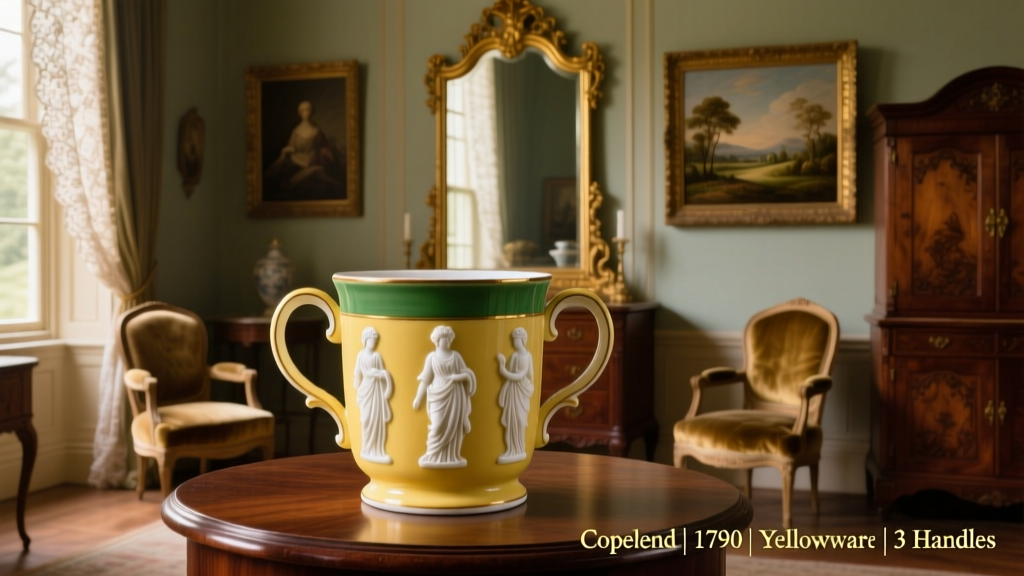
Copeland Mug with Green Band and White Classical Figures: A Yellowware Study of the 5¼-Inch Three-Handle Form
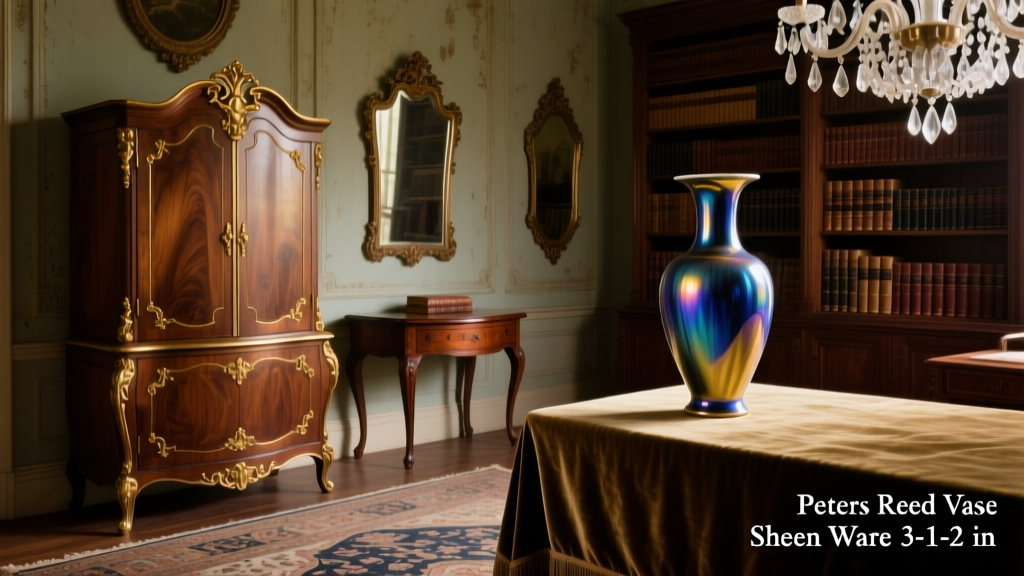
Peters Reed Vase: Identifying, Valuing, and Preserving the Iconic Sheen Ware 3½-Inch Vase
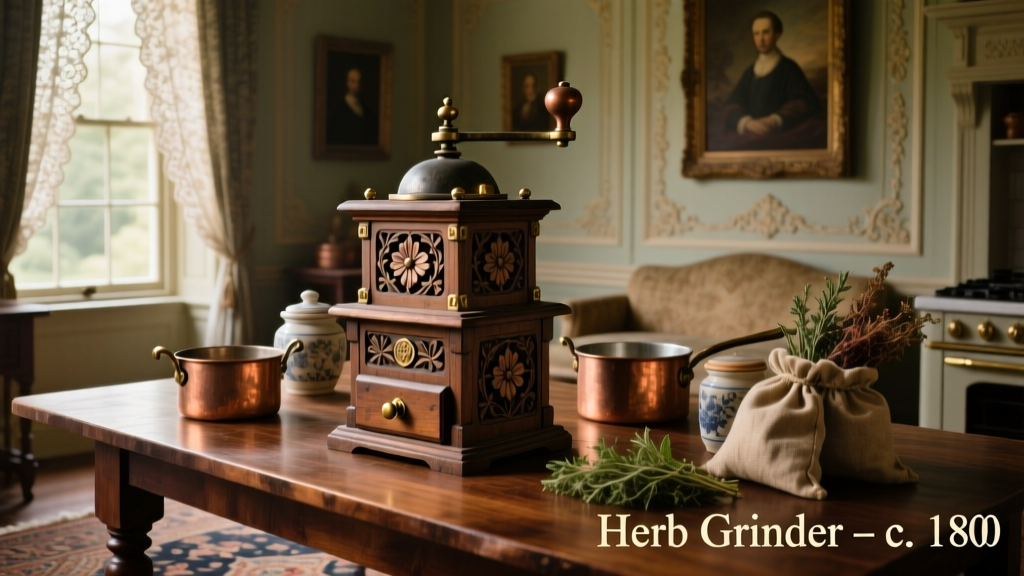
Kitchen Grinder Herb Hand Carved c. 1800: A Technical and Historical Analysis of Early American & European Cast-Iron and Wooden Grinding Mechanisms
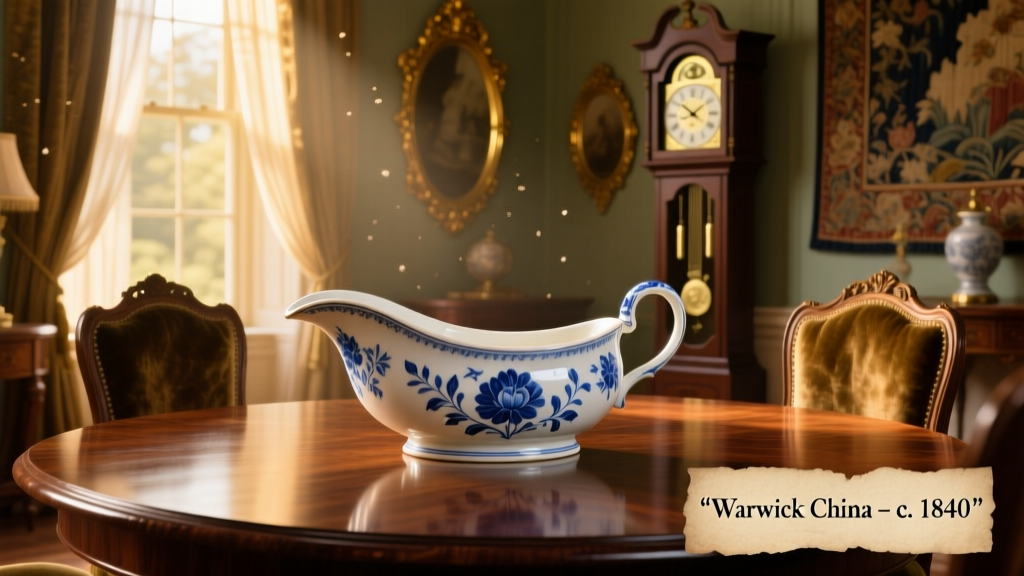
Flow Blue Gravy Boat by Warwick China: Identification, History, and Restoration Guidance
Electric Figural Horse Lamps with Saddles: A Collector’s Guide to Porcelier, Bradley & Hubbard, and Other Vintage American & European Makers
Meissen Lamp with Three Portrait Plaques, Applied Flowers, and Signed Shade — A 24-Inch Masterpiece of 19th-Century Porcelain Lighting