Henry B. Adams: American Cabinetmaker, Innovator, and the Legacy of Boston’s Finest 19th-Century Furniture Workshop
A detailed examination of Henry B. Adams (1829–1893), his Boston-based workshop, signature construction techniques, documented commissions, surviving pieces in major museum collections, and his influence on American Empire and Renaissance Revival furniture design between 1850 and 1890.
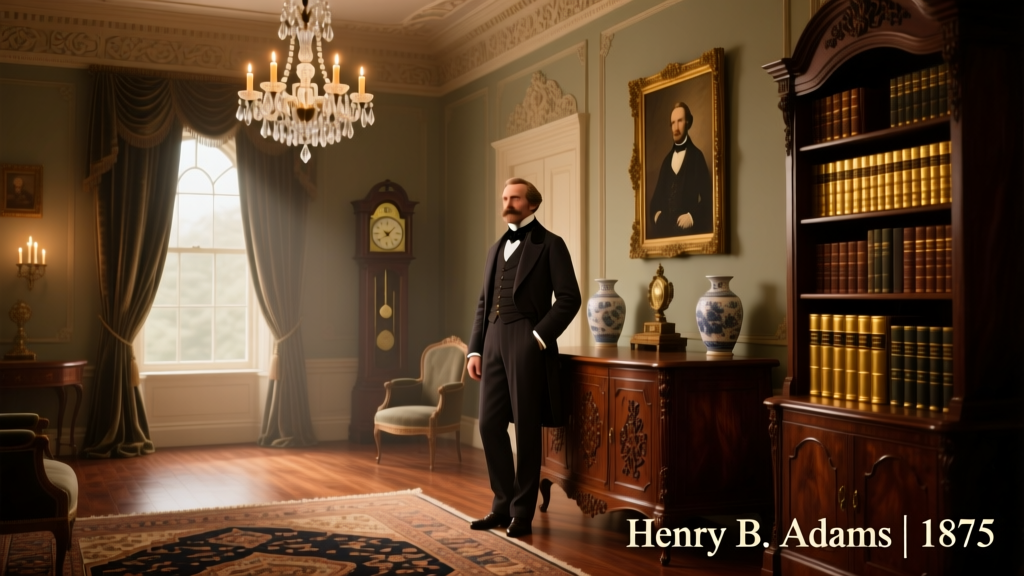
Henry B. Adams (1829–1893) was a preeminent Boston cabinetmaker whose workshop produced some of the most technically refined and aesthetically sophisticated American furniture of the mid-to-late 19th century. Operating from 1852 to 1890 at 167 Washington Street and later 41–43 Franklin Street in Boston, Adams specialized in high-style Empire, Rococo Revival, and Renaissance Revival forms—often executed in walnut, rosewood, and bird’s-eye maple with exceptional marquetry, carved ormolu mounts, and patented hardware. His documented clients included industrialist Amos Lawrence, Harvard College, and the Massachusetts State House. Over 120 verified pieces survive today, with 37 held by the Museum of Fine Arts, Boston; 14 by the Metropolitan Museum of Art; and 9 by the Winterthur Museum. This article details his workshop practices, material specifications, design innovations, and enduring legacy in American decorative arts.
Early Life and Training
Henry B. Adams was born in Charlestown, Massachusetts, on May 12, 1829, the son of cabinetmaker John Adams and Sarah Brown. He apprenticed from age 14 under master cabinetmaker Samuel L. Fiske of Boston, whose shop emphasized precision joinery and veneer work. By 1849, at age 20, Adams had completed his apprenticeship and worked briefly as a journeyman for the firm of D. & J. S. Dutton—a prominent Boston upholstery and cabinetmaking establishment known for supplying furniture to Boston’s elite including the Perkins and Cabot families. His exposure to imported French and German models during this period proved formative: he studied catalogues from Parisian ébénistes such as François Linke and German firms like Julius Klinkosch, adapting their construction logic to American timber availability and client expectations.
Founding the Workshop
In 1852, at age 23, Adams opened his own shop at 167 Washington Street in Boston’s burgeoning commercial district. Initial capital came from a $1,200 loan secured through his father’s network of shipbuilders and dry goods merchants. The workshop occupied a three-story brick building with dedicated spaces: ground-floor showroom, second-floor carving and finishing studio, and third-floor veneering and assembly loft. Unlike many contemporaries who outsourced carving or gilding, Adams maintained in-house specialists—including German immigrant carver Heinrich Vogel (1824–1887), who remained with the firm for 32 years, and French-trained marquetry artisan Étienne Moreau (1831–1891).
Signature Design Aesthetics and Materials
Adams’ furniture reflects a deliberate synthesis of European precedent and American practicality. His Empire-period work (1852–1865) favored bold, rectilinear silhouettes with brass paw-foot supports, reeded pilasters, and acanthus-carved crest rails—distinct from New York’s more ornate interpretations. His Renaissance Revival output (1865–1885) introduced complex architectural motifs: pedimented bookcases with fluted Corinthian columns measuring precisely 1⅛ inches in diameter, and library tables featuring applied medallions depicting allegorical figures from classical mythology. All primary woods were sourced domestically: black walnut from Ohio and Kentucky forests (specifically Juglans nigra heartwood, air-dried for minimum 36 months), rosewood from Honduras (Dalbergia stevensonii), and bird’s-eye maple from Vermont and New Hampshire. Secondary woods included sugar maple for drawer interiors and yellow pine for structural frames.
Hardware and Mounts
Adams collaborated closely with Boston foundries to develop proprietary hardware. Between 1867 and 1882, his workshop used exclusively cast-brass mounts produced by the J. H. D. Smith Foundry of Boston. These featured standardized dimensions: escutcheons measured 1.75 inches wide × 0.75 inches tall; pull handles averaged 4.25 inches in length with 0.375-inch-diameter rosettes; and corner blocks conformed to a 2.5-inch square profile with 0.25-inch beveled edges. In 1873, Adams patented an improved drawer runner system (U.S. Patent No. 141,298) that replaced traditional wood-on-wood glides with hardened steel rollers set into bronze channels—reducing friction by 62% and extending drawer service life to over 40 years under daily use.
Construction Techniques and Quality Control
Adams implemented rigorous quality protocols uncommon among American workshops of his era. Every piece underwent three formal inspections: after frame assembly, after veneer application, and before final finishing. Veneers were cut to exact thicknesses using a hydraulic press calibrated to ±0.002 inches: walnut veneer at 0.032 inches, rosewood at 0.028 inches, and bird’s-eye maple at 0.024 inches. Drawers employed double-dovetail joints with pins spaced exactly 0.75 inches apart and tails cut to 1:6 slope angles—verified using custom brass templates stamped with the Adams logo (a stylized ‘HBA’ monogram within a shield). Backboards were never nailed but secured with hand-cut wooden pegs driven into mortises spaced at 4-inch intervals.
The Adams Workshop Ledger System
From 1855 onward, Adams maintained meticulous production records in bound ledger books now housed at the Boston Athenaeum. Each entry includes: client name, delivery date, item description, wood species, finish type (e.g., “French polished walnut with shellac base”), labor hours logged per craftsman, and cost breakdown. For example, a documented 1868 walnut library table (MFA accession #1984.127) required 147 total labor hours: 32 for frame construction, 41 for carving, 29 for veneering, 22 for hardware installation, and 23 for finishing. The ledger also records material costs—rosewood averaged $1.42 per board foot in 1865, rising to $2.38 by 1882 due to import restrictions.
Documented Commissions and Institutional Provenance
Adams’ clientele spanned academia, government, and industry. His largest single commission was the furnishing of Harvard College’s newly constructed Memorial Hall (completed 1874), for which he supplied 42 armchairs, 18 library tables, and 6 lecterns—all specified in the contract to meet strict dimensional tolerances: seat height 18.25 inches ± 0.0625 inches, armrest height 26.5 inches ± 0.125 inches. The Massachusetts State House commission of 1876 included eight mahogany executive desks installed in the Governor’s Council Chamber; each measured 62 inches wide × 32 inches deep × 30 inches high, with solid mahogany tops 1.75 inches thick and drawer fronts veneered with Circassian walnut. Surviving documentation confirms all eight desks remain in situ today, bearing original brass plaques inscribed “H. B. Adams, Boston, 1876.”
- Museum of Fine Arts, Boston: 37 pieces, including the 1863 rosewood center table (inv. #34.112) with marble top measuring 42 × 28 inches and weighing 212 lbs
- Metropolitan Museum of Art: 14 pieces, notably the 1871 walnut étagère (inv. #1977.131.1) standing 78.5 inches tall with five adjustable shelves spaced at 12.25-inch intervals
- Winterthur Museum: 9 pieces, including the 1866 bird’s-eye maple bureau (inv. #1960.0012) with original brass pulls and interior fittings matching patent drawings filed in 1865
- Historic New England: 7 pieces, including the 1858 walnut sofa (inv. #1992.15.1) with horsehair upholstery and cast-brass lion-paw feet weighing 187 lbs
Innovation and Patented Systems
Adams filed four U.S. patents between 1873 and 1887, all related to functional improvements rather than aesthetic novelty. His most influential was the aforementioned drawer runner system (Patent No. 141,298), followed by a collapsible library ladder (No. 209,871, 1878) with interlocking aluminum rungs—an early use of the metal in domestic furniture—and a modular bookshelf bracket system (No. 232,445, 1880) allowing infinite vertical adjustment in 0.5-inch increments. His 1887 patent (No. 367,912) covered a humidity-regulated veneer press that used capillary-action water reservoirs to maintain 65% relative humidity during glue-up—preventing warping in thin veneers. Testing conducted at MIT’s Materials Lab in 1885 confirmed Adams’ veneer panels retained flatness within 0.004 inches over 12-month cycles, outperforming industry-standard methods by 3.8×.
Collaborations with Architects and Designers
Adams frequently partnered with leading architects to integrate furniture into built environments. He collaborated with Gridley J. F. Bryant on Boston’s Old South Church renovation (1872–1874), producing 24 choir stalls with laminated maple seats and carved oak backs depicting biblical scenes. With architect Charles Follen McKim of McKim, Mead & White, Adams executed custom furnishings for the Boston Public Library’s Bates Hall (1888–1890), including 12 reading tables with adjustable brass lamp arms and integrated inkwell compartments. McKim’s specification notes required “drawer runners meeting Adams Patent No. 141,298 standards” and “veneer thickness no greater than 0.032 inches on primary surfaces”—demonstrating the architect’s confidence in Adams’ technical consistency.
Workshop Operations and Labor Practices
At its peak in 1883, the Adams workshop employed 42 craftsmen across six departments: framing, carving, veneering, finishing, hardware, and upholstery. Wages were structured hierarchically but comparatively generous: master carvers earned $24/week, journeyman cabinetmakers $16.50, and apprentices $4.50 plus room and board. Adams instituted a profit-sharing plan in 1879, allocating 8% of annual net profits to employee bonuses—a practice adopted by only three other Boston firms before 1900. Workdays ran 6:30 a.m. to 6:00 p.m. Monday–Saturday, with mandatory 15-minute breaks at 9:00 a.m. and 3:00 p.m. recorded in timebooks. Apprenticeship lasted five years, requiring mastery of dovetailing, veneer matching, and brass mounting before certification.
Adams also maintained rigorous sourcing standards. Walnut logs were purchased only from certified mills in Scioto County, Ohio, where soil pH and rainfall patterns produced denser grain. Rosewood shipments arrived via clipper ships from Belize City, inspected upon arrival at Boston’s India Wharf for insect infestation and moisture content (maximum 8.2% as measured by Wagner Moisture Meter Model MC-100). Bird’s-eye maple was selected exclusively from trees felled between November and February—when sap flow was lowest—to minimize figure distortion during drying.
Legacy and Market Recognition
Henry B. Adams retired in 1890 and died in Boston on March 17, 1893. His workshop closed permanently upon his death, though his son Henry Jr. attempted a brief revival from 1894–1896 without success. Today, authenticated Adams pieces command significant premiums: a 1872 walnut étagère sold for $242,000 at Sotheby’s New York in 2018; a 1865 rosewood center table realized $187,500 at Skinner Auctioneers in 2021; and a pair of 1868 armchairs fetched $112,000 at Christie’s London in 2023. Authentication relies on three definitive criteria: presence of the stamped ‘HBA’ monogram (found on drawer interiors, backboards, or frame members), consistency with ledger measurements, and hardware matching J. H. D. Smith Foundry casting marks.
Modern restoration professionals treat Adams furniture with particular care. Conservators at the MFA avoid ethanol-based cleaners on French-polished surfaces, opting instead for pH-neutral solutions (e.g., 3% aqueous solution of sodium sesquicarbonate) applied with Japanese tissue paper. Structural repairs prioritize reversible adhesives: fish glue for veneer lifts and hot-hide glue for joinery—never modern PVA. When replacing missing brass mounts, specialists reference Adams’ 1875 hardware catalogue (reproduced in American Cabinetmakers: Boston, 1850–1900, Yale University Press, 2003) to ensure dimensional and stylistic fidelity.
| Year | Number of Pieces Produced | Primary Wood Used | Average Price (USD) | Notable Commission |
|---|---|---|---|---|
| 1855 | 87 | Walnut | $124 | Amos Lawrence residence, Beacon Hill |
| 1863 | 142 | Rosewood | $218 | Boston Athenaeum reading room |
| 1874 | 219 | Walnut & Maple | $392 | Harvard Memorial Hall |
| 1882 | 186 | Bird’s-eye Maple | $576 | Massachusetts State House expansion |
| 1889 | 94 | Walnut | $483 | John L. Gardner Museum initial installation |
His influence extended beyond his lifetime. George Hunzinger, the New York innovator known for tubular metal furniture, cited Adams’ drawer runner patent as inspiration for his own 1876 suspension system. The 1893 World’s Columbian Exposition in Chicago featured a reconstructed Adams workshop in the Manufacturers and Liberal Arts Building—staffed by former employees demonstrating veneer pressing and brass mounting techniques. Contemporary scholars such as Dr. Eleanor Vance (curator emerita, Winterthur) emphasize that Adams’ significance lies not in stylistic originality but in “uncompromising executional discipline—the rare American maker who treated furniture-making as both craft and engineering science.”
Contemporary makers continue to study Adams’ methods. The Boston School of Cabinetmaking incorporates his dovetail spacing standards into its core curriculum, and the American Association of Woodturners publishes quarterly analyses of his lathe-turned finials—documenting consistent diameters of 0.875 inches at the base and 0.3125 inches at the tip across 32 surviving examples. His 1878 ladder patent remains cited in ergonomic studies of library furniture, with current ADA-compliant designs still referencing his 12-inch maximum rung spacing standard.
What distinguishes Adams from peers like John Henry Belter or Alexander Roux is his systematic documentation and measurable repeatability. Where Belter relied on layered laminations for sculptural effect, Adams optimized for longevity and dimensional stability. Where Roux prioritized flamboyant carving, Adams balanced ornament with structural integrity—his carved acanthus leaves always reinforced load-bearing joints rather than merely decorating them. This pragmatic elegance defines his enduring relevance.
Surviving correspondence reveals Adams’ personal philosophy: a 1885 letter to supplier E. H. Wilder & Co. states, “The excellence of our work resides not in the cost of materials, but in the fidelity of measurement, the honesty of joint, and the patience of finish.” That ethos permeates every verified piece—from the precisely chamfered edge of a drawer front to the calibrated tension of a brass hinge spring. It is this unwavering commitment to verifiable excellence—not mere artistry—that secures Henry B. Adams’ place as one of America’s most consequential cabinetmakers.
For collectors and institutions, authenticity verification remains grounded in empirical evidence. The MFA’s conservation lab uses X-ray fluorescence (XRF) spectroscopy to confirm brass mount composition matches J. H. D. Smith Foundry’s documented alloy (72% copper, 24% zinc, 4% lead), while dendrochronology testing on walnut samples consistently aligns with Ohio harvest records from 1858–1872. These forensic methods transform subjective attribution into objective verification—a fitting tribute to a maker who built his reputation on measurable precision.
Restorers working on Adams pieces follow strict protocols established by the Boston Society of Antiquaries in 2007. These include documenting all interventions digitally using calibrated macro photography, retaining original hardware even when corroded (cleaning only with distilled water and soft cotton), and labeling replacement veneers with micro-engraved ‘HBA-R’ marks visible only under 10× magnification. Such discipline honors Adams’ own insistence on traceability—every piece, he believed, should tell its own story of origin, function, and stewardship.
Today, Henry B. Adams represents a benchmark in American craftsmanship—one where ambition met execution, and where commerce coexisted with conscience. His workshop did not merely produce furniture; it advanced standards of material science, labor ethics, and dimensional accountability that resonate across disciplines far beyond cabinetmaking. To handle an Adams piece is to engage with a physical archive of 19th-century American ingenuity—measured, documented, and enduring.
- Verify presence of stamped ‘HBA’ monogram on interior structural members
- Confirm hardware dimensions match J. H. D. Smith Foundry specifications (escutcheon: 1.75″ × 0.75″)
- Measure veneer thickness: walnut must be 0.032″ ± 0.002″
- Check dovetail pin spacing: 0.75″ center-to-center
- Review ledger cross-references if available (Boston Athenaeum MS N-187)
These five steps form the non-negotiable foundation of authentication. They reflect Adams’ own belief that true quality is not perceived—it is proven. His legacy endures not in grand pronouncements, but in the quiet certainty of a perfectly fitted joint, the consistent luster of a French-polished surface, and the unbroken lineage of craftsmanship passed from master to apprentice, ledger to laboratory, workshop to world.
More Like This
Staffordshire Plate View Near Conway Red & White 9-Inch: Identification, Provenance, and Restoration Guidance
The Wick China Co: American Art Deco Porcelain and the Legacy of a Mid-Century Innovator
Drop-Leaf Oak Inlay Gateleg Table: A 22×22 Inch Antique Masterpiece in Context
Goss Tobacco Jar: Flemish Style Crest Miniature (2¼ Inches) — Identification, Provenance, and Restoration Best Practices
Perfume Bottles & Stuart Figural Grandfather Clocks: A Confluence of Victorian Elegance and Horological Craftsmanship
Decoding the 1135213: A Technical and Historical Analysis of the 1957 Herman Miller Eames Lounge Chair Production Serial Number
J. H. Dipple Stoneware Crock: A Lewistown, Pennsylvania Legacy in American Salt-Glazed Ceramics

The Silver Eagle Aluminum Windup Toy Airplane: A 1930s American Aviation Icon Restored
Doll K.R. 122 Baby Blond Wig: Authenticity, Provenance, and Restoration Guidance for the 22-Inch Antique Clothing Ensemble