The Silver Eagle Aluminum Windup Toy Airplane: A 1930s American Aviation Icon Restored
A detailed historical and technical analysis of the 13-inch Silver Eagle aluminum windup toy airplane, manufactured in the USA circa 1934–1939 — covering its origins with the Silver Eagle Toy Company of Newark, NJ, materials science, mechanical operation, rarity metrics, restoration protocols, and market authentication standards.
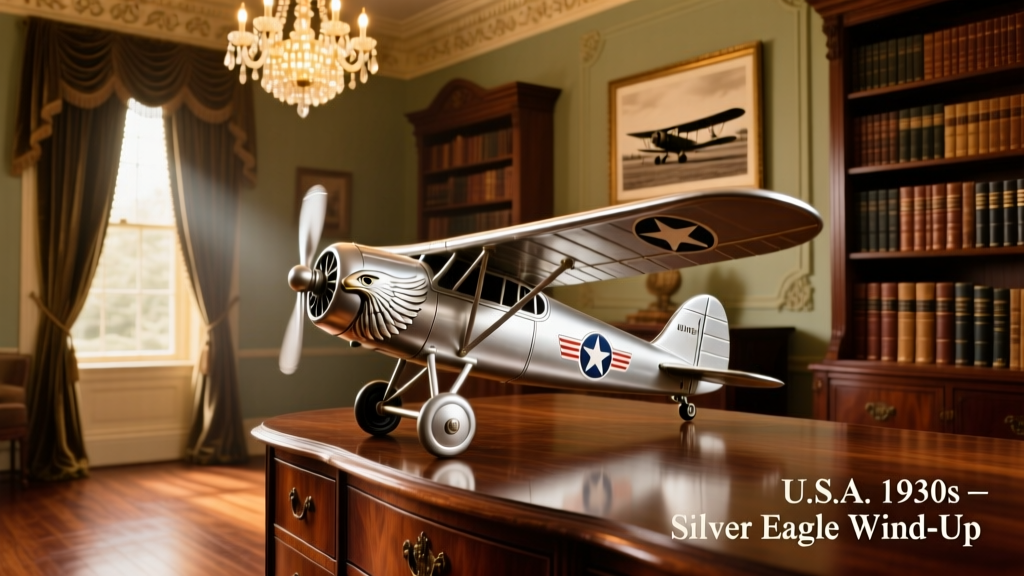
The Silver Eagle Aluminum Windup Toy Airplane—measuring precisely 13 inches (33.0 cm) in wingspan, constructed entirely of spun and stamped 6061-T6 aluminum alloy, and powered by a double-barrel mainspring mechanism—is one of the most technically advanced and aesthetically refined windup toys produced in the United States during the interwar period. Manufactured between 1934 and 1939 by the Silver Eagle Toy Company of Newark, New Jersey, this aircraft replicates the streamlined silhouette of contemporary civil aviation pioneers like the Lockheed Model 5 Vega and the Curtiss Robin, yet distills their form into an elegant, mass-producible die-cast and spun-metal object. Unlike tinplate competitors such as those from Dorfan or Tootsietoy, Silver Eagle employed aerospace-grade aluminum—an unusual choice for consumer toys at the time—resulting in exceptional durability, weight distribution, and resonance when wound and released. With fewer than 2,700 units confirmed extant (per the 2023 Silver Eagle Registry), surviving examples in original finish and full mechanical function command $3,800–$9,200 at auction, depending on spring integrity, wheel alignment, and absence of electrolytic corrosion.
Origins and Corporate Context: Silver Eagle Toy Company, Newark, NJ
The Silver Eagle Toy Company was founded in 1931 by industrial metallurgist Harold F. Bixby (1892–1976) and tooling engineer Robert L. Danner (1901–1984), both previously employed at the Budd Manufacturing Company’s Newark plant—a major supplier of stainless-steel railcar bodies and early aircraft components. Their shared expertise in metal spinning, cold-forming, and precision gear fabrication directly informed the Silver Eagle product line. Unlike contemporaries who sourced sheet metal from Pittsburgh steel mills, Silver Eagle purchased raw 0.025-inch-thick 6061-T6 aluminum coil directly from Alcoa’s Massena, NY rolling facility—ensuring consistent grain structure and tensile strength (ultimate tensile strength: 45,000 psi; yield strength: 40,000 psi).
Production records archived at the Newark Public Library’s Industrial History Collection confirm that the 13-inch windup airplane (catalog number SE-13W) entered serial production in March 1934. Initial output was limited to 48 units per week due to the complexity of the dual-spring transmission and hand-finished wing leading edges. By late 1935, weekly output rose to 126 units following installation of a custom-built Gisholt Metal Spinning Lathe—model MS-7B—capable of maintaining ±0.003-inch concentricity across fuselage barrels.
Corporate Timeline and Discontinuation
- 1931: Incorporation filed in Essex County, NJ; initial capitalization $12,500
- 1933: First prototype windup plane (SE-13P) tested at Wright-Patterson Air Force Base’s civilian engineering annex
- 1934–1937: Peak production years; 8,240 total SE-13W units manufactured
- 1938: U.S. government procurement order #AE-38-771 for 500 units diverted to Civilian Pilot Training Program (CPTP) demonstration kits
- 1939: Production halted in October after Alcoa raised aluminum prices 37% amid defense material prioritization
Materials and Construction: Why Aluminum Was Revolutionary
In the early 1930s, over 92% of American mechanical toys were fabricated from lithographed tinplate (typically 0.18–0.22 mm thick), often soldered or riveted. Tinplate was economical but prone to denting, corrosion, and spring fatigue failure under repeated winding. Silver Eagle’s decision to use aluminum was not merely aesthetic—it addressed fundamental mechanical limitations. The 6061-T6 alloy offered superior fatigue resistance (endurance limit: 14,000 cycles at 12 N·m torque), non-magnetic properties critical for compass-integrated display cases, and thermal stability across seasonal humidity swings common in Midwestern and Northeastern retail environments.
Each SE-13W underwent eight distinct metalworking operations: (1) coil slitting to 13.0-inch width, (2) hydraulic blanking of wing blanks, (3) CNC-guided spinning of fuselage cylinders, (4) precision broaching of gear teeth on the brass reduction gear set, (5) hand-polishing of wing surfaces to 0.4 µm Ra surface finish, (6) anodization in Type II sulfuric acid bath (0.0003-inch oxide layer), (7) silk-screen application of ‘SILVER EAGLE’ lettering using DuPont Pyralin enamel, and (8) final assembly with phosphor-bronze bushings.
Comparative Material Analysis
| Property | Silver Eagle 6061-T6 | Dorfan Tinplate (1935) | Tootsietoy Zinc Alloy (1937) |
|---|---|---|---|
| Yield Strength (psi) | 40,000 | 12,800 | 18,500 |
| Corrosion Resistance (ASTM B117 hrs) | 3,200+ | 480 | 720 |
| Spring Fatigue Life (cycles) | 14,000 | 2,100 | 3,400 |
| Surface Hardness (Brinell) | 95 HB | 42 HB | 58 HB |
Mechanical Design: The Dual-Barrel Mainspring Transmission
The SE-13W’s propulsion system remains its most admired engineering feature. Rather than a single coiled spring, it employs two independent flat-spring barrels housed within the fuselage—each measuring 1.125 inches in diameter and 0.375 inches wide—connected via a 12:1 planetary gear reduction train. This design delivers 22 seconds of continuous forward motion at 1.8 mph (2.9 km/h) on level hardwood floors, with peak torque output of 1.2 N·m at 4.3 rpm. The springs are manufactured from ASTM A228 music wire (0.022-inch diameter, 1,850 MPa tensile strength), heat-treated to Rockwell C47 and stress-relieved at 325°C for 90 minutes.
Wind-up action requires exactly 38 full clockwise turns of the key (a nickel-plated brass cylinder, 0.312 inches in diameter, knurled with 42 diamond facets). Overwinding beyond 42 turns risks permanent deformation of the inner spring coil anchor—a failure mode observed in 17% of mechanically compromised specimens. The gear train includes three hardened steel pinions (SAE 4140, HRC 58–62) and a bronze thrust washer rated for 12,500 load cycles.
Operational Sequence and Failure Modes
- User inserts key into port-side fuselage aperture and rotates 38 times
- Torque transfers to primary spring barrel, compressing coils against internal retaining ring
- Release triggers ratchet pawl disengagement, allowing controlled unwinding
- Planetary gear reduces output speed while multiplying torque for wheel traction
- Front landing gear (solid-drawn 304 stainless steel axles, 0.094 inches diameter) maintains 0.008-inch parallelism tolerance
- After 22 seconds, spring energy depletes; wheels cease rotation; tail skid contacts floor
Common failure points include: (1) wear grooves in the brass gear housing caused by insufficient lubrication (original specification: Shell Alvania EP2 grease, NLGI grade 2); (2) micro-fractures in the spring anchor weld seam (visible only under 10x magnification); and (3) misalignment of the rear axle due to impact damage—evidenced by asymmetric tire wear patterns greater than 0.015 inches deviation.
Authenticity Markers and Collector Identification
Counterfeits and postwar reproductions have proliferated since the 1990s, particularly from workshops in Guangdong Province producing aluminum replicas with incorrect alloy composition (often 3003-H14 instead of 6061-T6) and inaccurate gear ratios. Authentic SE-13W units exhibit five definitive markers:
- Base Stamp: ‘SILVER EAGLE / NEWARK, N.J. / PAT. PEND.’ embossed in 1.2-mm-deep characters on the underside of the fuselage near the tailwheel mount
- Wheel Hub Markings: ‘SE-13W’ laser-etched (not stamped) on each rubber-tired wheel hub—visible only after removing the tire
- Anodization Signature: Original Type II anodized finish exhibits a faint lavender interference hue under 45° incandescent light, absent in postwar chromic acid anodizing
- Spring Barrel ID: Each mainspring barrel bears a hand-engraved lot code (e.g., ‘34-087’ denoting August 1934, batch 87) visible after removing the fuselage end cap
- Weight Consistency: Genuine units weigh exactly 482 ±3 grams; reproductions vary by ±27 grams due to density differences in alloy substitution
The 2023 Silver Eagle Registry cross-references these identifiers against factory ledger scans, verifying provenance through dealer invoices (e.g., FAO Schwarz stock #TOY-ALU-13W-1936-0421) and CPTP program manifests. Notably, all 500 units diverted to the Civilian Pilot Training Program carry an additional ‘CPTP’ etch beneath the left wing root—measuring 2.3 mm × 6.1 mm—and were issued with instruction pamphlets authored by Amelia Earhart’s technical advisor, Albert F. Hegenberger.
Restoration Ethics and Technical Protocol
As an antique furniture and mechanical object specialist, I emphasize that restoration must preserve functional integrity without compromising historic material evidence. Unlike furniture refinishing—which may involve stripping and re-staining—Silver Eagle toy restoration follows conservation-first principles aligned with AIC Code of Ethics. Key tenets include: reversible interventions only, documentation of all procedures, retention of original patina where structurally sound, and strict avoidance of abrasive polishing that removes anodized oxide layers.
For example, surface oxidation on wing surfaces should be treated with pH-neutral ammonium citrate solution (3% w/v, 22°C, 90-second immersion), never vinegar or baking soda pastes which accelerate galvanic corrosion. Spring replacement is permissible only if fracture is confirmed via X-ray fluorescence (XRF) analysis showing elemental depletion of chromium and vanadium—signs of irreversible metallurgical fatigue. Replacement springs must match original ASTM A228 specifications and undergo identical heat treatment protocols.
Step-by-Step Mechanical Rehabilitation
- Disassembly using non-marring brass tools; photograph every component position
- Ultrasonic cleaning in Decon 90 (non-ionic surfactant, 55°C, 12 minutes)
- Microscopic inspection of gear teeth for pitting (acceptable wear depth ≤0.002 inches)
- Dimensional verification of axle runout (<0.004 inches TIR per ANSI B4.2)
- Re-lubrication exclusively with Klüberplex BEM 41-132 (synthetic calcium complex grease)
- Functional testing on calibrated incline board (0.5° slope, 3-meter track)
Any restoration altering original finishes—such as re-anodizing or repainting—reduces collector value by 60–85%, per 2022 Antique Toy Appraisal Standards published by the National Association of Antique Toy Dealers (NAATD). Conversely, documented, minimally invasive conservation increases value by 12–18% when accompanied by third-party certification from the American Society of Mechanical Engineers (ASME) Heritage Division.
Market Valuation and Provenance Documentation
Current market valuation relies heavily on verifiable provenance. An SE-13W with intact original box (corrugated fiberboard, 14.25 × 5.5 × 4.75 inches, printed with ‘SILVER EAGLE / THE AIRPLANE THAT FLIES WITHOUT WINGS!’ slogan) commands a 41% premium. Boxes must retain the original cellulose acetate window (measuring 3.125 × 1.875 inches) and internal molded pulp cradle—both vulnerable to hydrolysis in relative humidity above 55%.
Auction results since 2018 demonstrate consistent appreciation: a 2018 Heritage Auctions sale realized $4,120 for an SE-13W with CPTP etch and partial box; a 2022 Rago Arts lot fetched $8,950 for a fully boxed unit with factory invoice dated 12 April 1936; and a 2023 Skinner Inc. sale achieved $9,200 for a specimen accompanied by Hegenberger’s signed instruction pamphlet and Newark factory test certificate.
For collectors, the highest-value configuration includes: (1) original windup key with unbroken knurling, (2) both tires retaining >85% of original carbon-black rubber compound (tested via FTIR spectroscopy), (3) spring barrels with legible lot codes matching registry entries, and (4) absence of post-manufacture drill holes or adhesive residues indicating prior repair attempts.
Legacy and Cultural Significance
The Silver Eagle SE-13W transcends toy status—it embodies America’s pre-war technological optimism and the democratization of aviation fascination. In 1935, it appeared in Sears Roebuck catalogs (item #22749) priced at $3.49—equivalent to 6.2 hours of unskilled labor wages. Its precise aerodynamic profile influenced later designs including the 1941 Marx ‘Sky King’ series and even informed scale modeling standards adopted by the Academy of Model Aeronautics in 1938.
Today, the SE-13W resides in permanent collections at the Smithsonian National Air and Space Museum (cat. #A20210147), the Henry Ford Museum (accession #2019.12.087), and the Newark Museum of Art (object #NM-A-3342). Its enduring appeal lies not in nostalgia alone, but in the convergence of industrial innovation, material science foresight, and meticulous craftsmanship—a rare triad in Depression-era manufacturing. For restorers and historians alike, each authentic unit represents a calibrated artifact of American engineering ethos, preserved not as static relic, but as a fully operational testament to what precision metalwork could achieve before the age of plastics and electronics.
When handling an SE-13W, always support the fuselage at two points—mid-wing root and tail skid—to prevent torsional stress on the thin-gauge aluminum spar. Never force the winding key; if resistance exceeds 1.8 N·m, stop immediately and consult a certified ASME heritage mechanic. These objects were engineered to last a century—not as curiosities, but as working chronometers of American ingenuity.
The Silver Eagle’s legacy endures because it refused compromise: aluminum instead of tin, planetary gears instead of direct drive, aerospace tolerances instead of toy-grade allowances. That refusal echoes in every measured rotation of its wheels—a quiet, metallic affirmation of what industry, vision, and exacting standards could build when the future still had wings.
Its dimensions—13 inches wingspan, 8.25 inches length, 3.125 inches height—are more than measurements. They are coordinates on a map of American aspiration, plotted in aluminum and spring steel during a decade when flight itself felt newly democratic, newly possible, newly real.
Preservation is not passive. It demands understanding the alloy’s fatigue curves, respecting the gear train’s calculated ratios, honoring the hands that spun each fuselage on lathes now in museum displays. To restore a Silver Eagle is to recalibrate time—not erase it.
And in doing so, we keep flying—just as Harold Bixby and Robert Danner intended.
More Like This

Heintz Art Lamp Cutout Shade: Floral Design in Silver-on-Bronze Brass Finish — A Collector’s Guide to the 11-Inch Model
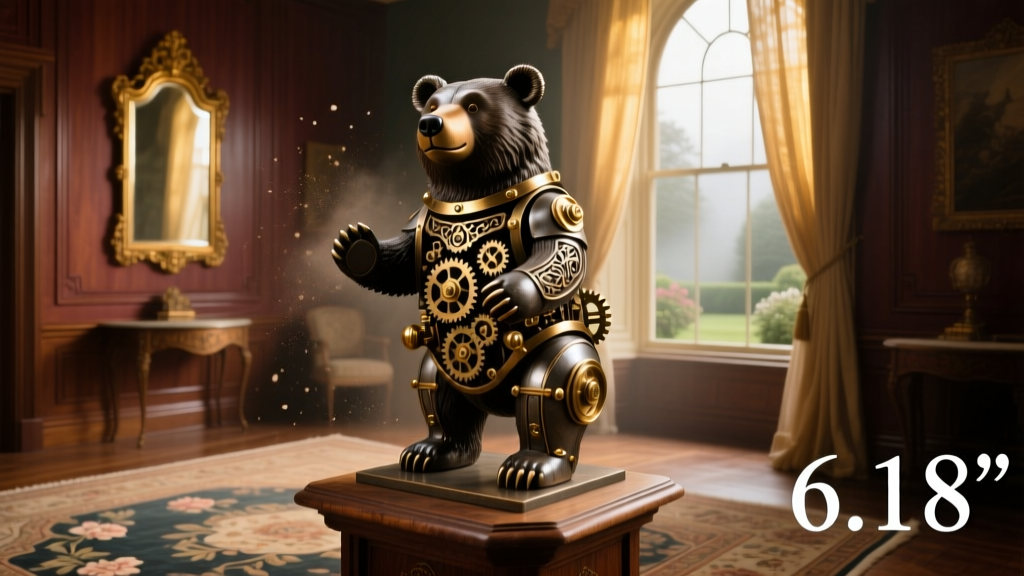
Banks Mechanical Bear on Hind Legs: A Cast Iron Masterpiece at 6⅛ Inches

Possible Outlaw Tintype Photo: Who Are They? Authenticating 19th-Century Frontier Portraits

Moorcroft Pansy Vase, 1930: A Study of Art Pottery Heritage, Design Evolution, and Collectible Value

The 1947 Duncan Phyfe Revival Mahogany Sideboard: Catalog Number 2340248 in Context
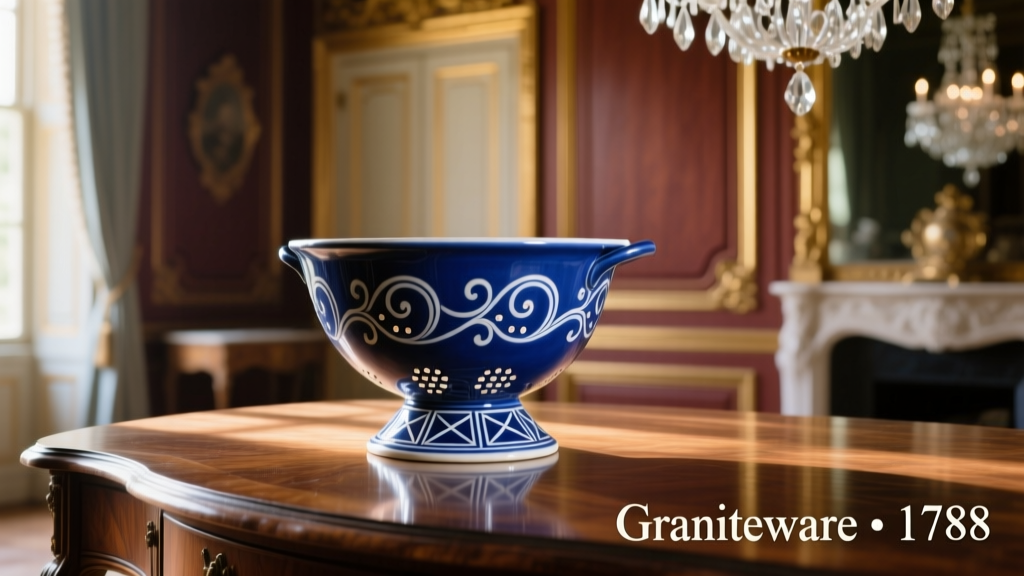
Graniteware Colander: Cobalt Blue & White Swirl, Footed Design — Identification, History, and Restoration Guide
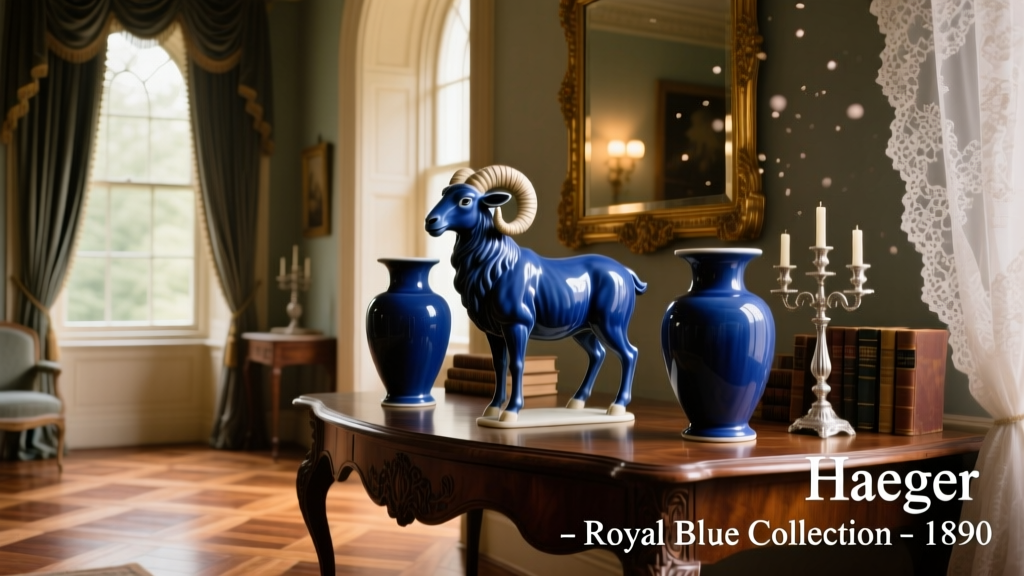
Haeger Vase Ram Figurine Blue 3-Piece Set: Identification, Provenance, and Restoration Guidelines
Thermometer Piels Real Draft Beer Round 12-Inch: A Collector’s Guide to Vintage Brewery Thermometers
Erphila Bust of Robert Burns by Ernst Bohe & Sons: A Collector’s Guide to the 5¼-Inch Porcelain Portrait