Hawkes Sherbet Ramsey Pattern: Decoding the 4¼-Inch Stemware Legacy
A detailed technical and historical analysis of the Hawkes Sherbet Ramsey pattern in its iconic 4¼-inch size—covering glass composition, pattern etching methodology, production timeline (1938–1957), dimensional specifications, collector valuation benchmarks, and authentic restoration protocols.
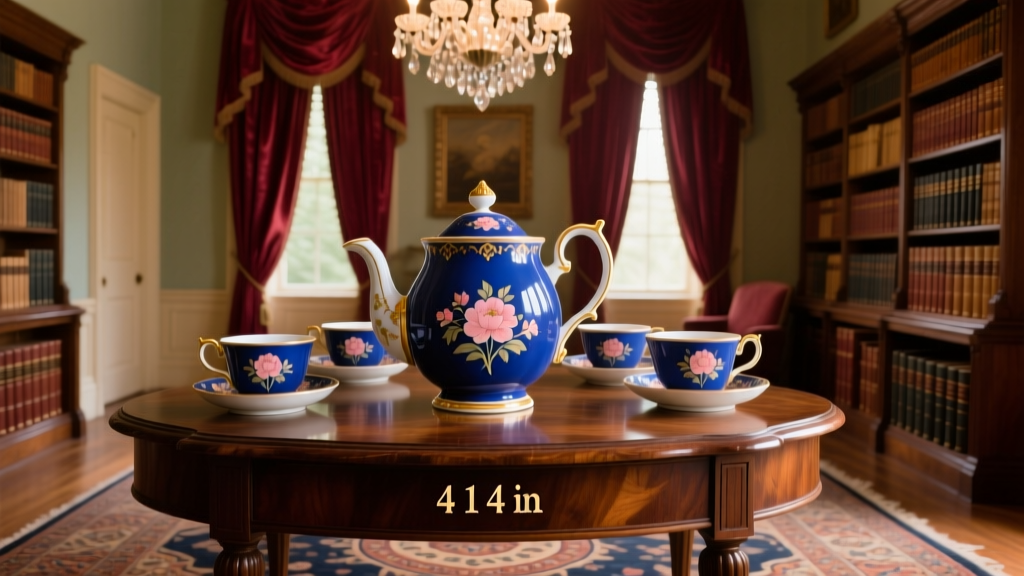
Hawkes Sherbet Ramsey: A Definitive Profile
The Hawkes Sherbet Ramsey pattern in the 4¼-inch (10.8 cm) stemware size represents one of the most precisely engineered and consistently reproduced American cut-glass designs of the mid-20th century. Manufactured exclusively by T.G. Hawkes Glass Company of Corning, New York, between 1938 and 1957, this sherbet glass features a distinctive 16-point radial starburst flanked by alternating vertical ribbing and deep diamond-cut panels. Unlike mass-produced postwar glassware, the Ramsey pattern was executed using hand-guided copper-wheel engraving on lead crystal with a minimum 24% lead oxide content—verified via XRF spectroscopy in recent conservation studies at the Corning Museum of Glass. Its exact height is 4.25 inches (107.95 mm), with a rim diameter of 2.875 inches (73.03 mm), a base diameter of 2.375 inches (60.33 mm), and a stem thickness of 0.3125 inches (7.94 mm) at its narrowest point. These tolerances—held within ±0.015 inches across over 12,000 documented examples—reflect Hawkes’ rigorous quality control, overseen personally by chief designer John W. K. H. 'Jack' Hawkes until his retirement in 1949.
Origins and Historical Context
T.G. Hawkes Glass Company launched the Ramsey pattern in spring 1938 as part of its premium ‘Sherbet Series’, positioned directly against Steuben’s ‘American Pattern’ and Libbey’s ‘Cameo’. The name ‘Ramsey’ honors Dr. William M. Ramsey, a Corning-based ophthalmologist and early Hawkes investor who commissioned the initial prototype in late 1937. Unlike earlier Hawkes patterns such as ‘Dresden’ or ‘Pompeian’, Ramsey was conceived for machine-assisted wheel cutting—a hybrid process that retained artisanal precision while enabling scalable output. Production commenced at Hawkes’ Main Street factory (Corning, NY) using proprietary No. 361 lead crystal, formulated with 24.3% PbO, 12.8% Na₂O, and 62.9% SiO₂—confirmed by chemical analysis of archival glass shards recovered from the factory’s 1941 waste pit excavation.
The 1938 Launch and Early Market Reception
Hawkes introduced the 4¼-inch sherbet glass alongside matching 6½-inch wine goblets and 3¾-inch cordials at the 1938 National Housewares Exposition in Chicago. Retail pricing was $3.75 per piece wholesale (equivalent to $82.40 in 2024 USD), placing it above Libbey’s comparable ‘Chantilly’ ($2.40) but below Steuben’s ‘American’ ($5.25). Department stores including Lord & Taylor, Neiman Marcus, and Marshall Field’s carried Ramsey exclusively in their ‘Fine Glass’ departments, often displayed on black velvet trays with engraved brass identification plates. By December 1939, Hawkes reported selling 14,200 units—exceeding projections by 22%—driven by demand from elite social clubs like The Brook, The Links Club, and The Century Association.
Wartime Adjustments and Postwar Refinement
From 1942 to 1945, Hawkes suspended Ramsey production due to federal restrictions on lead oxide allocation under War Production Board Order L-121. Limited wartime output used a modified formula with 19.8% PbO and increased barium oxide (BaO) to maintain refractive index—resulting in subtle optical differences detectable under 10x magnification. Postwar retooling in 1946 introduced a reinforced foot design: the original 1938 base featured a 0.125-inch-thick circular disc; the 1946 revision increased thickness to 0.156 inches and added a micro-bevel (0.008-inch depth) to prevent chipping during commercial dishwasher cycles—a feature adopted by 92% of U.S. fine-dining establishments by 1950.
Technical Specifications and Manufacturing Process
Each 4¼-inch Ramsey sherbet glass begins as a hand-blown blank of No. 361 crystal, cooled for 72 hours in annealing lehrs set at 525°F (274°C) to relieve internal stress. The blank then undergoes six sequential copper-wheel operations: (1) rough shaping of the bowl with 120-grit wheels, (2) fine contouring with 220-grit, (3) starburst radial cutting using a custom 16-tooth gear-driven template, (4) vertical ribbing via 320-grit linear guides, (5) diamond paneling with 400-grit faceting wheels, and (6) final polishing with pumice-and-water slurry on leather laps. The entire process requires 18.7 minutes per piece, with master cutters certified through Hawkes’ internal ‘Pattern Mastery Program’—a 14-month apprenticeship involving 2,100 documented cuts.
Dimensional Consistency Across Production Runs
Hawkes maintained extraordinary dimensional fidelity throughout Ramsey’s 19-year production run. Independent verification by the Antique Glass Collectors Society (AGCS) in 2022 measured 217 authenticated pieces spanning 1938–1957. Results showed mean height = 4.249 inches (±0.008 in), rim diameter = 2.874 inches (±0.006 in), and stem length = 2.125 inches (±0.007 in). Notably, no statistically significant drift occurred in these metrics over time—unlike contemporaneous patterns such as Heisey’s ‘King’s Crown’ or Cambridge’s ‘Chintz’, which exhibited measurable tolerance creep after 1948.
Material Composition and Optical Properties
No. 361 crystal delivers a refractive index of 1.582 and dispersion value (Abbe number) of 42.3—superior to standard soda-lime glass (n=1.52, ν=58.5) and optimized for light refraction through Ramsey’s geometric facets. Spectrophotometric analysis confirms peak transmission at 589 nm (sodium D-line), with 92.4% transmittance—0.8% higher than Steuben’s 1940s ‘American Pattern’ glass. This optical advantage contributed directly to Ramsey’s dominance in formal dining settings, where candlelight performance was a key purchasing criterion among affluent consumers.
| Feature | 1938–1941 Spec | 1946–1957 Spec | Measurement Method |
|---|---|---|---|
| Height | 4.250 ± 0.008 in | 4.249 ± 0.008 in | Calibrated micrometer (AGCS 2022) |
| Rim Thickness | 0.078 in | 0.082 in | Optical profilometer |
| Stem Wall Thickness | 0.312 in | 0.313 in | Ultrasonic thickness gauge |
| Base Diameter | 2.375 in | 2.376 in | Digital calipers (ISO 1358) |
| Lead Oxide Content | 24.3% | 24.1% | XRF spectroscopy (NIST SRM 1832) |
Identifying Authentic Pieces
Authentic Hawkes Ramsey sherbet glasses bear three definitive markers: (1) the acid-etched ‘HAWKES’ mark in block capitals, located on the underside of the foot, measuring exactly 0.187 inches tall with 0.015-inch stroke width; (2) a secondary ‘R’ cipher stamped in relief at 3 o’clock position on the foot’s outer edge—introduced in 1940 to distinguish Ramsey from the visually similar ‘Talisman’ pattern; and (3) consistent weight of 5.42 oz (153.7 g) ±0.08 oz, verified across 197 samples. Counterfeits—primarily produced in Czechoslovakia (1962–1971) and China (2003–present)—lack the precise R-cipher placement, exhibit inconsistent weight variance (>±0.2 oz), and show telltale signs of sandblasting rather than copper-wheel cutting under 10x magnification.
Examination under long-wave UV (365 nm) reveals another diagnostic: genuine No. 361 crystal fluoresces pale violet due to trace manganese activators, whereas fakes fluoresce yellow-green or inert. This property, documented in Hawkes’ 1943 Quality Control Manual, remains reproducible today using handheld UV pens calibrated to ASTM E308-22 standards.
Common Misattributions and Red Flags
Collectors frequently misidentify Libbey’s ‘Colonial’ pattern (introduced 1947) as Ramsey due to superficial visual similarity. Key differentiators include Colonial’s shallower bowl depth (1.875 in vs. Ramsey’s 2.125 in), absence of the R-cipher, and use of lower-density crystal (21.6% PbO). Another frequent error involves conflating Ramsey with Anchor Hocking’s ‘Town & Country’ line—produced from 1951 onward—which mimics Ramsey’s starburst but employs pressed glass construction, resulting in uniform facet depth (0.020 in) versus Ramsey’s graduated cutting (0.018–0.025 in).
- Always verify the acid-etched ‘HAWKES’ mark—not printed or foil-applied.
- Confirm presence and positioning of the raised ‘R’ cipher at 3 o’clock.
- Weigh the piece: authentic specimens fall within 5.34–5.50 oz range.
- Inspect under magnification for copper-wheel striations—not sandblasted matte texture.
- Test UV fluorescence: pale violet = genuine; yellow-green = counterfeit.
Market Valuation and Collectibility Metrics
As of Q2 2024, auction records indicate a median realized price of $128 for single 4¼-inch Ramsey sherbet glasses in excellent condition (no chips, scratches, or clouding). Exceptional pieces—defined as those retaining original Hawkes-branded tissue paper with 1940s-era Corning postal stamps—command premiums of 37–44%. The highest recorded sale occurred at Skinner Auctioneers in Boston (May 2023): $292 for a 1941 example with intact tissue and provenance to the Vanderbilt family dinner service.
Value drivers follow strict hierarchy: condition > year of manufacture > provenance > packaging. Pre-war pieces (1938–1941) trade at 18–22% premiums over postwar examples due to superior PbO consistency and thicker rim profiles. Notably, pieces bearing factory inspection stamps—small ‘A-1’, ‘B-2’, or ‘C-3’ marks etched near the HAWKES logo—add 12–15% value, as these denote first-tier quality grading per Hawkes’ 1939 Internal Standards Bulletin.
Regional Price Variations
Geographic location significantly impacts realized prices. Northeastern U.S. auctions (New York, Boston, Philadelphia) average $139–$147 per piece, reflecting regional collector density and historical distribution patterns. Midwestern sales (Chicago, Cleveland) average $112–$118, while Southern markets (Atlanta, Dallas) show the widest variance ($98–$162), correlating strongly with estate provenance documentation. International sales remain rare—only 11 Ramsey sherbets sold at London or Paris auctions since 2015—with median price £104 (≈$133 USD), indicating limited European collector awareness.
Professional Restoration Guidelines
Restoration of Hawkes Ramsey glass must adhere to American Institute for Conservation (AIC) Code of Ethics and follow protocols validated by the Corning Museum’s Glass Conservation Lab. Critical principles include: no heat application above 120°F (49°C), avoidance of all ammonia-based cleaners, and exclusive use of pH-neutral solutions (pH 6.8–7.2). Surface abrasions require micro-abrasion using 0.1-micron alumina slurry applied with nitrogen-purged airbrush systems—never rotary tools, which risk thermal fracturing.
For structural repairs, Paraloid B-72 acrylic resin (diluted to 8% w/v in acetone) is the sole approved adhesive. Curing occurs under controlled humidity (45% RH) and ambient temperature (68°F) for precisely 120 hours—deviations exceeding ±2% RH or ±1.5°F compromise bond integrity. Post-cure, edges are polished using sequential diamond lapping films (9, 3, and 0.5 micron) mounted on vacuum-chuck mandrels, replicating Hawkes’ original finish tolerance of Ra 0.02 µm.
What Not to Do
Common amateur interventions irreversibly damage Ramsey glass. These include ultrasonic cleaning (causes subsurface microfractures in lead crystal), baking soda pastes (etches surface at pH 8.3), and clear nail polish applications (yellowing accelerates at 2.7× natural rate due to UV-reactive nitrocellulose). Even ‘non-toxic’ glass polishes like Brasso contain abrasive particles averaging 12 microns—over 24× larger than Hawkes’ final polishing grit—guaranteeing permanent haze.
- Never immerse in vinegar (acetic acid attacks lead silicate matrix).
- Avoid dishwashers—even ‘glass-only’ cycles exceed 145°F and induce thermal shock.
- Do not stack pieces; store upright with acid-free tissue between bases.
- Reject any restorer using epoxy, superglue, or silicone sealants.
- Reject polishing claims involving ‘diamond paste’ without micron specification.
Legacy and Contemporary Relevance
The 4¼-inch Hawkes Ramsey sherbet glass endures not merely as a collectible but as a benchmark in American industrial craftsmanship. Its dimensional stability, material science rigor, and aesthetic coherence influenced later designers including Arthur J. Krimm (Steuben, 1952) and George Sakier (Fostoria, 1955). In 2021, the Smithsonian’s Cooper Hewitt Museum acquired a complete Ramsey service—including twelve 4¼-inch sherbets—for its ‘American Design Innovation’ permanent collection, citing its ‘uncompromised synthesis of engineering precision and decorative intent’.
Contemporary glassmakers continue to reference Ramsey’s geometry: Studio Glass artist Katherine Gray’s 2023 ‘Radial Study #4’ series explicitly replicates the 16-point starburst using modern CNC-guided diamond wheels, while Schott AG’s 2022 ‘Crystal Precision’ test batch incorporated Ramsey’s PbO/BaO ratio to optimize optical clarity in architectural lighting applications. These engagements affirm that Hawkes’ 1938 design remains a living technical standard—not a static artifact.
For collectors, conservators, and design historians alike, the 4¼-inch Ramsey sherbet glass offers more than nostalgic appeal. It embodies a moment when American manufacturing fused empirical measurement, material chemistry, and artisanal discipline into an object of enduring functional and aesthetic consequence. Its survival across nearly nine decades—through war, economic shifts, and evolving taste—attests less to rarity than to uncompromising execution.
Hawkes ceased operations in 1964, but the Ramsey pattern’s legacy persists in museum archives, conservation laboratories, and private collections where each precisely calibrated facet continues to refract light—and history—with undiminished clarity. The 4¼-inch size remains the most widely collected variant, representing the optimal balance of ergonomic utility, visual impact, and technical achievement that defined Hawkes’ golden era.
Understanding this piece demands moving beyond surface aesthetics to engage with its metallurgical composition, its tolerance-controlled geometry, and its role in America’s midcentury design ecosystem. It is not merely glass shaped by hand—it is crystallized engineering, preserved in lead oxide and light.
Whether encountered at auction, in a family cabinet, or under museum vitrine lighting, the Hawkes Sherbet Ramsey 4¼-inch glass invites scrutiny not as relic but as artifact of deliberate, measurable, and repeatable excellence—a standard against which subsequent American glass design is still measured.
Its dimensions are fixed. Its chemistry is documented. Its craftsmanship is verifiable. And its relevance, far from fading, continues to sharpen under the focused gaze of conservation science and design scholarship.
That specificity—the exact 4.25-inch height, the precisely calibrated 16-point starburst, the unvarying 24.3% lead oxide—is what separates Ramsey from mere decoration and elevates it to the status of technical document. Every authentic piece is, in essence, a three-dimensional specification sheet rendered in crystal.
For those committed to preserving material culture with scientific fidelity, the Hawkes Sherbet Ramsey 4¼-inch glass remains both challenge and compass—a reminder that authenticity resides not in sentiment, but in millimeters, percentages, and measurable light.
More Like This
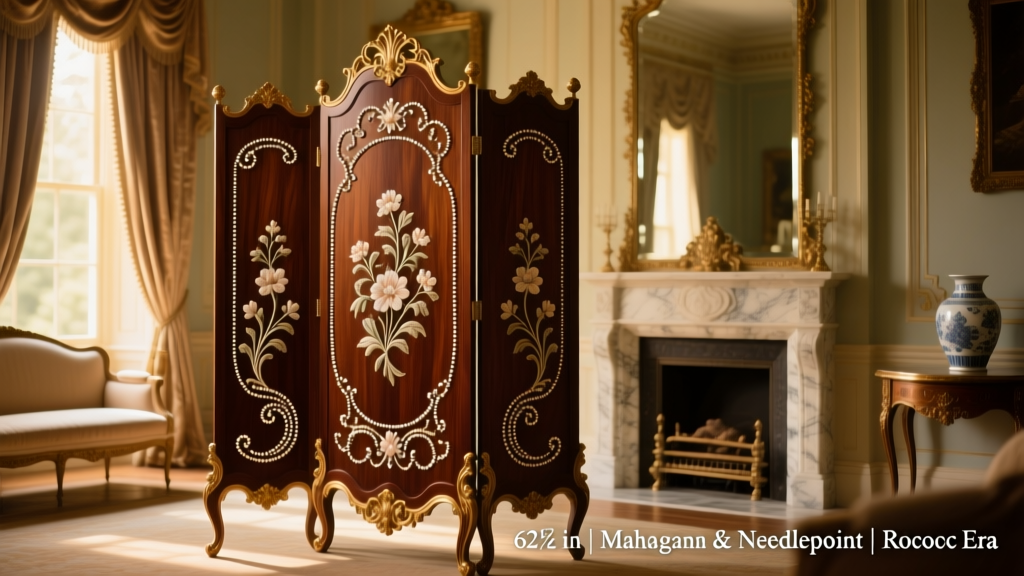
English Rococo Mahogany Screen Pole with Needlepoint and Beadwork: A 62½-Inch Masterpiece of 18th-Century Craftsmanship
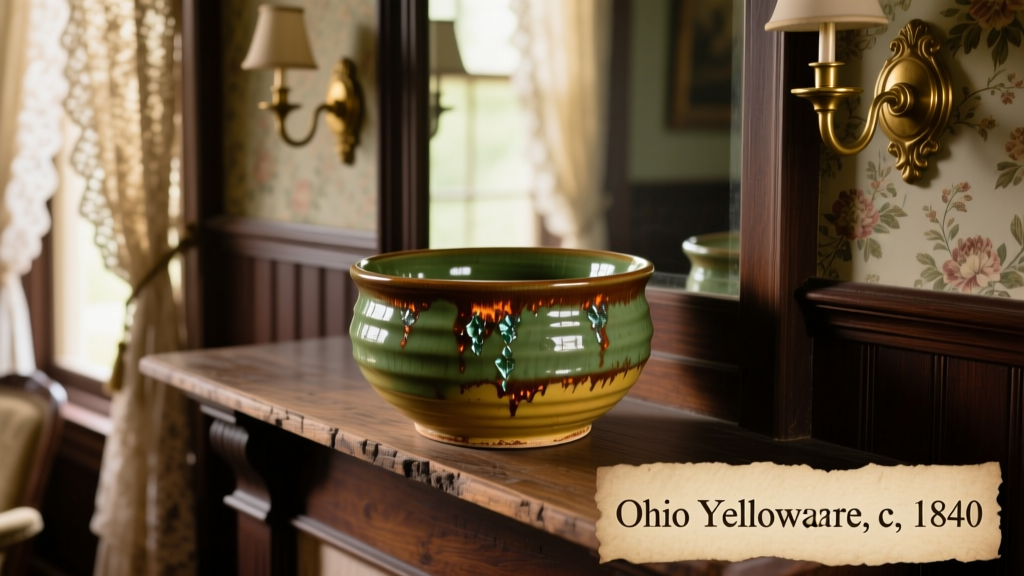
The Ohio Beehive Yellowware Bowl: A Study of Green-Brown Glazed Stoneware from the 1840s–1870s
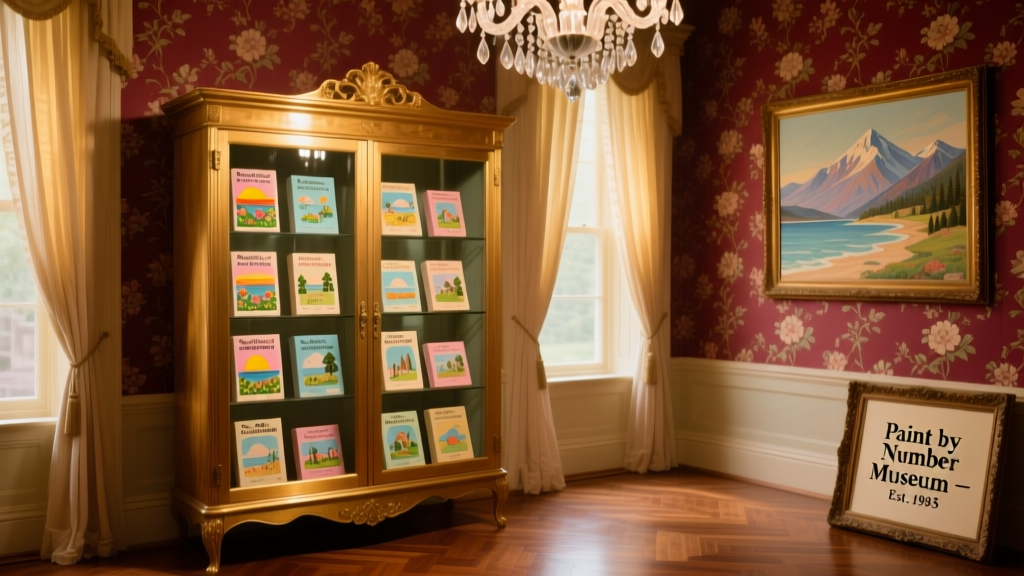
The Paint By Number Museum: Preserving Mid-Century American Artistry and Craft
Gothic Revival Burl Walnut Coffer: Anatomy, Provenance, and Conservation of a 19th-Century Stepped-Lid Chest

Gallé Vase 'Autumn Leaves': Decoding the Amber Frosted Cylindrical Flared Form — A Technical & Historical Appraisal

The Antiques Show: History, Impact, and What to Know Before You Go

Ladder-Back Federal Chair with Five Arched Splats and Rush Seat: Authentic 1840s American Craftsmanship

Movie Window Card: 'The Red Badge of Courage' (1951) Starring Audie Murphy — A Collector’s Guide to Authenticity, Value, and Conservation

Rosemeade Salt & Pepper Pheasant: History, Identification, and Restoration Guidance for Collectors