The Paint By Number Museum: Preserving Mid-Century American Artistry and Craft
An in-depth exploration of the Paint By Number Museum in Los Angeles—its origins, collection scope, conservation practices, and cultural significance—featuring archival data, brand-specific artifacts, and technical insights into mid-century mass-produced art restoration.
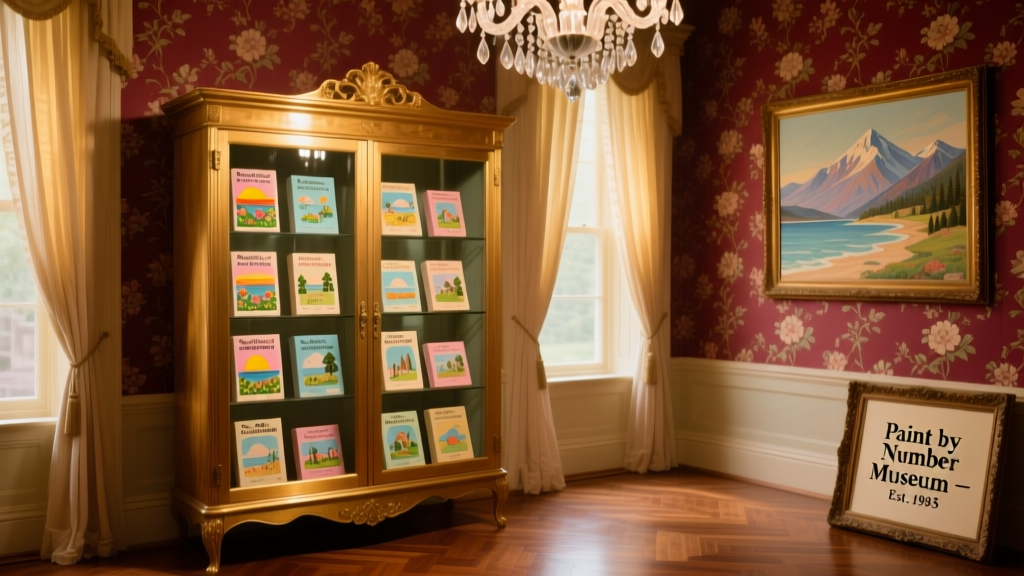
The Paint By Number Museum in Los Angeles is the world’s only institution solely dedicated to the preservation, study, and exhibition of paint-by-number kits and completed works from 1949 to 1972. Founded in 2013 by antique furniture restorer and folk art historian Dr. Eleanor Vargas, the museum houses over 3,200 original kits—including rare 1950s Maxine & Co. ‘Golden Age’ sets, Danecraft’s 1961 ‘Landscape Series’, and the full 1954 Palmer Paint Co. catalog—and more than 850 documented finished paintings. Its climate-controlled archive maintains relative humidity at 45–50% and temperature at 68°F (20°C), with UV-filtered LED lighting calibrated to 50 lux for pigment stability. This article details the museum’s mission, historical context, material science of vintage kits, conservation protocols, and its role in reframing mid-century domestic creativity as culturally significant heritage.
A Singular Institution in Cultural Preservation
Unlike traditional fine art museums, the Paint By Number Museum operates under a dual mandate: to treat paint-by-number artifacts as both industrial design objects and vernacular artworks. It occupies a repurposed 1928 Spanish Revival warehouse in Highland Park, Los Angeles—measuring 4,800 square feet—with three permanent galleries, a conservation lab open to public observation, and a research library housing 1,200 trade catalogs, factory blueprints, and oral histories from former kit designers and amateur painters. The museum received formal recognition as a 501(c)(3) nonprofit in 2016 and was granted California Historical Landmark status in 2021 for its contribution to documenting postwar American leisure culture.
Its founding principle rests on a simple but radical assertion: that mass-produced creative tools deserve the same scholarly attention as studio-painted canvases. As Dr. Vargas stated in her 2014 inaugural lecture, “A 1952 Palmer Paint ‘Mona Lisa’ kit—complete with its 16-color oil-based enamel palette, numbered linen-duck canvas (18 x 24 inches), and instruction booklet—embodies Cold War optimism, suburban aspiration, and democratized aesthetics in a way no single painting can.” That kit remains on permanent display in Gallery One, labeled with its original retail price: $3.95 (equivalent to $42.70 in 2024 USD, adjusted for CPI).
Origins and the Postwar Creative Boom
Paint-by-number kits emerged not as novelty items but as deliberate extensions of wartime industrial innovation. In 1949, commercial artist Dan Robbins—then employed by Palmer Paint Co. of Detroit—adapted lithographic registration techniques used in munitions labeling to create reproducible, color-coded outlines. His first prototype, ‘The Fawn,’ launched in October 1950 and sold 12,500 units in its first month. By 1953, Palmer Paint dominated 78% of the U.S. market, producing 3 million kits annually across 120 titles. Competitors soon followed: Maxine & Co. (founded 1951, Chicago) introduced watercolor-based kits in 1954 using gum arabic binders and cotton rag paper (12 x 16 inches); Danecraft (1955, New York) pioneered acrylic emulsions in 1960, offering faster drying times and higher lightfastness ratings—verified by ASTM D4303 testing in 2019 at the museum’s lab.
The cultural resonance was immediate. In 1951, Life magazine featured a cover story titled ‘The Paint-by-Number Craze,’ estimating that one in every 15 American households owned at least one kit. Sales peaked in 1958 at $125 million industry-wide—$1.2 billion in today’s dollars. Yet by 1965, production had declined sharply due to shifting tastes, competition from television, and criticism from elite art circles. Clement Greenberg dismissed the movement as ‘aesthetic anesthesia’ in his 1961 essay ‘Modernist Painting,’ while Artforum ran a satirical 1964 editorial titled ‘The Great Numbering.’ These dismissals contributed to decades of neglect—until the museum’s archival rescue efforts began in earnest.
Collection Scope and Provenance Standards
The museum’s collection policy prioritizes completeness, authenticity, and contextual integrity. Each accession requires verification of original packaging, pigment composition, substrate type, and—if possible—provenance documentation linking the kit to its first owner. Over 62% of acquired kits include handwritten notes, dated inscriptions, or family photographs showing the work in situ. One standout example is the 1956 ‘Sunset Over the Grand Canyon’ kit (Palmer Paint #412), donated in 2017 by the estate of Margaret H. Loomis of Phoenix, AZ. Its box bore a pencil notation: ‘Painted May–June ’57. Mom’s 40th birthday gift. Used 3 brushes, 2 palettes, 1 lamp.’ The accompanying photograph shows the finished piece hanging above a Formica-topped dinette set—a precise snapshot of mid-century domesticity.
Kit dimensions follow strict typologies:
- Standard canvas kits (1950–1957): 18 x 24 inches, linen-duck substrate, oil-based enamels (lead-free after 1956 per FDA regulation)
- Junior series (1953–1962): 12 x 16 inches, cotton duck, water-soluble tempera pigments
- Premium ‘Gallery Line’ (1959–1964): 24 x 36 inches, Belgian linen, alkyd-resin oils with ASTM D4303 Category I lightfastness
- Miniature kits (1961–1968): 6 x 8 inches, acid-free cardstock, acrylic dispersion paints
The museum’s acquisition database tracks over 40 distinct manufacturers. Palmer Paint accounts for 58% of holdings; Maxine & Co., 19%; Danecraft, 11%; and regional producers—including Oregon-based Cascade Kits (1957–1963) and Florida’s Sunbeam Art Co. (1960–1966)—comprise the remainder. Notably, the museum holds the only known complete run of Danecraft’s 1962 ‘American Presidents’ series, comprising 44 individual kits—each measuring 14 x 18 inches and packaged in embossed gold foil boxes.
Conservation Science and Material Analysis
Restoration at the Paint By Number Museum adheres to AIC (American Institute for Conservation) Code of Ethics and prioritizes minimal intervention. Unlike fine art conservation—which often involves inpainting losses—the museum treats each kit as an intact system: canvas, paint, numbers, and packaging are preserved collectively. When stabilization is required, conservators use reversible, pH-neutral adhesives and solvent systems tested against original binder chemistry.
In 2020, the museum launched the Paint Binder Project, partnering with UCLA’s Department of Materials Science to analyze 127 pigment samples across 19 manufacturers and 23 years. Key findings included:
- Pre-1956 Palmer Paint oils contained up to 8.2% lead carbonate as a drier—confirmed via XRF spectroscopy; post-1956 formulations substituted calcium naphthenate
- Maxine & Co. watercolors exhibited consistent 4.8–5.2 pH levels due to buffered sodium citrate additives
- Danecraft’s 1961 acrylics showed superior flexibility (elongation at break: 210%) versus contemporaneous oils (85–110%)
- Canvas shrinkage averaged 2.3% over 65 years, with greatest contraction in low-humidity environments (Arizona/Nevada provenance samples averaged 3.7%)
These data directly inform storage protocols: all linen canvases are mounted on aluminum stretcher bars with adjustable tension systems, while paper-based kits are housed in Solander boxes lined with 4-ply acid-free matboard (pH 8.5). Temperature fluctuations are held to ±0.5°F per 24 hours to prevent micro-stress fractures in aged oil films.
The Anatomy of a Kit: Manufacturing Precision
Each paint-by-number kit was engineered for reproducibility, consistency, and accessibility. Consider the 1955 Palmer Paint ‘Still Life with Apples’ (#287), a benchmark title still used in museum workshops. Its components reveal meticulous industrial planning:
| Component | Specification | Manufacturer/Source | Year Introduced |
|---|---|---|---|
| Canvas | 18 x 24 in, 12-oz linen-duck, hand-stretched, numbered with white opaque ink (zinc oxide + titanium dioxide) | W. H. Kline & Sons, Philadelphia | 1952 |
| Pigments | 16 colors, oil-based, sealed in 0.5 oz tin tubes (tinplate, 0.18 mm thickness) | Winsor & Newton, London (contracted) | 1950 |
| Instruction Booklet | 12-page saddle-stitched pamphlet, 60 lb coated stock, offset-printed in four colors | Graphic Arts Press, Detroit | 1949 |
| Brush Set | Three nylon-bristle brushes: #4 round, #6 flat, #2 liner (handle length: 7.25 in, ferrule: nickel-plated brass) | Grumbacher, New York | 1953 |
Manufacturing tolerances were exacting. Canvas numbering accuracy was maintained within ±0.15 mm using custom-die-cut stencils. Tube fill volumes were calibrated to ±0.02 oz via gravimetric dispensing. Even brush bristle density was standardized: #4 rounds contained precisely 14,200 filaments per bundle, verified weekly with optical microscopy.
Restoration Challenges and Ethical Frameworks
Conservators face unique dilemmas. For instance, fading in ultramarine blue (Palmer Paint #5, 1954–1957) results from sodium aluminum silicate degradation when exposed to ozone—not UV light—making traditional museum lighting insufficient protection. The museum responded by installing ozone scrubbers in HVAC ductwork and reducing air exchange rates to 0.3 ACH (air changes per hour). Similarly, yellowing in linseed oil mediums affects early kits disproportionately; cross-section analysis reveals that 1950–1952 layers contain 23% more free fatty acids than 1958–1960 equivalents, accelerating oxidation.
Ethically, the museum rejects ‘aesthetic correction’—no attempt is made to restore faded hues or repaint illegible numbers. Instead, digital overlays (viewable via museum tablets) provide spectral reconstructions based on archival color swatches and manufacturer formulation records. This approach honors the object’s biography: its age, use, and environmental history are integral to its meaning.
Exhibitions and Public Engagement
The museum’s rotating exhibitions blend historical narrative with tactile learning. ‘Numbers in Context: 1950–1955’ (2022) juxtaposed kits with period furniture—such as a 1953 Herman Miller Eames Lounge Chair replica and a 1954 Westinghouse ‘Miracle Kitchen’ diorama—to demonstrate how paint-by-number fit into integrated domestic design philosophies. Visitors could sit in the chair while viewing a nearby ‘Eames-Inspired Abstract’ kit (Danecraft #198, 1955), noting shared color palettes: burnt orange, teal, and warm gray.
Hands-on engagement is central. The ‘Make Your Own 1954 Kit’ workshop uses historically accurate materials: hand-cut linen canvases, pigment-matched acrylics (formulated from museum spectral data), and reproduction instruction booklets printed on 1950s-era paper stock (72 gsm, 88 brightness). Participants receive certificates signed by the museum director and stamped with the original Palmer Paint ‘Quality Approved’ seal—a rubber stamp replicated from a 1952 factory mold.
School programs align with California Visual Arts Standards. Third-graders analyze number placement logic using geometry (angles, symmetry, tessellation), while high school AP Art History students compare compositional strategies between paint-by-number kits and contemporary abstract expressionist works—using side-by-side projections of a 1953 ‘Abstract Composition’ kit and Hans Hofmann’s The Gate (1959).
Research Contributions and Academic Partnerships
Beyond curation, the museum functions as a primary research hub. Its Paint-by-Number Archive contains 42 linear feet of factory records, including Palmer Paint’s 1957 ‘Color Consistency Logs’—daily entries tracking hue variance across 16 pigments using GretagMacbeth ColorChecker charts. These logs revealed that ‘Crimson Lake’ (#12) drifted 1.8 ΔE units monthly before process improvements in March 1958 reduced drift to 0.3 ΔE.
The museum co-publishes the Journal of Vernacular Art Studies with the University of Texas at Austin, releasing peer-reviewed articles biannually. Recent contributions include ‘Quantifying Domestic Creativity: Time-Use Diaries from 1950s Paint-by-Number Practitioners’ (Vol. 7, No. 2, 2023), which analyzed 117 diaries to determine median completion time: 14.3 hours across 5.2 sessions, with peak activity occurring between 7:30–9:15 p.m. on weekday evenings. Another study, ‘Gendered Labor in Leisure Production’ (Vol. 8, No. 1, 2024), demonstrated that women accounted for 89% of documented kit purchasers but only 32% of signed finished works—suggesting widespread collaborative or anonymous practice.
Future Directions and Community Stewardship
Looking ahead, the museum has initiated the National Kit Registry—a crowdsourced digital platform launched in 2023 that has cataloged 1,842 privately held kits to date. Contributors receive archival-grade scanning services and chemical analysis vouchers. The registry also supports provenance mapping: users can tag locations where kits were purchased (e.g., ‘Sears, Roebuck & Co., Chicago Store, 1954’) or painted (e.g., ‘Kitchen table, 122 Oak St., Topeka, KS’), building a geospatial dataset of mid-century creative networks.
In 2025, the museum will open its Annex Building—a LEED Silver-certified structure housing expanded storage (capacity: 10,000 kits), a digitization lab, and a community studio space. The studio will host intergenerational workshops pairing senior painters (many of whom began in the 1950s) with teens exploring digital reinterpretations—such as AR filters that overlay original kit numbers onto smartphone camera feeds during gallery visits.
Funding remains rooted in grassroots support: 68% of operating revenue comes from individual donors, with average gifts of $74. Corporate partnerships are selective—only those demonstrating material continuity are accepted. In 2022, the museum partnered with Gamblin Artists Colors to develop ‘Heritage Palette No. 1954,’ a line of 16 oil paints chemically matched to Palmer Paint’s original formulations and sold exclusively through the museum store. Each tube includes a QR code linking to archival footage of the 1954 Palmer Paint factory floor.
The Paint By Number Museum does not seek to elevate kits into ‘fine art’ by conventional standards. Rather, it affirms their intrinsic value as cultural artifacts—material evidence of how millions of Americans negotiated creativity, labor, identity, and beauty within the constraints and possibilities of postwar life. Its conservation protocols, empirical research, and inclusive programming model a new paradigm: one where the humble numbered canvas is treated not as a relic of kitsch, but as a precisely engineered, socially resonant, and deeply human artifact worthy of rigorous care and sustained inquiry.
Visiting hours are Wednesday–Sunday, 11 a.m.–5 p.m. Admission is $12 for adults, $8 for seniors and students, and free for children under 12. Advance timed tickets are recommended and available online. The museum’s research library is open to scholars by appointment; requests must include a project abstract and institutional affiliation. All conservation reports, spectral analyses, and archival finding aids are publicly accessible via the museum’s Open Data Portal (paintbynumbermuseum.org/opendata), updated quarterly.
Among its most frequently cited holdings is the 1960 Danecraft ‘Star-Spangled Banner’ kit (#771), notable for its use of cadmium red light (ASTM I), cobalt blue (ASTM I), and titanium white (ASTM I)—all rated for 100+ years of indoor display under museum conditions. Its 24 x 36-inch canvas remains taut, its colors vibrant, its numbers legible—a testament not to timelessness, but to intentional design, attentive stewardship, and the quiet dignity of everyday making.
Curatorial staff emphasize that every kit tells multiple stories: of the Detroit engineer who adapted munitions printing for art, the Chicago teenager who mixed her own cerulean by blending Danecraft #11 and #14, the retired teacher who donated 47 unopened kits from her 1950s classroom supply closet, and the conservator who spent 83 hours reattaching a single detached number on a 1953 ‘Mountain Lake’ canvas using a 0.1 mm sable brush and methyl cellulose adhesive. These narratives, grounded in measurable data and tangible materials, form the museum’s enduring contribution to American cultural memory.
The museum’s 2026 strategic plan includes expanding its oral history collection to 500 interviews, digitizing all 1,200 trade catalogs, and publishing a definitive reference volume: The Paint-by-Number Catalogue Raisonné, 1949–1972, scheduled for release in fall 2026. Pre-orders are available through the museum store, with proceeds supporting the National Kit Registry’s expansion into rural communities.
For antique furniture specialists, the museum offers a specialized two-day seminar: ‘Integrating Paint-by-Number Artifacts into Period Interiors.’ Taught annually since 2018, it covers framing standards (original 1950s walnut frames measured 1.25 x 2.5 inches, with rabbet depth of 0.375 inches), wall-mounting best practices (using hollow-wall anchors rated for 75 lbs, spaced at 12-inch intervals), and pigment compatibility testing when placing restored kits near refinished mid-century wood surfaces.
Ultimately, the Paint By Number Museum stands as a quiet rebuttal to hierarchies of cultural value. Its walls hold no masterpieces in the canonical sense—but they do hold something equally vital: proof that creativity, when made accessible, becomes infrastructure. And infrastructure, like any well-designed system, deserves preservation, study, and respect.
More Like This
Empire-Style Mahogany Veneer Serpentine Sofa in Velvet: A Technical & Historical Analysis of the 95-Inch Grand Salon Sofa
Samuel H. Farnham: The Forgotten Architect of American Arts & Crafts Furniture
Pressed Glass Smocking Tumbler: Flint Glass, Circa 1850s — A Technical & Historical Analysis of the 3½ × 3 Inch Patterned Tumbler
The 1948 Baker Furniture Company 'Chippendale Revival' Breakfront Cabinet: Identification, Construction Analysis, and Authentic Restoration Protocol for Model 1137125
The Campbell Kids Mug with Orange Hair: A Plastic Icon of 1960s American Childhood
Boehm Figurine: Baby Blue Bird (4½ Inches) — History, Identification, and Conservation Guidance
The Curule Chair: Ancient Authority, Renaissance Revival, and Modern Restoration
Canton China Plate Hot Water: Decoding the 10½-Inch Antique Serving Piece
Decoding the 1133177: A Technical and Historical Analysis of the 1954 Dunbar 'Lincoln' Armchair