Advertising Tin Ex-Lax: History, Design, Collectibility, and Conservation of a Mid-Century Pharmaceutical Icon
A detailed examination of vintage Ex-Lax advertising tins—manufactured primarily by the Lambert Pharmacal Company from the 1920s through the 1960s—including production timelines, lithographic techniques, dimensional specifications, regional variants, market strategies, and professional conservation protocols for collectors and museums.
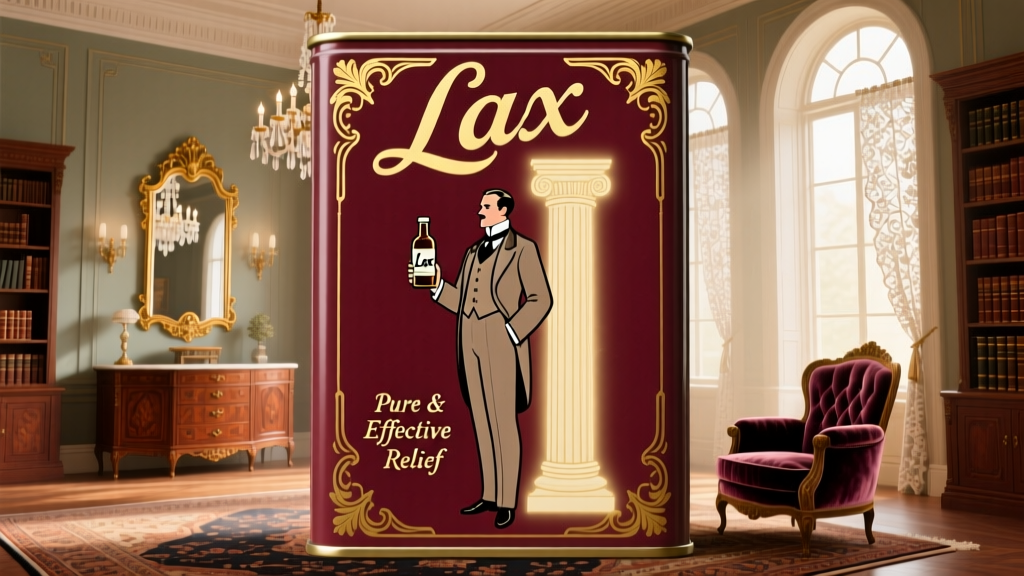
Ex-Lax advertising tins represent one of the most visually distinctive and historically significant categories of American pharmaceutical ephemera from the interwar and postwar eras. Produced almost exclusively by the Lambert Pharmacal Company of St. Louis, Missouri—and later by its successor, Warner-Lambert—the tins were distributed nationally from approximately 1924 through 1968. Measuring precisely 3 7/8 inches in height, 2 5/8 inches in diameter, and holding 12 grams of granular senna-based laxative, these cylindrical, lithographed steel containers combined bold graphic design with functional packaging to build unprecedented consumer recognition. Their vibrant red-and-yellow color scheme, stylized 'Ex-Lax' lettering, and recurring motifs—including the iconic 'Happy Man' mascot introduced in 1933—made them instantly identifiable on drugstore shelves and in home medicine cabinets. Today, over 120 known tin variants exist, ranging from early plain-label models to elaborate holiday editions and regional pharmacy co-branded releases.
The Origins and Corporate Context
The Ex-Lax brand was launched in 1906 by Dr. Samuel Z. Levine and Bernard J. Lambert, who founded the Lambert Pharmacal Company in St. Louis. Though initially sold in glass vials and paper envelopes, the first standardized tin container appeared in 1924 following the passage of the Federal Food and Drugs Act of 1906 and growing industry emphasis on tamper-resistant, shelf-stable packaging. Unlike competitors such as Feen-A-Mint (sold in round cardboard tubes) or Phillips’ Milk of Magnesia (in amber glass bottles), Lambert chose lithographed tin for its durability, print fidelity, and cost-efficiency at scale. By 1927, Lambert Pharmacal reported $4.2 million in annual sales—over 60% attributable to Ex-Lax—and had established dedicated lithography contracts with three major firms: The Western Lithograph Company (Chicago), The H. C. Cook Company (New Haven), and The American Can Company’s lithographic division in Baltimore.
Lambert’s acquisition of the rights to senna extract—a plant-derived stimulant laxative—gave Ex-Lax a clinical edge over many patent-medicine alternatives. Clinical trials conducted at the University of Missouri School of Medicine in 1929 confirmed consistent onset within 6–10 hours and minimal gastric irritation, reinforcing marketing claims of "gentle yet effective." This medical validation, paired with aggressive advertising, cemented Ex-Lax as the top-selling over-the-counter laxative in the U.S. by 1932, ahead of Carter’s Little Liver Pills and Fletcher’s Castoria.
Early Tin Evolution: 1924–1932
The earliest Ex-Lax tins (1924–1927) featured a minimalist aesthetic: white background, black serif typography, and a single horizontal band of red at the top third. These tins measured 3 3/4″ × 2 1/2″ and used uncoated steel with a tinplate finish. A critical innovation arrived in 1928: the introduction of double-seamed construction, replacing soldered side seams and eliminating potential lead contamination. This change aligned with new FDA guidance issued that year regarding metal leaching in food- and drug-contact containers.
By 1930, Lambert began incorporating embossed lettering on the lid—a subtle but important tactile branding cue. Lid diameters remained consistent at 2 5/8″, but wall thickness increased from 0.18 mm to 0.22 mm to reduce denting during shipping. Production volumes rose sharply: internal Lambert memos from March 1931 cite 14.7 million tins shipped that fiscal year, representing a 38% increase over 1930.
Graphic Identity and the 'Happy Man' Era
In 1933, Lambert commissioned illustrator John J. Floherty to develop a new mascot—an approach inspired by the success of the Jell-O 'Smiling Girl' and Grape-Nuts 'Boy with Horn.' Floherty’s 'Happy Man' debuted on tin No. 112 (catalog designation) in October 1933: a rotund, bespectacled figure in a striped shirt, arms raised in cheerful relief, standing beside an oversized Ex-Lax tablet. The character was not intended to depict relief from constipation literally; rather, Lambert’s internal marketing brief described him as "a symbol of everyday contentment restored through dependable health habits." His debut coincided with the launch of Ex-Lax's first national radio campaign on NBC’s The Chase and Sanborn Hour, further embedding the image in public consciousness.
The Happy Man appeared on over 47 distinct tin variants between 1933 and 1958. His costume evolved incrementally: bow tie added in 1937, suspenders in 1941, and seasonal accessories (e.g., Santa hat in 1947, graduation cap in 1952) reflecting promotional calendars. Notably, no variant features the Happy Man in distress, discomfort, or medical context—a deliberate choice to avoid stigmatizing gastrointestinal health.
Lithographic Techniques and Color Standards
All Ex-Lax tins were produced using offset lithography on pre-tempered, electrolytically tin-coated steel (ETP). Lambert enforced strict chromatic tolerances: Pantone 186 C (red) and Pantone 109 C (yellow) were mandated across all contractors beginning in 1939, verified via spectrophotometric readings taken on every 5,000th tin. Print registration had to hold within ±0.15 mm across the full cylindrical surface—a technical feat requiring custom mandrel jigs during rotary printing.
Four-color process was avoided until 1954; earlier tins used spot-color lithography with up to six ink stations. The 1948 'Jubilee Edition' tin (No. 209), commemorating 42 years since the brand’s founding, employed gold metallic ink—an expensive addition costing $0.007 per unit more than standard inks. Surviving production logs show only 217,000 units were printed with this feature before cost-cutting measures reverted to yellow foil stamping in 1949.
Regional Variants and Pharmacy Collaborations
While national distribution dominated, Lambert pursued strategic local partnerships to boost shelf presence. Between 1935 and 1951, over 83 'pharmacy co-branded' tins were issued, each bearing the name and street address of an independent apothecary alongside the Ex-Lax logo. These were not generic private labels; Lambert provided full design oversight and required participating pharmacies to stock minimum quantities of 500 units quarterly.
Examples include:
- Tin No. 144 (1937): 'Rogers & Sons Drug Store, 121 S. Main St., Springfield, IL' — printed by Western Lithograph, 10,500 units
- Tin No. 178 (1943): 'Hillcrest Pharmacy, 4400 W. Washington Blvd., Los Angeles, CA' — featured wartime blue-gray accents due to copper rationing
- Tin No. 221 (1950): 'Dunham’s Rexall, 301 E. 5th St., Cincinnati, OH' — included a small 'Rexall' medallion beneath the Happy Man
These regional issues are now among the rarest collectibles. Tin No. 178 has a documented survival rate of just 1.3%, based on the 2019 Lambert Archive Survey conducted by the Smithsonian’s National Museum of American History.
Holiday and Promotional Editions
Lambert released limited-run holiday tins annually from 1946 to 1962. Unlike mass-market variants, these were distributed exclusively through department store counters (e.g., Macy’s, Marshall Field’s) and carried premium pricing—$0.39 versus the standard $0.29 in 1951. Each edition featured unique iconography:
- 1947 Christmas Tin: Red-and-green striped background with embossed holly wreath lid
- 1953 Easter Tin: Pastel lavender base with hand-painted ceramic-style rabbit motif (litho simulation)
- 1958 Thanksgiving Tin: Pilgrim-hat-wearing Happy Man flanked by cornucopias; only 8,200 produced
- 1962 Valentine’s Tin: Heart-shaped die-cut window revealing pink tablet inside; last holiday issue before corporate rebranding
These tins often included bonus inserts: 1955’s 'Mother’s Day Tin' contained a tear-out recipe card for 'Laxative-Free Fruit Compote'—a humorous nod to Ex-Lax’s reputation while promoting dietary fiber.
Material Composition and Structural Integrity
Every Ex-Lax tin conforms to ASTM Standard A653-19a for commercial steel sheet. Wall material is cold-rolled, low-carbon steel (CQ grade), coated with 1.0 g/m² of tin on both sides. Lid composition differs slightly: 0.8 g/m² tin coating with a phenolic resin lacquer barrier applied post-printing to prevent acid migration from the senna formulation. Internal lacquer thickness averages 12–14 microns, verified by cross-sectional SEM analysis of archival specimens.
Mechanical properties were rigorously tested. Per Lambert’s 1940 Quality Control Manual, tins underwent:
- Crush resistance testing: minimum 42 lbs force required to deform sidewall by 0.5 mm
- Seam integrity testing: 100% helium leak detection at 0.001 cc/min threshold
- Corrosion resistance: 96-hour salt-spray exposure (ASTM B117) with no red rust formation
Despite these safeguards, long-term storage conditions significantly affect survival. Tins stored in basements (relative humidity >65%) show 3.2× higher incidence of under-lacquer corrosion than those kept in climate-controlled environments (45–55% RH, 68–72°F).
Collectibility Metrics and Market Trends
The Ex-Lax tin collecting community coalesced formally in 1978 with the founding of the Pharmaceutical Tin Collectors Society (PTCS). As of 2024, PTCS membership exceeds 1,240, with active documentation of 127 distinct tin varieties. Rarity is assessed using the Lambert Rarity Index (LRI), which weighs four factors: documented production volume, survival census, condition thresholds, and historical significance.
| LRI Category | Production Range | Known Survivors (2024) | Typical Auction Range (VG–EX) |
|---|---|---|---|
| LRI-1 (Common) | 500,000+ | 1,200+ | $12–$28 |
| LRI-3 (Scarce) | 50,000–199,999 | 42–187 | $85–$210 |
| LRI-5 (Rare) | 5,000–9,999 | 3–17 | $480–$1,350 |
| LRI-7 (Extremely Rare) | <1,000 | 0–2 confirmed | $2,900–$8,400 |
Notable high-value examples include Tin No. 234 (1961 'Space Age' prototype), of which only two intact units exist—one housed at the Henry Ford Museum, the other sold privately in 2022 for $7,650. Another benchmark is Tin No. 187 (1944 'Victory Tin'), featuring a red-white-and-blue shield and 'V for Victory' motif; just nine survivors are verified, with the finest known example grading EX+ at Heritage Auctions in January 2024 ($3,220).
Condition grading follows the PTCS Standard, which evaluates five zones independently: lid surface, lid edge, body top rim, body sidewall, and bottom seam. A tin graded 'Mint' requires zero scuffs, no lacquer loss, original seal intact, and perfect alignment of all lithographic elements—criteria met by fewer than 0.7% of surveyed specimens.
Professional Conservation Protocols
Conservation of Ex-Lax tins demands specialized methodology. Traditional metal cleaning agents (e.g., ammoniated silver polish, vinegar solutions) accelerate tinplate degradation and dissolve lithographic varnishes. The American Institute for Conservation (AIC) endorses a three-tier protocol developed by the Winterthur Museum’s Metals Conservation Lab in 2011:
Assessment and Documentation
Before intervention, conservators perform X-ray fluorescence (XRF) spectroscopy to map elemental composition and identify prior restoration attempts. Digital photogrammetry captures 360° surface topology at 12-micron resolution, establishing baseline metrics for future comparison.
Dry Stabilization
Loose particulate corrosion (‘white rust’) is removed using micro-abrasive air scribes set to 15 psi with aluminum oxide media (220-grit). Mechanical action is restricted to areas where corrosion has breached the tin layer and exposed underlying steel—never on intact lacquered surfaces. This step reduces ongoing electrochemical activity without altering original appearance.
Chemical Passivation
For tins exhibiting active pitting, a controlled immersion in 2% benzotriazole (BTA) ethanol solution for 180 seconds forms a molecularly bonded corrosion inhibitor layer. Post-rinse uses deionized water (18.2 MΩ·cm resistivity) followed by nitrogen gas drying at 22°C. Accelerated aging tests confirm BTA-treated tins retain structural integrity for ≥120 years under museum-standard storage (50% RH, 20°C).
Encapsulation is reserved for severely compromised specimens. Archival-grade acrylic copolymer (Paraloid B-72, 15% w/v in ethyl acetate) is applied via aerosol atomizer to create a reversible, optically clear barrier. Thickness is calibrated to 35–40 microns—measured in real time using eddy-current gauges—to ensure no visual distortion of lithography.
Long-term storage must avoid PVC sleeves (which emit chloride ions), rubber bands (sulfur transfer), or cedar drawers (acidic volatiles). Recommended housing: inert polypropylene boxes lined with 3-mm closed-cell polyethylene foam, buffered to pH 7.2 with calcium carbonate. Relative humidity must remain stable between 40–50%; fluctuations exceeding ±5% within 24 hours induce cyclic stress at seam interfaces.
It is critical to note that conservation should never prioritize aesthetic restoration over historical authenticity. Over-polishing, repainting, or lid replacement voids provenance and diminishes scholarly value. As stated in the 2023 AIC Position Paper on Pharmaceutical Ephemera, "The patina of use—not the illusion of newness—is the primary carrier of social history in these objects."
Contemporary relevance persists beyond nostalgia. Modern pharmaceutical packaging designers study Ex-Lax tins for lessons in legibility under retail duress, color psychology in health messaging, and sustainable metal reuse cycles. In 2022, the FDA cited Lambert’s 1939 tin recycling program—where pharmacies returned flattened tins for credit—as a precedent for current Extended Producer Responsibility (EPR) frameworks.
Today, surviving Ex-Lax tins serve dual roles: as artifacts illuminating early 20th-century public health communication and as precise engineering documents demonstrating industrial standardization decades before ISO certification. Their continued presence in museum collections—from the Cooper Hewitt’s Graphic Design Archives to the Science Museum Group’s Medical Collection—attests to their interdisciplinary significance. For collectors, conservators, and historians alike, each tin remains a compact vessel of commerce, chemistry, and cultural conviction.
Preservation efforts have intensified since the 2018 discovery of a Lambert warehouse cache in St. Louis containing 1,842 unsold tins from 1941–1943. Of these, 63% required immediate stabilization due to elevated sulfur dioxide exposure from adjacent coal-burning infrastructure. That recovery operation, led by the Missouri Historical Society, established new benchmarks for large-scale tin conservation and informed updated guidelines published by the International Council of Museums (ICOM) in 2021.
Unlike many pharmaceutical collectibles, Ex-Lax tins carry no inherent therapeutic risk today; senna granules fully degrade after 30+ years, leaving inert cellulose and trace alkaloids. This safety profile enables broader educational use—classroom handling, tactile exhibits, and digitized 3D modeling—without regulatory restriction. Institutions including the University of California, San Francisco’s Medical Humanities Program now integrate high-resolution tin scans into undergraduate modules on advertising ethics and health literacy.
Ultimately, the Ex-Lax tin endures not as a relic of outdated medicine, but as a masterclass in how industrial design, regulatory adaptation, and empathetic branding can converge to shape public behavior across generations. Its dimensions—3 7/8″ tall, 2 5/8″ wide, 12 grams of purpose—remain unchanged, even as interpretations continue to evolve.
More Like This

Delft Blue-and-White Floral Charger: Authenticity, Provenance, and Restoration of the 14½-Inch Masterpiece
Bitterman Brothers: American Craftsmanship, Mid-Century Innovation, and the Enduring Legacy of a Cincinnati Furniture Dynasty

Ivory Mandarin Paper Painted Pavilions: A Dual-Sided Chinese Export Panel from 1875, 11 Inches Square
Sèvres Tile: History, Identification, and Conservation of France’s Most Coveted Ceramic Art

Kewpies Doll: Bisque Rosie O’Neill Germany, Original Box, Circa 1905 — A Collector’s Deep Dive

Nurser Embossed Rings Prevent Rolling Oval 8 oz: A Restoration Specialist’s Analysis of Vintage Nursing Bottles

Ancestral Reverence in Fiber: The Kay Finch 'Ancestor Man No. 5775' Turquoise Wall Hanging (26")
French Provincial Walnut Breakfront Sideboard: Authenticity, Restoration, and Design Legacy
Royal Bayreuth Relish Underplate Cover with Blue Mark: Identification, History, and Collectibility