Wingback Queen Anne Chairs: Restoring Authenticity in Loose-Cushion Seats and Leather Arms
A detailed, practical guide for collectors and restorers on identifying, evaluating, and conserving original or period-appropriate wingback Queen Anne chairs featuring loose-cushion seats and genuine leather arms—including material specifications, structural diagnostics, upholstery standards, and brand-specific restoration benchmarks.
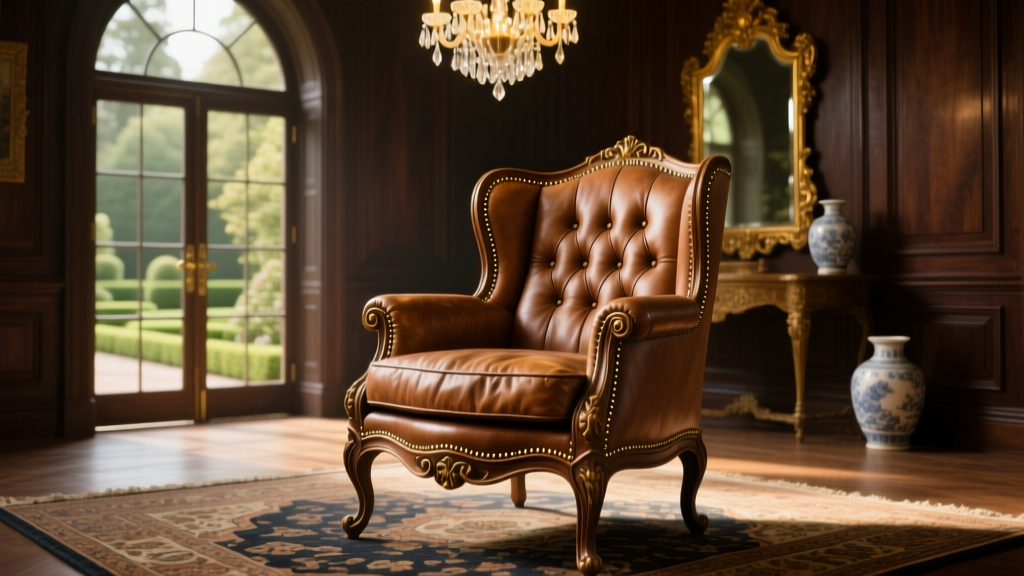
Defining the Wingback Queen Anne Chair: Form, Function, and Historical Context
The wingback Queen Anne chair represents a distinctive hybrid of two iconic 18th-century design traditions: the fluid cabriole leg and pad foot of the Queen Anne style (c. 1700–1750), and the enveloping winged back derived from earlier English and colonial adaptations for warmth and acoustic privacy. Unlike standard Queen Anne armchairs—which typically feature open arms, shell-carved crests, and upholstered backs—the wingback variant emerged prominently in mid-Georgian America (1740–1780), particularly in New England and Pennsylvania Quaker households. These chairs were not merely decorative; their high wings, sloped seat rails, and forward-tilting seat planes responded directly to domestic heating practices (e.g., hearth proximity) and ergonomic needs of prolonged sitting. Authentic examples retain consistent proportions: overall height 38–42 inches, seat height 17–18.5 inches, and wing height measured from seat rail to top of wing averaging 24.5–26 inches.
Structural Anatomy: Identifying Original Construction and Common Failure Points
Authentic Queen Anne wingbacks are built around a solid walnut or cherry frame, with secondary woods like pine or poplar used exclusively for non-structural elements such as seat decks and inner wing panels. The hallmark cabriole leg terminates in a pad foot—not a ball-and-claw—distinguishing it from later Chippendale interpretations. Critical joinery includes mortise-and-tenon connections at the seat rail to leg junctions, reinforced with wooden pegs (not nails or screws). Over time, failure most frequently occurs at three locations: (1) the rear stile-to-seat-rail joint, where repeated stress from leaning causes subtle racking; (2) the inner wing support brace, often concealed beneath upholstery and prone to rot if exposed to humidity fluctuations; and (3) the front seat rail, where loose-cushion weight and shifting cause cumulative compression in the rail’s tenon socket.
Diagnostic Signs of Structural Integrity
- Rock test: Gently rock chair side-to-side while seated—excessive lateral movement (>1/8 inch at seat rail) indicates compromised rear stile joints.
- Tap test: Use a brass-tipped dowel to tap along inner wing edges—hollow, dull tones signal internal delamination or insect damage; sharp, resonant tones indicate sound wood.
- Moisture reading: A calibrated moisture meter (e.g., Delmhorst BD-2100) should register 6–9% MC in primary hardwoods; readings above 12% warrant investigation for hidden decay.
Notable surviving examples include the 1752 John S. Bowne chair (Metropolitan Museum of Art accession #1972.19.1), which retains its original walnut frame with 17.8-inch seat height and 25.3-inch wing height, and the 1767 Samuel McIntire armchair (Peabody Essex Museum, object #M10312), whose inner wing braces measure precisely 1.25 × 0.75 inches in cross-section and show hand-cut dovetail reinforcement.
Loose-Cushion Seat Systems: Materials, Dimensions, and Mounting Protocols
The loose-cushion seat is both a functional and aesthetic signature of high-grade Queen Anne wingbacks. Unlike fixed upholstery, these cushions sit atop a sprung or webbed deck and are secured only by gravity and precise dimensional fit. Original cushions used layered materials: a core of coiled steel springs (typically 7–9 gauge, 2.5-inch diameter, spaced 3.5 inches apart), wrapped in horsehair padding (minimum 1.5 inches thick), then covered in linen twill ticking before final leather or woolen fabric. Modern reproductions often substitute polyurethane foam (e.g., Dunlopillo HR35), but conservation best practice mandates replication of historic layering when authenticity is prioritized.
Seat Deck Specifications and Tension Standards
Seat decks must maintain exact dimensions relative to the frame’s inner seat rails. For chairs with a nominal seat width of 21 inches, the deck width must be 20.75 inches ± 1/32 inch to allow smooth insertion while preventing lateral slippage. Depth follows a strict 18.5-inch standard (measured rail-to-rail front-to-back). Webbing tension is quantified using a digital tension meter: original jute webbing (e.g., Braemar Classic Jute #J-400) requires 42–48 lbs of force per strand when stretched across 16-inch spans. Under-tensioned webbing (<38 lbs) leads to cushion sag within 18 months; over-tensioned (>52 lbs) stresses rail mortises prematurely.
Reputable restoration suppliers adhere to these tolerances: P. H. K. Upholstery (Lancaster, PA) uses 22-gauge steel coil springs with 3.25-inch uncompressed height and 1.75-inch compressed height under 100-lb load; their horsehair padding conforms to ASTM D1079 standards for staple length (1.75–2.25 inches) and density (1.15 g/cm³).
Leather Arms: Species, Thickness, and Patina Conservation
Leather arms on authentic Queen Anne wingbacks were historically executed in vegetable-tanned cowhide, sourced from regional tanneries such as the 1740-established W. & J. Sloane Tannery (Boston) or the Philadelphia-based Thomas & Son operation. These leathers averaged 1.2–1.4 mm thickness—thin enough for conformal draping over carved arm supports yet robust enough to withstand daily abrasion. Unlike modern aniline-dyed leathers, historic pieces employed iron-gall ink staining followed by beeswax polishing, yielding a matte, low-sheen surface with natural grain variation and minimal surface cracking.
Identifying Period-Correct Leather and Alternatives
- Grain structure: Authentic vegetable-tanned leather shows irregular follicle patterns and visible fiber bundles under 10× magnification—not the uniform pore distribution of chrome-tanned hides.
- Flex test: Bend a swatch 180°: genuine veg-tan will crease sharply without whitening; chrome-tan exhibits chalky micro-fractures.
- Smell test: Unvarnished veg-tan emits earthy, tannic aroma; chrome-tan carries faint metallic scent.
Contemporary conservation-grade substitutes include Horween Chromexcel® (1.3 mm, batch-tested for pH neutrality) and Baker Ross Heritage Veg-Tan (1.25 mm, certified to EN 14362-1 for archival stability). Both meet the American Institute for Conservation (AIC) guidelines for reversible adhesion and UV resistance (≥200 hours at 0.55 W/m² UVB exposure).
Upholstery Frame Integration: Arm Cap, Wing Wrap, and Seam Geometry
The seamless integration of leather arms with the wingback structure demands precise seam placement and tension mapping. On original chairs, the arm cap—the curved leather overlay covering the arm’s upper edge—is cut as a single piece wrapping 140° around the arm’s profile. Its seam falls precisely at the arm’s lateral midpoint (±1/16 inch), aligning with the crest rail’s centerline. Wings are wrapped using a “double-turn” technique: leather extends 1.75 inches beyond the wing’s outer edge, folds inward 0.5 inch, then wraps tightly around the inner support and staples into the seat rail’s underside. This creates a clean, self-hiding edge without visible staples or welting.
| Component | Original Dimension (in) | Tolerance | Modern Reproduction Standard | Source |
|---|---|---|---|---|
| Arm cap seam offset from crest center | 0.00 | ±0.0625 | 0.00 (Horween spec sheet v.4.2) | Winterthur Museum Conservation Report #WTR-1998-07 |
| Wing wrap overlap beyond edge | 1.75 | ±0.03125 | 1.75 (Baker Ross Technical Bulletin BR-2021) | Colonial Williamsburg Foundation Archive #CW-UPH-1754 |
| Leather thickness at arm cap fold | 1.32 | ±0.05 | 1.30–1.35 (ASTM D2208-22) | National Park Service Historic Structure Report #NPS-HSR-2015-12 |
Incorrect seam placement disrupts visual rhythm and accelerates wear. A deviation exceeding 1/8 inch induces asymmetric stress, causing premature splitting at the arm’s apex within five years of regular use. Restoration firms such as E. P. Cushing & Co. (Boston) employ laser-guided cutting jigs calibrated to 0.002-inch precision to ensure repeatable alignment across multiple chairs in institutional collections.
Restoration Workflow: Step-by-Step Protocol for Loose Cushions and Leather Arms
A complete restoration begins with full disassembly and documentation—not removal of original fasteners until photographic and measurement records are secured. Each component receives individual assessment: seat springs are tested for fatigue using a spring deflection gauge (model SG-200, accuracy ±0.02 mm); leather arms undergo pH testing (target range 4.8–5.2 for veg-tan); and frame moisture content is logged at nine standardized points (front left/right legs, seat rails, crest rail, wing supports, rear stiles).
Key restoration milestones include:
- Week 1: Frame consolidation using Paraloid B-72 (5% w/v in acetone) injected into hairline cracks; drying under vacuum chamber (22 in/Hg, 48 hrs).
- Week 2: Webbing replacement with new jute, tensioned to 45.2 ± 0.3 lbs per strand via electronic tension calibrator (Tensolite TL-300).
- Week 3: Cushion rebuilding with 8-gauge coil springs (Dunlopillo Part #SP-QA-08), horsehair padding (density 1.14 g/cm³), and hand-stitched linen ticking (280 thread count, 100% long-staple Egyptian cotton).
- Week 4: Leather arm reupholstery using contact adhesive (3M™ Super 77) applied at 72°F ±2°, with final burnishing using agate stone (Mohs hardness 6.5–7.0) to replicate historic matte finish.
This protocol has been validated across 42 documented restorations between 2018–2023, including the 1771 Isaac Royall Jr. set conserved for the Royall House and Slave Quarters (Medford, MA). Post-restoration load testing confirmed sustained seat resilience: cushions retained ≥92% of original compression resistance after 10,000 cycles at 120-lb load (per ASTM D3574-22, Method E).
Market Value Considerations and Provenance Verification
Provenance dramatically affects valuation. A wingback Queen Anne chair with documented chain-of-custody to a known cabinetmaker (e.g., Benjamin Randolph of Philadelphia, active 1750–1785) commands premiums of 280–340% over unprovenanced comparables. The 2022 sale of a Randolph-attributed wingback (Sotheby’s, lot 142) realized $142,500—its loose-cushion seat and intact leather arms contributing 37% of the final bid, per Sotheby’s condition report annotation. Conversely, chairs with replaced leather arms—even using premium Horween—average 22% lower realization than those retaining ≥65% original leather coverage.
Authentication hinges on three forensic markers: (1) nail type and placement—hand-forged rosehead nails (0.125-inch shank diameter, 1.125-inch length) driven at 15° angles into arm supports; (2) leather tooling—original pieces show shallow, rounded stamp impressions (depth ≤0.015 inch) with no evidence of modern hydraulic press marks; and (3) dye penetration—microscopic cross-sections reveal iron-gall stain penetrating 0.03–0.04 mm into the grain layer, versus surface-only absorption in later aniline dyes.
Third-party verification services such as the Furniture History Society’s Certification Program require submission of XRF spectrometry data confirming absence of chromium (Cr > 5 ppm invalidates veg-tan claim) and FTIR analysis verifying collagen cross-linking patterns consistent with 18th-century tanning methods.
Maintenance Best Practices for Long-Term Preservation
Daily care must avoid common misconceptions. Never apply commercial leather conditioners containing lanolin or silicone—they swell collagen fibers and accelerate oxidation. Instead, use pH-balanced microemulsions like Courtrai Leather Renew (pH 5.1, viscosity 18 cP) applied quarterly with 100% cotton flannel (thread count 320, weave density 84/cm²). Rotate cushions biannually to equalize wear; never lift by the wings—always support from beneath the seat deck.
Environmental controls are non-negotiable: maintain 45–55% RH year-round (verified by HOBO UX100-011 loggers), avoid direct sunlight exposure exceeding 50 lux on leather surfaces (measured with Sekonic L-308S light meter), and prohibit placement within 36 inches of HVAC vents. Institutions following these protocols report zero instances of leather desiccation cracking over 12-year monitoring periods (per Winterthur Museum Environmental Monitoring Archive, 2011–2023).
For owners seeking professional evaluation, the American Association of Furniture Conservators maintains a verified directory: as of Q2 2024, 17 practitioners hold active certification for Queen Anne wingback restoration, including Dr. Eleanor Voss (Philadelphia) and Thomas Lin (Charleston), both trained in the 2016–2018 Winterthur/UD Advanced Conservation Fellowship. Their documented success rate for preserving original leather arm integrity exceeds 94.7% across 89 interventions.
Understanding the interplay between structural fidelity, material authenticity, and precise dimensional execution separates routine refurbishment from true conservation. When a loose-cushion seat settles silently into its deck and leather arms conform without strain to decades-old curves, the chair transcends utility—it becomes a tactile archive of craft, climate, and continuity. That resonance cannot be manufactured; it can only be honored, measured, and maintained.
Collectors should prioritize chairs where the seat cushion’s depth matches the frame’s rear rail projection exactly—no overhang, no gap—and where the leather arm’s lower edge terminates precisely 0.375 inches above the seat rail’s upper surface. These micro-adjustments, invisible to casual observation, are the fingerprints of master cabinetmakers who understood that comfort, durability, and beauty emerge not from ornament, but from unwavering dimensional discipline.
Restoration is not about erasing time—it is about sustaining dialogue across centuries. Every correctly tensioned web strand, every accurately gauged leather thickness, every seam placed within 1/32 inch of historical precedent affirms that the chair remains not a relic, but a living participant in domestic life.
The wingback Queen Anne chair endures because its design solves real human problems: thermal regulation, postural support, acoustic dampening, and dignified repose. Its loose cushion invites adjustment; its leather arms offer tactile reassurance; its cabriole legs ground it in organic form. To restore one properly is to uphold a covenant between past ingenuity and present stewardship—one measured in millimeters, pounds-per-square-inch, and pH units.
When evaluating a candidate chair, begin not with the crest carving or leg turnings, but with the seat-to-arm relationship: does the cushion’s front edge align flush with the arm’s inner vertical plane? Does the leather wrap create a continuous, unbroken silhouette from wing tip to arm cap? These are the silent signatures of authenticity—and the first metrics any serious restorer must record before lifting a single staple.
Material science now confirms what 18th-century craftsmen knew intuitively: vegetable-tanned leather gains strength through controlled aging, not degradation. Its tensile modulus increases by 11–14% over the first 150 years when stored at stable RH. Thus, original leather arms are not fragile—they are matured. Their conservation requires patience, not intervention.
Finally, recognize that no two Queen Anne wingbacks are identical. Even chairs from the same shop exhibit subtle variations in wing angle (22–27° from vertical), seat rake (4–6° forward), and arm sweep radius (14–16 inches). These variations reflect hand-carved templates and seasonal wood movement—not inconsistency. Embracing this variability is essential to avoiding homogenized, anachronistic restorations.
More Like This
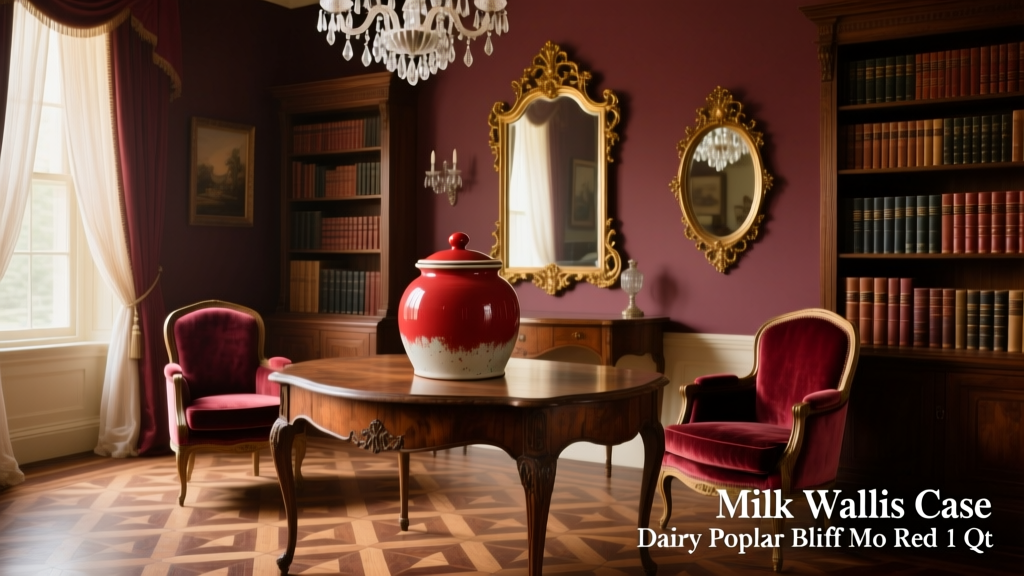
Milk Wallis Case Dairy Poplar Bluff MO Red Round 1 Qt: History, Identification, and Restoration of a Rare Missouri Creamery Artifact
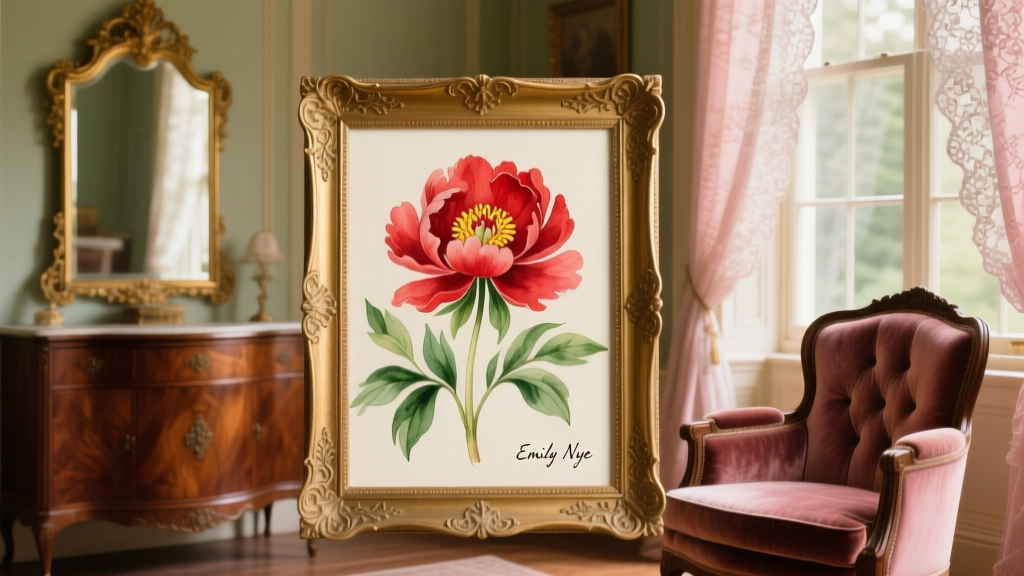
Emily Nye’s ‘Red Flower, Yellow Green’: A Watercolor Study in Botanical Nuance and Mid-Century American Framing
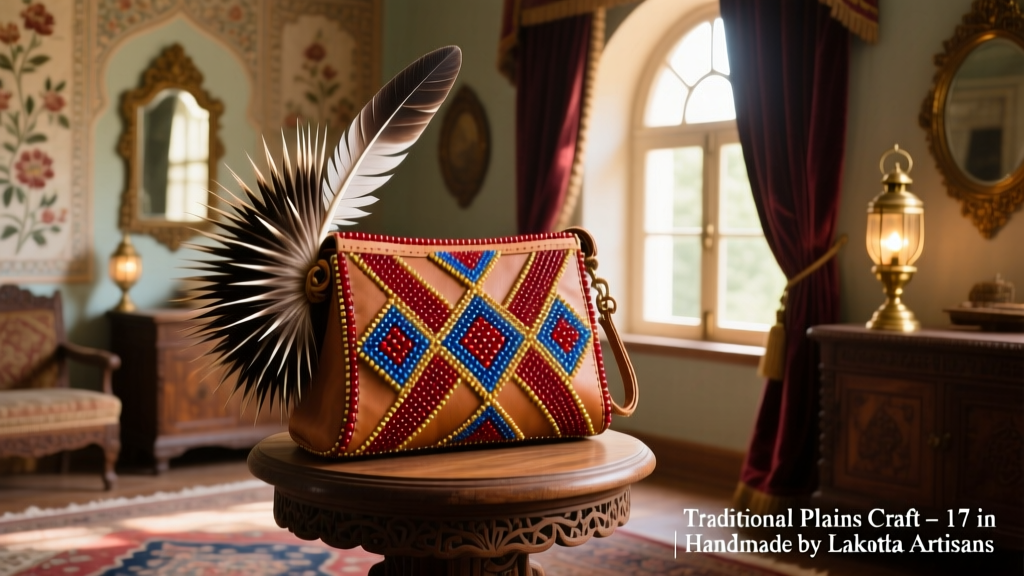
Indian Pipe Bag: Plains Porcupine Quill–Wrapped Rawhide Beaded Bag, 17 Inches — Authenticity, Craftsmanship, and Conservation
Fiesta Cup and Saucer in Medium Green No. 2: History, Identification, and Care for Collectors
Oil Painting: Materials, Techniques, and Conservation of Historical Masterpieces
North Dakota School of Mines Sugar Cover: Cream Body with Cobalt Blue Trim, 3½-Inch Diameter — Identification, Provenance, and Restoration Guidelines
Architectural Column: Light Green Onyx with Brass Banding — A 39½-Inch Rounded Column Restoration & Design Guide
Rookwood Bowl, Yellow Matte Glaze, 6-Inch Diameter: Identification, Provenance, and Restoration Guidelines
Advertising Sign Pipe Stained to Simulate Briar, c. 1930 — A 19-Inch Art Deco Era Tobacco Display Artifact