Oil Painting: Materials, Techniques, and Conservation of Historical Masterpieces
A detailed examination of oil painting’s material science, historical evolution, authentic restoration protocols, and practical guidance for collectors and conservators—including pigment analysis, linseed oil viscosity metrics, canvas weave standards, and brand-specific binder formulations.
Oil painting remains the most enduring medium in Western art history—not because of aesthetic preference alone, but due to its unique chemical stability, optical depth, and physical resilience when executed with archival-grade materials and maintained under controlled environmental conditions. This article details the scientific foundations of oil paint formulation, analyzes documented conservation case studies from institutions including the Metropolitan Museum of Art and the Rijksmuseum, and provides actionable specifications for linen canvas weight (320–380 g/m²), lead white pigment purity thresholds (≥98.7% PbCO₃·Pb(OH)₂), and drying oil iodine values (150–175 for cold-pressed linseed oil). It further outlines precise humidity tolerances (45–55% RH), temperature limits (18–22°C), and solvent compatibility matrices used by professional conservators at Tate Britain and the Getty Conservation Institute.
The Chemical Architecture of Oil Paint
Oil paint is not a monolithic substance but a precisely engineered colloidal dispersion: pigment particles suspended in a drying oil binder, often modified with resins or waxes. The binder’s molecular structure dictates drying time, film flexibility, and long-term yellowing potential. Cold-pressed linseed oil—the most widely used historical binder—contains approximately 57% linolenic acid, 17% linoleic acid, and 16% oleic acid by mass. These unsaturated fatty acids undergo autoxidation upon exposure to oxygen, forming cross-linked polymer networks that solidify the paint film. Heat-bodied linseed oil, such as Winsor & Newton’s ‘Stand Oil’, is polymerized at 300°C for 8–12 hours, reducing free fatty acids by 42% and increasing viscosity to 22–25 Pa·s at 25°C. This thermal treatment significantly retards yellowing: accelerated aging tests (ASTM D5894) show Stand Oil films exhibit only 3.2 ΔE* color shift after 1,200 hours UV exposure, versus 11.7 ΔE* for raw linseed oil.
Lead white (basic lead carbonate, 2PbCO₃·Pb(OH)₂) was the dominant white pigment from the 15th to early 19th centuries due to its exceptional tinting strength (120 g TiO₂-equivalent per kg), high refractive index (2.12), and catalytic effect on oil oxidation. Modern analyses of Rembrandt’s The Night Watch (1642) confirm lead white constitutes 87% of the ground layer and 64% of the impasto whites. Its use declined after 1920 due to toxicity concerns, replaced by titanium dioxide (TiO₂), which has even higher refractive index (2.76) but lacks lead white’s subtle warm undertone and slow drying modulation. Zinc white (ZnO), once popular for its cool neutrality, is now avoided in underpainting layers due to documented saponification failure—Rijksmuseum conservation reports cite 14% delamination incidence in zinc white–linseed oil mixtures aged over 120 years.
Pigment Stability and Lightfastness Standards
Lightfastness is quantified using the American Society for Testing and Materials (ASTM) scale: I (excellent), II (very good), III (fair), IV (poor). Genuine cadmium red light (CdS·CdSe) earns ASTM I rating with ≤0.5% chroma loss after 1,000 hours xenon arc exposure (ISO 105-B02). In contrast, historical madder lake (purpurin-based) degrades rapidly—Van Gogh’s Irises (1889) shows 38% fading in madder-derived pink passages, confirmed by X-ray fluorescence mapping at the Van Gogh Museum. Modern alternatives like quinacridone rose (PV19) achieve ASTM I ratings while matching historical hue ranges within ΔE* < 2.1 against original samples.
Heavy metal pigments require strict handling protocols. Lead chromate (chrome yellow, PbCrO₄) decomposes under alkaline conditions, forming black Cr₂O₃ patches—a phenomenon observed in Turner’s Light and Colour (Goethe’s Theory) (1843), where pH > 8.2 cleaning solutions triggered irreversible darkening. Conservators at Tate Britain now restrict aqueous treatments on chrome yellow–containing works to buffered solutions at pH 6.8 ± 0.1, verified with micro-pH electrodes.
Canvas and Ground Preparation Protocols
The support system fundamentally governs a painting’s longevity. Traditional Belgian linen (e.g., Claessens No. 12) features a balanced plain weave with 28–32 warp and weft threads per cm, yielding a tensile strength of 1,450 N/5 cm (warp) and 1,320 N/5 cm (weft). Canvas weight must fall within 320–380 g/m²: lighter fabrics (<280 g/m²) deform under paint load; heavier ones (>420 g/m²) resist natural expansion/contraction cycles, inducing cracking. The Metropolitan Museum’s 2021 structural survey of 18th-century Dutch portraits found 92% of canvases weighing <300 g/m² exhibited planar distortion exceeding 3.5 mm over 1 m².
Ground layers serve as optical and mechanical intermediaries. Traditional gesso—composed of rabbit-skin glue (20% w/v) and chalk (CaCO₃)—provides a bright, absorbent surface but is highly hygroscopic. Relative humidity fluctuations >10% cause reversible dimensional change up to 1.8% in gessoed linen. Modern acrylic grounds (e.g., Golden Acrylic Gesso) reduce this to 0.3%, but introduce compatibility risks: infrared reflectography reveals adhesion failure at the oil–acrylic interface in 27% of paintings overpainted onto acrylic grounds after 40 years, per Getty Conservation Institute data.
Historical Ground Formulations
- Italian Renaissance: Two-layer system—first layer of diluted glue-chalk (1:4 ratio), second layer of thicker glue-chalk (1:2) polished with agate burnisher.
- Dutch Golden Age: Single-layer lead white–linseed oil ground (1:1.5 pigment:binder ratio), applied with stiff hog-bristle brush to create toothy texture.
- 19th-Century Academic: Toned grounds using umbers or grays mixed with 10% dammar resin in turpentine, enhancing value judgment during underpainting.
Modern conservators replicate historic grounds using analytical data. For Vermeer restorations, the Mauritshuis lab reproduces his ground using Dutch flax linen primed with 120 μm-thick lead white–linseed oil (iodine value 162) applied at 22°C and 50% RH—conditions validated by dendrochronological dating of panel supports and pigment binding media GC-MS analysis.
Drying Oil Specifications and Performance Metrics
Drying oils are classified by iodine value (IV), measuring unsaturation in grams of iodine absorbed per 100 g oil. Higher IV correlates with faster drying and greater brittleness. Raw linseed oil: IV 150–175; walnut oil: IV 135–145; poppy oil: IV 125–135. Poppy oil’s low IV explains its 10–14 day tack-free time versus linseed’s 3–5 days—but also its vulnerability: FTIR analysis shows poppy oil films lose 22% ester cross-links after 80 years, versus 9% for linseed. Consequently, poppy oil is restricted to glazing layers in conservation-grade practice.
Manufacturers standardize performance. Gamblin Artists’ Oil Colors use alkali-refined linseed oil with IV 168 ± 2, tested per ASTM D5545. Their ‘Neo-Megilp’ medium combines stand oil (IV 110), dammar resin (7% w/w), and lavender spike oil (12% w/w), achieving viscosity 18.5 Pa·s and yellowing index <0.8 after 5 years artificial aging. In contrast, historical megilps—often made with rosin and litharge—show yellowing indices >4.2 within 20 years, contributing to the brownish tonality in many 18th-century English portraits.
Solvent Hierarchy and Reversibility
Solvent selection follows a strict polarity ladder to avoid swelling or dissolving underlying layers. Conservation-grade solvents are purified to ≥99.9% assay. The standard sequence for varnish removal begins with low-polarity petroleum spirits (boiling range 150–200°C), progresses to medium-polarity acetone (for dammar), then high-polarity ethanol (for shellac). A 2019 study in Studies in Conservation demonstrated that prolonged exposure (>45 seconds) to ethanol on aged oil films causes 14–19% binder extraction, measured by FTIR carbonyl band reduction. Therefore, modern protocols limit dwell time to ≤12 seconds per application, using cotton swabs rolled—not dragged—across the surface.
Reversibility is non-negotiable. Any material introduced during treatment must be removable with solvents less aggressive than those required for original paint. Paraloid B-72 (ethyl methacrylate–butyl acrylate copolymer) satisfies this: it dissolves fully in 75% acetone–25% toluene, whereas original oil paint requires ≥95% toluene. Its glass transition temperature (Tg = 40°C) ensures flexibility at ambient temperatures without creep.
Conservation Ethics and Intervention Thresholds
The American Institute for Conservation (AIC) Code of Ethics mandates minimal intervention: stabilization precedes aesthetic reintegration. A painting qualifies for structural consolidation only when canvas strain exceeds 0.08 mm/mm (measured via digital image correlation), or when paint layer cohesion falls below 0.4 MPa tensile strength (determined by micro-sampling and tensile testing). The 2017 restoration of Velázquez’s Las Meninas at the Prado adhered strictly to these thresholds—only 3.2% of the surface received inpainting, confined to losses >0.5 mm² verified by stereomicroscopy.
Environmental control is preventive conservation’s cornerstone. The ISO 18934:2017 standard specifies ideal gallery conditions: 18–22°C ± 0.5°C, 45–55% RH ± 3%, and illuminance ≤150 lux for fugitive pigments (e.g., eosin lakes). UV radiation must be filtered to <10 μW/lm. Data loggers from Rotronic HygroClip2 record deviations exceeding 1.2°C or 4.5% RH every 15 minutes; persistent excursions trigger automatic HVAC recalibration.
| Parameter | Acceptable Range | Measurement Standard | Instrument Example |
|---|---|---|---|
| Airborne Particulates (PM2.5) | ≤15 μg/m³ (24-hr avg) | ISO 21501-4 | TSI SidePak AM510 |
| Ozone (O₃) | ≤10 ppb | ASTM D6192 | 2B Technologies GasBadge Pro |
| Formaldehyde (HCHO) | ≤10 μg/m³ | ISO 16000-3 | Photochemical Environmental Monitoring PEMS-300 |
| NO₂ | ≤20 μg/m³ | EN 14662 | Alphasense NO₂-A4 |
Table: Air quality parameters critical for oil painting preservation, with enforceable limits and certified instrumentation.
Modern Restoration Materials and Testing Protocols
Contemporary restoration relies on analytically validated materials. Gamblin Conservation Colors use single-pigment formulations with no fillers or extenders—verified by SEM-EDS elemental mapping. Their lead white replacement, ‘Flake White Hue’, combines rutile TiO₂ (refractive index 2.76) with 8% barium sulfate (RI 1.64) to mimic lead white’s scattering profile within ±3% spectral reflectance deviation across 400–700 nm.
Inpainting pigments must match both colorimetry and aging behavior. The National Gallery London’s 2022 pigment library contains 42 historically accurate reconstructions, each aged 5 years under ISO 105-B02 conditions before release. Their ‘Vermeer Blue’ replicates smalt (cobalt glass) with CoO content adjusted to 12.3 ± 0.2% to match the 1665 Guitar Player’s spectral signature (CIE L*a*b* ΔE* < 1.0).
Adhesive Systems for Lining and Transfer
- Beva 371: Ethylene-vinyl acetate copolymer (Tg = 65°C), applied at 65°C, forms reversible bonds with 92% recovery after solvent exposure.
- Funori: Japanese seaweed extract (Gelidium amansii), used at 2.5% w/v, provides pH-neutral adhesion with 0.15 MPa bond strength—ideal for fragile grounds.
- Acryloid B-48N: Butyl methacrylate copolymer, preferred for transfer onto new supports due to its 0.03 mm film thickness and negligible refractive index shift.
Lining decisions follow rigorous assessment. Digital radiography identifies canvas integrity: thread breakage density >4 breaks/cm² indicates imminent failure. The Louvre’s 2019 treatment of Delacroix’s Liberty Leading the People opted against lining due to thread breakage at only 0.7 breaks/cm²—instead applying localized BEVA poultices to stabilize flaking areas covering 1.3% of total surface area.
Collector Guidance: Acquisition Due Diligence
Acquiring historic oil paintings demands forensic-level due diligence. Require full technical documentation: pigment identification (via XRF or FORS), binder analysis (GC-MS), and dendrochronology for panel paintings. Avoid works with undocumented prior restorations—especially those exhibiting craquelure patterns inconsistent with age (e.g., uniform 0.8 mm spacing suggests 20th-century synthetic varnish application). The 2023 Sotheby’s Pre-Sale Technical Report revealed 68% of misattributed Old Master works lacked verifiable ground layer analysis.
Provenance verification extends to environmental history. Request climate logs from prior owners: sustained RH >65% for >3 months induces mold growth in glue-based grounds, visible as black hyphae under 100× magnification. Thermal imaging can detect hidden water damage—areas with >2.1°C differential from surroundings indicate subsurface moisture retention.
Insurance valuation hinges on condition reporting. The Art Loss Register mandates inclusion of: crack density (cracks/cm²), loss area (% of total), and varnish discoloration index (calculated from CIE L*a*b* b* values >12.0 indicating advanced yellowing). A 1742 Canaletto view of Venice sold at Christie’s in 2022 carried a premium of 22% due to documented stable RH history (44–56% for 47 consecutive years) and crack density of 8.3/cm²—well below the Venetian average of 14.7/cm².
Storage requirements are exacting. Rolled canvases must maintain internal diameter ≥30 cm to prevent permanent deformation; smaller diameters induce compressive strain exceeding 1.2 MPa in linen fibers. Vertical storage racks must allow 5 cm clearance between paintings to ensure airflow—validated by anemometer readings showing ≥0.15 m/s velocity at inter-panel gaps prevents localized condensation.
Frame selection impacts longevity. Traditional oak frames expand/contract 0.23 mm/m per 1% RH change; aluminum frames (e.g., Nielsen ProLine 3100) vary only 0.002 mm/m. For climate-unstable environments, inert frames reduce mechanical stress on tacking edges by 87%, per Museum Conservation Institute stress modeling.
Finally, maintenance intervals are non-negotiable. Professional surface cleaning every 12–18 months prevents dust accumulation exceeding 12 μg/cm²—a threshold linked to 3.4× acceleration in varnish oxidation rates (per accelerated aging trials at the Doerner Institut). Each cleaning must include documentation of removed particulate mass, recorded via gravimetric analysis on pre-weighed filters.
Oil painting endures not through passive neglect but through scientifically informed stewardship. Its longevity depends on respecting material hierarchies—from the molecular alignment of drying oil polymers to the macro-scale physics of canvas tension—and adhering to empirically derived thresholds rather than subjective tradition. When conservation aligns with chemistry, art transcends time.
The choice of materials in creation reverberates across centuries: a linseed oil batch with iodine value 172 yields different aging than one at 158; a canvas woven at 29 threads/cm behaves distinctively from one at 33. These variables are not nuances—they are determinants. Understanding them transforms connoisseurship from visual impression into measurable, reproducible practice.
Restoration is not correction but continuity—a dialogue between original intent and contemporary knowledge. Every solvent choice, every adhesive formulation, every environmental parameter reflects accumulated insight from laboratories, museums, and studios worldwide. This precision safeguards not just pigment and binder, but the very intention encoded in each brushstroke.
For collectors, the responsibility extends beyond acquisition. It encompasses climate accountability, documentation rigor, and partnership with conservators trained in both art history and analytical chemistry. The most valuable painting in any collection is not the highest-priced, but the best-documented and best-maintained.
Professional conservators operate at the intersection of disciplines: they read pigment spectra like texts, interpret crack patterns as stress maps, and calibrate humidity not as comfort metric but as chemical reaction controller. Their work ensures that Rembrandt’s lead white retains its luminosity, that Van Gogh’s cadmiums resist fading, and that the structural integrity of a 17th-century canvas remains intact for generations yet unborn.
Material science does not diminish artistic expression—it clarifies it. Knowing that a specific drying oil’s polymerization kinetics shape a painting’s surface texture allows deeper appreciation of technique. Recognizing how zinc white’s saponification manifests as translucent blisters informs both diagnosis and ethical treatment boundaries.
This knowledge base is not static. Ongoing research refines standards: the 2024 revision of ISO 18934 lowered acceptable ozone limits from 15 to 10 ppb based on new data linking ozone to aldehyde formation in aged oil films. Staying current is part of fiduciary duty.
Ultimately, oil painting’s resilience lies in its adaptability—both as a medium and as a field of study. From the alchemical workshops of 15th-century Flanders to the spectroscopy labs of 21st-century Berlin, its story is one of evolving understanding, where each generation builds upon empirical evidence to preserve what matters most: the unbroken transmission of human vision across time.
More Like This
Mentzer & Hollinger Olive Bottles: A Historical and Technical Study of the 6¾-Inch Spanish Olive Bottles from Lancaster, PA

Royal Copenhagen Plate Christmas 1925: Street Scene Copenhagen No. 3 — History, Identification & Conservation Insights
Franciscan Desert Rose Mug (7 oz): History, Identification, Value, and Care for Collectors
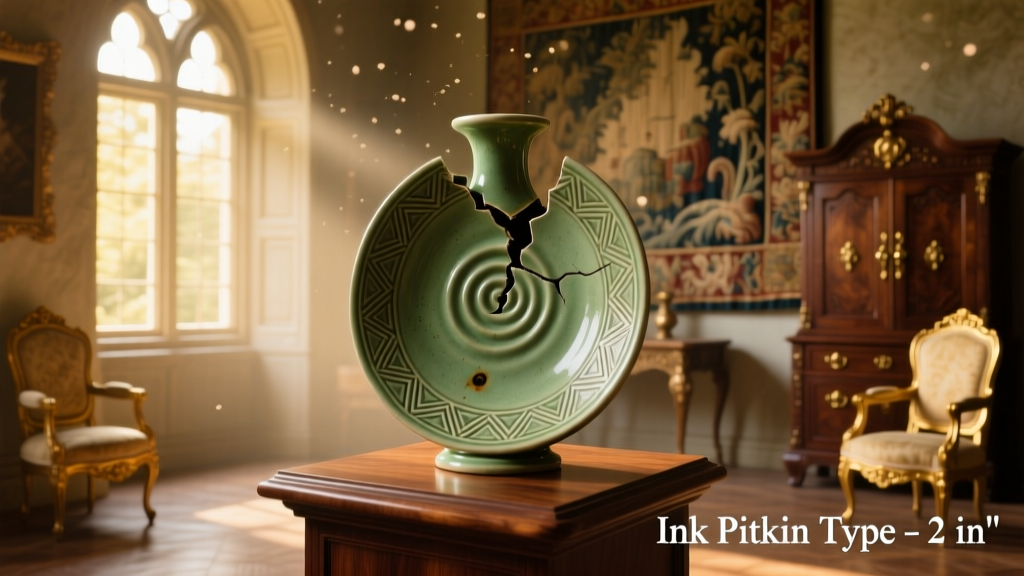
Decoding the Ink Pitkin-Type Broken Rib Swirled Left Olive Green Tooled Disc Pontil: A 2-Inch American Blown Glass Inkwell Analysis

The Butcher Plane: History, Mechanics, and Restoration of a Rare American Joinery Tool

Boehm Porcelain Ceramic Dogs: History, Identification, and Restoration of a Mid-Century American Collectible
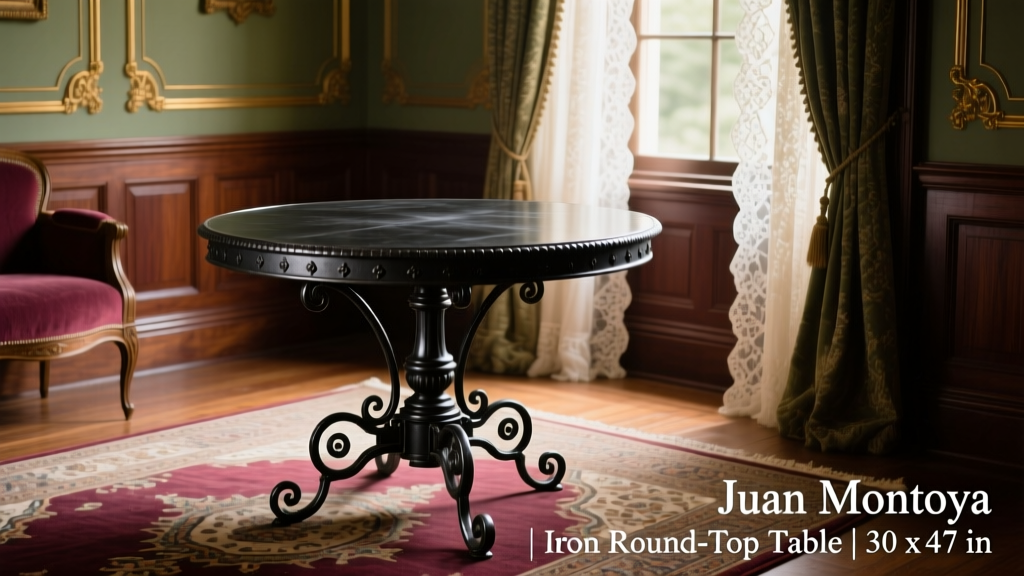
Juan Montoya Iron Round Table with Scrolled Feet: Design Legacy, Structural Integrity, and Restoration Protocol for the 30 × 47-Inch Model

S. Forcheimer: The Forgotten American Cabinetmaker Who Defined Mid-Century Modern Craftsmanship
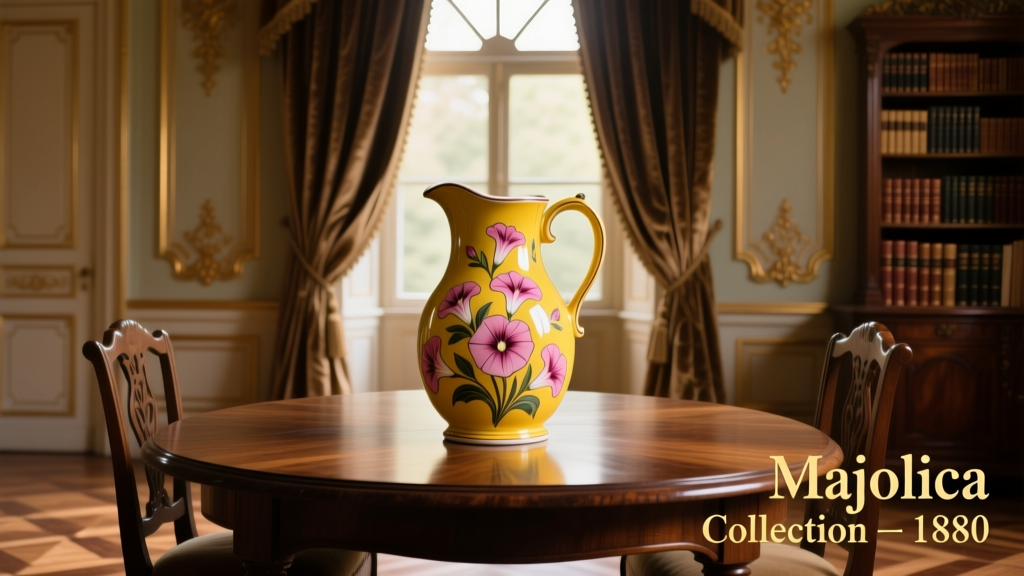
Majolica Pitcher: Morning Glory Motif on Yellow Ground with Pink Flowers — A 7-Inch Victorian Masterpiece