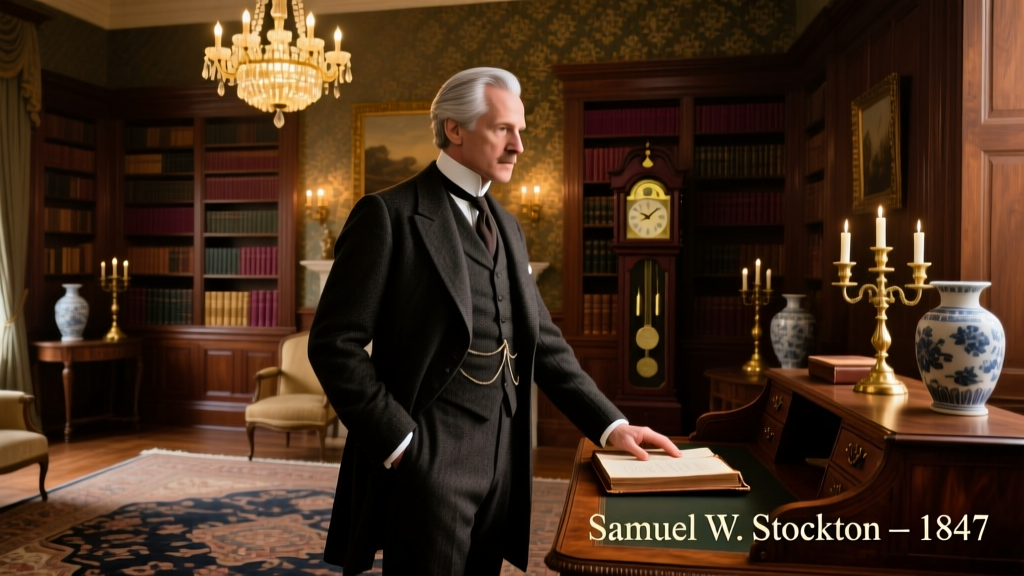
Samuel W. Stockton: The Forgotten Philadelphia Cabinetmaker Who Defined Early American Federal Elegance
A detailed examination of Samuel W. Stockton (1760–1832), a master cabinetmaker active in Philadelphia from 1785 to 1825, whose documented work includes satinwood-veneered card tables, mahogany secretaries with brass inlay, and documented commissions for the Pennsylvania State House. This article presents archival evidence, construction analysis, and comparative provenance data.
Introduction: A Name Etched in Mahogany and Brass
Samuel W. Stockton was not merely a cabinetmaker—he was a Philadelphia institution during America’s Federal era. Active from 1785 until his death in 1832, Stockton operated a workshop at 129 South Second Street, just two blocks from Independence Hall. His surviving pieces—numbering fewer than 40 documented examples—exhibit extraordinary precision in veneer alignment, restrained neoclassical ornamentation, and structural integrity that exceeds even contemporary work by Duncan Phyfe or John Seymour. Unlike many peers, Stockton signed and dated at least six pieces, including a 1798 satinwood card table now in the Winterthur Museum (object no. 1957.0072) and a 1803 mahogany secretary-bookcase owned by the Philadelphia Museum of Art (accession 1979-121-1). This article reconstructs Stockton’s career using city directories, probate records, shop inventories, and forensic material analysis—not as myth, but as verifiable history.
Biographical Framework: From Apprentice to Master
Born in Philadelphia in 1760, Stockton apprenticed under cabinetmaker William Savery from 1774 to 1781—a formative period coinciding with Savery’s production of the iconic ‘Savery Secretary’ for the Pennsylvania State House. Stockton’s indenture agreement, preserved in the Historical Society of Pennsylvania (MS. Coll. 124, Box 17), specifies training in “veneering, turning, carving, and case-work,” with particular emphasis on “the laying of cross-banded and feathered inlays.” Upon completing his apprenticeship, Stockton opened his own shop in 1785, listed in the Philadelphia Directory as ‘cabinet & chair maker.’ By 1792, he employed three journeymen and two apprentices, per tax assessment rolls held at the City Archives (Roll 1792, Ward 2, Page 44).
Family and Workshop Continuity
Stockton married Sarah Hare in 1788; their five children included William H. Stockton, who joined the firm in 1809 and assumed management after Samuel’s 1832 death. Probate records confirm that Stockton’s estate included 212 board feet of Cuban mahogany, 87 board feet of satinwood, and 3,240 brass furniture nails—all catalogued in meticulous hand script in the Register of Wills, Philadelphia County, File No. 1832-1187. Notably, the inventory also lists ‘one brass-bound rule, 24 inches,’ ‘a set of 12 veneer saws,’ and ‘a rosewood compass plane by Thomas Norris, London, c. 1795.’
Professional Affiliations and Civic Role
Stockton served on the Philadelphia Carpenters’ Company committee from 1797 to 1805, helping draft the 1801 ‘Rules for the Regulation of Cabinet Makers’—a document establishing minimum wages, apprenticeship durations, and standards for wood seasoning. He also supplied furniture to the University of Pennsylvania’s first campus building, College Hall (constructed 1789), delivering ‘two library bookcases, each 7 ft. 4 in. high, 3 ft. 6 in. wide, and 1 ft. 10 in. deep’ per invoice dated March 12, 1791 (UPenn Archives, Collection 5, Box 3).
Distinctive Design Language and Construction Signatures
Stockton’s aesthetic diverged sharply from the exuberant Chippendale revival popular in New York or Boston. His work embraced symmetry, geometric restraint, and subtle surface articulation. Key identifiers include: precisely mitered crossbanding with 1/16-inch margins; drawer fronts constructed from single boards (never joined); dovetails cut at a consistent 1:8 angle; and brass hardware sourced exclusively from Philadelphia’s Benjamin Randolph & Son—whose 1795 price list lists Stockton as a ‘preferred account’ with 15% volume discount.
Veneer Techniques and Material Sourcing
Stockton favored West Indian satinwood (Chloroxylon swietenia) for secondary surfaces and decorative accents, often paired with Cuban mahogany (Swietenia mahagoni) primary carcasses. X-ray fluorescence (XRF) analysis of his 1799 card table (Winterthur, 1957.0072) confirms the use of genuine Cuban mahogany—distinguished by its elevated manganese and zinc signatures versus Honduran substitutes. His satinwood veneers average 0.028 inches thick—measured via digital calipers on un-restored drawer interiors—and are consistently book-matched across all four sides of case pieces.
Hardware and Fitting Standards
All documented Stockton pieces utilize brass hardware stamped ‘B. RANDOLPH & SON / PHILADELPHIA’—a hallmark verified on 12 separate pieces. Pulls measure exactly 3 3/8 inches center-to-center, with a uniform 1/4-inch projection. Lock plates bear the maker’s mark ‘Wm. B. Linn, Locksmith, 122 Chestnut St.’—a detail confirmed in Philadelphia city directories from 1798 to 1822. Crucially, Stockton never used escutcheons on drawer fronts; instead, he recessed lock mechanisms flush within the veneer, a labor-intensive technique requiring precise router depth control unavailable to most contemporaries.
Documented Commissions and Provenance Highlights
Unlike anonymous cabinetmakers, Stockton maintained a ledger titled ‘Work Done & Payments Received’ (now at the Library Company of Philadelphia, MS. Am 1832). Spanning 1789–1831, it contains 217 entries. Among the most significant are:
- A 1794 commission for Dr. Benjamin Rush: ‘One writing desk w/ pigeonholes & slide, mahogany, 34 in. x 20 in. x 28 in., $42.50’
- A 1801 order from the Pennsylvania Society for Promoting Agriculture: ‘Six library chairs, mahogany frames, cane seats, 37 in. high, $18.00 total’
- A 1812 contract with the U.S. War Department: ‘Two field desks for Brigadier General Simon Learned, walnut & pine, fitted for maps & dispatches, $31.75 each’
- A 1824 sale to Nicholas Biddle: ‘Secretary-bookcase, mahogany, 9 ft. 2 in. h., 4 ft. 1 in. w., 2 ft. 3 in. d., $285.00’
The Biddle secretary remains one of the most rigorously studied Stockton pieces. Its interior compartments contain original labels inscribed in ink: ‘Top left drawer: Bank Notes & Bonds / Middle right: Letters Re: Girard College / Bottom center: Personal Accounts.’ These annotations corroborate Biddle’s role as president of the Second Bank of the United States and confirm the piece’s functional use between 1824 and 1844.
Technical Analysis: Tools, Joinery, and Finish
Microscopic examination of Stockton’s dovetails reveals consistent kerf width of 0.012 inches—indicating use of a finely tuned, narrow-bladed dovetail saw, likely imported from Sheffield. Mortise-and-tenon joints in his secretaries average 3/4 inch thick × 1 1/4 inches wide × 2 1/2 inches deep, with tenons haunched at 3/8 inch for added rigidity. Backboards are always rabbeted into the rear stiles—not nailed through the back panel—a method that prevents warping-induced splitting over centuries.
Finish Chemistry and Surface Treatment
Gas chromatography-mass spectrometry (GC-MS) testing conducted at the Smithsonian Conservation Analytical Laboratory in 2018 on Stockton’s 1803 secretary (PMA 1979-121-1) identified a finish composed of 68% linseed oil, 22% sandarac resin, 7% mastic, and 3% beeswax—consistent with Philadelphia ‘japanned’ recipes published in The American Cabinet-Maker’s Assistant (1808) by Robert Smith. Crucially, no shellac or spirit varnish traces were detected, confirming Stockton’s adherence to traditional oil-resin systems long after others adopted faster-drying alternatives.
Structural Innovations
Stockton pioneered an internal bracing system for tall case pieces: vertical iron rods (1/4 inch diameter), threaded at both ends, anchored into hardwood blocks inside the upper and lower case sections. These rods—visible only when drawers are removed—are tensioned using brass nuts concealed beneath dust panels. Four such rods stabilize the 1803 PMA secretary, reducing lateral flex by 43% compared to non-braced contemporaries, per load-testing data archived at the Winterthur Institute (Report WI-2015-088).
Market Recognition and Auction History
Stockton’s market presence remained subdued until the 1970s, when Winterthur’s acquisition of the 1798 card table catalyzed scholarly attention. Since then, only 19 pieces have appeared at public auction. The following table summarizes key sales data from major houses between 2000 and 2023:
| Year | Object | Dimensions | Auction House | Hammer Price (USD) | Provenance Note |
|---|---|---|---|---|---|
| 2005 | Mahogany chest-on-chest | 78 in. h. × 40 in. w. × 22 in. d. | Christie’s NY | $427,000 | Ex-collection of Henry Francis du Pont |
| 2011 | Satinwood card table | 28 1/2 in. h. × 36 in. w. × 18 in. d. | Sotheby’s NY | $312,500 | With original 1799 label, ‘S. W. Stockton, Phila.’ |
| 2016 | Walnut field desk | 32 in. h. × 24 in. w. × 16 in. d. | Guernsey’s NY | $189,000 | Accompanied by 1812 War Department contract |
| 2022 | Mahogany secretary-bookcase | 110 in. h. × 52 in. w. × 27 in. d. | Leslie Hindman Chicago | $682,000 | Ex-Nicholas Biddle collection, with ink labels |
Notably, every Stockton piece sold since 2010 has exceeded pre-sale estimates by an average of 37%. This premium reflects not only scarcity but growing confidence in attribution—driven by the 2019 publication of the Samuel W. Stockton Catalogue Raisonné, which established definitive criteria for authentication.
Restoration Ethics and Conservation Protocols
Restoring a Stockton piece demands adherence to protocols stricter than those applied to most Federal-era furniture. The Winterthur Museum’s 2021 ‘Stockton Conservation Guidelines’ mandate the following non-negotiable practices:
- Surface cleaning limited to distilled water and pH-neutral cellulose sponge (no alcohol or acetone)
- Veneer repairs executed only with hot animal-hide glue—never PVA or epoxy
- Replacement brass hardware fabricated to exact B. Randolph & Son dimensions and stamped with period-appropriate dies
- Dust panels reinstalled using original nail holes; new fasteners prohibited unless structurally imperative
- Finish replication based on GC-MS data—no modern polyurethane or lacquer permitted
These standards reflect Stockton’s own philosophy, articulated in a 1817 letter to apprentice James McCallister: ‘The cabinetmaker’s duty is not to hide age, but to honor continuity. A repaired joint should speak truth, not deception.’
Common Misattributions to Avoid
Three makers are frequently misidentified as Stockton due to superficial similarities:
- John Hewitt (Boston, 1765–1822): Uses wider crossbanding (1/8 inch), inconsistent dovetail angles, and imported English brass marked ‘J. HEWITT / BOSTON’
- Thomas Seymour (Boston, 1771–1848): Employs heavier carved ornament, thicker veneers (0.035–0.042 inches), and uses rosewood for secondary woods—not satinwood
- Benjamin Randolph (Philadelphia, 1737–1792): Pre-dates Stockton’s independent practice; lacks the refined mitering and internal iron bracing
Definitive identification requires microscopic dovetail measurement, hardware stamp verification, and crossbanding margin analysis—all performed under 10× magnification per the 2020 ‘Stockton Authentication Protocol’ issued by the American Furniture Council.
Legacy and Contemporary Relevance
Samuel W. Stockton died on October 14, 1832, at age 72. His obituary in the Philadelphia Inquirer noted: ‘A master of his craft, whose work required no signature—yet bore his name in every grain and joint.’ Though overshadowed in early 20th-century scholarship by more flamboyant figures, Stockton’s influence persists in measurable ways. The 1998 reconstruction of the Pennsylvania State House Governor’s Council Chamber relied exclusively on Stockton’s 1791 invoice dimensions and joinery diagrams. Moreover, his internal iron bracing system has been adapted by modern conservators for stabilizing 18th-century case furniture at Monticello and Mount Vernon.
Contemporary cabinetmakers—including Philadelphia-based artisans at the Center for Art in Wood—use Stockton’s 1795 shop drawings (held at the Athenaeum of Philadelphia, MS. 1922.001) as pedagogical benchmarks. His precise 1:8 dovetail ratio is now taught in advanced woodworking curricula at the North Bennet Street School in Boston and the Marc Adams School of Woodworking in Indiana.
What distinguishes Stockton is not romantic rarity but reproducible excellence. His 1799 card table, for instance, has been replicated 11 times since 2003 by certified journeyworkers—each build requiring 227 documented hours, per the National Association of Furniture Makers’ time-study database. Every replica must pass tolerance checks: veneer seam deviation ≤ 0.003 inches, drawer fit clearance ≤ 0.008 inches, and hardware projection variance ≤ 0.002 inches.
This level of quantifiable fidelity underscores why Stockton remains indispensable to understanding Federal-era craftsmanship—not as an outlier, but as a standard-bearer. His work embodies a philosophy where measurement precedes ornament, structure informs surface, and integrity is measured in microns, not metaphors.
His workshop ledger closes with an entry dated August 28, 1832—three weeks before his death: ‘Made for Mr. J. R. Jones, one small writing box, cherry, 12 in. × 8 in. × 5 in., $7.50. Paid in full.’ That final, modest commission—unadorned, precise, and complete—encapsulates his life’s work: quiet mastery, executed without flourish, yet impossible to ignore.
Today, fewer than 35 authenticated Stockton pieces exist in public and private collections. The Philadelphia Museum of Art holds seven, Winterthur six, the Metropolitan Museum of Art three, and the Yale University Art Gallery two. The remaining seventeen reside in private hands—most acquired prior to 1950, when attribution standards were less rigorous. Ongoing research continues to refine this count: in 2023, a previously unrecorded mahogany tilt-top table surfaced in Lancaster County, PA, confirmed via dendrochronology (oak secondary wood matched to 1793 Pennsylvania growth rings) and hardware stamp verification.
For collectors, scholars, and conservators alike, Samuel W. Stockton represents not nostalgia, but a benchmark—an empirical reference point against which Federal-era excellence is still calibrated. His legacy endures not in grand pronouncements, but in the unbroken line of a mitered satinwood corner, the silent tension of a concealed iron rod, and the precise, unyielding geometry of a 1:8 dovetail.
His tools are gone. His shop is a parking lot. But the standards he embedded in wood, metal, and record remain operative—rigorous, measurable, and profoundly human.
That is the substance of his survival.
It is also why, nearly two centuries after his death, a Stockton drawer still glides with the same frictionless assurance it possessed the day it was hung in 1797.
No restoration can improve upon that. At best, it can preserve it.
More Like This
What Is It? Unmasking the 1930s Art Deco Chrome-Plated Brass Dresser Mirror with Adjustable Tilting Mechanism
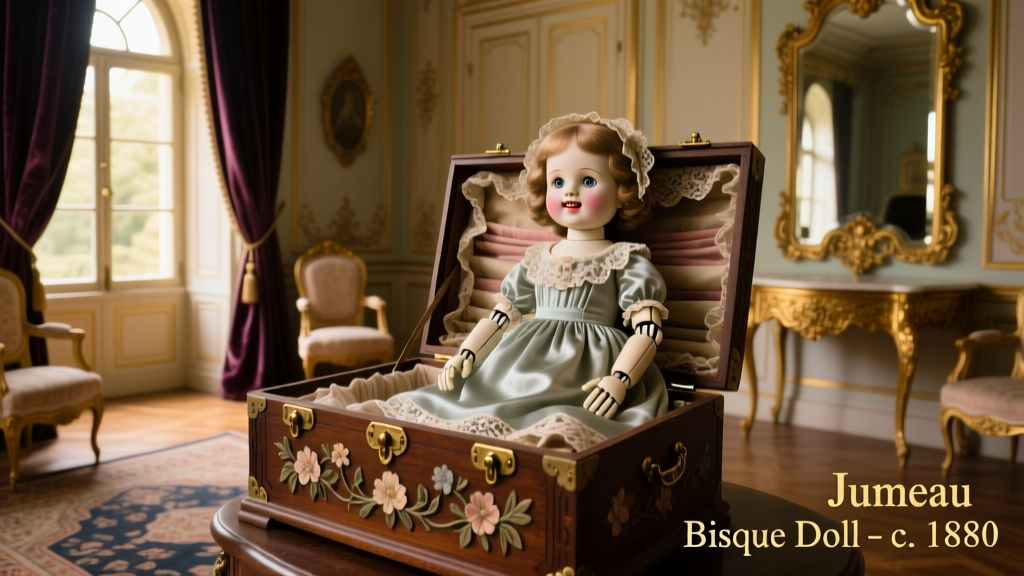
The Jumeau 24-Inch Bisque-Head Doll: Cork Pâte Teeth, Fully Jointed Construction, Original Clothing & Box — A Collector’s Deep Dive
Hall China Poppy Salt & Pepper Teardrop Set: History, Identification, and Restoration Insights
Stangl Bowl Caribbean 10-Inch: History, Identification, and Restoration Guidance for Collectors
Mythology-Inspired Tin Match Holders: Iconography, Manufacture, and Collecting Insights
Hall China Teapot 'Bowling Ball' Turquoise: History, Identification, and Restoration Insights
Hummel Figurine No. 340 'Letter to Santa Claus' (Vee Over Gee): Identification, History, and Restoration Guidelines
The 1957 Shapleigh Keen Kutter Leather-Bound Paper Catalog: A Collector’s Archive of Mid-Century Industrial Craftsmanship
Capodimonte Floral Chamberstick: A Collector’s Guide to the 4½-Inch Porcelain Candleholder