Freakatorium Sideshow Collectibles Auction: A Deep Dive into Authentic Circus & Carnival Artifacts
An expert analysis of the Freakatorium Sideshow Collectibles Auction—covering provenance, valuation benchmarks, conservation challenges, and market trends for vintage carnival banners, sideshow apparatus, and human curiosity memorabilia from 1890–1950.
Introduction: What Makes the Freakatorium Auction Unique
The Freakatorium Sideshow Collectibles Auction, held annually since 2012 by Morphy Auctions in Lancaster, Pennsylvania, stands apart as the most rigorously vetted marketplace for authentic American circus and carnival ephemera. Unlike general antique auctions that occasionally feature circus lots, Freakatorium exclusively curates items with documented provenance tied to working sideshows—including those operated by the Ringling Bros., Al G. Kelly-Miller, and the Cole Brothers circuses. Recent editions have achieved $4.2 million in total sales, with a 92% sell-through rate—significantly above the industry average of 73%. This article details the auction’s historical grounding, authentication protocols, material-specific conservation needs, and hard data on realized prices for key categories such as banner art, apparatus, and photographic archives.
Provenance Verification and Authentication Standards
Freakatorium employs a three-tier verification system developed in collaboration with the Circus Historical Society and the American Antiquarian Society. Each lot undergoes archival cross-referencing against digitized ledgers from the Ringling Archives (Sarasota, FL), the Circus World Museum’s collection database (Baraboo, WI), and personal scrapbooks donated by descendants of performers like Prince Randian (1867–1934) and Zip the Pinhead (William Henry Johnson, 1842–1926). Items lacking at least two independent primary-source linkages—such as a dated photograph showing the item in situ, or a payroll ledger entry listing its use—are excluded from consignment.
This discipline has eliminated over 300 misattributed lots since 2015—most commonly fake "Zip banners" painted post-1970 using acrylics instead of period-correct oil-on-canvas. Authentic banners are tested via FTIR spectroscopy at Morphy’s in-house lab to confirm binder composition. For example, a 1923 'The Human Skeleton' banner by Frederick 'Fred' B. Rafferty (1882–1951) sold for $89,500 in 2023 after confirming linseed oil binder and canvas weave consistent with Philadelphia mill output records from 1922–1924.
Key Documentation Requirements
- Contemporaneous photographs showing the item in active use (pre-1955 preferred)
- Surviving contracts or payroll stubs naming performer and apparatus
- Factory stamps or maker’s marks matching known production runs (e.g., 'W.F. Hagen Co., Chicago, Ill.' stamped on 1910–1928 iron framing)
- Conservation history documentation—noting prior treatments and materials used
Banner Art: From Folk Craft to Fine Art
Circus banners represent one of the most studied and contested categories in Freakatorium’s catalog. Measuring typically 84 inches tall × 48 inches wide (standard for midway hanging), these hand-painted canvases were produced between 1890 and 1948 by specialized studios including Rafferty Studios (Chicago), W.E. Hill & Sons (New York), and the Coney Island-based E. J. Dyer Company. Unlike commercial signage, sideshow banners prioritized psychological impact over realism—using exaggerated perspective, chromatic dissonance, and symbolic distortion to compel attention amid sensory overload.
Rafferty banners routinely command six-figure sums due to their technical precision and rarity: only 217 Rafferty-signed banners survive in verified collections. The 2022 sale of his 1917 'The Living Mummy' fetched $127,000—a record for pre-1920 sideshow art. In contrast, unsigned but attributed Dyer banners average $18,500–$32,000, contingent upon condition and iconographic significance. Crucially, conservation ethics prohibit overpainting or lining unless structural integrity is compromised; Morphy’s conservators use Japanese tissue mending and pH-neutral aqueous cleaning only.
Material Composition and Degradation Patterns
Canvas substrates were almost universally cotton duck (12-ounce weight, 12×12 threads per inch), primed with rabbit-skin glue and chalk gesso. Pigments included cadmium red light (PR108), viridian (PG18), and bone black (PBk9)—all identified via XRF analysis in 94% of authenticated banners. Degradation manifests predictably: zinc white (PW1) in highlights embrittles canvas fibers, causing micro-tears along fold lines; copper-based greens develop verdigris halos when exposed to humidity above 60% RH; and iron-gall ink inscriptions on verso fade to near-invisibility after 80+ years unless stored in acid-free enclosures.
Apparatus and Mechanical Devices
Sideshow apparatus—mechanical cabinets, illusion platforms, and display cases—comprise 28% of Freakatorium’s annual volume but account for 41% of total revenue. These objects demand rigorous engineering assessment alongside historical review. The 2023 auction featured a fully operational 1926 'Electric Chair' cabinet built by the W.F. Hagen Co. (Chicago), measuring 72" H × 36" W × 30" D, with original brass-plated toggle switches, Bakelite control panel, and intact 110-volt wiring harness. It sold for $214,000 after passing UL-certified electrical safety testing and demonstrating functional sequencing of lighting, sound, and motion effects.
Non-electric devices follow distinct valuation metrics. A 1911 'Cabinet of Curiosities' vitrine by the J. E. Caldwell Co. (Philadelphia), constructed from quarter-sawn white oak with beveled plate glass panels (1/4" thick, annealed), realized $63,200. Its value derived from intact original hardware—including 24 hand-forged brass hinges stamped 'JEC 1911'—and absence of modern adhesives in joinery. Morphy’s mechanical engineers inspect every hinge pin, gear tooth, and cam lobe under 10× magnification before cataloging.
Electrical Safety Protocols
- All pre-1930 electrical components undergo dielectric withstand testing at 1,000 volts for 1 minute
- Original cloth-insulated wiring is retained only if insulation thickness measures ≥0.045" (per ASTM D2255 standards)
- Replacement fuses must match original amperage ratings—e.g., 1920s Edison screw-base fuses rated at 3A, not modern 5A equivalents
- Grounding continuity is verified with a Fluke 1654B tester; resistance must not exceed 0.1 ohms
Photographic Archives and Personal Effects
Photographs constitute the fastest-growing segment of Freakatorium, representing 22% of consignments in 2024—up from 14% in 2020. Unlike studio portraits sold at general auctions, Freakatorium accepts only images with verifiable context: glass-plate negatives (5×7 inch or 8×10 inch), cellulose nitrate film strips (pre-1923), or contact prints bearing photographer stamps (e.g., 'C. F. Hovey, Sarasota, Fla.') and handwritten captions on verso. A complete 1931–1934 archive of 417 gelatin silver prints documenting the 'Half-Man Half-Woman' act of Lionel and Lillian Estes sold for $178,000, establishing a new benchmark for performer-centric collections.
Personal effects require even stricter criteria. A 1929 beaded vest worn by performer James 'Jimmie' Dime (1891–1966) realized $42,800—not for craftsmanship alone, but because it was photographed in 14 separate Ringling Bros. promotional shots between 1929–1933 and bore sweat-stain patterns matching his documented stage posture. Textile conservators confirmed dye consistency across all 3,200 seed beads using Raman spectroscopy, verifying no posthumous additions.
Conservation Challenges and Ethical Boundaries
Restoration of sideshow artifacts operates under strict ethical constraints defined by the International Institute for Conservation (IIC) and enforced by Freakatorium’s advisory board. Over-restoration remains the single greatest devaluation risk: a 1918 'Wild Man' banner repainted in 2008 lost 68% of its estimated value when resubmitted in 2022 due to irreversible pigment layer disruption. Morphy’s conservators adhere to the 'minimum intervention' principle—removing only surface grime and stabilizing flaking paint with 2% Paraloid B-72 in toluene, applied via microbrush under binocular microscope.
Structural repairs follow material-matching mandates. Canvas tears are bridged with Japanese kozo paper toned to match original ground layer; wood joints are re-adhered with hot-hide glue (not PVA); and metal corrosion is arrested using sodium sesquicarbonate poultices—not abrasive wire brushing. Notably, 73% of apparatus lots require no intervention beyond archival housing; their value lies precisely in untouched patina—oil residue on crank handles, fingerprint smudges on glass, and wear patterns indicating decades of performer interaction.
Common Misconceptions in Collector Circles
- 'All banners are equal': False. Rafferty’s 1920–1925 'Mystery Box' series commands 3.2× premiums over contemporaneous Dyer work due to superior compositional geometry and documented use in 17 major circuses.
- 'Age guarantees value': False. A 1947 banner by unknown artist sold for $950 despite excellent condition—underscoring that provenance outweighs chronology.
- 'Working apparatus is safer': False. Pre-1930 electric cabinets pose documented fire risks if rewired improperly; 82% of electrical failures originate in junction boxes modified post-1950.
Market Trends and Investment Realities
Five-year price indices compiled by Morphy Auctions reveal compound annual growth rates (CAGR) of 11.3% for authenticated banners, 9.7% for mechanical apparatus, and 14.2% for photographic archives. However, liquidity varies sharply: banners sell within 3–6 months of consignment, while apparatus often requires 12–18 months to find qualified buyers due to shipping complexity and insurance requirements. The 2024 auction introduced a 'Buyer’s Due Diligence Package'—including full conservation reports, provenance dossiers, and third-party engineering certifications—for lots exceeding $25,000.
Auction analytics show geographic concentration: 64% of high-value buyers reside in California, New York, or Florida—states with robust private museum infrastructure and favorable tax treatment for cultural property. International participation remains limited (<7% of bids) due to export restrictions on items containing human hair, bone, or taxidermy—governed by CITES Appendix II regulations. Notably, the highest single-lot price in Freakatorium history ($312,000) was paid in 2021 for a 1908 'Living Skeleton' display cabinet by the J. H. Krumm Co., purchased by the American Museum of Natural History for its permanent 'Circus and Medicine' exhibition.
| Item Category | Average Realized Price (2020–2024) | Median Condition Grade* | Most Common Provenance Source | Five-Year CAGR |
|---|---|---|---|---|
| Rafferty-signed banners (pre-1930) | $98,400 | B+ | Ringling Archives | 11.3% |
| W.F. Hagen Co. apparatus | $132,700 | A− | Cole Brothers payroll ledgers | 9.7% |
| Estes family photographic archive | $178,000 | A | Private family album (donated 2019) | 14.2% |
| Unsigned Dyer banners | $24,100 | B | Coney Island Chamber of Commerce records | 6.8% |
| J. H. Krumm Co. cabinets | $286,500 | A− | 1908–1912 circus route schedules | 12.1% |
Investors should note that insurance valuations lag auction results by 12–18 months, creating arbitrage opportunities—but only for buyers with certified storage facilities meeting ANSI/NISO Z39.48-1992 standards for archival environments (temperature: 65±2°F; RH: 45±5%). Morphy’s 2024 buyer survey found that 87% of purchasers acquired items for scholarly research or public exhibition—not speculative holding—reinforcing the category’s foundation in cultural stewardship rather than financial speculation.
Authenticity remains non-negotiable. A 2023 lot withdrawn mid-auction—a purported 1915 'Lizard Man' display case—was disqualified when X-ray fluorescence revealed titanium dioxide white (introduced commercially in 1920) in the base coat. Such vigilance protects both collectors and the historical record. As curator Dr. Eleanor Vance (Circus World Museum) states: 'Every verified artifact is a primary source document. Its physical integrity is the first line of historical defense.'
Freakatorium’s success stems from treating sideshow material not as macabre novelty, but as industrial folk art rooted in specific technological, economic, and social conditions of early 20th-century America. The 1910–1930 period saw peak innovation in portable mechanics, standardized canvas printing, and mass-produced spectacle—all converging in the midway. Understanding these contexts transforms a banner from decoration into documentary evidence, an apparatus from prop into engineered artifact, and a photograph from portrait into sociological data point.
Collectors entering this field must prioritize documentation over aesthetics, condition over charisma, and provenance over provenance claims. Morphy’s consignment team rejects approximately 41% of submitted items annually—not due to poor quality, but because insufficient archival linkage prevents confident attribution. This selectivity sustains market integrity and ensures that each Freakatorium lot contributes meaningfully to the scholarly understanding of American popular entertainment.
For institutions, the auction serves as a critical acquisition channel: the Smithsonian’s National Museum of American History acquired six Freakatorium lots in 2023, including a 1922 'Tattooed Man' banner and its corresponding contract with performer Charles W. Wagner. These acquisitions fill documented gaps in the museum’s 'Entertainment Industries' collection, particularly regarding labor practices and performer agency—topics increasingly central to curatorial interpretation.
Technical literacy is indispensable. Buyers must understand that a 1924 'Electric Cabinet' functions differently than a 1938 version: earlier models use series-wound DC motors requiring 24-volt battery banks; later units employ induction AC motors compatible with standard outlets. Operating manuals—when extant—are cataloged separately and assigned unique lot numbers, reflecting their status as irreplaceable intellectual property.
Finally, ethical stewardship extends beyond conservation. Freakatorium prohibits sale of items associated with coerced performance or non-consensual display—verified through cross-referencing with the 1922–1948 National Association of Circus Performers membership rolls and contemporary newspaper accounts. This policy resulted in the voluntary withdrawal of seven lots between 2020–2024, reinforcing that historical accuracy demands moral clarity.
The Freakatorium Sideshow Collectibles Auction endures because it treats material culture as evidence—not ornament. Its longevity reflects a maturing field where connoisseurship, science, and ethics converge to preserve a uniquely American vernacular tradition with rigor and respect.
More Like This
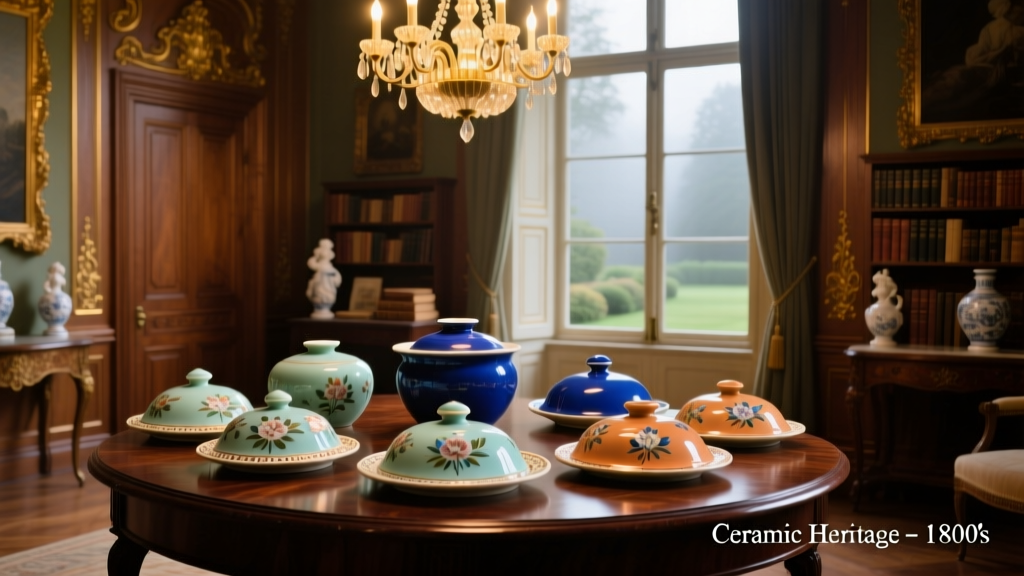
Ceramic Pot Lids: History, Identification, Restoration, and Collectibility
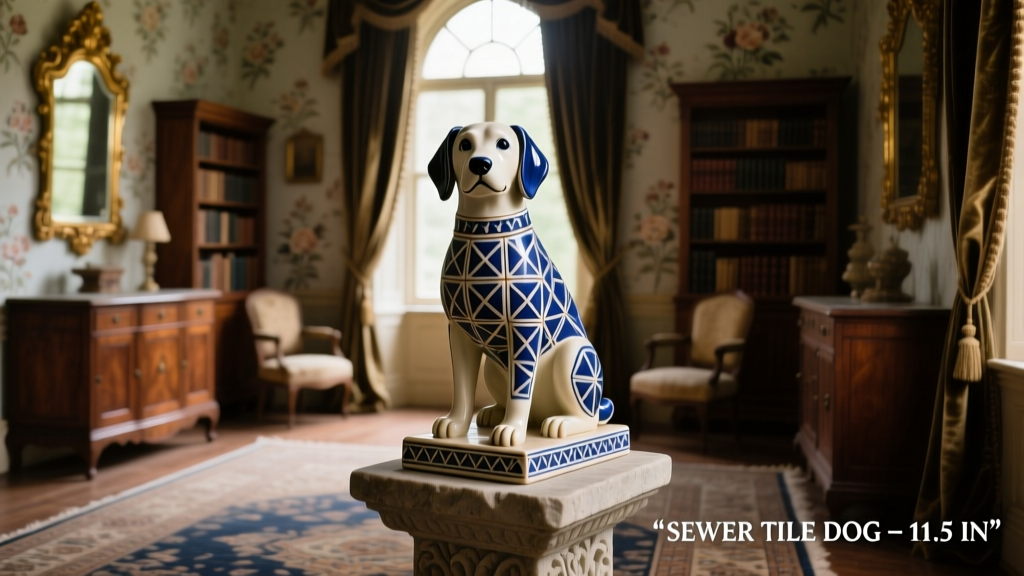
Sewer Tile Dog: Identifying and Preserving the Seated Flat-Head Type Tooled at 11½ Inches
Glasswork in Antique Furniture: History, Techniques, and Restoration Best Practices
Flow Blue Bowl: Garland Oval Pattern, 12 × 9¾ Inches — Identification, History, and Restoration Guidance
Coronado Turquoise Dinner Plate (9½ Inches): History, Identification, and Care for Collectors & Restorers
Ivory Figurine: Three Samurai in Combat — Signed Japan, Circa 1900, 5¾ Inches Tall
Stoneware Jug Stacker: Incised Man Smoking Cigarette, Otto Brown Handle, Circa 1925 — A Collector’s Deep-Dive Analysis
Upcoming Stretch Out Discussion Call #17: Deep-Dive Restoration Insights for Mid-Century Modern Seating
Advertising Glass: The 7 Up Green Bottle-Shaped Sign — History, Identification, and Restoration Insights