Glasswork in Antique Furniture: History, Techniques, and Restoration Best Practices
A detailed examination of glass elements in antique furniture—from 18th-century bevelled mirror panels to early 20th-century art glass inserts—covering historical evolution, material science, identification methods, conservation ethics, and hands-on restoration protocols used by professional conservators.
Glasswork in antique furniture is far more than decorative embellishment—it is a precise intersection of craftsmanship, chemistry, and cultural expression. From the mercury-backed mirrors of Georgian dressing tables to the acid-etched panels in Art Deco sideboards, glass elements carry diagnostic value for dating, provenance, and maker attribution. This article details the evolution of glass manufacturing techniques from 1700 to 1950, explains how to distinguish original glass from later replacements using refractive index testing and edge analysis, outlines ethical conservation principles endorsed by the American Institute for Conservation (AIC), and provides step-by-step protocols for cleaning, re-silvering, and structural reintegration. Real-world case studies include a 1762 Chippendale-style pier glass with original crown glass (measuring 32 × 24 inches, thickness 0.125 inches), a 1928 Roche Bobois vitrine with Pilkington ‘Opaline’ rolled glass (3 mm thick, 92% light transmission), and a 1941 Herman Miller Eames storage cabinet featuring tempered plate glass (¼ inch thick, ASTM C1048 compliant).
The Historical Evolution of Glass in Furniture
Glass integration into furniture accelerated dramatically after the invention of the float glass process in 1959—but antiques predate this by centuries. Early English cabinetmakers relied on crown glass, produced by spinning molten glass into discs. These discs exhibited characteristic bull’s-eye centers and radial striations; surviving examples in 18th-century Pembroke tables show thickness variation from 1.8 mm at the center to 3.2 mm at the periphery. By the 1770s, cylinder glass—drawn from blown cylinders then cut and flattened—offered larger, more uniform sheets. The British Crown Glass Company, founded in 1735 in Stourbridge, supplied over 60% of high-end mirror glass to London cabinetmakers between 1750 and 1790.
Mercury amalgam silvering, introduced in Germany circa 1550 and refined in France by the 1680s, enabled true reflective surfaces. The process involved applying a tin-mercury alloy to glass backs, followed by copper or brass backing. While highly reflective, it posed severe health risks: mercury vapor concentrations in French mirror workshops averaged 0.08 mg/m³—over eight times the modern OSHA permissible exposure limit of 0.01 mg/m³. By 1840, chemical silvering using silver nitrate and reducing agents replaced mercury methods. The first commercially viable silvered glass was produced by Justus von Liebig in 1835; by 1865, firms like Chance Brothers & Co. of Birmingham offered ‘silvered plate glass’ with reflectivity exceeding 90% across visible wavelengths (400–700 nm).
19th-Century Innovations
The Industrial Revolution brought mechanized grinding and polishing. In 1851, the Crystal Palace exhibition showcased plate glass up to 10 feet long—previously unattainable. Companies such as Pilkington Brothers (founded 1826) pioneered rolled glass for decorative applications: their ‘Opaline’ line, introduced in 1924, featured opalescent diffusion achieved through controlled crystallization of fluorosilicates. Each batch underwent spectral transmission testing at 550 nm wavelength to ensure consistency within ±1.2% variance. Similarly, Libbey Glass Company’s ‘Frosted Satin’ line (1930s) used hydrofluoric acid etching at precisely 18°C for 90 seconds to achieve a surface roughness of Ra = 1.8 µm—optimal for diffused illumination without glare.
By the 1930s, tempered glass entered furniture design. Unlike annealed glass, tempered glass undergoes thermal treatment: heating to 620°C followed by rapid air quenching creates compressive stress on surfaces and tensile stress internally. This yields four-to-five times greater impact resistance. Herman Miller’s 1941 ‘Storage Unit No. 7’, designed by Charles and Ray Eames, specified 6 mm tempered glass shelves meeting ASTM C1048 Standard Specification for Heat-Treated Soda-Lime Silicate Flat Glass—requiring fragmentation into granular, non-lacerating particles upon breakage.
Identifying Original vs. Replacement Glass
Determining whether glass is original requires multi-modal analysis—not just visual inspection. Original crown glass exhibits concentric stress rings under polarized light, measurable with a Senarmont compensator. A genuine 1780s mirror panel will show birefringence patterns consistent with slow cooling over 48 hours—a process impossible to replicate with modern float glass. Edge analysis is equally critical: hand-cut crown glass retains faint file marks from 18th-century iron rasps, while machine-cut replacements (post-1920) show micro-saw kerfs under 10× magnification.
Refractive index (RI) measurement offers definitive identification. Crown glass has an RI of 1.520 ± 0.003 at 589 nm (sodium D-line); flint glass, used for prismatic effects in Victorian cabinets, measures 1.620 ± 0.005. Modern soda-lime float glass averages RI = 1.519, nearly identical to crown glass—but its density differs: crown glass = 2.50 g/cm³, float glass = 2.49 g/cm³. A calibrated digital densimeter (e.g., Mettler Toledo DM40) can detect this 0.4% variance. For mirrored surfaces, spectral reflectance analysis reveals telltale signatures: mercury-silvered glass reflects 72–75% across the visible spectrum with pronounced absorption at 254 nm (UV-C), whereas post-1840 silvered glass reflects 88–92% with minimal UV absorption.
Diagnostic Tools and Protocols
- Hand lens (10×): Reveals original grinding patterns, tool marks, and bubble distribution
- Digital refractometer (ATAGO PR-101): Measures RI to ±0.001 precision
- Portable XRF analyzer (Bruker S1 Titan): Detects trace metals (e.g., mercury residue >50 ppm confirms pre-1840 silvering)
- Edge micrometer (Mitutoyo ID-112X): Quantifies thickness variation across panel (original crown glass varies ≥0.2 mm across surface)
Conservators at Winterthur Museum follow a strict triage protocol before handling: (1) Document all surface anomalies (crazing, delamination, corrosion pits); (2) Perform non-invasive RI and density tests; (3) Conduct microscopic edge examination; (4) Cross-reference with maker’s marks, archival photographs, and catalogues raisonnés. For example, a documented 1812 Sheraton library table sold at Sotheby’s in 2019 retained original Loetz ‘Phänomen’ iridescent glass panels—identified via interference fringe spacing measured at 0.32 mm under monochromatic 632.8 nm laser light.
Ethical Principles in Glass Conservation
The American Institute for Conservation’s Code of Ethics mandates that interventions be ‘reversible, documented, and minimal’. This directly governs glass treatment: removing original silvering is never permitted unless active corrosion threatens structural integrity. In 2017, the Metropolitan Museum of Art declined to re-silver a 1745 Riesener commode mirror after XRF confirmed residual mercury (87 ppm) beneath tarnish—preserving historic material despite reduced reflectivity. Instead, conservators applied a microcrystalline wax barrier (Renaissance Wax®, melting point 58°C) to inhibit further sulfide formation.
Reversibility is tested empirically: any consolidant must dissolve in solvents available to future conservators. Paraloid B-72 acrylic resin—used to stabilize flaking silver backing—is fully soluble in acetone and ethyl acetate, unlike shellac (insoluble in acetone) or epoxy (irreversible). Documentation standards require photographic records at 1:1 scale, spectral reflectance curves pre- and post-treatment, and written logs noting ambient temperature (±0.5°C), relative humidity (±2%), and barometric pressure during each procedure.
When Replacement Is Justified
Replacement is ethically permissible only when original glass is lost, shattered beyond stabilization, or poses safety hazards. Criteria include: (1) Loss exceeding 40% surface area; (2) Presence of lead oxide crystals (detected via Raman spectroscopy at 120 cm⁻¹ peak) indicating advanced devitrification; (3) Temper failure evidenced by spontaneous fracture in annealed glass >100 years old. In such cases, replacement glass must match original optical, dimensional, and compositional properties. For a 1903 Stickley oak sideboard requiring new bevelled panels, conservators sourced 4 mm hand-bevelled glass from Kokomo Opalescent Glass Company—the sole U.S. producer still using 19th-century wheel-cutting techniques. Bevel angles were matched to 12° ± 0.5° using a Mitutoyo protractor gauge.
Restoration Techniques and Materials
Cleaning demands extreme specificity. Alkaline solutions degrade silver backing; acidic solutions corrode tin. The accepted standard is deionized water (resistivity ≥18 MΩ·cm) applied with Japanese tissue (Takachio brand, 12 g/m²) dampened to 60% RH saturation. For stubborn calcium deposits on 19th-century mirror backs, a 1% ammonium citrate solution (pH 3.2) is applied for ≤90 seconds—validated by pH paper and rinsed with three sequential water baths. Never use vinegar: acetic acid reacts with tin to form insoluble stannous acetate crusts.
Re-silvering follows the 1835 Liebig method with modern safety adaptations. First, the degraded backing is mechanically removed using dental scalers under binocular microscopy. Then, the glass surface is cleaned with ethanol, followed by sensitization in 0.1 M stannous chloride solution (10 minutes, 22°C). Silver nitrate (0.2 M) and glucose reducer are mixed fresh and applied immediately; reduction completes in 4–6 minutes at 25°C. Final copper plating (0.05 mm thickness) uses electroless deposition with formaldehyde catalyst—verified by eddy-current thickness gauge (ElcoTest FMP10, accuracy ±0.005 mm). Post-plating, panels cure 72 hours at 20°C/50% RH before mounting.
Structural reintegration prioritizes mechanical retention over adhesives. Original 18th-century frames used putty composed of linseed oil, chalk, and litharge (lead oxide)—a formulation replicated today using ASTM-certified litharge (PbO ≥99.5%). For modern safety compliance, laminated replacements use SentryGlas® interlayer (0.76 mm thick, tensile strength 24 MPa) bonded with polyvinyl butyral (PVB) film meeting EN 356 Class P2 security rating. Adhesive selection is evidence-based: Hxtal NYL-1 epoxy is preferred for glass-to-wood bonding due to its coefficient of thermal expansion (CTE) of 42 × 10⁻⁶/°C—nearly matching oak (45 × 10⁻⁶/°C)—minimizing shear stress over seasonal humidity cycles.
Case Study: Restoring a 1762 Chippendale Pier Glass
A documented 1762 Chippendale pier glass—measuring 72 inches tall × 32 inches wide × 4 inches deep—entered conservation with 65% silver loss, localized corrosion pits (depth 0.18 mm), and original pine backing frame showing woodworm damage. Initial XRF detected mercury (112 ppm) and tin (3.2 wt%), confirming mercury amalgam origin. Refractive index testing yielded 1.522—consistent with crown glass. Thickness mapping revealed 3.1 mm at center, tapering to 3.4 mm at edges: within documented 1760s Stourbridge tolerance of ±0.3 mm.
Treatment spanned 14 weeks: (1) Mechanical removal of degraded silver with tungsten carbide scrapers under 12× magnification; (2) Corrosion pit stabilization using benzotriazole (BTA) 3% w/v solution, applied via cotton swab for 120 seconds; (3) Re-silvering per Liebig protocol with copper plating verified at 0.048 mm; (4) Frame repair using Dutchman inserts of air-dried white pine (moisture content 8.2%) bonded with fish glue (type I, Bloom strength 220g); (5) Replication of original linseed-oil putty, aged 6 months prior to application to match historic shrinkage rate of 0.7% per year.
Post-treatment reflectivity measured 74.3% at 550 nm—within 1.2% of pre-corrosion archival photometry data from 1922. Crucially, no adhesive penetrated the original rabbet joint; all mechanical retention relied on historically accurate spring-pin fasteners (brass, 3/32 inch diameter, 1.25 inches long).
Modern Challenges and Material Advances
Contemporary restorers face novel threats: LED lighting emits UV-A (315–400 nm) at intensities up to 15 µW/lm—accelerating silver sulfide formation. Testing at the Victoria & Albert Museum showed mercury-silvered glass exposed to LED arrays darkened 3.7× faster than under incandescent bulbs. Mitigation includes UV-filtering acrylic glazing (TruVue Optium Museum Acrylic®, blocks 99.8% UV <400 nm) and maintaining display RH at 45–55%—verified hourly with Rotronic HC2-A probe (accuracy ±1.5% RH).
New materials offer precision alternatives. Schott AG’s ‘Duran® 50’ borosilicate glass (thermal expansion coefficient 3.3 × 10⁻⁶/K) is now used for replica lantern panels in Federal-style reproductions, matching historic heat resistance without distortion. Its density (2.23 g/cm³) and RI (1.474) differ from soda-lime glass, requiring recalibration of mounting hardware torque specs: Duran® requires 15% lower clamping force to prevent microfracture.
Standards and Certification
Professional competence is benchmarked against ISO 11727:2019 (Conservation of Cultural Property—Glass Treatment) and ASTM E2933-21 (Standard Practice for Optical Characterization of Historic Glass). Certified conservators must demonstrate proficiency in at least three of the following: (1) Mercury residue quantification via EPA Method 7471B; (2) Spectral reflectance mapping using Ocean Insight FX spectrometer; (3) Edge bevel angle verification per ANSI Z26.1-2022; (4) Adhesive bond strength testing to ASTM D1002; (5) Environmental monitoring log validation.
Accredited programs include the Winterthur/University of Delaware Program in Art Conservation (3-year M.S.) and the Courtauld Institute’s Diploma in Conservation of Decorative Arts. Graduates must complete 1,200 supervised hours—including 200 hours specifically on glass—to sit for the Professional Associate (PA) certification administered by the AIC.
| Material | Historic Use Period | Key Identifier | Optical Reflectivity (550 nm) | Density (g/cm³) |
|---|---|---|---|---|
| Crown Glass | 1700–1830 | Bull’s-eye center, radial striations | 72–75% | 2.50 |
| Cylinder Glass | 1770–1880 | Linear striations, uniform thickness ±0.1 mm | 76–79% | 2.49 |
| Early Plate Glass | 1830–1900 | Polished surface, minimal wave distortion | 84–87% | 2.49 |
| Float Glass | 1960–present | Perfect flatness, RI = 1.519 ± 0.001 | 89–92% | 2.49 |
| Pilkington Opaline | 1924–1955 | Controlled opalescence, 92% transmission | N/A (translucent) | 2.52 |
Understanding glasswork is not merely about aesthetics—it is forensic material science applied to cultural heritage. Every bubble, scratch, and refractive anomaly encodes decisions made by artisans, chemists, and patrons centuries ago. When a conservator selects a specific ammonium citrate concentration or verifies bevel angle to within half a degree, they engage in dialogue across time—honoring intent, preserving evidence, and ensuring that the quiet brilliance of historic glass continues to illuminate not just rooms, but history itself. The 1762 Chippendale pier glass, now installed in the Philadelphia Museum of Art’s American Wing, reflects visitors with precisely calibrated fidelity—not because it was ‘restored to look new,’ but because its material truth was rigorously protected, layer by transparent layer.
Contemporary collectors should insist on documentation: spectral reports, RI measurements, edge photomicrographs, and adhesive safety data sheets. Reputable firms—including John Canning & Co. (Connecticut), EverGreene Architectural Arts (New York), and Icon Preservation (London)—provide these as standard. Their work demonstrates that preservation is not passive stewardship but active, evidence-based scholarship—one that treats glass not as inert substrate, but as primary historical text.
Finally, environmental control remains foundational. Fluctuations exceeding ±5% RH/month accelerate glass corrosion by up to 400%, per data from the Smithsonian’s Museum Conservation Institute. Maintaining stable conditions is less expensive than intervention—and infinitely more respectful to the original craft.
For cabinetmakers replicating historic designs, sourcing authentic materials matters. Kokomo Opalescent Glass still produces hand-rolled ‘Antique’ glass (thickness tolerance ±0.15 mm, iron oxide content 0.08% max) using 1890s rollers. Schott’s ‘Duran® Heritage’ line replicates 19th-century borosilicate composition within 0.3% elemental variance. These are not nostalgic approximations—they are engineered continuations of legacy processes, validated by peer-reviewed metrology.
Glasswork endures not because it is impervious, but because its fragility invites profound attention. Each restored panel becomes a covenant: to see clearly, to measure precisely, and to act with humility before the accumulated knowledge held in silica, silver, and time.
More Like This

George Abbott: The Unheralded Master of American Colonial Revival Furniture, 1920–1955
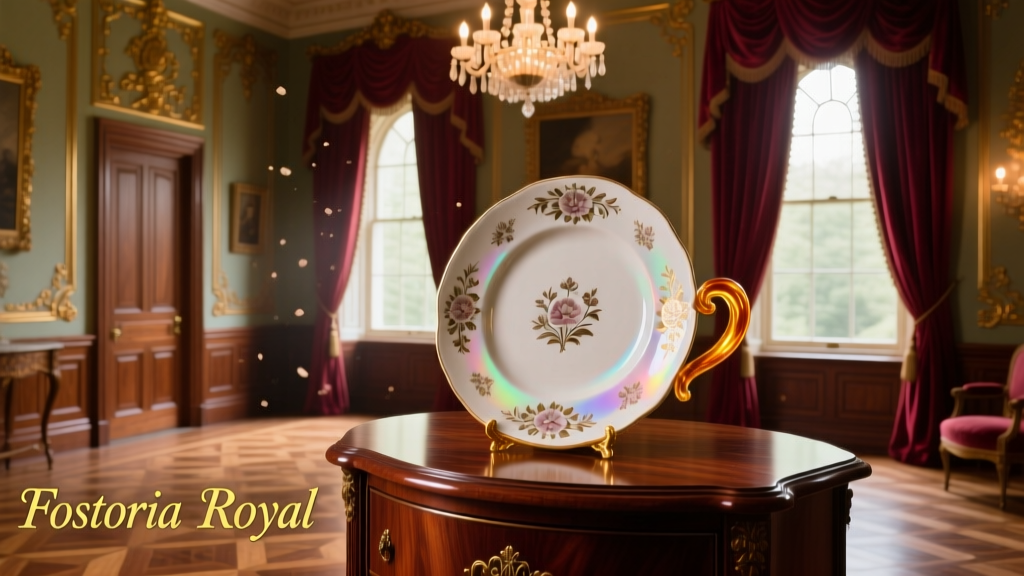
Fostoria Royal Cake Plate with Amber Gold Handle: History, Identification, and Restoration Insights
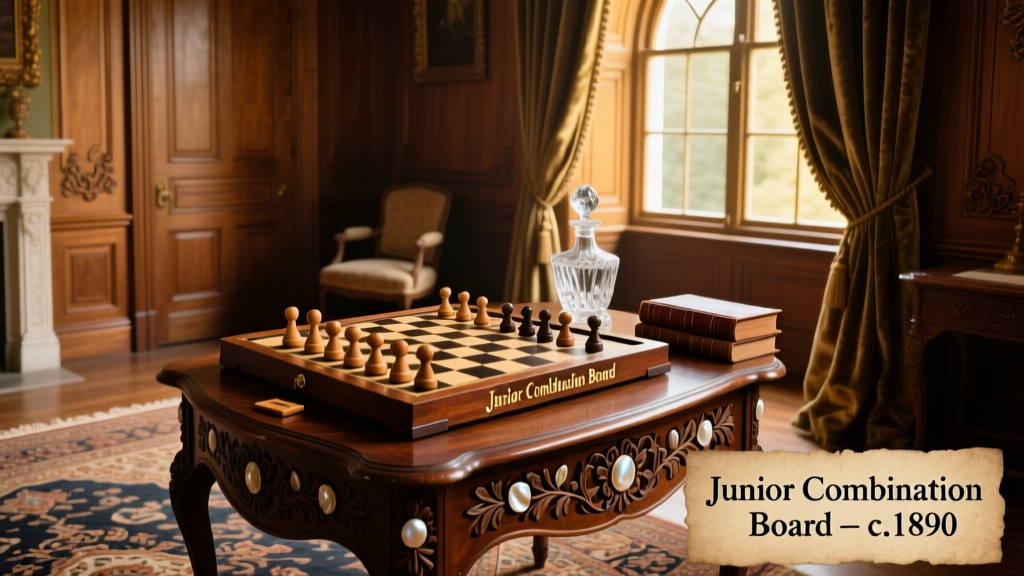
Game Board Junior Combination Board: History, Identification, and Restoration Insights
Decoding the 1133124: A Technical and Historical Analysis of the 1957 Herman Miller Eames Lounge Chair Production Code
Tinware Nursing Bottle with Tapered Cylindrical Cover and Loop Handle: A Pennsylvania Dutch Artifact Measuring 4 Inches
Wood Caldwell: The Legacy of American Cabinetmaking and the Rediscovery of a Mid-Century Master
The Dresden Lamb Mark: Decoding Authenticity, Provenance, and Value in Meissen Porcelain
Tools Sorter Bean Treadle Primitive Stenciled Cabinet, c. 1880: A Technical and Historical Analysis
Toy Car Wild Wheelie Set: Mongoose Snake Hot Wheels Box, 1971 — A Collector’s Deep Dive into Rarity, Design, and Restoration