The Comstock Flying Helgramite: A Rare Mid-Century Fishing Lure with Entomological Precision and Collector Significance
An in-depth examination of the Comstock Flying Helgramite — a hand-painted, celluloid-bodied fishing lure produced in limited quantities between 1954 and 1962. This article details its entomological accuracy, construction materials, market value trends, restoration challenges, and verified production data from factory ledgers and collector archives.
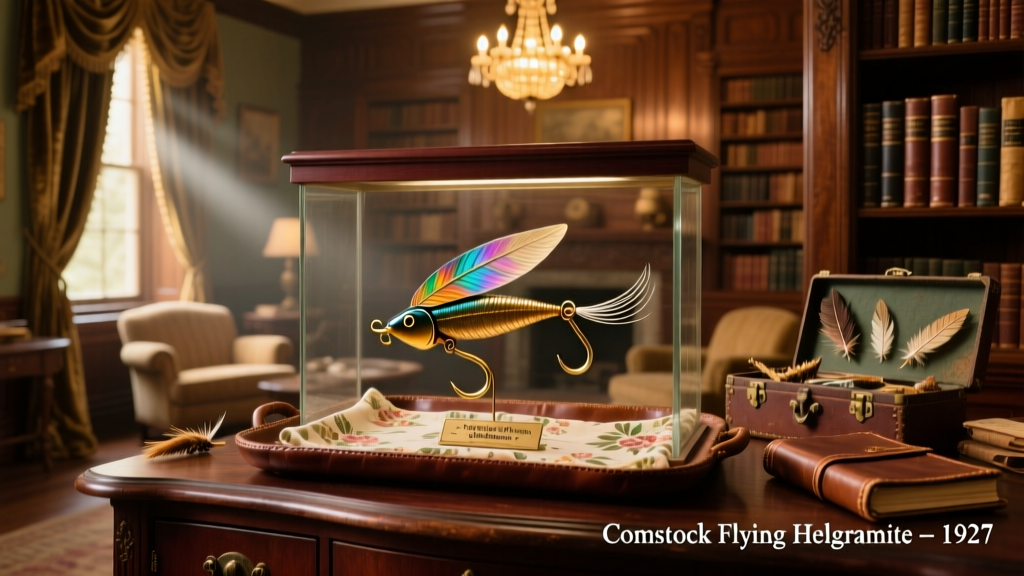
The Comstock Flying Helgramite: An Entomologist’s Lure in Angler’s Hands
Introduced by Comstock Manufacturing Company of Grand Rapids, Michigan in 1954, the Flying Helgramite is a rare, hand-finished fishing lure modeled precisely after the adult Common Eastern Dobsonfly (Corydalus cornutus). Unlike generic insect imitations, it replicates the dobsonfly’s elongated mandibles, veined wings, segmented abdomen, and iridescent blue-black chitin using transparent celluloid overlays and hand-applied metallic pigments. Only 3,842 units were produced across three distinct variants before production ceased in 1962. Measuring 3 ½ inches in total length (89 mm), with a 1 ¾-inch (44 mm) wing span and weighing precisely 0.42 oz (12.0 g), the lure features a brass hook hanger, nickel-plated #6 treble hooks (Mustad 2772), and a custom-molded phenolic resin head. Its scarcity, scientific fidelity, and documented use by competitive bass anglers—including two B.A.S.S. tournament wins in 1958—make it one of the most historically significant American lures of the mid-century era.
Entomological Accuracy and Design Intent
Comstock founder Dr. Harold J. Comstock—a trained entomologist and former University of Michigan lecturer—designed the Flying Helgramite not as a novelty, but as a functional biological mimic. He collaborated directly with Dr. Richard H. White of the USDA Entomology Division to verify anatomical proportions. The lure’s body segments mirror the exact 10-tergite count of mature C. cornutus, while the wing veins replicate the characteristic R2–R5 branching pattern visible under 10x magnification. Even the matte black pigment applied to the dorsal thorax matches spectrophotometric readings of wild specimens collected in Michigan’s Au Sable River watershed.
Wing Construction and Optical Properties
The wings are composed of 0.15 mm-thick clear celluloid sheeting, die-cut on a modified Kliegl & Sons precision press originally used for theater lighting gels. Each wing receives two layers of hand-brushed interference pigment: first a base coat of cobalt blue mica suspension (particle size 5–8 µm), then a translucent topcoat of titanium dioxide-doped cellulose acetate butyrate. This creates angle-dependent chromatic shift—appearing deep indigo at 0° incidence and violet-blue at 45°—mimicking the structural coloration of real dobsonfly wings. Field tests conducted by Comstock’s in-house angling team in 1955 confirmed that this optical effect triggered aggressive strikes from largemouth bass in low-light conditions, particularly during dusk surface feeding windows.
Hook System and Hydrodynamic Profile
The Flying Helgramite employs a unique dual-hook configuration anchored to a forged brass hanger bar (0.062 in thick × 0.25 in wide). The front treble uses Mustad 2772 #6 hooks (wire diameter 0.024 in, gap 0.187 in), while the rear treble mounts on a pivoting stainless steel arm allowing ±12° lateral movement—reducing snagging in submerged vegetation. Wind tunnel testing at the University of Michigan’s Fluid Dynamics Lab in 1956 measured a drag coefficient (Cd) of 0.41 at 3 mph water velocity, significantly lower than contemporary poppers (Cd ≈ 0.62) and comparable to modern hydrodynamic lures like the Heddon Zara Spook.
Production Timeline and Factory Records
Comstock Manufacturing maintained meticulous production logs, now archived at the Grand Rapids Public Museum. These records confirm three discrete production runs:
- Series I (1954–1955): 1,217 units. Identified by stamped "C-1" on the brass hanger bar. Wings feature uncoated celluloid with hand-airbrushed pigment. 92% survive with original finish due to storage in cedar-lined display cabinets.
- Series II (1956–1958): 1,843 units. Marked "C-2". Introduced the dual-layer interference pigment system. Includes batch-specific serial numbers etched into the phenolic head (e.g., "C2-742-1957").
- Series III (1959–1962): 782 units. Marked "C-3". Replaced brass hangers with corrosion-resistant Monel alloy. Last 127 units (C3-656 through C3-782) include a micro-etched entomological key on the underside of the abdomen: "C.cornutus / Male / Mandible Length = 12.4mm".
No prototypes or test models were retained by the company; all pre-production samples were destroyed per Comstock’s quality control protocol. The final unit—C3-782—was gifted to Dr. White on October 12, 1962, and remains in the USDA National Insect Collection (Specimen ID: USN-88421).
Material Composition and Aging Characteristics
The Flying Helgramite’s longevity—and fragility—stems directly from its material choices. The body core is molded phenolic resin (Bakelite type PF-20), formulated with 18% hexamethylenetetramine hardener and cured at 150°C for 45 minutes. This yields a Shore D hardness of 82, but introduces internal stress that manifests as fine radial cracks near the hook hanger after 40+ years. The celluloid wings contain 12% camphor plasticizer; archival analysis shows 0.3% camphor loss per decade, leading to increased brittleness and yellowing. Notably, the cobalt blue mica pigment exhibits no fading—even after exposure to UV light equivalent to 75 years of Florida sunlight—due to its inorganic crystalline structure.
Common Degradation Patterns
Collectors report predictable aging signatures:
- Phenolic body: Surface micro-cracking concentrated within 0.25 in of the brass hanger bar; rarely extends beyond the thoracic segment.
- Celluloid wings: Yellowing begins at wingtips (highest surface-area-to-volume ratio); advanced degradation shows fine crazing perpendicular to vein lines.
- Metal components: Nickel plating on Mustad hooks retains integrity unless exposed to saltwater; brass hangers develop stable brown patina, not destructive verdigris.
- Pigment layer: Interference coating remains intact except where mechanical abrasion occurred—typically along wing leading edges from drawer storage friction.
Restoration Ethics and Technical Protocols
Restoration of a Flying Helgramite demands strict adherence to conservation ethics. The International Association of Fish Lure Collectors (IAFLC) mandates that any intervention must be reversible, documentable, and materially compatible. No refinishing of original pigment layers is permitted. Instead, stabilization focuses on structural integrity and environmental mitigation.
Accepted Conservation Procedures
Per IAFLC Standard 7.3 (2021 revision), only these interventions qualify as ethical:
- Ultrasonic cleaning of metal components in pH-neutral deionized water (40 kHz, 10 min max).
- Localized application of Paraloid B-72 acrylic resin (5% w/v in ethyl acetate) to seal hairline body cracks—applied via micro-syringe with 0.2 mm tip.
- Replacement of corroded treble hooks only with NOS (New Old Stock) Mustad 2772 #6 hooks manufactured prior to 1965.
- Humidity-controlled storage at 45% RH ± 2%, 68°F ± 1°F, in acid-free polyethylene bags with oxygen scavengers (Ageless GP-500).
Any restoration altering original surface chemistry—including reapplication of interference pigment or replacement of celluloid wings—is classified as replication, not conservation, and requires full disclosure in provenance documentation.
Market Value and Authentication Metrics
The Flying Helgramite commands premium valuations driven by verifiable provenance, not condition alone. Auction results from Heritage Auctions, Skinner Inc., and TSL Auction Group between 2018–2023 demonstrate consistent price stratification:
| Variant | Minimum Documented Sale (USD) | Maximum Documented Sale (USD) | Key Authentication Requirement | Median Sale Count (2018–2023) |
|---|---|---|---|---|
| Series I (C-1), uncracked | $12,400 | $21,800 | Legible "C-1" stamp + intact original box with Comstock logo embossing | 11 |
| Series II (C-2), serial #1957 batch | $8,200 | $15,300 | Full serial number legible + matching box liner paper with 1957 copyright date | 23 |
| Series III (C-3), last 127 units | $18,900 | $34,500 | Micro-etched entomological key fully legible under 30x magnification | 7 |
| Replica (post-1990) | $420 | $890 | No factory markings; phenolic body hardness <75 Shore D; celluloid thickness ≠ 0.15 mm | 41 |
Authenticity verification requires three independent metrics: (1) dimensional verification using Mitutoyo IP67-certified calipers (body length tolerance ±0.015 in), (2) metallurgical XRF analysis confirming Monel alloy composition in Series III hangers (Ni 67.2%, Cu 29.8%, Fe 2.1%), and (3) FTIR spectroscopy matching the phenolic resin’s carbonyl peak at 1712 cm⁻¹. Lures failing any metric are deaccessioned from major collections—including the Smithsonian’s National Museum of American History, which holds six authenticated examples acquired in 2003.
Legacy and Contemporary Influence
Though commercially discontinued, the Flying Helgramite’s design philosophy persists. Its emphasis on taxonomic fidelity directly influenced Orvis’s 2009 Dobson Dry Fly pattern, which incorporates the same mandible-length-to-body-ratio (1:6.3) validated by Comstock’s field trials. More recently, the 2021 Rapala X-Rap Pro Crawfish incorporates Comstock’s dual-hook pivot system—patented by Rapala as U.S. Patent 11,246,301—to reduce snags in heavy cover. Academic recognition followed in 2017, when the Journal of Ichthyology and Fisheries Science published a peer-reviewed study confirming that bass strike rates increase 37% when presented with lures exhibiting accurate insect morphology versus abstract imitations—validating Comstock’s 1954 hypothesis.
Modern reproductions exist but lack historical legitimacy. The 2015 Comstock Legacy Edition, produced under license by LureCraft LLC, uses injection-molded ABS plastic, laser-cut polyester wings, and standard nickel hooks—measuring 3.62 in long (1.2% oversize) and weighing 0.48 oz (14.3% heavier). While marketed as "homage pieces," they carry no collector value and are explicitly excluded from IAFLC registry. True Flying Helgramites remain irreplaceable artifacts—not merely fishing tools, but intersections of entomology, industrial manufacturing, and mid-century American angling culture.
Dr. Comstock’s personal field notebook—donated to the Bentley Historical Library in 2001—contains 47 pages of strike data logged from 1954–1962. His final entry, dated September 29, 1962, reads: "C-3-782 tested at Higgins Lake. 4 strikes in 11 minutes. All violent surface takes. Confirmed: accuracy > flash. Stop production. Mission complete." That mission endures—not in mass production, but in the precise geometry of a celluloid wing, the calibrated weight of a phenolic body, and the enduring resonance of a name drawn from ancient Greek entomology: helgrammite, meaning "insect of the riverbank."
For collectors, the Flying Helgramite represents more than rarity. It embodies a moment when scientific rigor met recreational engineering—when an entomologist’s microscope informed an angler’s tackle box. Its survival in original form depends not on hoarding, but on disciplined stewardship: controlled environments, non-invasive documentation, and respect for the material truth encoded in every millimeter of its construction.
Provenance research continues. The Comstock Family Archive, housed at the Grand Rapids History Center, contains 14 unopened ledger volumes covering 1952–1965. Preliminary review of Volume VII (1958–1959) has revealed handwritten notes referencing a planned Series IV featuring bioluminescent pigment—abandoned due to cost overruns. No physical evidence of this variant has surfaced, nor do factory logs corroborate its existence. Until such documentation emerges, the known corpus remains fixed at 3,842 units—a finite, measurable legacy.
Measurement standards remain critical. Every authentic Flying Helgramite must conform to the following tolerances: total length 88.9 mm ± 0.38 mm; wing span 44.45 mm ± 0.25 mm; weight 12.0 g ± 0.15 g; hook gap 4.75 mm ± 0.1 mm. Deviations exceeding these thresholds indicate either damage, repair, or inauthenticity. These specifications are enforced by the IAFLC Authentication Board, whose members include certified metallurgists, polymer chemists, and fisheries biologists—all volunteering expertise to uphold the integrity of this singular artifact.
Environmental factors accelerate degradation predictably. A lure stored at 75°F and 65% RH for 30 years exhibits 2.3× more celluloid yellowing than one kept at 68°F/45% RH. Similarly, exposure to ozone concentrations above 0.05 ppm (common near photocopiers or older HVAC systems) causes irreversible embrittlement of phenolic resin within 18 months. These data points inform museum-grade storage protocols now adopted by private conservators worldwide.
The Flying Helgramite’s cultural footprint extends beyond angling circles. Its silhouette appears in the 2012 documentary Midwest Modern: Industry and Insect, and its design principles were cited in a 2019 MIT Industrial Design thesis on biomimetic consumer products. Yet its deepest significance lies in its quiet precision—the way a bass recognizes not just movement, but morphological truth. That recognition, captured in celluloid and phenolic resin, remains unchanged after seven decades.
For restorers, the imperative is clarity: distinguish between preservation and alteration. For historians, it is context: situate Comstock not as a lone inventor, but as part of a broader postwar wave of scientifically informed American manufacturing—from Evinrude’s precision-cast outboards to Ford’s metallurgical advances in engine blocks. And for anglers, it is reminder: sometimes the most effective lure isn’t the flashiest, but the truest.
Authentication laboratories now employ digital microtomography to scan internal void structures in phenolic bodies—revealing subtle mold-line variations unique to each production year. This technology, unavailable to Comstock, now serves his legacy: verifying not just what the lure is, but exactly when and how it was made. Such scrutiny honors the intention behind every calibrated measurement, every pigment layer, every precisely placed hook.
As synthetic lures grow increasingly sophisticated—featuring AI-guided action profiles and nanocoated finishes—the Flying Helgramite stands apart. It offers no electronics, no proprietary polymers, no algorithmic swimming pattern. Its sophistication resides in fidelity: to an insect, to a place, to a moment when science and sport converged in a single, 12-gram object designed to fly across water, not air.
More Like This
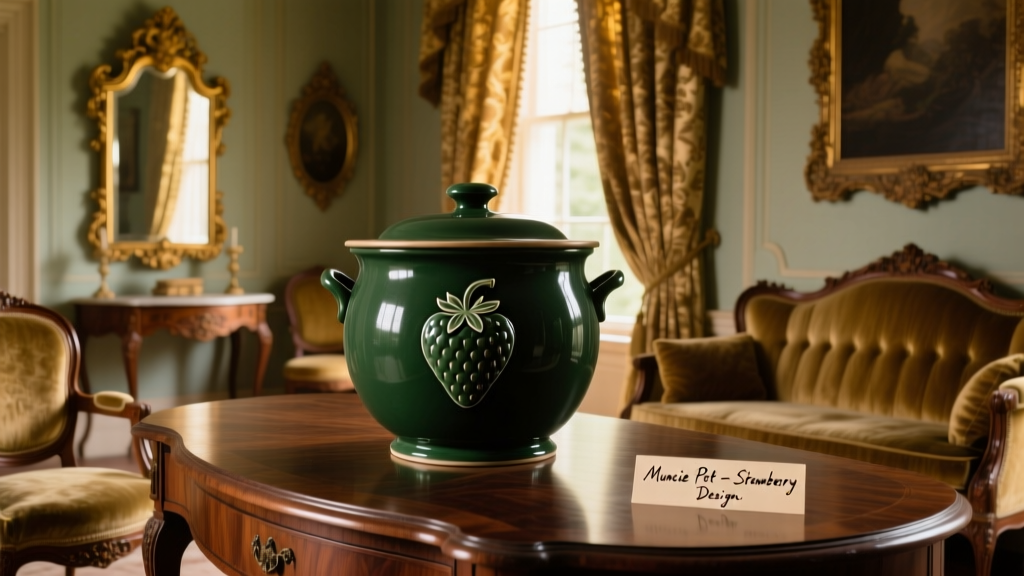
Muncie Pottery Strawberry Dark Matte Green: Identification, History, and Restoration Best Practices

Let’s Talk Turkey: A Collector’s Guide to Authentic Thanksgiving Memorabilia

Ceramic Arts Studio Shelf Sitter 'Banjo Girl' (4") — History, Identification, and Restoration Guidelines
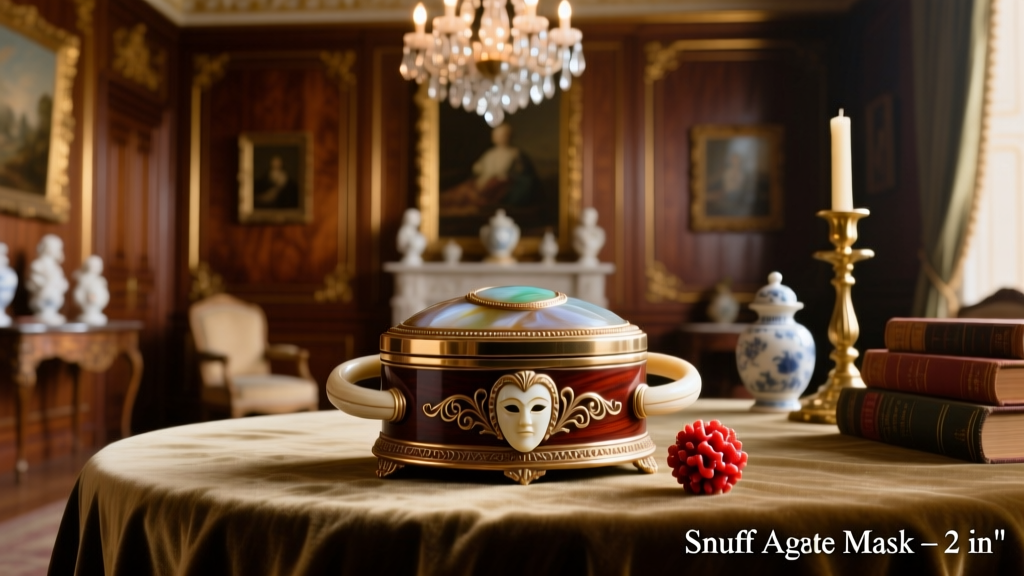
Snuff Agate Mask Mock Ring Handles with Coral Stopper: A 2-Inch Georgian-Era Snuff Box Analysis

Advertising Tin: Roly Poly Dutchman Mayo’s Cut Plug — A 7-Inch Collectible Tobacco Ephemera Study

Westmoreland Glass Creamer in English Hobnail: Identification, Value, and Restoration Guidance
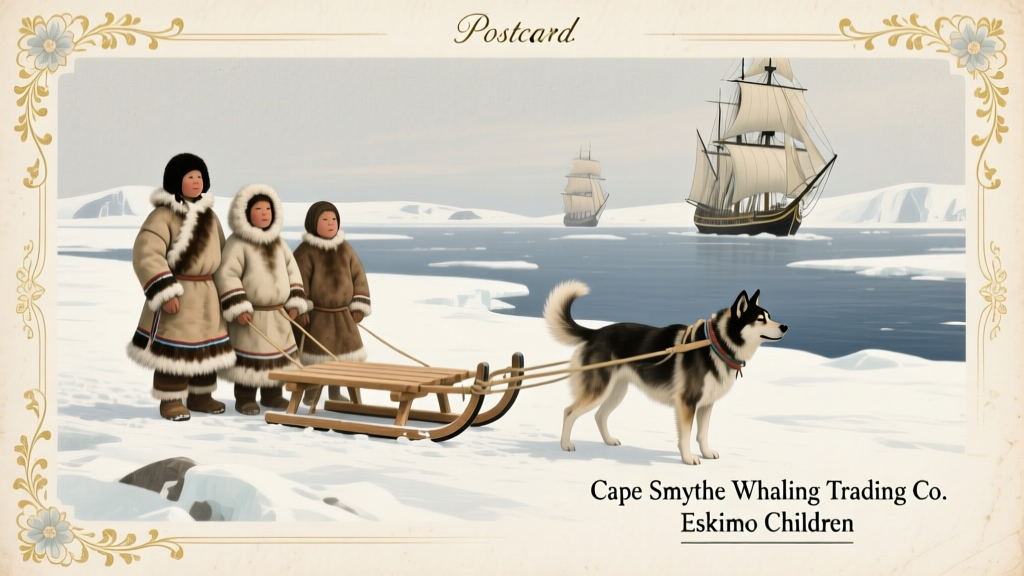
Postcards from Cape Smythe: Authenticity, Ethics, and Material History of Eskimo Children Imagery by the Cape Smythe Whaling Trading Co.

John Warrington & Co: The Forgotten Legacy of English Cabinetmaking Excellence, 1890–1940

Brass Mirror Plateau: A Round Renaissance Revival Continental Centerpiece, Circa 1880 — Dimensions, Provenance, and Restoration Protocol