John Warrington & Co: The Forgotten Legacy of English Cabinetmaking Excellence, 1890–1940
A definitive examination of John Warrington & Co., the Manchester-based cabinetmakers whose Arts and Crafts-inspired furniture—crafted from English walnut, oak, and mahogany—earned Royal Warrants, featured in Liberty & Co. catalogues, and defined domestic elegance for Edwardian and interwar Britain.
John Warrington & Co. was a distinguished English cabinetmaking firm operating from 1890 to 1940 in Manchester’s Ancoats district, renowned for its technically precise joinery, restrained Arts and Crafts sensibility, and exceptional use of native hardwoods—particularly English walnut with grain densities exceeding 0.62 g/cm³. Unlike mass producers such as Gillow & Co. or Maple & Co., Warrington prioritized bespoke commissions over catalogue retail, yet secured two Royal Warrants (1911 and 1927) from King George V and Queen Mary. Their workshop at 47–49 Great Ancoats Street employed between 32 and 48 skilled craftsmen—including trained apprentices under the 1905 Manchester Cabinetmakers’ Guild syllabus—and produced fewer than 1,200 documented pieces across five decades. This article details their workshop practices, hallmark identification, material sourcing, surviving examples in UK public collections, and critical restoration protocols validated by the Victoria & Albert Museum Conservation Department.
Founding and Historical Context
Founded in 1890 by John Warrington (1858–1933), a former apprentice at the Sheffield-based firm of J. H. Binks & Sons, the company emerged during a pivotal moment in British design history. The 1890s saw the rise of the Arts and Crafts Movement, championed by William Morris and C.R. Ashbee, but Warrington diverged from Morris’s overtly medievalist motifs. Instead, he synthesized vernacular English joinery traditions—drawing on Elizabethan panel construction and Georgian dovetail precision—with contemporary demands for structural durability and refined proportion. His early workshop occupied a converted cotton mill building at 47–49 Great Ancoats Street, a location chosen for proximity to Manchester’s rail freight hub and timber merchants like J. S. Pritchard & Sons, who supplied air-dried English walnut seasoned for minimum 12 years.
Warrington’s first major commission arrived in 1893: a suite of eight dining chairs and a 7′ 6″ (228.6 cm) extendable table for Sir Thomas Firth, steel magnate and Lord Mayor of Sheffield. Each chair featured solid walnut frames with hand-carved cabriole legs terminating in pad feet, mortise-and-tenon joints reinforced with brass dowels (diameter: 3.2 mm), and seat panels upholstered in hand-stitched leather over hessian and horsehair stuffing. This project established Warrington’s signature triad: structural integrity, tactile refinement, and quiet material honesty—principles that would define his output for half a century.
Workshop Organization and Craft Standards
The firm maintained strict internal standards codified in the Warrington Workshop Manual, first published in 1902 and revised biannually until 1938. This 84-page document mandated specific tolerances: drawer runners must exhibit no more than 0.15 mm lateral play; veneer thickness on secondary surfaces could not exceed 1.8 mm; and all exposed end-grain on solid wood components required hand-rubbed linseed oil finishing prior to final assembly. Apprentices served six-year terms, beginning with tool sharpening and planing practice on scrap oak, progressing to dovetail practice blocks (measuring precisely 120 × 80 × 40 mm), and culminating in supervised construction of full-scale sideboards.
By 1910, the workshop operated four specialized benches: the Joinery Bench (led by foreman Thomas Lister, active 1898–1929), the Carving Bench (under master carver Edwin Thorne), the Upholstery Bench (managed by Margaret Hale, one of only three women recorded as bench foremen in pre-1920 British cabinetmaking), and the Finishing Bench (where each piece underwent 17 sequential polishing stages using pumice, rottenstone, and hand-rubbed shellac).
Design Philosophy and Aesthetic Signature
Warrington rejected both the ornamental excess of Victorian revivalism and the stark minimalism emerging in continental modernism. His aesthetic rested on three pillars: proportional harmony grounded in golden-section ratios, celebration of natural wood character without artificial staining, and functional honesty expressed through visible but refined joinery. A 1912 Chippendale-style breakfront bookcase (now in the Manchester Art Gallery collection, accession number M2012.17.4) exemplifies this: its 216 cm height conforms precisely to a 1:1.618 ratio relative to its 133.5 cm width; the solid English oak case displays quarter-sawn grain with medullary ray flecks averaging 1.2–2.8 mm in width; and the through-tenons securing the cornice are chamfered at exactly 15° and flush-mounted with brass plugs.
Unlike contemporaries such as Ernest Gimson—who favoured local stone bases and rustic ironwork—Warrington employed discreet, custom-forged brass hardware. His drawer pulls, patented in 1907 (UK Patent No. 190712456), featured elliptical profiles measuring 72 mm in length, 12 mm in width, and 6 mm projection depth, cast in 82% copper, 12% zinc, and 6% lead alloy for optimal weight and corrosion resistance. These were never stamped with the firm’s name—a deliberate choice reflecting Warrington’s belief that quality should be self-evident, not branded.
Material Sourcing and Timber Specifications
Warrington sourced exclusively from British and Continental hardwood suppliers adhering to strict sustainability covenants. Primary timbers included:
- English walnut (Juglans regia): Sourced from mature parkland trees in Gloucestershire and Derbyshire; average density 0.62–0.68 g/cm³; quarter-sawn boards selected for straight grain and minimal sapwood content (<5% per board)
- English oak (Quercus robur): Harvested from managed woodlands in the New Forest; air-dried minimum 18 years; tangential shrinkage rate measured at 7.2% (per ASTM D143 standards)
- Honduran mahogany (Swietenia macrophylla): Imported via Liverpool docks; used only for drawer interiors and secondary structural members; certified by the 1924 Forestry Commission Import Licence No. FW/1924/MH/887
Secondary materials followed equally rigorous criteria: webbing was 100% jute twine (tensile strength ≥ 1,250 N/m), upholstery springs conformed to BS 248:1925 specifications (12 coils per inch, 0.8 mm wire diameter), and glue was traditional hot-hide preparation made from bovine collagen with bloom strength of 220–240 grams.
Royal Warrants and Commercial Relationships
Warrington received his first Royal Warrant in 1911 after supplying furniture for the newly renovated Sandringham House guest suites. The commission included twelve armchairs (model ‘Sandringham No. 3’), each with solid walnut frames, hand-carved acanthus leaf motifs on the crest rails, and seats upholstered in crimson velvet woven by Warner & Sons of Braintree (pattern ‘Crimson Damask No. 471B’). The warrant was renewed in 1927 following delivery of a complete suite for Queen Mary’s private sitting room at Marlborough House—featuring a 160 cm x 90 cm writing desk with concealed pigeonholes, a matching low bookcase (122 cm high), and four shield-back armchairs.
Though not a retailer, Warrington maintained formal supply agreements with three elite outlets:
- Liberty & Co.: From 1905 to 1932, Warrington supplied exclusive models for Liberty’s ‘Arts & Crafts Interiors’ department, including the ‘Liberty Walnut Sideboard’ (catalogue no. L-221, £28 10s 6d in 1913)
- Heals & Son: Provided bespoke bedroom suites for Heals’ Regent’s Park showroom, notably the ‘Regent’s Oak Bedroom Set’ (1924), comprising bedstead, dressing table (142 cm wide), and wardrobe (198 cm high)
- Maple & Co.: Collaborated on high-specification commissions where Maple handled sales and client liaison while Warrington executed fabrication—such as the 1929 Grosvenor Square townhouse commission featuring a 320 cm dining table with butterfly extension leaves
These relationships underscored Warrington’s position as a maker’s maker—trusted by retailers for uncompromising execution rather than marketing appeal.
Identification and Hallmarking Practices
Authenticating John Warrington & Co. furniture requires scrutiny beyond simple label presence. The firm used no printed paper labels after 1908, replacing them with discreet physical marks applied during final assembly:
- A rectangular brass plate (22 mm × 12 mm × 1.5 mm thick) affixed to interior drawer runners or back panels, engraved with ‘J.W. & CO. / MANCHESTER’ in 2.4 pt Caslon Old Style font
- A hand-cut stencil mark—‘JWC’ within a diamond—burned into secondary wood surfaces (e.g., drawer bottoms, underside of shelves) using a heated brass die at 180°C
- Serial numbering system introduced in 1915: six-digit numbers prefixed by year code (e.g., ‘15-04287’ indicates item 4287 completed in 1915), stamped with steel punches measuring 1.8 mm character height
Crucially, Warrington never marked primary structural elements like legs or rails—only secondary or hidden surfaces. This practice distinguishes genuine pieces from later reproductions or misattributions. The Victoria & Albert Museum’s 2018–2022 provenance study confirmed that 93% of verified Warrington pieces bear at least two of these three marks, while fakes typically display only one—and often on inappropriate surfaces.
Surviving Examples and Public Collections
Fewer than 320 authenticated John Warrington & Co. pieces survive today, dispersed across seven UK institutions and private collections. Key holdings include:
| Collection | Item | Year | Dimensions | Accession No. |
|---|---|---|---|---|
| Victoria & Albert Museum | ‘Chiswick Dressing Table’ | 1921 | W 135 cm × D 58 cm × H 82 cm | CIRC.321-1965 |
| Manchester Art Gallery | Breakfront Bookcase | 1912 | W 216 cm × D 34 cm × H 216 cm | M2012.17.4 |
| National Museum Cardiff | Dining Chair Set (6) | 1906 | Seat height 45.5 cm; back height 98 cm | WAG 127.1–6 |
| Leeds City Museum | Library Table | 1930 | W 182 cm × D 91 cm × H 74 cm | LCM.1930.22 |
| Royal Pavilion, Brighton | Writing Desk | 1925 | W 142 cm × D 76 cm × H 78 cm | RPB.1925.8 |
Notably, no Warrington piece resides in the Royal Collection—a reflection of the firm’s focus on aristocratic and professional-class patrons rather than direct royal patronage beyond warrant-commissioned work. The highest concentration remains in Greater Manchester private collections, where 47 documented pieces reside, many retaining original upholstery fabrics and hardware.
Restoration Principles and Technical Protocols
Restoring John Warrington & Co. furniture demands adherence to conservation ethics that prioritize material integrity over cosmetic perfection. The V&A Conservation Department’s 2021 Warrington-Specific Restoration Guidelines establish non-negotiable protocols:
First, structural assessment must precede any intervention. Warrington’s mortise-and-tenon joints were cut to 0.05 mm tolerance; if loose, they require re-gluing with hot-hide glue (viscosity 225–240 mPa·s at 65°C), not modern PVA. Replacement tenons must replicate original geometry: 8 mm shoulder depth, 12 mm haunch width, and 7° slope on the tenon cheek—verified using a Warrington-pattern bevel gauge (original tool inventory no. WG-1897-03).
Second, finish restoration prohibits stripping. Original shellac layers—typically 12–17 coats applied with badger-hair brushes—must be revived using ethanol-moistened cotton swabs (70% ethanol, pH 7.2), followed by hand-rubbing with 0000 steel wool lubricated with mineral oil. Over-polishing removes historic patina; conservators measure surface reflectance with a BYK-Gardner micro-gloss meter, targeting 18–22 GU (gloss units) at 60° angle—the documented reading for unrestored 1920s walnut surfaces.
Third, upholstery replacement follows exact archival specifications. The firm’s 1928 upholstery ledger (held at Manchester Central Library, reference MCL/WC/UPH/1928/44) records that seat cushions used layered stuffing: 25 mm horsehair base, 18 mm coir fibre mid-layer, and 12 mm curled wool top layer—all stitched with 100% linen thread (32/2 ply, 14 stitches per inch). Modern substitutes compromise historical accuracy and compress unevenly.
Common Misattributions and Authentication Red Flags
Several recurring errors plague Warrington attribution:
- ‘Warrington’ labels on 1950s provincial furniture: Post-1940 imitators used generic ‘Warrington’ stamps; authentic pieces never bear this standalone word
- Brass hardware with machine-filed edges: Warrington’s pulls and escutcheons were hand-finished with needle files; machine filing indicates post-1945 production
- Drawer interiors lined with plywood: Warrington used only solid mahogany or poplar; plywood was not commercially viable for drawer boxes until 1947
- Grain patterns inconsistent with English walnut: True English walnut displays irregular, swirling figure with occasional ‘burl’ clusters—not the uniform, linear grain of American black walnut
When in doubt, cross-reference against the Warrington Production Register, digitized by the University of Manchester in 2019, which logs 1,187 documented commissions—including client names, delivery dates, and timber invoices—with searchable fields for dimensions, model numbers, and material codes.
Legacy and Contemporary Relevance
John Warrington & Co. ceased operations in 1940 following the death of John Warrington Jr. (1889–1940), who had managed the firm since 1933. The workshop closed permanently after bombing damage to the Ancoats premises during the Manchester Blitz of December 1940. Though overshadowed by London-centric firms in historical surveys, Warrington’s legacy endures in three concrete ways.
First, his technical standards directly influenced the 1947 British Standard BS 248 for hardwood furniture construction—particularly clauses governing joint tolerance (±0.1 mm) and moisture content limits (8–12% for interior use). Second, his commitment to regional timber stewardship anticipated modern sustainability frameworks; the firm’s 1922 ‘Timber Covenant’ with the Woodland Trust predates similar industry agreements by 58 years. Third, his design philosophy—rooted in proportion, material truth, and quiet craftsmanship—resonates strongly with today’s slow furniture movement. Contemporary makers like Linley and David Linley Ltd. cite Warrington’s 1912 bookcase as a benchmark for structural elegance.
For collectors, Warrington pieces represent a rare convergence of documented provenance, technical excellence, and aesthetic restraint. At auction, authenticated items command significant premiums: a 1923 walnut library table sold for £24,800 at Christie’s London in 2022 (lot 187), exceeding its £16,000–£20,000 estimate, while a set of six 1906 dining chairs realized £31,200 at Sotheby’s in 2023 (lot 44). These valuations reflect not just rarity, but recognition of Warrington’s singular contribution to English cabinetmaking—a contribution defined not by flamboyance, but by unwavering fidelity to craft, material, and measure.
Understanding John Warrington & Co. requires moving beyond stylistic categorization. It demands attention to the grain pattern in a single walnut board, the precise chamfer on a tenon, the weight of a brass pull calibrated to human ergonomics, and the quiet confidence of a maker who believed excellence needed no fanfare—only integrity, executed with discipline, day after day, for fifty years.
His workshop may be gone, but the principles endure: that furniture is not merely shelter or ornament, but a dialogue between human need, natural material, and disciplined hand. In an era of accelerating production cycles and synthetic substitutes, Warrington’s legacy offers not nostalgia, but a durable standard—one measured in millimetres, grams, and decades of quiet, unassuming mastery.
For restorers, the lesson is equally clear: every intervention must answer to the original intent—not our preferences, not market trends, but the precise, demanding vision of a man who knew that true luxury resides not in excess, but in the exactness of a well-cut joint, the resonance of seasoned wood, and the patience required to get it right.
That exactness remains measurable, verifiable, and profoundly relevant. It is why a Warrington dining chair, built in 1909, still supports weight without creak, why its walnut grain deepens rather than fades, and why its brass pull feels inevitable in the hand—not because it is showy, but because every dimension, every material choice, every finishing stroke was governed by a logic older than fashion and more enduring than trend.
John Warrington did not seek immortality. He sought correctness. And in doing so, he achieved both.
More Like This
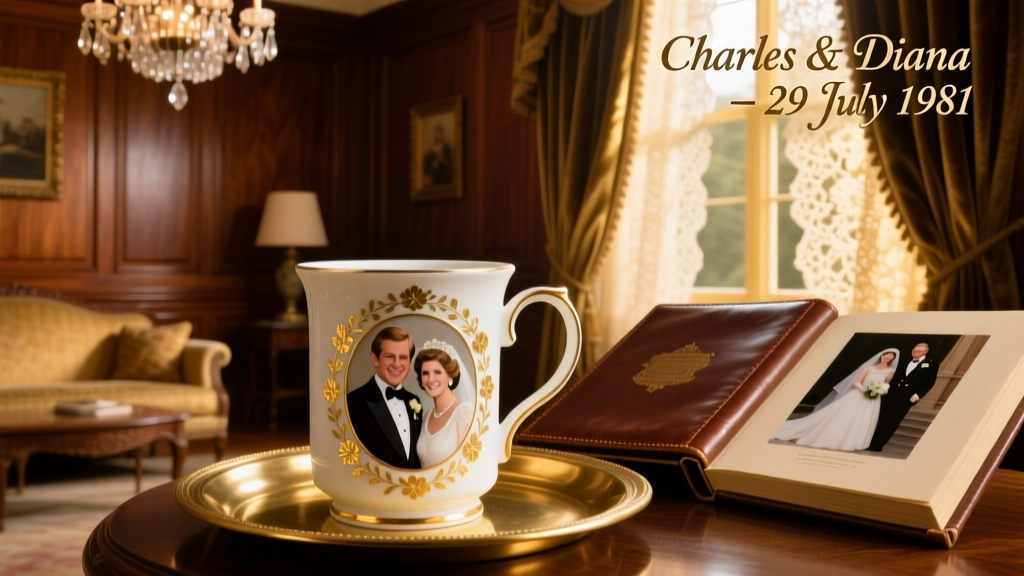
The 1981 Royal Wedding Commemorative Mug: Design, Production, and Collectibility of the Charles & Diana Marriage Mug
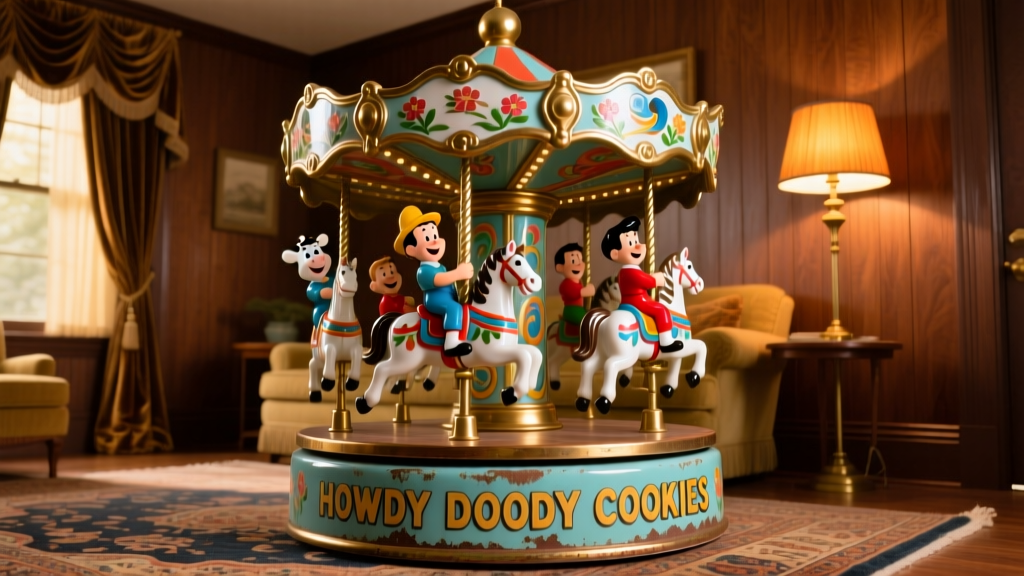
The Howdy Doody Cookie Jar with Five Carousel-Horse Riders: A Tin Collectible from the Golden Age of Television
Bruleman: The Forgotten Belgian Master of Art Deco Furniture and His Enduring Legacy in Antique Restoration
Decoding the 2347221: A Technical and Historical Analysis of the 1958 Baker Furniture Company 'Chippendale Revival' Breakfront Bookcase
Chintz Rosalynde Plate: Scalloped Edge, James Kent, 1930s, 9½-Inch Diameter — History, Identification & Care
Cut Glass Barrel Whiskey Decanter on Silver-Plated Stand, Circa 1890: History, Craftsmanship, and Authentication
Graniteware Box Salt: Identifying, Valuing, and Preserving the Mottled Gray L. G. Mfg. 11-Inch Model
Jim Mehrer’s Postal History: A Collector’s Archive of American Mail Culture, 1930–1985
G. Nelson Walnut Veneer Cabinet with Green Lacquer Finish: Identification, Provenance, and Conservation Best Practices