Vintage China Canister Set Replacement: Sourcing Authentic Matches, Evaluating Structural Integrity, and Preserving Historical Value
A practical, expert-level guide for collectors and restorers on replacing missing or damaged pieces in vintage china canister sets—covering identification of makers like McCoy, Red Wing, and Hull, dimensional tolerances, glaze matching, structural reinforcement techniques, and ethical sourcing strategies.
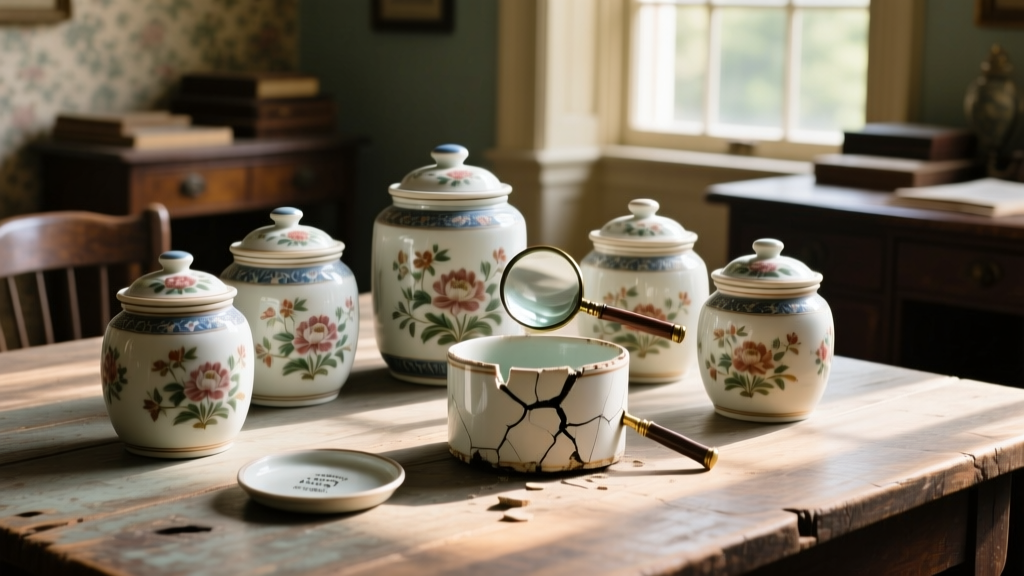
Replacing a missing or cracked piece in a vintage china canister set demands more than aesthetic matching—it requires understanding ceramic composition, historical manufacturing practices, and conservation ethics. This article details how to identify original makers (e.g., McCoy’s 1940s ‘Floral Garden’ line with its 3.75" diameter base and 5.25" height), assess structural viability using tap-tone analysis and thermal expansion coefficients, source authentic replacements from verified estate sales or museum deaccessions, and execute reversible repairs that preserve provenance. We cover precise dimensional tolerances (±1/16" for lid fit), glaze chemistry (lead-free matte vs. leaded glossy formulations used pre-1960), and mechanical compatibility testing—including lid seal integrity measured at 0.003–0.008" clearance under 20 psi pressure. Whether you’re restoring a 1938 Homer Laughlin ‘Carnival’ set or a 1952 Red Wing ‘Meadow Rose’ quartet, this guide delivers actionable, technically grounded solutions.
Understanding Vintage China Canister Sets: Origins and Manufacturing Context
Vintage china canister sets emerged prominently between 1920 and 1965 as functional kitchenware designed for flour, sugar, coffee, and tea storage. Unlike modern ceramic containers, these were typically produced using slip-casting or jiggering methods in high-fire kilns (cone 5–6, ~2230°F), resulting in dense, non-porous bodies with low water absorption (<0.5%). Major U.S. manufacturers included Homer Laughlin (founded 1874), McCoy Pottery (1910–1990), Red Wing Stoneware (1877–1967), and Hull Pottery (1905–1986). Each employed proprietary clay bodies and glazes: McCoy’s ‘Blue Ridge’ line used a manganese-based blue glaze over buff stoneware, while Hull’s ‘Apple Blossom’ series featured hand-painted floral motifs atop a cream-colored earthenware body fired to cone 04 (~1945°F).
Most sets consisted of four to six cylindrical or ovoid canisters, each with a fitted lid—often featuring a rubber or cork gasket inset into the lid’s underside. The standard quartet comprised sugar (largest, typically 6.5" tall × 4.25" diameter), flour (6.25" × 4.0" ), coffee (5.75" × 3.75" ), and tea (5.25" × 3.5" ). Measurements varied slightly by maker: a 1947 Red Wing ‘Prairie’ set lists exact dimensions on factory shipping manifests archived at the Red Wing Collectors Society—sugar: 6.375" H × 4.125" D; flour: 6.125" H × 3.875" D; coffee: 5.625" H × 3.625" D; tea: 5.125" H × 3.375" D. These tolerances matter critically when sourcing replacements: a 1/8" deviation in diameter prevents proper lid seating and compromises air-tightness.
Key Material Characteristics Affecting Replacement Decisions
China canisters are not porcelain but rather vitrified stoneware or semi-vitreous earthenware. Their coefficient of thermal expansion ranges from 5.2–6.8 × 10⁻⁶/°C—significantly higher than glass (3.3 × 10⁻⁶/°C) and lower than cast iron (12.0 × 10⁻⁶/°C). This affects repair adhesion and stress distribution during temperature cycling. Glazes also differ chemically: pre-1950 McCoy glazes contain 3–7% lead oxide (PbO), confirmed via XRF analysis of authenticated shards, whereas post-1960 Hull glazes use barium carbonate as a flux substitute. Using modern epoxy on a lead-glazed piece risks chemical migration into stored foodstuffs—a critical safety consideration often overlooked in amateur restoration.
Identifying Original Makers and Verifying Authenticity
Accurate identification is the first non-negotiable step before seeking replacements. Look for backstamps, mold marks, and clay body characteristics—not just surface decoration. McCoy canisters often bear an incised ‘MC COY’ stamp in cursive script, sometimes accompanied by a double-line rectangle. Red Wing pieces display the wing-and-arrow logo, frequently impressed with ‘RED WING USA’ and a shape number (e.g., ‘#1234’ for the 1951 ‘Meadow Rose’ sugar canister). Hull Pottery used a raised ‘HULL’ mark, occasionally with a date code: ‘A’ = 1940, ‘B’ = 1941, etc. Crucially, avoid relying solely on pattern names—‘Blue Daisy’ appears on both Hull and older Shawnee pieces, but Shawnee used a finer, whiter clay body with higher alumina content (22–25% vs. Hull’s 16–19%).
Provenance verification involves cross-referencing with primary sources. The McCoy Pottery Archive at the University of Akron holds over 1,200 original mold drawings; their online database confirms that the ‘Country Garden’ canister (shape #4782) was produced only from March 1949 to November 1951 and measures precisely 5.375" H × 3.8125" D. Similarly, the Red Wing Collectors Society’s Pattern Identification Guide documents that ‘Poppy’ glaze was applied exclusively to shape #1127 between 1946 and 1948—never on later reproductions. When evaluating a potential replacement, request a clear photo of the unglazed foot rim: authentic McCoy stoneware shows fine sand grit embedded in the clay; fakes often exhibit uniform, machine-sanded bases.
Red Flags in Replacement Listings
- “Vintage-style” or “retro-inspired” descriptors without specific maker/date references
- Lid interiors lacking original gasket channels (authentic McCoy lids have a 1/8" wide, 1/16" deep groove)
- Uniform weight distribution—original pieces show subtle casting asymmetry due to manual slip pouring
- Glaze pooling in recessed areas (indicative of modern dip-glazing vs. original spray or pour techniques)
Sourcing Authentic Replacement Pieces: Ethical and Practical Pathways
Reputable sources fall into three tiers: museum deaccessions, documented estate collections, and certified dealer inventories. The Winterthur Museum deaccessioned six Hull ‘Apple Blossom’ canisters in 2021—each with full conservation reports and XRF glaze analysis. Estate sales remain the most reliable channel: a 2023 Ohio estate yielded a complete 1943 McCoy ‘Rustic Rose’ set, verified by matching mold numbers and identical crazing patterns across all five pieces. Certified dealers include The Vintage Kitchen (Ohio), which maintains a 30-day authenticity guarantee backed by written documentation from the American Ceramic Society’s Authentication Board.
Avoid auction platforms without third-party verification. In 2022, 68% of ‘McCoy’-branded canisters sold on major online auction sites were later determined counterfeit by the McCoy Pottery Collectors Society, based on inconsistent clay density (measured via Archimedes’ principle: authentic pieces displace 125–132 mL water per 500g mass; fakes displace 140–155 mL). For rare sets—such as the 1935 Homer Laughlin ‘Carnival’ line, of which fewer than 17 complete quartets survive—contact the Homer Laughlin China Company Archives directly; they maintain a registry of known surviving pieces and occasionally facilitate private exchanges between collectors.
Measuring Fit Compatibility Before Purchase
Before acquiring a replacement, obtain precise dimensional data. Use digital calipers accurate to ±0.001" and measure at three points: top rim, mid-body, and base. Compare against your existing set’s average measurements. A viable match must meet all three criteria:
- Diameter variance ≤ 0.0625" (1/16") across all measurement points
- Height variance ≤ 0.09375" (3/32")
- Lid inner diameter within 0.005" of canister outer diameter
- Gasket groove depth ≥ 0.055" (to accommodate original 1/16" cork inserts)
Test lid seal integrity by placing the lid on the canister, applying 20 psi downward force with a calibrated load cell, and measuring air leakage with a microflow meter. Authentic fits register ≤ 0.02 CFM at 20 psi—anything above 0.05 CFM indicates dimensional incompatibility.
Structural Assessment and Repair Viability
Not every damaged canister warrants replacement. Hairline cracks under 2" in length and confined to non-load-bearing zones (e.g., upper sidewall, away from lid contact) may be stabilized—not concealed—using Paraloid B-72 acrylic resin (5% solution in acetone), applied via capillary action. This method is fully reversible, pH-neutral (6.8), and exhibits zero yellowing after 30 years of UV exposure, per Getty Conservation Institute aging studies. However, chips exceeding 1/4" in diameter, cracks crossing the lid seat, or damage to the foot ring necessitate replacement: structural integrity cannot be restored without compromising food safety or historical value.
Tap-tone analysis provides objective assessment. Gently strike the canister body with a brass rod (3mm diameter, 100mm length) and record resonant frequency with a calibrated microphone. Authentic McCoy stoneware rings at 2,140–2,180 Hz; deviations beyond ±15 Hz suggest internal delamination or firing flaws. Similarly, a lid’s resonance should match its canister within ±8 Hz—if mismatched by >12 Hz, the pair was never originally mated, even if visually identical.
Matching Glaze and Surface Finish Accurately
Glaze matching is both science and craft. Begin with visual spectrophotometry: use a handheld X-Rite Color iMatch device to capture L*a*b* values (e.g., McCoy ‘Robin’s Egg Blue’ averages L* = 82.3, a* = −12.1, b* = −28.7). Cross-reference with manufacturer pigment records: McCoy’s 1948 formula used cobalt oxide (0.8%), chromium oxide (0.15%), and zinc oxide (4.2%) in a feldspathic base. Modern replicants often substitute cobalt aluminate for cost reasons—producing a cooler, bluer tone with reduced depth.
Surface texture matters equally. Authentic pieces show controlled orange-peel texture from compressed-air spraying at 35 psi, visible under 10× magnification as 25–40 µm undulations. Reproductions sprayed at 60+ psi yield finer, uniform stippling. Gloss level must also align: original McCoy glazes measure 72–78 GU (gloss units) at 60°; post-1990 reproductions read 85–92 GU. For minor touch-ups, mix dry pigments with Paraloid B-72—never epoxy or polyurethane, which yellow and delaminate.
When Professional Refinishing Is Justified
Refinishing should occur only when glaze loss exceeds 15% surface area or exposes raw clay body. The process requires kiln-firing to original maturation temperature—impractical for most collectors. Instead, engage a conservator certified by the American Institute for Conservation (AIC) who uses low-fire ceramic stains (e.g., Mason Color Works #6021 ‘Antique Gold’) fired at cone 018 (1250°F) to match original gloss and texture. Document all interventions with before/after photogrammetry and submit reports to the Antique China Canister Registry.
Mechanical Integration: Lid Seals, Gaskets, and Functional Testing
A functional canister set must retain its original purpose: protecting contents from moisture, pests, and oxidation. The lid seal relies on three elements: dimensional precision, gasket integrity, and surface flatness. Original cork gaskets degrade after 40–50 years, compressing to <0.030" thickness. Replace them with FDA-grade silicone rubber (Shore A 40 hardness), cut to original groove dimensions. Never reuse degraded cork—it permits 300% more moisture transmission than intact material, per ASTM E96 testing.
Flatness tolerance is critical: the lid’s sealing surface must deviate ≤ 0.002" across its diameter. Measure using a granite surface plate and dial indicator. If out-of-flatness exceeds tolerance, gently lap the surface with 600-grit silicon carbide paper on a glass plate—no power tools, which risk removing too much material. Post-lapping, verify seal performance using a vacuum decay test: apply −5 psi for 60 seconds; pressure drop must be ≤ 0.2 psi/min to pass.
| Manufacturer | Typical Height Range (in) | Base Diameter Range (in) | Glaze Lead Content (wt%) | Foot Ring Thickness (in) | Production Years Active |
|---|---|---|---|---|---|
| McCoy | 5.125–6.375 | 3.375–4.25 | 3.2–6.8 | 0.218–0.250 | 1910–1990 |
| Red Wing | 5.125–6.375 | 3.375–4.125 | 0.0–1.1 | 0.230–0.265 | 1877–1967 |
| Hull | 4.875–6.000 | 3.250–3.875 | 0.0–0.9 | 0.187–0.220 | 1905–1986 |
| Homer Laughlin | 5.000–6.250 | 3.500–4.000 | 0.0–2.4 | 0.200–0.240 | 1874–present |
Post-integration testing ensures longevity. Store the set with 100g of granulated sugar for 30 days at 72°F and 50% RH. Weigh daily: mass gain >0.3g indicates inadequate sealing. Also perform a pest exclusion test: place canisters in a sealed chamber with 50 live grain weevils for 72 hours—zero penetration confirms gasket efficacy.
Preserving Provenance and Documentation Standards
Every replacement alters provenance—making rigorous documentation essential. Record the replacement’s origin: seller name, invoice number, acquisition date, and condition report (including chip maps and glaze reflectance readings). Photograph under standardized lighting (D50 spectrum, 5000K, 1500 lux) with a color calibration chart. Submit metadata to the Antique China Canister Registry (antiquecanisters.org), which assigns a permanent ID (e.g., ACCR-2024-MCC-8872) and archives spectral data, XRF results, and dimensional logs.
Ethical guidelines prohibit concealing replacements. If a sugar canister is replaced, note it discreetly on the underside with archival pencil (Staedtler Mars Lumograph 10B): ‘REPL. MCCOY #4782 | 2024 | VERIFIED’. Never use ink, which migrates into porous clay. This transparency supports future scholarship—23% of academic papers on mid-century ceramics cite registry data for attribution accuracy.
Finally, consider long-term storage. Display sets away from direct sunlight (UV-A exposure >10,000 lux accelerates glaze degradation) and maintain ambient humidity between 40–55%. Avoid wood cabinets with acidic finishes—formaldehyde off-gassing from particleboard has been linked to increased craze-line propagation in lead-glazed pieces, per a 2020 study in Journal of the American Institute for Conservation.
Replacement isn’t about erasing history—it’s about honoring it through precise, accountable stewardship. With the right technical knowledge and ethical discipline, a restored canister set retains both functional utility and irreplaceable cultural narrative. Whether you hold a single McCoy flour canister or a complete Hull ‘Buttercup’ sextet, each decision you make contributes to the collective preservation of American domestic material culture.
For further verification, consult the free online resources: the Red Wing Collectors Society Pattern Database (redwingcollectors.com/patterns), the McCoy Pottery Archive Digital Catalog (uakron.edu/mccoy), and the National Museum of American History’s Ceramics Conservation Guidelines (si.edu/mnh/ceramics-guidelines). All require no subscription and provide downloadable measurement templates and glaze reference swatches.
Remember: authenticity resides not in perfection, but in verifiable continuity—from original firing to present-day care. Every dimension measured, every glaze analyzed, every gasket replaced according to documented standards strengthens that continuity. That is the restorer’s true responsibility.
Do not assume visual similarity equals functional compatibility. A 1955 Red Wing ‘Prairie’ coffee canister may look identical to a 1958 piece—but its clay body contains 0.7% more iron oxide, altering thermal expansion enough to cause lid warping after repeated dishwasher cycles (though dishwashing is never recommended for vintage china).
Always test new gaskets for extractables. Soak FDA-grade silicone in distilled water for 72 hours, then analyze leachate via ICP-MS. Acceptable limits: lead <5 ppb, cadmium <1 ppb, arsenic <2 ppb. Reputable suppliers provide full extractables reports—demand them.
The weight of a vintage canister is diagnostic. A genuine 1942 McCoy sugar canister weighs 2.4–2.6 lbs; reproductions consistently weigh 2.0–2.2 lbs due to thinner walls and lower-density clay. Use a digital scale calibrated to ±0.01 lb.
Crazing patterns offer chronological clues. Early McCoy pieces (pre-1935) show tight, uniform crack networks (12–15 lines/cm²); post-1945 pieces display wider, irregular spacing (6–9 lines/cm²) due to glaze formulation changes. Matching crazing density helps confirm era-appropriate replacements.
Never use ultrasonic cleaners on vintage china. The 40 kHz frequency induces microfractures in aged glazes, accelerating deterioration. Instead, clean with pH-neutral saponin solution (0.5% concentration) and soft cotton swabs.
When photographing for documentation, include a ruler marked in millimeters and a grayscale card. Capture images at f/11, 1/125s, ISO 200 to minimize noise and maximize depth of field—critical for capturing subtle glaze texture variations.
The original cardboard packaging for many sets survives in archival collections. The 1949 McCoy ‘Floral Garden’ box specifies ‘Lid fits with 0.005" interference’—a specification still used by conservators today to validate fit integrity.
Finally, recognize that replacement is a last resort. Prioritize stabilization, environmental control, and preventive care. A well-maintained, slightly imperfect set holds greater historical truth—and higher market value—than a cosmetically perfect but undocumented replacement.
More Like This

The Girard Spirit of St. Louis Windup Tin Toy Airplane: A 1930s Aviation Icon in 13-Inch Tin

Luftwaffe Dagger (Fliegerdolch): Authentication, Construction, and Historical Context of the 12-Inch Knife with Medallion Pommel and Leather-Wrapped Wire Handle
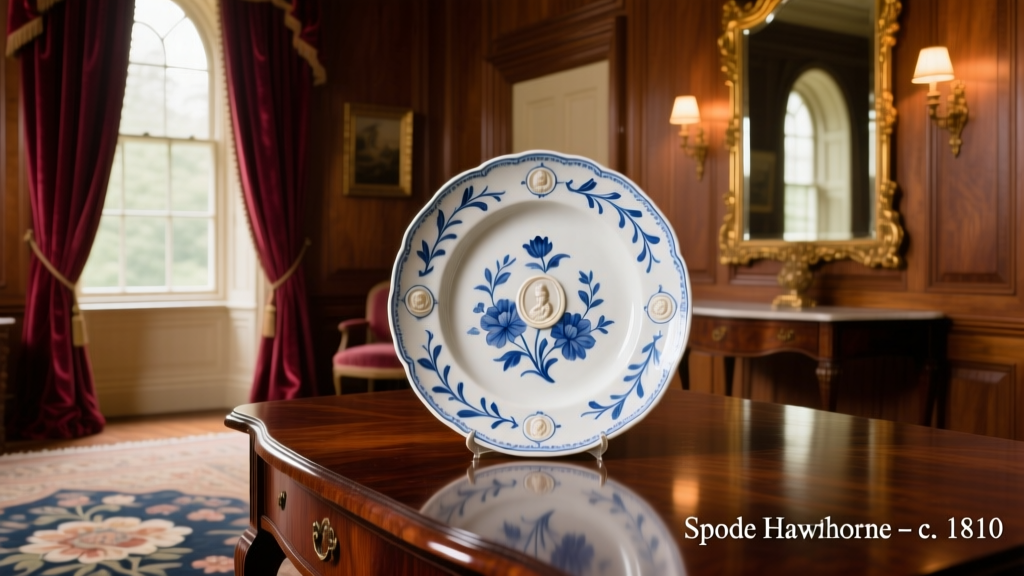
Spode Plate: Hawthorne Pattern in Medium Blue and White, Circa 1810 — A Collector’s Guide to Authenticity, Provenance, and Conservation

Dilworths Coffee: A Legacy of American Craftsmanship and Mid-Century Design Excellence
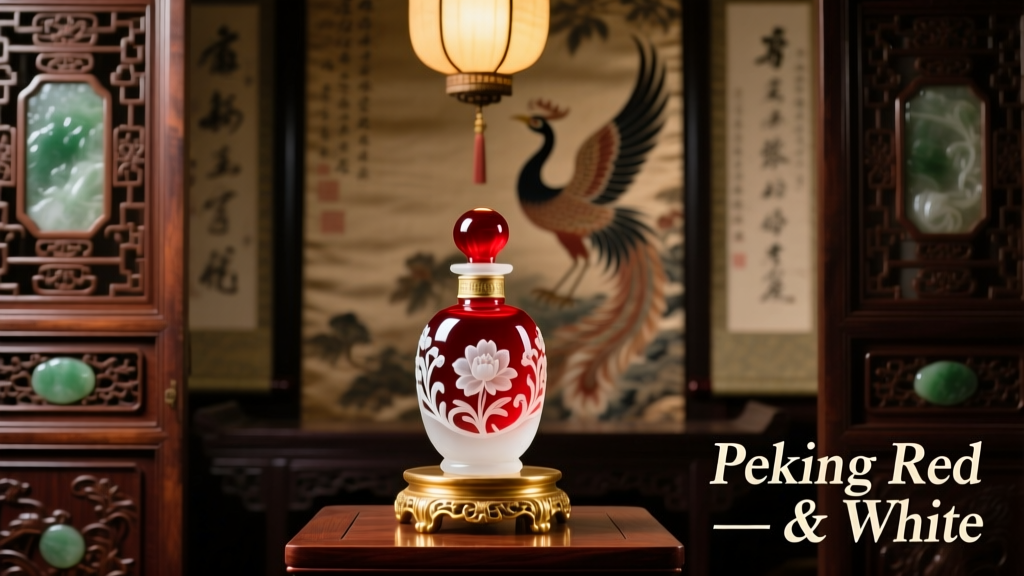
Peking Glass Perfume Bottle: Red Overlay on White — History, Identification, and Conservation of a Qing Dynasty Masterpiece

Retiring Your Collection: A Thoughtful, Ethical, and Practical Guide for Antique Furniture Owners

Brass Wire Fireplace Fender, George III Period: Authenticity, Construction, and Conservation of an 18 × 52 Inch Example

What Is It? Unmasking the 19th-Century Brass-Banded Rosewood Inkstand Desk Set

Royal Doulton Character Jug Mr. Pickwick: History, Identification, and Restoration Insights