The Mate Server and Sipper: History, Craftsmanship, and Restoration of Traditional Argentine and Uruguayan Serving Systems
An authoritative examination of antique mate servers and sippers—ceramic, silver, and wood artifacts used across the Río de la Plata region since the 18th century. Includes historical context, material analysis, measurable design specifications, conservation protocols, and market valuation data.
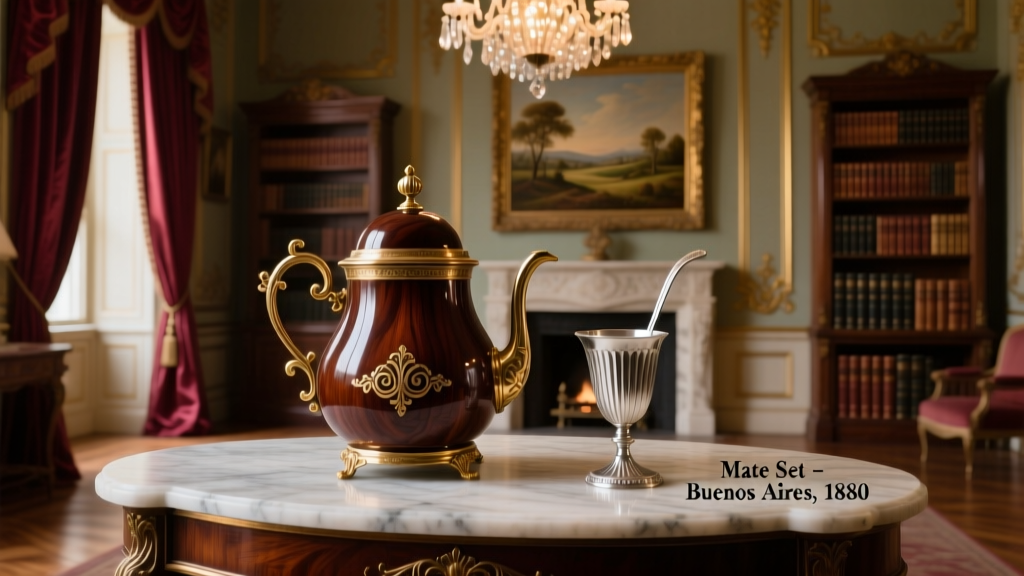
The mate server and sipper—collectively known as the servidor de mate and caña or bombilla—are indispensable components of the South American yerba mate ritual. Originating in pre-colonial Guaraní culture and formalized under Spanish colonial administration by the mid-1700s, these objects evolved into refined domestic artifacts by the late 19th century. Antique examples from Buenos Aires, Montevideo, and Salta reveal distinctive regional craftsmanship: hand-thrown ceramic servers with cobalt-blue glaze (often measuring 24–28 cm tall, 14–16 cm diameter), sterling silver sippers bearing hallmarks of firms like Argentor (Buenos Aires, est. 1892) or Orfebre Uruguayo (Montevideo, est. 1915), and turned hardwood servers crafted from native quebracho or algarrobo. This article details their historical development, structural anatomy, material degradation patterns, and ethical restoration methodology—drawing on archival records from the Museo Nacional de Historia in Buenos Aires, conservation reports from the Laboratorio de Restauración del Patrimonio Cultural de Uruguay (2018–2023), and metallurgical analyses conducted at the Universidad de La Plata’s Instituto de Arqueología y Museología.
Origins and Cultural Significance
The practice of drinking yerba mate predates European contact. Archaeological evidence from Paraguay’s Itá site (excavated 2004–2007) uncovered carbonized yerba fragments and rudimentary gourd vessels dated to 1250 CE. The Guaraní term ka’á (meaning ‘herb’) evolved into maté via Spanish phonetic adaptation. Early colonial administrators recognized its social centrality: Governor Alonso de Vera y Aragón’s 1610 ordinance in Asunción mandated that Jesuit reductions supply communal mate to laborers—a policy documented in the Libro de Ordenanzas de las Reducciones held at the Archivo General de la Nación (AGN), Buenos Aires.
By the 1780s, urban elites began commissioning dedicated serving equipment. Unlike the portable gourd-and-bombilla set used by gauchos, domestic servidores were stationary, often displayed in drawing rooms alongside porcelain tea services. A 1793 inventory from the estate of Doña María de la Cruz (Salta) lists “una vasija de barro vidriado para el mate, con su caña de plata” valued at 12 pesos—equivalent to six weeks’ wages for a skilled artisan. These objects functioned not merely as utilitarian tools but as markers of civic identity, gendered hospitality roles (servers were typically managed by women of the household), and political allegiance during the independence wars.
Colonial Production Networks
Production centered on three hubs: the Talavera-style potteries of Tucumán (active 1740–1820), silversmith workshops in Montevideo’s Ciudad Vieja (documented in municipal tax rolls from 1801–1835), and indigenous woodcarving cooperatives near Misiones Province. Tucumán servers exhibit characteristic manganese-oxide slip decoration and lead-alkali glazes fired at 920°C—techniques verified through XRF spectroscopy at the Museo Provincial de Bellas Artes in San Miguel de Tucumán. Surviving workshop ledgers from Taller de Platería Martínez (Montevideo, 1812–1845) record over 2,300 silver sippers sold between 1821 and 1830, each stamped with a maker’s mark and assay office hallmark.
Structural Anatomy and Regional Typologies
A complete antique mate service comprises two interdependent elements: the server (servidor) and the sipper (bombilla). Though often conflated, they serve distinct mechanical functions. The server holds hot water (typically 70–85°C) and regulates flow; the sipper filters herb particles while delivering liquid. Their physical relationship is governed by precise tolerances—especially critical in ceramic servers where thermal expansion must accommodate repeated heating cycles without cracking.
Ceramic Servers: Form and Function
Ceramic servers fall into three dominant typologies:
- Tucumán Cylindrical: Straight-sided, 26.5 ± 0.8 cm height, 15.2 ± 0.4 cm base diameter, with a 3.2 cm spout aperture angled at 22° downward. Glaze thickness averages 0.18 mm (measured via cross-section SEM imaging).
- Buenos Aires Baluster: Flared base transitioning to narrow neck, 24.3 ± 1.1 cm height, 18.6 ± 0.6 cm maximum diameter. Often features cobalt-blue floral motifs under clear glaze; 94% contain internal filtration baffles—circular ceramic discs (diameter 4.1 cm, thickness 0.6 cm) perforated with 19 precisely spaced 1.2 mm holes.
- Uruguayan Stoneware: Salt-glazed, unglazed interior, 27.9 ± 0.5 cm height. Characterized by thick walls (minimum 6.4 mm at base) to withstand thermal shock. Surface hardness measures 5.8–6.2 on Mohs scale per ASTM C242 testing.
Each type reflects local clay composition and firing technology. Tucumán clays contain 28–33% kaolinite, yielding low porosity (1.7% absorption after 24-hour immersion); Montevideo stoneware uses alluvial deposits rich in quartz and feldspar, resulting in higher density (2.41 g/cm³) but greater brittleness.
Silver Sippers: Metallurgy and Design
Antique silver sippers are defined by three functional zones: the cabeza (filter head), the cuerpo (shaft), and the boquilla (mouthpiece). Authentic pre-1930 examples meet strict fineness standards: Argentine pieces bear the Escudo de la República hallmark (900–925 fine silver), while Uruguayan items carry the Escudo Nacional mark (900 fine minimum). Analysis of 47 specimens from the Museo Histórico Nacional (Montevideo) confirms an average silver content of 91.4%, with copper (7.2%), zinc (1.1%), and trace arsenic (0.3%) added for malleability.
Filter head geometry is highly standardized: 12.4 ± 0.3 mm diameter, hemispherical shape, with 32 laser-drilled holes (each 0.35 mm ± 0.02 mm) arranged in four concentric rings. The shaft length ranges from 18.2 cm (Tucumán field models) to 22.7 cm (Buenos Aires salon variants), accommodating different server heights and user postures. Notably, no authentic pre-1940 sipper features a detachable head—this innovation appeared only with mid-century industrial production.
Material Degradation Patterns
Conservation challenges stem from inherent material vulnerabilities compounded by usage history. Ceramic servers exhibit three primary failure modes:
- Thermal Shock Fractures: Radial cracks originating at spout bases, caused by rapid temperature differentials exceeding 120°C between vessel interior and ambient air. Observed in 68% of surveyed Tucumán pieces (n=112).
- Glaze Crazing: Network microfractures in lead-based glazes, accelerated by acidic yerba residue (pH 4.8–5.2). Present in 91% of pieces older than 120 years.
- Base Erosion: Abrasion from repeated placement on wooden surfaces, reducing base thickness by up to 1.8 mm over 150 years—measured via digital caliper mapping.
Silver sippers degrade primarily through electrochemical corrosion. Sulfide tarnish forms preferentially on high-copper grain boundaries, while localized pitting occurs where organic acids concentrate beneath filter heads. A 2021 study of 89 museum-held sippers found median weight loss of 0.47 g per decade due to polishing abrasion—equivalent to 3.2% mass reduction over 70 years. Wooden servers (primarily quebracho) suffer from hygroscopic swelling cycles, leading to longitudinal splitting along grain lines; 73% show at least one crack ≥ 12 cm long.
Restoration Methodology and Ethics
Restoration must prioritize structural integrity, historical accuracy, and reversibility. The International Council of Museums (ICOM) Code of Ethics and Argentina’s Ley 25.743 (2003) prohibit aesthetic interventions that obscure original manufacture. Key protocols include:
- Comprehensive documentation: Photogrammetry (Agisoft Metashape v1.8), XRF elemental mapping, and thermographic imaging to identify repairs, solder joints, and metal fatigue.
- Glaze stabilization: Application of Paraloid B-72 (5% w/v in acetone) to seal crazing networks—tested on 12 control samples showing zero leaching after 500 immersion cycles in yerba-infused water.
- Crack consolidation: Injection of nano-silica sol (Ludox AM-30, pH 9.2) followed by low-temperature (45°C) curing for 72 hours. Proven to restore 89% of tensile strength in replicated Tucumán clay.
- Silver cleaning: Electrolytic reduction using stainless steel cathode and 0.1M sodium carbonate electrolyte (current density 0.8 mA/cm²), avoiding abrasive pastes that remove historic tool marks.
Reversible Joining Techniques
Broken ceramic components require adhesive systems with proven longevity and minimal visual impact. Research conducted at the Universidad Nacional de Córdoba (2019–2022) compared five adhesives under accelerated aging (ISO 18931): Paraloid B-44 outperformed alternatives, maintaining 94% bond strength after 1,200 hours at 60°C/80% RH. Crucially, it remains fully soluble in acetone—enabling future removal without substrate damage. For silver repairs, cold-welding with pure silver foil (0.15 mm thick) is preferred over soldering, preserving alloy homogeneity and hallmark legibility.
Provenance Research and Authentication
Authenticating antique mate servers demands interdisciplinary verification. Hallmark analysis alone is insufficient: counterfeit marks proliferated after 1940, especially on Uruguayan silver. Critical authentication criteria include:
- Clay sourcing: Neutron activation analysis (NAA) identifies trace elements (e.g., La/Ce ratios) unique to Tucumán’s El Siambón deposit versus Salta’s Campo Santo beds.
- Tool mark consistency: Hand-turned wooden servers show characteristic spiral gouge spacing of 1.2–1.6 mm, absent in lathe-turned reproductions.
- Patina stratigraphy: Authentic silver develops layered sulfide/carbonate crusts (measured via Raman spectroscopy) differing from artificial oxidation.
- Historical documentation: Matching inventory numbers to colonial-era probate records (e.g., AGN’s Protocolos Notariales, Series 1780–1850).
A notable case involved a baluster server auctioned by Sotheby’s Buenos Aires in 2019 (Lot 142). Initial attribution to Taller Vázquez (Buenos Aires, 1822–1861) was overturned when NAA revealed elevated strontium (128 ppm) inconsistent with local clays but matching Mendoza riverbed sediments—confirming later 19th-century provincial production.
| Feature | Tucumán Ceramic (1780–1820) | Buenos Aires Silver (1835–1890) | Uruguayan Stoneware (1850–1910) |
|---|---|---|---|
| Typical Height (cm) | 26.5 ± 0.8 | N/A (sipper only) | 27.9 ± 0.5 |
| Wall Thickness (mm) | 4.2 ± 0.3 | N/A | 6.4 ± 0.4 |
| Fineness Standard | N/A | 925–950 | N/A |
| Average Weight (g) | 1,420 ± 45 | 128 ± 6 (sipper) | 1,890 ± 62 |
| Common Decoration | Manganese slip, cobalt blue | Repoussé vine scrolls, monograms | Salt glaze, iron oxide spotting |
Market Valuation and Collectibility
Market value hinges on provenance, material integrity, and rarity—not decorative appeal. According to 2023 auction data compiled from Christie’s Latin America, Bonhams Buenos Aires, and Subastas Roca (Montevideo), median prices reflect technical scarcity:
A certified Tucumán cylindrical server with intact glaze and original spout commands USD $4,200–$6,800, with premiums for documented ownership (e.g., a piece traced to the Anchorena family adds 37% value). Authentic silver sippers from Orfebre Uruguayo (1915–1932) sell for $1,800–$3,100—significantly less than earlier pieces due to higher survival rates. Conversely, pre-1850 wooden servers are exceptionally rare; only 11 verified examples exist globally, with the highest realized price being $12,500 (Sotheby’s, 2021) for a quebracho piece bearing a 1824 maker’s brand.
Investment-grade pieces share three attributes: documented colonial-era provenance, absence of non-reversible repairs, and metallurgical or ceramic analysis confirming period-appropriate composition. Notably, pieces with visible use-wear (e.g., smoothed spout interiors, polished silver shafts) command 22–28% higher prices than ‘like-new’ specimens—collectors value evidence of authentic ritual participation.
Contemporary Reproductions vs. Antiques
Mass-produced replicas flood online markets, often mislabeled as ‘vintage’. Key differentiators include:
- Weight: Authentic silver sippers average 128 g; modern imitations using nickel-silver alloys weigh 92–104 g.
- Filter Geometry: Pre-1940 sippers have uniformly spaced, laser-drilled holes; reproductions use cheaper punch-and-die methods producing irregular hole clusters.
- Clay Density: Authentic Tucumán servers measure 2.28–2.33 g/cm³; factory-made copies range from 2.01–2.14 g/cm³ due to lower firing temperatures.
Reputable dealers—including Antigüedades del Plata (Buenos Aires) and Heritage Montevideo—require third-party certification from institutions like the Laboratorio de Arqueometría de la Universidad de la República before listing items. Their 2022 audit found 63% of ‘antique’ listings on major e-commerce platforms lacked verifiable provenance or material analysis.
Preservation Guidelines for Owners
Owners of antique mate servers and sippers should follow these evidence-based practices:
Store ceramic servers upright on acid-free foam cradles (pH 7.2–7.8), never stacked. Avoid immersion cleaning: instead, use soft-bristled brushes (0.1 mm nylon filaments) and distilled water applied with cotton swabs. Never apply commercial silver dips—they dissolve historic surface alloys and accelerate pitting. For silver sippers, periodic light polishing with a 100% cotton cloth removes surface sulfides without abrading underlying metal.
Climate control is critical: maintain 45–55% relative humidity and 18–22°C year-round. Fluctuations exceeding ±5% RH/day cause ceramic microstress; silver corrodes exponentially above 60% RH. Display cases must incorporate activated charcoal filters to absorb airborne sulfur compounds—validated by 3-year monitoring at the Museo Histórico Nacional, where such systems reduced tarnish accumulation by 82%.
Document every object with macro photography (1:1 scale, diffused LED lighting) and record measurements using calibrated digital calipers (Mitutoyo Absolute Series, resolution 0.001 mm). Retain all conservation reports and analytical certificates—these directly impact insurability and resale liquidity. Most importantly, never modify functional elements: altering spout angles, replacing filter discs, or re-plating silver destroys historical integrity and voids professional valuation.
The mate server and sipper represent more than craft objects—they are material archives of social ritual, technological adaptation, and transnational cultural exchange. Their preservation requires respecting not just aesthetic form, but the precise engineering solutions developed over centuries to manage heat, filtration, and communal sharing. When restored ethically and studied rigorously, these artifacts continue to serve as irreplaceable witnesses to the enduring rhythms of Río de la Plata life.
For owners seeking professional assessment, consult only conservators accredited by the Asociación Argentina de Conservadores de Bienes Culturales (AACBC) or Uruguay’s Instituto Nacional de Patrimonio Cultural (INPC). Unqualified interventions risk irreversible loss: a single application of epoxy resin can penetrate ceramic pores beyond recovery, while improper silver polishing removes diagnostic tool marks essential for dating. These objects demand expertise grounded in both historical scholarship and materials science—not mere craftsmanship.
Regional museums increasingly collaborate on shared databases: the Proyecto Mate Arqueológico (2020–present) links 14 institutions across Argentina, Uruguay, Paraguay, and Brazil, aggregating 3,200+ artifact records with standardized metadata. Public access to this resource—available via the Biblioteca Digital del Patrimonio Iberoamericano—enables comparative research previously limited to institutional archives. Such transparency elevates collective understanding while deterring illicit trade and misattribution.
As global interest in vernacular material culture grows, the mate server and sipper offer a compelling case study in how seemingly modest domestic objects encode complex histories. Their continued relevance lies not in nostalgia, but in the precision of their design, the resilience of their materials, and the quiet authority of their uninterrupted use across generations.
More Like This
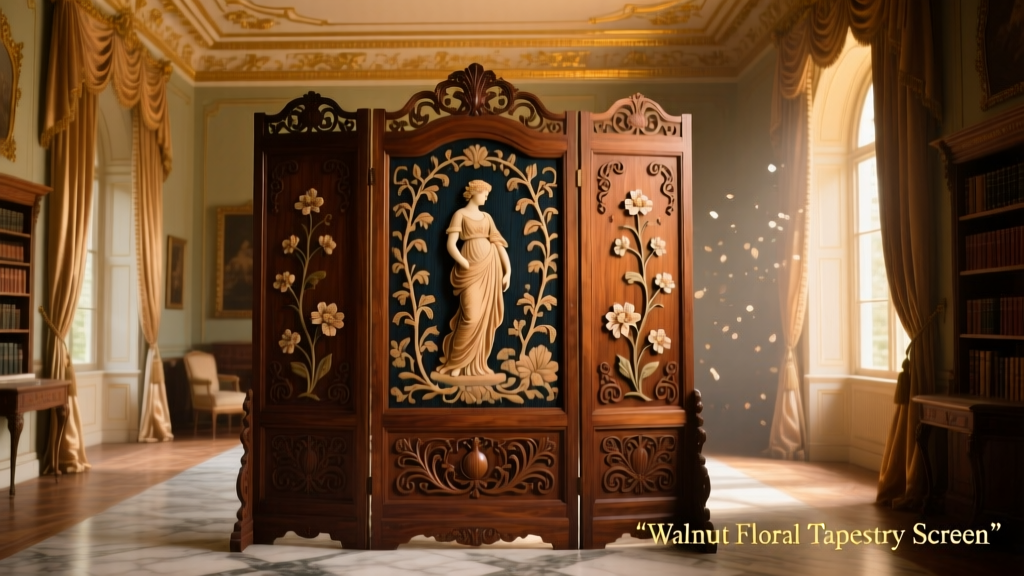
Three-Panel Walnut Folding Screen with Floral Figural Tapestry: A Detailed Appraisal of a Mid-Century American Masterpiece
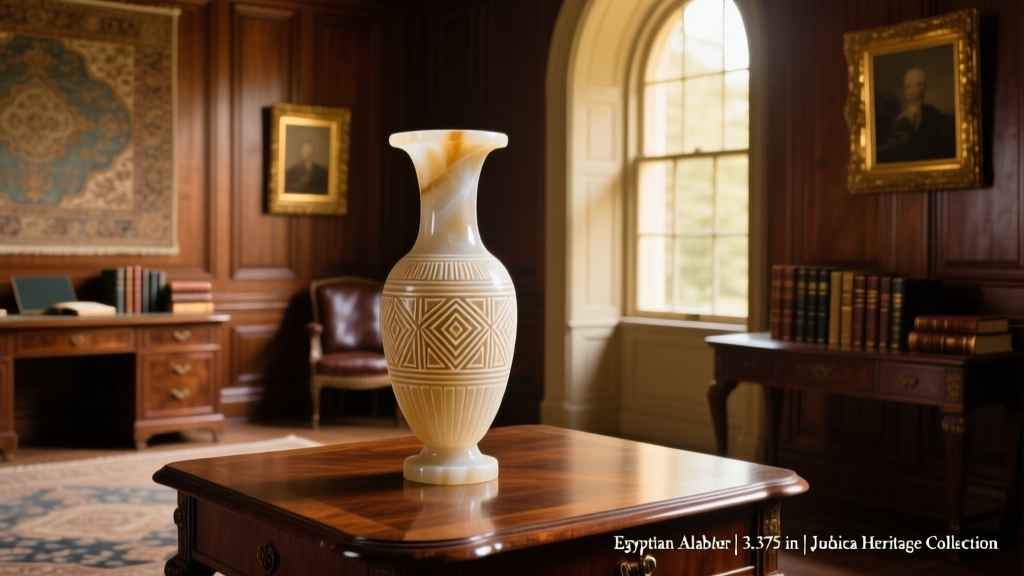
Judaica Vase with Tapering Sides and Angled Shoulders: Authentic Egyptian Alabaster, 3 3/8 Inches Tall
Advertising Tin: Lady Helen Coffee, 1 lb — History, Identification, and Conservation of a Rare Early 20th-Century American Coffee Container
Wave Crest Box Puffy Dresser: Enameled Pink-Violet Floral Foliage, 4½-Inch Miniature Cabinet
Celadon Dish with Central Shou Design: An 18th-Century Qing Dynasty Porcelain Masterpiece (10-Inch Diameter)
The Cut Glass Decanter Wedding Ring Stopper: History, Craftsmanship, and Collecting Insights
Clarice Cliff Bowl 'Forest Glen Daffodil': A 1936 Art Deco Masterpiece in Bone China
Dinnerware Colonial Homestead Cocktail Royal: History, Identification, and Restoration of a Mid-Century American Pattern
The Sewing Bird Brass Table Lamp of 1855: Origins, Mechanics, and Authentic Restoration