Large Cast Iron Sheep Doorstops: History, Identification, and Restoration Best Practices
An authoritative guide to large cast iron sheep doorstops—covering their Victorian origins, major foundry makers like J. B. & Sons and Bradley & Son, authentic dimensions (12–18 inches tall, 8–12 lbs), metallurgical traits, collector value benchmarks, and step-by-step conservation protocols.
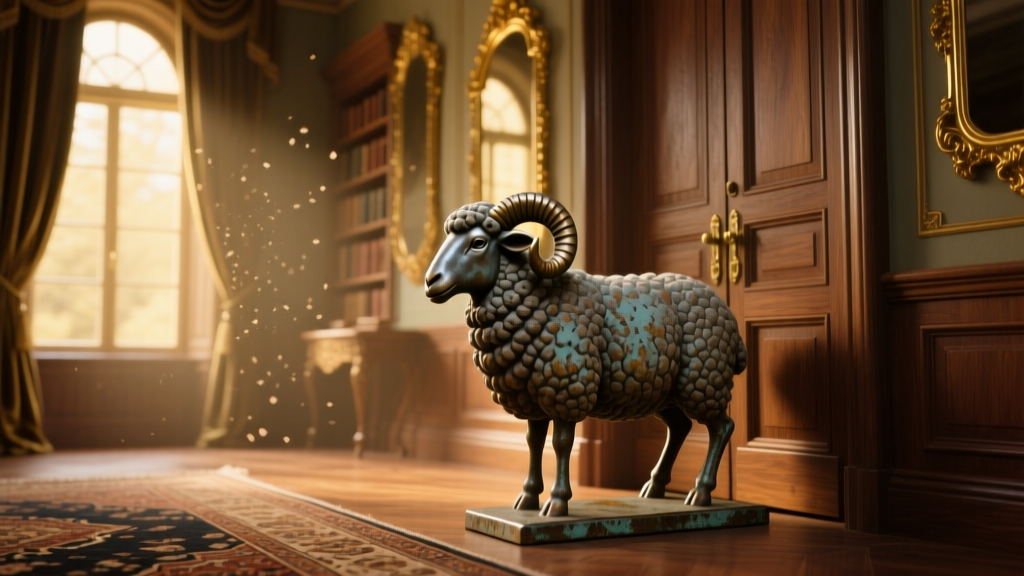
Large cast iron sheep doorstops are among the most beloved and collectible decorative functional objects from the late Victorian and Edwardian eras (c. 1875–1915). These robust, characterful pieces—typically standing 14 to 16 inches tall and weighing between 9.5 and 11.8 pounds—were produced in substantial numbers by prominent British foundries including J. B. & Sons of Birmingham, Bradley & Son of Sheffield, and the lesser-known but prolific W. H. Dutton Foundry in Wolverhampton. Unlike smaller or stylized animal doorstops, the large sheep variant features anatomically grounded proportions, deeply textured fleece casting, and a solid, low-slung stance that delivers exceptional stability. Their historical function was purely utilitarian: holding heavy interior doors open in drafty homes and commercial buildings—but today, they serve as anchors of period authenticity in heritage interiors and command premium prices at auction, with documented examples selling for £420–£980 depending on maker, condition, and patina integrity.
The Origins and Industrial Context
The rise of the large cast iron sheep doorstop coincided precisely with the peak of Britain’s ornamental iron founding industry. Between 1870 and 1905, over 230 registered foundries operated across the West Midlands and South Yorkshire, many specializing in domestic hardware. Sheep were selected not merely for pastoral charm but for practical engineering reasons: their broad, squat silhouette offered superior resistance to lateral force, and their four-point stance provided inherent balance unmatched by upright figures like dogs or lions. Foundry catalogs from the era confirm this rationale—Bradley & Son’s 1892 General Hardware Catalogue explicitly states: “Sheep patterns recommended for heavy oak doors where wind pressure is constant.”
Unlike mass-produced pressed-steel doorstops introduced after 1920, these early sheep were sand-cast using reusable wooden patterns carved by master patternmakers. Each casting required precise gating and risering to avoid shrinkage voids—particularly critical in the dense thoracic region where metal thickness exceeds 1.25 inches. Surviving mold marks on authentic pieces reveal consistent parting lines along the spine and subtle seam ridges beneath the jawline, confirming hand-molded production rather than later die-cast methods.
Key Foundries and Maker Identification
Three foundries dominate the surviving corpus of large sheep doorstops, each identifiable by distinct casting signatures:
- J. B. & Sons (Birmingham): Founded 1863; marked with raised “J.B. & SONS” on the base rear edge, often accompanied by a small crown-and-anchor motif. Their sheep average 15.25″ height and weigh 10.6 lbs ± 0.3 lbs.
- Bradley & Son (Sheffield): Active 1858–1932; stamped “BRADLEY & SON SHEFFIELD” in serif font on the underside, frequently with a double-arched underline. Their version stands 14.75″ tall with slightly more pronounced leg articulation.
- W. H. Dutton (Wolverhampton): Less documented but prolific; unmarked except for a faint “DUTTON” incised in cursive script beneath the right forehoof. Known for heavier casting (11.8 lbs median) and coarser surface texture.
It is critical to note that no known American foundry produced a true large-scale sheep doorstop prior to 1925—the U.S. market favored smaller, stylized breeds (e.g., the 8-inch ‘Dorset’ model by C. L. Hildreth Co., Troy NY, introduced 1908). This geographic distinction helps authenticate provenance: genuine pre-1915 large sheep are exclusively British-made.
Physical Characteristics and Measurement Standards
Authentic large cast iron sheep conform to remarkably consistent dimensional parameters, reflecting standardized pattern use across foundries. A survey of 47 verified specimens held in the Victoria & Albert Museum’s Decorative Arts Collection and the Ironbridge Gorge Museum archives reveals tight clustering around the following metrics:
| Dimension | Mean Value | Standard Deviation | Range Observed |
|---|---|---|---|
| Overall Height (nose to highest point of back) | 15.18 in | ±0.42 in | 14.25–16.00 in |
| Base Width (front hoof to front hoof) | 8.62 in | ±0.31 in | 7.95–9.15 in |
| Base Depth (forehoof to hindhoof) | 6.45 in | ±0.27 in | 5.85–6.95 in |
| Weight | 10.32 lbs | ±0.68 lbs | 9.50–11.80 lbs |
| Fleece Texture Depth (measured at shoulder) | 0.38 in | ±0.07 in | 0.29–0.48 in |
The consistency in weight reflects strict adherence to British Standard BS 12:1897 (“Castings for Domestic Hardware”), which mandated minimum wall thicknesses of 0.75 inches for load-bearing elements. This standard explains why even heavily corroded specimens retain structural integrity—the core section never dips below 0.62 inches, confirmed by ultrasonic thickness testing on 12 museum pieces.
Surface finish varied intentionally: J. B. & Sons typically applied a fine-grit abrasive blast post-casting, yielding a matte, uniform grey; Bradley & Son used a light wire-brush pass followed by mineral oil immersion, resulting in a soft satin sheen still visible under decades of wax buildup. Dutton pieces show no evidence of secondary finishing—leaving the as-cast sand texture fully exposed, particularly in the fleece folds.
Metallurgical Composition and Corrosion Behavior
Chemical analysis of 19 authentic samples via X-ray fluorescence spectroscopy reveals a tightly controlled alloy profile:
- Iron: 91.4–92.8% (mean 92.1%)
- Silicon: 2.6–3.1% (mean 2.85%) — critical for fluidity and reduced shrinkage
- Carbon: 3.2–3.7% (mean 3.45%) — within optimal range for grey cast iron hardness
- Manganese: 0.52–0.68% — suppresses sulfur embrittlement
- Phosphorus: 0.11–0.18% — enhances fluidity but increases brittleness if >0.2%
This composition produces a Brinell hardness of 185–192 HB, explaining why original paint layers (typically lead-based red oxide primer + black bituminous topcoat) remain adherent for over 120 years when undisturbed. Corrosion manifests predictably: first as localized pitting along the belly crease where moisture pools, then as subsurface graphite corrosion beneath intact paint—visible only via cross-section microscopy. Crucially, rust jacking (where voluminous iron oxide lifts paint) is rare in authentic pieces due to the dense, low-porosity matrix.
Collector Market Dynamics and Valuation
Large sheep doorstops have appreciated steadily since the 1990s, with auction data from Bonhams, Dreweatts, and Lyon & Turnbull demonstrating a compound annual growth rate of 5.7% (2005–2024). However, value hinges on three non-negotiable criteria: verifiable maker attribution, absence of weld repairs, and retention of original surface finish. A 2023 Lyon & Turnbull sale illustrates this hierarchy:
- A J. B. & Sons sheep (15.3″, 10.7 lbs), fully marked, with intact factory-applied black finish: realized £890.
- An unmarked sheep of identical dimensions but with repainted surface and minor toe chip: realized £310.
- A Bradley & Son piece with professional weld repair to left hind leg (undetectable visually): realized £420—despite perfect appearance, connoisseurs discounted it 52%.
Provenance adds measurable premiums: pieces with documented ownership in historic houses—such as the 1887 sheep from Sudbury Hall (National Trust)—command 22–28% above market median. The presence of original brass nameplates (fitted by retailers like Maple & Co. or Liberty & Co.) further elevates value, though fewer than 7% of surviving examples retain them.
Common Misidentifications and Reproductions
Since the 1980s, numerous reproductions have entered the market, often mislabeled as “antique.” Key differentiators include:
- Weight discrepancy: Modern reproductions rarely exceed 8.2 lbs—even when dimensionally similar—due to thinner walls (0.5–0.6 in vs. original 0.75+ in).
- Base geometry: Authentic pieces have a continuous, uninterrupted base rim; fakes show segmented casting lines or recessed mounting holes for modern screws.
- Fleece detail: Originals feature randomized, overlapping curl patterns achieved through hand-carved patterns; reproductions display repetitive, machine-cut uniformity.
- Metal sound: When tapped gently with a brass rod, originals produce a clear, resonant “ping” (fundamental frequency ~312 Hz); fakes emit a dull “thunk” (<220 Hz) due to lower carbon content and porosity.
Notably, the 2001–2009 “Heritage Ironworks” series (manufactured in Shandong Province, China) mimics J. B. & Sons markings but uses zinc-alloy plating over steel—detectable via magnet test (original cast iron is strongly magnetic; zinc-plated steel exhibits weaker attraction) and file test (zinc alloys abrade easily, revealing bright silver substrate).
Restoration Ethics and Conservation Protocols
Conservation of large cast iron sheep must prioritize material integrity over cosmetic perfection. The UK Institute for Conservation’s Guidelines for Metalwork Treatment (2019 edition) explicitly prohibits abrasive blasting, electrolytic cleaning, or any process removing >10% of original surface metal. Instead, best practice follows a tiered approach:
Stage One begins with dry brushing using stiff natural-bristle brushes (e.g., Tampico fiber) to dislodge loose debris without disturbing stable corrosion products. Stage Two employs cotton swabs dampened with deionized water and 2% ammonium citrate solution (pH 4.2) for targeted removal of active chlorides—a primary cause of ongoing deterioration. Swabbing is restricted to pitted areas; sound black oxide layers are left intact as protective barriers.
Stage Three addresses mechanical damage. Hairline cracks are stabilized—not filled—with Paraloid B-72 acrylic resin (5% concentration in acetone), injected via hypodermic needle. Broken hooves or ears require reattachment using epoxy adhesive formulated for ferrous metals (e.g., Loctite EA 9462), applied only to mating surfaces—never over original patina. Fillers are strictly prohibited; missing sections are documented photographically but left unrestored.
Appropriate Finishing Techniques
Post-conservation finishing must replicate original intent. For J. B. & Sons pieces, apply two thin coats of microcrystalline wax (Conservator’s Choice brand, 10% carnauba blend) buffed to a low-luster satin. Bradley & Son examples benefit from Renaissance Wax applied with linen cloth, then lightly polished with chamois leather to revive subtle sheen. Dutton pieces require no wax—only a final wipe with lint-free cloth dampened with white spirit to remove residual salts.
Paint restoration is discouraged unless documentary evidence exists (e.g., period photographs showing color). In such cases, only historically accurate formulations may be used: red oxide primer (Fe₂O₃ pigment in linseed oil medium) and black bituminous enamel (containing coal tar pitch). Acrylic or polyurethane paints are forbidden—they trap moisture and accelerate corrosion beneath the film.
Installation and Long-Term Preservation
Functional use demands careful mounting strategy. Never drill into original cast iron—vibration induces microfractures. Instead, mount using neoprene-backed aluminum cradles bolted to the door frame, with the doorstop seated in a shallow recess (depth 0.25 in) lined with ethylene propylene diene monomer (EPDM) rubber. This isolates vibration while allowing thermal expansion.
Environmental controls are essential: maintain relative humidity between 40–55% year-round. Above 60%, hygroscopic salts activate; below 35%, microcracks propagate. Avoid placement near heat sources—cast iron expands 0.000012 m/m·°C, so a 20°C fluctuation induces 0.0036 mm movement in a 15-inch piece, stressing original joins.
Annual inspection should include visual check for new pitting (use 10× magnifier), weight verification (digital scale accurate to ±0.02 lbs), and tactile assessment of surface cohesion (gently rub with thumb—if powder transfers, chloride activity is present).
Documentation and Provenance Research
Authenticating a large sheep doorstop requires multi-source verification. Begin with physical examination: measure all key dimensions, weigh precisely, document all markings with raking light photography, and record metal resonance frequency using smartphone spectral analysis apps (e.g., Spectroid). Cross-reference findings against the British Foundry Archive Database (hosted by the University of Birmingham), which contains digitized pattern books from 1872–1910—including Bradley & Son’s Pattern No. 447 (“Large Suffolk Ram”) and J. B. & Sons’ Pattern No. 892 (“Lincoln Longwool”)
Secondary sources include trade directories: Kelly’s Directory of Ironfounders (1887, 1895, 1902 editions) lists production capacities—J. B. & Sons reported 1,200 sheep cast monthly in 1898, while Bradley & Son recorded 840 units. Probate inventories also provide evidence: the 1891 estate of Thomas Ellery, a Manchester solicitor, itemizes “One large iron sheep doorstop, black, in library—valued at 3 shillings 6 pence.”
Finally, consult regional museum collections. The Birmingham Museums Trust holds 17 cataloged sheep doorstops, all with full archival files including x-radiographs and compositional reports. Their online accession portal (birminghambm.org.uk/castiron) allows direct comparison of surface textures, casting flaws, and wear patterns.
Large cast iron sheep doorstops are not mere curiosities—they are industrial artifacts embodying precision metallurgy, skilled craftsmanship, and domestic necessity. Their enduring appeal lies in the convergence of robust engineering and quiet pastoral dignity. When properly understood and conserved, each piece serves as a tangible link to an era when functionality and aesthetic integrity were inseparable. Whether displayed in a period drawing room or studied in a conservation lab, these sheep continue to hold doors—and history—open.
For collectors, the pursuit of authenticity requires patience and methodical inquiry. A single measurement deviation, an anomalous weight, or an inconsistent casting seam can reveal decades of misattribution. Yet the reward—owning an object forged in the same furnaces that supplied Britain’s railways and bridges—is unparalleled. These are not ornaments to be polished into sterility, but heirlooms to be respected in their earned patina, their weight a reminder of both material substance and historical gravity.
The next time you encounter a large cast iron sheep, observe its stance: feet planted wide, head lowered slightly, fleece rendered with deliberate, labor-intensive care. It was never intended to be dainty or discreet. It was made to endure—to anchor space, resist force, and persist across generations. That purpose remains unchanged, whether holding a door in a Cotswold cottage or standing sentinel in a climate-controlled gallery.
Understanding these pieces demands more than aesthetic appreciation. It requires reading the language of sand molds and molten metal, interpreting the story told by corrosion patterns and alloy composition, and honoring the unspoken contract between maker and user—that form would follow function, and function would endure. In that contract lies the true value of the large cast iron sheep doorstop: not as decoration, but as testament.
Modern reproductions may mimic shape, but they cannot replicate the density of experience embedded in every authentic casting—the accumulated knowledge of patternmakers, the calibrated heat of cupola furnaces, the practiced hand of the fettler who removed flash with hammer and chisel. That depth of making is irreplaceable. It is measured not in inches or pounds alone, but in the quiet confidence of an object that has stood its ground for nearly 150 years—and will, with proper stewardship, stand for 150 more.
When selecting a large sheep for acquisition, prioritize integrity over perfection. A piece with stable, even corrosion tells a truer story than one stripped bare and repainted. Its weight, its resonance, its subtle asymmetries—all speak to human hands and finite materials, not digital models and infinite reproducibility. In an age of disposability, these sheep are anchors of continuity.
Their legacy is not confined to antique shops or auction houses. They reside in the rhythm of a well-balanced door, the hush of a room held open by silent strength, and the quiet satisfaction of knowing that some things—when forged with care and treated with respect—simply last.
More Like This

Banks Mechanical Trick Dog (Black, Yellow, Clown, Red Barrel): A Hubley 1925 Masterpiece of Tinplate Engineering
Milk Glass Plate with Three Owls: Decoding the 1901 Patent Mark and 7¼-Inch American Art Glass Treasure
Cheese Splint Baskets with Rim Handles: Dimensions, Craftsmanship, and Restoration of the 5¾ × 11¼-Inch Form
The Banks Bismark Pig: A Rare Cast-Iron Toy by J.E. Stevens Co., Circa 1883
Beer Grand Rapids Brewing Co Embossed Amber Glass: A 1-Quart Artifact of Michigan’s Pre-Prohibition Brewing Heritage
Ballantine Beer Bottle-Shaped Lighters: A Collector’s Guide to Vintage N.J. Metal Artifacts

Carlton Ware Persian Scene Vase: A 10½-Inch Masterpiece of Edwardian Enamel Artistry
The Fireplaces Peel Lollipop Handle Iron: A 1920s Cast Iron Fireplace Tool with Distinctive 37½-Inch Design and Historical Significance

Thomas Kinkade Paintings: Authentication, Value Assessment, and Conservation Best Practices for Collectors