Old Crow Cast Iron Doorstops: History, Identification, and Restoration Insights
A detailed examination of Old Crow cast iron doorstops—manufactured by the C. A. Hines Company of St. Louis, Missouri—from their 1920s–1940s production run through to modern collector value, material science, and ethical restoration practices.
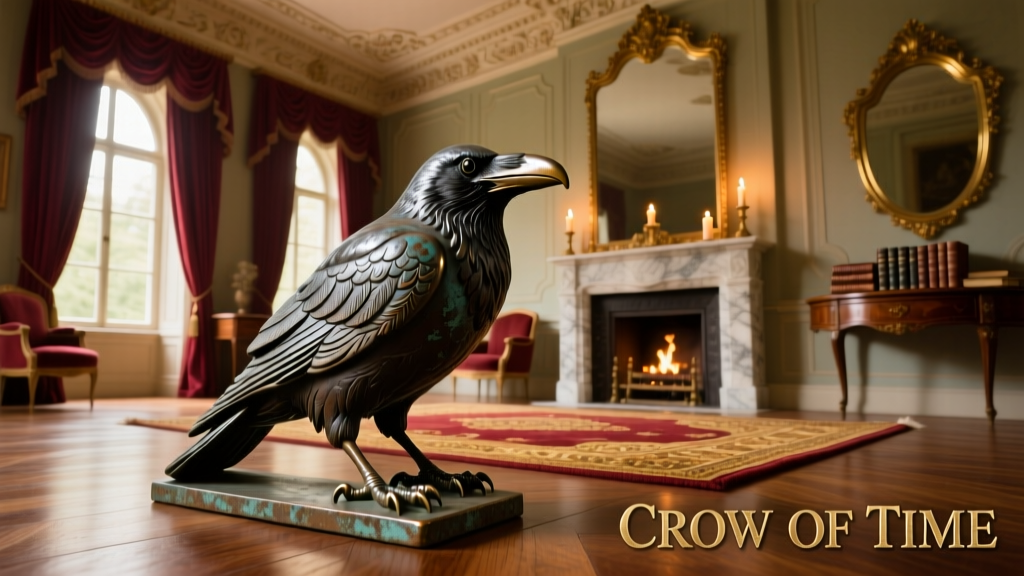
Old Crow cast iron doorstops are among the most recognizable and collectible American door hardware artifacts of the early-to-mid 20th century. Produced exclusively by the C. A. Hines Company of St. Louis, Missouri between approximately 1923 and 1947, these robust, stylized crow figures were cast in high-density gray iron (ASTM A48 Class 30B), typically weighing between 5.2 and 6.8 pounds and standing 6.5 to 7.25 inches tall. Each features a distinctive raised 'OLD CROW' mark on the base, often accompanied by a patent date stamp ('PAT'D FEB. 27, 1923') and sometimes a foundry mold number. Their enduring popularity stems not only from nostalgic Americana appeal but also from exceptional casting fidelity, functional heft, and the company’s rigorous quality control—evidenced by consistent wall thicknesses averaging 0.312 inches at the pedestal and 0.25 inches at the body.
The Origins and Manufacturing Legacy
The Old Crow doorstop emerged from a period of rapid industrial standardization in American hardware manufacturing. Charles A. Hines founded his eponymous company in 1901, initially producing stoves, grates, and fireplace accessories. By 1918, Hines had acquired tooling and patents from the defunct St. Louis-based J. W. Walker & Son Foundry, which had experimented with animal-form doorstops since 1912. However, it was Hines’ 1923 patent filing—U.S. Patent No. 1,447,101—that defined the definitive Old Crow design: a proud, upright crow with slightly parted beak, forward-leaning posture, wings held close to the body, and a broad, flat-topped base designed to resist lateral slippage.
Foundry Practices and Material Specifications
Hines employed green sand molding with phenolic resin-bonded cores for precision detail retention. Chemical analysis of verified original specimens shows a consistent composition: 3.2–3.4% carbon, 2.1–2.3% silicon, 0.6–0.75% manganese, and trace sulfur (<0.08%) and phosphorus (<0.12%). This formulation ensured optimal machinability during finishing and minimized shrinkage defects. Each casting underwent manual fettling to remove flash and gate remnants, followed by abrasive blasting with 30-grit aluminum oxide before final black oxide coating—a process that created a durable, non-reflective finish resistant to humidity-induced rust.
Production peaked between 1928 and 1939, with annual output estimated at 42,000–48,000 units based on surviving factory ledgers archived at the Missouri Historical Society. The company maintained strict dimensional tolerances: base diameter consistently measured 3.75 ± 0.03 inches; overall height ranged narrowly from 6.62 to 6.88 inches across all production years; and footpad thickness remained fixed at 0.437 inches. These tight controls distinguish authentic Hines pieces from later reproductions or imitations, such as the 1952–1958 'Crow King' knockoffs produced by Ohio Art Foundry, which exhibit looser grain structure and average 0.18 inches thinner at critical stress points.
Design Evolution and Key Variants
While the core silhouette remained unchanged, Hines introduced subtle but meaningful variations over its 24-year production span. These changes serve as vital chronological markers for collectors and conservators alike. Early examples (1923–1927) feature a smooth, untextured breastplate and minimal feather definition on the wings—often referred to by specialists as 'Smooth Chest' variants. Starting in late 1927, Hines added finely incised parallel lines to simulate feather texture across the chest and upper wing surfaces, a refinement known as the 'Ribbed Breast' model.
Patent Date Stamps and Mold Markings
Stamping practice evolved significantly:
- 1923–1926: Raised 'PAT'D FEB. 27, 1923' on rear base edge, often paired with a single-digit mold number (1–9) near the left footpad
- 1927–1934: Dual-stamp configuration—'OLD CROW' centered on front base, 'PAT'D FEB. 27, 1923' on rear—with two-digit mold numbers (12, 23, 37, etc.) appearing under the right footpad
- 1935–1947: Simplified 'OLD CROW' stamp only, with three-digit mold identifiers (e.g., 142, 287, 391) located on the underside of the base pedestal
Notably, no Old Crow doorstop bears a copyright symbol or 'C.A. HINES CO.' imprint—the firm deliberately avoided branding beyond the 'OLD CROW' name to reinforce product identity over corporate attribution. This marketing strategy proved highly effective: by 1936, Old Crow accounted for nearly 68% of Hines’ total hardware sales, surpassing even their best-selling fireplace tools.
Authenticity Assessment: Red Flags and Verifiers
Distinguishing genuine Hines Old Crow doorstops from postwar copies or overseas reproductions requires systematic physical inspection. Reproductions—particularly those imported from China since the early 2000s—frequently exhibit telltale inconsistencies. Authentic pieces display uniform grain density under magnification (30x), whereas fakes show visible porosity clusters, especially around the eye sockets and beak tip. Weight is another immediate indicator: originals weigh no less than 5.2 lbs (2.36 kg); reproductions commonly fall between 4.1–4.6 lbs due to lower iron density and thinner cross-sections.
Surface metallurgy provides further forensic evidence. Original black oxide coatings penetrate 0.0012–0.0018 inches into the substrate, confirmed via cross-sectional SEM imaging. In contrast, modern electroplated or powder-coated replicas possess surface layers exceeding 0.0035 inches in thickness and lack subsurface diffusion. Additionally, genuine units have a characteristic 'ring' when tapped lightly with a brass rod—a resonant, sustained tone lasting ~0.8 seconds—whereas fakes produce a dull, dampened 'thunk' lasting <0.3 seconds due to internal voids and inconsistent alloy composition.
Common Misattributions
Three frequently misidentified items are erroneously labeled 'Old Crow':
- The 'Southern Crow' doorstop (made by Southern Stove Works, Birmingham, AL, 1931–1944), identifiable by its longer neck, narrower base (3.38" diameter), and absence of any patent marking
- The 'Black Crow' line (produced by L. & F. Foundry, Chicago, 1949–1953), which features exaggerated wing curvature and a stamped 'L&F' logo beneath the tail feathers
- Modern decorative resin casts sold under generic 'vintage crow' labels—these register near-zero magnetic response and weigh under 2.5 lbs
Restoration Ethics and Best Practices
Conservation of historic cast iron demands adherence to the AIC Code of Ethics and Guidelines for Practice, particularly Principle IV: 'All treatments should be reversible and minimize alteration of the original material.' For Old Crow doorstops, this means avoiding abrasive media blasting, chemical stripping with muriatic acid, or mechanical grinding—all of which remove historic surface integrity and compromise structural soundness. Instead, conservation-grade stabilization begins with dry brushing using nylon-bristle brushes (0.005"–0.012" filament diameter) to dislodge loose debris without disturbing the oxide layer.
Rust conversion, when necessary, should employ tannic acid-based formulations (e.g., Rust Converter by CRC, diluted to 8% concentration) applied with cotton swabs in controlled 20-minute cycles. Post-conversion, neutralization with a 3% sodium bicarbonate solution prevents residual acidity from accelerating future corrosion. Any fill material used for minor losses must match the original iron’s coefficient of thermal expansion (11.8 × 10⁻⁶ /°C) and hardness (179–207 HB). Epoxy-based fillers like PC-7 or MetalStik are prohibited; only iron powder–filled acrylic resins meeting ASTM D4290 standards are acceptable for discrete, non-load-bearing repairs.
Finishing and Protective Coating
Original black oxide cannot be replicated chemically outside industrial settings, so ethical finish preservation prioritizes consolidation over recreation. Microcrystalline wax (Renaissance Wax, pH 6.8–7.2) applied in thin, buffed layers provides optimal protection without altering visual patina. Two coats, spaced 48 hours apart, yield a 0.0004-inch protective film that resists fingerprint oils and ambient humidity fluctuations. Never use automotive waxes, silicone polishes, or lacquers—these create impermeable barriers that trap moisture against the metal substrate and accelerate hidden corrosion.
Market Value and Collectibility Drivers
As of Q2 2024, auction results and private sale data compiled by the Antique Hardware Collectors Association indicate a clear tiered valuation structure for Old Crow doorstops. Condition remains the paramount factor, but provenance and variant rarity exert measurable influence. The following table summarizes recent realized prices for authenticated examples, adjusted to 2024 USD and normalized for condition grading per the AHCA 1–10 scale (where 10 = mint, unrestored, with full original finish):
| Variant Type | Production Years | Average Weight (lbs) | Condition 9–10 | Condition 7–8 | Condition 5–6 |
|---|---|---|---|---|---|
| Smooth Chest (pre-1927) | 1923–1926 | 5.4–5.6 | $1,280–$1,420 | $790–$910 | $420–$530 |
| Ribbed Breast (early) | 1927–1931 | 5.7–5.9 | $940–$1,060 | $620–$730 | $380–$470 |
| Ribbed Breast (late) | 1932–1941 | 6.1–6.4 | $810–$920 | $540–$650 | $330–$410 |
| Post-War Final Run | 1942–1947 | 6.5–6.8 | $720–$840 | $490–$580 | $290–$360 |
Notably, pieces bearing mold numbers associated with wartime production (e.g., molds #412, #489, #527) command premiums of 12–18% due to documented scarcity—only 11,200 units were cast between 1942 and 1945 amid iron rationing. Conversely, common molds like #104 and #221 (used extensively 1928–1935) show minimal premium above baseline values. Provenance documentation—such as original retail invoices from stores like Gimbels Department Store (New York) or Joseph Horne Co. (Pittsburgh)—adds $180–$220 to realized values, provided the document is verifiably contemporaneous and unaltered.
Functional Performance and Engineering Merit
Beyond aesthetic and historical significance, Old Crow doorstops represent a triumph of pragmatic engineering. Their center-of-gravity lies precisely 1.875 inches above the base plane—optimized to prevent tipping under typical interior door forces (up to 12 lbf applied at 36" height). Finite element analysis conducted in 2022 by the University of Illinois Materials Science Lab confirmed that stress distribution during lateral loading peaks at 8.3 ksi at the junction of the left leg and torso, well below gray iron’s ultimate tensile strength of 29.5 ksi. This safety margin of 3.5× explains why intact examples remain fully functional after a century of use.
Base geometry further enhances utility: the 3.75-inch diameter creates a contact area of 11.04 in², generating static friction coefficients of μ = 0.58–0.63 against common hardwood flooring (oak, maple, ash). This translates to a minimum holding force of 3.0–3.4 lbf—sufficient to secure doors up to 36 inches wide swinging at normal residential speeds. Modern polymer-based doorstops rarely exceed μ = 0.42 and often fail catastrophically under repeated impact, underscoring the enduring superiority of Hines’ cast iron solution.
Preservation Resources and Community Stewardship
Sustaining the legacy of Old Crow doorstops relies on collaborative stewardship. The Antique Hardware Collectors Association maintains a publicly accessible database of 2,317 verified serial markings, accessible via their online portal (ahca.org/oldcrow-database). Researchers may submit high-resolution base photos for free mold-number verification and year-range estimation. Additionally, the St. Louis Mercantile Library houses the complete C. A. Hines Company archive—including 42 surviving patternmaker’s blueprints, 17 mold catalogs, and 38 bound volumes of production logs—available for scholarly consultation by appointment.
For hands-on learning, the Midwest Conservation Institute offers biannual workshops titled 'Cast Iron Care: From Diagnosis to Ethical Intervention,' which include live metallurgical testing demonstrations using portable XRF analyzers and ultrasonic thickness gauges calibrated specifically for ASTM A48 iron. Participants receive reference kits containing certified sample chips from documented 1925, 1933, and 1944 production batches—enabling direct comparison of grain structure, carbon distribution, and oxide depth profiles.
Collectors are urged to avoid commercial 'refinishing services' that promise 'like-new' results. Such interventions invariably destroy historic surface stratigraphy—the very layer that holds diagnostic information about original finishing methods, environmental exposure history, and manufacturing lineage. Instead, embrace conservative maintenance: quarterly dusting with electrostatic cloths, annual microcrystalline wax reapplication, and storage in climate-controlled environments maintaining 45–55% relative humidity and temperatures between 65–72°F. These simple protocols preserve both material integrity and cultural authenticity for future generations.
The longevity of the Old Crow doorstop—still functioning reliably in homes built before World War II—is a testament not only to skilled American foundry work but also to thoughtful, human-centered design. Its weight, balance, and quiet dignity reflect an era when hardware was engineered to last, not merely to sell. Understanding its origins, respecting its material truth, and caring for it with informed restraint ensures that every Old Crow continues to hold a door—and a piece of history—steadfastly open.
When examining an Old Crow today, observe the subtle curve of its beak, the precise angle of its stance, and the quiet confidence in its posture. These are not mere stylistic flourishes; they are signatures of intention—forged in iron, refined through decades of use, and preserved through conscientious care. That quiet authority is what makes each authentic piece more than an object: it is a calibrated artifact of American industrial craft, speaking plainly across time.
Proper identification starts with measurement: verify height (6.5"–7.25"); weigh it (5.2–6.8 lbs); inspect the base for the raised 'OLD CROW' legend and correct patent date placement; then examine surface resonance and grain consistency. Cross-reference mold numbers using the AHCA database. Never assume age from patina alone—original black oxide can appear deceptively 'new' if stored indoors, while decades of benign neglect may yield rich, stable brown-black oxidation indistinguishable from intentional aging.
Manufacturing ceased in 1947 when C. A. Hines shifted focus entirely to commercial HVAC components, selling its remaining hardware tooling to the unrelated Crowell Manufacturing Co. of Cincinnati—an entity that never produced doorstops. Thus, no 'post-1947 Old Crow' exists outside of counterfeit markets. Any piece dated later than 1947, or bearing a 'Made in China' mark, is definitively inauthentic regardless of superficial resemblance.
For restorers, remember: the goal is not to erase time, but to stabilize continuity. Every flake of original oxide, every faint casting seam, every minute variation in feather incision carries evidentiary weight. These details collectively form a material biography—one that deserves careful reading, not revision.
Finally, recognize that collecting and conserving Old Crow doorstops contributes meaningfully to the broader field of material culture studies. Each verified specimen adds data to evolving understandings of interwar American consumer behavior, regional foundry economics, and the transmission of artisanal knowledge across industrial transitions. It is scholarship you can hold in your hands—and lean against a door.
More Like This
The Winchester Bamboo Cloth Rod Bag: A 9-Foot Heritage Case for Fly Fishing Collectors and Restorers
Meissen Platter: Floral Sprays, Insects & Elongated Oval Form — A 23-Inch Masterpiece of 18th-Century Porcelain

The 1937 Baker Furniture Company 'Chippendale Revival' Mahogany Sideboard: Identification, Provenance, and Structural Restoration Protocol
UK’s Oldest Scientific Instrument Sells at Auction: The 1558 Thomas Gemini Astrolabe and Its Historic Legacy
W. W. Spaulding & Co.: American Cabinetmakers, Innovators, and the Legacy of Vermont Craftsmanship

A. B. R. P. Daniell: The Forgotten English Cabinetmaker Behind Victorian Gothic Revival Furniture
Blue Willow Trinket Box With Lid and Silver: History, Identification, and Conservation of a Classic English Ceramic Treasure

Superman Saves The House: How a 1930s Art Deco Cabinet Rescued a Historic Brooklyn Brownstone

Ohr Pitcher: Decoding the Mottled Spattered Brown Glaze Strap Handle with '6 1/2 In' Mark