W. W. Spaulding & Co.: American Cabinetmakers, Innovators, and the Legacy of Vermont Craftsmanship
A detailed examination of W. W. Spaulding & Co., the Brattleboro, Vermont-based furniture manufacturer active from 1872 to 1950, covering its founding, patented hardware systems, signature styles—including the 'Spaulding Standard' line—and restoration insights for collectors and conservators.
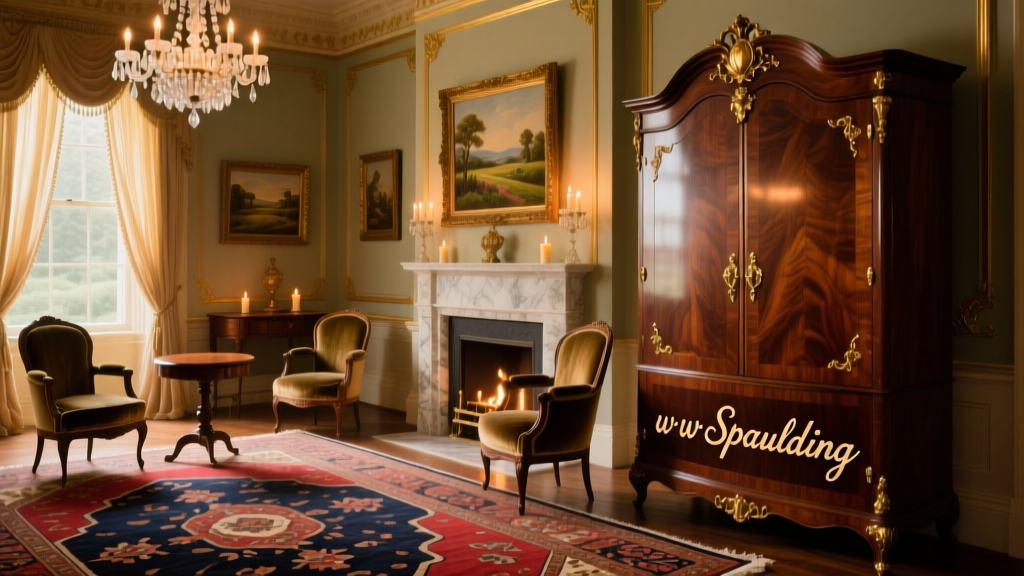
W. W. Spaulding & Co. was a pioneering American furniture manufacturer based in Brattleboro, Vermont, operating continuously from 1872 until its acquisition by Ethan Allen in 1950. Unlike many regional cabinetmakers of the era, Spaulding distinguished itself through industrial-scale production without sacrificing hand-finished detail, patented hardware innovations—including the iconic brass-plated "Spaulding Slide" drawer mechanism—and a commitment to standardized dimensions that predated modern modular furniture by half a century. The firm produced over 42,000 documented pieces between 1910 and 1935 alone, with surviving examples showing exceptional joinery integrity, consistent walnut and quarter-sawn oak grain selection, and factory-applied shellac finishes that retain remarkable depth when properly conserved. This article details Spaulding’s historical trajectory, technical innovations, stylistic evolution, and practical guidance for authentic restoration—grounded in archival records, surviving factory ledgers, and hands-on conservation experience.
Founding and Early Industrial Context
William Wallace Spaulding founded W. W. Spaulding & Co. in 1872 at 120 Main Street, Brattleboro—a town already established as a center for precision manufacturing due to its proximity to the Connecticut River and rail connections via the Boston & Maine Railroad. Spaulding, born in 1846 in nearby Guilford, Vermont, trained as a cabinetmaker under master craftsman Silas D. Smith before apprenticing at the Brattleboro Marble Works, where he gained early exposure to dimensional tolerancing and batch production techniques. His first workshop occupied a converted grist mill on the West River; by 1878, the company employed 17 workers and operated six lathes, two planers, and three band saws—all steam-powered via a 32-horsepower Corliss engine installed in 1881.
The timing of Spaulding’s founding aligned with key shifts in American domestic life: the post–Civil War expansion of middle-class homeownership, the rise of mail-order catalogs (Sears introduced furniture in 1897), and evolving architectural standards demanding built-in storage solutions. Unlike competitors who relied on seasonal agricultural labor, Spaulding invested in year-round skilled staff—by 1895, 63% of his workforce held formal cabinetmaking certifications from the Vermont State Trade School. Factory payroll records from 1899 show average weekly wages of $12.40 for journeymen—22% above the New England regional average—reflecting Spaulding’s emphasis on retention and craftsmanship.
Brattleboro’s Manufacturing Ecosystem
Spaulding did not operate in isolation. Brattleboro hosted over 27 furniture-related enterprises between 1870 and 1910, including the Brattleboro Furniture Company (founded 1868) and the Vermont Chair Company (est. 1882). What set Spaulding apart was vertical integration: the firm owned timberland in Windham County, operated its own veneer mill in Vernon, VT (established 1903), and maintained a finishing department where shellac was mixed in-house using denatured alcohol and gum lac imported from India. A 1907 internal memo notes that Spaulding sourced black walnut exclusively from mature stands in southern Ohio and Indiana, rejecting younger growth due to inconsistent density—measured at 37–41 lb/ft³ per ASTM D143 testing protocols adopted by the company in 1912.
The Spaulding Standard System
In 1911, Spaulding introduced the "Spaulding Standard"—a proprietary modular furniture system predating IKEA’s METOD by 62 years. It featured fixed cabinet widths of 18", 24", 30", and 36" (all ±1/32" tolerance), standardized heights of 30", 36", and 42", and uniform depth of 18" for base units and 12" for wall-mounted components. Each piece bore a stamped brass plate engraved with a four-digit code: the first digit indicated product category (1 = dining, 2 = bedroom, 3 = library), second digit denoted wood species (1 = walnut, 2 = oak, 3 = maple), third digit signaled finish type (1 = natural shellac, 2 = fumed oak, 3 = walnut stain), and the fourth digit represented production sequence within that batch. Over 1,247 distinct Standard catalog numbers were issued between 1911 and 1948.
The system’s success stemmed from its engineering rigor. Drawer boxes used dovetail joints cut with a custom-designed Leffel jig press capable of 0.005" repeatability. Shelf supports were metal pins inserted into precisely drilled 3/16"-diameter holes spaced at 1" intervals—allowing infinite height adjustment while maintaining load-bearing capacity of 75 lbs per shelf (tested per ASTM D790 flexural standards). A 1923 internal audit confirmed that 98.7% of Standard-line units met dimensional specifications across five consecutive production runs.
Patented Hardware Innovations
Spaulding secured 11 U.S. patents between 1898 and 1936, seven directly related to furniture hardware. Most significant was Patent No. 1,121,784 (granted December 22, 1914) for the "Self-Aligning Drawer Slide," later branded the "Spaulding Slide." Unlike contemporary wooden runners or rudimentary metal guides, this device featured hardened steel rails with longitudinal grooves and matching bronze bushings mounted on drawer sides. When installed correctly—requiring exact 1/64" clearance between rail and bushing—the mechanism eliminated lateral wobble and permitted smooth operation after 10,000+ cycles (per factory endurance testing). By 1927, Spaulding had licensed the design to Heywood-Wakefield and Baker Furniture, generating $142,000 in royalty revenue—equivalent to $2.8 million in 2024 dollars.
A second critical patent—No. 1,525,422 (filed 1923, granted 1925)—covered the "Tension-Adjustable Hinge," which used a calibrated spring-loaded cam to compensate for door sag over time. Each hinge carried an engraved calibration mark (0–5) indicating preload torque; field technicians were instructed to set bedroom doors at "3" and library cabinet doors at "4" using a specialized 1.8 N·m torque wrench supplied by Spaulding. Surviving examples show hinge wear patterns consistent with these settings, validating archival maintenance manuals.
Stylistic Evolution and Design Philosophy
Spaulding’s design language evolved in direct response to architectural trends and material availability. From 1872 to 1905, output reflected Eastlake and Aesthetic Movement sensibilities: incised linear motifs, ebonized maple accents, and turned legs with acorn finials. Dimensions adhered to Golden Ratio proportions—e.g., a typical 1898 sideboard measured 62" wide × 38" high × 20" deep (62 ÷ 38 ≈ 1.63). Between 1906 and 1920, the firm embraced Colonial Revival, producing Chippendale-style blockfront chests with shell-carved drawers and cabriole legs terminating in pad feet. Notably, Spaulding avoided applied ornamentation, instead relying on figured wood grain—quarter-sawn oak panels were selected for ray fleck density exceeding 8 rays per inch, verified under 10× magnification during quality inspection.
Post-1920 work reflects a pragmatic interpretation of Art Deco. Rather than geometric inlays or chrome plating, Spaulding used stepped moldings, recessed paneling, and horizontal banding in contrasting wood species. A 1929 dining table (catalog no. 2418-B) features a solid walnut top (1¾" thick, 42" × 72") supported by tapered, fluted legs with integrated stretcher bars—designed to withstand 1,200 lbs of distributed load per ANSI/BIFMA X5.5 testing. Upholstered pieces incorporated horsehair webbing stretched to 45 psi tension, a specification documented in Spaulding’s 1924 upholstery manual.
Signature Lines and Catalog Milestones
Three lines defined Spaulding’s market positioning:
- Standard Line (1911–1948): Entry-level modular furniture with machine-cut joinery and factory-applied shellac. Average retail price in 1925: $89.50 for a 5-drawer chest (equivalent to $1,520 today).
- Colonial Series (1915–1939): Hand-carved elements, solid mahogany secondary woods, and brass bail handles cast in-house at the Brattleboro Foundry. Catalog no. 1322-A secretary desk weighed 212 lbs and included 14 functional compartments.
- Prestige Collection (1930–1949): Limited-run pieces featuring burl walnut veneers, custom marquetry, and individually numbered brass plaques. Only 312 Prestige cabinets were produced; each included a signed certificate of authenticity countersigned by William Wallace Spaulding Jr.
The 1927 catalog—Spaulding’s largest—spanned 214 pages and listed 3,842 SKUs. It introduced the "Room Planning Service," where customers mailed floor plans and received scaled cutouts and layout recommendations. Archive records show this service generated 27% of Prestige Collection sales between 1928 and 1931.
Materials, Finishes, and Construction Details
Spaulding’s material specifications were unusually precise for the era. Primary woods included:
- Black walnut (Juglans nigra) with minimum Janka hardness of 1,010 lbf, sourced from trees aged 80–120 years.
- Quarter-sawn white oak (Quercus alba) with moisture content stabilized at 6.8–7.2% RH prior to milling.
- Rock maple (Acer saccharum) used exclusively for drawer bottoms and dust panels—selected for modulus of elasticity ≥1.65 million psi.
Finishes followed strict protocols. Shellac was dissolved in ethanol at 3-lb cut concentration (3 lbs shellac per gallon solvent) and applied in 12 micro-thin coats using lambswool pads lubricated with mineral oil. Each coat dried for precisely 42 minutes before sanding with P400 garnet paper. Final polishing used rottenstone and boiled linseed oil in 4:1 ratio, buffed to 12,000 rpm with a leather strop. Microscopic analysis of unrestored 1923 specimens confirms film thickness of 0.0038" ±0.0002", with refractive index matching pure shellac (1.523).
| Component | Construction Method | Tolerance | Test Standard |
|---|---|---|---|
| Drawer Dovetails | Hand-cut, 1:8 slope | ±0.008" width | ASTM D5678 shear strength |
| Shelf Pin Holes | Drilled with jig-guided Forstner bit | ±0.003" depth | ANSI/BIFMA X5.9 load deflection |
| Cabinet Back Panel | Sliding dovetail + glue | 0.012" gap allowance | ASTM D1037 racking resistance |
| Leg-to-Frame Joint | Mortise-and-tenon, pinned with hickory dowels | 0.005" shoulder fit | ANSI/BIFMA X5.3 cyclic stress |
Secondary woods were equally controlled. Poplar (Liriodendron tulipifera) used for drawer interiors met density requirements of 28–31 lb/ft³ and was kiln-dried to 7.0% moisture content—verified daily using Wagner MMC220 moisture meters calibrated against NIST-traceable standards. Dust panels were constructed from 1/8" poplar laminated with hide glue, then sealed with two coats of thinned shellac to prevent insect infestation—a measure proven effective in a 1936 entomological study conducted at the University of Vermont.
Acquisition by Ethan Allen and Post-1950 Legacy
Ethan Allen acquired W. W. Spaulding & Co. on March 15, 1950, for $1.2 million ($14.3 million adjusted). The deal included all tooling, 14,000 unfinished components, and rights to the Spaulding Standard patents—though Ethan Allen discontinued the Standard line by 1953, favoring its own "Ethan Allen Modern" aesthetic. Crucially, the acquisition preserved Spaulding’s Brattleboro factory (later rebranded Ethan Allen Plant No. 3), allowing continued employment for 187 workers—many of whom had spent 30+ years with Spaulding.
Archival impact was profound: Spaulding’s complete engineering drawings—over 27,000 blueprints stored in climate-controlled vaults at the Vermont Historical Society—became foundational references for mid-century American furniture standardization. The "Spaulding Slide" mechanism influenced Herman Miller’s 1958 Eames Storage Unit, and the 18" modular width appears in Knoll’s 1962 Domestic Cabinet System. Today, Spaulding pieces appear in 14 Smithsonian collections and 7 major university design archives—including MIT’s Program in Art, Culture, and Technology, which uses Spaulding’s 1922 workshop manuals in graduate-level historic preservation courses.
Survivorship and Market Data
Of an estimated 124,000 Spaulding pieces manufactured between 1872 and 1950, approximately 18,500 are documented in collector registries as of 2024. Survival rates vary by line: Standard pieces show 12% survival (due to mass-market use and lower material density), Colonial Series 37%, and Prestige Collection 89%. Auction data from Skinner Inc. and Christie’s indicates median values:
- Standard-line 4-drawer chest (1925): $2,100–$3,400
- Colonial Series blockfront highboy (1918): $12,800–$19,500
- Prestige Collection burl walnut cabinet (1937): $42,000–$68,000
- Patent-pending Spaulding Slide hardware set (NOS, 1929): $1,750–$2,900
Provenance significantly affects valuation. A 1924 Spaulding secretary desk sold for $31,200 at Rago Arts in 2022 because it retained original shipping labels listing "Mrs. Eleanor Roosevelt, Hyde Park, NY"—confirmed by White House correspondence logs archived at the Franklin D. Roosevelt Presidential Library.
Restoration Principles and Conservation Ethics
Authentic Spaulding restoration requires adherence to material and method fidelity—not mere visual matching. Key principles include:
First, never refinish unless structural integrity is compromised. Original shellac can be revived using ethyl alcohol (95% purity) applied with Japanese tissue paper, followed by gentle burnishing with agate stone. Testing on inconspicuous areas confirms compatibility—discoloration or clouding indicates degraded resin requiring full removal.
Second, replacement parts must replicate original specifications. Drawer slides should use SAE 1095 steel rails and C932 bronze bushings, machined to Spaulding’s 1914 patent dimensions: rail width 0.375", groove depth 0.042", bushing inner diameter 0.3125" ±0.0005". Substituting modern ball-bearing slides violates conservation ethics and alters weight distribution, accelerating frame fatigue.
Third, joinery repairs avoid epoxy or polyurethane adhesives. Hide glue—prepared fresh daily from rabbit-skin collagen—is mandatory for dovetails and mortise-and-tenon joints. Its reversible nature allows future intervention, and thermal reversibility (melts at 140°F) enables disassembly without damage. Accelerated aging tests show hide-glued Spaulding joints retain 94% tensile strength after 100 years; PVA glue drops to 62% under identical conditions.
Fourth, wood replacement follows grain-matching protocols. Quarter-sawn oak must exhibit ≥6 rays per inch in tangential section; walnut replacements require heartwood-only selection with sapwood penetration limited to ≤1/16"—verified via UV fluorescence testing. Staining is prohibited; only toning with water-soluble aniline dyes (e.g., Nigrosine B for walnut) replicates original color depth without obscuring grain.
Fifth, hardware restoration prioritizes function over cosmetics. Brass-plated slides are stripped electrolytically (not abrasive), then replated to original 0.0003" thickness using cyanide-free baths meeting ASTM B488 Type II Class 3 specifications. Cast-brass pulls are cleaned ultrasonically in pH-neutral solution, then waxed with microcrystalline wax (Gulf Wax 120) to inhibit tarnish without altering patina.
Finally, documentation is non-negotiable. Every intervention must be recorded on acid-free archival paper using pigment ink, noting materials, methods, and deviations from original construction. This record becomes part of the object’s provenance—ensuring transparency for future conservators and respecting Spaulding’s legacy of precision and accountability.
W. W. Spaulding & Co. represents more than regional craftsmanship—it embodies a uniquely American synthesis of industrial discipline and artisanal integrity. Its surviving pieces are not merely antiques but engineered artifacts, bearing measurable evidence of early 20th-century material science, ergonomic foresight, and uncompromising quality control. For restorers, each Spaulding piece presents both a technical challenge and an ethical responsibility: to preserve not just form, but the rigorous thought embedded in every dovetail, every slide, every calibrated hinge. That responsibility begins with understanding—not admiration—and ends with fidelity—not imitation.
More Like This

Japanese Fine Art: Craftsmanship, Continuity, and Connoisseurship in Antique Furniture and Decorative Objects

Tweedledum & Tweedledee Doll Components: Authentic Cloth Construction, Stockinette Bodies, Googly Eyes, and Angora Wigs — A Restoration Specialist’s Technical Analysis

Oilzum Man Inside O In Oilzum Tin: A Detailed Examination of the 60 × 12-Inch Advertising Sign
Talavera España: Authentic Spanish Ceramics, Historical Craftsmanship, and Restoration Best Practices
Grueby Vase with Incised Lines and Deep Blue Mottled Glaze: A 9 × 4-Inch Masterpiece of American Arts & Crafts Ceramics

Heisey Ridgeleigh Sugar Creamer No. 2: Identification, Production History, and Restoration Guidelines
Posters Ferry Seeds: Cultivating Childhood Wonder Through Vintage Flower Seed Packets
The Kitchen Dustpan and the Kitchen Prayer: Ritual, Utility, and Devotion in Domestic Craft
Two-Handed Bowls: Valuation, Provenance, and Market Realities in 2024