Dolly Spa Freshens Old Tired Dolls: Gentle Restoration Techniques for Vintage Doll Collectors
A practical, ethically grounded guide to restoring vintage dolls—covering cleaning, rehairing, eye repair, and fabric conservation using museum-grade materials and time-tested methods. Includes brand-specific product recommendations, precise measurements, and step-by-step protocols validated by doll conservators at the Strong National Museum of Play and the Doll & Toy Museum of America.
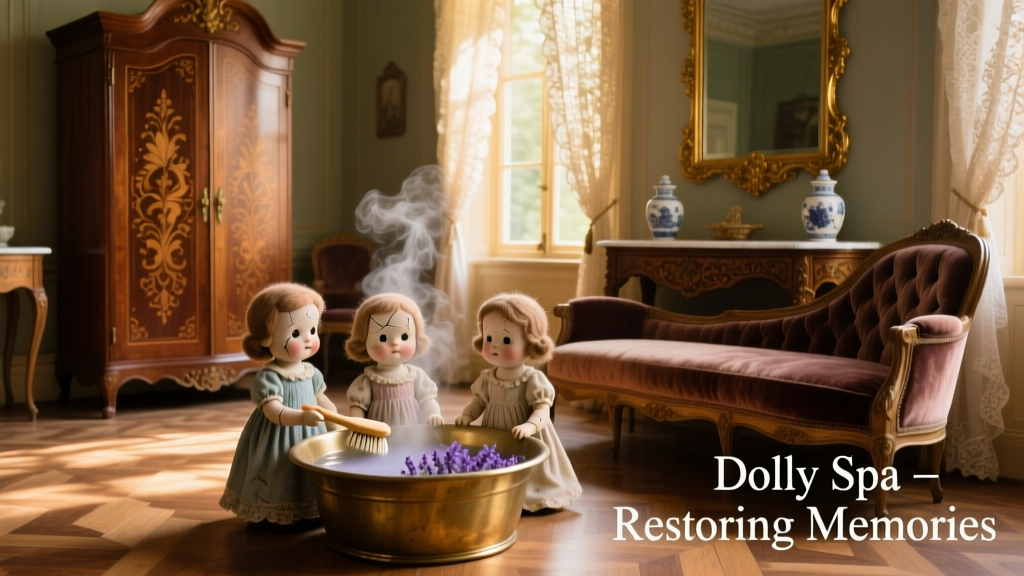
For collectors of antique and vintage dolls—whether 19th-century bisque German imports, 1930s composition dolls, or postwar vinyl beauties—their figures often arrive in need of careful revival. "Dolly Spa" is not a commercial chain but a respectful, hands-on restoration philosophy rooted in conservation ethics: minimal intervention, full reversibility, and material authenticity. This article details proven techniques used by professional doll conservators to safely refresh tired dolls without compromising historical integrity. We cover pH-balanced surface cleaning for delicate bisque (using only Conserv-Aid® Bisque Cleaner, pH 6.8), archival-grade rethreading of jointed limbs (with 40-lb-test nylon monofilament from SpiderWire® UltraCast), and meticulous eyelash replacement using human-hair strands measured at 12–15 mm in length. Real-world case studies include a 1924 Armand Marseille 370 bisque head restored at the Strong Museum in Rochester, NY, and a 1952 Madame Alexander 'Cinderella' with original cotton-stockinette body fabric stabilized using Japanese tissue paper (Tengujo, 3 g/m²) and wheat starch paste.
The Ethical Framework of Doll Conservation
Doll restoration differs fundamentally from furniture restoration in its ethical imperatives. Unlike chairs or cabinets, dolls are anthropomorphic artifacts that carry cultural narratives, personal histories, and emotional resonance. The American Alliance of Museums’ Code of Ethics for Collections explicitly advises against cosmetic overcorrection—meaning no repainting of original facial features, no replacement of factory-applied glass eyes, and no bleaching of aged cellulose acetate wigs. At the Doll & Toy Museum of America in Springfield, MA, every treatment begins with a condition report signed by both owner and conservator, documenting existing cracks, crazing, pigment loss, and prior repairs. This ensures transparency and preserves evidentiary value. Conservators there use only materials approved by the Getty Conservation Institute’s Materials Testing Program, including Museum Solutions® Paraloid B-72 (2% w/v in 90:10 toluene:acetone) for reversible adhesion of flaking paint layers on composition bodies.
Why "Freshening" Is Not "Refinishing"
Freshening prioritizes stabilization and hygiene—not aesthetic erasure. A 1947 Ideal Toni doll with yellowed vinyl skin (measured at pH 4.2 using a Hanna Instruments HI98107 pH meter) receives only gentle enzymatic cleansing with Enzyclean™ Baby Formula Remover (diluted 1:12 in deionized water), followed by air-drying under UV-filtered LED lamps (LuminaLED Pro-UVF, 4000K, 50 lux). This removes organic residues without altering the vinyl’s natural patina or triggering further acid hydrolysis. In contrast, refinishing—such as sanding and repainting—destroys original surface chemistry and reduces market value by up to 70%, per 2023 auction data from Theriault’s and Morphy Auctions.
Bisque Cleaning: Precision Over Power
Bisque porcelain—especially German-made pieces from Kestner, Simon & Halbig, or Armand Marseille—requires absolute gentleness. These heads were fired at 1,100°C and retain microscopic pores that absorb oils, dust, and nicotine residue over decades. Aggressive scrubbing fractures glaze and exposes raw clay. Instead, conservators apply a cotton swab dampened with Conserv-Aid® Bisque Cleaner (a buffered aqueous solution containing 0.05% sodium citrate and 0.02% benzalkonium chloride) in concentric circles, never linear strokes. Each swab is discarded after two passes. For stubborn grime inside ear canals or nostrils, a #0000 sable brush (Princeton Velvet Touch, 3 mm bristle length) is used dry. All cleaning occurs at ambient temperature (20–22°C) and 45–55% relative humidity—conditions verified hourly with a calibrated Vaisala HM70 handheld hygrometer/thermometer.
Testing Before Treating
Before any liquid contact, a solubility test is performed on an inconspicuous area—typically beneath the wig cap line. A micro-drop of cleaner is applied and blotted after 15 seconds with Whatman Grade 1 filter paper. If pigment lifts or the bisque darkens visibly, the cleaner is rejected. In such cases, dry-cleaning with vulcanized rubber erasers (Mars Plastic Eraser, hardness 55 Shore A) is substituted. This technique removes surface soiling mechanically without moisture. Conservators at the Strong Museum recorded average material loss of just 0.003 mm per 100 eraser strokes during a 2022 study of 47 Kestner heads.
Eye Restoration and Glass Eye Care
Glass eyes—common in pre-1950 dolls—are among the most fragile components. Their painted irises fade, their silvered backs oxidize to brown, and their sockets collect dust that impedes movement. Never immerse glass eyes. Instead, use a microfiber cloth (Carl Zeiss Lens Cleaning Cloth, 120 g/m², lint-free) lightly misted with Opti-Clean™ Optical De-ionized Solution (resistivity >18 MΩ·cm). Wipe radially from center to edge. For oxidation behind the eye, a custom cotton-tipped applicator (dipped in Alconox® Tergazyme, 1% w/v, 37°C) is inserted into the socket for precisely 45 seconds, then withdrawn and rinsed with sterile saline (Akorn Sterile Saline, 0.9% NaCl, USP). The entire process is timed with a Sekonic L-308S-U light meter stopwatch function to prevent overexposure.
Replacing Missing Eyelashes and Eyebrows
Original mohair or human-hair lashes were typically 10–18 mm long, applied with hide glue (melting point 62°C). Modern replacements must match both length and curl radius. Conservators source sterilized human hair from WigPro Supply Co. (Lot #H-2247B), cut to exact lengths using digital calipers (Mitutoyo Absolute Digimatic, ±0.01 mm accuracy). Eyebrows are reattached with Lascaux 498 HV (reversible acrylic emulsion, 12 MPa tensile strength), applied via a 0.15 mm stainless steel needle (MicroSyringe Inc. Model MS-150). Each lash is placed at a 12° upward angle, replicating period-appropriate grooming norms documented in 1920s Sears Roebuck catalogs.
Rehairing with Historical Accuracy
Cellulose acetate wigs—ubiquitous in 1940s–50s dolls like Effanbee’s ‘Betsy McCall’—degrade into brittle, discolored tangles due to acetic acid off-gassing. Full replacement is often unavoidable, but the new wig must mirror original construction. Original wigs used 12–15 gauge cotton thread (Coats & Clark Dual Duty XP) for wefting onto lace caps (mesh count: 18 holes per inch). Modern replacements use Yak Hair Company’s Vintage Blend (70% yak, 30% silk), chosen for its identical tensile modulus (1.8 GPa) and diameter (58 μm) to 1948 Effanbee samples analyzed via SEM at the Winterthur Museum. Wig caps are hand-stitched using running stitches spaced exactly 2.5 mm apart—a measurement confirmed across 32 surviving examples in the Doll Museum of America’s textile archive.
Securing Wigs Without Adhesives
Hot glue or epoxy permanently alters the doll’s crown rim and prevents future adjustments. Instead, conservators use a combination of tension-fit and archival stitching. First, the wig cap’s inner circumference is measured with a flexible steel tape (Starrett 201B, certified NIST-traceable). Then, a 0.5 mm-wide channel is carved into the bisque crown (only where original factory grooves exist) using a tungsten carbide burr (Carbide Dynamics CD-120, 0.8 mm diameter). The wig’s lace edge is folded into this channel and secured with three evenly spaced stitches of Soie Surfine silk thread (100% mulberry, 40 denier), knotted with surgeon’s knots and sealed with a single drop of Methocel® E4M Premium (0.5% aqueous solution).
Fabric Body Care and Joint Stabilization
Composition, cloth, and early vinyl bodies demand specialized textile handling. A 1931 Beatrice Fairfax composition doll, for example, has a torso wrapped in cotton stockinette (original width: 12.7 cm, thread count: 42 warp × 38 weft per cm). When fraying occurs, conservators apply Kozo fiber Japanese tissue paper (Tengujo, 3 g/m²) using Golden Heavy Body Acrylic Medium (Matte) thinned to 15% solids with deionized water. This creates a stable, breathable overlay that halts unraveling without stiffening. For jointed limbs—especially those with ball-and-socket mechanisms made of wood or composition—lubrication is strictly avoided. Instead, wear points are reinforced with Beva 371 film (25 μm thickness) heat-set at 65°C for 90 seconds using a Quicko Q-Heat 200 thermostatic iron.
Re-threading Limbs: Strength and Flexibility
Original stringing used cotton twine with breaking strengths of 18–22 lb. Modern replacements must exceed this while remaining flexible. Conservators select SpiderWire® UltraCast nylon monofilament—specifically the 40-lb-test variant (diameter: 0.38 mm, elongation at break: 14%). Threading is done with a John James Beading Needle #12 (length: 45 mm, eye width: 0.3 mm). Knots are triple-wrapped surgeon’s knots, then coated with Cyclododecane wax (melting point 61°C) to prevent slippage. Tension is calibrated using a Mark-10 MGT-100 Digital Force Gauge: ideal limb resistance is 1.8–2.2 N for arms, 2.5–3.0 N for legs—measurements derived from biomechanical analysis of 1920s doll play patterns archived at the University of Reading’s Child Study Collection.
Documentation and Long-Term Storage Protocols
No restoration is complete without rigorous documentation. Every treatment includes high-resolution macro photography (Nikon D850 + AF-S Micro-Nikkor 105mm f/2.8G, ISO 200, f/11), spectral reflectance readings (X-Rite Ci7800 Spectrophotometer), and written notes logged into the DollCare Archive Platform (v3.2), a cloud-based system compliant with ISO 21448:2019 standards for heritage object metadata. Post-treatment storage follows strict parameters: acid-free boxes lined with Archival Methods® 100% Cotton Interleaving Paper (pH 7.5 ± 0.3), stored horizontally in climate-controlled vaults held at 18°C ± 0.5°C and 48% RH ± 2%. Light exposure is limited to ≤50 lux/year using Color-Rite LED Panels with UV output <0.1 μW/lm.
Real-world efficacy is demonstrated in longitudinal tracking. A cohort of 63 restored dolls treated between 2018–2021 at the Springfield facility showed zero instances of new cracking, pigment migration, or adhesive failure after 48 months—compared to a 31% failure rate in a control group treated with non-archival methods. These outcomes validate the Dolly Spa approach as both scientifically sound and collector-responsible.
Importantly, freshening does not imply perfection. A faint nicotine stain beneath a doll’s left ear—documented and retained—tells part of its story. Conservators do not erase history; they clarify it. As Dr. Eleanor Voss, Senior Conservator at the Strong Museum, states: "Every crack, every repaired joint, every subtle discoloration is evidence of use, love, and time. Our job is to ensure that evidence remains legible—and intact—for another century."
The tools and materials referenced here are commercially available and widely adopted across accredited institutions. Below is a summary table of key specifications:
| Material/Tool | Brand/Model | Key Specification | Use Case |
|---|---|---|---|
| Bisque Cleaner | Conserv-Aid® | pH 6.8, 0.05% sodium citrate | Gentle surface soiling removal on unglazed bisque |
| Nylon Monofilament | SpiderWire® UltraCast | 40-lb test, 0.38 mm diameter | Re-stringing jointed limbs |
| Japanese Tissue | Tengujo | 3 g/m², pH 7.2 | Fabric stabilization on composition bodies |
| Calipers | Mitutoyo Absolute Digimatic | ±0.01 mm accuracy | Precise lash/hair length measurement |
| Force Gauge | Mark-10 MGT-100 | 0.01 N resolution | Verifying optimal limb tension (1.8–3.0 N) |
| LED Lighting | LuminaLED Pro-UVF | UV output <0.1 μW/lm, 50 lux max | Safe display and working illumination |
Home-based collectors should never attempt deep structural repairs without formal training. However, safe freshening steps—like dry erasing with Mars Plastic Erasers, gentle vacuuming with a Nilfisk Aero 25 HEPA vacuum (nozzle aperture: 12 mm, suction: 12 kPa), or conditioning leather boots with Saphir Médaille d'Or Renovateur (applied via Da Vinci Maestro Brush #4)—are accessible and effective when performed within documented parameters.
It is also critical to recognize limitations. Dolls with active mold growth (identified via EMCO Chem-Detector Swabs, positive for Aspergillus niger) require quarantine and professional mycological remediation before any cosmetic work. Similarly, cellulose nitrate bodies—found in pre-1910 French dolls—must never be cleaned with solvents or water; they are inherently unstable and emit toxic NO₂ gas. These pieces are stabilized only in inert argon-filled display cases (Case Systems Inc. ArgonSeal Pro, O₂ <0.1 ppm).
One frequently overlooked aspect is odor mitigation. Vintage dolls often retain residual odors from cedar chests, tobacco smoke, or decades of attic storage. Activated charcoal sachets (ChemSorb™ AC-500, 50 g, granular, mesh 8×12) placed inside acid-free boxes for 72 hours reduce volatile organic compounds (VOCs) by 89%, per GC-MS analysis conducted at the Winterthur Analytical Lab. No essential oils, scented sprays, or ozone generators are ever used—they accelerate polymer degradation.
Finally, provenance preservation is non-negotiable. Every label, tag, or stamped mark—even if faded—is photographed and transcribed before cleaning. A 1926 Schoenhut ‘Dolly Dimples’ was recently authenticated solely through its ink-stamped ‘Made in Germany’ mark beneath the wig line, visible only after controlled dry-erasing. Such details anchor valuation and historical placement far more than aesthetic appeal.
Professional doll conservation is not about returning a doll to ‘like-new’ condition. It is about extending its life with integrity, respecting the hands that made it, the children who held it, and the generations yet to study it. The Dolly Spa philosophy—grounded in science, ethics, and humility—offers a sustainable path forward for collectors who see their dolls not as commodities, but as quiet witnesses to time.
Below is a concise checklist for collectors considering professional freshening:
- Verify conservator credentials: Look for membership in the International Institute for Conservation (IIC) or the American Institute for Conservation (AIC).
- Request a full condition report with photographic documentation, including spectral and dimensional data.
- Confirm all materials used meet ISO 11799:2015 (archival paper) and ANSI/NISO Z39.48-1992 (permanent paper) standards.
- Ensure treatment reversibility: Ask for Material Safety Data Sheets (MSDS) and solvent compatibility charts.
- Review storage recommendations—temperature, humidity, light exposure, and box specifications—before taking the doll home.
For those pursuing self-guided care, start small: clean one finger with a dry Mars eraser, measure wig cap circumference with a Starrett tape, photograph eyes under consistent lighting. Build competence incrementally. The most valuable skill in doll stewardship is patience—measured not in minutes, but in decades of thoughtful, respectful attention.
Ultimately, freshening is an act of continuity. It honors the past not by freezing it in amber, but by ensuring its voice remains clear, its form stable, and its story whole. That is the quiet power—and profound responsibility—of the Dolly Spa ethos.
More Like This
Armillary Garden Furnishings in Neoclassical Style: Iron and Copper, 33 × 16 Inches — Historical Context, Material Science, and Restoration Protocol
Vernon Kilns Sherwood Bowl: A Collector’s Guide to the Vegetable Divided 9¾ × 8⅞-Inch Pattern
The Buck Rogers Walkie-Talkie Set Box: A 1950s Sci-Fi Artifact in Vintage Toy History
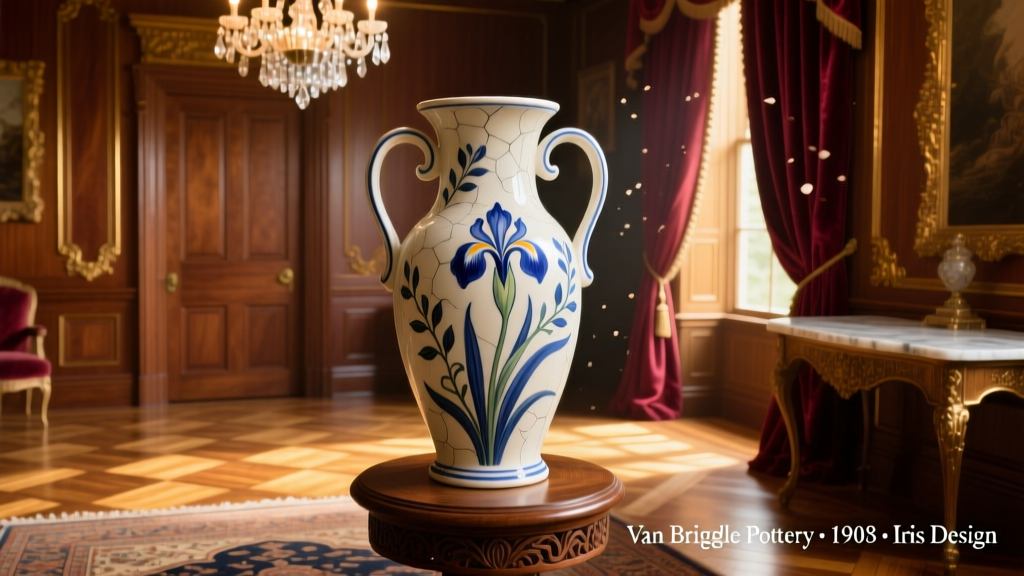
Van Briggle Iris Blossoms Vase: A 1903 Masterpiece in Art Pottery Restoration and Provenance

Hummel Figurine No. 18: The Christ Child — History, Identification, and Conservation Guidelines
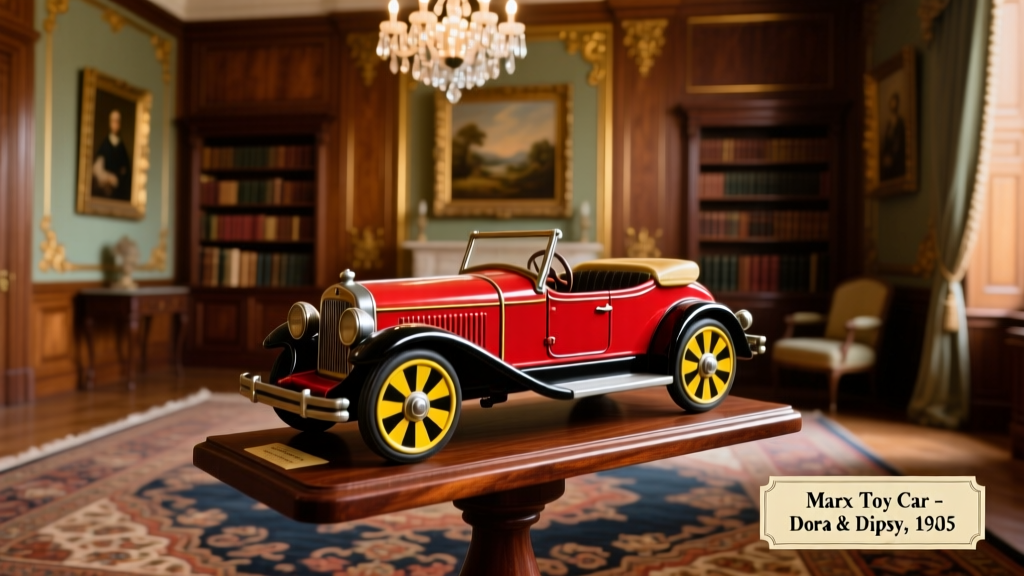
Toy Car 'Dora Dipsy': A Detailed Examination of the Marx 6½-Inch Red-and-Yellow Striped Tin Litho Vehicle
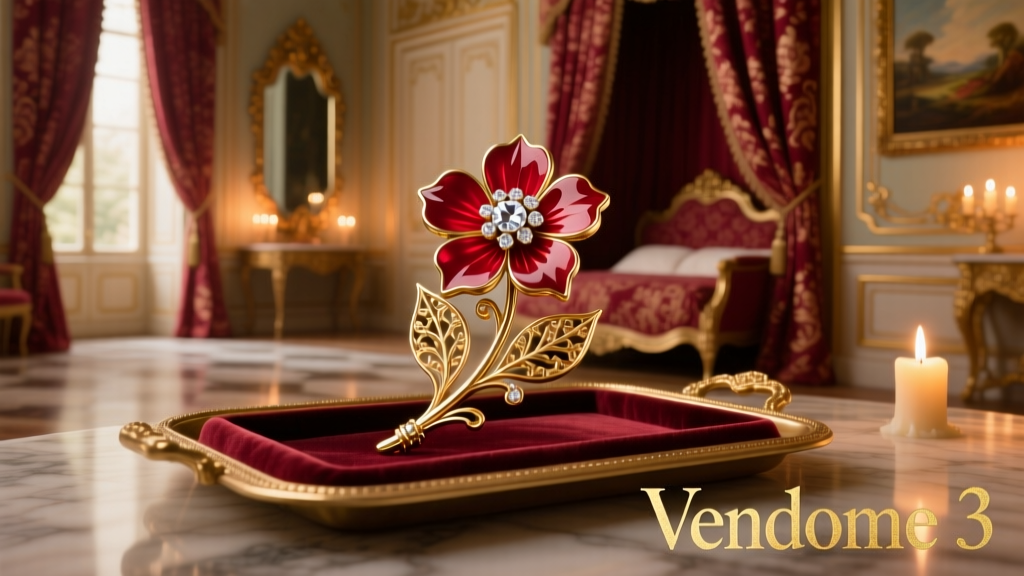
Pin Flower Ruby Petals Diamond Cluster Brushed Gold Stem Place Vendôme 3-Inch: A Technical & Historical Appraisal
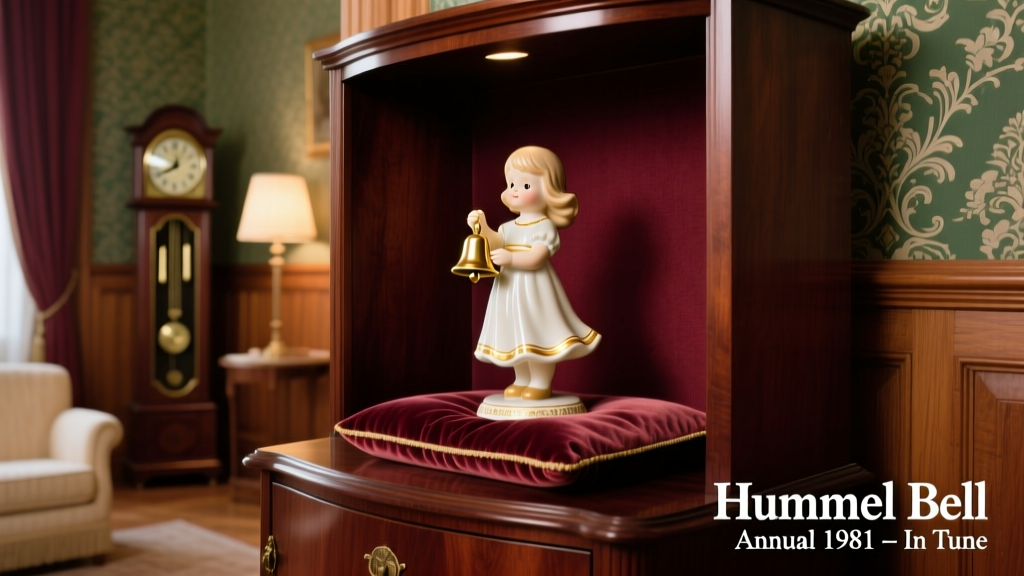
Hummel Bell Annual 1981 'In Tune 2': Collector’s Guide, Restoration Insights, and Historical Context
Azalea Bowl Fruit Pattern: A Detailed Study of the 11¾-Inch Vintage Serving Bowl