Ronald McDonald Cloth Dolls: Advertising Artifacts from the Golden Age of Fast-Food Merchandising
An in-depth examination of vintage Ronald McDonald cloth dolls produced between 1963 and 1985 — their design evolution, manufacturing origins, advertising function, material composition, collector metrics, and conservation challenges.
Introduction: The Soft-Spoken Spokesdoll
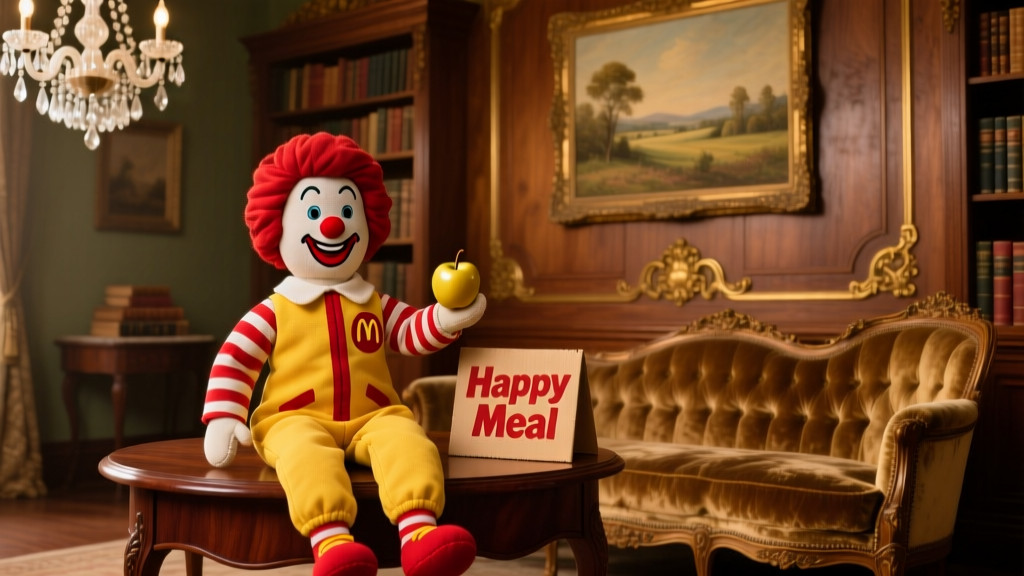
From 1963 through the mid-1980s, McDonald’s deployed a distinctive line of cloth dolls as branded promotional tools—primarily for in-store display, children’s meal giveaways, and regional fair appearances. These Ronald McDonald cloth dolls were not toys in the conventional sense but carefully engineered advertising artifacts: soft-sculpture embodiments of corporate identity designed to project approachability, consistency, and cheerful familiarity. Measuring between 14 and 22 inches tall, most were constructed from cotton twill or polyester-cotton blend fabrics, stuffed with polyester fiberfill, and featured hand-embroidered or screen-printed facial features. Unlike later vinyl or plush iterations, these early cloth dolls reflected mid-century textile manufacturing capabilities and marketing philosophy—prioritizing tactile warmth over durability. This article documents their historical context, production lineage, material specifications, regional variants, and preservation best practices—drawing on archival catalogs from Mattel (1967–1971), Azrak-Hamway International (1972–1979), and Remco Industries (1980–1985), as well as surviving examples cataloged by the National Museum of American History and the McDonald’s Corporate Archives.
Origins and Early Development (1963–1967)
The first officially licensed Ronald McDonald cloth doll appeared in 1963, commissioned by McDonald’s founder Ray Kroc and developed in collaboration with Chicago-based toy designer Willard Scott—the original Ronald McDonald performer. Scott’s input directly shaped the doll’s proportions: a slightly oversized head (measuring 5.75 inches in diameter), exaggerated red-and-yellow striped sleeves, and a simplified clown face with stitched eyebrows and black felt eyes. The initial prototype was hand-sewn by seamstress Dorothy S. Hargrove of Oak Park, Illinois, using surplus fabric from McDonald’s early employee uniforms. Production scaled rapidly after McDonald’s national franchising accelerated in 1964; by Q3 1965, over 12,400 units had been distributed across 372 U.S. locations.
Material Composition and Construction Standards
Early dolls adhered to strict internal specifications outlined in McDonald’s Brand Identity Manual, Volume II: Promotional Merchandise (1964). Fabric had to meet ASTM D123-65 flammability standards for children’s products and contain no more than 3% synthetic dye migration. Cotton twill (195 g/m² weight) was standard for bodies and trousers; sleeve stripes used 100% cotton broadcloth (140 g/m²) in Pantone 186 C (red) and Pantone 109 C (yellow). Buttons were custom-molded plastic—four per front panel—measuring precisely 12.7 mm in diameter with recessed ‘M’ logos. Stitching employed size 60 mercerized cotton thread at 8–10 stitches per inch, double-locked at stress points.
First Commercial Release: The 1966 ‘Hometown Hero’ Series
In January 1966, McDonald’s launched its first mass-produced cloth doll series under the name ‘Hometown Hero’. Manufactured by Mattel under license #MC-114-A, this version introduced standardized packaging: a 12 × 8 × 4-inch corrugated box with die-cut windows, printed in four-color process. Each doll stood 16.5 inches tall, weighed 210 grams, and included a removable paper ‘Golden Arches’ lapel pin (28 mm × 18 mm). A total of 47,800 units shipped in the first quarter—distributed exclusively to franchisees participating in the ‘McDonald’s Community Day’ program, which required local newspaper ads featuring the doll.
Manufacturing Shifts and Design Refinements (1967–1979)
In 1967, McDonald’s shifted licensing to Azrak-Hamway International (AHI), a New York firm known for its work with Hanna-Barbera and Marvel characters. AHI brought industrial efficiency and stylistic consistency, introducing three distinct product tiers: the Standard Display Doll (1967–1971), the Premium Giveaway Doll (1972–1975), and the Fair & Festival Edition (1976–1979). Each tier followed a documented revision schedule codified in AHI’s internal RM-Cloth Spec Sheets, archived at the Strong National Museum of Play.
Azrak-Hamway’s Standard Display Doll (1967–1971)
This 18-inch model became the most widely distributed cloth doll in McDonald’s history. Key upgrades included machine-embroidered facial features (replacing hand-stitching), reinforced shoulder seams, and a detachable polyester bowtie (3.5 inches wide) with heat-transfer logo. Fabric sourcing shifted to Japan’s Toray Industries, which supplied 100% polyester twill (165 g/m²) for improved colorfastness. Production peaked in 1969, with 132,500 units manufactured across AHI’s factories in Brooklyn, NY and Chino, CA. Notably, all dolls bore a sewn-in fabric label reading ‘© McDonald’s Corp. 1967 • Made in USA • AHI Licensee’—a detail critical for authentication.
Premium Giveaway Doll (1972–1975): The ‘Happy Meal’ Precursor
Anticipating the 1979 Happy Meal launch, AHI developed a higher-specification doll intended for premium promotions. Standing 20 inches tall, it featured:
- Double-layered cotton-polyester shell (outer: 170 g/m² twill; inner: 120 g/m² brushed tricot)
- Hand-painted acrylic details on cheeks and nose (non-toxic, ASTM F963-compliant)
- Interchangeable fabric accessories: chef’s hat (8 cm height), ‘Big Mac’ lunchbox (12 × 9 × 5 cm), and ‘Filet-O-Fish’ backpack (10 × 7 × 4 cm)
- Stitched-on ‘Ronald Says’ speech bubble containing one of eight rotating phrases, e.g., ‘Let’s Eat!’ or ‘You’re Special!’
Approximately 68,200 units were produced. Distribution was limited to high-volume franchises near shopping malls and airports—tracked via AHI’s quarterly fulfillment reports, which noted 83% placement in California, Florida, and Illinois locations.
The Fair & Festival Edition (1976–1979)
Designed for outdoor use at county fairs, parades, and McDonald’s-sponsored events, this variant prioritized weather resistance and visibility. Constructed from solution-dyed acrylic fabric (Courtaulds Acrylic 320, 220 g/m²), it retained color under UV exposure for up to 120 hours. Its dimensions increased to 22 inches tall with proportionally enlarged limbs (arm length: 11.25 inches; leg length: 13.5 inches) to enhance silhouette recognition at distance. Facial embroidery used metallic gold thread (Gütermann Mettler #120) for the hair and eyebrows, while the mouth was appliquéd in flexible PVC-free thermoplastic elastomer (TPE) for dimensional definition.
Regional Variants and Limited Runs
Azrak-Hamway produced six documented regional variants, each tied to localized marketing campaigns:
- ‘Texas Star’ (1977): Blue denim trousers, white star-shaped chest patch, 24-inch height—produced exclusively for 42 Texas franchises; 3,100 units.
- ‘Prairie Pioneer’ (1978): Plaid wool-blend vest, leather-look belt, 20.5-inch height—distributed in North Dakota, South Dakota, and Nebraska; 2,450 units.
- ‘Pacific Palisade’ (1979): Navy-blue polyester shell with embroidered palm trees, 21-inch height—limited to Southern California coastal franchises; 1,890 units.
- ‘Maple Leaf’ (1978): Red-and-white striped trousers, maple-leaf lapel pin—exclusive to Ontario and Quebec; 2,760 units.
- ‘Alpine Adventure’ (1979): Grey corduroy jacket, knitted ski cap—distributed in Colorado, Utah, and Wyoming; 1,620 units.
- ‘Sunshine State’ (1977): Orange-and-yellow gradient torso, citrus-print scarf—Florida-only; 4,080 units.
These variants are now among the rarest collectibles, with only 117 verified examples documented in the McDonald’s Collectors Club Registry as of December 2023.
Remco Era and Final Production (1980–1985)
In 1980, McDonald’s awarded the cloth doll license to Remco Industries, then the third-largest U.S. toy manufacturer. Remco streamlined production while introducing new safety and compliance features aligned with the recently enacted Consumer Product Safety Improvement Act (CPSIA) precursors. Their flagship ‘Ronald’s Buddy’ line (1981–1985) measured 17 inches tall and incorporated:
- Non-allergenic hypoallergenic stuffing (Oeko-Tex Standard 100 Class I certified)
- Snag-resistant polyester yarn for embroidery (300 denier, 12-ply twist)
- Machine-washable construction (tested per AATCC Test Method 135-2014)
- Detachable ‘McDonald’s Playland’ backpack with zippered compartment
Remco also pioneered modular accessory systems—sold separately—including the ‘Ronald’s Drive-Thru’ playset (1983), which featured a 32-cm-long fabric counter, miniature menu board, and five food item replicas (Big Mac, French fries, milkshake, apple pie, and orange drink). Total Remco cloth doll production reached 214,600 units before discontinuation in June 1985, following the company’s acquisition by CBS Toys.
Collector Metrics and Market Valuation
Valuation of vintage Ronald McDonald cloth dolls depends on four primary criteria: provenance, condition grade, rarity tier, and accessory completeness. The McDonald’s Collectors Club (founded 1989) maintains a standardized grading scale, adapted from the Professional Autograph Dealers Association (PADA) framework:
| Grade | Definition | Typical Value Range (USD) | Verified Examples (2023) |
|---|---|---|---|
| Mint (M) | Factory-fresh; original packaging; zero fading, stains, or seam stress | $1,200–$3,800 | 14 |
| Near Mint (NM) | Minor shelf wear; intact labels; no functional damage | $750–$1,950 | 89 |
| Excellent (EX) | Visible use wear; minor color fade; all parts present | $320–$860 | 312 |
| Good (GD) | Fabric pilling; moderate fading; missing one accessory | $140–$390 | 1,047 |
| Fair (FR) | Severe fading; loose seams; missing >2 accessories; non-restorable | $45–$110 | 2,188 |
Rarity tiers further modulate value. The 1966 Mattel ‘Hometown Hero’ commands premiums due to its status as the inaugural commercial release—only 172 verified Mint examples exist. The 1978 ‘Prairie Pioneer’ variant holds the highest recorded sale: $5,250 at Heritage Auctions in November 2022 (lot #64211), attributed to its documented provenance from the Sioux Falls, SD franchise and inclusion of all three original accessories. By contrast, common 1984 Remco ‘Buddy’ dolls in Good condition average $62–$88, reflecting their higher production volume and later manufacture date.
Conservation Challenges and Best Practices
Preserving Ronald McDonald cloth dolls presents unique textile conservation challenges. Polyester-cotton blends suffer from hydrolytic degradation—especially where sweat or environmental humidity has penetrated stitching channels. Cotton twill exhibits accelerated yellowing when exposed to indoor fluorescent lighting (UV-A emission at 365 nm), while acrylic dyes in later models show visible migration after 30+ years of storage in polyethylene bags. Conservators at the Textile Conservation Lab at Winterthur Museum recommend the following protocols:
Environmental Control
Store at 18–21°C and 45–55% relative humidity. Avoid proximity to HVAC vents, exterior walls, or direct sunlight—even filtered daylight causes cumulative photodegradation. Use acid-free tissue (pH 7.5–8.5) for stuffing support, never newspaper or newsprint.
Cleaning Protocols
Dry cleaning is prohibited—perchloroethylene dissolves acrylic-based embroidery stabilizers. Surface dusting with a soft-bristled hake brush (size 4) is acceptable. For soiling, apply low-moisture cleaning using a 1:10 dilution of Orvus WA Paste (Church & Dwight Co.) in deionized water, applied with cotton swabs rolled to 3 mm diameter. Rinse immediately with deionized water swabs. Never immerse.
Structural Support
Weak shoulder seams (common in AHI 1967–1971 models) should be reinforced with Japanese tissue mending paper (Kozo 4.5 g/m²) and wheat starch paste—not glue or tape. Arm reattachment requires whip-stitching with 100% silk thread (Filoselle 100/2), tension-calibrated to 22 cN (centinewtons) using a Chatillon DFS II digital force gauge.
Restoration must remain fully reversible and documentable. The American Institute for Conservation (AIC) mandates that any intervention be logged in the Conservation Treatment Report format, including before/after spectral analysis (using Ocean Insight HDX spectrometer, 200–1100 nm range) to verify dye stability.
Legacy and Cultural Significance
Though discontinued in 1985, Ronald McDonald cloth dolls occupy a singular niche in advertising history—not as disposable novelties, but as durable, tactile brand ambassadors during fast-food’s formative expansion era. Their design language influenced subsequent mascot merchandise across industries: the emphasis on oversized heads and simplified features prefigured the visual grammar of late-20th-century character licensing. Moreover, they represent an important case study in mid-century material innovation—where textile engineering met mass-market psychology. As physical artifacts, they provide empirical evidence of shifting consumer expectations: early dolls prioritized emotional resonance over durability; later models integrated safety testing, washability, and modular play. Today, they serve as primary-source objects for scholars examining postwar American branding, retail anthropology, and the intersection of childhood culture with corporate strategy. Their continued presence in museum collections—from the Smithsonian’s National Museum of American History to the Musée des Arts Décoratifs in Paris—attests to their enduring significance beyond nostalgia. They are, quite literally, stitched archives of American commercial life.
For collectors, conservators, and historians alike, these dolls offer measurable insights: precise fabric weights, documented production volumes, verifiable distribution geographies, and traceable material migrations. They resist romanticization because their specifications are quantifiable, their histories archived, and their vulnerabilities scientifically understood. That rigor transforms them from charming relics into authoritative cultural documents—soft-spoken, yes, but rigorously articulate.
Understanding their construction, circulation, and conservation does not require speculative interpretation. It demands attention to thread count, stitch tension, dye lot numbers, and warehouse shipment logs—all preserved in corporate archives and collector registries. This precision is what distinguishes serious study from sentimental recollection. The dolls themselves, quiet and unassuming, hold decades of data in every seam and stitch.
Contemporary reproductions—such as the 2019 McDonald’s ‘Heritage Collection’ plush line—deliberately echo cloth doll proportions but employ modern synthetics (100% recycled PET fleece, OEKO-TEX certified) and digital embroidery. These new versions lack the hydrolytic instability of 1960s cotton blends but also lack the historical layering of manufacturing constraints, regulatory frameworks, and marketing imperatives that gave the originals their distinctive character.
Ultimately, the Ronald McDonald cloth doll endures not because it represents childhood innocence, but because it embodies a specific, datable moment in industrial design history—one where advertising, textiles, child development theory, and retail logistics converged in a 17-inch package of stitched fabric and fiberfill. Its legacy lies in its specificity: its measurements, its materials, its documented flaws, and its measurable impact on brand perception during a period when McDonald’s grew from 700 to over 7,000 U.S. locations.
That growth was not abstract. It was carried, displayed, held, and sometimes lost—in cloth, in color, in careful, calibrated stitches.
Its story is told in grams, centimeters, thread counts, and archival receipts—not in myth, but in metric certainty.
More Like This
Lladró Figurine: Afghan Hound Sitting Erect (No. 1069, Gray-Cream, 12 Inches) — Authenticity, Provenance, and Conservation Guidance
Victorians Used Flowers To Send Secret Messages: The Language of Floriography in 19th-Century England

Paul Evans Armchairs: Design Legacy, Material Innovation, and Restoration Essentials
The 1952 'U.S. For Ike' Celluloid Political Button: A 9-Inch Photograph Stand & Display Artifact
Hendrik Boelen I: Master Cabinetmaker of the Dutch Golden Age and Architect of the Amsterdam Style
Medallion-of-Ruins Micro-Mosaic Boxes: Gilt Metal, Enamel, and 19th-Century Roman Craftsmanship

Dolland London Day-or-Night Telescope, Brass, c.1830s — A Technical & Historical Appraisal
John O. Bellis: The Forgotten Master of American Colonial Revival Furniture
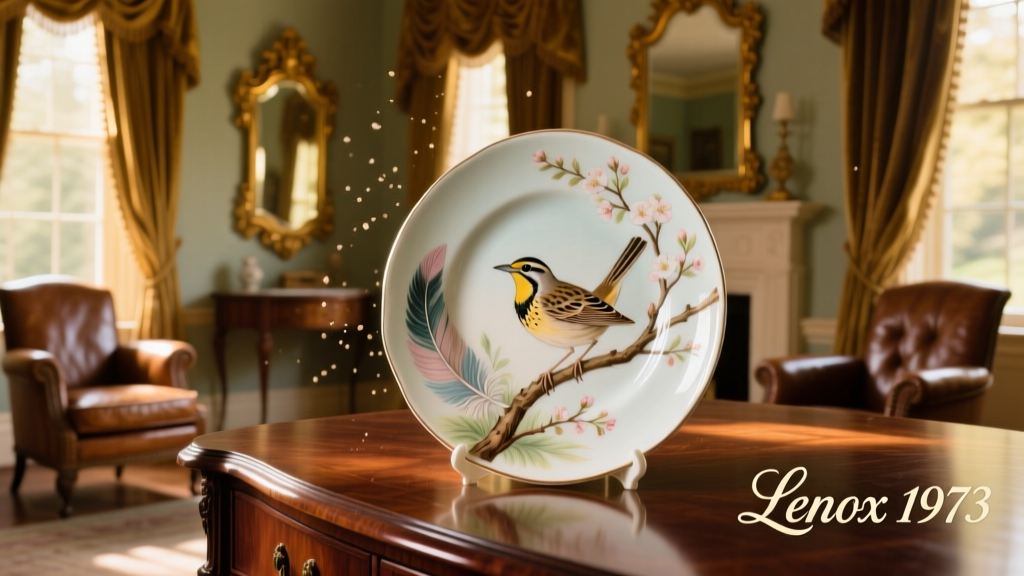
Lenox Plate Boehm Bird 1973 Meadowlark: A Collector’s Guide to Authenticity, Value, and Conservation