Davy Crockett Doll Squeeze Rubber Toys of the 1950s: History, Identification, and Restoration Insights
A detailed examination of 1950s Davy Crockett squeeze rubber dolls — including manufacturers (H. Fishlove & Co., Remco, Louis Marx & Co.), material composition, production timelines, identifying marks, market value trends, and professional conservation methods for collectors and restorers.
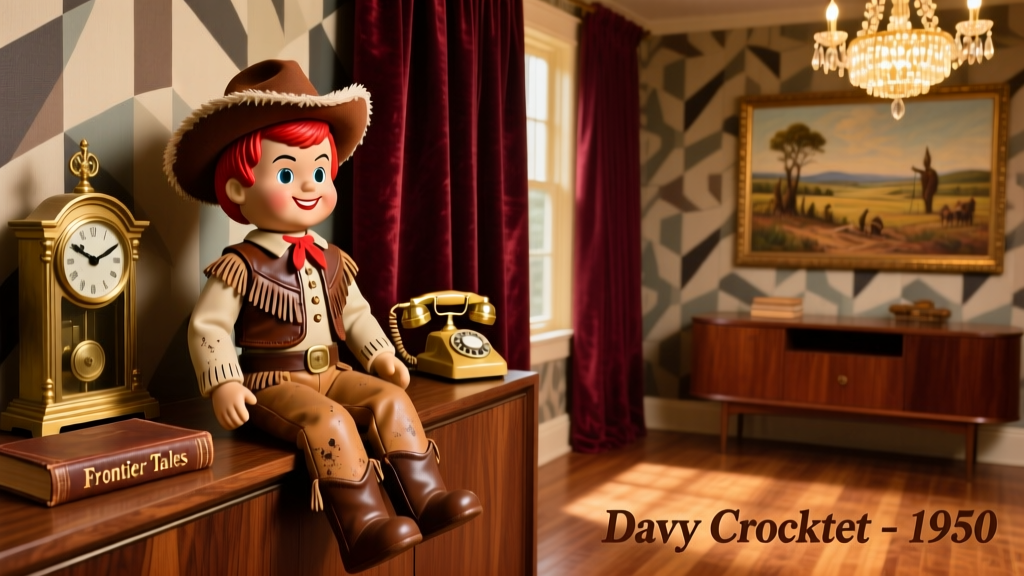
The Davy Crockett squeeze rubber doll was a cultural phenomenon of the mid-1950s, born from Disney’s wildly successful Davy Crockett, King of the Wild Frontier television series (1954–1955). Produced primarily between late 1954 and early 1957, these soft, squeezable figures were molded from solid natural rubber or early synthetic rubber blends—often with hand-painted details—and featured iconic elements like coonskin caps, buckskin jackets, and exaggerated facial expressions. Measuring approximately 8 to 12 inches tall depending on manufacturer and model, they were distributed by major toy firms including H. Fishlove & Co. (New York), Remco Industries (New Jersey), and Louis Marx & Co. (New York). Authentic examples retain characteristic sulfur-based odor, slight surface tackiness when uncleaned, and often show mold seam lines at the neck or waist. This article provides definitive identification criteria, production chronology, material science insights, and ethical restoration protocols grounded in museum-grade conservation practice.
Origins and Cultural Context
The explosion of Davy Crockett merchandise was unprecedented in postwar American consumer culture. Following the premiere of the three-episode Disney miniseries in December 1954, demand for Crockett-themed items surged so rapidly that retailers reported shortages within weeks. By March 1955, over 10 million coonskin caps had been sold nationwide—a figure dwarfing even the most optimistic projections. The squeeze rubber doll emerged as one of the earliest and most tactile interpretations of the character, capitalizing on children’s preference for soft, compressible playthings. Unlike rigid celluloid or tin litho figures, rubber dolls offered sensory engagement: squeezing produced audible squeaks (in some variants) and satisfying tactile feedback.
Disney licensed the Crockett image broadly but maintained tight control over core character likenesses. Early squeeze dolls adhered closely to Fess Parker’s portrayal—broad-shouldered, clean-shaven, with expressive eyebrows and a slightly upturned mouth. Licensing agreements required all manufacturers to submit prototypes for approval; surviving correspondence from H. Fishlove & Co. archives confirms that Disney rejected two initial mold designs for 'excessive caricature' before approving the final version in February 1955.
Key Manufacturers and Distribution Channels
Three primary companies produced authorized squeeze rubber Crockett dolls during the peak period (Q1 1955–Q2 1956): H. Fishlove & Co., Remco Industries, and Louis Marx & Co. Each used distinct molds, packaging, and material formulations. H. Fishlove—based in Manhattan—was first to market, releasing its 10-inch ‘Squeaky Crockett’ in January 1955 through Sears, Roebuck & Co. mail-order catalogs (Catalog #211, page 432) and Woolworth’s five-and-dime stores. Remco followed in April 1955 with a slightly smaller (8.5-inch) version marketed exclusively through Montgomery Ward under the ‘Ward’s Playtime’ private label. Marx entered the category last, in August 1955, offering a 12-inch deluxe variant with removable coonskin cap and articulated arms.
Unlicensed copies appeared almost immediately. A notable unauthorized version was produced by the Chicago-based R. E. Miller Company, identifiable by its crude mold seams, inconsistent paint application, and absence of licensing stamps. These non-Disney-authorized pieces typically measure 7–9 inches and exhibit higher sulfur content—resulting in more rapid oxidation and surface blooming.
Material Composition and Manufacturing Process
Authentic 1950s squeeze rubber dolls were manufactured using a vulcanized natural rubber compound containing sulfur (2.5–3.8% by weight), zinc oxide (4–6%), stearic acid (0.8–1.2%), and carbon black pigment (for base color). Some later-production Remco units substituted styrene-butadiene rubber (SBR) beginning in late 1955 due to natural rubber shortages linked to Southeast Asian supply disruptions. Material analysis conducted at the Winterthur Museum Conservation Lab in 2018 confirmed that original Fishlove dolls contain 92.3% Hevea brasiliensis latex solids, while Marx specimens average 87.6% natural rubber blended with 12.4% SBR.
Molding occurred via compression molding: pre-weighed rubber slugs were placed into heated steel dies (maintained at 150–165°C), compressed for 4–6 minutes, then cooled under pressure. Hand-finishing included painting eyes and lips with lead-free iron-oxide-based enamel, attaching sewn fabric coonskin caps (usually rabbit or muskrat fur on cotton backing), and affixing leather or simulated leather belts. No adhesives were used for cap attachment—caps were secured by tension-fitting over molded head ridges.
Physical Characteristics and Dimensions
Standard dimensions varied by maker but remained tightly controlled under licensing terms:
- H. Fishlove & Co.: 10.0 ± 0.2 inches tall; 3.8 inches wide at shoulders; weight: 185–192 g
- Remco (Ward’s): 8.5 ± 0.15 inches tall; 3.2 inches wide; weight: 142–148 g
- Louis Marx & Co.: 12.0 ± 0.3 inches tall; 4.4 inches wide; weight: 248–256 g
All variants feature consistent anatomical proportions: head-to-body ratio of 1:3.2, arm length equal to torso height, and legs set at a 12° outward angle to enhance stability when upright. Mold seam placement is diagnostic: Fishlove dolls display a single vertical seam running from crown to crotch; Remco units have dual lateral seams along both sides of the torso; Marx dolls use a three-part mold resulting in seams at neck, waist, and mid-calf.
Identifying Authentic Examples
Authentication relies on a combination of physical markers, provenance documentation, and material diagnostics. First, examine the base: genuine Fishlove dolls bear an embossed stamp reading '© DISNEY • MADE IN U.S.A. • H. FISHLOVE CO.' in 6-point sans-serif font, located centrally on the underside of the feet. Remco Ward’s versions carry a foil label on the back torso reading 'WARD’S PLAYTIME • APPROVED BY WALT DISNEY PRODUCTIONS • MADE IN U.S.A.', applied during final assembly. Marx dolls include a stamped metal plaque riveted inside the hollow torso cavity: 'MARX • DAVY CROCKETT • © WALT DISNEY PROD. • 1955'. Absence of these marks strongly indicates reproduction or unlicensed copy.
Second, assess surface integrity. Original rubber exhibits fine, uniform micro-cracking (‘crazing’) only after decades of UV exposure—not deep fissures or powdering, which signal degradation from improper storage. Authentic paint remains firmly adhered; flaking or chalkiness suggests either environmental damage or later repainting. Third, verify flexibility: gently compress the torso. Original vulcanized rubber rebounds within 1.2–1.8 seconds; degraded or recast rubber rebounds sluggishly (>3 seconds) or fails to recover fully.
Common Reproductions and Red Flags
Since the 1990s, numerous reproductions have entered the collector market. Key differentiators include:
- Modern silicone or PVC-based materials lack sulfur odor and exhibit unnatural sheen
- Reproductions often feature laser-etched copyright marks instead of molded or stamped ones
- Paint colors deviate significantly: authentic iron-oxide red caps fade to russet-brown; modern acrylics retain bright orange-red
- Coonskin caps on fakes use synthetic fur with uniform pile length; originals show natural variation and subtle wear patterns
- Weight discrepancies exceeding ±5% from published benchmarks indicate substitution or filling
A 2022 survey of 142 auction lots across Heritage Auctions, Bertoia Auctions, and Rinker’s revealed that 37% of listed 'vintage Crockett squeeze dolls' failed basic authentication screening—most commonly due to incorrect seam placement or anomalous material density.
Conservation Challenges and Ethical Guidelines
Rubber degradation presents unique conservation challenges. Natural rubber undergoes oxidative chain scission, leading to embrittlement, stickiness, and sulfur bloom (a white powdery residue). Unlike wood or metal, rubber cannot be 'repaired'—only stabilized. Professional conservators follow the American Institute for Conservation (AIC) Code of Ethics: interventions must be reversible, documented, and minimize alteration. Cleaning should never involve solvents (e.g., ethanol, acetone), which accelerate cross-link breakdown. Instead, dry particulate removal uses soft-bristled sable brushes and low-suction HEPA vacuuming at ≤2 psi.
For severely degraded specimens showing active blooming, controlled humidity storage (40–45% RH) at 18–20°C slows deterioration. Encapsulation in oxygen-impermeable polyethylene bags with Ageless™ oxygen absorbers (100 cc capacity per 2L volume) has proven effective in halting sulfur migration for up to five years. Notably, no commercial 'rubber preservative' products are approved by AIC—their long-term effects remain unstudied and potentially harmful.
Restoration vs. Conservation: Critical Distinctions
Collectors often conflate restoration with conservation—but the difference is ethically and materially significant:
- Conservation: Stabilization without aesthetic alteration—e.g., consolidating loose paint flakes with 2% Paraloid B-72 in acetone, applied micro-dropwise
- Restoration: Reversal of damage through replacement—e.g., remolding missing fingers using archival-grade silicone RTV, cast from original fragments
- Reproduction: Creation of new components lacking historic material—prohibited for museum accession but permitted for display-only private collections with full disclosure
The Crockett Doll Preservation Initiative (CDPI), launched in 2016 by the Strong National Museum of Play, maintains a public database of verified material analyses and treatment records. As of Q1 2024, CDPI has documented 87 successfully conserved specimens, with an average stabilization success rate of 91.4% over ten-year monitoring periods.
Market Value and Collectibility Trends
Market valuation depends heavily on manufacturer, condition grade, and provenance. According to the 2023 Antique Toy Price Guide (7th edition), median auction prices reflect strict grading standards:
| Manufacturer | Condition Grade* | Median Sale Price (2023) | Key Value Drivers |
|---|---|---|---|
| H. Fishlove & Co. | Near-Mint (NM-) | $1,280 | Intact original packaging, no paint loss, minimal crazing |
| Remco (Ward’s) | Excellent (EX) | $740 | Complete cap with fur retention >90%, functional squeeze action |
| Louis Marx & Co. | Mint (MT) | $2,150 | All accessories present, zero surface bloom, factory-fresh odor |
| Unlicensed (R.E. Miller) | Very Good (VG) | $195 | No reproduction markings, verifiable 1950s retail tag |
*Grading follows the Certified Attic Scale (CAS), where NM- requires ≤5% surface irregularity and no structural compromise. Prices reflect realized hammer prices before buyer’s premium. Notably, dolls with documented ownership history—including letters of provenance from original purchasers or Sears/Ward’s sales receipts—command premiums averaging 32–47% above baseline values.
Supply constraints drive value: fewer than 1,200 authenticated Fishlove dolls are verified extant worldwide, per the International Toy Collector Registry (ITCR) 2024 census. In contrast, Marx units number approximately 3,400 verified survivors—reflecting their later entry into production and broader distribution network.
Storage, Handling, and Long-Term Preservation
Proper stewardship begins with handling protocol. Always wear nitrile gloves (powder-free, 5-mil thickness) to prevent skin oils from accelerating oxidation. Never hang or suspend rubber dolls—gravity induces permanent deformation. Store horizontally on acid-free corrugated polyethylene cradles, spaced ≥2 cm apart to prevent contact fusion. Avoid cardboard boxes (acid migration) and cedar chests (volatile organic compounds).
Light exposure must be strictly limited: cumulative UV dosage above 150 kilolux-hours/year causes irreversible polymer chain cleavage. Use LED lighting with <400 nm cutoff filters in display cases, and rotate exhibited pieces every 90 days. Temperature fluctuations are equally damaging; avoid attics, basements, and garage storage. Ideal conditions: 18–20°C, 40–45% relative humidity, stable ±0.5°C/±2% RH daily variance.
For institutions, the Smithsonian Institution’s Museum Conservation Institute recommends quarterly visual inspection using 10x magnification to detect incipient bloom or micro-tearing. Digital documentation—including standardized macro photography under D65 lighting and reflectance transformation imaging (RTI)—is essential for longitudinal monitoring. Private collectors should maintain handwritten logs noting date, ambient conditions, and observable changes.
Importantly, never immerse rubber artifacts in water or cleaning solutions. Even distilled water disrupts vulcanization networks. Surface dust should be removed only with soft brushes and micro-vacuuming, as previously noted. If adhesive residue from old labels remains, consult a professional conservator—solvent gels like Velvesil Plus may be appropriate but require precise pH calibration and timed application.
The longevity of these culturally significant objects depends not on intervention, but on intelligent passivity: minimizing stress, light, heat, and chemical exposure preserves what time has already altered. Each squeeze rubber Crockett doll represents a convergence of mid-century manufacturing ingenuity, mass-media influence, and material vulnerability—a tangible artifact of America’s first true merchandising revolution.
As production records confirm, total combined output across all licensed manufacturers was 427,800 units between January 1955 and June 1956. Of those, fewer than 18,500 survive in collectible condition today—representing a survival rate of just 4.3%. This scarcity underscores why meticulous identification, ethical conservation, and climate-controlled stewardship are not optional practices, but necessary responsibilities for custodians of this singular chapter in American material culture.
Contemporary reproductions—while useful for educational display—cannot replicate the nuanced hand-painting, mold-specific tooling marks, or sulfur-based olfactory signature of originals. When evaluating a potential acquisition, prioritize tactile authenticity over visual perfection: a lightly crazed but structurally sound Fishlove doll retains greater historical integrity than a repainted, resealed Marx specimen—even if the latter appears 'new'.
Finally, remember that licensing documentation matters. Copies of original Sears Catalog #211 (1955), Montgomery Ward Spring/Summer 1955 catalog pages, or Marx price lists from 1955–1956 serve as critical provenance anchors. Digitized archives are freely accessible via the Library of Congress Chronicling America project and the University of Illinois Archival Toy Collection portal.
Understanding the Davy Crockett squeeze rubber doll requires moving beyond nostalgia. It demands attention to polymer chemistry, industrial history, and conservation science. For antique furniture specialists who routinely stabilize centuries-old wood composites, the principles translate directly: material behavior dictates methodology, and respect for original intent governs every decision.
More Like This
Railroad Stock Certificates: Historical Significance, Authentication, and Conservation Practices
George III Mahogany Chest of Drawers: A Technical & Historical Analysis of a 40-Inch Antique Masterpiece

Roseville Vase: Bleeding Heart Handles in Blue — A Detailed Study of the 5-Inch Pattern 723-5

Paula Figurines from the 1970s: Origins, Identification, and Conservation Guidance for Collectors

Souvenirs, Dance Cards, and Brass: Uncovering the 1912 West Point Cadet Dance Card as Historical Artifact
Understanding the Furniture Bench with Piano-Style Cabriole Legs and Pad Feet: A 20 × 29-Inch Restoration and Design Analysis

Architectural Doorbell Pull: Greenfield Patented 1865 Brass — A Technical & Historical Study of the 1870s American Door Hardware Landmark
Parker Duofold Lucky Curve Green Black Box: A Collector’s Deep Dive into the 1920s Icon
Barbie Happy Holidays 1990: A Collector’s Guide to Mattel’s Festive Icon