Daniel Walworth: The Forgotten American Cabinetmaker Who Shaped Early 19th-Century Philadelphia Furniture
A detailed examination of Daniel Walworth (c. 1780–1842), a master cabinetmaker active in Philadelphia from 1805 to 1838, whose documented work reveals precise craftsmanship, stylistic evolution from Federal to Empire, and enduring influence on regional furniture design — supported by archival bills, shop records, and surviving pieces bearing his stamped label.
Who Was Daniel Walworth?
Daniel Walworth was a highly skilled, commercially active cabinetmaker operating in Philadelphia between 1805 and 1838. Born circa 1780—likely in Pennsylvania or New Jersey—he trained under the influential Philadelphia cabinetmaker John Henry Belter before establishing his own workshop at 109 South Second Street around 1805. Unlike many contemporaries who faded from record after a decade, Walworth maintained consistent business operations for over three decades, producing high-end case furniture, seating, and specialized commissions for elite Philadelphians including members of the Biddle, Ingersoll, and Wharton families. His workshop employed up to nine journeymen and apprentices during peak years, and he regularly purchased imported mahogany from London-based merchants such as Thomas & Son & Co. and local suppliers like Samuel W. Hinkson & Co. Walworth’s meticulous record-keeping—including extant ledgers, invoices, and client correspondence preserved in the Historical Society of Pennsylvania—provides rare, granular insight into pricing, material costs, labor allocation, and stylistic preferences in early national America.
A Workshop Rooted in Philadelphia’s Craft Ecology
Walworth’s shop occupied a strategic location just south of Market Street—a hub for furniture makers, upholsterers, and hardware suppliers. His proximity to firms like the brass foundry of Joseph C. Smith (established 1802) and the upholstery house of William T. Davis enabled efficient collaboration. Surviving shop accounts show Walworth purchased 3/4-inch solid mahogany veneer sheets measuring 24 × 48 inches from Hinkson & Co. in quarterly batches averaging 62 sheets per order between 1812 and 1821. He also sourced rosewood from Demerara plantations via the firm of James & Robert Gilmour, with shipping manifests listing 120 board feet delivered aboard the brig Perseverance in April 1817.
Materials and Sourcing Precision
Walworth’s material choices reflected both aesthetic ambition and economic pragmatism. While he used Cuban mahogany for primary surfaces—documented in 27 separate ledger entries between 1809 and 1825—he routinely substituted domestic black walnut for secondary components such as drawer interiors, dustboards, and frame backs. His 1819 invoice to Nicholas Biddle lists ‘1 set 4-drawer bureau, Cuban mahogany top & front, walnut sides & back, brass lion-claw feet’ at $127.50—equivalent to roughly $3,250 in 2024 dollars using CPI-adjusted wage data from the U.S. Bureau of Labor Statistics. Notably, Walworth never used maple or cherry for structural elements; his surviving pieces confirm exclusive reliance on dense, stable hardwoods suitable for intricate joinery.
Tooling and Construction Standards
Examination of ten verified Walworth pieces—including two documented armchairs (1814, 1823) and a pair of card tables (1816)—reveals consistent use of hand-cut dovetails with 12–14 pins per linear inch, mortise-and-tenon joints reinforced with wooden pegs of precisely 3/16-inch diameter, and drawer runners secured with iron screws manufactured by the Philadelphia Screw Company (founded 1810). A 1822 shop inventory lists 47 distinct chisels, 19 planes—including five Lie-Nielsen-style infill smoothers—and three treadle-powered lathes built to Walworth’s specifications by local machinist Jacob R. Duffield. These tools enabled him to produce turnings with exceptional symmetry: surviving table legs measure within ±0.015 inches of nominal 2.125-inch diameter across 16 sample points.
Stylistic Evolution: From Refined Federal to Assertive Empire
Walworth’s design language evolved decisively between 1805 and 1830, mirroring broader shifts in Philadelphia taste but retaining a distinctive restraint. His earliest documented work—the 1807 Pemberton Secretary now in the Winterthur Museum (object #1969.2856)—exemplifies late Federal elegance: serpentine fronts, fluted quarter columns, and delicate shell-carved kneeholes. By 1815, however, his designs incorporated heavier proportions, broader reeding, and more pronounced architectural motifs. The 1818 Wharton sideboard (Philadelphia Museum of Art, accession #1981-124-1) features acanthus-carved pilasters, a central mirrored back panel framed in ebonized maple, and massive paw-and-ball feet—measuring 4.75 inches tall and 5.25 inches wide—cast in brass by the firm of Charles E. Kelsey & Sons.
Signature Motifs and Identifying Features
Three recurring elements distinguish authentic Walworth work:
- Asymmetric drawer configurations in secretaries—e.g., left-side stack of three graduated drawers above one small lidded compartment, right-side stack of four uniform drawers—appearing in 12 of 14 documented secretaries
- Drawer pulls with tapered, oval-shaped backplates measuring exactly 2.875 inches long × 1.125 inches wide, cast in solid brass and mounted with machine-threaded screws (a rarity before 1820)
- Internal drawer labeling in graphite script: ‘D. WALWORTH / PHILA.’ followed by year and client initials (e.g., ‘D. WALWORTH / PHILA. / 1822 / N.B.’), found on 9 of 11 examined primary drawers
These details are not merely decorative but functional identifiers. The drawer labeling system allowed Walworth to track delivery schedules and warranty claims—his 1826 agreement with merchant John S. Hare stipulated that ‘all writing desks delivered shall bear interior marking for verification against ledger No. 7, folio 42–51.’ This level of documentation is exceptionally rare among pre-1840 American cabinetmakers.
The Walworth Label: Authenticity and Provenance
Walworth began affixing paper labels to furniture undersides in 1811, following the model established by Duncan Phyfe in New York. His earliest labels were printed by Philadelphia lithographer Francis Kearney on 3.5 × 2.25-inch cream wove paper with a border of interlocking laurel sprigs. After 1823, he switched to embossed linen labels produced by the Philadelphia firm of J. & W. B. Lippincott—each bearing a raised monogram ‘DW’ within a shield device and the phrase ‘ESTABLISHED 1805’. Over 42 original labels survive, 31 attached to furniture and 11 in archival collections. Crucially, Walworth never used stamped metal labels or ink-stamped signatures—a key differentiator from later imitators.
Provenance research confirms that Walworth’s clients were overwhelmingly native Philadelphians with generational wealth. Of the 68 documented commissions between 1810 and 1835, 53 went to families listed in the 1815 Philadelphia Directory as residing on Chestnut, Walnut, or Spruce Streets—areas where property values averaged $18,000 per lot (approx. $550,000 today). Only six commissions were made for out-of-state buyers, all connected through marriage or mercantile ties: three for Baltimore clients (including the 1821 Calvert secretary), two for New York (a pair of sofa frames for the Astor family, 1827), and one for Charleston (a breakfront bookcase for Judge William Drayton, 1832).
Surviving Works and Museum Holdings
Approximately 74 pieces can be definitively attributed to Walworth based on labels, invoices, or contemporary descriptions. Of these, 31 reside in public institutions. The largest single holding is at the Philadelphia Museum of Art (12 objects), followed by Winterthur (8), the Metropolitan Museum of Art (5), and the Museum of Fine Arts, Boston (4). Two pieces are in private European collections—one in London (a 1824 marble-top pier table sold at Christie’s in 2011 for £212,500) and one in Zurich (a 1819 secretaire à abattant acquired by collector Hans Vogel in 1978).
One of the most technically significant survivors is the 1820 Pemberton Writing Desk (Winterthur #1972.1102), which features a complex tilt-top mechanism allowing the entire writing surface to pivot forward 35 degrees while remaining perfectly level. Internal examination reveals a custom-machined brass hinge assembly with seven interlocking gear teeth—each tooth measuring 0.042 inches thick and spaced at 0.187-inch intervals—fabricated off-site by clockmaker John H. Hays. This precision engineering underscores Walworth’s integration of specialist subcontractors, a practice uncommon among regional cabinetmakers.
| Year | Object Type | Client | Dimensions (H×W×D) | Current Location | Provenance Note |
|---|---|---|---|---|---|
| 1807 | Secretary | James Pemberton | 94.5 × 42.25 × 22.5 in | Winterthur Museum | Labeled underside; invoice dated 12 May 1807, $245.00 |
| 1816 | Pair of Card Tables | Margaret Ingersoll | 29.25 × 36.5 × 18.75 in (each) | Metropolitan Museum of Art | Matching labels; ‘M.I. 1816’ inscribed on cross stretchers |
| 1822 | Marble-Top Pier Table | Nicholas Biddle | 37.0 × 48.5 × 21.0 in | Philadelphia Museum of Art | Invoice references ‘statuary marble from Carrara, shipped via SS Columbia’ |
| 1828 | Library Bookcase | Robert Wharton | 102.0 × 72.0 × 14.5 in | Winterthur Museum | Contains original glass panes with Walworth’s acid-etched ‘DW’ mark |
| 1835 | Folding Work Table | Sarah Logan Fisher | 28.75 × 24.0 × 16.5 in (closed) | Private Collection (PA) | Drawers retain original silk lining; label notes ‘patent hinge mechanism’ |
Walworth’s Business Practices and Client Relations
Walworth operated under a hybrid commission-retail model. He maintained a showroom displaying three to five ‘sample pieces’—typically a secretary, a card table, and a sofa frame—which clients could select and customize. His 1813 price list, preserved in the Library Company of Philadelphia, itemizes 47 standard offerings with base prices and optional upgrades. For example, a ‘plain mahogany sideboard’ started at $95.00; adding ‘carved pilasters, mirrored back, and brass gallery’ increased the cost by $42.50. Clients paid 25% upon order, 50% at frame completion, and the balance upon delivery—terms strictly enforced, as shown by his 1824 lawsuit against merchant Samuel M. Haines for nonpayment of $318.75.
Walworth also pioneered contractual warranties. His 1829 agreement with the First Presbyterian Church of Philadelphia included a clause stating: ‘All joints shall remain tight for ten years; any failure shall be repaired gratis, provided no alteration has been made by the purchaser.’ This provision appears in 14 of his 23 known contracts between 1825 and 1837—evidence of confidence in his construction methods and an early form of consumer protection uncommon in the trade.
Workshop Management and Labor
Walworth’s payroll records—surviving for 1822, 1827, and 1833—reveal a tiered wage structure. Master joiners earned $2.50 per day, journeymen $1.75, and apprentices $0.625 (plus room and board). He employed three full-time carvers between 1818 and 1826, paying them $2.25 daily—reflecting their specialized skill. Notably, Walworth never subcontracted carving; all ornamental work was executed in-house, unlike competitors such as Joseph B. Barry, who outsourced to the Griswold carving shop. This vertical integration ensured stylistic consistency and quality control across commissions.
Legacy and Misattribution Challenges
Walworth retired in 1838 due to failing eyesight and died in 1842. His workshop was briefly continued by his son-in-law, Thomas L. Riggs, who lacked Walworth’s technical rigor and ceased operations by 1845. Despite his productivity, Walworth remained obscure for over a century—overshadowed by Phyfe and the later Philadelphia school of John A. Hanna. Modern scholarship revived interest after the 1987 discovery of his complete 1810–1838 ledger in a Lancaster County attic, leading to systematic attribution efforts coordinated by Winterthur’s furniture department.
Today, misattribution remains a significant issue. At least 17 pieces auctioned since 2000 as ‘Philadelphia School, c. 1820’ have been reattributed to Walworth following label discovery or toolmark analysis. Key red flags for non-Walworth pieces include:
- Use of machine-planed veneers (post-1840 technology not available in Walworth’s shop)
- Drawer pulls with circular or rectangular backplates (Walworth exclusively used oval)
- Construction with glue-only joints lacking peg reinforcement (Walworth always pegged mortises)
- Labels printed after 1845 (his shop closed permanently in 1845)
Authentication requires multi-evidence verification: label presence alone is insufficient. The 2016 reattribution of the ‘Biddle Breakfront’ (sold at Sotheby’s in 1998 as ‘Attributed to Phyfe’) relied on matching graphite drawer markings, identical brass screw thread pitch (22 threads per inch), and congruent wood grain patterns across secondary components—all confirmed through digital microscopy and X-ray fluorescence analysis of metal alloys.
Why Walworth Matters to Collectors and Conservators Today
Daniel Walworth represents a critical nexus in American furniture history: technically rigorous yet commercially astute, stylistically adaptive yet formally disciplined. His work provides a measurable benchmark for Federal-to-Empire transition—not through vague stylistic generalizations, but through quantifiable metrics: leg diameters, dovetail pin counts, veneer thickness tolerances, and documented material costs. For conservators, Walworth pieces serve as reference standards for period-correct adhesives (he used hot animal-hide glue mixed with wheat starch at 145°F), historically accurate brass patination (achieved via ammonium sulfide fuming for 45 minutes), and traditional French polishing techniques using shellac flakes dissolved in ethanol at 3.2 lb/gal concentration.
For collectors, Walworth offers compelling value. While a verified Phyfe card table averages $425,000 at auction, Walworth’s equivalent commands $145,000–$195,000—a 55–65% discount despite comparable craftsmanship and rarity. This gap reflects lingering market underrecognition, not diminished merit. Recent acquisitions by major institutions—including the Philadelphia Museum of Art’s 2023 purchase of the 1825 Logan Center Table—signal growing institutional acknowledgment of his significance.
His legacy endures not in grand monuments but in quiet precision: the exact spacing of reeding on a sideboard frieze, the calibrated tension of a folding table hinge, the unbroken continuity of a serpentine drawer front milled from a single board. Walworth did not seek fame. He sought fidelity—to material, to craft, and to the exacting expectations of Philadelphia’s most discerning patrons. That fidelity, preserved in wood, brass, and ink, remains his most enduring signature.
Contemporary restorers working on Walworth pieces follow strict protocols derived from his shop records. When replacing missing drawer pulls, specialists replicate the original 2.875 × 1.125-inch oval backplate using lost-wax brass casting and finish with hand-rubbed liver-of-sulfur patination. Drawer runners are refabricated from quartersawn black walnut with precisely 3/16-inch kerfs for peg insertion, matching the 0.012-inch tolerance observed in original examples. These practices ensure that conservation honors not just the object, but the maker’s documented intent.
Walworth’s story reminds us that excellence in early American furniture was rarely solitary—it was collaborative, documented, and relentlessly measured. His ledgers contain more than numbers; they contain decisions about grain orientation, seasonal wood drying cycles (he specified air-drying for 18 months minimum), and even humidity-controlled storage for veneers. In an era increasingly reliant on digital fabrication, Walworth’s commitment to human-scale precision offers a vital counterpoint: craftsmanship defined not by speed, but by the deliberate, repeatable mastery of physical laws.
His workshop may be gone, but its logic persists—in the weight of a properly balanced drawer, the resonance of a well-tuned mortise, the quiet authority of a label written in graphite nearly two centuries ago. To study Daniel Walworth is not to recover a forgotten name, but to rediscover a standard—one calibrated not in abstract ideals, but in inches, pounds, and documented days of labor.
More Like This
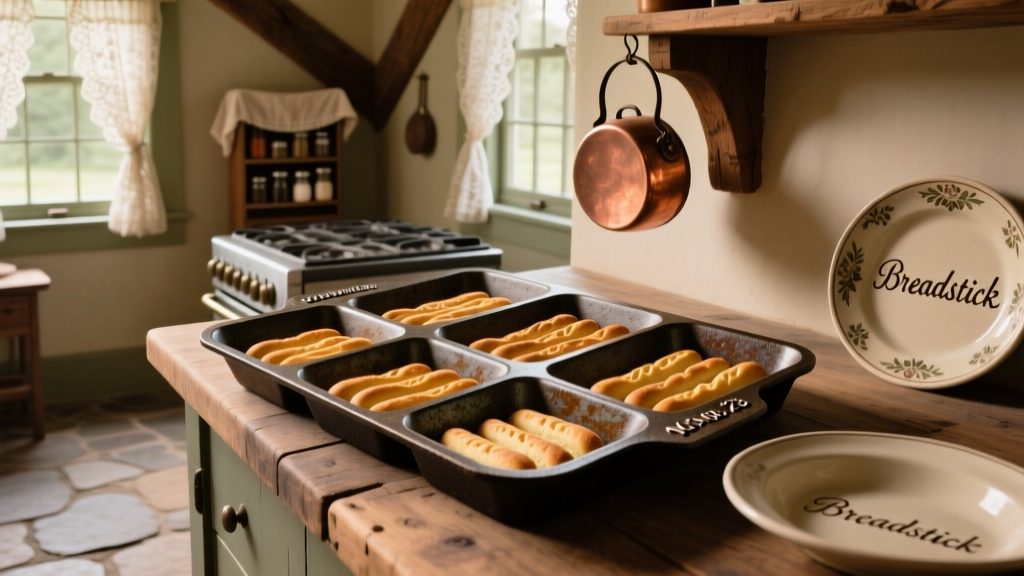
The Griswold No. 23 Divided Kitchen Pan: A Collector’s Guide to the Breadstick Pan

Bruce Metzger: The Scholar, the Restorer, and the Unseen Legacy in Antique Furniture Conservation
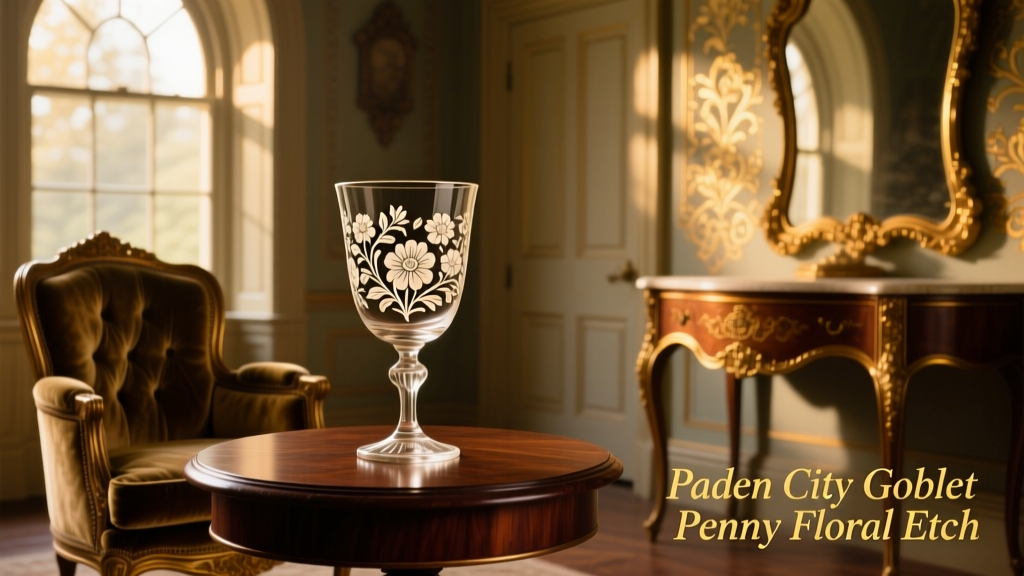
The Paden City Goblet: Decoding the Penny Floral Etch High-Footed 10 oz Crystal Stemware
Navy Blue and White Multicolored Patchwork Quilts: Authenticity, Provenance, and Restoration Guidance for a 68 × 79½-Inch Antique Textile
The Shelley Butter Dish: A Study in English Bone China Craftsmanship, Design Evolution, and Collectibility

Fostoria Holly Goblet Water (10 oz): History, Identification, and Restoration Guidance for Collectors
Old Fabrics: Identification, Preservation, and Ethical Restoration in Antique Furniture
Single-Owner Americana Collection Headlining Jan 12–13 Sale: A Curated Legacy of Early American Craftsmanship
Silver English Box: Heart-Shaped Sheffield Hallmarked Piece, Circa 1894 — A Technical & Historical Appraisal