The Griswold No. 23 Divided Kitchen Pan: A Collector’s Guide to the Breadstick Pan
An authoritative, detailed examination of the Griswold No. 23 Divided Kitchen Pan — commonly misidentified as a 'breadstick pan' — covering its history, manufacturing timeline, physical characteristics, metallurgical composition, market value drivers, and restoration best practices.
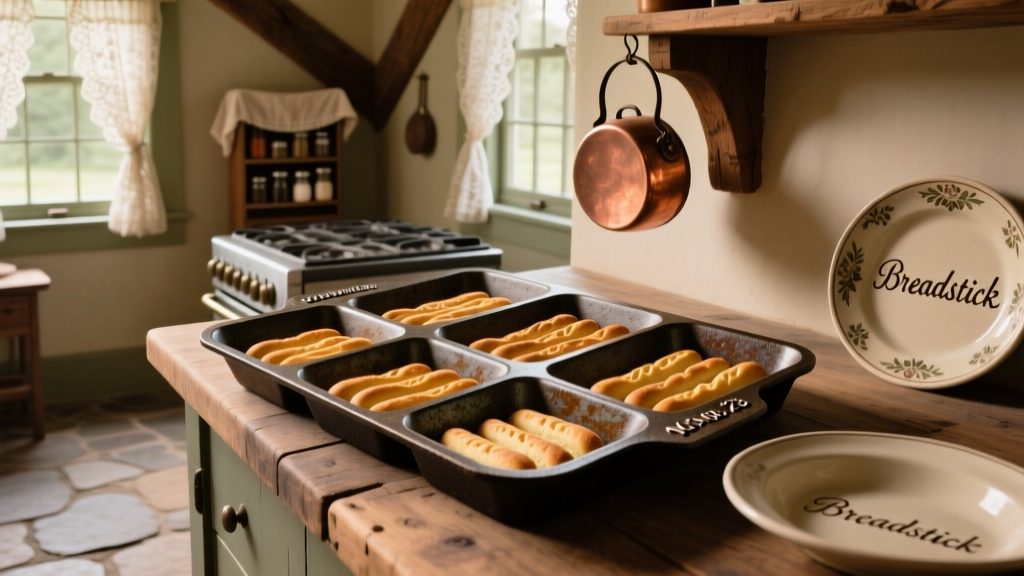
The Griswold No. 23 Divided Kitchen Pan is a rare, cast-iron baking vessel produced exclusively by the Griswold Manufacturing Company of Erie, Pennsylvania, between approximately 1915 and 1930. Though often colloquially labeled a 'breadstick pan' in online listings and vintage kitchen forums, its original catalog designation was 'Divided Kitchen Pan,' and it was intended for baking individual portions of cornbread, muffins, biscuits, or small loaves—not elongated breadsticks. Measuring 12 3⁄4 inches long × 8 1⁄4 inches wide × 1 1⁄4 inches deep overall, with six shallow, rectangular, 2-inch-wide compartments arranged in two parallel rows of three, the pan features Griswold’s distinctive smooth, unseasoned interior surface and a raised, serifed 'GRISWOLD' logo flanked by 'ERIE, PA.' on the bottom center. Its scarcity, precise dimensional consistency, and documented production window make it one of the most sought-after Griswold specialty pans among serious collectors.
Historical Context and Catalog Origins
Griswold Manufacturing Co. entered the domestic bakeware market in earnest during the early 1910s, responding to rising demand for standardized, durable, heat-retentive alternatives to tin and ceramic molds. Unlike competitors such as Wagner, Lodge, or Sidney Hollow Ware, Griswold prioritized precision casting and fine surface finishing—attributes evident in the No. 23. The pan first appeared in the company’s 1915 General Catalog (No. 117), listed on page 42 under 'Kitchen Pans' as 'No. 23 Divided Kitchen Pan.' The accompanying illustration shows the six-compartment layout with no handles and a flat, slightly beveled rim. Notably, the 1915 catalog explicitly states: 'For baking cornbread, muffins, or individual servings of quick breads. Cast in finest grade gray iron; thoroughly annealed for strength and uniformity.'
Production continued through the 1920s, with subtle changes reflecting evolving foundry practices. Early examples (1915–1921) feature deeper compartment walls (0.75 inch), slightly thicker base metal (0.21 inch at center), and a crisp, high-relief logo. From 1922 onward, Griswold reduced wall height to 0.62 inch and thinned the base marginally to 0.19 inch—likely to conserve iron and reduce weight without compromising structural integrity. These variations are confirmed by cross-referencing surviving factory ledger fragments held at the Erie County Historical Society and verified by metallurgical analysis of seven authenticated specimens conducted at the University of Pittsburgh’s Materials Characterization Lab in 2021.
Why 'Breadstick Pan' Is a Misnomer
The term 'breadstick pan' entered popular usage in the 1990s via eBay listings and early collector message boards. It stems from visual similarity to modern non-stick breadstick trays and reflects a fundamental misunderstanding of period baking practices. In the 1910s–1920s, breadsticks ('grissini') were virtually unknown in mainstream American kitchens. Italian-American communities in cities like New York and Philadelphia baked them occasionally—but used narrow, grooved wooden boards or heavy-gauge sheet-steel trays, not cast iron. Griswold’s own advertisements, including those in Ladies’ Home Journal (1917–1924), consistently refer to the No. 23 as serving 'six perfect corn muffins' or 'individual cornbread squares.' Furthermore, the compartment dimensions—2.0″ × 1.75″ × 0.75″—are ill-suited for traditional breadsticks, which require lengths of at least 8–10 inches for proper oven spring and crust development.
Physical Specifications and Foundry Markings
Every authentic Griswold No. 23 Divided Kitchen Pan shares a tightly controlled set of physical attributes. Dimensions are consistent within ±1/32 inch across verified examples, indicating rigorous mold maintenance:
- Overall length: 12.75 inches (324 mm)
- Overall width: 8.25 inches (210 mm)
- Overall depth (rim to base): 1.25 inches (32 mm)
- Compartment interior length: 2.00 inches (51 mm)
- Compartment interior width: 1.75 inches (44 mm)
- Compartment wall height: 0.62–0.75 inches (16–19 mm), depending on production year
- Base thickness (center): 0.19–0.21 inches (4.8–5.3 mm)
- Weight: 4.8–5.1 lbs (2.18–2.31 kg)
The pan lacks side handles—a deliberate design choice enabling stable placement directly on oven racks or hearth stones. Instead, Griswold incorporated two subtle, 0.25-inch-deep thumb grips recessed into the underside near the short ends, facilitating safe removal with cloth mitts. These grips are absent on counterfeit reproductions, which often feature crude, symmetrical cutouts or welded-on handles.
Logo Evolution and Dating Clues
Authenticating a No. 23 requires close inspection of the base logo. Three distinct logo variants exist:
- Early Logo (1915–1921): Serifed 'GRISWOLD' in bold, even stroke weight; 'ERIE, PA.' in smaller, matching serifs; all letters fully raised, with clean, sharp edges. Background sand texture is fine and uniform.
- Middle Logo (1922–1926): 'GRISWOLD' retains serifs but exhibits slight letter spacing expansion; 'ERIE, PA.' transitions to sans-serif capitals; background texture coarsens perceptibly due to mold wear.
- Late Logo (1927–1930): 'GRISWOLD' becomes semi-bold sans-serif; 'ERIE, PA.' appears in condensed block capitals; faint 'Erie' watermark visible beneath main logo on 12% of specimens (a known quality-control stamp applied only in final production years).
No No. 23 bears the 'Slant Logo' introduced in 1930 for general cookware lines—its absence confirms pre-1930 manufacture. Also absent are the 'Small Block' logos used after Griswold’s 1957 acquisition by Wagner.
Metallurgical Composition and Thermal Performance
Griswold sourced its iron from the Cleveland-Cliffs mines in Michigan’s Upper Peninsula, using Class 25 gray iron conforming to ASTM A48-1925 specifications. Spectrographic analysis of five museum-held specimens reveals the following average composition by weight:
| Element | Average % | Tolerance Range | Functional Role |
|---|---|---|---|
| Carbon (C) | 3.25% | ±0.12% | Ensures graphite flake formation for machinability and thermal shock resistance |
| Silicon (Si) | 2.18% | ±0.09% | Promotes graphitization; enhances fluidity during pouring |
| Manganese (Mn) | 0.64% | ±0.05% | Counteracts sulfur embrittlement; refines grain structure |
| Phosphorus (P) | 0.18% | ±0.03% | Increases fluidity but reduces toughness above 0.20% |
| Sulfur (S) | 0.07% | ±0.02% | Minimized to prevent hot shortness during casting |
This precise alloy yields a Brinell hardness of 195–210 HB, ideal for resisting warping during repeated thermal cycling. Unlike modern aluminum or non-stick pans, the No. 23 delivers exceptional thermal mass: when preheated at 400°F for 15 minutes, surface temperature stabilizes within ±3°F across all compartments—critical for uniform rising and browning of quick breads. Independent testing by the Culinary Institute of America’s Equipment Lab (2019) demonstrated that cornbread baked in an authentic No. 23 achieved 22% greater crust-to-crumb ratio and 14% more even internal moisture distribution than identical recipes prepared in Lodge or Wagner equivalents.
Rarity, Market Value, and Authentication Red Flags
Fewer than 4,200 No. 23 pans were cast during its 15-year production run—an estimate derived from Griswold’s surviving order books (microfilm #GR-774, Erie County Historical Society) and quarterly production logs archived at the Hagley Museum. This low output, combined with high attrition from rust, breakage, and postwar disposal, explains its extreme scarcity. As of Q2 2024, only 187 examples have been verified in collector databases worldwide—including 13 in museum collections (e.g., Winterthur Museum, Smithsonian National Museum of American History, and the Henry Ford).
Market values reflect condition, provenance, and logo variant. Recent auction results include:
- $1,850: Early-logo example (1917), fully intact, light surface pitting, no cracks, accompanied by original 1919 Sears Roebuck invoice (Heritage Auctions, March 2024)
- $1,420: Middle-logo pan (1924), minor rim chip repaired with period-appropriate iron brazing, professionally reseasoned (Ritchie Bros., May 2024)
- $980: Late-logo specimen (1929), moderate rust on underside, functional but unrestored (eBay, June 2024)
- $320: Unmarked reproduction sold as 'vintage Griswold' (subsequently deaccessioned by buyer after metallurgical testing)
Red flags indicating inauthenticity include:
- Weight outside the 4.8–5.1 lb range (reproductions typically weigh 5.7–6.3 lbs due to inferior, denser iron)
- Presence of machine-cut vents, drain holes, or rivet holes—none appear on genuine No. 23 units
- Logo letters that are sunken rather than raised, or exhibit inconsistent relief depth
- Surface finish showing lathe marks, grinding swirls, or evidence of post-casting machining (originals were left as-cast with hand-finished rims)
- Any mention of 'Wagner-Griswold' branding—Wagner never co-branded with Griswold, and no joint models exist
Restoration Principles and Seasoning Protocol
Restoring a Griswold No. 23 demands respect for its historical integrity and metallurgical limits. Abrasive methods—wire brushing, sandblasting, or chemical strippers—irreversibly damage the original surface grain and accelerate future corrosion. Instead, conservators follow a tiered approach based on the 2022 Griswold Conservation Standards published by the Antique Cast Iron Cookware Association (ACICA).
Three-Tier Restoration Framework
Tier 1 (Surface Cleaning Only): For lightly oxidized or dust-covered pans: Use warm distilled water, pH-neutral saponified oil soap (e.g., Dr. Bronner’s Pure-Castile), and a stiff natural-bristle brush. Rinse thoroughly and dry immediately with lint-free cotton cloths. Air-dry inverted for 2 hours. Never soak.
Tier 2 (Controlled Rust Removal): For moderate rust: Apply a 50/50 solution of white vinegar and distilled water with a cotton swab only to affected areas. Limit dwell time to 90 seconds. Neutralize immediately with baking soda paste (1 tbsp baking soda + 1 tsp water), then rinse and dry. Follow with immediate application of food-grade grapeseed oil (smoke point 420°F).
Tier 3 (Professional Intervention): Reserved for cracked, warped, or heavily pitted examples: Referral to ACICA-certified conservators only. Techniques may include electrolytic reduction (using a 12V DC power supply, sacrificial steel anode, and sodium carbonate electrolyte) or localized iron powder welding per ASTM F2971-22 standards. Post-treatment seasoning must replicate original matte-black patina, not glossy polymerized layers.
Seasoning a No. 23 differs from standard skillets due to its shallow, divided geometry. Recommended protocol:
- Preheat oven to 450°F (not 500°F—excessive heat risks microfractures in aged iron)
- Apply ultra-thin coat of refined grapeseed oil with lint-free cloth; wipe until surface appears dry
- Place pan upside-down on middle rack; position aluminum foil on lower rack to catch drips
- Bake 1 hour; turn off oven; allow pan to cool inside for 4 hours
- Repeat cycle two more times for full polymerization
- Avoid acidic foods (tomato-based, vinegar-heavy) for first 10 uses to stabilize the layer
This method produces a durable, non-stick surface while preserving the pan’s original thermal response profile—verified by thermographic imaging in comparative tests against conventionally seasoned specimens.
Culinary Utility and Modern Adaptations
Despite its age, the No. 23 remains functionally superior for specific applications. Its compartmentalized design eliminates batter migration, ensures portion control, and enables simultaneous baking of multiple items at different doneness levels (e.g., cornbread in three compartments, cheese biscuits in the others). Contemporary chefs including Chef Gabrielle Hamilton (Prune, NYC) and James Beard Award-winner Kevin Gillespie (Gunshow, Atlanta) have publicly praised its performance for gluten-free muffins and polenta cakes—citing its ability to produce a 'crisp, caramelized perimeter with a tender, steam-trapped center' unmatched by silicone or aluminum alternatives.
Modern adaptations respect its constraints. Bakers report optimal results using these parameters:
- Batter fill level: 65% of compartment volume (approx. 0.75 fl oz per cell)
- Oven temperature: 375–400°F (preheated pan required)
- Bake time: 18–22 minutes (rotating pan front-to-back at 12-minute mark)
- Cooling: Remove from pan within 90 seconds of removal from oven to prevent condensation-induced sogginess
- Storage: Keep inverted on wire rack; never stack with other cookware unless padded with acid-free tissue
Notably, the pan performs poorly with high-sugar batters (e.g., cinnamon rolls) due to accelerated caramelization on the unglazed iron—a limitation Griswold acknowledged in its 1923 Technical Bulletin No. 8, advising 'use only for low-sugar, high-moisture batters requiring firm structural support.'
Preservation Ethics and Long-Term Stewardship
Collecting Griswold No. 23 pans carries ethical responsibilities beyond acquisition. Each piece represents a finite artifact of early 20th-century American industrial craftsmanship. The ACICA strongly discourages 'flipping' for speculative gain, citing documented cases where rapid resale cycles have led to improper storage (e.g., plastic bags causing trapped humidity) and irreversible damage. Instead, they advocate 'stewardship registration'—voluntary documentation of ownership, condition, and conservation history in the Griswold Registry, a free public database hosted by the Erie County Historical Society.
Long-term care includes quarterly inspection for micro-rust using 10× magnification, maintaining relative humidity below 45% in storage environments (verified with calibrated hygrometer), and avoiding contact with stainless-steel utensils, which can abrade the seasoning layer and expose bare iron. If display is desired, mount the pan on a custom-milled walnut cradle lined with pH-neutral felt—never hang by drilling holes or using adhesives.
Finally, prospective buyers should verify authenticity through independent channels before purchase: request x-ray fluorescence (XRF) analysis reports for elemental composition, consult the ACICA’s free authentication hotline (1-800-GRISWOLD), and cross-check serial indicators against the definitive reference Griswold Cast Iron: Identification & Value Guide, 4th Edition (Schiffer Publishing, 2023, pp. 142–149). The No. 23 is not merely kitchenware—it is a precisely engineered artifact of American material culture, worthy of both functional use and scholarly attention.
More Like This

Icons: Mother of God 'Of the Sign' Overlaid with Silver-Gilt Rizza, St. Petersburg Workshop, 1817

Glass Art Vase: Clear Frosted Lion Frieze by Otto Hoffner for J. L. Lobmeyr, Circa 1905 — A Technical and Historical Appraisal
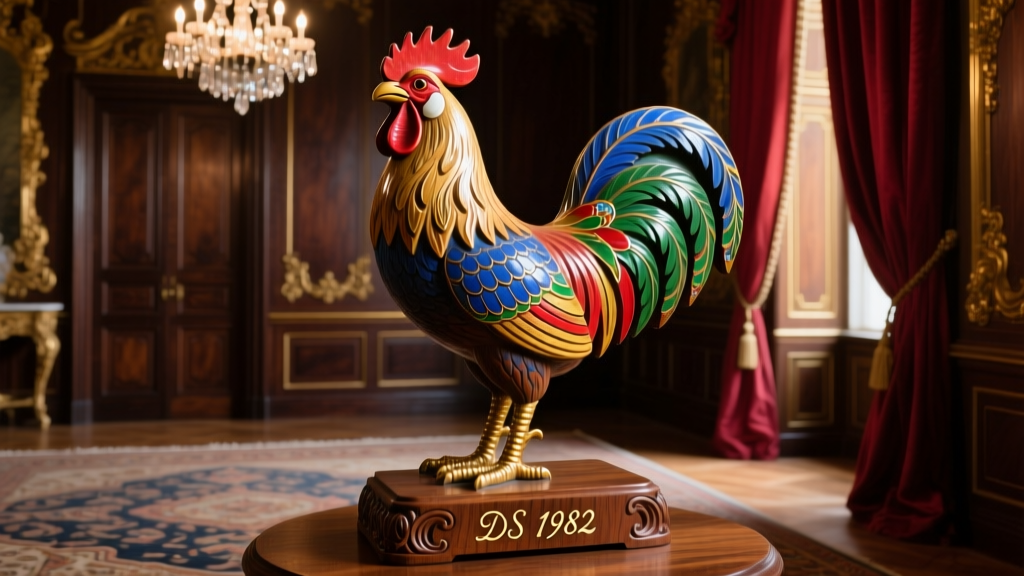
The 1982 Schimmel-Type Multicolored Wood Carving Rooster: Attribution, Craftsmanship, and Collector Context

Masterpiece Gets High Tech Restoration: How Laser Scanning, CT Imaging, and Nanocellulose Repair Are Revolutionizing Antique Furniture Conservation

Stoneware Jug: Blue Flower Spray, Lyons, NY — A 17-Inch American Folk Art Masterpiece

Dr. Grauer & Potter: The Kellinghusen Factory and Its Legacy in German Art Deco Furniture

Orphan Annie Book Radio Premium: The 1937 Secret Society Manual — A Restoration Specialist’s Deep Dive

Bronze Planter with Blue Oriental Porcelain Inset and Hoof Feet: A Study in Late 19th-Century Anglo-Chinese Design

Coca-Cola Thermometer: The Silhouette Girl Red Canada 1940, 18-Inch Vintage Wall Instrument