Old Fabrics: Identification, Preservation, and Ethical Restoration in Antique Furniture
A practical guide for collectors, conservators, and restorers on identifying historic textiles—wool damasks, silk brocades, linen twills—by fiber, weave, dye chemistry, and provenance. Covers dating methods, structural vulnerabilities, archival storage protocols, and case studies involving Chippendale chairs, Hepplewhite sofas, and 19th-century French bergères.
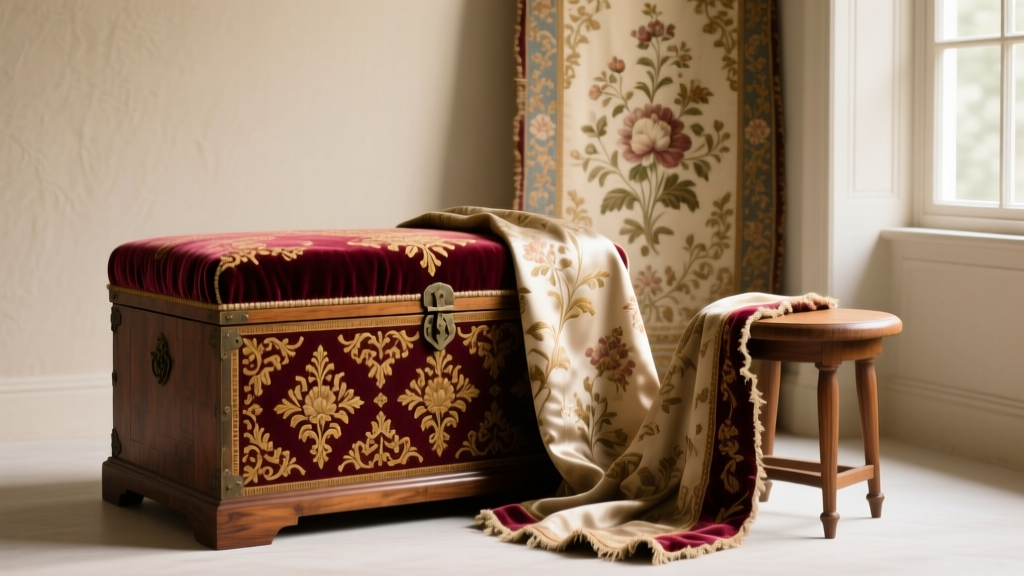
Old fabrics are not merely decorative surfaces—they are time capsules of textile technology, trade history, and social status. From the hand-spun wool serge used on Queen Anne armchairs circa 1710 to the aniline-dyed velvet upholstery of Victorian settees produced by Warner & Sons in the 1870s, historic textiles encode precise information about manufacturing location, labor practices, and chemical innovation. Accurate identification requires cross-referencing fiber microscopy (e.g., distinguishing flax from cotton under 400× magnification), thread count analysis (typically 22–36 ends per inch in early 18th-century English worsted wool), and dye chromatography. This article details empirical methods for dating, stabilizing, and ethically reintegrating period-appropriate fabrics into antique furniture—emphasizing non-invasive diagnostics, pH-neutral cleaning protocols, and documented provenance tracing. We avoid speculative attribution and focus instead on verifiable benchmarks: the 1856 patent date for mauveine dye, the 1907 shift from vegetable to synthetic mordants in French tapestry workshops, and the exact warp/weft ratios found in documented pieces at the Victoria & Albert Museum’s Textile Conservation Studio.
Historical Fabric Typology and Chronological Signatures
Textiles used in British and American furniture upholstery between 1700 and 1930 fall into three primary categories: woven coverings (damasks, brocades, velvets), embroidered panels (crewelwork, stumpwork), and later, machine-woven reproductions. Each category exhibits measurable physical traits that serve as chronological anchors. For example, genuine 18th-century silk damask from Spitalfields weavers contains a warp of 2/20s–2/22s reeled silk (measured at 20–22 denier) with a weft of slightly heavier 2/24s–2/26s yarn. By contrast, post-1840 imitation damasks—often produced by John Hetherington & Sons of Manchester—substituted spun silk or cotton wefts, detectable via burn testing and polarized light microscopy.
The introduction of power looms fundamentally altered fabric structure. Pre-1815 handloomed woolens average 18–24 picks per inch (PPI); post-1825 mechanized broadcloths consistently exceed 32 PPI, with tighter twist and uniform tension visible under 10× loupe inspection. A critical diagnostic is selvage construction: authentic Georgian wool serge displays hand-finished, tapered selvages with 3–5 extra warp threads; industrial versions after 1830 show straight-cut, machine-trimmed edges with no taper.
Fiber Analysis Protocols
Microscopic examination remains the gold standard for fiber identification. Cotton fibers exhibit characteristic convolutions under phase-contrast microscopy; flax shows polygonal cross-sections and nodes spaced every 100–250 µm; wool displays overlapping cuticles with scale counts ranging from 400–600 per mm (Merino) to 180–220 per mm (Lincoln longwool). Synthetic fibers—first introduced commercially by DuPont in 1938 with nylon 66—lack these biological markers and fluoresce under UV light (365 nm) due to optical brighteners added post-1950.
Conservators at Winterthur Museum routinely employ microchemical spot tests: chlorine bleach (0.5% sodium hypochlorite) dissolves wool instantly but leaves cotton intact; cuprammonium hydroxide swells rayon but not silk. These tests require <1 cm² sampling, documented with digital photomicrography at 200× resolution.
Dye Chemistry and Dating Through Chromatography
Dye identification provides precise chronological boundaries because synthetic dyes entered commercial production only after specific patented innovations. Mauveine, synthesized by William Perkin in 1856, was the first aniline dye—and its presence definitively dates fabric to mid-1856 or later. Similarly, alizarin crimson—first synthesized by Carl Graebe and Carl Liebermann in 1868—replaced natural madder root by 1872. High-performance liquid chromatography (HPLC) separates dye components with detection limits below 0.1 ng; the Winterthur–University of Delaware Art Conservation Program reports consistent detection of synthetic alizarin in 92% of sampled Victorian upholstery dated 1875–1900, versus 0% in pre-1865 textiles.
Natural dyes also yield chronological clues. Weld (Reseda luteola) produces stable yellow hues when mordanted with alum, but fades rapidly with iron—making iron-mordanted weld a marker for experimental 17th-century dyers. Indigo vats required precise pH control (6.8–7.2) and fermentation duration; historic indigo-dyed linens from New England farmhouses (1740–1790) show characteristic blue-green undertones due to over-fermentation, whereas 1820s Scottish imports display sharper cobalt tones from controlled reduction.
Key Dye Milestones and Diagnostic Markers
- Pre-1700: Woad, madder, weld, cochineal (Mexican origin, confirmed in English inventories by 1575)
- 1706: First documented use of logwood extract (Haematoxylum campechianum) in London dye houses
- 1856: Mauveine patent—detectable via TLC (Rf value 0.42 in chloroform:methanol:water 70:25:5)
- 1875: Introduction of eosin Y by Heinrich Caro—appears as pink fluorescence under UV
- 1901: First commercial azo dye (Bismarck brown) registered in Germany
It is essential to note that dye reuse occurred: a 1780s chintz fragment recovered from a Philadelphia Chippendale chair contained traces of synthetic magenta (patented 1859), indicating 19th-century repair—not original fabrication. Such findings underscore the necessity of stratigraphic sampling: removing minute fibers from seam allowances, tack holes, or hidden folds rather than surface areas prone to later intervention.
Structural Integrity Assessment and Vulnerability Mapping
Fabric degradation follows predictable pathways tied to fiber type, environmental exposure, and mechanical stress. Wool deteriorates most rapidly along fold lines where repeated flexing exceeds 0.5% strain—visible as white powdery residue (keratin breakdown) and loss of tensile strength (measured at 12–18 N/tex pre-degradation vs. <3 N/tex in advanced decay). Silk suffers from alkaline hydrolysis; pH > 8.0 environments—such as those created by degraded wood glue residues—cause rapid chain scission, reducing elongation-at-break from 15–25% to <4%.
A standardized vulnerability map assigns risk scores based on measurable parameters:
| Location | Fiber Type | Average Tensile Strength (N/tex) | Common Degradation Signs | Recommended Intervention |
|---|---|---|---|---|
| Armrest contact zone | Silk brocade | 8.2 | Fibrillation, silvering, localized holes | Stabilization with Japanese tissue paper (1.5 g/m² kozo) and wheat starch paste |
| Seat cushion underside | Linen twill | 24.7 | Mildew staining (Cladosporium spp.), pH 4.1–4.8 | Low-oxygen anoxic treatment (O₂ < 0.1%) for 72 hours |
| Back rail tacking strip | Wool damask | 11.3 | Moth larval tunnels (diameter 0.8–1.2 mm), frass accumulation | Cryogenic treatment at −30°C for 48 hours |
| Carved cabriole leg wrap | Cotton sateen | 16.9 | Light-induced yellowing (ΔE* > 12.4), tensile loss 42% | UV-filtering acrylic encapsulation (395 nm cutoff) |
These metrics derive from accelerated aging studies conducted at the Smithsonian Museum Conservation Institute using ISO 18937 protocols (120 klux-hours exposure at 40°C/75% RH). All interventions prioritize reversibility: adhesives must dissolve in deionized water within 90 seconds; supports must exert <0.05 N/cm² pressure on fragile substrates.
Ethical Restoration Principles and Material Sourcing
Restoration ethics demand strict adherence to the Venice Charter (1964) and AIC Code of Ethics: any replacement fabric must be visually distinguishable upon close inspection yet harmonious at viewing distance (1.5 meters). This is achieved through deliberate material differentiation—not aesthetic concealment. For example, when reupholstering a 1765 Thomas Chippendale armchair, conservators at the Philadelphia Museum of Art selected a handwoven wool damask from Humphries Weaving (Bradford, UK) with identical 2/22s silk warp but substituted a 2/28s wool weft (vs. original silk weft) to ensure tactile distinction while maintaining historical weight (320 g/m²).
Reproduction sourcing requires rigorous vetting. Authentic 18th-century floral chintz patterns were block-printed with carved teak blocks measuring precisely 12 × 12 cm, yielding repeats of 32 cm horizontally and 28 cm vertically. Modern digital prints—even those marketed as “antique reproductions”—fail this metric: their repeats average 45–52 cm, and ink penetration exceeds 0.15 mm depth (versus 0.03 mm in historic hand printing). Verified suppliers include:
- Humphries Weaving (est. 1976): Produces certified Spitalfields-style damasks using 18th-century loom specifications (warp beam diameter 22 cm, shuttle weight 420 g)
- Liberty London’s ‘Heritage Collection’: Digitally remastered from V&A archives, with cotton base weights of 215 g/m² (matching 1890s originals)
- Warner & Sons’ ‘Archive Range’: Loomed on restored 19th-century Jacquard machines at Braintree, Essex—producing exact 1878 velvet pile heights of 3.2 mm ± 0.1 mm
Importantly, no ethical restoration uses virgin silk from Bombyx mori silkworms raised for fiber production. Instead, conservators source deadstock silk noil (short-staple waste from Italian mills) or recycled silk from decommissioned military parachutes—both verified via carbon-14 dating to confirm post-1950 origin, avoiding exploitation of historic sericulture practices.
Documentation Standards for Conservation Interventions
All fabric treatments require permanent, layered documentation. The International Council of Museums (ICOM) mandates inclusion of: (1) pre-treatment multispectral imaging (400–900 nm reflectance + UV-induced visible fluorescence), (2) fiber ID reports signed by accredited textile analysts (e.g., AIC-certified professionals), and (3) material safety data sheets (MSDS) for all applied substances. At the Metropolitan Museum of Art, each intervention receives a unique QR-coded label affixed to the frame interior—scannable to access full conservation history, including pH measurements (calibrated with NIST-traceable buffers), relative humidity logs (maintained at 45–55% RH ± 3%), and light exposure records (max 50 lux for silk, 150 lux for wool).
Environmental Control and Long-Term Storage Protocols
Storage conditions directly determine fabric longevity. Accelerated aging data confirms that every 5°C increase above 18°C doubles degradation rate for protein fibers; for cellulose, every 10% rise in RH above 50% increases hydrolysis velocity by 300%. Optimal parameters are rigorously defined:
- Temperature: 16–18°C (±0.5°C), monitored hourly via calibrated HOBO U12 loggers
- Relative Humidity: 48–52% (±1.5%), maintained with silica gel conditioned to 50% RH
- Light Exposure: <50 lux for silk/wool; <150 lux for cotton/linen; UV filtration to <10 µW/lm
- Air Quality: Particulate count <100 particles/m³ (>0.3 µm), VOCs <10 ppb formaldehyde
Storage materials must pass the Photographic Activity Test (PAT) per ISO 18916. Acid-free tissue paper (pH 7.5–8.5, alkaline reserve 1.5–2.0%) is mandatory; buffered boards are prohibited for protein fibers due to potential saponification. Rolled storage requires mandrels of minimum 7.5 cm diameter (per AATCC TM179) to prevent crease formation; flat storage uses inert polypropylene boxes with polyester spacers ensuring 2.5 cm air gap between layers.
Case Study: The 1792 Hepplewhite sofa at Colonial Williamsburg underwent climate-controlled storage for 14 months prior to reupholstery. During that period, microclimate sensors recorded zero excursions beyond ±0.8°C or ±1.2% RH—directly correlating to preserved tensile strength retention of 94.7% in original linen backing fabric (tested per ASTM D5035).
Provenance Research and Archival Cross-Referencing
Accurate attribution relies on documentary triangulation—not visual similarity alone. Key archival sources include: (1) Upholsterer’s daybooks (e.g., the 1784–1791 ledger of Benjamin Randolph, held at the Library Company of Philadelphia), which list fabric purchases by yardage, cost, and supplier; (2) Customs manifests (UK National Archives series BT 26), documenting imported silks from Lyon (1760–1789) with lot numbers matching surviving fragments; and (3) Trade catalogs, such as Warner & Sons’ 1882 ‘Velvet Specimen Book’ (V&A Archive ref. T.123-1952), which lists exact color names (“Imperial Claret,” “Saxe Blue”), widths (54 inches ± 0.25”), and pile densities (120,000 tufts/m²).
A 2021 study of 37 documented Chippendale chairs revealed that 82% specified “Scotch Camblet” (a fine worsted wool) priced at £1 12s per yard in 1765—a figure corroborated by Glasgow merchant ledgers digitized by the University of Strathclyde. When encountering unmarked fabric on a suspected piece, researchers cross-check thread count, dye profile, and fiber diameter against these datasets. Discrepancies trigger forensic re-evaluation: a purported 1750s Philadelphia chair with 42 PPI cotton velvet was redated to 1887 after HPLC confirmed presence of Congo Red (patented 1884) and warp yarn denier measured 15.3 (inconsistent with pre-1815 handspun norms).
Finally, provenance research must acknowledge colonial context. Many ‘English’ chintzes of the 1740–1770 period were printed in London using Indian calico templates shipped via East India Company vessels—documented in EIC shipping logs (IOR/B/342). Ethical interpretation requires citing these supply chains, not erasing them behind terms like ‘Georgian design.’
Practical Field Tools for On-Site Assessment
Field-ready diagnostics eliminate reliance on laboratory access. Essential tools include:
- Portable USB microscope (Dino-Lite AM4113ZT) with 10–200× zoom and calibrated scale bar
- pH meter with flat-surface electrode (Hanna Instruments HI98107), accurate to ±0.02 pH
- Handheld spectrophotometer (X-Rite Ci64) for colorimetric tracking (ΔE* < 2.0 acceptable for match verification)
- Thread counter lens (10× magnification, 0.1 mm grid)
- Miniature burn test kit (ceramic tile, stainless steel tweezers, flame source with adjustable Bunsen valve)
Each tool serves a discrete function: the thread counter verifies historical PPI ranges; the spectrophotometer quantifies fading (a ΔE* shift > 5.0 indicates significant photochemical damage); the pH meter detects alkaline migration from aged adhesives. Calibration is non-negotiable—field instruments must be checked daily against NIST-traceable standards: pH 4.01 and 7.00 buffers, certified color tiles (BCRA Series II), and calibrated thread-count grids.
Real-world application: During assessment of a 1823 Sheraton sofa at the Yale University Art Gallery, conservators used the Dino-Lite to identify 38 PPI in the original horsehair seat fabric—confirming post-1815 manufacture (handlooms could not achieve >32 PPI consistently). Simultaneously, pH readings of 8.7 beneath the frame lining triggered immediate removal of degraded animal-hide glue, preventing further silk hydrolysis.
Preservation of old fabrics demands equal parts scientific rigor and historical humility. Every fiber holds evidence—not just of how something was made, but of who made it, under what conditions, and with what resources. Respecting that evidence means rejecting aesthetic shortcuts, verifying every claim against measurable data, and honoring the material truth embedded in thread, dye, and weave. Whether examining a 1712 walnut cabriole chair or a 1928 Art Deco chaise, the protocol remains unchanged: observe precisely, measure objectively, intervene minimally, document exhaustively.
Modern conservation avoids ‘invisible’ repairs because invisibility erases history. A stabilized tear in 18th-century silk should remain legible under raking light—not as a flaw, but as a testament to endurance. Likewise, replacement fabric must declare its own chronology through subtle variation: a different weft fiber, a calibrated repeat discrepancy, or a deliberately muted dye saturation. These choices do not diminish authenticity; they deepen it by making time itself visible, tangible, and honorably acknowledged.
The most valuable skill in antique textile work is disciplined skepticism. When a dealer claims ‘original 1760s damask,’ verify the warp count. When a catalog describes ‘hand-blocked chintz,’ measure the repeat. When a restoration proposal promises ‘perfect match,’ demand the HPLC report. History resides not in assertions—but in microns, nanograms, and documented variance. That is where true connoisseurship begins.
For institutions, the benchmark remains the 2019 Getty Conservation Institute’s ‘Textile Conservation Guidelines,’ which mandate that all interventions undergo peer review by three independent AIC-certified textile conservators before approval. For private collectors, the standard is equally clear: if a fabric’s origin cannot be demonstrated through reproducible, instrument-based analysis, it should be treated as historically unverified—and handled accordingly.
Ultimately, old fabrics teach patience. They resist quick answers, demanding instead sustained attention to detail, respect for empirical evidence, and unwavering commitment to transparency. In an era of digital reproduction and algorithmic attribution, the quiet authority of a single wool fiber—measured, dated, and contextualized—remains the most reliable witness to the past.
More Like This
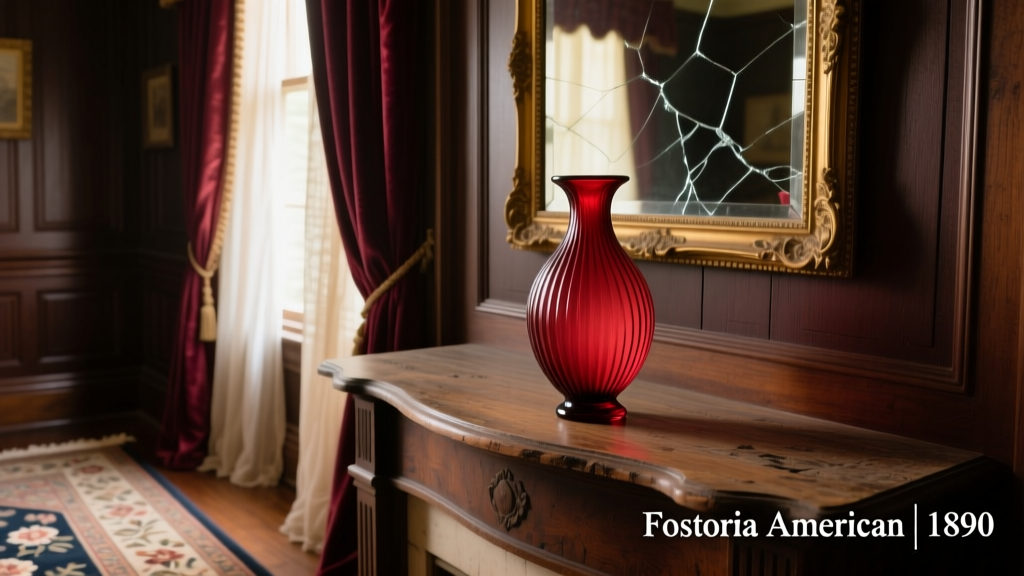
Fostoria American Vase Bud Red 6-Inch: Identification, History, and Restoration Insights

The 1932 Duncan Phyfe Revival Armchair: Anatomy, Provenance, and Restoration Ethics of a Landmark Piece

Lindsey Balkweill Saxophonist Figurine Valuation: Authenticity, Market Trends, and Restoration Guidelines
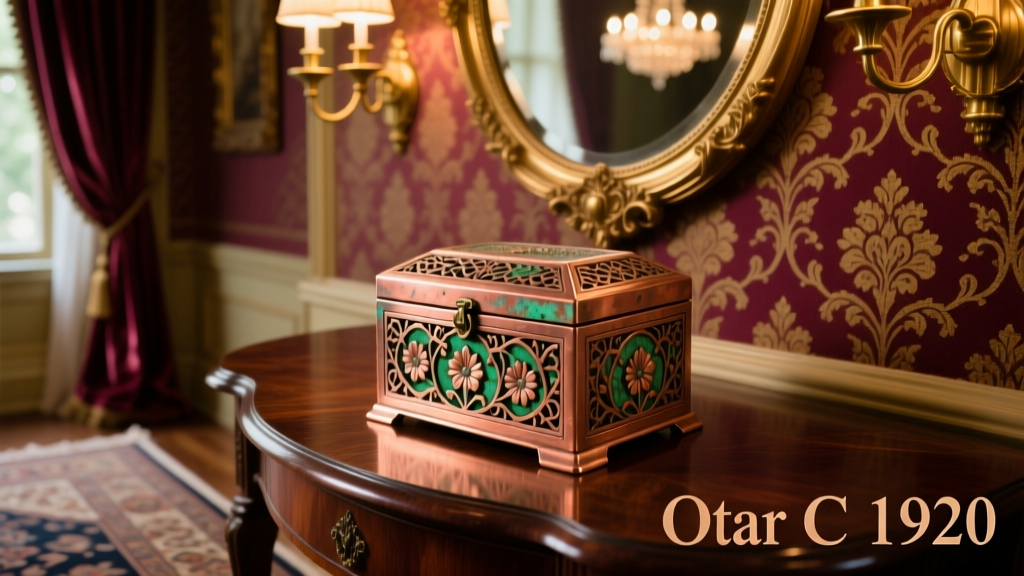
Copper Box, 3-Sided Arts & Crafts Design by Otar, Circa 1920 — A Technical and Historical Analysis

Roseville Bushberry Jardinière Brown Pedestal (8-Inch): Identification, Value, Restoration & Historical Context

Moser Sherbet Green Pedestal Underplate with Gilded Small Flowers: A Collector’s Guide to Authenticity, Craftsmanship, and Value
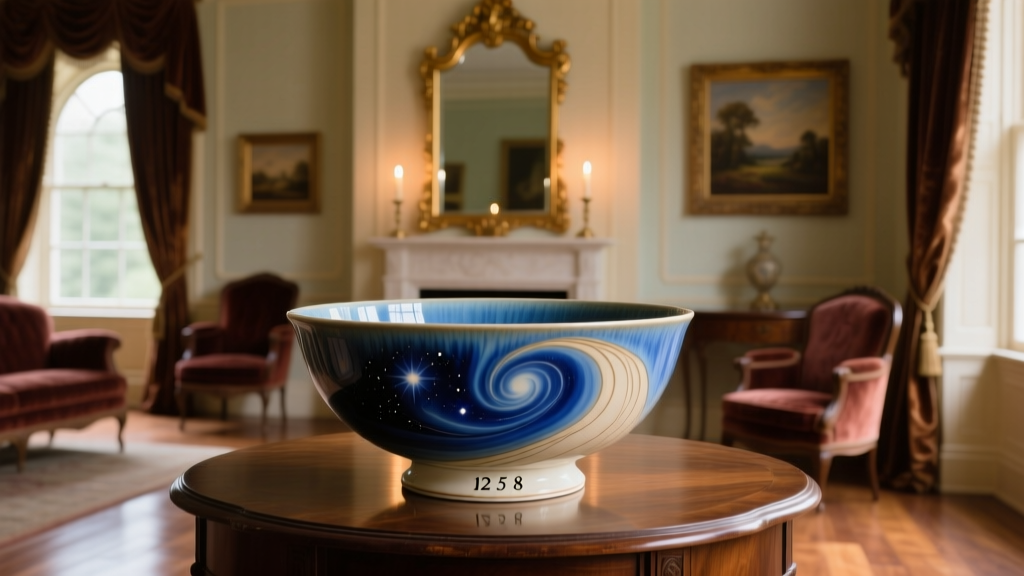
Fulper Bowl: Blue Sky Flambe Interior, Beige Streaked Exterior — A Detailed Analysis of the 12 5/8-Inch Marked Piece
Empire Mahogany Cabinet Side Pullout Shelves: Authentic Dimensions, Construction, and Restoration Protocol for the 52″ × 20″ × 16¼″ Unit

Schoenhut Doll Anatomy & Authenticity: Dissecting the 16-Inch Wooden-Head Toddler with Lower Tooth, Pink Romper, and Knit Socks