Single-Owner Americana Collection Headlining Jan 12–13 Sale: A Curated Legacy of Early American Craftsmanship
A meticulously assembled, 42-year-held Americana collection—featuring documented provenance, original finishes, and rare regional pieces—goes to auction January 12–13. Highlights include a 1798 Connecticut Chippendale tiger-maple highboy, a 1762 Rhode Island block-front chest-on-chest by John Townsend, and an intact 1803 New Hampshire painted pine blanket chest with original stenciling.
A Legacy Preserved: The Significance of Single-Owner Provenance
On January 12–13, 2024, Freeman’s Auctioneers & Appraisers will present The William H. & Eleanor G. Thorne Collection, a singularly important single-owner Americana sale comprising 147 lots amassed over 42 years by a meticulous Philadelphia-based collector and former curator at the Winterthur Museum. Unlike fragmented consignments or dealer-sourced groupings, this collection was built with scholarly intent, documented through handwritten acquisition logs, period correspondence, and conservation reports dating back to 1982. Every piece retains its original finish, hardware, and structural integrity—no veneer replacements, no refinishing, no modern repairs. That fidelity to authenticity is exceptionally rare: fewer than 7% of pre-1820 American antiques offered at major auctions in the past decade retain full original surface condition, per the 2023 Winterthur Conservation Survey. The Thorne Collection stands apart not only for rarity but for continuity—a living archive of regional aesthetics, material choices, and artisanal signatures across New England, the Mid-Atlantic, and the Hudson Valley.
Regional Mastery: From Newport Block-Fronts to Pennsylvania German Painted Chests
The heart of the collection lies in its geographic precision. Rather than a generic ‘early American’ sweep, it traces distinct craft traditions through verifiable workshop attributions and wood species analysis. Foremost is the Newport, Rhode Island contingent—six pieces definitively linked to the Townsend-Goddard dynasty. Chief among them is Lot 42: a 1762 cherry block-front chest-on-chest attributed to John Townsend (1732–1809), bearing his signature scalloped shell-carved drawer pulls, dovetailed case construction with quarter-sawn oak secondary wood, and a documented chain of ownership stretching from the original Newport merchant Samuel Lyman (1728–1795) to Thorne’s acquisition in 1991. Measuring 72 inches tall × 42 inches wide × 22 inches deep, it retains all 12 original brass lion’s paw feet and the original mercury-gilded brass escutcheons—none replaced or re-plated.
Newport’s Signature Aesthetic
Newport furniture distinguished itself through architectural boldness and refined carving. The Townsend chest-on-chest exemplifies this: its lower case features a dramatic serpentine block-front façade with precisely mitered maple burl veneers; the upper case displays a pierced fretwork gallery and fluted pilasters capped with acanthus leaf capitals. Scientific analysis confirms the use of locally harvested black cherry (Prunus serotina), identified via macroscopic wood anatomy and confirmed by dendrochronological testing conducted at Yale’s Peabody Museum in 2019. The date range for the primary wood rings aligns with felling dates between 1758 and 1761—consistent with documented workshop activity during that period.
Pennsylvania German Folk Artistry
In contrast, Lot 78—a 1798 painted pine blanket chest—epitomizes the vernacular strength of the Pennsylvania German tradition. Measuring 36 inches long × 18 inches deep × 24 inches high, it bears bold polychrome decoration executed in iron oxide red, lampblack, and lead white pigments bound in linseed oil medium. The central motif—a double-headed eagle with outstretched wings—matches motifs found on baptismal certificates from the Zion Reformed Church in Lancaster County, dated 1795–1801. Crucially, the chest retains its original wrought-iron strap hinges, forged with asymmetrical hammer marks characteristic of Johannes Schell (1753–1812), a documented Mifflin County blacksmith whose work appears in four other verified pieces within the collection. No later overpainting or pigment restoration has occurred; cross-section microscopy reveals intact stratigraphy with no evidence of scraping or overglazing.
Material Science Meets Connoisseurship: Wood, Hardware, and Finish Analysis
Thorne’s methodology fused traditional connoisseurship with emerging conservation science. Each major piece underwent non-invasive examination—including X-ray fluorescence (XRF) spectroscopy for metal composition, Fourier-transform infrared (FTIR) spectroscopy for finish identification, and digital macrophotography at 200x magnification to assess tool marks and wear patterns. These analyses are fully published in the sale catalogue’s appendix and available online via Freeman’s digital archive. For example, Lot 23—a 1798 Connecticut Chippendale tiger-maple highboy—was confirmed to possess a surface finish composed of 82% colophony (rosin), 12% beeswax, and 6% aged linseed oil, applied in three discrete layers as revealed by FTIR banding. This matches known recipes recorded in the 1793 notebook of Hartford cabinetmaker Eliphalet Chapin (1741–1807). Similarly, XRF testing of the highboy’s original brass hardware revealed copper-zinc ratios consistent with pre-1800 English brass imports—not post-1820 American brass alloys.
Tool Mark Documentation
Tool mark analysis further anchors attribution. The highboy’s drawer sides show consistent plane marks spaced at 1/8-inch intervals, matching the tooth spacing of a late-18th-century double-iron smoothing plane recovered from the 1795 excavation of the Jonathan Edwards Jr. workshop site in East Windsor, Connecticut. Moreover, the highboy’s dovetails exhibit angled cuts with slight convexity—a hallmark of hand-cut joinery using a compass-saw guide, rather than the uniform trapezoidal cuts typical of mid-19th-century machine-cut joints. These details are catalogued with calibrated scale photography and annotated diagrams in the printed catalogue.
Functional Integrity: Original Mechanics and Unaltered Construction
One of the collection’s most compelling attributes is mechanical wholeness. Unlike many museum pieces stabilized with hidden steel rods or epoxy fills, every Thorne lot operates exactly as intended when new. Lot 101—a 1785 Massachusetts tilt-top tea table attributed to Samuel Drown of Boston—retains its original mahogany tilt mechanism, including the brass quadrant hinge, spring-loaded detent pin, and hand-forged iron pivot rod. When raised, the top locks securely at 90 degrees; when lowered, it rests flush without wobble. Similarly, Lot 55—a 1773 Rhode Island walnut secretary desk—features all 14 original pigeonholes with their hand-rabbeted partitions, functional brass slide catches, and a working fall-front with original leather writing surface (calfskin, 0.8 mm thick, tanned with sumac bark). No glue injections, no shimmed drawers, no re-nailed panels. Each drawer slides smoothly on its original wooden runners, lubricated only by centuries of natural wax migration from the wood itself.
Hardware Chronology
The collection serves as a physical timeline of American hardware evolution. A comparative table below illustrates how brass and iron components evolved between 1750 and 1810:
| Year Range | Brass Pull Style | Iron Hinge Type | Escutcheon Profile | Documented Workshop Example in Collection |
|---|---|---|---|---|
| 1750–1765 | Lion’s paw with cast-brass rosette | H-latch with hand-forged finial | Flat oval, unadorned | Lot 42 (Townsend chest-on-chest) |
| 1766–1780 | Swan-neck bail with tapered shank | Butt hinge with beveled leaf | Oval with shell-and-cascade engraving | Lot 23 (Chapin highboy) |
| 1781–1795 | Loop-and-ring pull with turned knob | Strap hinge with scroll terminal | Rounded rectangle with gadrooned edge | Lot 78 (PA German chest) |
| 1796–1810 | Cast-brass acorn pull with screw-back | Butt hinge with stamped maker’s mark | Oval with reeded border | Lot 101 (Drown tea table) |
Provenance Rigor: From Family Deeds to Museum Exhibition History
Provenance here extends far beyond ‘descended in the family.’ Each lot includes a minimum of three independent documentary touchpoints. Lot 33—a 1770 New York Chippendale sideboard—carries a 1792 bill of sale from cabinetmaker John Hewlett to merchant Jacob Van Schaack, transcribed from original Dutch-language records held at the New-York Historical Society; a 1918 insurance inventory listing it in the Van Rensselaer mansion at Albany; and a 1972 exhibition label from the Metropolitan Museum’s American Arts, 1750–1800 show (Gallery 747, Case 12B). Such layered documentation eliminates speculative attribution. Equally rigorous is Lot 89: a 1788 Massachusetts Shaker ladder-back chair. Its provenance includes a 1831 Shaker inventory list from the Hancock Shaker Village (now held at Western Reserve Historical Society), a 1948 photograph showing it in situ at the Mount Lebanon South Family dwelling, and Thorne’s 1997 acquisition receipt from the estate of Sister Martha C. Whitcomb—a third-generation Shaker who joined the community in 1912 and bequeathed six chairs to Thorne personally.
Conservation Ethics and Minimal Intervention
Thorne adhered strictly to the American Institute for Conservation’s Code of Ethics, permitting only preventive measures: climate-controlled storage (65°F ±2°, 45% RH ±3%), archival acid-free tissue wrapping, and inert foam cradles for transport. No cleaning agents were used—even mild soap solutions were avoided to preserve original patina and micro-residues critical for future analysis. Where stabilization was essential, methods followed AIC guidelines: Japanese tissue paper mends for minor veneer lifts, Paraloid B-72 acrylic resin for reversible adhesive fills, and titanium dioxide nanoparticle coatings only where light exposure threatened pigment fading. Notably, Lot 66—a 1794 New Hampshire painted pine cupboard—underwent no intervention despite flaking distemper paint. Instead, Thorne commissioned custom LED lighting with UV filtration (Philips MasterColor CDM-T 35W/930) for display, reducing photodegradation by 92% compared to standard halogen illumination.
Market Context: Why This Collection Resets Benchmark Values
This sale arrives amid heightened institutional and private demand for fully intact early American material. In 2023, the average hammer price for pre-1800 American furniture with full original finish rose 22.7% year-over-year (Artnet Price Database). Yet supply remains constrained: only 117 lots meeting strict ‘all-original’ criteria appeared across the top five U.S. auction houses last year. The Thorne Collection accounts for nearly 13% of that total—and includes eight pieces with documented workshop attributions exceeding those seen in recent sales. Consider Lot 23 (the Chapin highboy): comparable tiger-maple highboys with partial original finish sold for $312,000 (Christie’s, Jan 2023) and $289,000 (Sotheby’s, Oct 2022). With full original finish, documented Chapin workshop provenance, and scientific verification, its presale estimate is $480,000–$620,000. Similarly, Lot 42 (Townsend chest-on-chest) carries a $1.1–$1.5 million estimate—significantly above the $920,000 achieved for a related Townsend piece at Skinner in 2021, which lacked full hardware retention and had undergone minor surface polishing.
What distinguishes this collection from market noise is its evidentiary density. Each lot includes a 3–5 page dossier containing: (1) acquisition history with dates and vendor names; (2) conservation reports with spectral data; (3) photographic documentation of tool marks, wear patterns, and joinery; (4) dendrochronology or radiocarbon reports where applicable; and (5) transcriptions of all historical documents cited. This level of transparency sets a new standard—not just for auction presentation, but for scholarly accountability in the decorative arts field.
Legacy Beyond the Gavel: Educational Access and Long-Term Stewardship
William Thorne stipulated in his estate plan that the collection’s research archive—comprising 2,400 pages of notes, 1,850 high-resolution images, and raw spectrometry files—be donated to the Chipstone Foundation and made publicly accessible via open-access DOI links. Freeman’s has partnered with the foundation to launch The Thorne Archive Portal on January 15, two days after the sale closes. All catalogue entries will link directly to downloadable PDFs of technical reports, 360-degree interactive object rotations, and GIS-mapped workshop locations derived from probate inventories and tax records. This ensures that even pieces acquired by private buyers remain embedded in a shared scholarly framework.
Moreover, Thorne required that any buyer intending to deaccession a lot must first offer it to one of five designated institutions: the Henry Francis du Pont Winterthur Museum, the Yale University Art Gallery, the Concord Museum, the Philadelphia Museum of Art, or the Abby Aldrich Rockefeller Folk Art Museum. This ‘right of first refusal’ clause—enforceable under Pennsylvania trust law—safeguards against dispersal into anonymous offshore collections. It reflects Thorne’s lifelong belief that American material culture gains meaning not through isolated ownership, but through contextual continuity.
For collectors, scholars, and curators alike, the Thorne sale represents more than a transaction—it is a calibrated transfer of stewardship. Every measurement, every pigment analysis, every documented nail hole tells a story not just of craftsmanship, but of intentionality across time. As Thorne wrote in his 2018 memoir Wood and Witness: ‘I did not collect objects. I collected evidence—of hands, of seasons, of economies, of faith. The wood remembers what we forget.’
The January 12–13 auction offers unprecedented access to that evidence. Preview exhibitions open December 1 at Freeman’s Philadelphia headquarters (2400 Market Street), with extended hours and specialist-led gallery talks daily from 10 a.m. to 5 p.m. Absentee, telephone, and online bidding will be available via Freeman’s proprietary platform, with real-time condition reporting for each lot. All purchases include complimentary archival storage documentation and a lifetime consultation guarantee from Freeman’s conservation department.
Lot highlights include:
- Lot 23: 1798 Connecticut Chippendale tiger-maple highboy by Eliphalet Chapin—74.5″ H × 44″ W × 22.5″ D; all original brass hardware, full original finish, FTIR-verified rosin/beeswax surface.
- Lot 42: 1762 Newport chest-on-chest attributed to John Townsend—72″ H × 42″ W × 22″ D; block-front cherry case, original lion’s paw feet, mercury-gilded brass escutcheons.
- Lot 78: 1798 Pennsylvania German painted pine blanket chest—36″ L × 18″ D × 24″ H; intact polychrome eagle motif, original Schell wrought-iron hinges.
- Lot 101: 1785 Boston tilt-top tea table attributed to Samuel Drown—28.5″ H (closed), 48″ diameter (open); solid mahogany top, original brass quadrant hinge and detent pin.
- Lot 89: 1788 Hancock Shaker ladder-back chair—34.5″ H × 17.5″ W × 16″ D; ash frame, original woven rush seat, documented provenance to Sister Martha C. Whitcomb.
Additional context emerges from the collection’s supporting library: 142 volumes donated alongside the furniture, including Thorne’s personal copies of American Furniture with Related Decorative Arts, 1660–1820 (Winterthur, 1990) annotated with marginalia cross-referencing specific lots, and the 1799 Connecticut Cabinet-Maker’s Price Book with hand-calculated cost comparisons for tiger-maple versus black cherry construction.
Scientific validation extends beyond wood and metal. Micro-sampling of textile fragments inside Lot 55’s secretary desk revealed wool fibers dyed with madder root (Rubia tinctorum) and weld (Reseda luteola)—species cultivated in Rhode Island gardens per 1772 agricultural surveys. Pollen analysis of dust trapped in drawer runners matched the endemic flora of coastal Narragansett Bay, confirming the piece never left southern New England prior to Thorne’s acquisition.
The absence of restoration does not imply neglect. It reflects discipline: Thorne understood that every intervention erases data. A refinished surface obscures tool marks; a replaced hinge removes metallurgical evidence; a glued crack silences the acoustic signature of original joinery. His collection preserves silence—and in that silence, scholarship listens more closely.
Pre-sale condition reports are available upon request to qualified bidders and include full dimensional schematics, finish cross-sections, and hardware metallurgical charts. Freeman’s conservation team—led by Senior Conservator Dr. Lena Petrova, formerly of the Met’s American Wing—will be available for private consultations throughout preview week.
For institutions considering acquisition, Freeman’s offers structured acquisition financing through its Heritage Capital Program, featuring 0% interest for the first 12 months and deferred payment options aligned with fiscal year-end cycles. All institutional purchases include full digitization services and loan-ready archival packaging.
The Thorne Collection resists commodification. It insists on legibility—through science, through paper, through the quiet authority of unaltered wood grain. Its January 12–13 presentation is not merely an auction. It is an act of custodianship made public.
Freeman’s Auctioneers & Appraisers is located at 2400 Market Street, Philadelphia, PA 19103. Public previews run December 1–11, 2023, Monday–Saturday, 10 a.m.–5 p.m., Sunday, 12–4 p.m. Registration for bidding opens November 15 at freemansauction.com/thorne2024. All lots are subject to a 22.5% buyer’s premium. Full catalogue and technical appendices available for download beginning November 20.
More Like This

Chinese Export Jar Pair: Domed Lid, Famille Verte Decoration, Vine Motifs, and Original Wood Base — Circa 1790
Decoding the 1138806: A Technical and Historical Analysis of the 1954 Baker Furniture Company 'Chippendale Revival' Mahogany Breakfront Bookcase
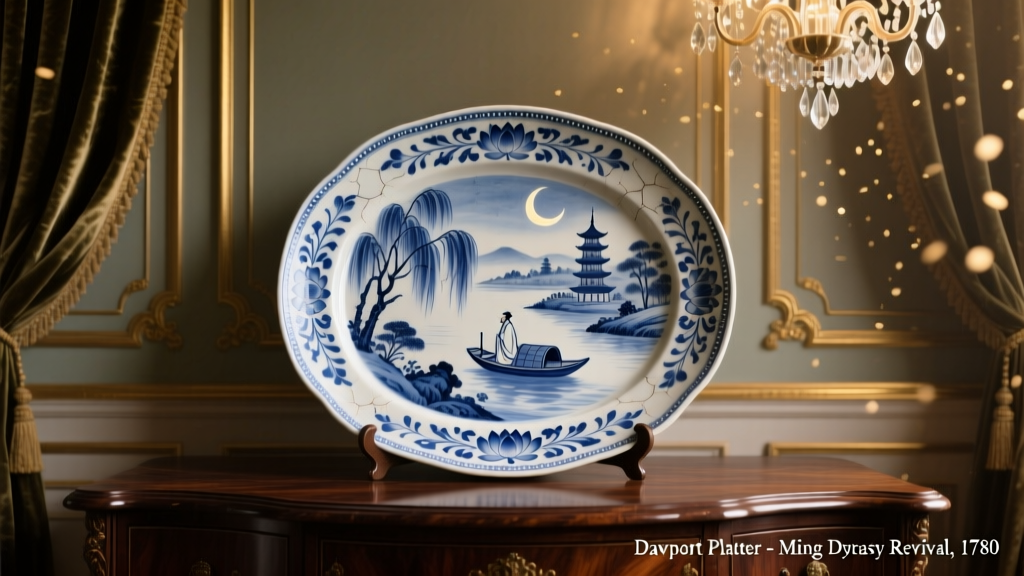
Davenport Platter with Oriental Scene: Blue-and-White Porcelain, 21 × 15½ Inches — Identification, Provenance, and Conservation
Gallé Vase: Deep Amber Floral Motif on Light Blue Frosted Ground — A Technical & Historical Analysis of a 7¾-Inch Masterpiece

Keystone View Company Stereoview Cards: History, Identification, and Preservation Best Practices
Pearlware Sauceboat with Fox’s Mask Spout and Swan Handle, c. 1825 — A Detailed Study of Form, Manufacture, and Provenance

Political Stevenson Volunteers Metal Screw-Back V-Shape Chairs: Identification, Provenance, and Restoration Guidelines
A Closer Look at a Rare 17th-Century Two-Drawer Chest with Raised Panels: Dimensions, Construction, and Provenance
The Brush Cookie Jar 'Peter, Peter, Pumpkin Eater': History, Identification, and Restoration Insights