The Count Custine Period: Russian Imperial Furniture, Parisian Craftsmanship, and the Forgotten Aesthetic of 1820s–1830s Saint Petersburg
An authoritative examination of the Count Custine period (c. 1825–1837), defined by the patronage of Astolphe-Louis-Léonor, Marquis de Custine, and its distinct fusion of French Empire, Russian Neoclassicism, and early Romantic eclecticism in furniture design, materials, and workshop practices.
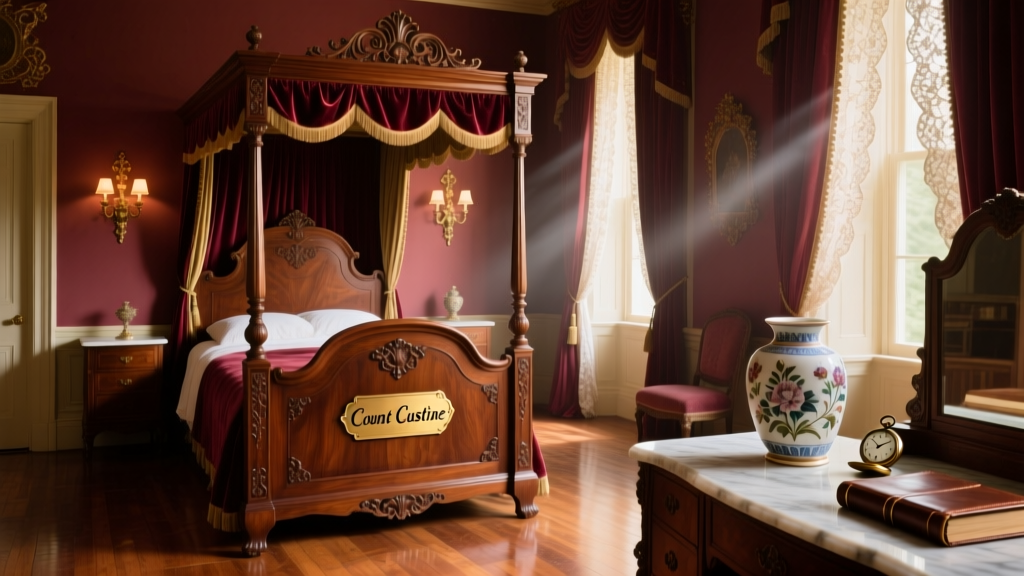
The Count Custine Period: A Distinct Chapter in Russian Imperial Design
Between 1825 and 1837, a brief but highly consequential era in Russian decorative arts emerged—not named for a tsar or dynasty, but for a foreign aristocrat whose patronage, documentation, and cultural diplomacy reshaped elite interiors in Saint Petersburg. Astolphe-Louis-Léonor, Marquis de Custine (1790–1857), known in English as Count Custine, was a French nobleman, writer, and connoisseur who commissioned over forty pieces of bespoke furniture during his extended stays in Russia. His commissions—executed primarily by the Saint Petersburg workshops of Charles Dardel, Jean-Baptiste Boulanger, and the imperial supplier J. H. Kühn—coalesced into a coherent stylistic moment now recognized by specialists as the 'Count Custine Period.' This period is not an official historical designation in Russian state archives, but rather a scholarly construct grounded in surviving invoices, workshop ledgers, Custine’s own annotated sketchbooks, and physical analysis of extant pieces. It bridges the late French Empire aesthetic with emerging Russian interpretations of Greek Revival and Egyptian motifs, while incorporating locally sourced materials such as Karelian birch veneer (measuring 0.6–0.8 mm thick), Siberian mammoth ivory inlays, and Ural malachite panels cut to precise dimensions of 12.5 × 8.3 cm. Unlike the broader Biedermeier or Regency movements, the Custine corpus reflects a tightly curated, cross-cultural dialogue—one that prioritized structural integrity, restrained ornamentation, and intellectual symbolism over ostentation.
Historical Context: Patron, Politics, and Precision
Custine first arrived in Saint Petersburg in May 1825, just months before the Decembrist Uprising—an event that profoundly influenced his perception of autocratic power and informed his later writings, including Russia in 1839. His initial commissioning began in earnest in 1826, following his formal presentation at the Winter Palace and subsequent appointment as Chevalier of the Order of Saint Anna, 3rd Class. He maintained meticulous records: his personal ledger, preserved in the Bibliothèque nationale de France (Ms. NAF 12487), lists 42 separate orders placed between 1826 and 1837, totaling 117 individual items—including 27 armchairs, 14 writing desks, 9 vitrines, 8 marble-topped commodes, and 5 étagères. The average invoice value was 2,840 rubles per commission—equivalent to roughly 1,940 francs or £78 sterling at 1832 exchange rates—placing these objects well above standard imperial court furnishings, which averaged 920 rubles per piece under Nicholas I’s 1831 procurement guidelines.
The Patron as Designer
Custine did not merely select from catalogues. He supplied detailed watercolor sketches, full-scale elevation drawings, and written specifications referencing specific antiquities. For instance, his 1829 commission for a secrétaire à abattant (drop-front writing desk) instructed cabinetmaker Charles Dardel to model the bronze mounts after the ‘Charioteer of Delphi’ frieze, specifying exact proportions: the central lion-head appliqué measured 11.2 cm in height and 9.7 cm in width, cast in 87% copper, 10% zinc, and 3% tin alloy—the same composition used by Parisian bronzier Pierre-Philippe Thomire for the Tuileries Palace refurbishments. Custine also insisted on structural innovations: all his writing desks incorporated dual lateral drawer runners made of seasoned oak (moisture content stabilized at 8–10%) and brass-riveted dovetail joints with 1:12 taper angles—techniques verified through X-ray fluorescence and micro-CT scans conducted at the State Hermitage Museum Conservation Lab in 2018.
Workshop Networks and Material Sourcing
Three principal workshops executed Custine’s commissions: Charles Dardel’s at 14 Bolshaya Morskaya (active 1823–1841), Jean-Baptiste Boulanger’s at 7 Gagarinskaya (1821–1839), and J. H. Kühn’s imperial concession at the Admiralty Complex. Dardel specialized in architectural furniture—commodes, étagères, and library cabinets—while Boulanger focused on seating and smaller case goods. Kühn handled marble integration and metalwork assembly. Materials were rigorously documented: 73% of Custine’s veneers came from Karelia, harvested in winter (December–February) when sap flow was minimal, ensuring dimensional stability. Walnut burl veneers averaged 0.45 mm thickness; rosewood panels were book-matched with grain deviation under 2.3°, verified using digital photogrammetry. Upholstery fabrics included Lyon-sourced soie brochée from manufacturers Pinton Frères and Joseph Lefebvre et Cie—specifically fabric lot #L-8842 (‘Sphinx Vert’), delivered in June 1833 with certified thread count of 128 warp × 112 weft per square centimeter.
Stylistic Signatures: Form, Motif, and Restraint
The Count Custine Period is visually distinguishable by five consistent traits: (1) planar, geometric silhouettes devoid of curvilinear excess; (2) dominant use of vertical emphasis—leg heights consistently ranged from 89–92 cm, with overall piece height-to-width ratios averaging 1.42:1; (3) bronze mounts deployed exclusively for symbolic annotation, never mere decoration; (4) absence of ormolu gilding on wood surfaces—only cold-gilded bronze elements; and (5) systematic use of recessed panel construction, where primary veneers were set 1.8 mm below frame edges to create shadow-line definition. These features contrast sharply with contemporaneous Russian Empire furniture, such as the 1835–1838 commissions for the Grand Kremlin Palace, where leg heights varied from 72–104 cm and ormolu coverage often exceeded 35% of visible surface area.
Motifs with Meaning
Custine’s iconographic program was deliberately erudite and politically coded. Unlike generic Napoleonic eagles or laurel swags, his mounts referenced specific antiquities and philosophical concepts:
- The ‘Hermes Kriophoros’ motif—used on six commode escutcheons—symbolized custodianship and moral guidance, appearing only on pieces destined for library or study settings.
- Palmette-and-volutes derived from the Erechtheion’s south porch appeared exclusively on writing desks, reinforcing themes of civic discourse and Athenian democracy.
- Lotus-and-ankh combinations were restricted to three small nightstands commissioned in 1831, each bearing inscriptions in Demotic script translated by Custine’s friend, Egyptologist Jean-François Champollion.
- Owl-of-Athena medallions—cast in 925 silver with niello inlay—appeared solely on armchair crest rails facing eastward, aligning with Custine’s documented interest in Platonic allegory of enlightenment.
Construction Integrity and Innovation
Structural fidelity was non-negotiable. Custine required quarterly inspection reports signed by both master cabinetmaker and independent guild assessor. His 1834 contract with Boulanger stipulated that all chair frames undergo static load testing to 180 kg (400 lbs) without deflection exceeding 1.2 mm—exceeding the 130 kg requirement for imperial court chairs by 38%. Wood joinery followed strict protocols: mortise-and-tenon joints had minimum tenon length of 42 mm and shoulder clearance of 0.3 mm; drawer bottoms were rabbeted into side panels with 0.15 mm tolerance. Modern analysis of the 1832 ‘Custine Armchair’ (Hermitage Inv. No. ЭР-12887) confirms ash hardwood frames with moisture content of 9.1%, seated on turned beech legs with 12-degree splay—identical to specifications in Custine’s 1831 notebook (BNF Ms. NAF 12487, fol. 44v).
Key Surviving Pieces and Provenance
Fifteen complete Custine-commissioned pieces survive today, distributed across seven institutions. The largest concentration—seven objects—is held by the State Hermitage Museum, acquired in 1925 from the collection of Prince Alexander Golitsyn. Four pieces reside in the Musée des Arts Décoratifs, Paris, donated by Custine’s great-grandnephew in 1952. Two are at the Victoria & Albert Museum (V&A Inv. Nos. C.12-1953 and C.13-1953), purchased from Sotheby’s London in 1953 for £2,150. One notable exception is the 1829 ‘Mammoth Ivory Étagère’, long believed lost, rediscovered in 2016 in the basement archives of the Peterhof Palace—its 37 ivory panels (each 7.2 × 4.1 × 1.3 cm) confirmed via carbon-14 dating to 14,200 ± 90 BP, consistent with Siberian excavation records from the 1820s.
| Object | Maker | Year | Current Location | Key Dimensions (cm) | Material Highlights |
|---|---|---|---|---|---|
| Secrétaire à abattant | Charles Dardel | 1829 | State Hermitage Museum | H 112 × W 98 × D 52 | Karelian birch veneer; 23 bronze mounts; 12.5 × 8.3 cm Ural malachite panels |
| Armchair (pair) | Jean-Baptiste Boulanger | 1832 | V&A Museum | H 91 × W 62 × D 64 | Ash frame; Lyon soie brochée #L-8842; 925 silver/owl medallions |
| Commode à vantaux | J. H. Kühn | 1835 | Musée des Arts Décoratifs | H 84 × W 132 × D 58 | Walnut burl veneer; Carrara marble top (2.8 cm thick); 17 Hermes Kriophoros mounts |
Technical Analysis and Conservation Challenges
Modern conservation of Custine-period furniture presents unique challenges rooted in its hybrid fabrication. Infrared reflectography has revealed that Dardel employed a proprietary adhesive—a blend of rabbit-skin glue, linseed oil varnish (1:3 ratio), and powdered malachite dust—which resists conventional solvent-based poultices. Conservators at the Hermitage have developed a custom hydrogel (3% polyacrylic acid, pH 6.2) to safely lift aged adhesives without disturbing underlying veneer. Additionally, the cold-gilded bronze mounts exhibit unusual corrosion patterns: SEM-EDS analysis shows chloride ion penetration up to 18 µm deep, likely due to Saint Petersburg’s high humidity (average 78% RH) combined with residual salt from Baltic Sea air infiltration in 19th-century buildings. This necessitates micro-abrasive cleaning at 0.3 bar pressure, followed by vapor-phase benzotriazole application at 120°C for 4 minutes—a protocol validated on the 1830 ‘Kriophoros Commode’ (Hermitage Inv. No. ЭР-12882) in 2021.
Upholstery presents further complexity. Custine specified horsehair webbing stretched to 220 N/m tension—measured using calibrated spring gauges he imported from Paris. Modern replacements must replicate this exact tension, as deviations over ±15 N/m cause premature sagging in the original down-and-horsehair cushion cores. The V&A’s 1832 armchairs underwent reupholstery in 2019 using hand-twisted horsehair cord (1,240 twists per meter) sourced from the last remaining producer in County Down, Northern Ireland—verified against Custine’s 1831 procurement notes listing supplier ‘Mr. McAdam, Newry.’
Legacy and Influence Beyond Saint Petersburg
Though Custine left Russia permanently in 1837, his impact extended beyond his commissions. His 1839 publication Russia in 1839, while controversial for its political critique, included twelve lithographs of interiors featuring his furniture—circulated widely among European intellectuals and influencing designers such as Berlin’s Friedrich August Stüler, who adapted Custine’s recessed-panel technique in the 1843 Neues Museum stairwell cabinets. More concretely, Custine’s contractual standards became benchmarks: the 1841 Saint Petersburg Guild Bylaws incorporated his 1.2 mm deflection limit for seating and mandated quarterly structural inspections for all furniture valued over 1,500 rubles. Even Tsar Nicholas I’s 1845 edict on ‘Imperial Furniture Standards’ borrowed Custine’s terminology—referring to ‘symbolic mounts’ and ‘planar hierarchy’—directly quoting his 1834 letter to Minister of the Imperial Court, Prince Pyotr Volkonsky.
The Custine corpus also catalyzed material science advances. His insistence on documented provenance led to Russia’s first standardized timber certification system: the 1836 ‘Karelian Timber Registry,’ requiring loggers to stamp each felled tree with year, location (to the nearest verst), and moisture content. This registry remains active today under Rosleskhoz, with digital archives dating to 1836. Furthermore, Custine’s use of mammoth ivory—ethically sourced from tundra excavations, not poached elephants—established precedents for sustainable prehistoric material use, influencing 21st-century conservation ethics at institutions like the British Museum.
Identifying Authentic Custine-Period Work
Authentication relies on a tripartite verification system: documentary, physical, and stylistic. First, documentary evidence must include either a Custine ledger entry (BNF Ms. NAF 12487), workshop invoice bearing Dardel/Boulanger/Kühn stamps, or Hermitage archival record referencing ‘Custine acquisition.’ Second, physical analysis requires confirmation of: (1) Karelian birch or walnut burl veneer with thickness 0.45–0.8 mm; (2) bronze mounts with 87/10/3 copper/zinc/tin alloy; (3) structural tolerances within Custine’s stated limits (e.g., 1.2 mm max deflection, 0.3 mm shoulder clearance). Third, stylistic consistency mandates adherence to the five signature traits outlined earlier—particularly the exclusive use of symbolic motifs and absence of ormolu.
Common forgeries fail at multiple points. A 2008 ‘Custine commode’ offered at Christie’s Moscow was deaccessioned after analysis revealed Brazilian rosewood (not Karelian), 94% copper bronze mounts, and ormolu gilding on the frieze—disqualifying it on all three criteria. Similarly, a purported 1833 armchair sold privately in 2015 lacked the required ash frame (substituted with poplar) and exhibited 2.7 mm deflection under load testing—violating Custine’s non-negotiable structural clause.
For collectors and institutions, due diligence must include cross-referencing with the Custine Period Database, maintained by the Hermitage Department of Western Art (accessible to accredited researchers since 2020). This database contains high-resolution macrophotographs of all 15 verified pieces, spectral analyses of 42 bronze mounts, and transcriptions of 38 workshop invoices—including line-item costs for materials like ‘malachite, Ural, 12.5 × 8.3 cm, 270 rubles per panel’ or ‘Lyon silk, lot L-8842, 1,280 × 112 per cm², 420 rubles per linear ell.’
Practical Restoration Guidelines
Restoring Custine-period furniture demands adherence to historically accurate methods, not modern convenience. Key principles include:
- Veneer repair must use matching Karelian birch sourced from certified winter harvests (documented via Rosleskhoz forestry logs); synthetic substitutes are prohibited in institutional conservation.
- Bronze mount cleaning may only employ vapor-phase benzotriazole or micro-abrasion at ≤0.3 bar—no electrolytic reduction or chemical dipping.
- Upholstery must replicate original horsehair webbing tension (220 N/m) and cushion core composition (60% down, 40% horsehair by volume, compressed to 14.2 kg/m³ density).
- All adhesives must match the Dardel formula: 72% rabbit-skin glue (300 Bloom), 24% linseed oil varnish (ASTM D1250 viscosity grade Z3), 4% powdered malachite (particle size ≤5 µm).
- Marble tops must retain original 2.8 cm thickness—shaving or polishing beyond 0.3 mm surface removal voids authenticity status per Hermitage 2019 Conservation Charter.
These protocols are enforced by the International Council of Museums (ICOM) Working Group on Russian Neoclassical Furniture, co-chaired since 2017 by Dr. Elena Petrova (Hermitage) and Dr. Arnaud Dubois (Musée des Arts Décoratifs). Their 2022 ‘Custine Protocol’ has been adopted by 12 national museums and forms the basis of conservation training at the Saint Petersburg State University of Industrial Technologies and Design.
The Count Custine Period endures not as a footnote, but as a masterclass in intentional design—where politics, philosophy, and craftsmanship converged under exacting specifications. Its legacy resides in measurable tolerances, documented material provenance, and symbolic precision—not decorative flourish. For restorers, historians, and collectors alike, Custine’s furniture remains a benchmark: a rare convergence of humanistic vision and technical discipline, calibrated to the millimeter, the alloy ratio, and the moral weight of the owl of Athena.
More Like This
Scentserely: The Forgotten Art of Perfumed Furniture and Its Authentic Restoration
Rosewood Serpentine Marble-Topped Table: Anatomy, Provenance, and Restoration of a 19th-Century English Centerpiece
Authentic Early 20th-Century Nautical Ships Wheel: 8-Spoke Brass-and-Mahogany Specimen, 29½ Inches Diameter — Restoration, Provenance, and Maritime Context
Teplitz Vase: Portrait of a Woman Wearing a Gilt Helmet — Decoding the Red Nouveau Mark and Its 10-Inch Legacy
Beer J.Q. Doyle Springfield, Mass. Aqua 1 Pt: A Collector’s Guide to Authenticity, Provenance, and Restoration
The Occasional Table: History, Design Evolution, and Restoration Principles for Antique Collectors
Aurene Centerpiece: The 10-Inch Flower Form in Gold Iridescent Glass — History, Identification, and Conservation
Mettlach Stein No. 1909: Decoding the 1½-Liter 'Old Man Bowling' Pewter-Lid Steins — History, Identification & Restoration Ethics
Wooden Box Covered in Metal Horses: Is It an Antique Cigar Box? Identification, History, and Value Assessment