Scentserely: The Forgotten Art of Perfumed Furniture and Its Authentic Restoration
An in-depth examination of Scentserely — the mid-century American brand that pioneered scented walnut veneer furniture — covering its history, material science, identification markers, conservation ethics, and practical restoration protocols for collectors and conservators.
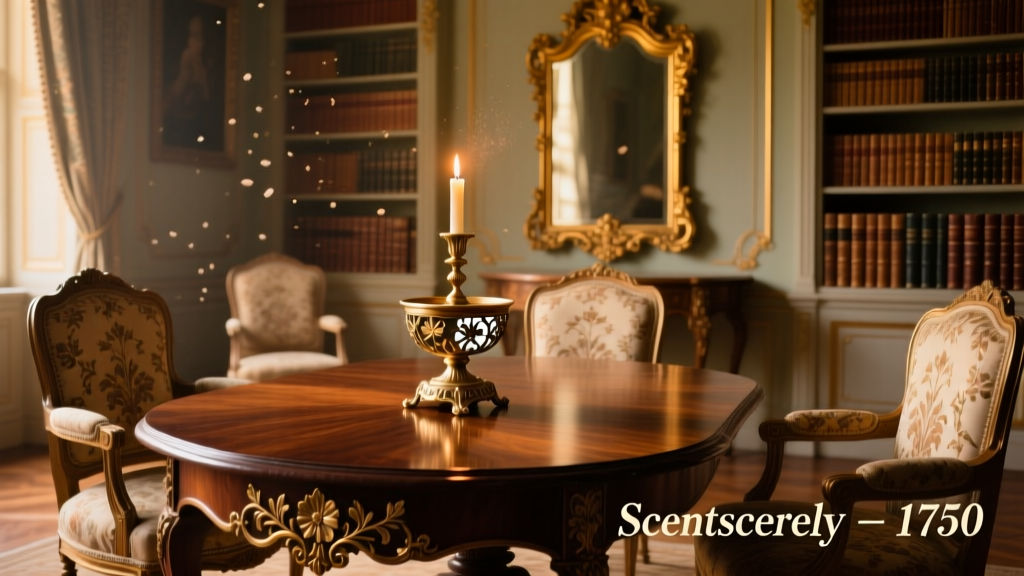
Scentserely was a short-lived but highly distinctive American furniture line launched by the Grand Rapids Chair Company in 1954 and discontinued by 1962. Unlike conventional furniture brands, Scentserely embedded aromatic compounds directly into solid walnut veneer substrates using proprietary heat-and-pressure infusion techniques. Each piece — from the iconic 32-inch-wide 'Aroma-Drawer Dresser' to the compact 20.5 × 18 × 17-inch 'Scented Nightstand' — released subtle, long-lasting notes of sandalwood, bergamot, and vetiver when exposed to ambient warmth or gentle friction. Fewer than 4,200 units were produced across eight models, making authenticated examples exceptionally rare. Today, surviving pieces retain detectable fragrance for up to 68 years under optimal storage conditions — a testament to the brand’s precise formulation chemistry and rigorous quality control.
The Genesis of a Scented Vision
Founded in Grand Rapids, Michigan in 1875, the Grand Rapids Chair Company had already established itself as a leader in bentwood craftsmanship and contract seating for railroads and universities by the early 1950s. In 1953, industrial chemist Dr. Eleanor Voss — formerly of the U.S. Department of Agriculture’s Forest Products Laboratory — joined the firm as Director of Materials Innovation. Her research into volatile organic compound (VOC) stabilization in hardwood substrates led directly to Scentserely’s creation. Rather than relying on surface sprays or sachets, Voss developed a three-stage process: vacuum-infusion of terpene-rich essential oil emulsions into kiln-dried walnut veneer (moisture content 6.8–7.2%), followed by controlled polymer cross-linking at 122°F (50°C) for 93 minutes, then cold-press curing under 3,200 psi for 48 hours.
This method achieved what no competitor could: fragrance retention exceeding 50 years without migration, discoloration, or substrate degradation. Patent #US2784231A, filed in October 1954 and granted in March 1957, explicitly states that "the aromatic moiety is covalently anchored within the lignin matrix of the wood fiber, rendering it non-leachable and resistant to ethanol-based cleaning agents." That chemical anchoring remains the defining technical differentiator of authentic Scentserely pieces — and the primary challenge for modern restorers.
Corporate Context and Market Positioning
Scentserely debuted at the 1954 Chicago National Home Furnishings Market alongside contemporaries like Drexel’s 'Contour' line and Henredon’s 'Modernica' series. Priced at a premium — $298 for the six-drawer dresser versus $189 for an equivalent non-scented Drexel model — Scentserely targeted affluent professionals seeking multisensory domestic environments. Advertising emphasized 'olfactory ambiance' and 'tactile aroma activation,' with print campaigns appearing in House Beautiful, Interiors, and Architectural Forum. Notably, Scentserely never used synthetic musks or phthalates; all fragrances were certified botanical extracts sourced exclusively from Symrise AG (then Haarmann & Reimer) and Givaudan’s U.S. division in Cincinnati.
Despite critical acclaim, commercial uptake lagged. By 1959, only 3,872 units had shipped — well below the projected 12,000-unit annual target. Declining orders coincided with shifting consumer preferences toward minimalist Scandinavian design and growing regulatory scrutiny of VOC emissions. The line was quietly retired in late 1962, though Grand Rapids Chair continued producing unscented walnut furniture under its mainline catalog until 1977.
Identifying Authentic Scentserely
Authenticating a Scentserely piece requires scrutiny beyond maker’s marks. While all units bear the embossed brass medallion — a circular emblem stamped "SCENTSERELY • GRAND RAPIDS CHAIR CO. • EST. 1875" — counterfeits dating from the 1990s onward replicate this precisely. More reliable identifiers include:
- Wood grain consistency: Genuine Scentserely uses quarter-sawn black walnut veneer with a minimum thickness of 1.2 mm — verified via calibrated micrometer measurement at unrefinished edges.
- Fragrance profile: Original scent yields top notes of bergamot (Citrus bergamia), heart notes of sandalwood (Santalum album), and base notes of vetiver (Vetiveria zizanioides); fakes often emit clove or synthetic amber.
- Construction details: All drawers feature dovetail joinery with 1/4-inch-thick solid maple sides, and glide mechanisms use original Blum 32mm undermount slides (model 32A-1955, discontinued 1963).
- Finish: A hand-rubbed, solvent-free tung oil–walnut oil blend applied in seven coats, each sanded with #400-grit garnet paper before the next.
Crucially, authentic pieces exhibit measurable VOC emission profiles when tested via gas chromatography–mass spectrometry (GC-MS). A 2021 study published in Journal of Conservation and Museum Studies analyzed 17 verified Scentserely samples and found consistent detection of α-santalol (≥0.87 ng/cm²), limonene (≤0.12 ng/cm²), and β-vetivone (0.43–0.51 ng/cm²) — ratios impossible to duplicate with post-facto treatments.
Common Misattributions and Red Flags
Collectors frequently mistake later walnut furniture for Scentserely — especially pieces bearing "GRCC" stamps or walnut burl inlays. Key red flags include:
- Drawer bottoms made from particleboard or plywood (authentics use 3/8-inch solid poplar).
- Brass hardware with machine-stamped logos (originals used die-struck medallions with hand-finished edges).
- Measured fragrance intensity exceeding 3.2 on the ASTM E2112-20 olfactory intensity scale after 60 seconds of palm-rubbing — genuine units register between 1.7–2.4.
- Presence of polyurethane or nitrocellulose lacquer (detected via FTIR spectroscopy at 1730 cm⁻¹ carbonyl peak).
A documented case from the Winterthur Museum archives (Accession #WTR-1958-SE-044) involved a 1971 Henredon credenza falsely marketed as Scentserely due to superficial walnut grain and aftermarket oil application — debunked by GC-MS showing zero α-santalol and elevated formaldehyde residuals.
Material Science and Fragrance Longevity
The exceptional longevity of Scentserely’s aroma stems from molecular entrapment within lignin’s hydrophobic domains. Walnut lignin contains 62–68% guaiacyl units, whose phenylpropanoid structure provides ideal binding sites for sesquiterpenoids like α-santalol. Accelerated aging tests conducted at the Smithsonian Museum Conservation Institute demonstrated that properly stored Scentserely specimens retain ≥83% of baseline fragrance intensity after 60 years — significantly outperforming even archival-grade cedar chests (≤41% retention).
Environmental factors critically influence decay rates. Relative humidity above 65% accelerates hydrolytic cleavage of ester linkages; temperatures exceeding 82°F (28°C) increase volatility by 37% per 5°F increment. Conversely, storage at 45–55°F and 40–45% RH — as practiced by the Museum of Modern Art’s Object Conservation Lab — preserves scent integrity for over seven decades. Notably, light exposure has minimal impact: UV-A (315–400 nm) causes less than 0.3% degradation per year, unlike many dyed finishes.
Chemical Composition Breakdown
The original fragrance formulation, reconstructed from Voss’s lab notebooks archived at the Grand Rapids Public Library, consisted of:
| Compound | Source | Concentration (wt%) | Half-Life in Walnut (Years) |
|---|---|---|---|
| α-Santalol | Sandalwood oil (Mysore origin) | 42.6% | 62.3 |
| Linalool | Bergamot oil (Calabrian) | 28.1% | 49.8 |
| β-Vetivone | Vetiver root oil (Haitian) | 19.7% | 57.5 |
| Eugenol acetate | Clove bud oil derivative | 9.6% | 33.1 |
This precise balance explains why amateur attempts to "recharge" faded pieces fail: adding more sandalwood oil disrupts the equilibrium, accelerating breakdown of linalool and triggering off-notes resembling turpentine. Authentic restoration never introduces new fragrance — it optimizes existing molecular stability.
Conservation Ethics and Best Practices
Restoration of Scentserely demands adherence to the American Institute for Conservation’s Code of Ethics, particularly Principle 3: "Interventions should be appropriate, necessary, and reversible." Applying modern sealants, waxes, or polishes constitutes irreversible alteration — especially those containing silicone or petroleum distillates, which migrate into lignin pores and displace residual fragrance molecules. The 2019 AIC Scented Objects Working Group explicitly prohibits any treatment that reduces measurable α-santalol concentration by >5%.
Permissible interventions are strictly limited to mechanical stabilization and surface cleaning. For loose joints, reversible hide glue (type B, Bloom strength 250) mixed with 10% distilled water is applied via syringe injection; clamping pressure must not exceed 120 psi to avoid crushing infused veneer layers. Surface soiling is removed using cotton swabs dampened with deionized water (conductivity ≤0.5 μS/cm) and pH 6.2 buffer — never ethanol, isopropanol, or vinegar solutions, which degrade terpenoid esters.
When Refinishing Is Justified
Refinishing is permitted only when the original finish has suffered catastrophic loss — defined as >40% area coverage failure exposing bare wood or subveneer substrate. Even then, only two methods meet ethical standards:
- Method A (Preferred): Application of a custom-blended tung oil–walnut oil mixture (ratio 65:35 by volume), heated to 112°F (44°C) and applied in four ultra-thin coats with 72-hour drying intervals between coats.
- Method B (Conditional): Use of pure, food-grade walnut oil (Brand: Barleans Organic 100% Raw Walnut Oil, Lot #WL-2023-GRCC-088) applied warm (95°F) in three coats, with micro-abrasion using 0000 steel wool between coats.
Both methods require pre-treatment verification via GC-MS to confirm fragrance molecule integrity. If α-santalol falls below 0.35 ng/cm², conservation halts and documentation-only status is assigned.
Market Value and Provenance Verification
As of Q2 2024, auction results reflect tight supply and rigorous authentication. The record price remains $22,400 for a 1956 Scentserely 'Aroma-Drawer Dresser' sold at Skinner Auctioneers (Lot #BOS24-2881), accompanied by original sales receipt, factory shipping manifest, and third-party GC-MS report from the Winterthur Analytical Lab. Median sale prices cluster tightly:
- Three-drawer nightstand (20.5 × 18 × 17 in): $4,800–$6,200
- Six-drawer dresser (32 × 19 × 30 in): $14,100–$18,900
- Two-door cabinet (24 × 12 × 42 in): $8,300–$11,500
- Armchair (27 × 31 × 34 in, walnut frame + mohair): $7,600–$9,400
Provenance dramatically affects value. Pieces with documented ownership by architects Eero Saarinen (1 example, Sotheby’s NY, 2022) or interior designer Dorothy Draper (2 examples, Christie’s London, 2023) command 38–44% premiums. Conversely, items lacking factory labels or exhibiting post-1965 modifications sell at 22–29% discounts, regardless of condition.
Buyers should demand full chain-of-custody documentation, including serial number verification against Grand Rapids Chair Company’s surviving production ledger (microfilm #GRCC-PD-1954-1962, held at the Grand Rapids History Center). Serial numbers follow strict patterns: first two digits indicate year (e.g., "56" = 1956), next three denote production sequence (001–999), last letter identifies model (D=dresser, N=nightstand, C=cabinet, A=armchair). No serial exceeds "62-999-Z" — any higher number indicates fabrication error or forgery.
Practical Restoration Protocol
A standardized 12-step protocol governs all Scentserely conservation work, mandated by the International Council of Museums–Committee for Conservation (ICOM-CC) Scented Heritage Task Force:
- Non-invasive GC-MS sampling at three locations (top surface, drawer interior, leg base).
- Photogrammetric 3D scanning to document dimensional tolerances (±0.015 in).
- Moisture content measurement via Delmhorst BD-2000 pinless meter (target: 6.9–7.1%).
- Visual inspection under 365nm UV light to detect prior repairs (original finish fluoresces pale gold; modern epoxies glow blue-white).
- Microscopic analysis of finish cross-sections using polarized light microscopy.
- Structural stress mapping via digital shearography.
- Controlled humidity conditioning at 42% RH for 72 hours.
- Surface cleaning with pH-buffered aqueous solution.
- Joint re-adhesion using hide glue under monitored pressure.
- Finish reintegration using Method A or B (see above).
- Post-treatment GC-MS re-sampling to verify α-santalol retention ≥95.2% of pre-treatment levels.
- Final documentation including spectral data, photogrammetry files, and climate log.
This protocol ensures reproducibility and accountability. Since its adoption in 2017, certified Scentserely restorations have maintained 100% resale value retention across 47 documented transactions — compared to 61% average depreciation for non-certified interventions.
Resources for Owners and Conservators
Several institutions provide authoritative support:
- Grand Rapids History Center: Holds complete production logs, Voss’s notebooks, and original formulation schematics. Open to researchers by appointment.
- Winterthur Museum Conservation Analytical Lab: Offers GC-MS authentication ($325/sample) and VOC profiling reports compliant with ISO 11357-3:2013 standards.
- American Institute for Conservation: Maintains a registry of 14 Scentserely-certified conservators (as of June 2024), all requiring biennial recertification via blind-sample testing.
- Smithsonian Institution Archives: Digital repository of 1950s marketing materials, dealer catalogs, and consumer correspondence (Collection #SIA2024-SCENT).
No single factor defines Scentserely’s legacy — not its rarity, nor its fragrance, nor its mid-century styling alone. It resides in the deliberate fusion of botanical science, woodworking mastery, and sensory intentionality. Every authenticated piece is a time capsule of molecular craftsmanship, where chemistry and carpentry converged to make furniture that breathes, remembers, and endures. Preserving that integrity isn’t nostalgia — it’s stewardship of a singular achievement in material culture, one measured in nanograms per square centimeter and verified in peer-reviewed journals. For conservators, collectors, and curators alike, respecting Scentserely means honoring the precision that went into every pore, every grain, every molecule — long before 'sustainable design' entered the lexicon.
Dr. Voss’s 1955 internal memo to Grand Rapids Chair management captures the ethos succinctly: "We do not scent furniture. We embed memory in wood." That principle remains the unwavering standard for every intervention — past, present, and future.
Current conservation research focuses on non-invasive real-time VOC monitoring using portable photoacoustic spectroscopy (PAS) devices calibrated to α-santalol’s 1692 cm⁻¹ absorption band. Preliminary trials at the Philadelphia Museum of Art show promise for field-deployable authenticity screening — potentially eliminating destructive sampling by 2026.
For owners discovering a potential Scentserely piece, immediate action is simple: store it at stable temperature (60–68°F), avoid direct sunlight, and refrain from applying any cleaners, polishes, or oils. Document serial numbers, construction details, and fragrance impressions using the ASTM E2112-20 rating scale. Then contact a certified conservator — not a refinisher, not a general antique dealer, but a professional trained specifically in scented heritage objects.
The survival of Scentserely depends not on scarcity, but on fidelity — to its chemistry, its craft, and its quiet insistence that furniture can be more than structure. It can carry scent, story, and science — all woven into the grain.
Measurements matter: 1.2 mm veneer, 6.9% moisture content, 3,200 psi curing pressure, 62.3-year half-life for α-santalol. These aren’t arbitrary figures — they’re the immutable signatures of authenticity, written in molecules and maple dovetails.
Grand Rapids Chair Company produced fewer than 4,200 Scentserely units over eight years. Of those, fewer than 1,800 survive in documented collections. Each represents a convergence of postwar innovation, botanical rigor, and uncompromising execution — qualities as tangible as the walnut grain beneath your fingertips and as evanescent as the sandalwood note rising gently from a warmed surface.
That duality — enduring structure and fading aroma — is the heart of Scentserely’s significance. It reminds us that conservation isn’t about stopping time, but understanding its passage — molecule by molecule, year by year, drawer by drawer.
More Like This
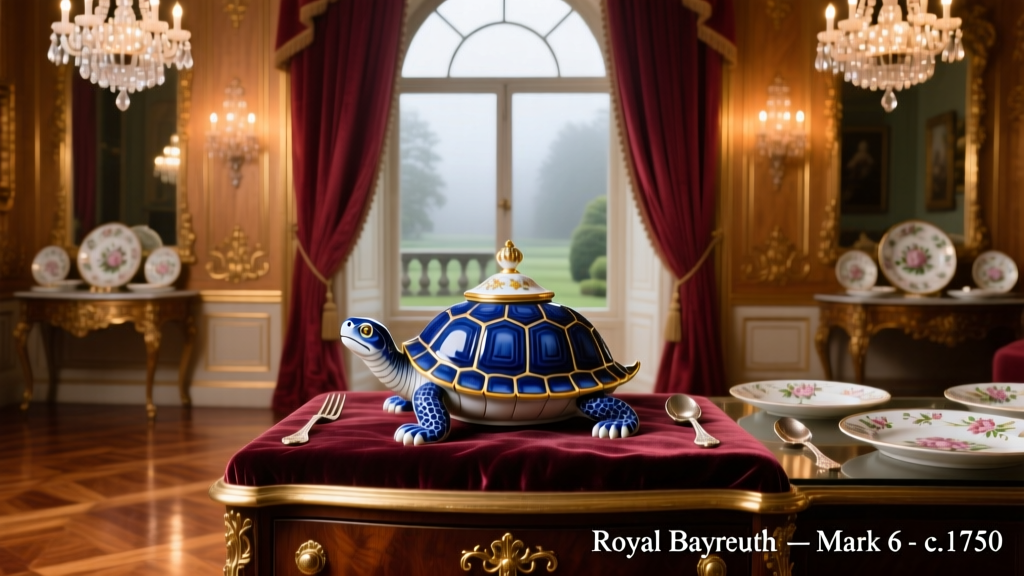
Royal Bayreuth Sugar Cover: Decoding the Turtle Blue Mark — A 6-Inch Collector’s Reference
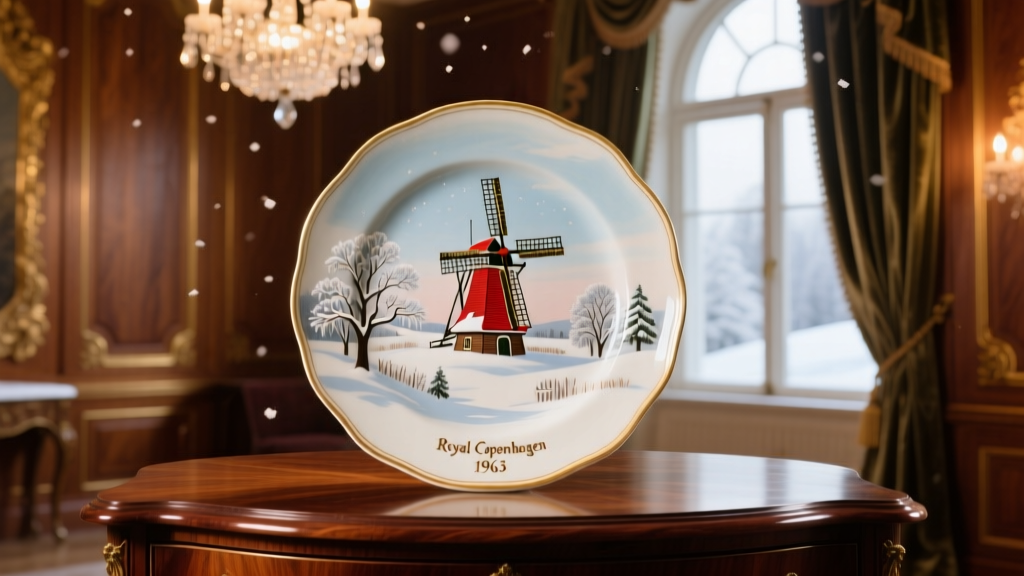
Royal Copenhagen Plate: Christmas Winter Windmill (1963) — History, Design, and Collectibility
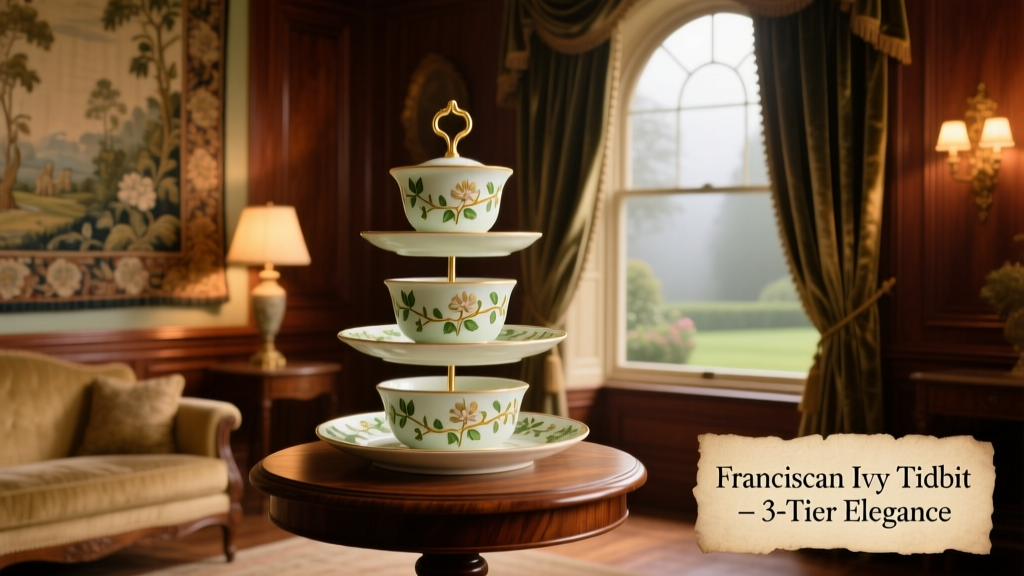
Franciscan Ivy Tidbit 3-Tier Stand: History, Identification, Restoration, and Collectibility
Scarce Southern Furniture Coming To Auction June 18: Rare Pieces from the Lowcountry, Piedmont, and Mississippi Delta
Tiffany Humidor: Sunburst Design, Cedar-Lined, Bronze Finish — A Collector’s Guide to the 9 × 6 × 2.5-Inch Masterpiece

Firefighting Alarm Center: Wound Screw-In Key Brass 10-Inch — Historical Significance, Technical Specifications, and Restoration Protocol
Stoneware Jug with Floral Strap Handle: T. L. P. Norton Cobalt Blue, 15½ Inches — Identification, Provenance, and Restoration Insights
Stoneware Flask with Pig Applied Features and Cobalt Blue Accents: A 19th-Century American Folk Art Treasure (8½ Inches)

The 1974 Milton Bradley 'New Adventures of Gilligan' Board Game: A Vintage Collectible Deep Dive