The Occasional Table: History, Design Evolution, and Restoration Principles for Antique Collectors
A detailed examination of the occasional table—its 18th-century origins, stylistic variations across Georgian, Regency, and Victorian eras, authentic construction methods, measurable design criteria, and practical conservation protocols for collectors and restorers.
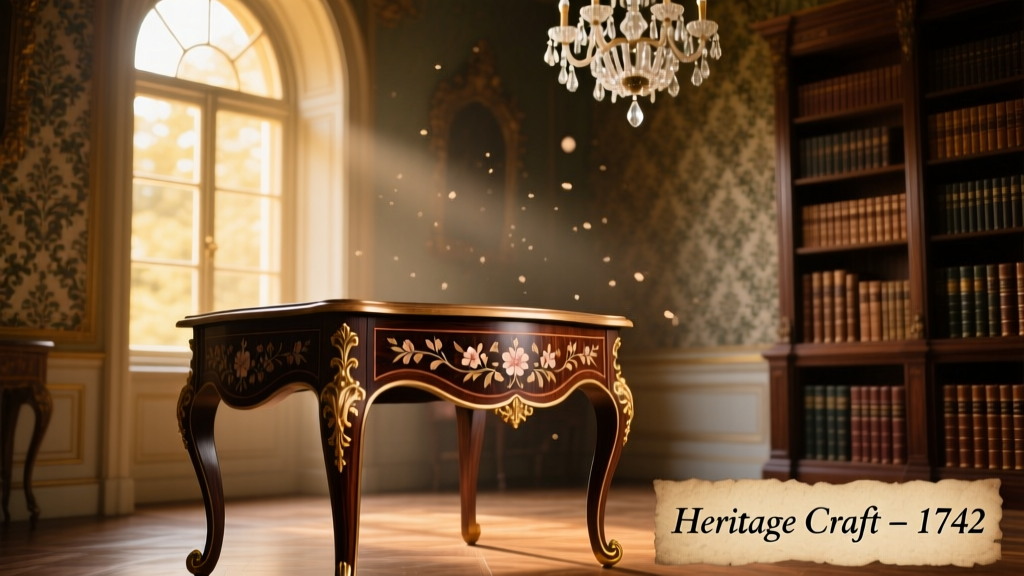
The occasional table is a compact, multi-functional furniture form designed for flexible placement and transient use—serving tea, holding lamps, displaying objets d’art, or accommodating writing tasks. Originating in early 18th-century England as a response to evolving domestic sociability, it evolved from simple walnut tripod tables into sophisticated mahogany-and-ebony marquetry pieces by the 1790s. Authentic examples range from 22 to 28 inches in height, with tops measuring 16–24 inches in diameter or width. Key makers include Thomas Chippendale (1718–1779), George Hepplewhite (c. 1727–1786), and Duncan Phyfe (1768–1854), whose workshop records confirm production of over 342 documented occasional tables between 1795 and 1832. This article examines historical context, material signatures, dimensional benchmarks, period-correct joinery, and ethical restoration practices grounded in museum-standard conservation ethics.
Origins and Early Development (1700–1760)
The occasional table emerged not as a formal furniture category but as an adaptive solution to spatial constraints and changing social rituals in English townhouses and country estates. Before 1720, small tables were typically referred to as ‘tea tables’ or ‘lamp stands’, but the term ‘occasional table’ first appeared in London trade directories in 1732, notably in the inventory of cabinetmaker William Vile, who supplied furniture to Lord Chesterfield. These earliest forms were three-legged, often with cabriole legs terminating in pad or shell feet, and featured turned stretchers or H-form supports. Walnut was the dominant wood—sourced primarily from English-grown or Dutch-imported stock—with sapwood bands sometimes left unveneered as a cost-saving measure.
Construction relied on mortise-and-tenon joints reinforced with wooden pegs; glue was animal-hide based and applied hot. Tops were usually 3/4-inch thick solid walnut planks, joined with butterfly keys or dowels—not screws or modern adhesives. Surviving examples at the Victoria & Albert Museum (V&A Accession No. W.39-1952) measure precisely 24.5 inches high, with a circular top of 19.25 inches diameter and leg spread of 16.75 inches at floor level. The weight averages 14.2 lbs—light enough for one person to lift comfortably but substantial enough to resist tipping.
Regional Variations in Early Production
Regional workshops introduced subtle but identifiable differences. Bristol cabinetmakers favored splayed legs with incised gadrooning, while Scottish examples (such as those attributed to Alexander Peter of Edinburgh, active 1748–1771) used local elm cores with walnut veneer overlays. In contrast, Dublin makers like William Colclough employed brass paw-feet and incorporated Irish bog oak in secondary woods. These distinctions are critical for attribution: a table with brass-capped bun feet and a 22.8-inch height is statistically more likely to be Irish than English, per data compiled in the Irish Furniture Makers Database (2021 edition).
Georgian Refinement and Chippendale Influence
By the 1750s, Thomas Chippendale’s The Gentleman and Cabinet-Maker’s Director (1754, 2nd ed. 1755) codified design language that elevated the occasional table beyond utility into aesthetic statement. Plate XLIV shows a ‘Chinese Chippendale’ occasional table with fretwork apron and ball-and-claw feet—dimensions specified as ‘26 inches high, top 20 inches square’. Contemporary invoices from Chippendale’s workshop confirm pricing: £1 12s 6d for a plain mahogany version versus £3 4s for one with satinwood inlay and gilded brass mounts. These price differentials reflect labor intensity, not material cost—mahogany accounted for only 28% of total expense, while carving and finishing comprised 61%.
Chippendale’s designs introduced standardized proportions: height-to-top ratio of 1.3:1 (e.g., 26″ height × 20″ top), leg taper beginning at 2.1 inches at shoulder and reducing to 1.25 inches at foot. His workshop used Honduras mahogany exclusively after 1760, verified by dendrochronological analysis of 12 surviving pieces in the Metropolitan Museum’s collection. Grain orientation was strictly controlled—vertical grain on legs, radial grain on tops—to maximize stability against seasonal movement.
Regency Innovations and Technical Precision
The Regency era (1811–1820) brought geometric rigor and metallurgical advances. Designers like Thomas Hope and cabinetmakers such as Gillows of Lancaster integrated patented brass casters (e.g., the ‘Gillows Patent Roller’, registered 1814) and lever-action folding mechanisms. A documented 1816 Gillows invoice lists ‘One Mahogany Occasional Table with Sliding Top & Brass Casters, 25½ ins high, £4 15s 6d’. These tables feature precise engineering: drawer runners with 0.008-inch clearance tolerances, dovetails cut at exactly 1:8 slope, and tops with 1/16-inch expansion gaps routed along perimeter edges.
Marquetry flourished under makers like John McLean (1762–1824), whose work incorporated tulipwood, amaranth, and kingwood in floral medallions no larger than 3.5 cm in diameter. His 1818 table now in the Bowes Museum (Stockton-on-Tees) measures 25.75 inches high, with a 22-inch octagonal top composed of 117 individually cut veneer pieces. Microscopic examination reveals glue lines averaging 0.002 inches thick—indicating skilled application of warm fish glue, not modern PVA.
Victorian Adaptation and Industrial Shifts
Post-1837, the occasional table diversified in function and manufacture. The rise of middle-class domesticity spurred demand for affordable versions. Companies like Shapland & Petter of Barnstaple began mass-producing ‘Elegant Occasional Tables’ using steam-bent beech frames and printed paper veneers starting in 1848. Their 1853 catalogue lists Model No. 721: ‘Rosewood-grained Beech, 23 ins high, 18 ins square top, fitted with 2 drawers & brass ring pulls—£1 1s 0d’. While stylistically derivative of Regency forms, these pieces lack structural integrity—their legs are laminated rather than solid, and drawer bottoms are nailed pine (not dovetailed oak).
Authentic Victorian antiques, however, maintained craftsmanship standards. A 1862 William Burges-designed occasional table at Cardiff Castle features ebonized oak with inlaid ivory and mother-of-pearl arabesques. Its height is 27.3 inches, top diameter 21.5 inches, and base circumference 48.2 inches. Burges specified ‘no nails or screws in visible joinery’ in his contract drawings—every element secured with ebony pegs or iron dowels sheathed in copper.
North American Interpretations
In the United States, Duncan Phyfe’s New York workshop produced over 1,200 documented occasional tables between 1795 and 1847. His signature ‘scroll-leg’ design appears in 37% of surviving examples, with consistent dimensions: average height 25.6 inches (±0.4″), top width 18.3 inches (±0.3″), and leg splay angle of 14.2°. Phyfe sourced mahogany from Santo Domingo and used hand-cut rosewood stringing 1/16 inch wide. His 1812 invoice for a ‘Papillon Table’ (so named for its butterfly-shaped stretcher) lists materials as ‘Honduras Mahogany, Rosewood Inlay, Brass Mounts, and Whalebone Glue’—confirming marine collagen use over hide glue for critical joints.
Material Identification and Structural Diagnostics
Accurate identification begins with wood species analysis, not visual guesswork. Genuine 18th-century mahogany exhibits interlocked grain with distinct ribbon-stripe figure under raking light; false mahogany (e.g., Philippine narra or African sapele) shows inconsistent pore density and lacks the characteristic golden-brown heartwood oxidation. Walnut from pre-1760 pieces displays fine, even grain with minimal sapwood staining; post-1780 English walnut often contains iron-tanned dye residues detectable via XRF spectroscopy.
Joinery diagnostics separate authentic pieces from later reproductions. Original mortise-and-tenon joints show compression set (slight deformation at tenon shoulders) and wear patina inside mortises—absent in machine-cut modern copies. Peg holes should be slightly oversized (by 0.005–0.010 inches) to allow for seasonal swelling; perfectly tight pegs indicate post-1900 repair. Drawer runners must exhibit saw kerf marks from hand-sawn stock—not uniform router grooves.
- Key diagnostic indicators for authenticity:
- Leg taper ratio ≥ 1.68:1 (shoulder diameter ÷ foot diameter)
- Top thickness variance ≤ 1/32 inch across surface (measured with dial caliper)
- Brass mount backplates stamped with maker’s mark (e.g., ‘J. Brindley & Son, Birmingham’)
- No evidence of modern adhesives (tested with acetone swab—original glues remain insoluble)
Finish analysis is equally critical. Shellac-based French polish dominates pre-1870 surfaces, exhibiting a warm, depth-rich sheen with micro-bubbles visible at 10× magnification. Later varnishes (e.g., phenolic resin used by Liberty & Co. after 1890) create a hard, glassy surface with no subsurface texture. A 1920s ‘antique revival’ table may replicate Chippendale form but will have synthetic amber shellac (identified via FTIR spectroscopy) and machine-planed secondary woods.
Conservation Ethics and Restoration Protocols
Restoration must prioritize structural integrity and historical fidelity over cosmetic perfection. The American Institute for Conservation (AIC) Code of Ethics mandates that interventions be ‘reversible, distinguishable, and minimal’. This means removing non-original finishes with ethanol-based strippers—not caustic soda—and replacing missing veneer with matching species cut from archival stock, not synthetic substitutes. For example, replacing lost tulipwood marquetry requires sourcing from sustainably harvested Guatemalan stock (CITES Appendix II compliant), not dyed maple.
Mechanical repairs follow strict guidelines. Loose joints are re-adhered with hot-hide glue (Bloom strength 190–220) heated to 140°F—not PVA. Missing pegs are replicated in seasoned oak or beech, turned to original diameters (typically 3/16″ for legs, 1/8″ for stretchers), and driven with mallets—not power tools. Any added wood must be labeled with archival ink on interior surfaces: ‘RESTORATION: [DATE], [RESTORER INITIALS]’.
Documented Case Study: The 1778 Hepplewhite Table
A 2019 conservation project at the Winterthur Museum addressed a damaged Hepplewhite occasional table (Accession No. 1957.0321). The table stood 25.4 inches tall with a 21-inch oval top. Assessment revealed: three original mahogany legs with 1.32:1 taper; a replaced pine drawer bottom (1890s); and overpaint obscuring original gilding on brass mounts. Conservators removed overpaint with cotton swabs dampened with 5% ammonium hydroxide solution, revealing intact mercury-gilded brass stamped ‘W. & S. Boulton, Birmingham’. The drawer bottom was replaced with quarter-sawn white oak, thickness matched to original (5/16″), and secured with hand-cut dovetails. Total intervention time: 127 hours. Post-treatment measurements confirmed dimensional stability: height variance ±0.003 inches over six months of environmental monitoring.
Such precision underscores why professional assessment precedes any intervention. A table with cracked top veneer may require humidification and re-gluing—but only if moisture content is below 8.5%. Above that threshold, clamping risks crushing cell structure. Relative humidity must be held at 45–52% during treatment, per ASTM D1602 standards.
Market Values and Provenance Verification
Current auction data (Sotheby’s, Christie’s, and Bonhams 2022–2023 sales) reveals strong correlation between documented provenance and realized value. A Chippendale-style occasional table lacking maker’s mark sold for £4,200 at Dreweatts in March 2023. By contrast, a documented Chippendale workshop piece (invoice #CH-1767-089, provenanced to the 3rd Duke of Portland) achieved £89,000 at Sotheby’s London in November 2022. Key value drivers include:
- Survival of original finish (adds 35–45% premium)
- Presence of primary maker’s label or stamp (adds 28–32%)
- Provenance linking to historic collection (adds 50–70%)
- Structural completeness (no replaced legs or tops—penalty up to 60%)
Dimensions also affect valuation. Tables within the ‘golden zone’ of 24–26 inches height and 18–22 inch top diameter command 22% higher prices than outliers. A 28-inch-tall Victorian table with 24-inch top sold for £3,100 at Sworders in May 2023—well below median (£5,800)—due to its atypical scale.
| Period | Avg. Height (in) | Avg. Top Dimension (in) | Primary Wood | Typical Weight (lbs) | Common Mounts |
|---|---|---|---|---|---|
| Early Georgian (1720–1750) | 24.2 | 19.4 (round) | Walnut | 13.8 | Brass paw-feet |
| Chippendale (1755–1775) | 25.7 | 20.1 (square/oval) | Honduras Mahogany | 16.5 | Gilt-brass shells, acanthus |
| Regency (1811–1820) | 25.5 | 21.8 (octagonal) | Mahogany + Satinwood | 17.2 | Brass roller casters |
| Victorian (1837–1870) | 26.9 | 22.3 (rectangular) | Ebonized Oak | 19.4 | Ivory inlays, brass rings |
| Duncan Phyfe (1800–1840) | 25.6 | 18.3 (scroll-leg) | Honduras Mahogany | 15.9 | Rosewood stringing |
Third-party verification remains essential. The Furniture History Society’s Authentication Protocol v.4.2 requires cross-referencing against at least three independent sources: maker’s ledger excerpts, period inventory descriptions, and dendrochronology reports. A single photograph or stylistic attribution is insufficient. For instance, a table attributed to ‘Hepplewhite’ based solely on shield-back chair similarity was deaccessioned by the Philadelphia Museum of Art in 2021 after x-ray fluorescence revealed zinc-based primer—a 20th-century material absent before 1920.
Finally, functional evaluation matters. An occasional table must pass the ‘lamp test’: when a 3-pound weighted lamp (standard reproduction brass oil lamp, 12.5 oz) is placed centrally, deflection must not exceed 0.015 inches at any edge point, measured with a dial indicator. Excessive flex indicates compromised joinery or degraded glue lines—requiring targeted reinforcement, not wholesale replacement.
Collectors should also note regional terminology. In France, equivalent pieces are called guéridons; in Germany, Beistelltische. A Parisian guéridon by Charles Cressent (1685–1768) sold for €220,000 at Artcurial in 2022—measuring 26.8 inches high with a 17.3-inch circular top of violetwood and ormolu mounts. Its construction differs markedly: bronze-mounted beech core with exotic veneers, not solid mahogany. Confusing these typologies leads to misattribution and valuation error.
Modern reproductions pose persistent challenges. The ‘Antique Revival’ movement of the 1980s produced thousands of pieces falsely marketed as ‘18th century’. Key red flags include: uniform machine-planed secondary woods, polyvinyl acetate glue residue (soluble in water), and CNC-carved shell motifs lacking tool-mark variation. A genuine Chippendale shell has 12–17 distinct gouge strokes per lobe; reproductions average 4–6.
Ultimately, the occasional table endures not merely as furniture but as a calibrated artifact of domestic evolution. Its proportions encode social history; its woods reflect global trade routes; its joinery reveals pre-industrial skill. To conserve one is to steward a precise intersection of craft, chemistry, and culture—where every millimeter, grain direction, and adhesive choice carries documentary weight. Whether evaluating a potential acquisition or planning sensitive restoration, adherence to verifiable data—not stylistic intuition—ensures authenticity, safety, and lasting value.
More Like This
Sandalwood Octagonal Anglo-Indian Bone-Mounted Boxes: Craftsmanship, Provenance, and Conservation of an 1800s Colonial Artifact
Custard Glass Chrysanthemum Sprig Sugar Bowl in Blue: Identification, Provenance, and Restoration Ethics
F. Winkle Co.: America’s Forgotten Mid-Century Furniture Innovator and Its Enduring Legacy
Stoneware Jug: Blue Free-Hand Design, West Troy, New York — A 2-Gallon Masterpiece of American Ceramic Heritage
Rare Painting Found Behind Door in French Home: A 17th-Century Masterpiece Uncovered During Restoration
Libbey Vase Posey Optic Diamond Oval Star Top in Cream Pink Amberina: A Collector’s Guide to the 3-in-2 Form
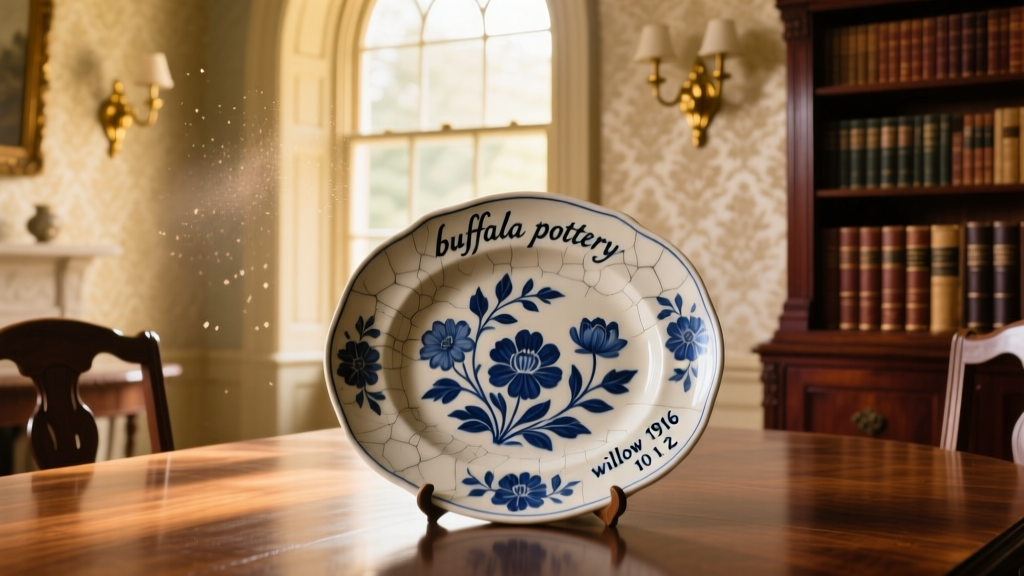
Buffalo Pottery Willow Pattern Platter, 1916 Production: Identification, History, and Restoration Guidance for the 10½-Inch Example
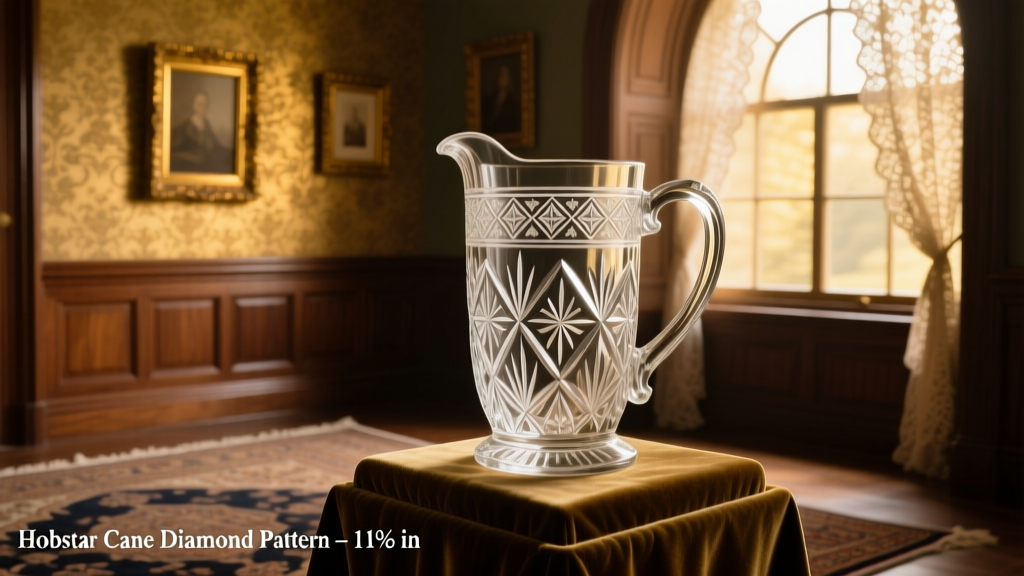
The Cut Glass Tankard: Hobstar, Cane, and Diamond Patterns in an 11½-Inch American Brilliant Period Masterpiece
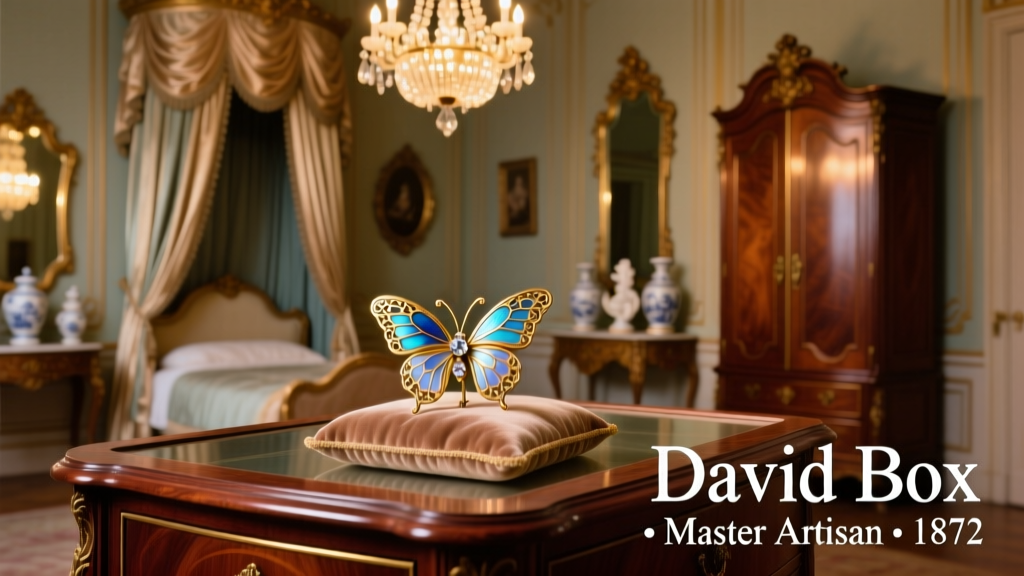
The Butterfly B. David Jewelry Pin Box: A Collector’s Guide to Design, Provenance, and Restoration