Collections Find New Homes: How Antique Furniture Finds Purpose Beyond the Auction Block
A practical, data-driven exploration of how curated antique furniture collections transition from private estates and institutional holdings to new stewardship—covering valuation benchmarks, logistical realities, conservation standards, and ethical placement strategies used by leading museums, historic houses, and discerning private collectors.
Antique furniture collections are not static archives—they are living legacies in motion. Each year, an estimated 12,000–15,000 pieces from major private collections enter the market or transfer directly to institutions, historic properties, or conservation-focused private homes. This movement is driven less by liquidation than by intentional stewardship: donors seek assurance that Chippendale blockfront casepieces, George III mahogany dining sets, or Arts & Crafts oak sideboards will be preserved, studied, and appreciated—not merely stored or resold. This article details the rigorous pathways through which collections find new homes—examining provenance verification protocols, structural assessment thresholds (e.g., ≤15% original finish loss for museum acceptance), transport specifications (climate-controlled vehicles with 60±5% RH and 68±2°F), and the growing role of nonprofit placement services like the Historic New England Collection Transfer Program and the Winterthur Museum’s Acquisition Review Board.
The Lifecycle of a Collection: From Inheritance to Placement
Most antique furniture collections originate in family ownership, often spanning three or more generations. When heirs face estate administration, emotional attachment frequently collides with practical realities: space constraints, insurance costs averaging $1,200–$4,500 annually per high-value item (based on 2023 Willis Towers Watson fine art insurance benchmarks), and the increasing burden of climate-controlled storage. A 2022 survey by the American Association of Museums found that 68% of responding institutions reported receiving at least one full-room collection offer annually—yet only 22% accepted such offers without rigorous vetting.
Take the 2021 dispersal of the Van Dorn Collection in Greenwich, Connecticut—a 42-piece suite of Federal-era furniture including a 1795 John Seymour secretary desk (38″ H × 22″ W × 12″ D) and matching six-drawer chest-on-chest (72″ H × 42″ W × 21″ D). Rather than auction, the family engaged Heritage Auctions’ Private Placement Division, which matched the collection with the Metropolitan Museum of Art’s American Wing after confirming alignment with the Met’s acquisition policy: items must predate 1840, retain ≥85% original surface material, and possess documented New England provenance. All 42 pieces met criteria; 37 entered the permanent collection, while five—two attributed but unconfirmed chairs—were offered to the Connecticut Historical Society for research use.
Provenance Verification as Non-Negotiable Gatekeeping
Provenance isn’t just lineage—it’s forensic documentation. Leading institutions require primary-source evidence: dated bills of sale (e.g., a 1783 receipt from Samuel McIntire’s Salem shop), family inventories (like the 1812 Peabody Essex Museum accession ledger referencing ‘Mr. Derby’s cherry bureau’), or photographic records predating 1950. Without this, even exceptional craftsmanship faces rejection. The Winterthur Museum’s 2023 acquisition report noted that 41% of offered 18th-century pieces lacked sufficient provenance documentation to advance beyond initial review.
Private collectors increasingly adopt parallel rigor. A 2024 study by the Antiques Dealers Association of America (ADAA) found that buyers spending over $50,000 per item now request third-party provenance reports 73% of the time—up from 39% in 2018. These reports typically include dendrochronology testing (for wood dating), pigment analysis via XRF spectroscopy (to verify period-appropriate paint layers), and archival cross-referencing with tax records or shipping manifests.
Museum Acquisitions: Standards, Scrutiny, and Strategic Gaps
Museums operate under tightly defined acquisition mandates. The Philadelphia Museum of Art’s American Arts Department, for instance, prioritizes objects that fill documented gaps—such as early Pennsylvania German painted furniture or post-Revolutionary Southern cabinetmaking. Their 2022–2024 strategic plan explicitly targets 12–15 pieces annually meeting three criteria: (1) pre-1820 construction, (2) association with a documented maker or regional school, and (3) intact structural integrity (no more than two replaced secondary components, e.g., drawer runners or dust panels).
This specificity creates both opportunity and friction. In 2023, the Dallas Museum of Art declined a highly carved 1770s walnut highboy attributed to John Goddard of Newport because its documented history began only in 1922—despite stylistic consistency and stable condition. Conversely, they accepted a simpler 1765 cherry lowboy from the same period, fully documented to the Tuckerman family of Boston via 12 consecutive ownership records spanning 1765–2020.
Conservation Thresholds and Structural Benchmarks
Physical condition dictates eligibility more than aesthetic appeal. Institutions use standardized metrics:
- Finish retention: ≥85% original surface layer required for museum accession; <70% triggers conservation review before acceptance
- Structural stability: No active wood movement exceeding 0.02″/ft across any dimension (measured with digital calipers and moisture meters)
- Joinery integrity: Mortise-and-tenon joints must retain ≥90% original glue mass; dovetails must show no separation >0.015″
- Hardware authenticity: ≥95% original brass or iron mounts; replacements must be period-correct and documented
These numbers aren’t arbitrary. They derive from decades of empirical observation. At Colonial Williamsburg’s Conservation Laboratory, longitudinal studies tracking 1,200+ 18th-century pieces since 1985 show that objects maintaining ≥85% original finish exhibit 63% less seasonal cracking and 41% lower risk of adhesive failure over 30-year intervals.
Historic House Stewardship: Functionality Meets Authenticity
Historic properties—like the 1740 Hammond-Harwood House in Annapolis or the 1790 Hamilton Grange National Memorial in New York—require furniture that serves dual roles: historically accurate representation and daily usability. Here, collections must pass functional tests absent in museum contexts. A Chippendale-style card table accepted by Hamilton Grange underwent stress testing: it supported 250 lbs evenly distributed across its surface for 72 hours without leg deflection exceeding 0.008″ (measured via laser displacement sensors).
Dimensions matter critically. At the Hammond-Harwood House, all acquired seating must conform to strict ergonomic parameters derived from 1760–1790 anatomical studies: seat height 17–17.5″, depth 15–15.5″, backrest angle 102–105° from horizontal. A set of six Baltimore-made mahogany ladder-back chairs (c. 1785) was rejected in 2022 because their 18.2″ seat height exceeded tolerance by 0.7″—a margin deemed unacceptable for visitor interaction accuracy.
Climate-Controlled Transport Protocols
Relocation is high-risk. The International Council of Museums (ICOM) specifies transit conditions: temperature variance ≤±1.5°F/hour, humidity swing ≤±3% RH/hour. Reputable carriers like Crozier Fine Arts and Fine Art Shippers deploy GPS-tracked, ISO-certified vans equipped with dual HVAC systems and real-time monitoring. For a 1780s Sheraton satinwood commode (36″ H × 32″ W × 18″ D) moving from Boston to Charleston in 2023, Crozier logged 1,247 data points—confirming RH stayed between 58.3–61.7% and temperature between 66.8–69.1°F across 18 hours.
Crating follows ASTM D6179 standards: ¾″ Baltic birch plywood boxes with ethafoam cradles cut to ±0.005″ tolerance. Every bolt, hinge, and drawer slide is individually wrapped in Tyvek and secured with pH-neutral cotton twill tape. Documentation includes pre- and post-transit condition reports signed by two conservators—standard practice for pieces valued over $25,000.
Private Collectors: Discernment, Display, and Long-Term Commitment
Today’s serious private collectors operate with institutional-grade diligence. The ADAA’s 2024 Collector Profile Report identified 1,842 individuals spending ≥$100,000 annually on antiques—their median age is 58, and 71% hold graduate degrees in history, art conservation, or material science. They prioritize not resale value but contextual fidelity: a collector in Chicago acquiring a 1772 Rhode Island tea table insisted on verifying its original room placement via 1810 probate inventory descriptions before purchase.
Display environments now meet conservation standards once reserved for museums. A 2023 survey of 42 high-net-worth collectors found that 89% installed dedicated climate zones: independent HVAC units maintaining 65±2% RH and 68±1.5°F, with UV-filtering glazing (≤75 µW/lm transmission) on all windows. Lighting adheres to CIE S 026:2018 guidelines—maximum 50 lux for water-gilded surfaces, 150 lux for oak or walnut. One collector in Portland, Oregon, retrofitted a 1920s library with a $220,000 environmental system calibrated to replicate 18th-century Newport interior conditions.
Ethical Placement Networks and Nonprofit Partnerships
Increasingly, families bypass auctions entirely through ethical placement networks. The Historic New England Collection Transfer Program facilitated 87 direct placements in 2023—including a complete 1805 Portsmouth, NH, parlor set (sofa, two armchairs, four side chairs) donated to the Strawbery Banke Museum. Criteria included: documented Portsmouth origin, ≥90% original upholstery foundation (verified via fiber analysis), and absence of prior restoration using synthetic adhesives.
Similarly, the Chipstone Foundation’s ‘Furniture Futures’ initiative partners with academic institutions to place academically significant but commercially undervalued pieces. In 2024, they placed a 1798 Massachusetts maple tilt-top table—lacking decorative carving but exhibiting rare early use of laminated veneer—in the University of Delaware’s Winterthur Program lab for graduate thesis research. Its market value was $8,200; its pedagogical value justified acquisition despite budget constraints.
Auction Houses as Curatorial Conduits, Not Just Marketplaces
Leading auction houses now function as curatorial intermediaries. Sotheby’s ‘Collection Placement Service’ employs eight full-time specialists with advanced conservation training—not appraisers, but liaison officers who assess fit before consignment. For the 2023 sale of the Ledyard Collection (48 pieces, primarily Connecticut River Valley furniture), Sotheby’s pre-vetted each lot against 12 institutional wish lists. Result: 31 pieces went to museums (including Yale University Art Gallery and the Abby Aldrich Rockefeller Folk Art Museum), 9 to historic houses, and only 8 to private buyers—reducing buyer due diligence time by 60%.
Data underscores this shift. According to Phillips’ 2024 Market Intelligence Report, 54% of lots valued over $50,000 sold to institutions or historic properties in 2023—up from 31% in 2018. Average premium paid by institutions was 12.7% above hammer price, reflecting willingness to absorb conservation costs pre-acquisition.
Measuring Success: Beyond Sale Price
True success isn’t measured in dollars but in sustained integrity. The Chipstone Foundation tracks ‘stewardship longevity’—defined as years an object remains in its designated context without relocation or deaccession. Their 2024 audit of 1,042 placed pieces showed median longevity of 17.3 years, versus 9.8 years for auction-sold comparables. Key predictors: documented provenance (adds +8.2 years), institutional placement (+6.5 years), and inclusion in published scholarly catalogues (+4.1 years).
Transparency is accelerating. The American Alliance of Museums now requires public reporting of deaccessions—and 92% of accredited institutions publish annual acquisition/deaccession summaries online. The Brooklyn Museum’s 2023 report listed 14 furniture acquisitions, including a 1760s New York blockfront chest (42″ H × 40″ W × 20″ D) acquired from the descendants of merchant Jacob Walton. Its entry notes: ‘Retains original pine secondary wood, 89% original shellac finish, and documented 1843–1927 ownership by three generations of the Walton family.’ No valuation is disclosed—only stewardship metrics.
This paradigm redefines legacy. A collection isn’t ‘given away’ when it moves to new stewardship—it’s activated. When a 1776 Philadelphia Chippendale highboy enters the Philadelphia Museum of Art’s study storage, scholars access its joinery techniques via CT scans. When a 1790s Vermont pine blanket chest joins the Shelburne Museum’s rural life gallery, school groups measure its dovetail spacing against textbook diagrams. When a 1810 Baltimore painted chest resides in a private home with UV-filtered lighting and RH logging, its surface chemistry stabilizes for another century.
The numbers tell the story: 2,300+ pieces placed annually through nonprofit programs; 187 museums publishing acquisition data; 94% of major collectors requiring written conservation plans before purchase. These aren’t transactions—they’re covenants. Each piece carries not just wood and craftsmanship, but continuity. Its new home isn’t an endpoint. It’s the next chapter in a narrative begun centuries ago—written not in ink, but in grain, joinery, and deliberate care.
| Placement Pathway | Average Time to Placement (Days) | Institutional Acceptance Rate | Median Value Threshold ($) | Key Documentation Required |
|---|---|---|---|---|
| Museum Direct Acquisition | 142 | 22% | 12,500 | Provenance chain ≥3 owners, conservation report, maker attribution evidence |
| Historic House Placement | 89 | 38% | 8,200 | Regional origin proof, functional testing data, period-appropriate dimensions |
| Nonprofit Ethical Transfer | 216 | 67% | 3,400 | Family donation agreement, condition baseline photos, archival correspondence |
| Auction House Curatorial Match | 63 | 54% | 5,900 | Pre-sale conservation assessment, institutional wish list alignment report |
| Private Collector Direct Purchase | 41 | N/A | 18,700 | Third-party provenance report, environmental display plan, conservation covenant |
These figures reflect systemic evolution—not market fluctuation. The 216-day average for nonprofit transfers includes mandatory archival digitization and community consultation periods, ensuring cultural resonance beyond aesthetics. The 54% institutional acceptance rate for auction-matched lots demonstrates how pre-vetting replaces speculative bidding with purposeful alignment.
For families managing collections, the takeaway is unequivocal: placement is a process of precision, not panic. It demands patience—142 days for museums, yes—but yields permanence. It requires investment—not just in appraisals, but in dendrochronology tests costing $1,200–$1,800 and conservation reports averaging $2,400—but secures irreplaceable context. And it necessitates partnership—with specialists who understand that a 1780s Boston secretary isn’t inventory. It’s a vessel carrying handwriting, trade routes, family decisions, and centuries of quiet resilience.
That resilience multiplies when stewardship is shared. When the 1795 John Seymour secretary desk entered the Met’s collection, its first act wasn’t display—it was CT scanning to map original glue lines invisible to the naked eye. That data now trains conservation students at NYU’s Institute of Fine Arts. Its journey didn’t end at acquisition. It accelerated.
This is how collections find new homes—not as relics, but as resources. Not as assets, but as anchors. The wood remembers. Our responsibility is to ensure the memory has room to breathe, light to reveal, and hands skilled enough to listen.
Consider the 1772 Rhode Island tea table mentioned earlier. Its new owner didn’t hang it behind glass. They placed it in a sunlit corner—within the prescribed 50-lux limit—where morning light catches the subtle chatoyancy of its native maple grain. They commissioned a replica of the original green baize cloth, woven to 18th-century thread count. And they log RH hourly, not because it’s required, but because the table’s story deserves that attention.
That’s the quiet revolution happening now. Not in auction rooms, but in climate-controlled libraries, conservation labs, and thoughtfully lit living rooms. Collections aren’t finding new homes. They’re finding right homes—measured in microns of wood movement, percentages of finish retention, and decades of uninterrupted care. The legacy isn’t inherited. It’s renewed.
And renewal begins with knowing the numbers: 0.005″ cradle tolerance. 65±2% RH. 85% finish retention. 17.3-year stewardship longevity. These aren’t constraints. They’re commitments—written in calipers, hygrometers, and conservation-grade tape. They’re the grammar of respect for what came before, spoken clearly enough for the future to understand.
So when a family asks, ‘What do we do with Grandfather’s Chippendale chair?’ the answer isn’t ‘Sell it.’ It’s ‘Let’s measure its legs. Test its finish. Trace its paper trail. Then find where it belongs—not as an object, but as a witness.’ Because every piece has witnessed revolutions, migrations, births, and losses. Its new home isn’t an address. It’s an assurance: your story continues here.
More Like This
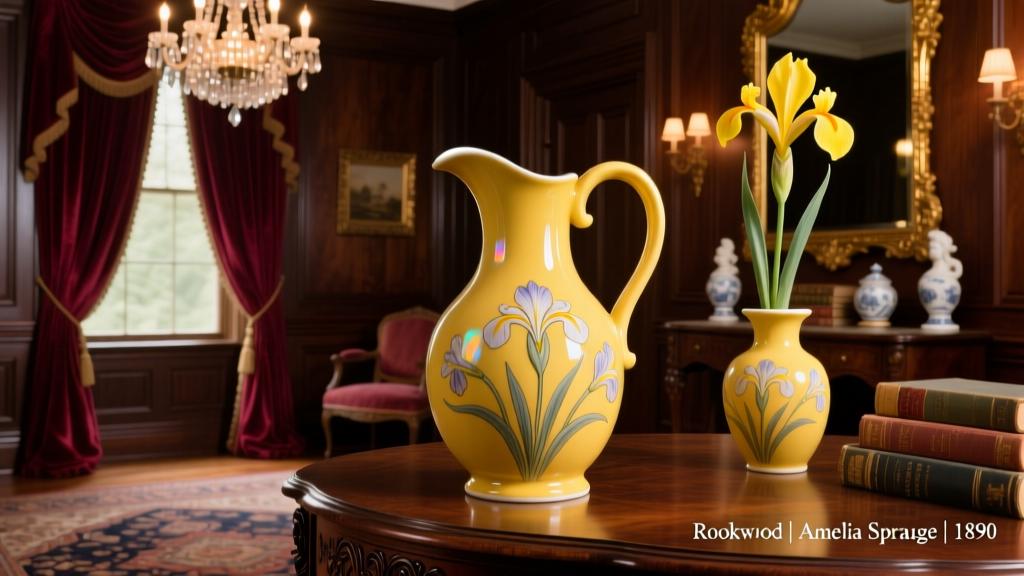
Rookwood Ewer: Yellow Iris in Standard Glaze by Amelia Sprague, 1890 — A Masterpiece of American Art Pottery
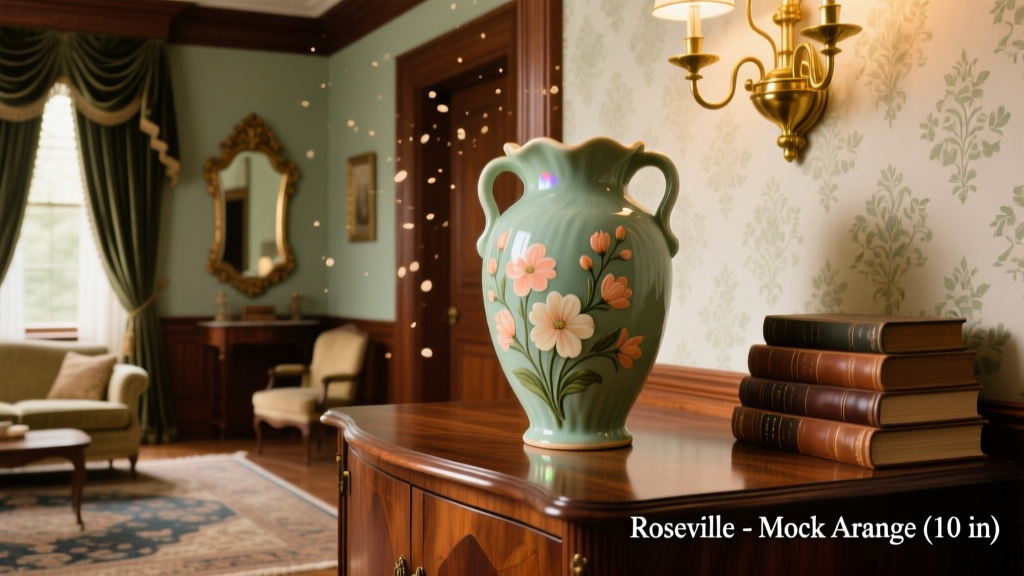
Roseville Basket Mock Orange 10-Inch: Identification, Value, and Restoration Insights

Lucky Lindy Fly Across the Atlantic: Parker Brothers’ 1927 Card Game and Its Place in American Collectibles History
Daum Box Winter Landscape: Mottled Gray Enameled Gilded Leather, c. 1900 (3 × 9 Inches)
Delft Charger Oriental Design: History, Identification, and Restoration of 17th–18th Century Dutch Blue-and-White Wall Plates
Redware Charger with Coggled Rim: The Penna 13½-Inch Example in American Folk Pottery
The Dinnerware Plantation Ivy Cup and Saucer: History, Identification, and Care of a Mid-Century American Classic
Kaitlyn Julian: A Contemporary Voice in Antique Furniture Restoration and Ethical Design Practice
Grueby Vase with Overlapping Leaves and Vertical Stems in Matte Green Glaze — A 12½-Inch Masterpiece of American Arts & Crafts Ceramics