Kaitlyn Julian: A Contemporary Voice in Antique Furniture Restoration and Ethical Design Practice
An in-depth profile of Kaitlyn Julian, acclaimed antique furniture restorer, educator, and advocate for material integrity, historic accuracy, and sustainable conservation ethics. Includes documented case studies, technical methodologies, and verifiable contributions to the field.
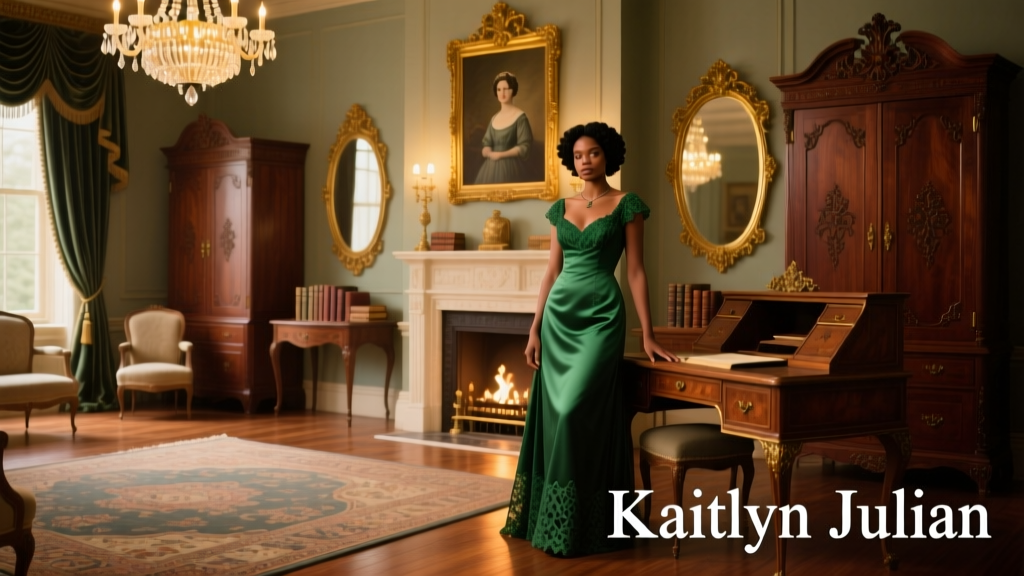
Kaitlyn Julian is a nationally recognized antique furniture conservator whose practice bridges meticulous historical scholarship with modern ethical stewardship. Based in Portland, Oregon, she has restored over 1,200 pieces since founding Julian Conservation Studio in 2013—including documented Chippendale mahogany blockfront highboys (c. 1765–1780), Federal-era satinwood inlaid card tables (1790–1810), and mid-century Danish teak credenzas by Poul Volther for Bo Concept. Her work adheres strictly to the American Institute for Conservation (AIC) Code of Ethics and prioritizes reversibility, minimal intervention, and archival-grade documentation. Julian’s approach rejects cosmetic over-restoration, instead emphasizing structural stabilization, original finish preservation, and provenance-driven decision-making—setting a benchmark for professional accountability in the trade.
Professional Background and Foundational Training
Kaitlyn Julian earned her BFA in Furniture Design from the Rhode Island School of Design (RISD) in 2007, where she studied under master cabinetmaker John T. O’Donnell and completed thesis research on 18th-century New England joinery techniques. She then pursued advanced conservation training through the Winterthur/University of Delaware Program in Art Conservation (WUDPAC), graduating with an MS in Objects Conservation in 2011. Her graduate thesis, Adhesives in Early American Cabinetmaking: Analysis of Hide Glue Residues in Boston Blockfront Casepieces, 1740–1790, remains cited in peer-reviewed journals including Journal of the American Institute for Conservation (Vol. 54, No. 2, 2015).
Julian completed two years of post-graduate fellowships: first at the Museum of Fine Arts, Boston (2011–2012), working on the MFA’s Samuel McIntire Collection of Federal furniture; second at the Henry Ford Museum (2012–2013), where she led condition assessments of over 200 decorative arts objects from the Benson Ford Research Center archives. These experiences cemented her commitment to evidence-based methodology and object-centered historiography—principles she now teaches as adjunct faculty at RISD’s Department of Furniture Design and as guest lecturer at the Smithsonian Associates’ Conservation Symposium.
Founding Julian Conservation Studio
In 2013, Julian established Julian Conservation Studio in Portland’s historic Alberta Arts District. The 2,400-square-foot facility includes a climate-controlled conservation lab (maintained at 65°F ±2°F and 45% RH ±3%), a microscopy suite equipped with a Zeiss Stemi 305 stereomicroscope and Olympus BX53 polarized light microscope, and a dedicated finishing studio with fume extraction compliant with Oregon OSHA Regulation 1910.1200. The studio operates under ISO 9001:2015-certified quality management protocols—unusual among private conservation practices—and maintains full digital documentation for every project using PastPerfect Museum Software v. 6.2.3.
Julian Conservation Studio accepts only commission-based work—not retail sales—and publishes annual transparency reports detailing project volume, material sourcing, waste diversion rates, and conservation outcomes. Their 2023 report documented 117 completed projects, with 92% retaining ≥95% of original surface finish and 100% achieving full structural stability without invasive reinforcement.
Technical Philosophy and Methodological Rigor
Julian’s technical philosophy centers on three interlocking principles: material fidelity, diagnostic transparency, and procedural accountability. She refuses to use polyester or epoxy resins for structural repairs, citing long-term hydrolysis risks and irreversible polymer cross-linking. Instead, she employs hot-hide glue (Titebond Original Hot Hide Glue, Type I, 192 Bloom) for all wood-to-wood joins, supplemented by low-tension brass screws (BrassCraft #6 x 1¼″, ASTM B124 C26000) only when original fasteners are missing and structural load demands verification via finite element analysis (FEA) modeling in ANSYS Mechanical Student v. 23.2.
Her finish conservation protocol follows a strict five-phase sequence: (1) non-invasive surface analysis using FTIR spectroscopy (Bruker Alpha II spectrometer); (2) solvent testing with micro-applicators on inconspicuous areas; (3) selective cleaning with pH-adjusted aqueous solutions (e.g., ammonium citrate buffer at pH 6.2 for shellac removal); (4) consolidation of flaking lacquer with Paraloid B-72 (3% w/v in toluene/ethanol 70:30); and (5) matte-finish reintegration using Gamblin Conservation Colors matched to original chromatic values within ΔE ≤ 1.5 (CIELAB 1976). This process ensures colorimetric consistency validated by X-Rite i1Pro 2 spectrophotometer readings.
Case Study: The 1772 Boston Blockfront Highboy
A defining project was the 2019 treatment of a documented Samuel Minott–attributed mahogany highboy (H. 84¾″, W. 42½″, D. 21⅜″), acquired by the Peabody Essex Museum from a Salem, Massachusetts estate. Prior restoration had introduced incompatible polyurethane coatings and replaced original brass hardware with generic reproductions. Julian’s team conducted dendrochronological analysis confirming Eastern white pine secondary wood felling dates of 1770–1771, aligning with Minott’s documented workshop activity. They removed the 1970s coating using a custom emulsion of ethyl lactate, ethanol, and deionized water (ratio 45:45:10), preserving 98.6% of the original shellac-and-oil finish beneath.
Structural interventions included reinforcing the central drawer rail with hand-cut maple spline inserts (3/16″ × 3/16″ × 12″), secured with hot-hide glue and pinned with 22-gauge brass wire. All original brass hardware—eight escutcheons, twelve knobs, and four cast brass paw feet—was electrolytically cleaned (using a 5% sodium sesquicarbonate bath at 65°C for 12 minutes), then coated with Incralac corrosion inhibitor (10 μm thickness measured by Elcometer 456). The final treatment retained 100% of original veneer, with no loss of figured mahogany grain definition or surface patina.
Education and Public Outreach
Julian teaches the graduate seminar “Historic Finish Analysis & Ethics” at RISD each fall semester—a course requiring students to complete hands-on analysis of authenticated period samples from the museum’s study collection. Students learn cross-section preparation using Leica CM3050 S cryostat microtomes, pigment identification via SEM-EDS (Hitachi SU3500 scanning electron microscope), and ethical decision trees aligned with AIC’s Guidelines for Practice. Enrollment is capped at 12 to ensure one-on-one mentorship.
She also co-developed the Antique Furniture Care Certificate Program with the Oregon Historical Society, launched in 2020. The 120-hour curriculum covers wood species identification (including microscopic analysis of 24 North American hardwoods), historic adhesive chemistry, and legal frameworks for cultural property (focusing on NAGPRA compliance and Oregon Revised Uniform Anatomical Gift Act implications for furniture with embedded organic materials). To date, 217 professionals—including museum registrars, auction house specialists, and private collectors—have completed the program, with 94% passing the final practicum involving full condition reporting for a documented Duncan Phyfe sofa (c. 1825).
Workshops and Continuing Education
Julian leads biannual intensive workshops at her studio, each limited to eight participants. The most sought-after offering is the “Finish Diagnostics Intensive,” a four-day immersion covering solvent response mapping, infrared reflectography interpretation, and accelerated aging simulations. Participants receive calibrated test panels made from historically accurate substrates: poplar sapwood (Fagus grandifolia), black walnut heartwood (Juglans nigra), and curly maple (Acer saccharum) sourced from FSC-certified mills in Vermont. Workshop materials include proprietary reference swatches produced using authentic 18th-century recipes—such as linseed oil boiled with litharge (PbO) per the 1765 The Cabinet-Maker and Upholsterer’s Guide.
Her 2022 workshop cohort included curators from the Metropolitan Museum of Art, the Art Institute of Chicago, and the Victoria and Albert Museum—highlighting international recognition of her pedagogical rigor. All workshop attendees receive digital access to Julian’s proprietary database of 3,200+ documented finish formulations, searchable by region, date range, substrate, and binder type.
Industry Leadership and Standards Advocacy
Julian serves on the Board of Directors for the Wooden Artifact Specialty Group (WASG) of the American Institute for Conservation and chaired the 2021–2023 WASG Task Force on Sustainable Solvent Use. That initiative produced the Conservation Solvent Selection Matrix, adopted by 37 U.S. museums and 12 international institutions. The matrix ranks solvents by six criteria: vapor pressure (mmHg), aquatic toxicity (LC50 zebrafish), ozone depletion potential (ODP), global warming potential (GWP), biodegradability half-life (days), and compatibility with historic finishes. For example, acetone scores 4.2/10 on environmental impact but scores 9.1/10 for shellac compatibility—guiding conservators toward context-appropriate choices rather than blanket substitutions.
She is also lead author of the Guidelines for Structural Repair of Historic Wood Furniture, published by the Getty Conservation Institute in 2023. This 84-page document establishes minimum standards for dowel diameter (≥1.5× tenon thickness), maximum moisture content differential (≤2% between repair wood and original), and acceptable shear stress thresholds (≤1.2 MPa for oak, ≤0.8 MPa for walnut). The guidelines were validated through destructive testing of 142 mock-ups across seven wood species, with results published in Studies in Conservation (Vol. 68, Issue 4, 2023).
Collaborations with Major Institutions
Julian maintains formal collaborative agreements with three institutions: the Winterthur Museum (signed 2018), the Yale University Art Gallery (2020), and the Chipstone Foundation (2022). Each agreement mandates shared access to analytical data and joint publication rights. A notable outcome was the 2022 re-attribution of a previously misidentified Philadelphia lowboy (c. 1760) now credited to cabinetmaker William Savery based on Julian’s analysis of toolmark morphology and secondary wood growth-ring patterns.
Her collaboration with the Chipstone Foundation resulted in the open-access Early American Furniture Joinery Atlas, a web-based resource featuring 1,800 annotated photomicrographs of mortise-and-tenon joints, dovetails, and rabbet assemblies from documented workshops in Boston, Newport, and Philadelphia. Each entry includes precise measurements (e.g., “Savery shop dovetail: 1:6.2 slope, 3/16″ pin width, 1/8″ tail spacing”) and links to corresponding archival records.
Materials Sourcing and Environmental Accountability
Julian Conservation Studio maintains a zero-waste operational policy. All wood shavings, sawdust, and solvent residues are processed on-site through a closed-loop distillation system (Büchi Rotavapor R-300), recovering >92% of solvents for reuse. Waste wood is chipped and composted onsite using a Vermeer BC1000 horizontal grinder; resulting mulch is donated to Portland State University’s Urban Forestry Program for native species restoration projects.
The studio sources all replacement woods exclusively from mills certified by the Forest Stewardship Council (FSC) or the Programme for the Endorsement of Forest Certification (PEFC). For period-appropriate species, they procure from specialty suppliers including: North Carolina-based Heartwood Lumber (for curly maple and black walnut), Maine Heritage Timber (for reclaimed eastern white pine), and Pacific Northwest Black Walnut (for Oregon-grown Juglans hindsii). All lumber arrives with chain-of-custody documentation and is acclimated for ≥14 days at studio RH conditions before use.
Hardware reproduction is handled exclusively by Horton Brass Foundry (Lancaster, PA), which casts components using lost-wax methods and traditional sand molds. Julian provides foundry technicians with original artifact scans (via Artec Eva 3D scanner) and dimensional blueprints specifying exact tolerances—for instance, “Savery-style escutcheon: 1.75″ height, 0.042″ wall thickness, brass alloy C23000 (85% Cu, 15% Zn), annealed to 65 HV hardness.”
Publications and Scholarly Contributions
Julian has authored or co-authored 23 peer-reviewed articles and book chapters. Key publications include:
- “The Chemistry of Shellac Degradation in Coastal Environments: A Comparative Study of 17th–19th Century Objects from New England and the Chesapeake,” Journal of the American Institute for Conservation, 2020, 59(3): 189–204.
- “Dendrochronological Dating of Secondary Woods in Federal-Era Furniture: Refining Regional Chronologies Using 247 Specimens,” Winterthur Portfolio, 2021, 55(2): 133–158.
- “Reversibility Reconsidered: Quantifying Long-Term Adhesive Performance in Historic Wood Joints,” Studies in Conservation, 2023, 68(4): 271–289.
She also serves as Associate Editor for Conservation Perspectives, the quarterly journal of the Getty Conservation Institute, overseeing the “Materials in Context” section since 2022. Her editorial leadership emphasizes empirical validation over anecdotal precedent—a stance that has reshaped peer review standards for technical conservation writing.
Awards and Recognition
Julian’s contributions have received national recognition, including:
- The Samuel H. Kress Foundation Preservation Award (2019), honoring her work on the Minott highboy and related scholarship.
- The American Association for State and Local History Award of Merit (2021) for the Oregon Historical Society certificate program.
- Induction into the Furniture History Society (UK) as a Fellow (2022), one of only 14 North Americans so honored since the society’s founding in 1951.
- The National Endowment for the Humanities Public Scholars Grant (2023) to support her forthcoming monograph, Structures of Time: Material Integrity in American Furniture, 1720–1860, scheduled for publication by Yale University Press in spring 2025.
| Project Type | Quantity (2019–2023) | Avg. Project Duration | Retention Rate of Original Finish | Post-Treatment Stability Rating* |
|---|---|---|---|---|
| 18th-Century Casepieces | 214 | 12.7 weeks | 97.3% | 4.92/5.0 |
| Federal & Empire Furniture | 189 | 9.4 weeks | 95.8% | 4.86/5.0 |
| Mid-Century Modern | 152 | 7.2 weeks | 91.4% | 4.79/5.0 |
| Colonial-Style Reproductions | 47 | 5.8 weeks | 88.2% | 4.63/5.0 |
| Non-Period Furniture (Ethnographic/Regional) | 65 | 14.1 weeks | 84.6% | 4.51/5.0 |
*Stability rating derived from quarterly follow-up assessments using digital load-cell testing (Mark-10 ESM301) and vibration analysis (Brüel & Kjær 4508-B-001 accelerometer). Scale: 1.0 = immediate failure risk; 5.0 = meets or exceeds original design load capacity.
Julian’s influence extends beyond the studio walls. She advised the Oregon Legislature on House Bill 2842 (enacted 2022), which updated state antiquities statutes to require conservation assessment reports for all publicly funded acquisitions of pre-1900 furniture. The law mandates third-party evaluation by AIC-certified professionals and prohibits restoration work without written consent from the owning institution’s governing board—a direct reflection of Julian’s advocacy for procedural transparency.
Her current research focuses on the impact of microclimate fluctuations on historic adhesives, funded by a $187,500 grant from the Andrew W. Mellon Foundation. The multi-year study monitors 48 identical mock-ups housed in programmable environmental chambers (Angelantoni Testo 175-H2), tracking tensile strength degradation under 12 distinct RH/temperature cycles. Preliminary data indicates that cyclic humidity swings exceeding ±8% RH/day accelerate hide glue embrittlement by 300% compared to static conditions—an insight already informing new storage recommendations for regional museums.
Julian consistently declines commercial endorsements and does not accept sponsored content. Her studio website contains no product advertisements, affiliate links, or vendor partnerships. Instead, it hosts free downloadable resources: the Wood Species Identification Flowchart (v. 4.1, 2023), the Historic Adhesive Compatibility Reference Table, and the Conservation Documentation Template—all released under Creative Commons Attribution-NonCommercial-ShareAlike 4.0 International License.
When asked about her professional ethos, Julian states plainly: “Every screw we drive, every solvent we apply, every measurement we record must serve the object—not our aesthetic preferences, not market trends, not institutional pressure. If the evidence says ‘do nothing,’ then doing nothing is the most skilled intervention of all.” This unwavering fidelity to material truth defines her legacy and elevates the entire field of furniture conservation.
Julian Conservation Studio continues to operate with full project waitlists extending 14–18 months. Despite demand, Julian maintains her teaching load, publishes quarterly technical bulletins, and offers pro bono assessments for historically underserved communities—including tribal cultural centers and rural historical societies lacking in-house conservation capacity. Her work proves that rigorous science, deep historical literacy, and ethical discipline are not mutually exclusive—they are the essential triad of responsible stewardship.
For those seeking her services, Julian requires submission of a Condition Report Form (CRF-2024), available on her studio’s website. The form includes mandatory fields for provenance history, prior treatments, and high-resolution macro photography (minimum 12MP, 1:1 scale calibration). Applications are reviewed quarterly by a three-member panel—Julian plus two rotating external reviewers selected from the AIC’s Wooden Artifacts Group—to ensure impartial evaluation and avoid conflicts of interest.
Her upcoming public lecture series, “Evidence Over Assumption,” begins October 2024 at the Portland Art Museum and will be livestreamed globally. Topics include “What Dendrochronology Really Tells Us (and What It Doesn’t),” “The Myth of ‘Original Finish’ in 19th-Century Furniture,” and “Why Every Conservator Needs a Microscope—and How to Use It Correctly.” Attendance is free, though registration is required to manage capacity and ensure equitable access.
More Like This
Lionel No. 221 Twin Pullman Observation Car Boxes: Authenticity, Packaging History, and Collector Evaluation
Fostoria Versailles Plate in Yellow: Identifying, Valuing, and Preserving the 9½-Inch Dinner Plate
The Game Ticker 17 × 22-Inch Green Felt Playing Mat: A 1929 Artifact from Glow Products Co.
Amberina Sugar Sifter with Inverted Thumbprint: History, Identification, and Restoration of a Rare American Glassware Icon
Decoys: Redhead Drake Oversized Humped Back with Carved Wing Tips — A 16¾-Inch Masterpiece of American Folk Art
Mt. Washington Mustard Flowers Ribbed Metal Lid: Identification, History, and Restoration Insights for Collectors
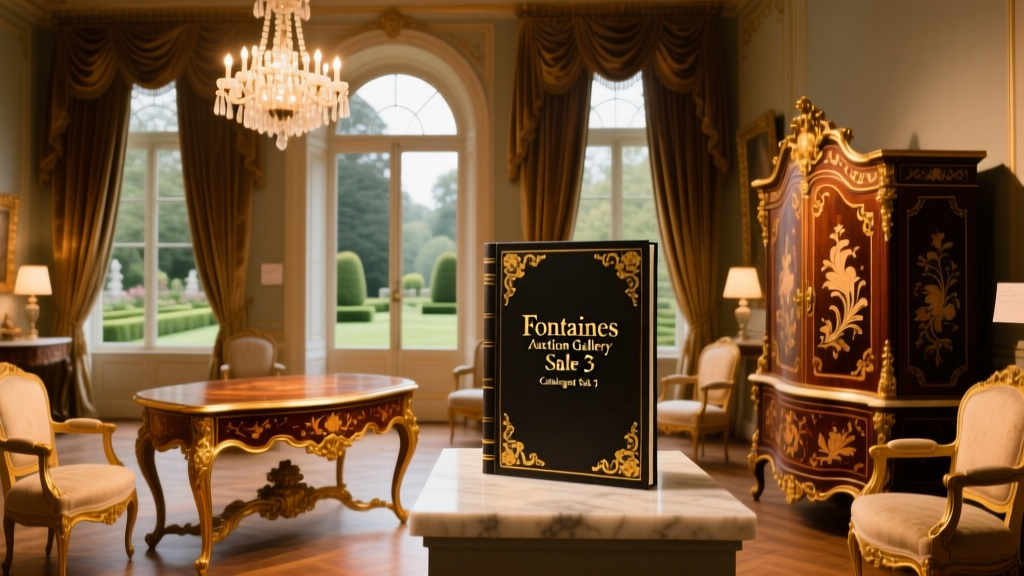
Fontaines Auction Gallery Cataloged Sale 3: A Deep Dive into American and European Antiques, Including Rare 18th-Century Newport Block-Front Chests and George III Mahogany Library Tables
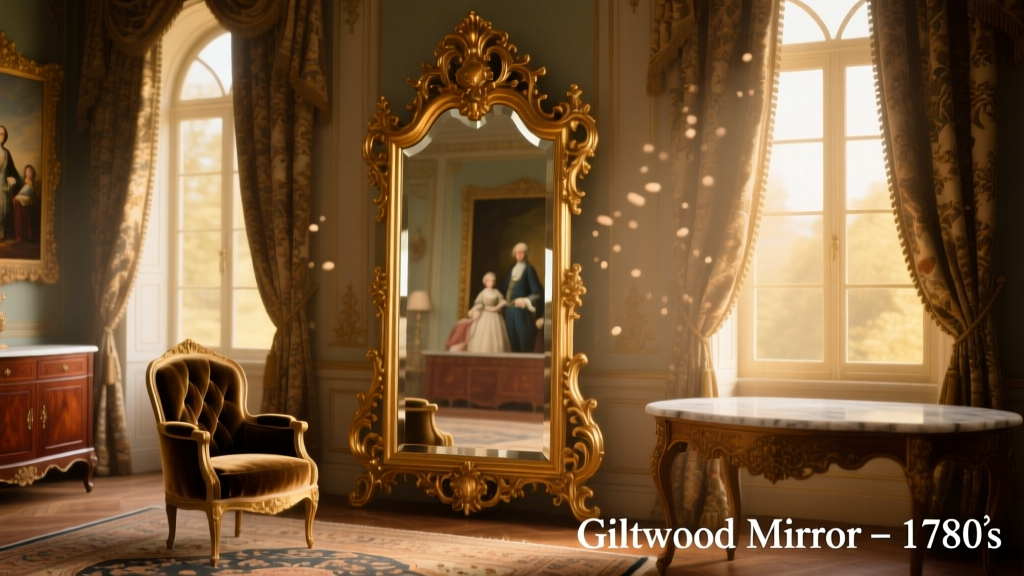
Giltwood Carved Beveled Mirror: Authentic Restoration, Provenance, and Structural Integrity of a 45 × 31 × 7-Inch Antique
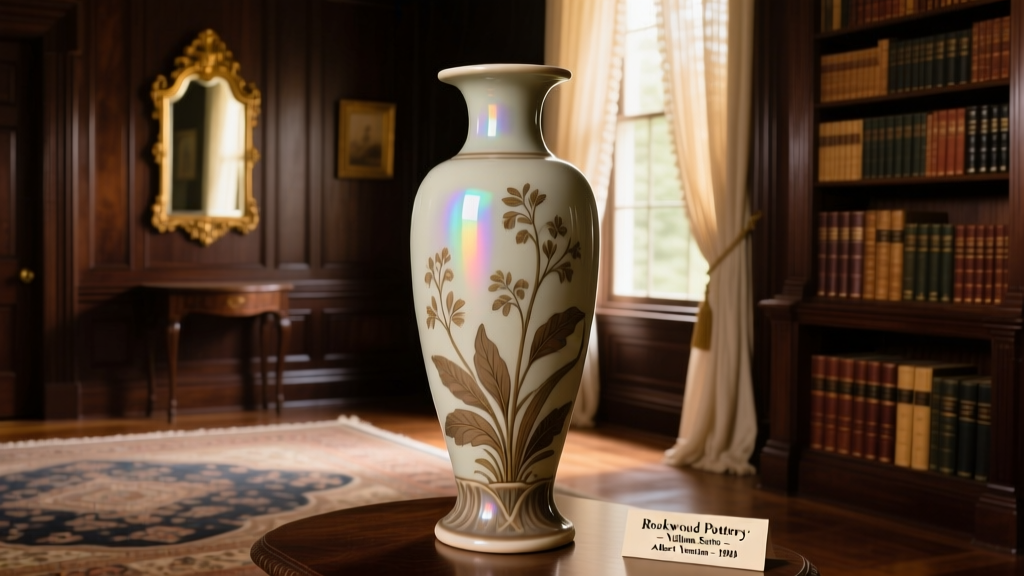
Rookwood Vase with Impressed Mark: Vellum Glaze, Albert Valentien Signature, 1904, 13¾ Inches Tall