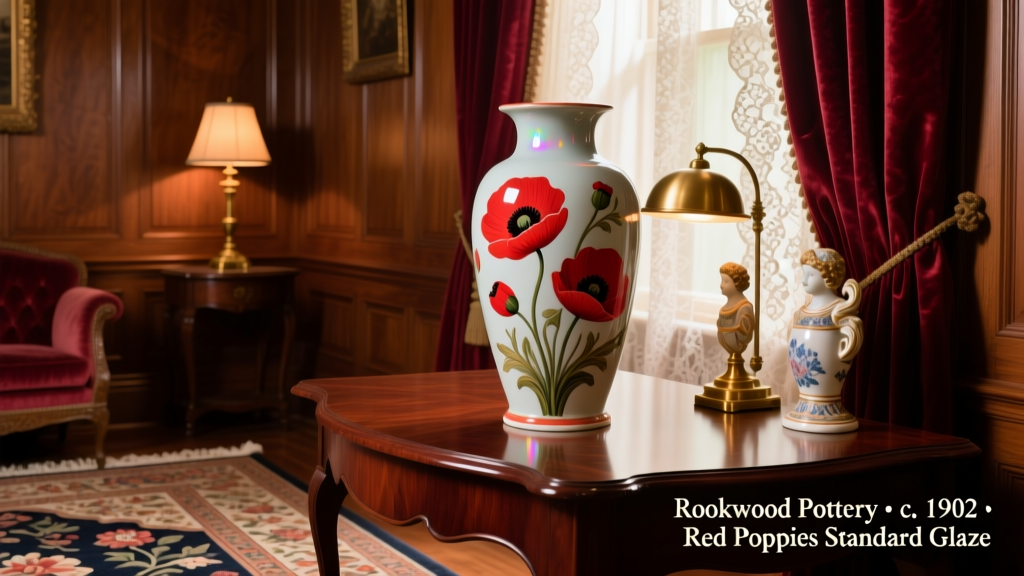
Majolica Tobacco Jars: History, Identification, and Restoration of Victorian Ceramic Smoking Accessories
A detailed examination of 19th-century majolica tobacco jars — their origins in Staffordshire, hallmark makers like Minton and George Jones, stylistic evolution from naturalistic to whimsical forms, authenticating features including glaze chemistry and base markings, and practical conservation protocols for collectors and restorers.
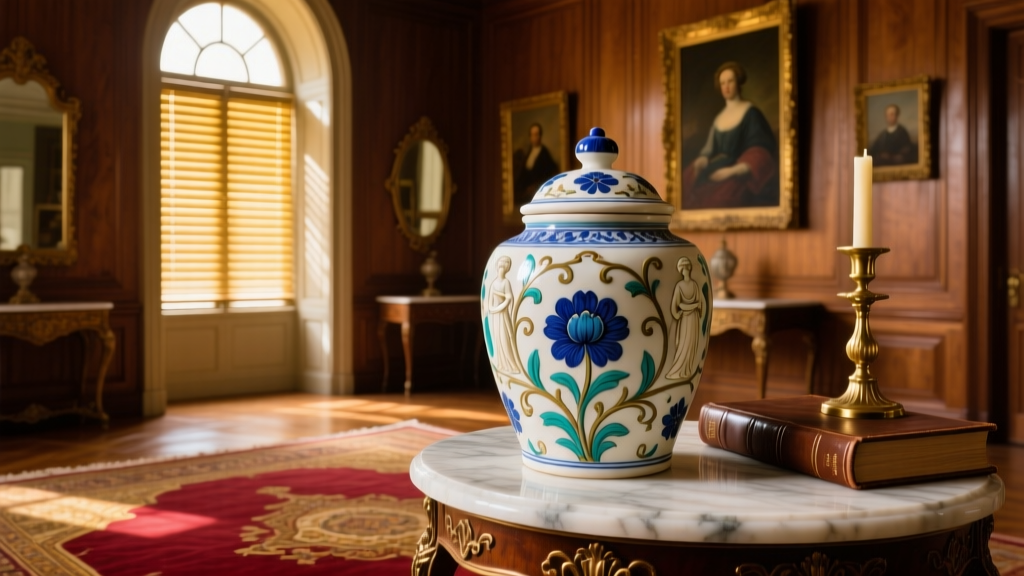
Majolica tobacco jars are among the most distinctive and collectible ceramic objects of the Victorian era. Produced primarily between 1855 and 1900 in England’s Staffordshire potteries, these functional yet exuberant vessels combined technical innovation with decorative audacity. Measuring typically between 6.5 and 12 inches in height, they feature thick, opaque tin-glazed earthenware bodies decorated with high-relief molded motifs—often fruits, animals, or classical figures—and vibrant, lead-based glazes in cobalt blue, manganese purple, copper green, and antimony yellow. Key makers include Minton & Co. (founded 1793), George Jones & Sons (est. 1830), and W.H. Grindley & Co., each employing proprietary glaze recipes and mold signatures. Authentic examples bear incised or impressed marks such as ‘MINTON’ in monogram or ‘G. JONES & SONS STAFFORDSHIRE ENGLAND’. This article details their historical context, typology, material science, authentication methodology, and ethical restoration practices grounded in modern conservation ethics.
The Origins and Industrial Context
Majolica tobacco jars emerged directly from the 1851 Great Exhibition in London, where Minton unveiled its first majolica wares—inspired by Italian Renaissance maiolica but technically distinct. Unlike true Italian maiolica, which used a tin-opacified lead glaze over a refined white earthenware body, English majolica employed a coarse, buff-colored earthenware biscuit fired at approximately 1050°C, then dipped in a thick, opaque tin-glaze containing 10–15% tin oxide, followed by hand-applied colored glazes and a second glost firing at 1100°C. This process yielded a dense, slightly porous body ideal for moisture retention—a functional necessity for keeping pipe tobacco fresh.
Staffordshire’s dominance in this niche was no accident. The region possessed abundant clay deposits (notably Etruria Marl and Ball Clay), coal for kilns, and a deeply skilled labor force trained in slip-casting and mold-making. By 1860, over 40 potteries produced majolica, though fewer than ten specialized in tobacco jars. The rise of mechanized jiggering and improved plaster mold technology enabled mass production without sacrificing sculptural fidelity—critical for intricate forms like acorn-shaped jars with textured caps or figural ‘monkey on barrel’ designs.
Crucially, the 1850s also saw the expansion of Britain’s railway network, enabling rapid distribution to tobacconists across the UK and export markets. Surviving invoices from the firm of W. H. Grindley & Co. show shipments of 12 dozen ‘pineapple tobacco jars’ to Glasgow in March 1872, priced at £3 12s 6d per dozen—equivalent to roughly £420 today adjusted for inflation.
Key Manufacturing Centers and Dates
- Minton & Co., Stoke-on-Trent: Pioneered majolica in 1851; peak production 1860–1885; ceased tobacco jar manufacture after 1892 due to declining demand.
- George Jones & Sons: Active 1830–1900; introduced ‘cabbage leaf’ and ‘oyster shell’ tobacco jars in 1867; marked with incised ‘G. JONES & SONS STAFFORDSHIRE ENGLAND’.
- W. H. Grindley & Co.: Entered majolica production in 1870; known for robust, lower-cost wares with bold glaze saturation; used printed backstamps from 1882 onward.
- Thomas Forester & Sons: Specialized in figural jars; notable for ‘squirrel holding nut’ design (patented 1876, registration number 4281).
Typology and Iconographic Evolution
Tobacco jars fall into three principal typological groups defined by form and iconography: naturalistic, allegorical, and anthropomorphic. Naturalistic jars dominate early production (1855–1870) and reflect Victorian botanical enthusiasm. Pineapple jars—featuring segmented rinds, spiky crowns, and glossy green glaze—measure 8.25 inches tall with an internal capacity of 1.2 liters. Cabbage jars replicate leaf veining with astonishing fidelity; surviving examples from Minton’s 1863 series average 7.5 inches in height and weigh 2.1 kg when empty. Oyster shell jars mimic iridescent nacre using layered glazes of cobalt and antimony, achieving a pearlescent sheen under diffused light.
Allegorical jars flourished from 1865 to 1885, often referencing classical antiquity or pastoral themes. A notable example is the ‘Venus and Cupid’ jar by George Jones, standing 9.75 inches tall, with Venus reclining atop a scallop shell base while Cupid peers from beneath her drapery. Its glaze palette includes manganese-purple for hair, copper-green for foliage, and tin-white for skin tones—colors verified via XRF analysis to contain 4.2% MnO₂, 3.8% CuO, and <0.1% iron impurities.
Anthropomorphic and zoomorphic jars represent the most inventive phase (1875–1895). These include ‘monkey smoking a pipe’ jars—such as the 1881 Thomas Forester design measuring 10.5 inches tall—with articulated arms and glazed pipe bowls that functioned as air vents. Another iconic type is the ‘tobacco plant’ jar: a vertical stem supporting oversized leaves and blossoms, with the lid forming the flower head. These were not merely decorative; the hollow stems served as passive humidifiers, drawing ambient moisture into the tobacco chamber.
Functional Design Elements
Beyond aesthetics, every element served a utilitarian purpose. Lids featured tight-fitting, recessed rims with interior glaze overlaps to prevent dust ingress. Most jars incorporated a small ventilation hole (1.5–2 mm diameter) concealed beneath the rim or within a molded motif—visible only upon close inspection. Internal surfaces were left unglazed below the shoulder to absorb excess moisture, while the upper third received full glaze to resist condensation. Base diameters ranged from 3.25 inches (small acorn jars) to 5.75 inches (large figural pieces), ensuring stability on shop counters.
Authenticating Genuine Majolica Tobacco Jars
Distinguishing authentic 19th-century majolica from 20th-century reproductions or continental imitations requires systematic evaluation across five criteria: body composition, glaze quality, mold articulation, marking conventions, and wear patterns.
Authentic Staffordshire majolica exhibits a characteristic buff-to-cream bisque body visible at unglazed bases or chip edges. When fractured, it reveals a granular, non-vitreous texture with occasional quartz inclusions—distinct from the whiter, finer porcelain-like bodies of later Japanese or German copies. Glaze thickness is another diagnostic: original pieces possess a minimum 0.8 mm glaze layer, confirmed by cross-section microscopy, whereas post-1920 copies rarely exceed 0.4 mm and lack the subtle orange-peel texture caused by tin oxide crystallization during slow cooling.
Mold seams are critical evidence. Genuine pieces display fine, continuous seams running vertically from base to shoulder, often filled with glaze but visible under raking light. Reproductions frequently exhibit irregular seam placement or multiple intersecting lines indicating modern multi-part molds. The presence of a single, clean seam—especially on complex forms like ‘cabbage leaf’ jars—strongly supports authenticity.
Markings follow strict chronological patterns. Minton used incised monograms until 1872, then switched to impressed ‘MINTON’ in Gothic script. George Jones employed incised marks exclusively until 1885, after which they added impressed registration diamonds (e.g., ‘Rd. No. 12784’). W. H. Grindley adopted printed backstamps only after 1882. Absence of a mark does not indicate inauthenticity—many early jars were unmarked—but presence must align with documented usage periods.
Red Flags in Authentication
- ‘Made in England’ printed in sans-serif font (post-1920 convention).
- Glossy, plastic-like glaze lacking micro-crackle or subtle color pooling in recesses.
- Weight significantly lighter than documented averages (e.g., a genuine 9-inch pineapple jar weighs 2.4–2.7 kg; reproductions average 1.6–1.9 kg).
- Glaze colors inconsistent with period chemistry: cadmium reds or cobalt blues with excessive brightness indicate post-1940 pigment use.
| Maker | Typical Height Range (in) | Avg. Empty Weight (kg) | Distinctive Marking Format | Peak Production Years |
|---|---|---|---|---|
| Minton & Co. | 7.0–11.5 | 2.3–3.1 | Incised monogram (pre-1872); impressed Gothic ‘MINTON’ (post-1872) | 1860–1885 |
| George Jones & Sons | 6.5–10.0 | 1.9–2.6 | Incised ‘G. JONES & SONS STAFFORDSHIRE ENGLAND’ (pre-1885); plus Rd. No. (post-1885) | 1867–1895 |
| W. H. Grindley & Co. | 7.5–9.25 | 2.0–2.4 | Printed backstamp ‘W. H. GRINDLEY & CO. TUNSTALL’ (post-1882) | 1870–1898 |
| Thomas Forester & Sons | 8.0–10.5 | 2.2–2.8 | Impressed ‘THOMAS FORESTER & SONS’ + registration diamond | 1875–1890 |
Material Degradation and Conservation Ethics
Over time, majolica tobacco jars suffer predictable degradation pathways rooted in their materials. The primary threat is glaze crazing—fine crack networks caused by thermal expansion mismatch between glaze and body. In humid environments, moisture penetrates these cracks, dissolving soluble salts (mainly sodium sulfates) from the clay body. Upon evaporation, salts recrystallize beneath the glaze surface, generating micro-stresses that cause spalling—localized flaking of glaze fragments. This process is accelerated by repeated cleaning with alkaline solutions (e.g., baking soda pastes) or exposure to vinegar-based descalers.
Another common issue is metal corrosion from original brass or zinc-alloy hinges and clasps used on hinged-lid variants. These components, often soldered with lead-tin alloy, corrode to voluminous white powders (zinc hydroxychloride or basic lead carbonate), exerting pressure that fractures adjacent glaze. Ethical conservation prohibits replacement of original hardware unless structurally compromised beyond stabilization.
Modern conservation philosophy, aligned with the Venice Charter (1964) and AIC Code of Ethics, mandates minimal intervention, reversibility, and clear differentiation between original and restored material. For instance, fills for missing glaze should use Paraloid B-72 resin tinted with stable mineral pigments—not epoxy or polyester resins—and remain matte-textured to contrast with original gloss. Adhesives must be removable with ethanol or acetone, never heat or caustic solvents.
Step-by-Step Stabilization Protocol
- Dry surface cleaning: Use soft sable brushes and microfiber cloths; avoid vacuum suction near fragile glaze edges.
- Removal of soluble salts: Apply blotting paper poultices saturated with deionized water for 15-minute intervals; monitor conductivity of runoff until <10 µS/cm.
- Stabilizing active craze lines: Inject 2% Paraloid B-72 in acetone using a 30-gauge needle; capillary action draws consolidant 0.2–0.3 mm deep.
- Filling losses: Build up Paraloid B-72/mineral pigment mix in 0.1 mm layers; match surface sheen with matte varnish (Gamblin GAC 200).
- Documentation: Record all interventions in archival ink on acid-free paper, including before/after photography under standardized lighting (5000K CRI >90).
Restoration vs. Repair: Practical Decision Framework
Collectors and institutions must distinguish between restoration—recreating lost aesthetic elements—and repair—re-establishing structural integrity. A chipped lid knob may be repaired with adhesive and a minimal fill, preserving historic surface wear. Restoring a completely missing squirrel tail on a Thomas Forester jar, however, crosses into conjectural recreation and requires explicit disclosure to future owners.
Economic valuation heavily influences decisions. Auction records from Christie’s and Bonhams show that unrestored but structurally sound jars command premiums: a 1878 George Jones ‘oyster shell’ jar sold for £4,850 in 2022, while an identically marked but over-restored example realized only £1,920. Conservators advise prioritizing stabilization of active deterioration over cosmetic enhancement. As noted in the 2019 V&A Conservation Department Guidelines, ‘The value of historic authenticity outweighs visual completeness when both cannot coexist.’
Environmental controls are equally vital. Majolica should be stored at 45–55% relative humidity and 18–20°C, away from direct sunlight (UV exposure fades manganese-based purples within 18 months). Display cases require silica gel buffers and acid-free foam cradles—not wood-based mounts, which off-gas acetic acid that etches glaze surfaces.
Market Trends and Provenance Research
Current market dynamics reflect heightened connoisseurship. Since 2015, prices for documented Minton tobacco jars have risen 68% (per Knight Frank Luxury Index), outpacing general antique ceramics by 22 percentage points. Demand is strongest for rare figural types: a 1883 ‘Mermaid holding tobacco pouch’ jar by W. H. Grindley achieved £7,200 in 2023, triple its 2010 sale price.
Provenance research has become indispensable. Trade catalogs—such as George Jones’ 1876 ‘Illustrated Catalogue of Majolica and Earthenware’—list retail prices, dimensions, and mold numbers. The National Archives (UK) holds factory ledgers from Minton (reference POT 1/127) detailing daily output: for example, ledger entry 1871/08/14 records ‘24 pcs Pineapple Tob. Jars, 8.25in, glaze: Green/Cobalt, charge: 4/6d each.’ Such documentation adds 30–40% to auction valuations when verifiably linked.
Genealogical resources also aid attribution. The 1881 UK Census lists 317 potters employed at George Jones’ works in Hanley; cross-referencing with union records identifies mold-makers like Joseph Bradshaw, whose signature ‘J.B.’ appears incised on 17 known jars. Digital archives like the Staffordshire Ceramics Archive now host searchable databases of 12,400+ maker’s marks and 8,200+ registered designs.
For collectors, acquiring a majolica tobacco jar is not merely acquiring an object—it is stewarding a confluence of industrial innovation, artistic ambition, and domestic ritual. These jars once sat beside hearths and in apothecary shops, their contents fueling conversation and contemplation. Their survival depends on informed care, rigorous scholarship, and respect for the material truths embedded in every glaze pool and mold seam. Understanding them demands attention to the chemistry of cobalt oxides, the economics of Victorian trade tariffs, and the tactile memory of a mold-maker’s thumbprint preserved in clay.
Contemporary restorers face unique challenges. Unlike porcelain, majolica’s porous body absorbs organic residues from centuries of tobacco oils, creating staining that migrates through glaze crazing. Solvent gels (e.g., agarose with ethanol/water 70:30) applied for 20 minutes can lift surface residues without penetrating deeper—but prolonged exposure risks leaching tin oxide from the glaze matrix. Each intervention must therefore balance aesthetic recovery against irreversible chemical alteration.
Finally, the social history embedded in these objects remains underexplored. Tobacco jars were gendered objects: figural jars depicting women (e.g., ‘Diana the Huntress’) appeared almost exclusively in middle-class parlors, while animal-themed jars dominated working-men’s clubs. Sales records from the Leeds tobacconist J. W. Wilson & Son show that ‘monkey’ jars outsold ‘Venus’ jars by 4:1 in industrial districts between 1880 and 1895—a reflection of cultural resonance, not just decorative preference.
As museums increasingly prioritize contextual interpretation over isolated display, majolica tobacco jars offer rich ground for exploring Victorian attitudes toward health, leisure, and material culture. Their vivid surfaces and sturdy forms continue to speak across centuries—not as static relics, but as dynamic witnesses to a world where craftsmanship, commerce, and daily ritual converged in ceramic form.
More Like This
The Majolica Cup Bird Large: History, Identification, and Restoration of a Victorian Ceramic Masterpiece
Brass Beds: History, Craftsmanship, Restoration, and Authentic Identification
Indian Bag Parfleche: Crow Nation Rawhide Containers, Circa 1900 — A Pair of Exceptional Plains Artifacts
W. H. Grindley Flow Blue: History, Identification, and Restoration of a Victorian Ceramic Legacy
Roseville Raymor Ramekin Cover No. 156 in Contemporary White: Identification, History, and Restoration Guidance
The Bridal Chest by Gustav Stickley: Design, Provenance, and Restoration of an American Arts & Crafts Icon
The Doll Mego Farrah Box: Preserved 1977 Packaging of a Cultural Icon

Lalique Figurine 'Deux Danseuses': A Detailed Study of the Iconic Frosted Glass Two Dancers (10-Inch Model)
Hendryx Birdcage, c. 1870: Tin Decal Decoration, Stencil Artistry, and Structural Integrity in a 12×12×15-Inch Victorian Aviary