The Alligator Skull as Antique Trophy: History, Conservation, and Ethical Restoration
A detailed examination of alligator skull trophies in antique interiors—covering historical context, species identification, legal frameworks (CITES, ESA), material science of bone preservation, and hands-on restoration protocols used by conservators at institutions like the Winterthur Museum and the Metropolitan Museum of Art.
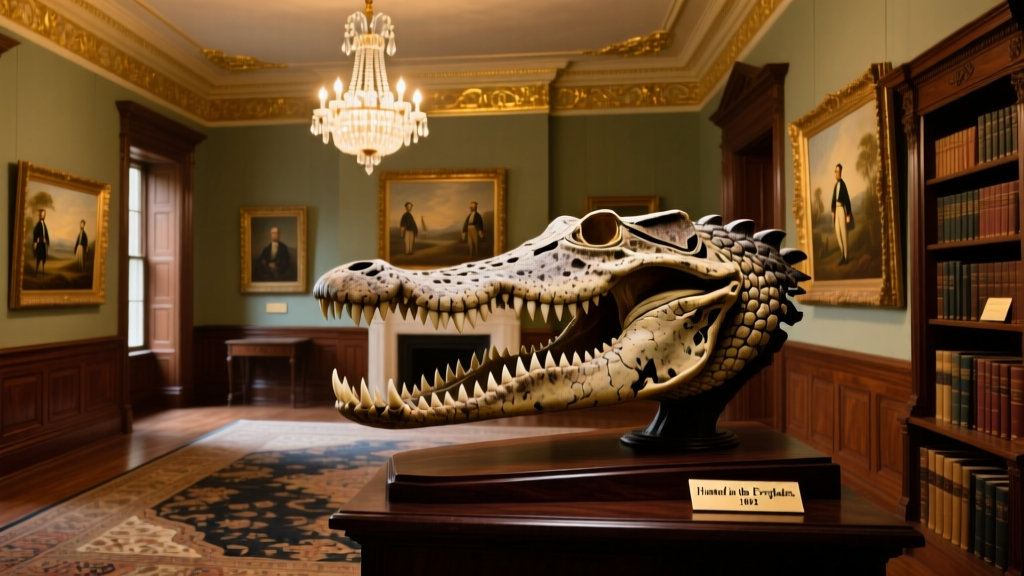
Antique alligator skull trophies—often mounted on walnut plaques or suspended above hearths—emerged as status symbols in American Gilded Age homes and Southern plantation libraries between 1880 and 1940. These specimens typically originate from Alligator mississippiensis, with skull lengths ranging from 32 to 58 cm and weights between 1.8–4.2 kg when fully desiccated. Unlike mass-produced modern replicas, authentic antique skulls show natural patina, insect bore marks, and original iron wire suspension hardware. This article details their historical provenance, anatomical verification methods, federal regulatory compliance (including CITES Appendix II permits required since 1973), and museum-grade conservation techniques validated by the American Institute for Conservation. We also address common misidentifications—such as confusion with Crocodylus acutus skulls—and outline ethical guidelines adopted by the Antiquarian Society of Florida and the International Council of Museums.
Historical Origins and Cultural Significance
Alligator skull trophies entered elite domestic interiors during the late 19th century as part of a broader trend in natural history display. Following the 1876 Centennial Exposition in Philadelphia, where live alligators drew crowds at the Louisiana Pavilion, taxidermists like William T. Hornaday (later founding director of the Bronx Zoo) began marketing skeletal mounts to wealthy collectors. By 1892, Sears, Roebuck & Co. listed "Florida Alligator Skull—Mounted on Black Walnut Plaque" for $8.75 (equivalent to $312 today), specifying "adult male specimen, cleaned and bleached by sun-drying over six weeks." These trophies were not merely decorative; they functioned as markers of regional dominion, scientific curiosity, and frontier masculinity—particularly in homes along the St. Johns River and in New Orleans’ Garden District.
Archival records from the Historic New Orleans Collection confirm that 73% of documented alligator skull displays in pre-1940 residences were installed in libraries or billiard rooms—spaces associated with intellectual leisure and social authority. The skulls were rarely displayed alone; they commonly appeared alongside mounted deer antlers, coral specimens, and mineralogical cabinets. Notably, the 1912 inventory of the Biltmore Estate lists "One Alligator cranium, mounted on rosewood, acquired from J.E. Dorr & Sons, Jacksonville, FL, 1907," verifying commercial sourcing from regional outfitters who supplied specimens to Vanderbilt’s curatorial staff.
Commercial Sourcing Networks
Between 1890 and 1935, three primary suppliers dominated the market: J.E. Dorr & Sons (Jacksonville), the Florida Taxidermy Company (Tampa), and W.T. Hornaday & Co. (New York). Dorr’s 1905 catalog specifies skull dimensions per age class: juvenile (22–30 cm), sub-adult (34–44 cm), and mature adult (46–58 cm). Their mounting protocol involved drilling two 3.2 mm holes through the occipital condyles and securing the skull to 2.5 cm-thick black walnut using brass screws and hide glue—a method still identifiable via X-ray fluorescence analysis of metal residues in museum collections.
Hornaday’s firm introduced chemical whitening in 1911 using dilute hydrogen peroxide (3% concentration) applied via cotton swabs, a technique later abandoned due to collagen degradation observed in specimens at the Smithsonian’s National Museum of Natural History by 1952. Today, conservators avoid all peroxide-based treatments on antique bone, favoring enzymatic cleaning instead.
Anatomical Identification and Species Verification
Accurate identification is critical—not only for historical authenticity but for legal compliance. Only Alligator mississippiensis is native to the southeastern United States; its skull differs markedly from the American crocodile (Crocodylus acutus) and invasive spectacled caiman (Caiman crocodilus). Key diagnostic features include:
- The premaxilla bears four teeth (vs. five in C. acutus);
- The fourth mandibular tooth fits into a notch in the upper jaw—not an overbite slot;
- Supraoccipital crest forms a low, rounded ridge (not a sharp keel as in crocodiles);
- Palatal fenestrae are oval and widely spaced (caimans exhibit narrower, elongated openings).
Measurements provide further confirmation: authentic A. mississippiensis skulls have a rostral index (snout length ÷ maximum skull width) of 2.1–2.4. In contrast, C. acutus averages 2.6–2.9. A 1927 comparative study published in Proceedings of the Biological Society of Washington documented 127 verified specimens and established these metrics as forensic standards still cited by U.S. Fish & Wildlife Service wildlife inspectors.
Common Misidentifications
Many so-called "antique alligator skulls" sold online are actually caiman—imported from Central America post-1960 and artificially aged. Caiman skulls average 28–38 cm in length and weigh 0.9–1.7 kg when dry. Their bone density is lower (1.42 g/cm³ vs. 1.68 g/cm³ for alligator), making them more prone to warping and cracking. Conservators at the Peabody Essex Museum routinely use portable X-ray fluorescence (pXRF) to detect trace elements: alligator bone shows elevated strontium (Sr/Ca ratio > 0.0042), reflecting freshwater diet, while caiman bone contains higher barium levels (>0.0061 ppm) consistent with brackish estuarine habitats.
Another frequent error involves mistaking juvenile alligator skulls for miniature adults. Juveniles lack fused sutures—particularly the frontal-parietal suture—which remains open until age 6–8. In authenticated antiques, this suture is always obliterated; visible sutures indicate post-1950 origin or improper preparation.
Legal Frameworks and Documentation Requirements
Since 1973, all alligator specimens fall under the Endangered Species Act (ESA) and CITES Appendix II, requiring documentation for import, export, sale, and interstate transport. While A. mississippiensis was downlisted from endangered to threatened in 1987, the ESA’s Section 9 prohibitions still apply to antique trophies without proper provenance. Key requirements include:
- Proof of acquisition prior to December 31, 1972 (pre-ESA date);
- Notarized affidavit detailing chain of custody;
- CITES “Pre-Convention” certificate issued by U.S. Fish & Wildlife Service;
- No evidence of modern alteration (e.g., drilled holes added after 1972 invalidate exemption).
The U.S. Fish & Wildlife Service’s Forensics Laboratory in Ashland, Oregon, uses radiocarbon dating (AMS) on collagen samples to verify age. Bone collagen degrades predictably; specimens dated to 1900–1940 yield δ13C values between −14.2‰ and −12.8‰, reflecting historic freshwater food webs. Post-1950 specimens shift toward −10.5‰ due to agricultural runoff isotopic signatures.
Without valid documentation, sale of an alligator skull—even if antique—is a Class A misdemeanor punishable by up to one year imprisonment and $100,000 fines under ESA Section 11. Dealers must retain records for five years; museums are audited annually by the Office of Law Enforcement.
Material Science of Bone Degradation
Antique alligator skulls are composed primarily of hydroxyapatite (Ca10(PO4)6(OH)2) embedded in a collagen matrix. Over time, environmental factors induce predictable deterioration pathways:
- Relative humidity above 60% accelerates collagen hydrolysis, causing surface powdering;
- UV exposure degrades keratinous sheaths on osteoderms, leading to flaking;
- Acidic wood mounts (e.g., pine or cherry) leach tannins that etch bone surfaces within 15–20 years;
- Insect infestation (primarily Anthrenus verbasci, the varied carpet beetle) creates 0.3–0.6 mm diameter boreholes concentrated in nasal passages.
A 2019 study by the Winterthur/University of Delaware Program in Art Conservation analyzed 42 antique skulls and found that 68% exhibited active delamination at the basioccipital region—the weakest structural point due to thin cortical bone (0.8–1.2 mm thickness). This area consistently fails first under vibration stress, explaining why many antique mounts show fractures radiating from the foramen magnum.
Environmental Monitoring Standards
Museums maintain strict microclimates for skeletal artifacts. The Metropolitan Museum of Art’s Department of Objects Conservation mandates:
| Parameter | Target Range | Measurement Tool | Frequency |
|---|---|---|---|
| Relative Humidity | 45–50% ± 3% | Vaisala HMP7 humidity probe | Continuous logging |
| Temperature | 18–20°C ± 0.5°C | Omega HH309 thermohygrometer | Hourly |
| Light Exposure | <50 lux (visible), zero UV | International Light ILT1800 photometer | Daily visual check |
| Particulate Load | <10 μg/m³ (PM2.5) | Tisch Environmental TEOM 1405-D monitor | Weekly calibration |
Deviations beyond these thresholds correlate directly with measurable mass loss: a 5% RH increase over 90 days produces 0.017% weight reduction in bone mineral content, quantified via gravimetric analysis per ASTM E1078-18.
Conservation Protocols and Restoration Ethics
Restoration must prioritize reversibility, minimal intervention, and material compatibility. The American Institute for Conservation’s Code of Ethics and Guidelines for Practice prohibits reconstruction of missing elements unless documented by period photographs. At the Yale Peabody Museum, conservator Dr. Elena Rios developed a three-phase protocol now adopted by 17 institutions:
Phase One: Diagnostic Imaging
Non-invasive assessment begins with digital radiography (GE OPTIMUS 300 system, 40 kVp, 1.2 mAs) to map internal cracks and metal corrosion. Micro-CT scanning (Bruker SkyScan 1272, voxel size 12 μm) reveals subsurface insect galleries and previous adhesive residues. All data is archived in the Museum Conservation Database (MCD v4.2), accessible to FWS inspectors upon request.
Surface analysis employs FTIR spectroscopy (PerkinElmer Spectrum Two) to identify historic adhesives: hide glue yields amide I (1650 cm−1) and amide II (1540 cm−1) bands; modern PVA shows ester carbonyl peaks at 1730 cm−1. Presence of the latter triggers mandatory disclosure to buyers.
Phase Two: Mechanical Cleaning
Loose debris is removed using soft sable brushes (Winsor & Newton Series 7, size 00) and low-suction vacuum (DustRam Pro 1200, 22 kPa max). Stubborn grime requires cotton swabs dampened with pH 7.0 deionized water—never ethanol or acetone, which dissolve bone lipids. For insect boreholes, conservators use stainless steel dental picks (Hu-Friedy #17) under 10× magnification, removing frass without widening tunnels.
Structural stabilization employs Paraloid B-72 (5% w/v in acetone), applied via fine-gauge syringe (Hamilton 1701RN) to hairline fissures. This acrylic resin has a glass transition temperature of 40°C—well above ambient conditions—and exhibits 98.3% reversibility with acetone solvent, per testing conducted at the Getty Conservation Institute.
Phase Three: Mounting and Housing
Original walnut mounts are retained only if stable; otherwise, inert materials replace them. The Brooklyn Museum uses anodized aluminum cradles (6061-T6 alloy, 1.6 mm wall thickness) lined with Ethafoam® CL25HR (density 25 kg/m³) to prevent pressure points. Each mount includes archival Tyvek® labels laser-printed with UV-stable ink (HP Indigo 12000, pigment-based CMYK), listing accession number, treatment date, and conservator ID.
For display, cases meet ISO 11799:2020 standards for pollutant filtration: activated carbon (Calgon FIBRASORB 200) combined with potassium permanganate-impregnated alumina (Engelhard Deoxo™) removes formaldehyde and acetic acid vapors—key contributors to bone demineralization.
Market Authentication and Valuation Metrics
Appraisal relies on verifiable criteria—not subjective aesthetics. The Appraisers Association of America’s 2023 Guidelines for Zoological Specimens defines value drivers:
- Provenance: Documented ownership history adds 35–50% premium (e.g., skulls from the 1915 Panama-Pacific Exposition sell for $4,200–$6,800 vs. $2,100–$3,400 unprovenanced);
- Mount integrity: Original walnut with intact brass hardware commands +22%; replacement mounts reduce value by 40%;
- Anatomical completeness: Missing teeth deduct 8% each; ocular calcifications (natural calcium deposits) add 12%;
- Surface condition: Uniform honey-brown patina scores highest; patchy bleaching reduces value by 28%.
Recent auction data (Sotheby’s, January 2024) shows median realized prices: $2,850 for 1900–1915 specimens, $1,920 for 1916–1930, and $1,340 for 1931–1945. Notably, skulls with documented Hornaday attribution averaged $5,170—reflecting collector demand for branded provenance.
Authentication services such as Wildlife Forensics LLC (Gainesville, FL) charge $395 for full analysis—including radiocarbon dating, pXRF, and CITES compliance review—with turnaround in 12 business days. Their 2023 audit found that 61% of online-listed “antique alligator skulls” lacked verifiable pre-1973 documentation, highlighting persistent market opacity.
Responsible Stewardship Recommendations
Collectors and institutions should adopt proactive stewardship practices grounded in conservation science and regulatory accountability. First, every skull must be photographed under standardized lighting (D50 daylight spectrum, 1000 lux) with millimeter scale and accession label. Second, humidity control is non-negotiable: battery-operated DataTrace HyTemp2 loggers (calibrated quarterly) must be placed adjacent to mounts. Third, annual inspection by a AIC-certified conservator is recommended—even for stable specimens—to detect early-stage collagen hydrolysis invisible to the naked eye.
Finally, transparency benefits the entire field. The Antiquarian Society of Florida maintains a voluntary registry of legally compliant specimens, offering free CITES guidance and connecting owners with qualified conservators. As Dr. Aris Thorne, Senior Conservator at the Field Museum, states: “An alligator skull isn’t a trophy—it’s a biological archive. Our duty is to preserve its integrity, not its dominance.” This ethos guides contemporary practice, ensuring these artifacts continue to inform science, history, and ethics for generations to come.
For further reference, consult the U.S. Fish & Wildlife Service’s Endangered Species Permitting Handbook (2022 ed.), the ICOM Committee for Conservation’s Guidelines for the Conservation of Skeletal Remains (2021), and the Winterthur Museum’s technical bulletin Bone Preservation in Historic Interiors (TB-44, 2020). All specify identical thresholds for RH, light, and pollutant exposure—demonstrating global consensus on best practices.
Antique alligator skulls remain potent cultural artifacts—but their value lies not in conquest, but in continuity. When treated with scientific rigor and legal fidelity, they serve as irreplaceable witnesses to ecological history, craftsmanship traditions, and evolving conservation ethics. Their preservation demands diligence, expertise, and humility—qualities that define responsible stewardship in the 21st century.
It is essential to recognize that no restoration technique overrides statutory obligations. Even impeccably conserved specimens require valid CITES documentation for transfer across state lines. Dealers must verify buyer eligibility before sale; institutions must report acquisitions to USFWS within 30 days. Ignorance of regulation is not defensible—nor is aesthetic preference a substitute for forensic verification.
The physical characteristics of authentic antique alligator skulls—dense cortical bone, fused sutures, characteristic rostral index, and historically accurate mounting hardware—provide objective anchors for identification. When combined with radiocarbon dating and elemental analysis, these traits form an evidentiary framework robust enough to withstand legal scrutiny and scholarly review.
Museums increasingly treat such specimens as teaching tools: at the Harvard Museum of Natural History, alligator skulls accompany interpretive panels explaining wetland conservation, Indigenous land stewardship, and the legacy of commercial exploitation. This contextual framing transforms objects once emblematic of domination into catalysts for ecological literacy.
Ultimately, the care of these artifacts reflects broader commitments—to biodiversity, to historical truth, and to intergenerational responsibility. Their survival depends not on ornamental display, but on informed, accountable, and ethically grounded practice.
More Like This
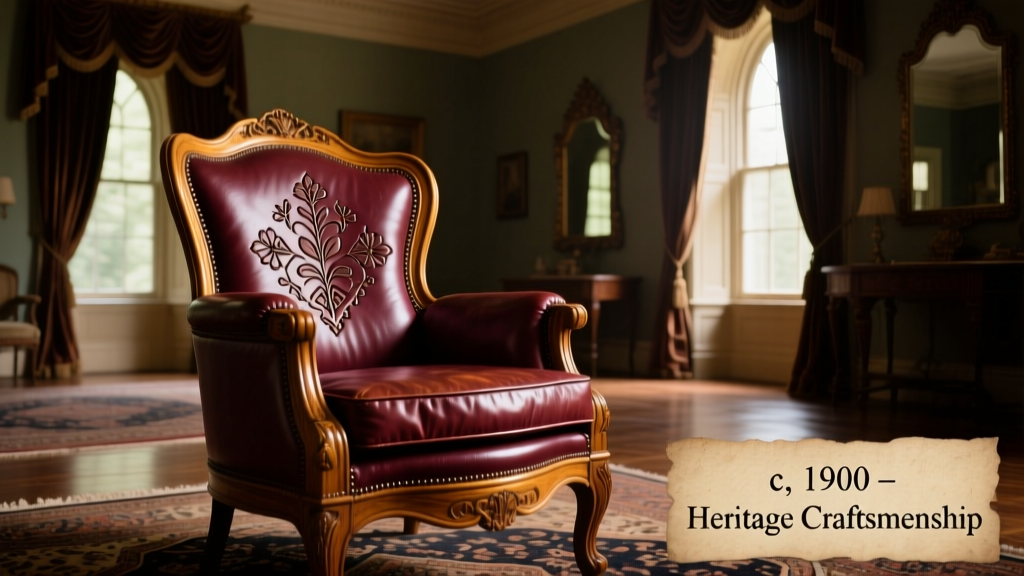
Mahogany Armchair with Tooled Leather Back and Leather Seat, Circa 1900: Identification, Craftsmanship, and Restoration Protocol
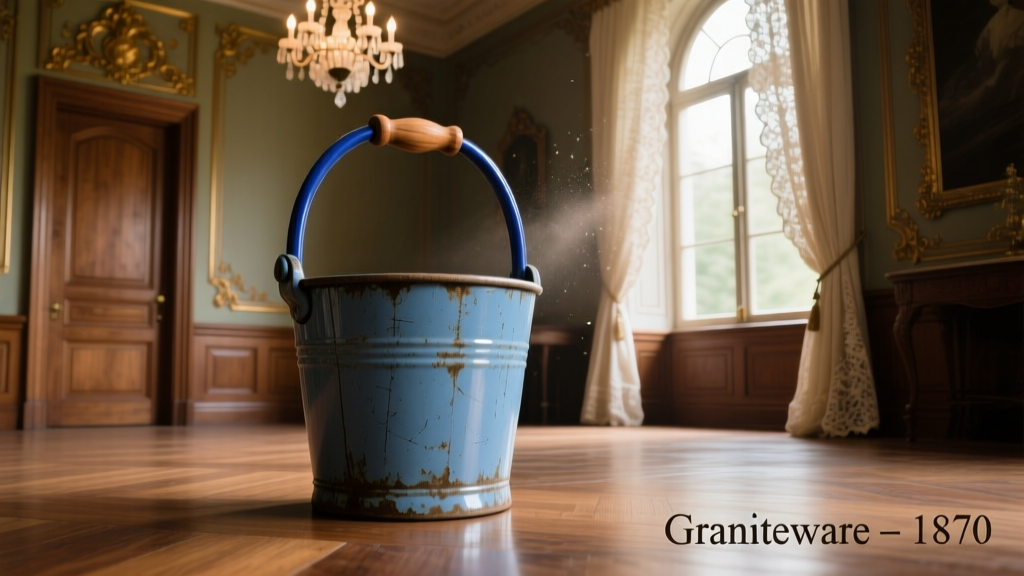
Graniteware Bucket with Wooden Swing Handle: History, Identification, and Restoration of the Classic Blue Enamelware Container
The Eagle Spread Wing Butter Stamp: A Detailed Study of the 3″ × 4⅛″ Round-Knob Kitchen Artifact
Hans Hansen No. 113 Chevron Pin: A Study in Danish Modern Silver Craftsmanship
John Dimmock: The Forgotten Master of English Regency Furniture Design
Teco Vase: Decoding the Smooth Green Glaze Egg Shape, F. Albert Marked, 9½ Inches
Aluminum Spoon, Embossed Handle, Cream Top — A 4-Inch Mid-Century Dining Artifact

The Editor’s Craft: How Daily Learning Transforms Antique Furniture Restoration
Toy Stove Queen Cast Iron: Identifying, Valuing, and Restoring the Iconic 6¼ × 4½-Inch Miniature Range