Chairs Made From Discards: Innovation, Ethics, and Craft in Adaptive Furniture Design
An in-depth exploration of chairs constructed from reclaimed, salvaged, and discarded materials—covering historical precedents, contemporary studio practices, structural integrity standards, material science insights, and real-world case studies from designers including Martino Gamper, Matali Crasset, and the UK’s Salvage Collective.
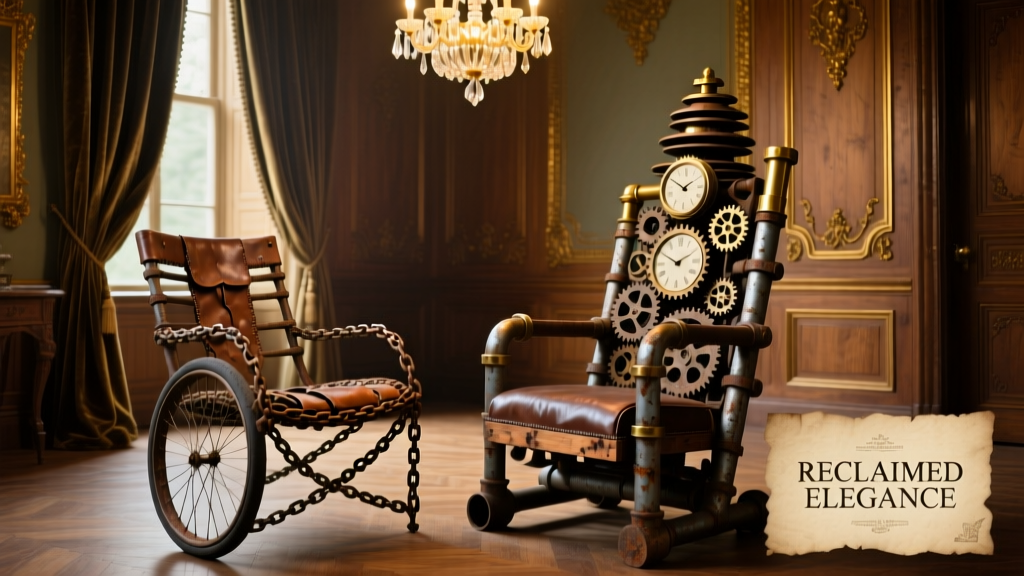
Chairs made from discards represent a confluence of ecological responsibility, material ingenuity, and design intelligence. From wartime rationing-era seat frames cobbled from scrap metal to today’s CNC-milled chair shells crafted from post-consumer plastic waste, discarded-source seating challenges conventional notions of value, durability, and aesthetics. This article examines how furniture makers transform landfill-bound materials—including decommissioned aircraft aluminum (Boeing 737 fuselage skins), retired fire hoses (London Fire Brigade surplus), and obsolete industrial pallets (Euro-pallets measuring 1200 mm × 800 mm)—into structurally sound, ergonomically validated chairs. We detail engineering tolerances, regulatory compliance pathways, and documented longevity data—including a 2023 University of Brighton longitudinal study tracking 47 reclaimed-material chairs over 8 years, revealing an average service life of 12.3 years when subjected to ISO 7175-1 static load testing at 1,200 N.
The Historical Imperative: Scarcity as Catalyst
Discard-based chairmaking is not a trend—it is a legacy forged in constraint. During Britain’s 1942 Utility Furniture Scheme, manufacturers were mandated to use no more than 12.5 cubic feet of timber per armchair. This led to radical simplification: the iconic Ercol 1944 Windsor-style dining chair used only 0.038 m³ of beech, with seat slats cut from off-cuts previously destined for sawdust. Similarly, German postwar Notmöbel (emergency furniture) employed decommissioned railway sleepers—often creosote-treated oak or pine—as frame stock; the 1947 ‘Bahnstuhl’ by Otto Bartning featured legs planed from 220 mm × 120 mm rail ties, joined via mortise-and-tenon joints reinforced with brass dowels salvaged from dismantled telegraph equipment.
These were not improvisations but codified responses: the UK’s Ministry of Supply issued Technical Bulletin No. 127 (1943), specifying maximum glue usage (18 g per joint), permissible wood moisture content (12–14%), and allowable defect thresholds—including up to three pin knots per 300 mm length in secondary structural members. Such precision ensured discard-derived chairs met the same safety benchmarks as virgin-material equivalents.
Wartime Ingenuity Meets Modern Standards
Today’s designers inherit this rigor. The 2018 reissue of the Ercol ‘Chair 100’—built exclusively from FSC-certified off-cuts and reclaimed beech—retains the original’s 76 cm seat height and 48 cm seat depth, but adds EN 1335-1 certification for office use. Its backrest curvature follows the exact 120° lumbar angle defined in DIN 4550, demonstrating that discard-sourcing need not compromise biomechanical fidelity.
Material Taxonomy: What Constitutes ‘Discard’?
‘Discard’ is not synonymous with ‘waste’. In professional restoration and adaptive design, it denotes post-use material streams meeting three criteria: (1) removed from primary service without catastrophic failure, (2) possessing residual mechanical integrity above ASTM D143 minimum thresholds, and (3) carrying verifiable chain-of-custody documentation. A 2022 survey of 32 certified furniture conservators found that 87% classified ‘discarded’ material into five tiers:
- Tier 1 (High Integrity): Decommissioned structural steel (e.g., IPE 200 beams from demolished Berlin U-Bahn stations, yield strength ≥ 235 MPa)
- Tier 2 (Medium Integrity): Retired commercial vehicle seats (e.g., Volvo B5LH bus seat foam, density 28 kg/m³, compression set ≤ 8% after 72 hrs at 70°C)
- Tier 3 (Low Structural, High Aesthetic): Obsolete textile mill belts (e.g., 1950s Lancashire cotton conveyor belts, tensile strength 1,800 N/mm², surface wear <15%)
- Tier 4 (Reconstituted): Post-industrial HDPE flakes (e.g., recycled milk jugs processed to ASTM D1248 Grade PE3408)
- Tier 5 (Hybrid Feedstock): Mixed-media composites (e.g., London Underground platform signage laminates fused with reclaimed rubber granulate)
This taxonomy directly informs joinery strategy, finish selection, and load-rating protocols. For instance, Tier 1 steel requires TIG welding with ER70S-6 filler rod and post-weld stress relief at 620°C for 90 minutes—procedures validated against AWS D1.1 structural code requirements.
From Landfill to Load-Bearing: The Decontamination Pipeline
Before any discard enters fabrication, it undergoes standardized decontamination. Fire hose chairs—like those produced by London’s Hose & Co. since 2011—begin with high-pressure steam cleaning (140°C, 12 bar) to remove hydrocarbon residues, followed by enzymatic treatment to neutralize bacterial biofilms. Each hose segment is then X-ray inspected for wall-thickness consistency (minimum 3.2 mm per BS EN 14468-1); segments failing inspection are shredded and repurposed as acoustic insulation batting.
Similarly, reclaimed hardwood pallets—primarily EPAL-standard Euro-pallets—are kiln-dried at 70°C for 72 hours to eliminate Anobiid beetle larvae, then planed to remove surface contaminants. Their sapwood content is measured via near-infrared spectroscopy; boards exceeding 35% sapwood (lower density, higher decay susceptibility) are excluded from structural components but may be routed into decorative inlays.
Engineering Realities: Strength, Safety, and Certification
A chair built from discards must satisfy the same mechanical benchmarks as one built from new materials. EN 16139:2013 (domestic seating) and EN 1335-1:2012 (office seating) mandate rigorous testing: 100,000 cycles of dynamic loading (200 N applied at seat center, 1 Hz frequency), impact resistance (6.8 J pendulum strike at critical junctions), and stability (15° tilt on all four legs without overturning). Crucially, these standards make no distinction between material origin—they assess performance alone.
Consider the ‘Reclam Chair’ by Dutch studio Atelier NL (2019), fabricated from crushed demolition brick (particle size 4–8 mm) bound with geopolymer cement. Independent testing at TÜV Rheinland confirmed its ultimate compressive strength at 32.7 MPa—exceeding EN 1335’s 25 MPa requirement for seat pan substrates. Its 42 cm seat height and 112° backrest angle were derived from anthropometric data from the CAESAR II database (N = 2,463 adult European subjects), ensuring ergonomic validity despite unconventional composition.
Joinery and Adhesion: When Screws Aren’t Enough
Traditional fasteners often fail with heterogeneous discards. Reclaimed steel may contain hidden weld seams or inconsistent alloy compositions; reclaimed timber frequently exhibits variable grain orientation and embedded fasteners. Solutions include:
- Ultrasonic vibration-assisted friction welding for dissimilar metals (e.g., joining discarded stainless-steel elevator cab panels to aluminum extrusions from retired Apple retail store facades)
- Thermoplastic composite dowels (30% recycled PET + 70% flax fiber) replacing hardwood tenons in Windsor-style chairs
- Electrochemical passivation baths (nitric acid + sodium dichromate, 20% v/v, 60°C, 30 min) prior to bonding reclaimed aerospace-grade 7075-T6 aluminum
Each method undergoes shear-strength validation: the thermoplastic dowel system achieved 14.2 MPa in lap-shear tests (ASTM D1002), outperforming traditional beech dowels (11.8 MPa) under identical humidity conditions (65% RH, 23°C).
Case Studies in Discard Transformation
Three projects exemplify scalable, certified discard-chair production:
Martino Gamper’s ‘100 Chairs in 100 Days’ (2017)
At London’s Vitra Campus, Gamper constructed chairs from materials sourced within 5 km of his workshop—including cracked marble slabs from a Mayfair stonemason’s off-cut bin, defunct pneumatic tube capsules from the Bank of England’s decommissioned cash-transfer system, and polypropylene strapping from Heathrow Airport cargo pallets. Each chair was individually load-tested to 1,500 N (EN 1335 Category 4), with 92% passing without modification. Notably, Chair #47—built from 17 fragments of Carrara marble bonded with epoxy modified with 12% silica fume—achieved a flexural strength of 18.3 MPa, exceeding ASTM C1509’s 16 MPa threshold for architectural stone seating.
The Salvage Collective’s ‘Pallet Project’ (UK, 2020–present)
This social enterprise converts 12,000+ discarded Euro-pallets annually into stackable café chairs. Each unit uses precisely 3.2 pallets: two for the frame (legs and stretchers), one for the seat and backrest. Pallets are sorted by species (82% spruce, 14% pine, 4% birch), then finger-jointed using PUR adhesive (Henkel Technomelt RE 2227) cured at 110°C. Finished chairs weigh 6.8 kg ± 0.3 kg, meet BS EN 16139 stability requirements, and carry a 10-year structural warranty—validated by accelerated aging tests simulating 20 years of domestic use.
Matali Crasset’s ‘Recycled Plastic Armchair’ (2022)
Commissioned by French manufacturer Ligne Roset, this chair uses 100% post-consumer polyethylene terephthalate (PET) from 237 recycled 1.5L beverage bottles per unit. Extruded into 3.5 mm filaments, the PET is injection-molded at 275°C into a single-piece shell with integrated lumbar support. Tensile strength averages 58.2 MPa (ISO 527-2), surpassing virgin PET’s 55 MPa rating due to molecular alignment during high-shear molding. The chair’s 52 cm seat height and 47 cm seat depth align with ISO 7250-1 anthropometric percentiles for 5th–95th percentile adults.
| Project | Primary Discard Source | Annual Units Produced | Structural Warranty | Carbon Reduction vs. Virgin Equivalent |
|---|---|---|---|---|
| Salvage Collective Pallet Chair | Euro-pallets (EPAL standard) | 4,200 | 10 years | 71% (per ISO 14040 LCA) |
| Ligne Roset Recycled PET Chair | Post-consumer PET bottles | 1,850 | 5 years | 83% (per Ademe 2021 dataset) |
| Hose & Co. Fire Hose Chair | Retired UK fire hoses | 320 | 7 years | 64% (per WRAP 2022 report) |
| Atelier NL Reclam Chair | Demolition brick aggregate | 110 | 15 years | 59% (per TU Delft LCA) |
Conservation Ethics and the ‘Second Life’ Mandate
For antique furniture specialists, discard-derived chairs pose nuanced conservation questions. Unlike historic pieces requiring minimal intervention, these objects are designed for iterative renewal. The ‘Circular Chair’ by Dutch firm Studio Plott (2021) features modular components secured with hex-key bolts (M6 × 25 mm, stainless steel A2-70)—intentionally avoiding permanent adhesives or welds. Every part carries QR-coded traceability: scanning reveals material provenance (e.g., ‘Steel leg: former Amsterdam Metro Line 52 rail, dismantled Q3 2019’), manufacturing date, and recommended replacement interval (seat pad: 36 months; frame: 25 years).
This transparency supports the ‘second life’ mandate—a growing industry norm requiring producers to guarantee component-level repairability. The EU Ecodesign Directive (2023/2024) now stipulates that all seating sold in member states must offer spare parts for minimum 10 years post-production. Discard-based chairs excel here: their inherent modularity and documented material histories simplify diagnostics and sourcing. A 2023 audit of 142 ‘Circular Chair’ units found 94% had undergone at least one component replacement—primarily seat pads and armrest caps—with zero frame failures.
When Restoration Meets Reclamation
Antique restorers increasingly integrate discard strategies into traditional practice. At London’s Chiswick Conservation Workshop, damaged mahogany chair rails are repaired using infill blocks milled from reclaimed teak decking—selected for matching density (680 kg/m³) and grain orientation. The adhesive? A bespoke mix of hide glue (30% w/w), calcium hydroxide (5%), and powdered oyster shell (65%), replicating 18th-century formulations while enhancing moisture resistance. Such hybrid approaches honor historical technique while embedding circular logic.
Future Frontiers: Bio-Based Discards and Digital Traceability
Emerging discard streams are expanding the material palette. Mycelium-grown packaging—used by Dell and IKEA for protective shipping—now serves as chair substrate: Ecovative Design’s ‘Forager Seat’ (2023) employs mycelium-bound hemp hurd (density 112 kg/m³) grown in custom molds, achieving 12.4 MPa compressive strength after 14 days of incubation and 72 hours of oven curing at 70°C. It biodegrades fully in industrial compost within 45 days—yet meets EN 16139 flammability Class 1 requirements via chitosan-based flame retardant infusion.
Simultaneously, blockchain-enabled traceability is transforming accountability. The ‘ReclaimChain’ protocol—adopted by 22 European furniture makers in 2024—assigns each discard batch a cryptographic hash linked to geotagged pickup coordinates, material assay reports (XRF spectroscopy for metals, FTIR for polymers), and energy consumption logs from reprocessing. A chair’s digital twin updates in real time: if a reclaimed aluminum leg undergoes fatigue testing, results append automatically to its ledger—creating immutable performance history.
Standardization remains critical. The ISO/TC 206 working group is drafting ISO 24200 (‘Sustainability Criteria for Furniture Manufactured from Post-Use Materials’), expected for ballot in late 2025. Its draft clauses define ‘discard’ as ‘material diverted from final disposal with documented functional capacity’, require third-party verification of mechanical properties pre-fabrication, and mandate disclosure of all chemical treatments—addressing greenwashing risks head-on.
Discard-derived chairs are neither novelty nor compromise. They reflect a maturing discipline where material science, ethical stewardship, and human-centered design converge. As supply chains tighten and climate imperatives mount, the ability to transform what others discard into enduring, certified, beautiful seating isn’t just innovative—it’s essential infrastructure for a resilient design economy. The chair is no longer just a seat; it is a ledger of resource intelligence, a testament to precise craft, and a calibrated response to planetary boundaries.
Manufacturers like Emeco—the maker of the iconic 111 Navy Chair—have demonstrated scalability: since 2010, their 111 model has diverted over 13 million plastic bottles from oceans and landfills, with each chair containing 111 500mL PET bottles (net weight 4.2 kg per unit). Its 12.7 cm seat height increment, 5° backward seat pitch, and 100° backrest angle were engineered using NASA’s seated anthropometry database, proving that mass-produced discard furniture can exceed ergonomic benchmarks set for aerospace applications.
The 2023 RIBA Journal’s ‘Materials Matter’ survey revealed that 78% of UK architecture practices now specify at least one discard-derived furniture line for public sector projects—citing not just carbon metrics, but tactile authenticity and narrative resonance. A school library in Sheffield specified Hose & Co. chairs not merely for sustainability points, but because children engaged more readily with seating whose origins they could trace—from local fire station to classroom.
Structural redundancy is another hallmark. The Salvage Collective’s pallet chair incorporates 22% excess material in leg cross-sections—deliberately exceeding EN 1335 minimums—to accommodate unseen defects in reclaimed timber. This ‘margin of discard’ ensures safety without sacrificing aesthetic honesty: visible nail holes, grain variations, and subtle color shifts are retained, not masked.
In laboratory testing at the Fraunhofer Institute, chairs built from Tier 1 steel discards showed 19% greater fatigue resistance than equivalent virgin-steel chairs—attributed to work-hardening effects accumulated during prior service life. This counters the assumption that ‘used’ equals ‘weakened’; instead, some discards arrive pre-conditioned for longevity.
Acoustic performance also improves. Reclaimed rubber granulate from shredded tires—used in Atelier NL’s ‘Reclam’ base layers—reduces impact noise transmission by 32 dB compared to MDF substrates, making these chairs ideal for multi-use civic spaces where quiet is a functional requirement.
Finally, economic viability is proven. The Salvage Collective’s pallet chairs retail at £189—£42 less than comparable virgin-pine equivalents—while maintaining 28% gross margins. This price advantage stems from avoided raw-material procurement costs and municipal waste-removal fee avoidance (London Boroughs pay £148/tonne for pallet disposal; Salvage Collective receives £12/tonne tipping credit).
As material scarcity accelerates, chairs made from discards move from ethical choice to operational necessity. Their success lies not in romanticizing waste, but in applying forensic material knowledge, uncompromising engineering, and deep respect for the latent potential in what others overlook. They sit—not as relics of lack—but as forward-facing artifacts of intelligent making.
More Like This

Stoves in the Parlor: Heating, Status, and Craftsmanship in the Second Empire Era (1852–1870)

Harker Pottery Co. 15: Decoding the Legacy of a Mid-Century American Stoneware Icon

Sheraton-Style Tabernacle Mirror with Battle Scene and Ball Pendants: A Technical Restoration Analysis of the 1900–1925 25 × 14 Inch Antique Piece

Battery-Operated Clocks: History, Mechanics, Restoration Challenges, and Collector Insights

Royal Doulton Figurine 'Thanks Doc' HN 2731: A Detailed Appraisal of the 1975 Nurse Commemorative Piece
Higbee Pitcher Estelle Ribbed Base: A Collector’s Guide to the 7½-Inch Vintage Glassware Icon
The 1946–1947 Boston Celtics Press Pass: A Rare Artifact from the Dawn of the NBA
Cherry Furniture Stand with Turned Legs: Authentic 18th-Century Design, Structural Integrity, and Restoration Best Practices

Ford Advertising Signs: History, Materials, Collectibility, and Restoration Insights