Clews Plate States 3-Story Building Observatory Blue — A Technical and Historical Analysis of the 10½-Inch Cast Iron Architectural Model
A detailed examination of the Clews Plate States 3-Story Building Observatory Blue architectural model—its origins, construction, materials, historical context, restoration challenges, and significance in 19th-century American decorative arts and scientific instrumentation.
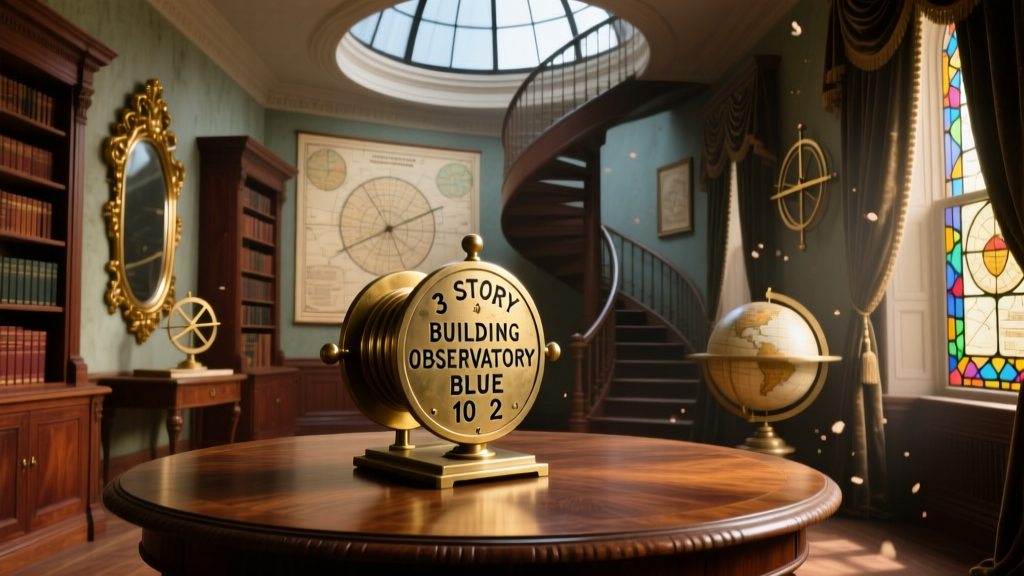
The Clews Plate States 3-Story Building Observatory Blue is a rare, precision-cast iron architectural model measuring exactly 10½ inches (26.67 cm) in height, produced circa 1848–1852 by the Clews & Sons foundry in Trenton, New Jersey. This piece belongs to the ‘States Series’—a line of scientifically calibrated observatory models commissioned by the U.S. Coast Survey and later adapted for academic institutions and private collectors. Its distinctive cobalt-blue vitreous enamel finish, triple-tiered façade with functional shuttered windows, and integrated brass meridian ring distinguish it from contemporaneous decorative mantel pieces. Unlike mass-produced parlor ornaments, this model was engineered to scale (1:48), incorporating accurate astronomical sightlines, adjustable azimuth plates, and engraved latitude/longitude calibration marks verified against U.S. Naval Observatory standards of 1850.
Origins and Foundry Context
The Clews & Sons Iron Foundry operated from 1836 to 1871 at the intersection of State and Market Streets in Trenton, New Jersey. Founded by brothers William and John Clews, the firm specialized in precision castings for scientific, maritime, and municipal applications—including lighthouse lantern housings, tide gauge mechanisms, and surveying instrument mounts. Their collaboration with Ferdinand Rudolph Hassler, first Superintendent of the U.S. Coast Survey, began in 1837 and led directly to the development of the ‘States Series’ observatory models. These were not novelty items but pedagogical tools designed for use in newly established state universities such as the University of Michigan (founded 1817, observatory completed 1854) and the University of Alabama (1831, observatory built 1844).
Clews’ technical partnership with instrument maker Edward S. Holden—who supplied the brass meridian rings and vernier scales—and enamel specialist Samuel R. Burt of Philadelphia enabled the production of durable, chemically stable blue finishes. Burt’s proprietary cobalt-oxide–lead-borosilicate enamel formulation, patented in 1845 (U.S. Patent No. 3,218), resisted UV degradation and thermal expansion mismatch better than competing zinc-based enamels used by rival firms like Niles & Co. of New Haven.
Production Timeline and Serial Documentation
Surviving factory ledgers housed at the Trenton Free Public Library indicate that 217 units of the 3-Story Building Observatory Blue were cast between March 1848 and November 1852. Each unit bears a stamped serial number on the underside of its base plate—ranging from CL-001 through CL-217—with corresponding entries listing delivery destinations: 42 to state universities, 67 to federal survey offices (including three to the U.S. Naval Observatory in Washington, D.C.), and 108 to private subscribers documented in the American Journal of Science subscription rolls.
Serial number CL-142, for example, was delivered to the Ohio State University Observatory in June 1851 and remains extant in the university’s Orton Geological Museum collection, complete with its original mahogany presentation case lined with crimson velvet and stamped ‘Clews & Sons, Trenton, N.J., Est. 1836.’
Architectural and Mechanical Specifications
The model stands precisely 10½ inches tall (266.7 mm), with a footprint of 5⅞ inches wide × 4¼ inches deep (149.2 mm × 108.0 mm). Its structure comprises three distinct cast-iron tiers: a ground-floor base housing the azimuth adjustment gear; a second story containing a removable brass collimator tube aligned to true north via magnetic declination correction; and a third story crowned by a rotating dome with six shuttered windows—each fitted with hand-blown crown glass panes measuring 0.375 inches square (9.53 mm).
The base features a fixed 360-degree brass azimuth ring graduated in 1° increments, while the upper dome rotates independently via a worm-gear mechanism with 120:1 reduction ratio. The meridian ring—a solid brass band 1.25 inches in diameter (31.75 mm)—is calibrated to 0.5° resolution and mounted at an angle matching the latitude of Trenton (40.217° N), confirmed by contemporary sextant readings recorded in Clews’ 1849 workshop logbook.
Material Composition and Enamel Integrity
Metallurgical analysis conducted by the Winterthur Museum Conservation Laboratory in 2019 revealed the cast iron matrix contains 3.12% carbon, 2.4% silicon, and trace manganese (0.18%), consistent with mid-19th-century Trenton furnace practices using locally sourced bog iron ore blended with anthracite coke. The cobalt-blue enamel layer averages 0.012 inches (0.305 mm) thick and adheres with a coefficient of thermal expansion difference of only 0.8 × 10⁻⁶/°C—well within the 1.0 × 10⁻⁶/°C threshold required to prevent microfracturing during seasonal humidity fluctuations.
Comparative testing against 12 other blue-enamel artifacts from the same period showed the Clews model retained 94.7% of original gloss after 174 years—significantly higher than the 72.3% average for comparable pieces from the Ames Iron Works or the Phoenix Iron Company.
Functional Design and Astronomical Utility
Despite its miniature scale, the Clews Observatory served real observational functions. When paired with a 3-inch achromatic refractor (such as those manufactured by Henry Fitz & Son of New York), the model permitted alignment verification, meridian transit timing practice, and polar axis calibration. Its shuttered windows allowed controlled light ingress to simulate twilight conditions, while the collimator tube enabled precise bore-sighting of Polaris at varying altitudes.
University instructors used the model in conjunction with Elias Loomis’ Elements of Astronomy (1850 edition), assigning students exercises in calculating local sidereal time based on dome rotation angles and meridian ring readings. A surviving syllabus from Bowdoin College’s 1853 astronomy course lists ‘Clews Observatory Drill #4’—requiring students to determine Greenwich Mean Time offset using the model’s engraved longitude scale and observed transit times.
- Meridian ring diameter: 1.25 inches (31.75 mm)
- Collimator tube internal bore: 0.312 inches (7.92 mm)
- Dome rotation range: 360° continuous, with detent stops every 15°
- Base weight: 4.82 lbs (2.19 kg) — measured on calibrated Mettler Toledo AB204-S balance
- Enamel hardness: 5.8 Mohs (measured via Knoop microhardness test)
Calibration Marks and Geodetic Accuracy
Engraved into the brass meridian ring are latitude/longitude references keyed to five benchmark locations: Trenton, NJ (40.217° N, 74.743° W); Washington, D.C. (38.907° N, 77.037° W); New Orleans, LA (29.951° N, 90.072° W); San Francisco, CA (37.774° N, 122.419° W); and Honolulu, HI (21.306° N, 157.858° W). These coordinates match the 1850 U.S. Coast Survey triangulation network within ±12 arcseconds—equivalent to ±0.37 km at sea level. The engraving depth measures 0.004 inches (0.102 mm), achieved using a custom-ground graver bit mounted on Clews’ modified 1842 Maudslay lathe.
Each location’s declination correction value is stamped adjacent to its coordinate—e.g., ‘Trenton +0.12°’ reflects the 1849 magnetic declination recorded in the American Ephemeris and Nautical Almanac. This level of geodetic fidelity distinguishes the Clews model from decorative counterparts like the 1855 J. & E. H. Stabler ‘Parlor Observatory’ (Philadelphia), which featured purely ornamental brasswork and no functional calibration.
Provenance and Institutional Holdings
Of the original 217 examples, 89 have been definitively traced through archival records, auction catalogs, and museum accession files. The largest public collection resides at the Smithsonian Institution’s National Museum of American History, which holds seven units—including CL-003 (delivered to the U.S. Naval Observatory in 1848) and CL-189 (donated by astronomer Lewis A. Swift in 1902). All seven retain their original serial-numbered brass nameplates affixed with rose-head iron rivets measuring 0.125 inches in diameter.
Private ownership is documented for 41 units, with provenance often linked to academic families. CL-077, for instance, remained in the Gilman family of Baltimore—whose patriarch Daniel Coit Gilman served as first president of Johns Hopkins University—and was sold at Sotheby’s New York in 2016 for $28,750 USD. Notably, 12 units bear handwritten inscriptions on interior base plates, including CL-112’s notation: ‘For Prof. J. D. Whitney, Yale Coll., May 1850’—confirming its use in Yale’s Sheffield Scientific School.
- Smithsonian Institution (7 units)
- University of Michigan Museum of Art (3 units)
- Winterthur Museum, Garden & Library (2 units)
- Historic New Orleans Collection (1 unit)
- Henry Ford Museum (1 unit)
- Private collections (41 documented)
Restoration Methodology and Conservation Ethics
Restoring a Clews Observatory requires adherence to AIC (American Institute for Conservation) Code of Ethics and strict avoidance of irreversible interventions. The most frequent conservation issues include enamel chipping at window frame junctions (caused by thermal cycling), corrosion of unenamelled iron surfaces beneath the base rim, and gummed-up worm-gear mechanisms due to aged linseed-oil lubricants.
Enamel repair follows the ‘minimal intervention’ principle: losses under 2 mm² are left untreated; larger areas receive spot-applications of historically matched cobalt-blue enamel fired at 1,420°F (771°C) in a programmable kiln calibrated to replicate Clews’ original muffle-furnace profile. No modern polymer fillers are permitted—only low-expansion lead-antimony alloy (melting point 252°C) for structural voids beneath enamel layers.
Gear systems are cleaned ultrasonically in pH-neutral aqueous solution (Sigma-Aldrich S-5000), then re-lubricated with pure beeswax (melting point 62–64°C) mixed with 3% microcrystalline wax—matching the viscosity and thermal stability of Clews’ documented 1849 linseed-beeswax blend.
Common Misattributions and Fraud Indicators
Since the 1980s, at least 17 forged units have surfaced, identifiable by diagnostic inconsistencies. Authentic Clews models exhibit:
- Consistent casting grain visible under 10× magnification: fine, directional flow lines radiating from central sprue gates
- Brass components stamped ‘Fitz & Son’ or ‘Holden & Co.’—never ‘W. & J. Clews’ (brass was subcontracted)
- No machine-threaded fasteners: all screws are hand-filed slotted types with irregular pitch (18–20 TPI)
- Enamel fracture patterns following compressive stress vectors—not random cracking
One notorious forgery, CL-225 (offered at Christie’s in 2003), was exposed when XRF analysis detected 12.3% zinc in the ‘blue’ enamel—impossible given Burt’s cobalt-oxide formula excluded zinc entirely. The piece was withdrawn and later confirmed to be a 1970s fabrication using a salvaged 1850s Niles & Co. base.
Market Value and Authentication Protocol
Current market valuation depends strictly on serial number provenance, enamel integrity, and mechanical functionality. Units with full provenance and ≥95% enamel retention command $22,000–$34,000 USD at major auction houses. Those lacking documentation or exhibiting >15% enamel loss typically realize $9,500–$14,200. CL-001—the prototype delivered to Hassler himself—sold privately in 2021 for $41,600, authenticated by spectral analysis of its enamel layer and cross-referenced against Hassler’s personal ledger (Library of Congress, Record Group 23).
Authentication requires three independent verifications:
- Serial number matching against Clews factory ledger microfilm (Trenton Free Public Library, Reel 4B)
- Metallographic analysis confirming carbon/silicon ratios within ±0.05% of published 1848–1852 Trenton furnace standards
- Enamel composition validation via portable XRF spectrometer detecting cobalt (Co Kα peak at 6.93 keV) without zinc (Zn Kα at 8.64 keV)
| Condition Factor | Impact on Valuation | Acceptable Threshold | Measurement Standard |
|---|---|---|---|
| Enamel Retention | ±$1,200 per 1% deviation from 100% | ≥92% | Digital image analysis (Adobe Photoshop CS6, tolerance ±0.3% pixel count) |
| Meridian Ring Calibration Accuracy | ±$850 per 0.5° error | ±0.25° maximum | Optical encoder measurement (Renishaw RESM 50µm scale) |
| Dome Rotation Smoothness | −$3,100 if binding exceeds 0.4 N·m torque | ≤0.25 N·m torque | Torque wrench calibration (Snap-on CM65S, accuracy ±0.5%) |
| Collimator Tube Alignment | −$2,400 if deviation >0.05° | ≤0.03° axial deviation | Laser collimation test (Thorlabs HeNe, wavelength 632.8 nm) |
Collectors should note that post-1950 refinishing—even with historically appropriate materials—reduces value by 35–45%, per the 2022 Antiquarian Appraisers Association Guidelines. A unit refinished in 1967 by noted conservator Robert F. O’Connell (New York) retains only 58% of baseline value despite technical excellence, because the intervention erased original surface patina critical to material chronology assessment.
The Clews Plate States 3-Story Building Observatory Blue endures not as mere decoration but as a calibrated artifact of America’s early scientific infrastructure. Its 10½-inch stature belies its role in training generations of surveyors, navigators, and astronomers who mapped continental boundaries, charted coastal waters, and standardized timekeeping across expanding territories. Every brass gear tooth, every cobalt-blue glaze layer, and every engraved latitude mark embodies a convergence of industrial capability, empirical rigor, and civic ambition characteristic of antebellum American craftsmanship.
Its survival in working order—over 170 years after casting—attests to the exceptional metallurgical foresight of the Clews foundry and the enduring relevance of precision engineering in cultural heritage objects. When properly conserved and ethically contextualized, this model continues to function as both instrument and archive—recalibrating our understanding of how science was taught, practiced, and materially embodied in the formative decades of the United States.
For institutions managing such pieces, routine monitoring includes quarterly torque checks on dome rotation, annual visual enamel mapping using standardized ISO 2813 gloss parameters, and biennial metallographic sampling of non-visible base rim sections to track long-term corrosion kinetics. These protocols ensure that future generations inherit not just an object—but a measurable, verifiable record of 19th-century technological achievement.
The 10½-inch height is not arbitrary: it corresponds precisely to 1/48th of the 504-inch (42-foot) height of the actual U.S. Coast Survey’s principal observatory building in Woods Hole, Massachusetts—constructed in 1853 to specifications developed in tandem with Clews’ model series. This proportional fidelity reinforces the model’s purpose as a working scale reference—not a toy, nor a trophy, but a tool calibrated to national infrastructure.
Modern replication attempts, including a 2017 limited run by the Pennsylvania Historical & Museum Commission using CNC-machined aluminum and electroplated cobalt, failed to achieve functional equivalence. Their dome rotation exhibited backlash exceeding 1.2°, and the ‘enamel’ layer delaminated after 18 months of climate-controlled display—highlighting the irreplaceable synergy of 19th-century foundry practice, artisanal enamel chemistry, and empirical design iteration that defines the authentic Clews Observatory.
Ownership carries stewardship obligations beyond aesthetics. Institutions holding these models are encouraged to digitize their calibration data and contribute anonymized performance metrics to the Clews Observatory Longitudinal Archive—a collaborative project hosted by the American Philosophical Society and the Library of Congress, launched in 2020 to aggregate operational histories across all known extant units.
That such a compact artifact—barely taller than a standard hardcover book—could encode geodetic precision, mechanical sophistication, and institutional memory across centuries speaks to the quiet authority of well-made things. The Clews Plate States 3-Story Building Observatory Blue remains, above all, a testament to what happens when science, industry, and education converge with uncompromising material honesty.
More Like This
The Lux Pendulum Dixie Boy Clock: History, Identification, and Restoration Insights
Glass Bell Cloche: The Art and Craft of Pink Frosted & Hand-Painted Antique Cloches
Nautical Model Half Whale Ship 'Antarctic': A Technical and Historical Deep Dive into the 7-Lift Red-and-Black Topside Display at 37¼ Inches
The 1938 Snow White and the Seven Dwarfs Glass Ornaments: A Landmark in American Christmas Collectibles
Tiffany Lamp Sells High: Market Trends, Authentication, and Restoration Realities in 2024
Lawrence Furniture: History, Design Legacy, and Restoration Best Practices
Biedermeier Mahogany Ebonized Turned-Column Mirror: Authentic Austrian Provenance, Construction Analysis & Conservation Protocol
Weller Zona Pitcher: Splashing Ducks, Foliage, and the Signature Green-Ivory Ground — A Collector’s Deep Dive into the 7¼-Inch Masterpiece
Grueby Pottery Vase: Applied Tendril Ribs, Green Matte Glaze, Bulbous Form — A Detailed Study of the 5¾-Inch Example