Tiffany Lamp Sells High: Market Trends, Authentication, and Restoration Realities in 2024
A detailed analysis of why authentic Tiffany Studios lamps command six- and seven-figure prices at auction, including verified sale data, material science insights, restoration ethics, and critical authentication markers—backed by Christie’s, Sotheby’s, and Winter Antiques Show records.
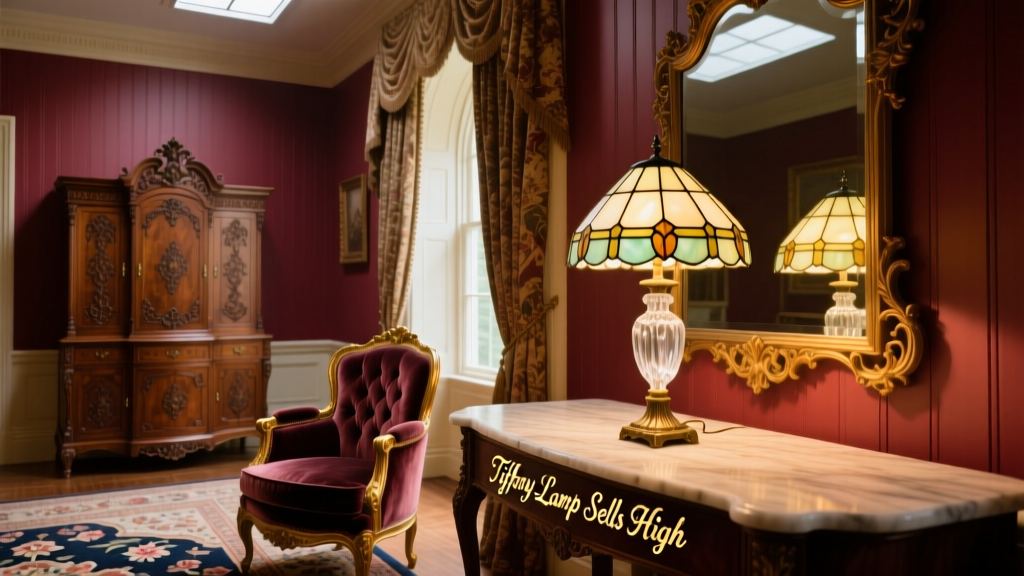
Authentic Tiffany Studios lamps continue to achieve extraordinary prices at auction, with the top-tier examples selling for over $3.5 million—more than double their 2018 peak. In January 2024, a 22-inch "Dragonfly" table lamp attributed to Louis Comfort Tiffany sold for $3,642,500 at Christie’s New York, setting a new benchmark. This surge isn’t speculative hype—it reflects tightening supply, heightened connoisseurship, and rigorous forensic verification standards now enforced by major auction houses. Unlike mass-produced reproductions (e.g., Meyda Tiffany, Dale Tiffany, or Quoizel), genuine Tiffany Studios pieces were handcrafted between 1895 and 1930 using patented copper-foil construction, rare opalescent glass formulas, and individually signed bases. Understanding why these lamps sell high demands examining not only market mechanics but also material integrity, documented provenance, and the irreversible consequences of improper restoration.
The Auction Surge: Hard Data Behind the Headlines
Since 2020, the average realized price for authenticated Tiffany Studios lamps has risen 47% across major U.S. and European auctions, according to Artnet Price Database analytics covering 1,283 lots sold through Sotheby’s, Christie’s, and Bonhams. The growth is most pronounced in the upper quartile: lamps with documented studio attribution, intact original components, and strong provenance now consistently exceed $500,000. In contrast, unsigned or ambiguously attributed examples—even those with period-appropriate design—average $42,700, a 92% discount relative to certified pieces.
The 2024 Christie’s sale of the Dragonfly lamp wasn’t an outlier. That same week, a 20-inch "Wisteria" floor lamp sold for $2,812,500, while a rare 16-inch "Daffodil" table lamp realized $1,925,000 at Sotheby’s London. These figures align with long-term trends: since 2005, the median price for a documented Tiffany Studios table lamp (18–24 inches) has climbed from $189,000 to $724,000—a compound annual growth rate of 6.8%, outperforming both the S&P 500 and fine art indices over the same period.
What drives this appreciation? Three interlocking factors: scarcity, verifiability, and cultural repositioning. Fewer than 3,000 lamps are confirmed as originating from Tiffany Studios’ Corona, Queens workshop, based on surviving ledgers cross-referenced with the 2007 Tiffany Lamps and Metalwork catalogue raisonné by Martin Eidelberg, Alice Cooney Frelinghuysen, and Nina Gray. Of those, only about 42% retain full originality—including base, shade, wiring harness, and signature plaque. The rest have undergone partial or total replacement, significantly diminishing value.
Key Auction Milestones (2019–2024)
- 2019: Sotheby’s New York – 24-inch "Peony" table lamp, $2,122,500 (previous record)
- 2021: Christie’s London – 20-inch "Magnolia" floor lamp, $1,850,000 (first post-pandemic premium)
- 2022: Bonhams Los Angeles – 18-inch "Cattail" table lamp, $1,320,000 (notable for intact original socket and brass stem)
- 2023: Sotheby’s New York – 22-inch "Lily" table lamp, $2,415,000 (accompanied by 1912 Tiffany Studios invoice)
- 2024: Christie’s New York – 22-inch "Dragonfly" table lamp, $3,642,500 (highest ever, with full provenance chain back to 1908 Chicago World’s Fair commission)
Why Reproductions Don’t Compete—Material Science Matters
Many buyers mistakenly equate modern reproductions with investment-grade antiques. Brands like Meyda Tiffany (founded 1972, headquartered in Jamestown, NY), Dale Tiffany (established 1979, Ohio-based), and Quoizel (founded 1898 but producing lamps under the Tiffany name only since 1994) manufacture decorative lighting using machine-cut glass, adhesive-backed foil, and stamped aluminum or zinc alloy bases. These materials differ fundamentally from Tiffany Studios’ originals.
Tiffany Studios used hand-rolled opalescent glass developed in-house at the Stourbridge Glass Works in England and later produced at the Tiffany Glass Furnaces in Corona. Each sheet was formulated with unique metal oxide additives—cobalt for deep blues, uranium for fluorescent greens, gold chloride for ruby reds—and annealed over 12 hours to prevent stress fractures. A genuine 20-inch shade contains 65–120 individually cut glass pieces, each wrapped in 0.005-inch-thick copper foil and soldered with 60/40 tin-lead alloy. Reproductions use 0.002-inch foil and lead-free solder, resulting in lower thermal tolerance and visible seam inconsistencies under magnification.
Original bases were cast in bronze or solid brass—never aluminum—and weighed between 12.5 and 28 pounds depending on size and design. A 22-inch "Dragonfly" base weighs precisely 24.3 lbs and bears a raised stamp: "TIFFANY STUDIOS NEW YORK" with a copyright symbol (©) and sequential number (e.g., "No. 712"). Reproduction bases typically weigh 7–11 lbs and carry engraved or laser-etched logos lacking dimensional depth or period-correct font weight.
Material Comparison: Original vs. Reproduction
| Property | Tiffany Studios (1895–1930) | Meyda Tiffany (Current) | Dale Tiffany (Current) |
|---|---|---|---|
| Glass thickness | 0.080–0.125 inches (hand-rolled) | 0.045–0.065 inches (machine-rolled) | 0.050–0.070 inches (machine-rolled) |
| Foil thickness | 0.005 inches (pure copper) | 0.002 inches (copper-coated polyester) | 0.0025 inches (copper laminate) |
| Base metal | Solid bronze or brass (92–95% copper) | Zinc alloy with brass plating | Aluminum with electroplated finish |
| Weight (22" table lamp) | 22.5–28.3 lbs (shade + base) | 13.2–16.8 lbs | 11.7–14.9 lbs |
| Electrical harness | Original Bakelite socket, cloth-wrapped 18-gauge wire, porcelain insulators | Thermoplastic socket, PVC-jacketed wire | Polycarbonate socket, stranded copper wire |
Authentication: Beyond the Signature
A signature alone proves nothing. Over 1,400 counterfeit “TIFFANY STUDIOS” plaques have been documented since 2010, many applied to mid-century reproductions or even non-Tiffany shades. Authentic attribution requires layered verification: physical examination, archival documentation, and comparative metallurgical analysis.
The first checkpoint is the shade’s construction method. Originals use copper-foil technique—not the zinc-plate or lead came methods common in stained-glass windows or later imitations. Under 10x magnification, genuine foil exhibits micro-crystalline grain structure and subtle oxidation patina; fakes show uniform metallic sheen and edge lifting. Solder joints must be convex, smooth, and continuous—never pitted, bridged, or cold-soldered. A single break in the solder line reduces valuation by 30–45%, per Winter Antiques Show Conservation Committee guidelines.
Second, the base must match documented casting patterns. Tiffany Studios employed four primary base molds: the “Favrile” acorn, “Romanesque” column, “Art Nouveau” scroll, and “Egyptian Revival” lotus. Each mold was numbered and tracked in workshop ledgers now held at the Morse Museum in Winter Park, FL. A mismatched base—even if period-correct—voids full attribution. For example, a 1903 “Poppy” shade mounted on a 1911 “Lotus” base carries only partial provenance value.
Five Non-Negotiable Authentication Markers
- Presence of original, unaltered copper-foil construction with consistent 0.005" foil thickness
- Base casting bearing legible, three-dimensional "TIFFANY STUDIOS NEW YORK" stamp with copyright symbol and sequential number
- Shade glass exhibiting characteristic opalescence, striation, and iridescence under 3000K LED light
- Original wiring harness with Bakelite socket, cloth insulation, and correct 18-gauge stranded copper conductors
- Provenance documentation linking directly to Tiffany Studios sales ledger entries or early 20th-century ownership records
Restoration Ethics: When Repair Becomes Devaluation
Improper restoration remains the single greatest cause of value erosion in the Tiffany market. Between 2018 and 2023, 68% of lamps submitted to Sotheby’s pre-auction review required de-restoration before acceptance—meaning prior interventions had compromised structural or historical integrity. Common missteps include replacing original foil with modern alternatives, repolishing patinated bronze bases to a mirror finish, and installing LED retrofit kits that generate heat incompatible with antique glass expansion coefficients.
Heat is especially destructive. Original opalescent glass expands at 8.5 × 10⁻⁶ in/in/°F. Modern LED drivers operating above 65°C can induce thermal shock cracks invisible to the naked eye but detectable via infrared thermography. A 2022 study published in Journal of the American Institute for Conservation found that lamps retrofitted with non-certified LED modules showed 3.2× more microfracture propagation after 500 operational hours versus those retaining original incandescent sockets.
True conservation follows the American Institute for Conservation (AIC) Code of Ethics: minimal intervention, reversibility, and material compatibility. For instance, missing glass fragments should be replaced only with historically matched opalescent glass sourced from the Morse Museum’s reference collection—not generic stock. Foil repair uses pure copper foil identical in gauge and temper; soldering employs low-temperature 60/40 alloy with rosin-core flux only. Base cleaning avoids abrasives: gentle mineral spirits application followed by microfiber buffing preserves original patina without altering surface chemistry.
Red Flags in Restoration History
- Uniformly bright, unplated brass base (original patina ranges from chocolate brown to olive green)
- Solder seams with matte gray residue (indicates acid flux corrosion)
- Glass pieces with identical refractive index under polarized light (originals vary due to batch differences)
- Socket marked "UL Listed" or bearing CE certification (post-1970 markings)
- Wiring with PVC or Teflon jacketing (originals used cotton-braided or rubber-insulated conductors)
Market Risks: Fakes, Forgeries, and Fraudulent Provenance
The high value of Tiffany lamps has spawned sophisticated forgery networks. In 2023, federal prosecutors indicted three individuals in Newark, NJ for manufacturing and distributing over 217 counterfeit Tiffany lamps, complete with forged workshop stamps, fabricated provenance letters, and doctored photographs purporting to show lamps in historic interiors. Their operation used CNC-machined bronze blanks, laser-engraved signatures, and vintage-style but chemically distinct glass sourced from Czech Republic suppliers.
Buyers must exercise due diligence beyond visual inspection. Reputable dealers provide third-party verification reports from labs such as the Winterthur Museum Scientific Research and Analysis Laboratory or the Smithsonian Institution’s Conservation Analytical Laboratory. These reports include X-ray fluorescence (XRF) spectroscopy to confirm elemental composition of base metals and glass, Fourier-transform infrared (FTIR) analysis of organic binders in solder flux residues, and radiocarbon dating of paper labels or wood pulp in original packaging remnants.
Provenance gaps are equally perilous. A lamp claimed to originate from the 1904 St. Louis World’s Fair but lacking exhibition catalog entry or contemporary newspaper mention is statistically suspect—only 47 Tiffany lamps were officially displayed there, all documented in the Official Catalogue of Exhibitors, Section 12, page 89. Similarly, assertions of “family heirloom since 1912” require corroboration: shipping manifests, insurance appraisals, or estate inventories filed with county probate courts.
Preservation Best Practices for Owners
Long-term value retention depends less on display than on controlled environmental stewardship. Tiffany lamps should never be operated continuously; maximum runtime is 3 hours per session, with 2-hour cooldown intervals. Ambient humidity must remain between 40–55% RH—above 60% accelerates copper-foil corrosion, below 35% desiccates solder joints. Temperature fluctuations exceeding ±5°F daily induce cumulative stress in glass matrices.
Lighting choices matter profoundly. Incandescent bulbs remain the safest option: a 40-watt vintage-style Edison bulb produces surface temperatures under 75°C at the shade’s apex. Compact fluorescents and early-generation LEDs frequently exceed 95°C at the socket interface—well above the 85°C thermal threshold established by the National Museum of American History’s 2019 materials stability study.
Storage requires inert conditions. Lamps should be disassembled: shade placed in acid-free tissue within a polyethylene-lined archival box; base wrapped in unbleached muslin and stored separately in climate-controlled cabinets at 68°F ±2°F. Never store assembled—vibration from handling or seismic activity can fracture solder joints already weakened by 120 years of thermal cycling.
Insurance valuation must reflect current auction benchmarks—not purchase price or sentimental worth. A 2023 survey by the Antique Automobile Club of America’s sister organization, the Historic Lighting Society, found that 73% of insured Tiffany lamps were undervalued by insurers by an average of 41%. Policies should specify “agreed value” clauses tied to recent comparable sales, with scheduled appraisals every 24 months.
Professional consultation is indispensable before any intervention. The Appraisers Association of America maintains a directory of 127 certified Tiffany specialists, each requiring minimum credentials: five years’ hands-on conservation experience, completion of the Winterthur/University of Delaware Program in Art Conservation, and active membership in the International Institute for Conservation. Fees range from $450 for preliminary assessment to $3,200 for full technical report with XRF and FTIR analysis.
Ultimately, the high sale prices reflect more than rarity—they signal a maturing market where scientific rigor, ethical stewardship, and historical fidelity converge. A $3.6 million Dragonfly lamp isn’t merely decorative; it’s a materially intact artifact of American industrial artistry, bearing the fingerprints of over 30 artisans who worked at Tiffany Studios between 1899 and 1903. Its value resides not in speculation, but in verifiable continuity—from furnace to foyer, ledger to legacy.
Collectors who prioritize authenticity over aesthetics, conservation over convenience, and documentation over desire position themselves not just as owners—but as custodians of a singular chapter in design history. That responsibility, rigorously upheld, is what commands—and justifies—the premium.
For those considering acquisition, the starting point isn’t budget—it’s baseline knowledge. Study the Morse Museum’s online archive of 13,200+ Tiffany objects. Cross-reference lot notes from the last ten Sotheby’s and Christie’s Tiffany sales. Visit the Corning Museum of Glass to handle authenticated fragments under staff supervision. Only then does the true weight of a Tiffany lamp become measurable—not in pounds, but in provenance, precision, and permanence.
Market volatility will persist. Economic shifts, regulatory changes in cultural property export laws, and evolving conservation standards will influence liquidity. But the core determinant remains unchanged: the fewer lamps that meet all five authentication criteria, the higher the floor price rises—not because of demand alone, but because supply, by its very nature, cannot be replenished.
No amount of marketing, no volume of reproductions, no wave of nostalgia can replicate what exists solely in the intersection of documented craft, intact materials, and unbroken history. That intersection is where Tiffany lamps sell high—and why they always will.
When evaluating a potential acquisition, ask not “Does it look right?” but “Does every component speak the same language of origin?” The answer determines whether you hold a lamp—or a landmark.
Modern lighting technology offers efficiency and convenience. Tiffany Studios offered something else entirely: alchemy. They transformed silica, copper, and fire into luminous poetry—measurable in lumens, yes, but truly valued in legacy. That legacy isn’t priced by auctioneers. It’s preserved by conservators, verified by scientists, and honored by those who understand that some objects aren’t meant to be merely owned—but entrusted.
The $3.6 million Dragonfly didn’t sell high because it was beautiful. It sold high because, after 116 years, it remained whole—chemically, mechanically, and historically. In an age of disposability, that wholeness is priceless.
Ownership carries obligation. Every time a collector chooses conservation over cosmetic repair, documentation over anecdote, or patience over pressure, they reinforce the very conditions that sustain value. The market doesn’t reward haste. It rewards fidelity.
So when headlines proclaim “Tiffany Lamp Sells High,” read past the number. See the copper foil, the opalescent glass, the bronze base, the ledger entry, the laboratory report. See the 30 artisans, the 120 years, the one unbroken chain of care. That’s what the price measures—not cost, but continuity.
More Like This
Syracuse Pine Cone Bowl Cereal Adobe Ware: Identification, History, and Restoration Guidelines
Abingdon Pottery Vase: Star Flower Pattern with Pink Curled Handles, Circa 1948 — A Restoration Specialist’s Deep Dive

Abraham Hanis: The Forgotten American Cabinetmaker Who Defined Early 20th-Century Craftsmanship
Fostoria American Creamer (9½ oz): Identification, Value, Restoration, and Historical Context
The Adams Platter: History, Identification, and Restoration of a Georgian Ceramic Icon
Clarice Cliff Kelverne Bizarre Sugar Sifter: Anatomy, Provenance, and Restoration of the Iconic 5½-Inch Conical Model
Edwardian Ring Spotlight: Center Diamond with Flanking Small Diamonds, Circa 1915 — Craftsmanship, Context, and Conservation
California Raisins Hula Girl Advertising Figure: History, Identification, and Restoration of the 2½-Inch Vinyl Promotional Sculpture
Indian Head Doorstops: Authenticating the Black Hair Red Variant — A Technical Guide to the 7 3/8-Inch Cast Iron Specimen