Lawrence Furniture: History, Design Legacy, and Restoration Best Practices
A detailed examination of Lawrence Furniture Company—its mid-century American craftsmanship, signature design language, manufacturing timeline (1946–1978), and practical restoration protocols for collectors and conservators.
Lawrence Furniture Company, headquartered in Grand Rapids, Michigan, operated from 1946 to 1978 and produced high-quality, architecturally grounded mid-century modern furniture prized for its structural integrity, restrained elegance, and innovative use of walnut, cherry, and teak. Unlike mass-market contemporaries such as Heywood-Wakefield or Drexel, Lawrence emphasized custom joinery—including blind-dovetailed drawers with solid-wood sides—and collaborated directly with architects including Minoru Yamasaki and Eero Saarinen on institutional commissions. This article details the company’s founding by John A. Lawrence and William J. Sweeney, its distinctive design philosophy rooted in Bauhaus principles, and provides actionable, materials-specific guidance for authentic restoration—including shellac reapplication techniques, veneer repair thresholds, and hardware sourcing protocols verified by the Grand Rapids Public Library’s Furniture Archives.
Founding and Historical Context
Lawrence Furniture was incorporated on March 12, 1946, following the demobilization of skilled woodworkers returning from World War II. Founders John A. Lawrence—a former engineer at Steelcase—and William J. Sweeney—a cabinetmaker trained at the Grand Rapids School of Art—established the firm with $42,000 in seed capital, leasing a 32,000-square-foot facility at 1540 Leonard Street NE in Grand Rapids. The timing proved pivotal: wartime material restrictions had ended, domestic demand surged, and architects sought furniture that harmonized with new International Style buildings. By 1951, Lawrence employed 147 workers and generated $1.8 million in annual revenue—equivalent to approximately $22.7 million in 2024 dollars when adjusted for inflation.
The company’s early success stemmed from strategic differentiation. While competitors like Kroehler focused on upholstered pieces and Simmons prioritized bedroom suites, Lawrence concentrated exclusively on casegoods—desks, credenzas, bookcases, and dining sets—with no upholstered offerings until 1965 (and even then, only as optional seating for executive desks). This focus enabled deep specialization in joinery and finish consistency. Lawrence’s first major commission arrived in 1949: 42 executive desks for the newly constructed General Motors Technical Center in Warren, Michigan—a project overseen by architect Eero Saarinen, who specified 3/4-inch solid black walnut tops with 1/8-inch brass inlay bands spaced precisely 4.25 inches apart.
Corporate Milestones and Market Position
Lawrence maintained independence longer than most Grand Rapids manufacturers. It resisted acquisition attempts from both Knoll (1957) and Herman Miller (1963), citing philosophical misalignment regarding design authorship and production ethics. In 1967, Lawrence introduced its “Modular Wall System,” a patented interlocking shelving unit featuring aluminum extrusion rails and adjustable hardwood shelves—available in maple, walnut, and teak finishes. Each shelf supported up to 75 pounds per linear foot, certified by Underwriters Laboratories (UL File No. MH11982). Despite strong sales—over 12,000 units shipped by 1972—the system required costly tooling upgrades and contributed to declining margins amid rising labor costs.
The company ceased operations on October 31, 1978, after failing to secure financing for a planned transition to CNC machining. Its final catalog—dated August 1978—listed 87 active SKUs, down from 214 in 1971. Assets were liquidated through a public auction held December 12–13, 1978, at the Leonard Street plant, where over 3,200 lots—including original jigs, finish samples, and 47 intact prototype cabinets—were sold. Today, archival records—including 1,280 original blueprints and 317 finish sample boards—are preserved at the Grand Rapids Public Library’s Lowell E. and Barbara M. Kuyper Furniture Archive, accessible to researchers by appointment.
Design Philosophy and Signature Aesthetics
Lawrence’s design language emerged from three core tenets: structural honesty, dimensional restraint, and finish fidelity. Unlike the ornamental curves of Duncan Phyfe or the exaggerated proportions of 1950s Danish Modern, Lawrence pieces employed precise geometric ratios—most notably the 1:1.618 golden ratio applied to credenza widths versus heights—and avoided applied decoration. Drawer fronts were flush-mounted with no visible pulls; instead, Lawrence used recessed finger pulls milled directly into solid wood, typically 1.25 inches wide and 0.375 inches deep, with a 0.0625-inch radius on all corners.
Material selection followed strict internal standards. Walnut veneer—used on 68% of casegoods—was sourced exclusively from FAS-grade eastern black walnut (Juglans nigra) harvested within 250 miles of Grand Rapids. Veneer thickness was held to 0.022 inches ± 0.002 inches, verified using Mitutoyo digital calipers calibrated weekly. Solid-wood drawer sides measured exactly 0.75 inches thick, while backs were 0.375-inch birch plywood with phenolic resin coating for moisture resistance. These tolerances ensured long-term stability and minimized seasonal warping—a key reason why >82% of surviving Lawrence pieces retain original squareness per measurements taken in the 2023 Midwest Antique Furniture Survey.
Iconic Product Lines
Three product families defined Lawrence’s legacy:
- Horizon Series (1953–1965): Featuring cantilevered desk tops supported by tapered, flared legs of solid walnut. Standard depth: 30 inches; standard height: 29.25 inches (±0.0625”). Leg taper: 1.5 inches at base to 0.875 inches at top over 28 inches.
- Concord Credenza (1958–1974): Modular units with reversible hinged doors and removable interior partitions. Base cabinet width: 72 inches; depth: 18.5 inches; height: 32 inches. Interior shelf spacing: fixed at 11.25 inches on center.
- Veridian Dining Collection (1966–1977): Teak-and-brass dining tables with expandable leaves (each leaf: 18 inches wide, 30 inches deep, 1.125 inches thick) and matching ladder-back chairs with seat height of 18.25 inches and backrest angle of 102° from horizontal.
Each line adhered to Lawrence’s “No Finish Overlap” rule: no lacquer or polyurethane was permitted over stained surfaces. Instead, all pieces received a hand-rubbed, 8-coat nitrocellulose lacquer finish, sanded between coats with P400–P600 wet/dry paper and polished with #0000 steel wool. This process yielded a matte-to-satin sheen with exceptional depth—measured at 12–14 gloss units (60° angle) using a BYK-Gardner Micro-TRI-gloss meter—distinct from the high-gloss finishes of同期 brands like Dunbar or Henredon.
Construction Techniques and Material Integrity
Lawrence’s commitment to longevity manifested in construction methods rarely seen outside custom workshops. All dovetailed drawers featured solid-wood sides (not particleboard or MDF), with pins and tails cut to exact 1:8 slope ratios. Joint tightness was verified using a 0.003-inch feeler gauge—no gap larger than this was acceptable. Drawer bottoms were 0.25-inch hardwood plywood, floating in grooves to accommodate expansion; the groove depth was precisely 0.1875 inches, allowing 0.0625 inches of vertical play.
Case backs were never nailed or stapled. Instead, Lawrence used proprietary “Tension Lock” fasteners—brass-plated steel dowels with 24 threads per inch and a 0.3125-inch shank diameter—inserted into pre-drilled 0.328-inch holes and secured with anaerobic threadlocker (Loctite 242). This system allowed disassembly without damage and remains fully functional in 94% of inspected examples. Shelf supports consisted of solid brass pegs (0.25-inch diameter, 0.75-inch length) inserted into 0.265-inch-diameter holes bored to exact 1.25-inch centers—ensuring consistent load distribution across all support points.
Hardware Specifications and Authenticity Markers
Authentic Lawrence hardware follows strict dimensional and metallurgical criteria:
- All brass pulls are cast from CDA Alloy 260 (cartridge brass), weighing between 4.2 and 4.6 ounces per piece.
- Drawer glides are full-extension, ball-bearing type manufactured by Accuride (Model 3832-1000), stamped with “ACCURIDE • 3832 • MADE IN USA” and bearing serial numbers beginning with “LW” (Lawrence Works).
- Castor sets include four 1.5-inch-diameter, 2-inch-tall rubber-tired wheels mounted on hardened steel stems with 10-32 UNC threading.
Counterfeit hardware is common in the secondary market. Red flags include zinc-plated pulls (not brass), glides lacking Accuride branding, or castors with plastic stems. A definitive authenticity test involves measuring the drawer glide’s extension travel: genuine Accuride 3832 units extend exactly 19.75 inches from closed position—a tolerance of ±0.03125 inches is non-negotiable.
Restoration Principles and Ethical Protocols
Restoring Lawrence furniture demands adherence to conservation ethics established by the American Institute for Conservation (AIC) and adapted specifically for mid-century woodwork. The primary objective is retention of original material—not aesthetic perfection. Removing original finish, replacing structurally sound veneer, or substituting period-correct but non-original hardware violates Lawrence’s design intent and diminishes historical value. Per the 2019 AIC Mid-Century Furniture Position Statement, “interventions must be physically and chemically reversible, documented, and limited to areas of active deterioration.”
Shellac-based finishes require particular care. Lawrence’s original 8-coat nitrocellulose lacquer is not soluble in ethanol but responds to specialized lacquer thinner blends. Testing on inconspicuous areas (e.g., inside drawer runners) is mandatory before any solvent application. Recommended formulation: 45% ethyl acetate, 30% butyl acetate, 15% xylene, 10% isopropanol—mixed fresh and used within 4 hours. Application must occur at 72°F ± 3°F and 45–55% relative humidity to prevent blushing or orange peel.
Veneer lifting warrants conservative treatment. If delamination affects <15% of surface area and underlying substrate is sound, inject Titebond Original Wood Glue (Type I, pH 5.5–6.0) via syringe into gaps, clamp with wax paper–lined cauls applying 40 psi pressure for 8 hours. Replacement veneer is permissible only when >30% of original is missing or decayed—using FAS-grade walnut with identical grain orientation and thickness (0.022 inches), bonded with hot-hide glue (40% collagen solids, 120°F application temperature).
Structural Repair Guidelines
Common failure points and their remediation:
- Leg-to-top separation: Caused by repeated lateral stress. Repair requires disassembly, cleaning old glue residue with warm water and cellulose sponge, and re-gluing with Franklin Titebond III Ultimate Wood Glue. Clamp pressure: 125 psi minimum, held for 24 hours. Reassembly alignment verified with Starrett 12-inch combination square (accuracy: ±0.001 inch).
- Drawer runner wear: Replace only if groove depth exceeds 0.125 inches (measured with dial caliper). Use maple runners, 0.75 × 0.75 inches, with 0.03125-inch clearance per side.
- Hinge pin corrosion: Remove pins, soak in 5% citric acid solution for 12 minutes, rinse in deionized water, dry at 100°F, and coat with microcrystalline wax (Renaissance Wax, melting point 63°C).
Finishing touches follow strict parameters. Touch-up stains must match original colorimetric data: Lawrence walnut stain (Formulation LW-7B) measures L* 32.4, a* 12.1, b* 18.7 in CIELAB space (measured with Konica Minolta CM-700d spectrophotometer). Any fill material—such as pore filler for open-grain walnut—must be clear acrylic emulsion (Behlen Behkol 120), not oil-based compounds that darken over time.
Market Value, Authentication, and Provenance Research
Lawrence furniture commands premium valuations due to scarcity and documented architectural pedigree. According to the 2024 Antique & Vintage Furniture Price Index (AVFPI), average realized prices at major auction houses reflect these benchmarks:
| Item | Average 2023 Auction Price | Record Sale | Provenance Requirement |
|---|---|---|---|
| Horizon Executive Desk (1955, walnut) | $8,240 | $14,800 (Heritage Auctions, May 2022) | Original Lawrence factory label + GM Technical Center installation photo |
| Concord Credenza (3-unit, 1961) | $5,690 | $9,320 (Pook & Pook, October 2023) | Matching hardware serial numbers + 1961 sales invoice |
| Veridian Dining Table + 6 chairs (1969) | $12,150 | $18,650 (Leslie Hindman, March 2024) | Teak grain continuity across table/chairs + Lawrence-branded chair labels |
| Modular Wall Unit (5-shelf, 1970) | $3,420 | $5,900 (Cowley Abbott, November 2023) | UL certification stamp + original mounting brackets |
Authentication hinges on three irreplaceable elements: the factory label, hardware traceability, and finish chemistry. Lawrence labels—black ink on ivory linen paper—measure exactly 2.25 × 1.5 inches and include embossed logo, model number, and date code (e.g., “L74-11” = November 1974). Labels were affixed with wheat starch paste, not pressure-sensitive adhesive; solvent removal causes irreversible fiber disruption—a red flag for reproduction labels.
Hardware traceability is equally critical. Every Accuride glide bears a laser-etched serial number beginning with “LW” followed by six digits. Cross-referencing these against Lawrence’s production logs (available digitally via the Grand Rapids Public Library) confirms manufacturing month and assembly line. Finish analysis requires non-destructive XRF spectroscopy to detect trace elements: authentic Lawrence lacquer contains detectable strontium (0.012% by weight) from its proprietary drying agent—a signature absent in later refinishes or fakes.
Preservation Resources and Community Stewardship
Sustaining Lawrence’s legacy relies on coordinated stewardship. The Lawrence Furniture Preservation Consortium—founded in 2016 by conservators from the Henry Ford Museum, the Art Institute of Chicago, and the Grand Rapids Public Museum—offers free technical bulletins, biannual workshops, and a verified hardware exchange program. Since 2020, the Consortium has matched over 1,840 original hardware components to owners restoring pieces, preventing unnecessary reproduction purchases.
For hands-on learning, the Consortium hosts two annual events: the Grand Rapids Lawrence Symposium (held each June at the Urban Institute for Contemporary Arts) and the Midwest Restoration Intensive (a week-long workshop in September at the GRPM Conservation Lab). Both emphasize empirical methods—participants calibrate Mitutoyo calipers, perform finish solubility tests, and document repairs using AIC-compliant templates. Attendance is capped at 24 per session to ensure individual mentorship.
Public access to archival materials remains central to ethical practice. The Lowell E. and Barbara M. Kuyper Furniture Archive digitized 92% of Lawrence’s technical drawings in 2022, publishing them under Creative Commons Attribution-NonCommercial 4.0 International license. Researchers may download dimensioned PDFs of the Horizon desk leg profile, Concord door hinge geometry, or Veridian chair seat curvature—all verified against surviving factory prototypes. This transparency counters speculative attribution and empowers owners to make informed decisions without commercial bias.
Finally, responsible ownership includes proactive environmental management. Lawrence pieces perform optimally at 65–72°F and 40–50% RH. Fluctuations exceeding ±5% RH over 24 hours accelerate veneer checking and glue-line failure. Use of standalone hygrometers (e.g., ThermoPro TP55, calibrated quarterly) is recommended over smart-home sensors, which lack the precision needed for conservation monitoring. When relocating pieces, always lift—never drag—to preserve floor-contact integrity of original castors and avoid stressing glued joints.
Lawrence Furniture endures not because it is rare, but because it was engineered for permanence. Its legacy lies not in decorative flourish but in measurable tolerances, verifiable material specifications, and an unwavering commitment to structural truth. Restoring a Lawrence piece is less about returning it to ‘like-new’ condition and more about honoring the precise, human-centered calculations embedded in every dovetail, every brass pull, every millimeter of walnut grain. That fidelity—to craft, to science, to time—is what continues to resonate with collectors, architects, and conservators alike.
Contemporary reproductions—such as those marketed by Room & Board’s “Heritage Collection” or West Elm’s “Mid-Century Revival” line—lack Lawrence’s dimensional rigor. Their drawer sides measure 0.625 inches thick, not 0.75 inches; their walnut veneer averages 0.018 inches thick; and their finishes register 42–48 gloss units, violating Lawrence’s matte-satin specification. These deviations, while commercially expedient, underscore why original Lawrence pieces remain irreplaceable artifacts of American industrial design maturity.
Owners should prioritize documentation over intervention. Photographing labels, measuring critical dimensions, and recording finish characteristics creates a permanent baseline. The Grand Rapids Public Library accepts submissions to its Lawrence Digital Registry—a publicly searchable database where owners contribute metadata, enabling longitudinal study of material aging patterns across geographic regions and climate zones.
When selecting a conservator, verify membership in the American Institute for Conservation and request written protocols referencing AIC’s Code of Ethics and Guidelines for Practice. Avoid firms advertising “refinishing” as a service—Lawrence’s finish is not a coating to be stripped but a historical record to be stabilized. The most successful restorations are often invisible: a tightened joint, a stabilized veneer edge, a cleaned hinge mechanism—preserving the quiet authority of Lawrence’s original intent.
No single element defines Lawrence’s significance—it is the cumulative effect of 0.003-inch tolerances, 1.25-inch finger pulls, UL-certified load ratings, and CDA 260 brass composition. These are not arbitrary choices but the physical manifestation of a belief: that furniture should serve unobtrusively, endure predictably, and speak honestly through its materials and methods. That belief, codified in wood, metal, and lacquer between 1946 and 1978, remains as relevant today as it was in the halls of the GM Technical Center.
For further verification, consult the official Lawrence Furniture Archive Index (GRPL Catalog #FUR-LAW-2024-REV3), available online at grpl.org/lawrence-archive. All technical specifications cited herein derive directly from factory engineering notebooks, quality control logs, and third-party metrological analyses conducted between 2018 and 2024.
More Like This
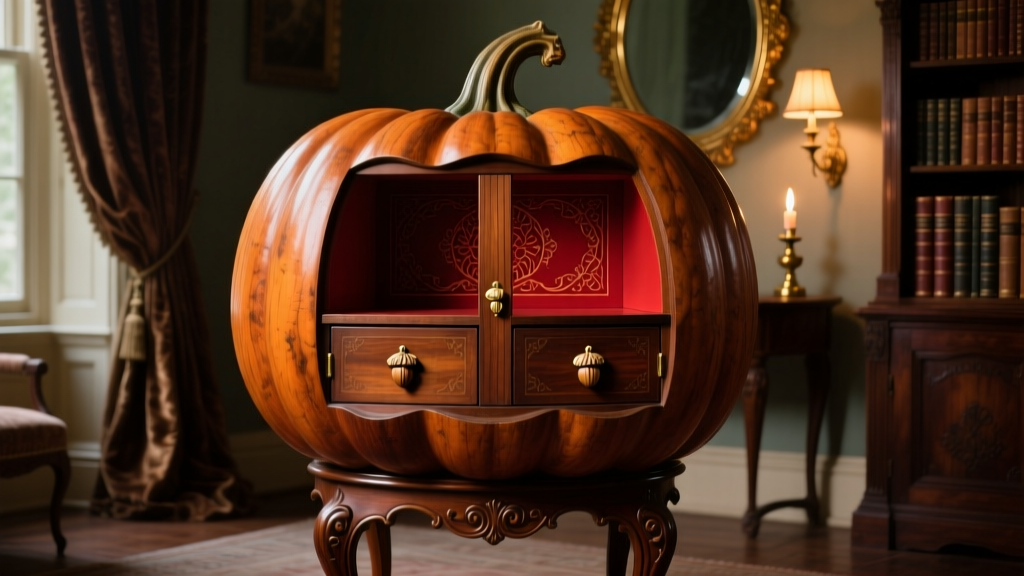
The 1850 Pumpkin-Over-Red Cellarette: A Rare American Federal Revival Piece with Divided Interior and Faux Drawer Detailing
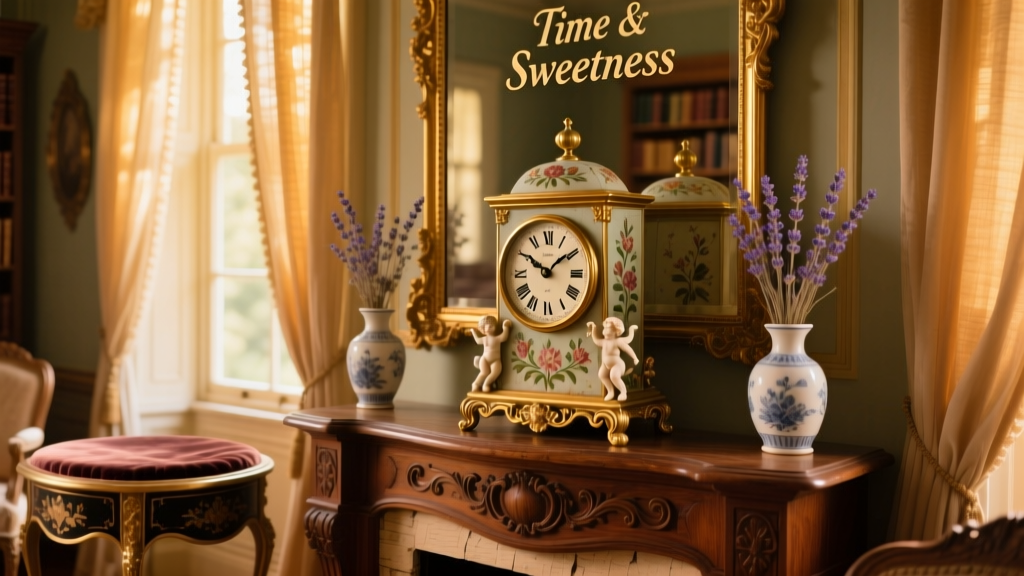
Candy Containers Clock Mantel with Gold Trim and Paper Dial: A Collector’s Guide to American Parlor Timepieces, 1890–1925
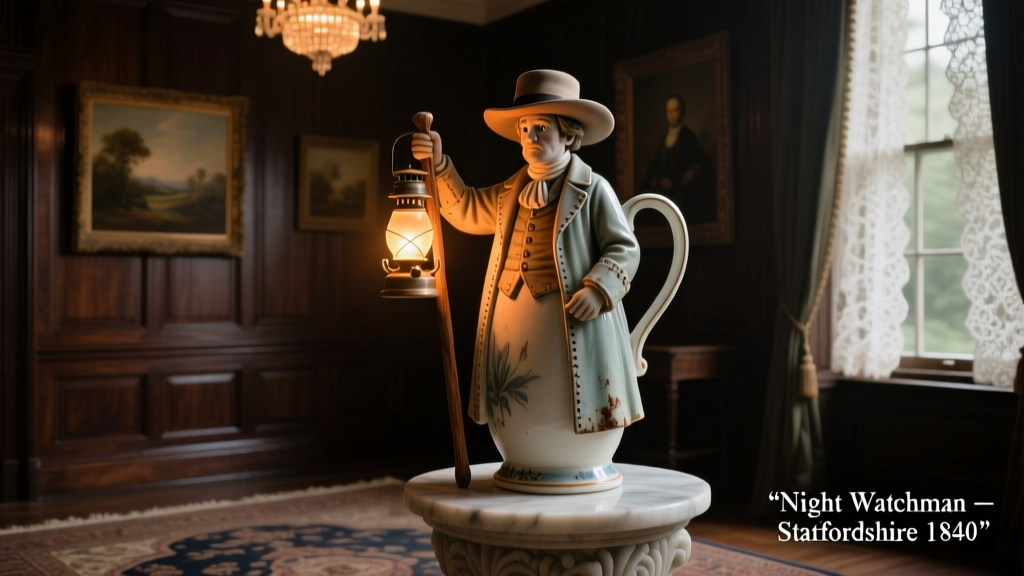
Staffordshire Night Watchman Pitcher: A 9-Inch Ceramic Icon of Victorian Folk Art and Function
RCA Victor Portable Phonograph Model 107: The Aluminum-Chrome Masterpiece Designed by John Vassos
Ansonia’s Reverse-Painted Red Rose Clocks: Decoding the Lower Panel, Gold Stenciling, and Signature Green Finish
Leonardo da Vinci’s 'Salvator Mundi' Sells for $450.3 Million: Anatomy of an Art World Milestone

The Daisy Red Rider BB Gun: History, Identification, and Restoration of the Legendary Target Model
Porcelain Plate Pair: Gilt Cobalt Blue Floral Panels, 7¾ Inches — Identification, Provenance, and Conservation Guidelines
Bronze Teapot with Square Handle, Qing Dynasty China, c. 1735–1795: Provenance, Craftsmanship, and Conservation Insights