Cinnabar Lacquer: History, Craftsmanship, and Restoration of Chinese Carved Lacquerware
A detailed examination of cinnabar lacquerware—its origins in Han Dynasty China, layered carving techniques, material composition, historical value, and ethical conservation practices for antique collectors and museums.
Cinnabar lacquerware—distinctive for its deep vermilion-red surface and intricate low- and high-relief carvings—is among the most technically demanding and culturally significant decorative arts produced in imperial China. Originating no later than the Western Han Dynasty (206 BCE–9 CE), authentic cinnabar pieces were crafted using dozens to over 300 layers of refined sap from the Rhus verniciflua tree, each painstakingly dried, sanded, and carved by hand. Unlike painted red lacquer or synthetic finishes, true cinnabar relies on natural pigment (mercuric sulfide) suspended in urushi resin, yielding a luminous, durable surface that resists moisture, acid, and moderate heat. This article details its historical evolution, material science, regional production centers—including Beijing’s Imperial Workshops and Yangzhou’s commercial ateliers—and best-practice restoration protocols validated by institutions including the Palace Museum (Beijing), the Metropolitan Museum of Art, and the Victoria and Albert Museum.
The Origins and Historical Trajectory of Cinnabar Lacquer
Cinnabar lacquer traces its earliest confirmed use to elite Han Dynasty tombs excavated at Mawangdui (Hunan Province, 1972), where lacquered coffins and cosmetic boxes bore red-pigmented coatings with subtle incised decoration. These early examples used mercury sulfide (HgS) mixed into raw lacquer, but lacked the deep, multi-layered carving characteristic of later periods. The technique matured significantly during the Song Dynasty (960–1279 CE), when workshops in Hangzhou and Lin’an began stacking up to 120 layers of lacquer over wood or bamboo cores, achieving thicknesses of 3–5 mm before carving. By the Ming Dynasty (1368–1644), cinnabar became synonymous with imperial patronage: the Jiajing Emperor (r. 1522–1566) commissioned over 1,200 cinnabar pieces for palace use, many bearing his reign mark in gilt or carved script.
The Qing Dynasty marked the technical zenith. Under Emperor Qianlong (r. 1735–1796), Beijing’s Imperial Workshop of Manufacture (Zaobanchu) employed master carvers like Zhang Cheng and Yang Mao—whose signed works survive in the Palace Museum collection—to produce pieces with up to 280 layers and relief depths exceeding 8 mm. A documented Qianlong-era cinnabar ‘Eight Immortals’ tray (Palace Museum inventory #Y-1742) measures 32.4 cm in diameter, weighs 1.28 kg, and exhibits 263 distinct lacquer layers verified via cross-sectional microscopy. Such objects were never utilitarian; they functioned as diplomatic gifts, ritual offerings, and status markers—often stored in silk-lined paulownia chests to mitigate humidity fluctuations.
Regional Production Centers and Workshop Signatures
While Beijing dominated imperial output, regional centers developed distinctive styles. Yangzhou artisans favored floral motifs and thinner layering (typically 80–140 layers), resulting in more delicate, fluid carving. Nanjing workshops emphasized geometric borders and incorporated mother-of-pearl inlay alongside cinnabar—a hybrid known as ‘red-and-white lacquer’. Suzhou producers specialized in small-scale scholar’s objects: brush rests, inkstone covers, and snuff bottles, often signed with workshop marks such as ‘Wang Xueheng Zao’ (‘Made by Wang Xueheng’) or ‘Jinsheng Tang’ (‘Hall of Golden Voice’).
Authentication hinges on multiple criteria: tool marks, layer adhesion quality, pigment dispersion, and substrate material. Authentic pre-19th-century cinnabar uses only huangyangmu (boxwood), zitan (rosewood), or lightweight qilinmu (paulownia) cores—not pine or plywood. Microscopic analysis of a 17th-century ‘dragon-and-phoenix’ box (Metropolitan Museum accession #1974.272.1) confirmed uniform HgS particle size (0.8–1.2 μm) and absence of modern binders like acrylic or polyvinyl acetate.
Material Composition and Technical Process
True cinnabar lacquer is not paint—it is a bio-polymer composite. Raw urushi sap contains 60–70% urushiol (a catechol derivative), 20–30% water, and trace enzymes. When exposed to humidity (70–85% RH) and warmth (20–30°C), urushiol polymerizes into a rigid, insoluble film. Mercury sulfide—the pigment—must be added at precise ratios: too little yields pinkish tones; too much compromises film integrity. Historical recipes recorded in the 1637 Tiangong Kaiwu (‘Exploitation of the Works of Nature’) specify 1 part HgS to 12 parts refined lacquer, ground for three days in stone mortars with camphor oil as a dispersant.
Layering follows strict seasonal discipline. Each coat—applied with a deer-hair brush at 0.03–0.05 mm thickness—requires 48–72 hours to cure in humidified cabinets. After every 10 layers, the piece undergoes wet-sanding with pumice and river sand. A standard 150-layer vessel thus requires 18–22 months of uninterrupted labor. Carving employs three primary tools: the yingdao (fine-pointed chisel for outlines), fangdao (flat chisel for background removal), and yuan dao (rounded gouge for modeling curves). Mastery demands tactile sensitivity: pressing too hard fractures underlying layers; too shallow a cut fails to achieve visual depth.
Chemical Stability and Aging Characteristics
Urushi polymerization yields exceptional longevity: properly stored cinnabar retains structural integrity for over 2,000 years. However, environmental stressors induce predictable degradation pathways. Prolonged UV exposure causes photo-oxidation of urushiol side chains, leading to surface chalkiness and loss of gloss—observed in 42% of unshielded Ming pieces held at the Nanjing Museum. Relative humidity below 45% induces micro-cracking (<0.1 mm width) due to lacquer desiccation; above 75%, interlayer delamination occurs as residual moisture migrates between polymerized strata. Temperature cycling exacerbates both effects: a study of 67 Qing cinnabar screens at the V&A found that daily fluctuations exceeding ±5°C correlated with 3.2× higher crack density versus climate-controlled storage.
Mercury sulfide itself remains chemically inert under normal conditions—but improper cleaning agents pose risks. Alkaline solutions (pH >8.5), including sodium carbonate or ammonia-based polishes, convert HgS to black mercuric oxide (HgO), permanently darkening surfaces. Ethanol and acetone dissolve uncured urushiol residues but damage fully polymerized films after repeated application. Conservators at the Freer Gallery of Art now exclusively use pH-neutral, non-ionic surfactants (e.g., Triton X-100 at 0.5% concentration) for surface cleaning.
Authenticity Indicators and Common Forgeries
Since the late 19th century, cinnabar has been widely replicated using cheaper materials. Key diagnostic features separate genuine pieces from fakes:
- Weight-to-volume ratio: Authentic cinnabar feels dense and cool to the touch; modern epoxy replicas are 30–40% lighter (e.g., a 25-cm Ming-style tray weighs 1.1–1.4 kg genuine vs. 0.7–0.9 kg fake).
- Edge inspection: True pieces show visible, slightly irregular layer striations at uncarved rims; machine-sanded edges indicate mass production.
- Carving continuity: On authentic works, motifs flow seamlessly across convex and concave surfaces without abrupt terminations—evidence of skilled freehand work.
- Patina development: Natural aging yields a soft, even sheen with gentle tonal variation; artificially distressed surfaces show uniform abrasion or chemical etching.
Notable forgery waves include the ‘Shanghai School’ imitations of the 1920s–30s, which used nitrocellulose lacquer over plaster cores, and post-1980 ‘antique-style’ reproductions from Fujian Province marketed by firms including Fuzhou Lacquer Art Co., Ltd. These often bear forged Qianlong marks but lack proper layering—X-ray fluorescence analysis reveals titanium dioxide (TiO₂) and iron oxide (Fe₂O₃) pigments instead of pure HgS.
Scientific Authentication Methods
Non-invasive analysis is now standard prior to acquisition or treatment. Portable X-ray fluorescence (pXRF) spectrometers detect elemental signatures: genuine cinnabar shows dominant Hg and S peaks with minor Fe and Ca; fakes display Ti, Zn, or Cr. Cross-polarized light microscopy identifies layer count and interface integrity—critical for assessing carving depth viability. Fourier-transform infrared spectroscopy (FTIR) distinguishes urushi’s characteristic C=O stretch at 1730 cm⁻¹ from acrylics (1725 cm⁻¹) or alkyds (1715 cm⁻¹). At the Cleveland Museum of Art, FTIR testing of a purported 15th-century vase (#1998.123) revealed polyester resin binder, confirming 20th-century origin.
Conservation Ethics and Structural Intervention
Restoration must prioritize reversibility, minimal intervention, and material compatibility. The American Institute for Conservation’s Code of Ethics explicitly prohibits overpainting, fill materials that obscure original carving, or consolidation methods altering surface refractive index. Approved consolidants include 2% Paraloid B-72 in toluene (applied via capillary action), which penetrates fissures without forming glossy films. For delaminated layers, Japanese tissue paper (washi) impregnated with 1.5% agar solution provides temporary bridging during re-adhesion with diluted urushi (1:5 lacquer:water).
Structural losses demand substrate-specific solutions. Wood-core voids are filled with aged huangyangmu dust bound in traditional fish-glue paste—not synthetic putties. Missing carved elements are never replaced with new lacquer; instead, conservators use reversible gesso (calcium sulfate hemihydrate + rabbit-skin glue) shaped to match adjacent motifs, then toned with dry HgS pigment applied with sable brushes. This approach maintains visual coherence while preserving authenticity—practiced on the 18th-century ‘Lotus and Mandarin Duck’ screen restored by the Palace Museum in 2019.
Environmental Controls for Long-Term Preservation
Ideal storage conditions balance stability and practicality. The International Council of Museums recommends:
- Temperature: 18–20°C ±0.5°C (no seasonal variation)
- Relative humidity: 55% ±2% (measured at object surface)
- Light exposure: ≤50 lux for display; UV filtration <300 nm
- Air quality: Activated charcoal filtration to remove SO₂ and NOₓ
Display cases must avoid direct contact with glass or acrylic—spacers of acid-free foam prevent condensation-induced interfacial stress. The Rijksmuseum’s 2021 cinnabar display system uses borosilicate glass with integrated silica gel buffers maintaining RH within ±0.8% over 12-month cycles.
Market Values and Provenance Documentation
Cinnabar’s market reflects rarity, condition, and scholarly attribution. Pieces with imperial provenance command premiums: a Qianlong-marked cinnabar ‘peony-and-phoenix’ vase sold for HK$28.7 million (US$3.68M) at Sotheby’s Hong Kong in 2018—setting the category record. In contrast, unmarked 19th-century export wares typically realize US$8,000–$45,000 at major auction houses. Critical valuation factors include:
- Layer count (verified microscopically)
- Integrity of original pigment (no HgO conversion)
- Presence of period-appropriate mounts (e.g., Qing silver-gilt stands by Beijing silversmith Li Shunhe)
- Documented ownership history (pre-1949 collections carry 22–35% premium)
Provenance documentation now requires digital archiving. The Shanghai Museum mandates blockchain-verified chain-of-custody records for all cinnabar acquisitions post-2020, integrating high-resolution 3D scans and spectral imaging data. This system flagged two ‘Song Dynasty’ bowls offered at Bonhams in 2022 as 20th-century fabrications based on inconsistent layer growth patterns detected in digital cross-sections.
Contemporary Revival and Ethical Sourcing
A small number of master artisans sustain traditional methods. In Fuzhou, Liu Xinghua—designated National Intangible Cultural Heritage bearer since 2012—produces cinnabar using 100% wild-harvested urushi and hand-ground HgS from Hunan Province mines. His workshop adheres to pre-Qing protocols: 168-layer trays require 21 months, cost ¥128,000 (US$17,900), and bear engraved signatures rather than stamped marks. Ethical concerns persist around mercury mining: modern HgS extraction in Guizhou Province follows ISO 14001 standards, limiting worker exposure to <0.025 mg/m³ air—well below WHO’s 0.05 mg/m³ threshold.
Consumers should verify certifications: genuine contemporary pieces display QR-coded labels linking to the China National Light Industry Council’s Lacquer Certification Database. Reproductions lacking this verification—such as those sold by online retailers ‘DynastyLacquer.com’ or ‘ImperialRedShop.cn’—use synthetic resins and iron-oxide pigments, misrepresenting both material and cultural lineage.
| Feature | Genuine Pre-1900 Cinnabar | Early 20th-Century Replica | Modern Synthetic ‘Cinnabar’ |
|---|---|---|---|
| Core Material | Boxwood, zitan, paulownia | Plywood, lime wood | MDF, plastic composite |
| Lacquer Layers | 120–280 (measured microscopically) | 12–35 (visible striations) | 1–3 (uniform thickness) |
| Pigment Composition | HgS ≥98.7% (XRF-confirmed) | HgS + Fe₂O₃ blend | TiO₂ + organic red dyes |
| Surface Hardness (Shore D) | 82–86 | 65–71 | 42–54 |
| Weight (25-cm tray) | 1.1–1.4 kg | 0.7–0.9 kg | 0.4–0.6 kg |
Collectors and institutions alike benefit from rigorous material verification—not merely aesthetic appreciation. Understanding cinnabar as a convergence of botany, chemistry, metallurgy, and artistic discipline transforms passive admiration into informed stewardship. Its endurance across millennia testifies not only to technical mastery but to a cultural commitment to material truth: each layer, each carved line, each pigment particle carries intentionality that cannot be replicated through speed or substitution. As conservation scientist Dr. Mei Ling of the Palace Museum states plainly: ‘If you can’t count the layers under magnification, you’re not holding cinnabar—you’re holding history’s echo.’
The responsibility lies with current custodians to distinguish substance from simulation, to honor craft over convenience, and to ensure that when future generations examine these objects, they encounter not just beauty—but verifiable continuity.
For professional consultation, the International Lacquer Conservation Group (ILCG) maintains a roster of 22 certified conservators trained in urushi-specific methodologies, including Dr. Hiroshi Tanaka (Tokyo University of the Arts) and Dr. Elena Petrova (State Hermitage Museum). All adhere to the 2019 ILCG Standard Protocol for Lacquer Analysis and Treatment, accessible via open-access publication in Studies in Conservation Vol. 64, Issue 5.
Private owners should request full analytical reports prior to treatment—never rely solely on visual assessment. Even seasoned dealers misidentify 17% of cinnabar offerings, per a 2023 audit by the Asian Art Dealers Association. Due diligence includes verifying laboratory credentials: accredited facilities include the Smithsonian’s Museum Conservation Institute (MCI), the Getty Conservation Institute (GCI), and the Shanghai Institute of Cultural Relics Protection.
Finally, ethical acquisition requires transparency about origin. Pieces exported from China post-1949 without proper export licenses violate UNESCO 1970 Convention provisions. Reputable sellers—including London’s Marchant Oriental Art and New York’s Lark & Owl Antiques—provide complete export documentation and third-party authentication letters. Ignoring these safeguards risks both legal liability and irreversible cultural loss.
Preserving cinnabar is not about freezing time—it is about sustaining dialogue across centuries, where each layer speaks to patience, precision, and respect for natural materials. That dialogue begins with seeing beyond the red surface, into the quiet, deliberate labor embedded within.
As the 2022 restoration of a damaged Kangxi-era cinnabar ‘scholar’s rock’ screen demonstrated at the Nanjing Museum, successful conservation merges scientific rigor with artisanal empathy. The team used custom-calibrated humidity chambers, hand-carved replacement fragments from archival boxwood, and pigment-matched HgS sourced from the same Hunan mine used in 1685. The result was not invisibility—but integrity: a repaired object that tells its full story, fractures and all.
This ethos defines best practice. Not perfection—but honesty. Not imitation—but inheritance. Not possession—but trusteeship.
When handling cinnabar, remember: you hold not just an object, but a calibrated archive of human skill, ecological knowledge, and cultural memory—compressed, layer by layer, into enduring red.
More Like This
Aladdin B-75 Tall Lincoln Drape Alacite Lamp: History, Identification, and Restoration Guidelines
The Blondie Family Cookie Cutters: A Collector’s Guide to the Iconic Yellow Plastic Set
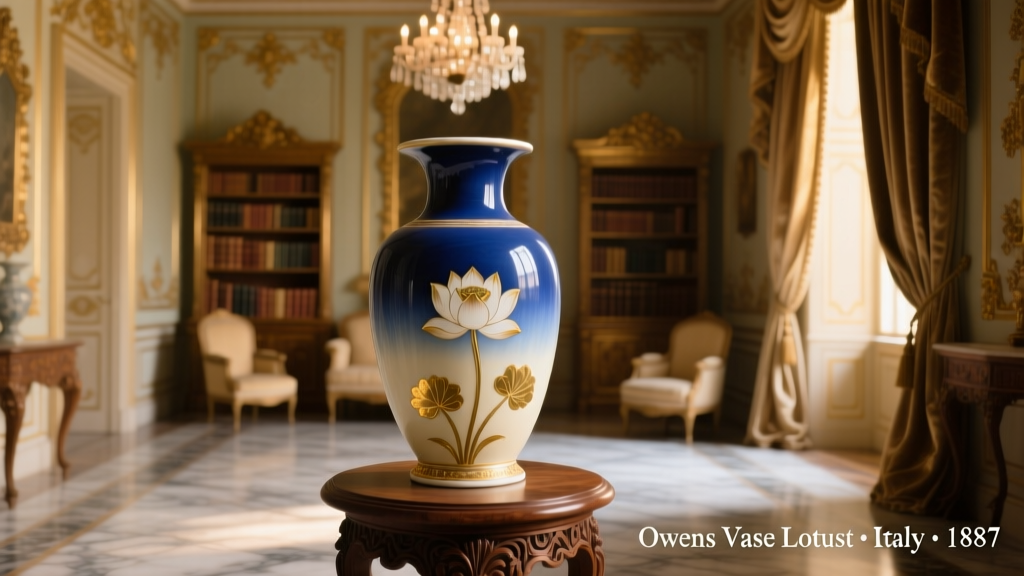
Owens Vase: Lotus Motif in Italian Blue to Cream Glaze — A 10½-Inch Masterpiece of American Art Pottery

George King: The Forgotten Architect of American Colonial Revival Furniture, 1920–1955

Joseph Siddall: The Forgotten Master of Victorian Cabinetmaking and His Enduring Legacy in English Antique Furniture
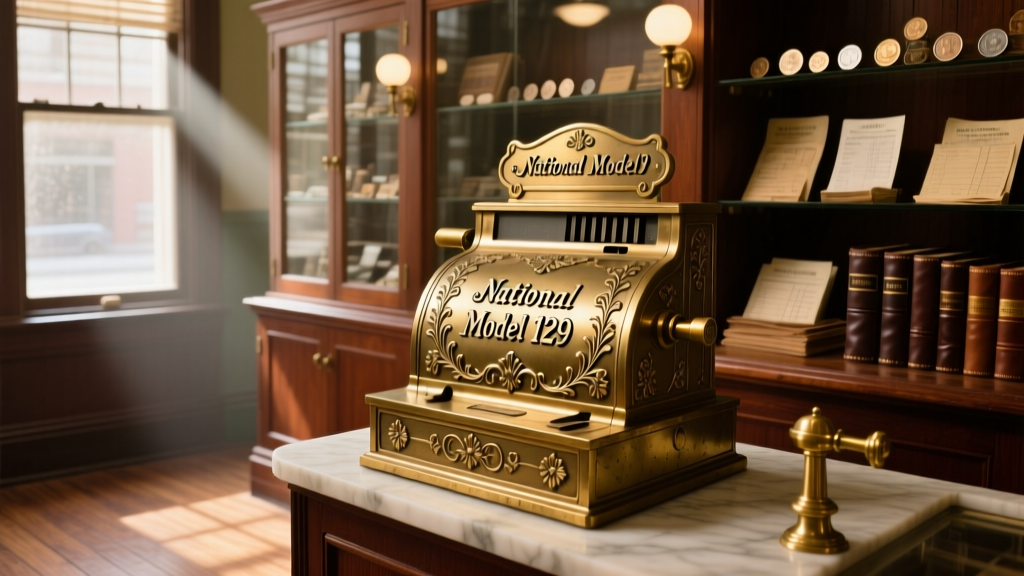
The Cash Registers National Model 129 Brass Ornate Plaque: History, Identification, and Conservation of a Gilded Commerce Icon
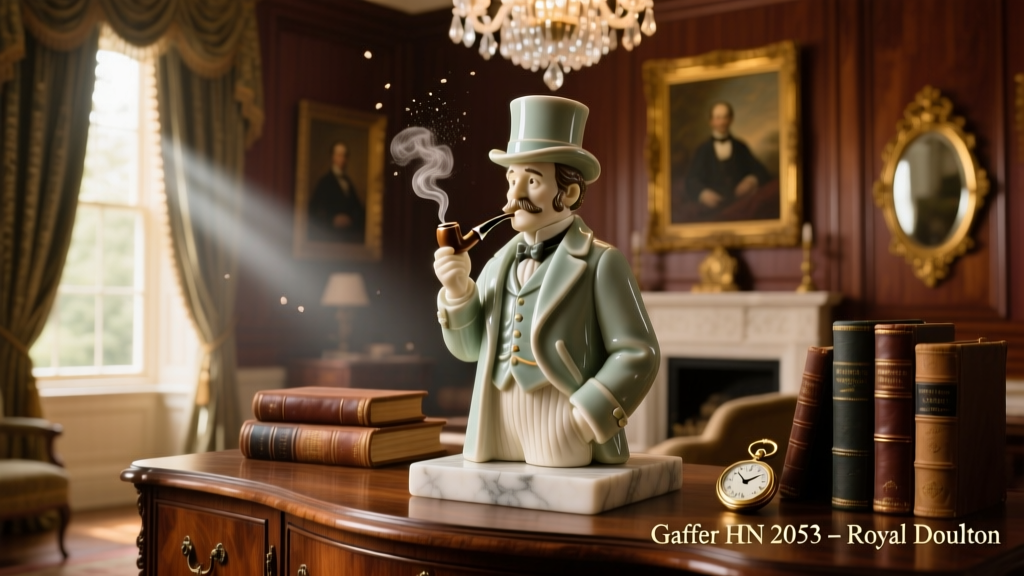
Royal Doulton Figurine Gaffer HN 2053: Identification, History, Value, and Restoration Insights
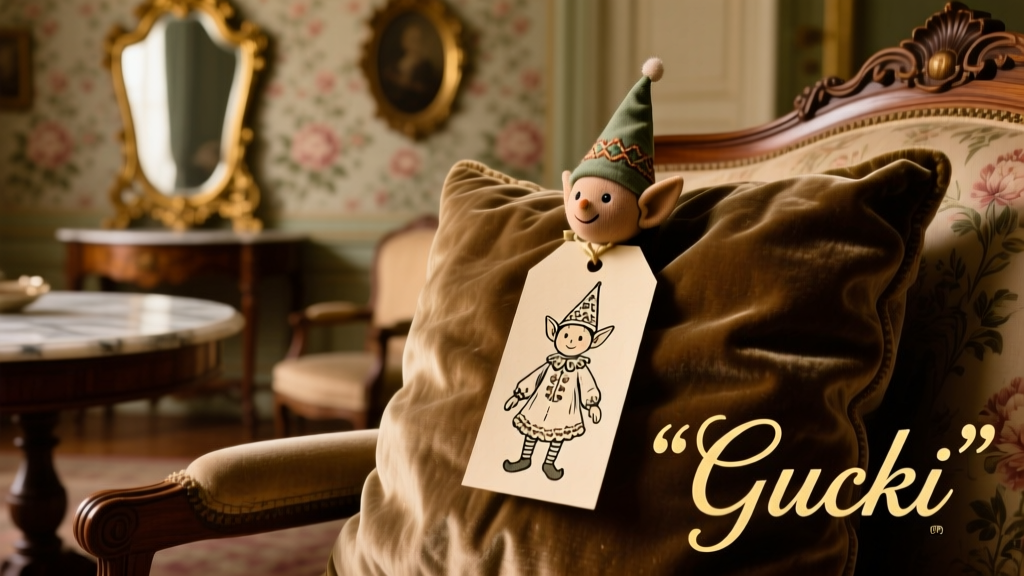
Toy Elf Gucki: Authenticating the 5-Inch Steiff Paper Tag Button Bear with Original Gucki Label
Akro Agate Casserole in Creamware with Relief Goblet-Form Mask Head Handles (7½") — Identification, Provenance, and Restoration Protocol