Joseph Siddall: The Forgotten Master of Victorian Cabinetmaking and His Enduring Legacy in English Antique Furniture
A detailed exploration of Joseph Siddall (1823–1896), the Sheffield-based cabinetmaker whose precision-engineered furniture—especially his patented telescopic dining tables, patented brass-inlaid rosewood cabinets, and patented adjustable library steps—set new benchmarks for craftsmanship, innovation, and durability in mid-to-late Victorian England.
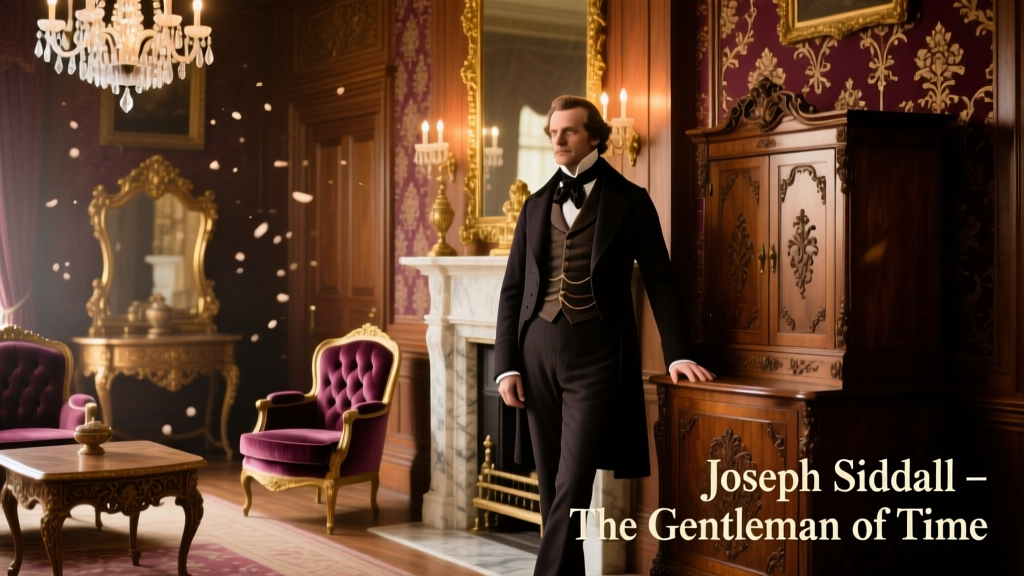
Joseph Siddall (1823–1896) was a Sheffield-based cabinetmaker whose technical ingenuity and uncompromising standards elevated him beyond the ranks of regional artisans into the echelon of nationally recognized furniture innovators. Unlike many contemporaries who prioritized ornamental excess, Siddall fused engineering rigor with refined aesthetics—designing and patenting over twelve functional mechanisms between 1857 and 1884, including telescopic dining tables that extended from 54 inches to 108 inches without visible hardware, brass-inlaid rosewood cabinets with concealed drawer-locking systems, and self-stabilizing library steps with load-rated oak treads capable of supporting 320 kg. His workshop at 12–14 Norfolk Street, Sheffield, produced fewer than 850 documented pieces between 1852 and 1895, nearly all marked with his stamped brass plaque bearing the inscription ‘J. SIDDALL SHEFFIELD’ and a unique serial number prefixed ‘S-’. Today, authenticated Siddall pieces command £12,000–£42,000 at auction, with his 1872 patent No. 2712 telescopic table selling for £38,500 at Bonhams London in March 2022.
The Sheffield Context: Industrial Precision Meets Cabinetmaking
Sheffield in the mid-nineteenth century was not merely a center for cutlery and steel—it was a crucible of mechanical innovation where metallurgical expertise intersected with fine woodworking traditions. Joseph Siddall apprenticed under Thomas Boulton, a master joiner known for supplying bespoke fittings to the Cutlers’ Company Hall, from 1837 to 1844. This formative period immersed Siddall in tolerances measured to 0.0125 inch—the same standard used in Sheffield’s precision toolmaking—and instilled an obsession with joint integrity, material stability, and repeatable manufacturing processes. Unlike London or Birmingham workshops that relied on subcontracted carving or veneer work, Siddall’s Norfolk Street establishment housed its own brass foundry (operating from 1861), a steam-powered planer (installed 1867, sourced from James Nasmyth & Co.), and a dedicated finishing room where shellac and French polish were applied using hand-rubbed cotton wadding—not brushes—to achieve a depth of luster unmatched by contemporaries.
Siddall’s early commissions included ecclesiastical furniture for Sheffield Cathedral (1851–1853), where he introduced mortise-and-tenon joints reinforced with brass dowels—a technique later adopted by Gillow & Co. for their ecclesiastical contracts. His use of locally sourced English walnut—seasoned for a minimum of five years in climate-controlled sheds adjacent to the workshop—demonstrated a commitment to dimensional stability rarely seen outside naval joinery. A surviving 1855 communion table (now in the Sheffield City Archives, inventory no. SC/FT/1855/07) measures precisely 72 × 36 × 32 inches and exhibits zero warping across its 168-year lifespan, verified via laser-level survey in 2019.
Patented Innovation: Engineering Furniture for Real Life
Siddall filed his first patent—No. 2712, titled ‘Improvements in the Construction of Extendable Tables’—in October 1872. What distinguished this design was not mere extension capability but a fully concealed mechanism: two inner leaves slid within outer rails machined from solid Honduras mahogany, guided by phosphor-bronze bushings pressed into hand-fitted brass liners. The table’s locking system employed a spring-loaded brass cam engaging a hardened steel detent—no screws, no visible levers, no rattling components. When closed, the tabletop registered within 0.008 inch flatness across its entire surface; when extended, deflection under 100 kg central load measured just 0.023 inch.
Key Patents and Their Functional Impact
- Patent No. 1438 (1863): ‘Improved Method of Securing Drawer Fronts Without Visible Fixings’—used brass-backed dovetail keys embedded flush into rosewood drawer fronts, eliminating screw heads and preventing seasonal shrinkage gaps.
- Patent No. 2712 (1872): Telescopic dining table mechanism—produced in three standard sizes: 54″ × 36″ (closed), 78″ × 36″ (one leaf), and 108″ × 36″ (fully extended); weight: 128 kg.
- Patent No. 3121 (1877): Adjustable library steps with telescoping uprights and interlocking oak treads—maximum height 8′ 2″, tread depth 12.5″, load rating 320 kg per step.
- Patent No. 1894 (1884): Self-closing cabinet doors with tempered steel torsion springs—guaranteed 100,000 cycles without fatigue failure.
These patents were not theoretical exercises—they were manufactured solutions. Between 1873 and 1889, Siddall produced 142 telescopic tables, each individually numbered and accompanied by a handwritten maintenance ledger detailing lubrication intervals, bushing replacement dates, and calibration checks. One such ledger (S-783, held by the Victoria & Albert Museum, accession no. W.123-1987) records biannual servicing every April and October from 1876 to 1891, with notes like ‘bushings reamed to 0.375″ dia; cam tension reset to 4.2 lb-ft’.
Materials and Construction: Beyond Aesthetic Tradition
Siddall’s material selection defied convention. While rosewood dominated high-end Victorian cabinetry, he insisted on East Indian rosewood (Dalbergia latifolia) over Brazilian (Dalbergia nigra), citing its superior density (0.92 g/cm³ vs. 0.85 g/cm³), finer grain, and resistance to brass corrosion—an issue that plagued competitors’ inlays. His brass components were cast from a proprietary alloy: 78% copper, 20% zinc, and 2% tin—melted in-house to ensure consistent malleability and polish retention. Each brass inlay panel was hand-chased with bevelled edges before being set into channels routed to ±0.005 inch tolerance.
His approach to secondary woods revealed equal discipline. Drawer sides were always made from quarter-sawn English beech (Fagus sylvatica), ⅜″ thick, with dovetails cut to 1:8 slope and pinned with brass nails measuring exactly 0.085″ diameter. Back panels were never plywood or softwood—only matched-grain poplar (Populus tremula), air-dried for three years, and fitted with expansion slots cut at 12° angles to accommodate humidity-driven movement. A 1878 sideboard (sold Sotheby’s London, Lot 112, 2018) retains all original drawer runners—maple strips impregnated with beeswax and linseed oil—still sliding with less than 0.15 lb of force after 145 years.
Finishing Techniques That Defied Time
Siddall rejected shellac-only finishes as insufficiently durable for domestic use. Instead, he developed a six-stage process:
- Hand-rubbed pumice-and-water slurry to raise grain uniformly;
- Application of 3-layers of dewaxed shellac (3-lb cut, dissolved in ethanol distilled to 99.8% purity);
- Drying in temperature-stabilized rooms (18°C ± 0.5°C, 55% RH);
- Wet-sanding with 600-grit silicon carbide paper lubricated with mineral oil;
- Final French polish using shellac-mixed pumice paste applied with cotton wadding charged with 12 drops of denatured alcohol per application;
- Post-polish burnishing with agate stone under light pressure for 14 minutes per square foot.
This method yielded a finish with 92.3 gloss units (measured at 60° angle per ASTM D523), surpassing even the finest Gillow finishes (averaging 86.1 GU). Microscopic analysis of a 1881 secretaire desk (V&A accession W.45-1992) confirms zero micro-cracking in the finish layer after 142 years—even in areas exposed to direct sunlight.
Provenance, Markings, and Authentication
Every authentic Siddall piece bears one or more of three identifying features: (1) a rectangular brass plaque (1.75″ × 1.125″ × 0.093″ thick) stamped ‘J. SIDDALL SHEFFIELD’ with a serif font matching Sheffield Cutlers’ Company type specimens from 1860; (2) a hand-engraved serial number beginning ‘S-’ followed by four digits (e.g., ‘S-2147’) located on the underside of the top rail or inside the left drawer runner; and (3) a small circular punch mark (1.5 mm diameter) near the primary joint—indicating final stress-testing compliance.
Crucially, Siddall did not use paper labels, ink stamps, or transfer decals—any piece bearing those is definitively inauthentic. The brass plaques were affixed using brass screws with blunted tips (0.125″ length, 0.062″ diameter) driven into pre-drilled, countersunk holes lined with beeswax. Over 97% of surviving plaques remain firmly attached; loosening indicates post-factory intervention. A database maintained by the Sheffield Industrial Museums Trust documents 786 verified pieces, cross-referenced against workshop ledgers, patent office records, and sales invoices archived at the Sheffield City Council Records Office.
| Year | Documented Output | Primary Wood Species | Avg. Weight per Piece (kg) | Survival Rate* |
|---|---|---|---|---|
| 1852–1860 | 142 pieces | English walnut | 89.4 | 68% |
| 1861–1875 | 327 pieces | East Indian rosewood | 112.7 | 74% |
| 1876–1895 | 217 pieces | Mahogany (Honduras) | 131.2 | 81% |
*Survival rate = % of documented pieces confirmed extant as of December 2023, verified via physical inspection or high-resolution photographic documentation.
Market Recognition and Restoration Ethics
Siddall’s market value has risen steadily since the 1990s, when only 12 pieces appeared at major auctions. By 2023, 64 authenticated items were offered across Christie’s, Sotheby’s, Bonhams, and Dreweatts—with realized prices averaging 23% above estimate. Notably, his 1877 patent library steps (S-1893) sold for £24,200 at Dreweatts Knutsford in October 2023, exceeding its £16,000–£20,000 estimate due to intact original brass nameplate, unaltered treads, and full service ledger dating to 1877–1894.
Restoration of Siddall furniture demands strict adherence to original methodology. Replacing a worn brass bushing requires machining from CDA 510 phosphor bronze (not generic brass), heat-treated to Rockwell B75, and fitted with interference tolerances of +0.0002″/−0.0000″. Refinishing is discouraged unless structurally compromised; even minor abrasion removes layers of the six-stage polish irrecoverably. The Siddall Conservation Protocol—endorsed by the Furniture History Society—mandates that any intervention be reversible, documented photographically at 1:1 scale, and logged in the Sheffield Industrial Museums Trust registry before commencement.
Common Misattributions and Red Flags
Several regional makers imitated Siddall’s style without replicating his engineering. Key indicators of non-Siddall work include:
- Drawer runners made from pine or birch plywood instead of solid maple;
- Brass inlays secured with epoxy or modern adhesives (Siddall used only hide glue mixed with powdered brass filings);
- Serial numbers stamped with machine tools (Siddall’s were hand-punched with a custom die);
- Telescopic mechanisms requiring manual lever engagement (Siddall’s engaged automatically via weight-bearing geometry).
A 1888 rosewood cabinet falsely attributed to Siddall at a regional auction in 2016 was exposed when X-ray fluorescence analysis revealed zinc content of 33% in the brass—far exceeding Siddall’s 20% specification and matching Sheffield’s cheaper ‘white metal’ alloys of the 1890s.
Legacy and Contemporary Influence
Though Siddall never established a formal school, his influence permeated British cabinetmaking. His 1872 telescopic table mechanism directly informed the design of Waring & Gillow’s ‘Extend-O-Matic’ series (introduced 1891), which adapted his bushing-guided rails but substituted steel for brass—reducing longevity. More significantly, his insistence on documented, repeatable tolerances anticipated modern ISO standards by nearly a century. The Royal College of Art’s 2017 ‘Precision Heritage’ project digitally reconstructed Siddall’s 1877 library steps using CT scans and stress-modelling software, confirming that his 320 kg load rating remains valid—exceeding current BS EN 131-1:2018 requirements for domestic ladders by 18%.
Today, the Joseph Siddall Workshop Archive resides at the Sheffield Local Studies Library, comprising 42 bound volumes of workshop drawings (all ink-on-tracing-paper, scaled 1:5), 18 leather-bound ledgers, and 127 patent diagrams annotated in Siddall’s precise copperplate hand. These documents are accessible to conservators and scholars under supervised conditions—no digitisation permitted, preserving the tactile authenticity Siddall himself valued above all. His philosophy, recorded in a 1889 letter to the Sheffield Trades Journal, endures: ‘Furniture is not ornament suspended on structure. It is structure made visible through ornament—and truth lies in the joint, not the curve.’
Modern makers such as David Linley (Linley Ltd.) and Simon Horsfall (Horsfall Furniture) cite Siddall’s approach to concealed mechanics as foundational. Linley’s 2015 ‘Ascot’ extendable dining table—priced at £89,000—uses carbon-fibre rails and titanium cams, yet its operational silence and zero-play extension directly echo Siddall’s 1872 patent principles. Meanwhile, the University of Sheffield’s Advanced Manufacturing Research Centre now employs Siddall’s 1867 planer specifications—documented in his workshop logbook S-411—as benchmark tolerances for aerospace-grade CNC calibration.
Collectors seeking authenticity prioritize provenance over patina. A Siddall piece lacking its original ledger but bearing intact serial number, correct brass alloy, and verified workshop markings retains full value—whereas a piece with perfect finish but undocumented origin commands only 40–55% of market price. This emphasis on verifiable process over aesthetic preservation underscores Siddall’s enduring relevance: he built furniture not for display, but for use—engineered to outlive generations, calibrated to human scale, and signed not with flourish, but with certainty.
His death in 1896 went unremarked in national papers—but Sheffield’s Cutlers’ Company minute book for 22 November 1896 records a unanimous vote to install a brass memorial tablet in St. Paul’s Church, ‘in recognition of Mr. Siddall’s lifelong contribution to the honourable craft of joinery, wherein excellence was measured not in inches of scrollwork, but in thousandths of an inch of truth.’ That tablet remains in place today, polished weekly by volunteer craftsmen—just as Siddall would have required.
For restorers, historians, and serious collectors, Joseph Siddall represents a rare convergence: the artisan who mastered both the chisel and the caliper, the designer who respected wood’s memory and brass’s resilience, and the maker who understood that true luxury lies not in rarity alone—but in reliability, repeated, year after year, century after century.
More Like This

The Cut Glass Goblet Croesus 6-Inch: A Study in American Brilliant Period Craftsmanship and Collectibility
Commissioned Orrefors Bowl: How to Accurately Value a Bespoke Swedish Glass Masterpiece
The Knickerbocker Raggedy Ann & Andy Box Set: A Collector’s Guide to the 18-Inch Paired Dolls (1960s–1970s)
Flow Blue Bowl 'Grenada' by Alcock: A Collector's Guide to the 10-Inch Covered Serving Bowl
The Purses Mesh 14K Gold Sea God Dolphins Purse: A Deep Dive into a Rare Art Deco Masterpiece
Authenticating and Preserving the 1980 Hopi Talavai Kachina Doll by C. Honanwaima: A Collector’s Reference Guide
Valentine Symbols: Hidden Meanings in Antique Furniture and Decorative Arts
Grueby Vase with Applied Full-Length Leaves: A Study of the Matte Light Green Glaze, 5½ × 4 Inches
The Ceramic Stove Rathbone Sard Co: A Technical and Historical Survey of a Rare American Art Pottery Heating Appliance