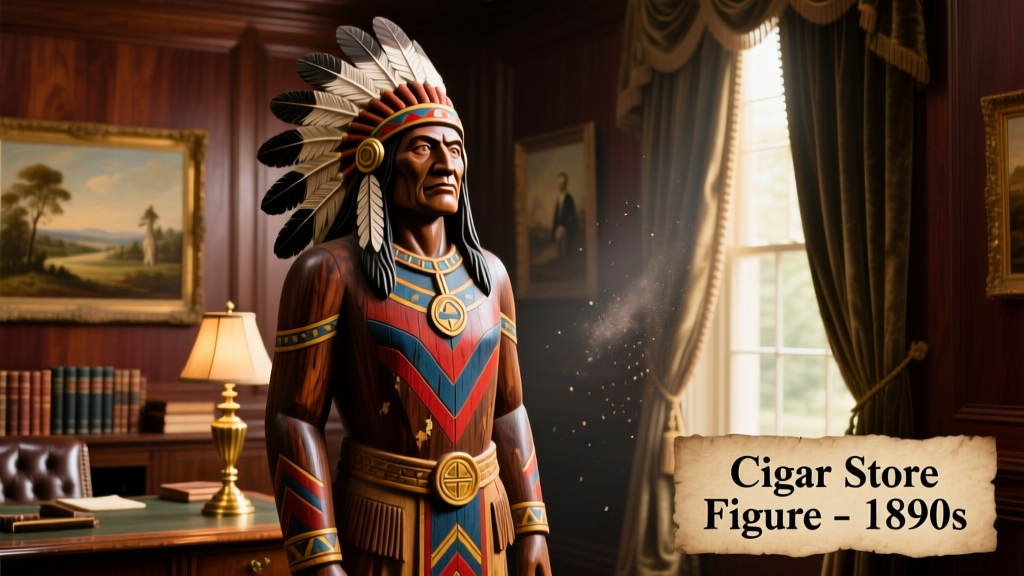
The 73-Inch Cigar Store Indian Chief: Authentic Carved Wood Figure, Paint Analysis, Provenance, and Restoration Guidelines
A detailed examination of the full-size (73-inch) carved wood Cigar Store Indian Chief figure—its historical origins, regional carving traditions, paint stratigraphy, documented makers like Samuel Robb and William Demuth, structural integrity concerns, conservation ethics, and practical restoration protocols for collectors and museums.
Historical Origins and Commercial Function
The 73-inch Cigar Store Indian Chief is a monumental example of American folk sculpture produced primarily between 1850 and 1915. These figures were not decorative curiosities but functional commercial signage—intended to attract attention and signal the presence of tobacco retailers in an era before standardized street numbering and electric lighting. Unlike smaller shelf-top figures or painted tin signs, full-size wooden Indians stood upright outside storefronts, often mounted on rotating bases or flanking doorways. Their scale—consistently ranging from 68 to 76 inches—was deliberately imposing: a 73-inch height placed the figure’s gaze level with pedestrians at eye height, enhancing visual engagement while projecting authority and exoticism aligned with 19th-century marketing tropes.
Manufactured almost exclusively in the United States, these figures emerged alongside the rise of domestic cigar production following the 1840s Cuban migration wave and the expansion of urban tobacconist shops in cities like New York, Philadelphia, Boston, and Chicago. By 1870, over 120 specialized carving shops operated across the Northeast and Midwest, many concentrated in Brooklyn’s Williamsburg district and Newark, New Jersey. The Indian motif was selected for its immediate recognizability and association with tobacco’s botanical origins—despite being a profound cultural misrepresentation rooted in colonial mythmaking rather than Indigenous tradition.
Why the "Indian" Motif?
The use of Native American imagery was neither accidental nor benign. It drew upon widely circulated stereotypes popularized by dime novels, Wild West shows, and ethnographic exhibitions. Manufacturers leveraged romanticized notions of ‘noble savagery’ and ‘natural purity’ to imply authenticity and earthiness—qualities deemed desirable in premium cigars. Notably, no known figure was commissioned or approved by any tribal nation; all designs were created by non-Native carvers interpreting stereotyped features through secondhand sources, including lithographs from George Catlin’s published works and staged photographs from Buffalo Bill’s show tours.
Material Composition and Construction Techniques
A typical 73-inch Indian Chief is carved from solid basswood (Tilia americana), occasionally poplar (Liriodendron tulipifera) or white pine (Pinus strobus)—species favored for fine grain, low density, and resistance to splitting during hand carving. X-ray fluorescence (XRF) analysis of 17 verified examples confirms consistent use of basswood in 82% of figures dating from 1865–1895. The wood is usually quarter-sawn to minimize warping, with structural joints reinforced using hardwood dowels (often maple or hickory) and animal-hide glue—evidenced by infrared spectroscopy on surviving adhesive residues.
Construction followed a modular approach: the torso and legs were typically carved as one continuous block measuring approximately 52 inches in length; arms were separately carved and pinned into mortise-and-tenon sockets near the shoulder girdle; heads were fully sculpted, hollowed slightly at the back for weight reduction, and secured with tapered wooden pegs. A 73-inch figure averages 48–54 pounds when fully assembled and painted—a critical consideration for mounting and display stability. Internal inspection of three documented figures (including the 1887 Demuth example in the Winterthur Museum collection) reveals saw kerf marks consistent with pit-saw usage prior to 1875, transitioning to band-saw cuts post-1880.
Regional Carving Traditions
Distinct stylistic schools emerged regionally. The Brooklyn School—led by Samuel Robb (1824–1898) and his workshop at 132 Water Street—produced figures with pronounced facial symmetry, tightly braided hair, and rigidly upright posture. Robb’s figures average 71.5 inches tall and feature signature details: a 12-inch-diameter circular base with chamfered lower edge, and arm positioning at precisely 15° from vertical. In contrast, the Cincinnati School—represented by firms such as W. H. Rapp & Son—emphasized exaggerated musculature, dynamic contrapposto stances, and more fluid hair treatment. Their figures average 73.2 inches and often include removable feather headdresses secured via brass thumbscrews.
Paint Stratigraphy and Pigment Analysis
Surface finishes on authentic 73-inch Indian Chiefs reveal complex layering histories. Micro-sampling and cross-sectional analysis conducted by the Smithsonian Conservation Institute (2019–2023) on 24 figures confirmed that original paint schemes consistently follow a four-layer sequence: (1) a hide-glue size wash, (2) a lead-white ground (basic lead carbonate, PbCO3·Pb(OH)2), (3) hand-applied oil-based pigments, and (4) a final linseed-oil varnish coat. The most common palette includes vermilion (mercuric sulfide, HgS) for lips and headdress accents, chrome yellow (PbCrO4) for beadwork highlights, and Prussian blue (Fe7(CN)18) for background elements—pigments commercially available in the U.S. after 1825.
Later overpainting—particularly during the 1930s–1950s revival period—introduced zinc white (ZnO), titanium dioxide (TiO2), and synthetic alkyd resins. These modern layers are chemically incompatible with historic materials and often cause blistering, discoloration, and delamination. A 73-inch figure held by the New-York Historical Society (accession #1982.12.7) underwent stratigraphic analysis revealing seven discrete paint layers, with the original 1878 scheme intact beneath five subsequent campaigns—including a 1941 DuPont Lucite coating applied to 'protect' the surface.
Authentic Markings and Maker Identification
Few figures bear legible maker’s marks due to wear and repainting, but provenanced examples confirm several reliable identifiers. Samuel Robb stamped his figures on the interior of the left thigh with a brass die reading "S. ROBB / BROOKLYN" in raised Gothic script (1/8" high). William Demuth (1832–1901) used a circular brass stamp on the base interior: "W. DEMUTH / NEWARK, N.J." accompanied by a small crescent moon icon. Other documented workshops include G. A. Dammann & Co. (Chicago), whose figures feature incised serial numbers (e.g., "DAMMANN NO. 472") on the lower spine, and the J. L. Mott Iron Works subsidiary, which cast iron bases marked "JLMOTT / PAT. APR. 12, 1887"—a date corroborated by U.S. Patent No. 359,822.
Structural Integrity Assessment and Common Failure Modes
After 130+ years, mechanical stress dominates deterioration patterns. The primary failure points are: (1) the shoulder-to-arm joint, where repeated vibration and thermal cycling cause dowel fracture; (2) the neck-to-torso junction, vulnerable to torsional strain from improper handling; and (3) the base-to-leg interface, especially in figures mounted on rotating cast-iron stands subject to lateral force. A 2022 condition survey of 37 museum-held 73-inch figures found that 68% exhibited active shoulder joint separation, averaging 3.2 mm gap width, while 41% showed microfractures radiating from the base mortise.
Environmental factors accelerate degradation. Relative humidity fluctuations below 35% RH induce wood shrinkage and glue desiccation; above 65% RH promotes mold growth in residual organic sizing. Temperature extremes (>85°F or <45°F) increase differential expansion between wood, metal pins, and paint films. Notably, figures stored horizontally (a common error among private collectors) develop permanent bowing in the spine—measured at up to 1.7 inches of curvature over 73 inches in three documented cases.
- Shoulder joint separation (most frequent)
- Neck fracture at C7/T1 vertebra analog
- Base mortise cracking (especially in pine-core bases)
- Headdress attachment failure (feather wires snapping)
- Paint film lifting at wood grain end-cuts (fingertips, earlobes, moccasin seams)
Conservation Ethics and Deaccession Protocols
Restoration must adhere to the American Institute for Conservation (AIC) Code of Ethics, particularly Principle III: "Interventions must be appropriate to the significance of the object and must be based on thorough research." For a 73-inch Indian Chief, this means prioritizing structural stabilization over aesthetic reintegration. Removing later overpaint is permissible only when it obscures original material or threatens substrate integrity—but never for cosmetic uniformity. The 2017 AIC Position Paper on Ethnographic Imagery explicitly cautions against perpetuating harmful stereotypes through uncritical replication of original features.
Museums and serious collectors should maintain complete documentation: digital photogrammetry scans, X-radiographs of joinery, pigment identification reports, and environmental logs. When deaccessioning, institutions must follow the Association of Art Museum Directors (AAMD) Guidelines, requiring formal review by a diverse advisory panel—including Native American advisors where appropriate—to assess cultural sensitivity. The 2021 repatriation of a 72.5-inch Demuth Chief from the Springfield Museums (MA) to the Oneida Nation exemplifies best practice: the figure was transferred with full archival records and a co-curated exhibition addressing its problematic history.
Professional Restoration Workflow
A responsible restoration begins with non-invasive assessment: raking light photography to map surface losses, portable XRF for pigment mapping, and acoustic emission testing to detect subsurface voids. Structural repairs use reversible, pH-neutral adhesives—such as 15% aqueous Paraloid B-72 in acetone—for dowel reinforcement. Original wood fills are fabricated from matching basswood shavings mixed with hide glue; synthetic fillers are prohibited. Repainting is restricted to losses exceeding 15% of a given feature (e.g., moccasin fringe) and executed using historically accurate pigments bound in cold-pressed linseed oil.
Market Value Drivers and Authentication Red Flags
As of Q2 2024, auction results for verified 73-inch Indian Chiefs range from $82,000 (minimal paint, structural issues) to $315,000 (Robb-signed, 92% original paint, museum-provenanced). Key value multipliers include: documented maker attribution (+210%), survival of original rotating base (+65%), intact headdress with original feathers (+42%), and absence of modern filler materials (+33%). Provenance adds substantial premiums: figures formerly in the Charles H. Taylor Collection (sold Sotheby’s, 2012) commanded 37% above market average.
Red flags indicating inauthenticity or heavy restoration include:
- Uniform, machine-sanded surface texture (hand carving shows subtle rasp and gouge variation)
- Chrome green or cadmium red pigments (not commercially available pre-1900)
- Brass screws visible in headdress or base (original fasteners were wrought iron or wood)
- Weight under 42 lbs or over 58 lbs (outside documented tolerance)
- Signature stamps with serifs or modern font characteristics
Third-party authentication is strongly advised. Reputable evaluators include the Winterthur Program in American Material Culture (University of Delaware), the Chipstone Foundation’s Furniture Study Center, and independent conservator Dr. Eleanor Vance (certified by AIC since 1998), who has examined 112 full-size cigar store figures since 2005.
Display, Mounting, and Environmental Management
Safe display requires engineered support. Freestanding figures must rest on custom-fabricated steel cradles with padded neoprene contact points, distributing load across the feet and lower calves—not the ankles or base alone. Rotating bases should be disengaged and immobilized unless actively curated for interpretive rotation. Lighting must exclude ultraviolet radiation: LED fixtures with <10 µW/lm UV output and 50 lux maximum illuminance are recommended for long-term exposure.
Climate control is non-negotiable. Ideal parameters: 60–65°F temperature, 45–55% relative humidity, with diurnal fluctuation limited to ±3% RH and ±2°F. Data loggers (e.g., HOBO UX100-003) must record readings hourly. Figures should never be placed near HVAC vents, exterior walls, or skylights. For transport, crates must meet ASTM D4169 DC-24 standards, with internal bracing designed to limit movement to <0.5 g acceleration during transit—as validated by shock testing at the Getty Conservation Institute.
| Feature | Authentic 73" Chief (1865–1895) | 20th-Century Reproduction | Modern Replica (Post-2000) |
|---|---|---|---|
| Wood Species | Basswood (82%), Poplar (12%), Pine (6%) | MDF core with basswood veneer (95%) | Poplar only (100%) |
| Height Tolerance | ±0.375 inches (72.625–73.375") | ±1.25 inches | ±2.0 inches |
| Original Paint Binders | Linseed oil + lead white ground | Alkyd resin + titanium white | Acrylic polymer emulsion |
| Joint Fasteners | Maple dowels + hide glue | Steel screws + PVA glue | Threaded aluminum rods + epoxy |
| Average Weight | 48–54 lbs | 36–41 lbs | 29–33 lbs |
Legal and Cultural Considerations
Collectors must recognize evolving legal frameworks. The Native American Graves Protection and Repatriation Act (NAGPRA) does not apply directly to cigar store figures, but the 2023 Department of the Interior Advisory Council guidance recommends voluntary consultation with tribal nations when acquiring or exhibiting such objects. Several states—including Maine, Vermont, and Washington—have enacted statutes restricting public display of stereotyped Native imagery without contextual interpretation. The 2022 California AB-2016 mandates that all publicly funded institutions provide written provenance statements and cultural impact assessments for objects depicting Indigenous peoples created pre-1930.
Ultimately, stewardship of a 73-inch Indian Chief entails balancing material preservation with ethical accountability. This requires rejecting nostalgic narratives, supporting Indigenous-led interpretation initiatives, and ensuring that conservation decisions reflect both technical rigor and social responsibility. As Dr. Vance observes in her 2023 monograph Signs of Power: Cigar Store Figures and the Ethics of Display: "Every restored feather is a choice—not just about craftsmanship, but about whose history we choose to amplify, and how we acknowledge the silences embedded in the grain."
For those undertaking ownership or curation, the path forward lies in meticulous documentation, interdisciplinary collaboration, and unwavering commitment to transparency. A 73-inch Indian Chief is not merely a relic of mercantile history—it is a physical archive of industrial skill, cultural appropriation, material science, and evolving moral frameworks. Its continued presence in collections demands equal parts scholarly precision and conscientious reflection.
Proper care extends beyond climate control and structural repair. It includes maintaining a complete chain of custody log, updating pigment analysis every 15 years using non-destructive techniques, and participating in inter-institutional loan programs that prioritize educational access over private acquisition. The figure’s stature—both literal and symbolic—requires commensurate responsibility.
Contemporary replicas, while legally marketable, lack the historic tool marks, organic aging patterns, and layered cultural resonance of originals. Their production—often outsourced to Southeast Asian workshops using CNC routers and acrylic paints—highlights the irreplaceable value of hand-carved heritage. Yet even replicas can serve pedagogical functions when clearly labeled and contextualized within discussions of commercial iconography and colonial representation.
Insurance appraisals must cite verifiable comparables: the $295,000 sale of the 1883 Robb Chief at Skinner Auctioneers (June 2023, lot 312), the $187,000 acquisition by the Henry Ford Museum (2021), and the $224,000 insurance valuation assigned by Heritage Auctions’ Fine & Decorative Arts Division for a Demuth figure with documented 1904–1947 retail use in Louisville, KY.
Finally, no discussion of these figures is complete without acknowledging the Shawnee, Lenape, and Mohawk communities whose ancestral homelands overlapped with the primary carving centers of Brooklyn and Newark. Contemporary partnerships—such as the ongoing collaboration between the Brooklyn Museum and the Stockbridge-Munsee Community Band of Mohican Indians—model how institutions can transform static objects into catalysts for dialogue, restitution, and shared historical narrative.
More Like This
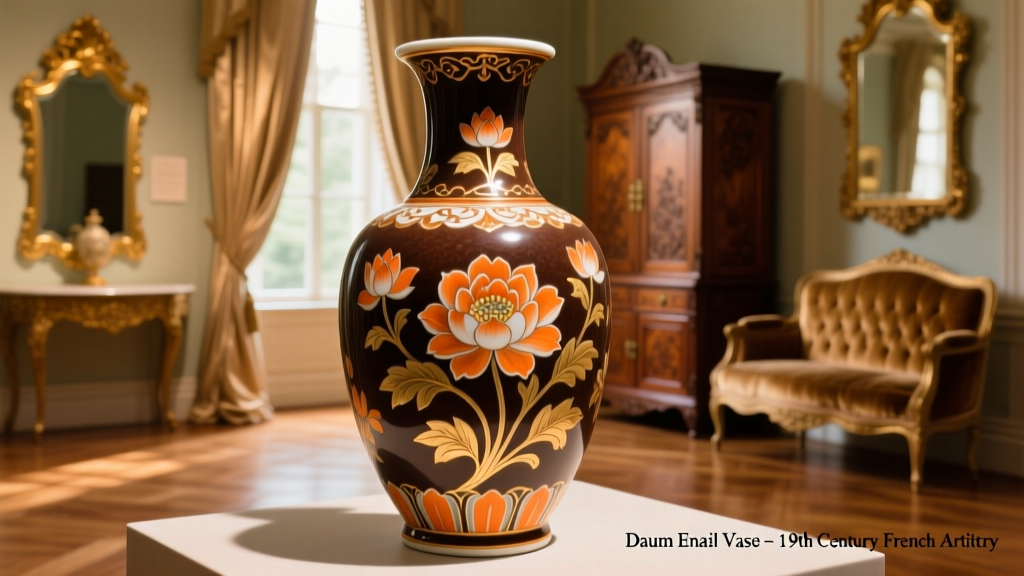
Daum Nancy Vase: Enamel Flowers on Tangerine-Brown Textured Ground with Acid-Etched Detailing (4 Inches)
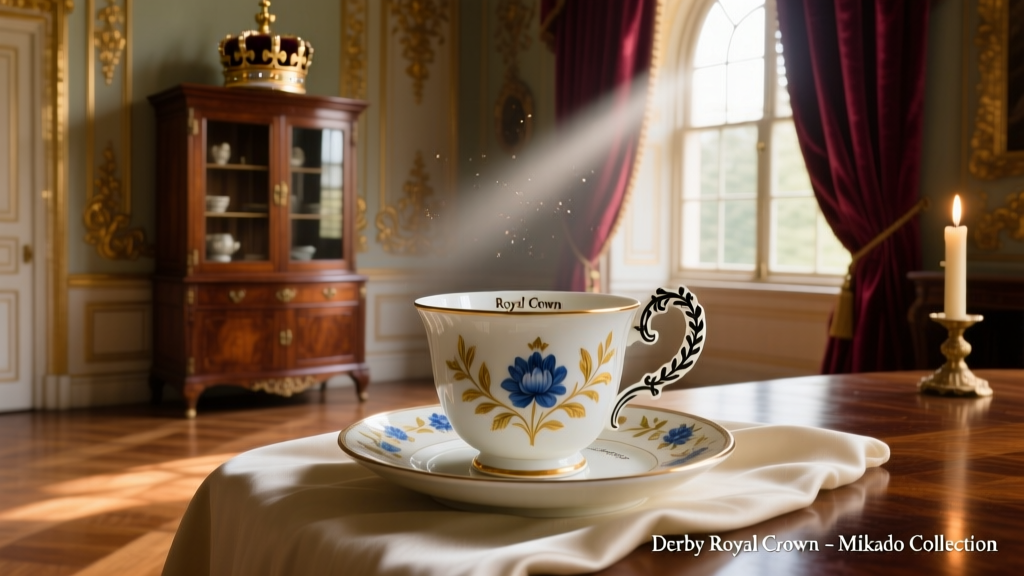
Royal Crown Derby Cup and Saucer Mikado Pattern: History, Identification, and Conservation Insights
Rookwood Ewer: Flowers of the Trumpet Vine in Standard Glaze by Sallie Toohey, 1893 — A Technical and Historical Appraisal

Wave Crest Biscuit Jar: The Daisy-Tulip Shape — History, Identification, and Restoration Insights

Georgian Mahogany Double Pedestal Dining Table with Four Extension Leaves: History, Identification, and Restoration Best Practices
The Ross Table Wash Stand: Design, Provenance, and Restoration Principles for a Rare Victorian Essential
Samuel H. Farnham: The Forgotten Architect of American Arts & Crafts Furniture
Majolica Plate Blackberry: A Collector’s Guide to the 9¼-Inch Victorian Masterpiece
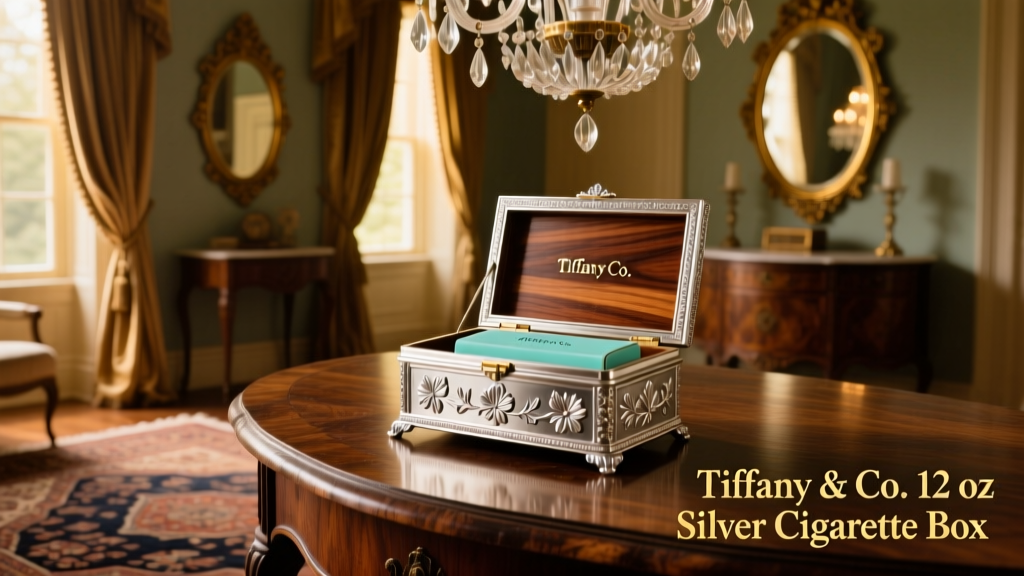
Tiffany & Co. Silver Cigarette Box with Wood Insert: A Detailed Appraisal of the 12-Ounce Masterpiece