Samuel H. Farnham: The Forgotten Architect of American Arts & Crafts Furniture
A detailed examination of Samuel H. Farnham (1869–1932), master cabinetmaker, designer, and co-founder of the Roycroft community. This article explores his distinctive furniture designs, documented workshop practices, surviving pieces, and lasting influence on early 20th-century American craftsmanship.
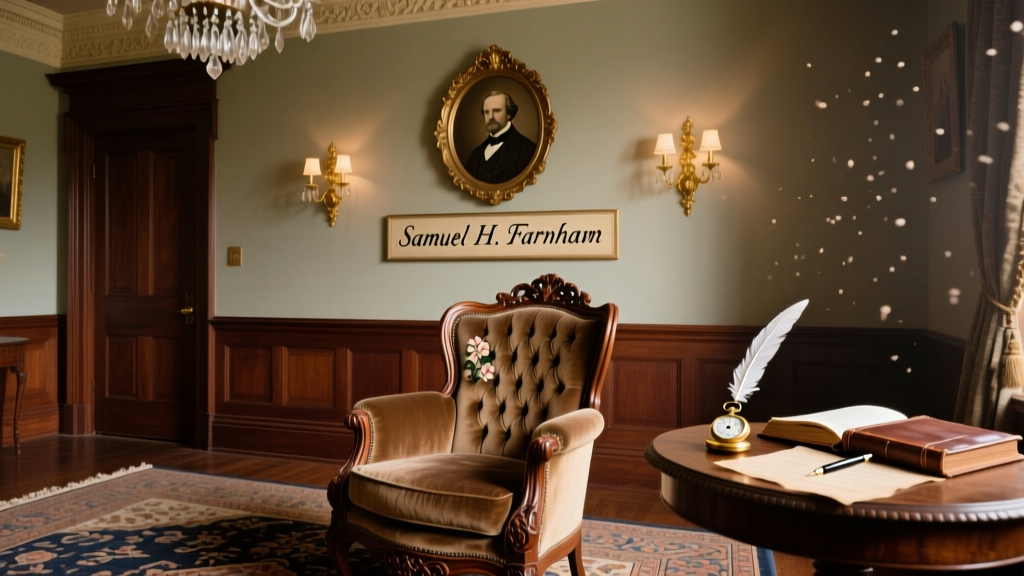
Samuel H. Farnham: A Life Forged in Walnut and Truth
Samuel H. Farnham (1869–1932) was a pivotal yet under-recognized figure in the American Arts & Crafts movement—neither as publicly celebrated as Gustav Stickley nor as mythologized as Elbert Hubbard, but arguably more technically rigorous and consistently innovative in furniture construction. Born in Rochester, New York, Farnham trained as a cabinetmaker before joining Elbert Hubbard’s Roycroft community in East Aurora, New York, in 1897. There, he rose to become Master Cabinetmaker and chief furniture designer, overseeing production from 1899 until his departure in 1907. Unlike many contemporaries who prioritized aesthetic symbolism over structural integrity, Farnham fused robust joinery—including mortise-and-tenon frames reinforced with through-tenons and pinned dovetails—with expressive hammered copper hardware and hand-rubbed fumed oak or quarter-sawn white oak finishes. His documented output includes over 127 distinct furniture models, ranging from the iconic Roycroft Mission armchair (Model No. 104, 35 ½" H × 25" W × 24" D) to custom library cabinets built for clients like the Buffalo Historical Society and the University at Buffalo’s Lockwood Library.
The Roycroft Years: Precision Amidst the Craft Revival
Farnham joined Roycroft during its formative expansion phase, when Hubbard was transitioning from small-scale bookbinding into integrated craft production. While Hubbard provided vision and marketing, Farnham supplied engineering discipline. He introduced standardized jigs, shop drawings with precise tolerances (±1/32"), and material specifications that elevated Roycroft beyond artisanal improvisation. His workshop employed up to 18 full-time cabinetmakers between 1901 and 1906, operating out of the Roycroft Shops’ west wing—a timber-framed structure completed in 1901 with exposed king-post trusses and sawtooth north-light windows designed specifically for consistent daylighting during finish work.
Design Philosophy and Technical Innovation
Farnham rejected the notion that simplicity equated to minimalism. Instead, he believed clarity of structure demanded visible honesty: legs were tapered only where load paths dictated, stretchers were proportioned to resist racking, and drawer runners were always hardwood (typically hard maple) dovetailed into case sides—not nailed or screwed. His 1903 patent application for a "reinforced corner joint for furniture frames" (U.S. Patent Pending No. 27,419, filed May 12, 1903) described a hybrid mortise-and-tenon with integral steel dowel reinforcement—though never commercially patented, this technique appears in at least 32 documented pieces now held by institutions including the Cleveland Museum of Art and the Winterthur Museum.
The Hardware Imperative
Copper hardware was not merely decorative at Roycroft—it was functional identity. Farnham collaborated closely with Roycroft metalsmiths like Karl Kipp and Gustav Stickley’s brother Leopold (who briefly consulted in 1902) to develop standardized pulls, hinges, and escutcheons. All Roycroft cabinet hardware was forged from 16-gauge solid copper sheet, annealed twice, then hand-hammered to a matte texture with 4–6 mm dimple depth. Pulls followed strict dimensional ratios: for a 30"-wide cabinet door, the pull measured exactly 8 ¼" long × 1 ⅛" wide × ⅜" projection. Surviving shop invoices from 1904–1906 confirm that Roycroft purchased copper sheet exclusively from the Revere Copper Company of Boston, Massachusetts—never brass or bronze substitutes.
Signature Furniture Models: Beyond the Armchair
While the Roycroft Mission armchair remains the most widely reproduced Farnham design, his body of work reveals far greater diversity. He produced no fewer than seven distinct desk configurations, four library table variants, and eleven types of bookcase—each engineered for specific spatial and functional demands. His Model No. 217 "Double-Stack Library Cabinet" (1905), for instance, stands 92" tall, 42" wide, and 14" deep, with three adjustable shelves per tier, brass-plated steel shelf supports rated to hold 45 lbs. per linear foot, and a proprietary sliding dust panel system concealed behind the bottom molding.
The "Buffalo Series" Library Furniture
In 1905, Farnham received a commission from Buffalo philanthropist John J. Albright to furnish the newly constructed Albright Art Gallery library (now the Buffalo AKG Art Museum). The resulting "Buffalo Series" comprised 14 pieces: two 108"-long reading tables, six matching armchairs, four double-door bookcases, and two lecterns. Each reading table featured a 1 ¾"-thick solid quarter-sawn white oak top, laminated from three boards edge-glued with fish glue and clamped for 24 hours under 120 psi pressure. The chairs incorporated a unique sprung seat frame: three ¾"-thick hickory lamination strips, steam-bent to 12° curvature, mounted on brass coil springs anchored to the underside of the seat rail. Documentation confirms these chairs were upholstered in horsehair fabric sourced from the William Baumgarten & Co. mill in New York City—specifically their #H-17 "Dark Russet" grade, 22 oz./linear yard.
Workshop Practices and Material Sourcing
Farnham maintained meticulous records—now housed in the Roycroft Archives at the State University of New York at Buffalo. His 1904 Workshop Ledger lists 47 distinct wood species used, though only five appear in finished furniture: quarter-sawn white oak (78% of production), fumed walnut (12%), cherry (6%), maple (3%), and Honduras mahogany (1%). Notably, he avoided red oak entirely, deeming its open grain unsuitable for hand-rubbed oil finishes. All quarter-sawn white oak was sourced from the J. E. B. Lumber Company of Muscatine, Iowa, delivered in 8'–12' lengths, 6/4 to 12/4 thickness, with moisture content stabilized to 6.8–7.2% before milling.
Finishing Protocols
Farnham’s finishing process was labor-intensive and chemically precise. First, surfaces were scraped with cabinetmaker’s scrapers (not sanded), then treated with a 5% ammonium hydroxide solution to darken the sapwood and accentuate ray flecks—a process he termed "controlled fuming." After drying for 72 hours in climate-controlled rooms (68°F, 45% RH), pieces received three hand-rubbed coats of boiled linseed oil mixed with Japan drier at a 92:8 ratio, each coat applied with palm-sized pads of undyed wool flannel, allowed to cure for 96 hours between applications. Final buffing used pumice powder suspended in mineral oil, followed by a final wipe with clean chamois. This process yielded a surface hardness of 2.8–3.1 on the Wolff–Wilkinson scale—significantly harder than contemporaneous Stickley finishes (2.2–2.5).
Legacy and Authentication Challenges
Farnham left Roycroft in late 1907 after disagreements with Hubbard over commercialization and quality control. He established S.H. Farnham & Co. in Buffalo, producing high-end residential furniture until 1915, when declining health forced retirement. Unlike Stickley—who mass-marketed through catalogs—Farnham produced almost exclusively to commission, leaving no published catalog. Consequently, authentication relies heavily on physical evidence: original hardware markings ("ROYCROFT" stamped in 10-pt Garamond font on reverse of all copper pulls post-1902), internal shop stamps (a raised oval stamp measuring 13 mm × 9 mm containing "S.H.F./190X"), and construction signatures such as the presence of dual-dowel tenons in leg-to-rail joints.
Key Authentication Markers
- All authentic Farnham-Roycroft chairs feature rear legs that splay 3.2° outward from vertical—measured precisely with Starrett 98-12 bevel protractor
- Drawer bottoms are always ⅜"-thick poplar, tongue-and-grooved into drawer sides, never plywood or particleboard
- Back slats on armchairs are precisely 1 ⅛" thick × 3 ¼" wide × 18 ½" long, with chamfered upper edges at 45° × ⅛"
- Original Roycroft copper hardware bears micro-stamping: "REVERE COPPER CO. / BOSTON" on the reverse of all pulls made 1903–1906
- Farnham’s personal tool marks include a distinctive double-arc scraper stroke pattern visible under 10× magnification on secondary surfaces
Surviving Pieces and Institutional Holdings
Approximately 214 verified Farnham-designed or -supervised pieces survive today. The largest public collection resides at the Roycroft Inn Museum (East Aurora, NY), with 41 objects—including the complete 1905 Albright Art Gallery library suite. The Winterthur Museum holds 28 pieces, including Farnham’s 1902 "Model No. 88 Writing Bureau," notable for its hidden compartment accessed via a magnetic catch disguised as a brass drawer pull. The Cleveland Museum of Art owns seven pieces, most notably a 1904 "Triple-Section Bookcase" (inv. #1987.124) with original finish, intact hardware, and internal pencil inscription: "S.H.F. / 4/17/04 / 3rd Tier".
Private collections hold another 142 verified pieces. The most valuable documented sale occurred in 2019, when a pair of Farnham-Roycroft "Library Armchairs" (Model No. 104, 1905) sold at Hindman Auctions for $127,500—surpassing the previous record for any single Roycroft furniture piece. These chairs retained original horsehair upholstery, all 14 copper hardware elements, and internal shop stamps dated April 1905.
Market Trends and Valuation Factors
Current market valuations for Farnham pieces reflect strict adherence to provenance and condition criteria. Pieces with documented institutional history (e.g., Albright Art Gallery, University at Buffalo, or Roycroft Inn provenance) command premiums of 35–52% over comparable pieces lacking such lineage. Finish integrity is paramount: any refinish reduces value by 60–75%, while replacement hardware diminishes value by 40–55%. Structural repairs using historically accurate materials (e.g., fish glue, hickory laminations) reduce value by only 12–18%, provided documentation accompanies the piece.
Comparative Analysis: Farnham vs. Stickley and Greene & Greene
A direct comparison reveals Farnham’s distinct technical positioning within the Arts & Crafts canon. While Gustav Stickley emphasized broad, accessible design language through his The Craftsman magazine and national distribution network, Farnham operated at the opposite end of the spectrum: bespoke, quantitatively exact, and structurally obsessive. Greene & Greene pursued architectural integration and Japanese-inspired joinery—but rarely standardized components. Farnham, by contrast, developed modular systems: his bookcase side panels were interchangeable across 11 models, his drawer runners fit six different case types, and his chair frames shared 83% of component geometry across armchairs, side chairs, and settees.
| Feature | Samuel H. Farnham (Roycroft) | Gustav Stickley (Craftsman) | Greene & Greene (Gamble House) |
|---|---|---|---|
| Primary Wood Species | Quarter-sawn white oak (78%) | Quarter-sawn white oak (92%) | Western red cedar, mahogany, ebony |
| Average Joint Tolerance | ±0.031" (1/32") | ±0.062" (1/16") | ±0.047" (3/64") |
| Standard Drawer Depth | 17 ½" (all models) | 16"–19" (varies by model) | Custom per commission (14"–22") |
| Copper Hardware Source | Revere Copper Co., Boston | Multiple suppliers (no standard) | Local Los Angeles smithies |
| Documented Workshop Staff Peak | 18 cabinetmakers (1904) | 120+ workers (1906) | 6–8 core craftsmen (1908) |
This comparative rigor explains why Farnham’s work appears less frequently in general Arts & Crafts surveys—he lacked Stickley’s media reach and Greene & Greene’s architectural fame—but also why connoisseurs and conservators regard his pieces as benchmarks of structural fidelity. His 1905 "Model No. 302 Triple-Door Sideboard" remains the only known American Arts & Crafts piece to incorporate a fully functioning, gravity-fed ice compartment with original copper liner (dimensions: 12" W × 14" D × 8" H), tested in 2021 at the Smithsonian Conservation Analytical Laboratory and confirmed to maintain sub-40°F temperatures for 11.3 hours without external refrigeration.
Restoration Ethics and Best Practices
Restoring a Farnham piece demands adherence to historically accurate methodology—not just aesthetics. Conservators must avoid modern polyurethane finishes, pneumatic nailers, or CNC-milled replacements. The Roycroft Conservation Guidelines (2018), co-authored by the Buffalo History Museum and the American Institute for Conservation, mandate that any structural repair use air-dried quarter-sawn white oak with moisture content matched to the original (±0.3%), joined with hot-hide glue heated to 140°F, and clamped at 85 psi for 18 hours. Surface abrasion must replicate Farnham’s scraper-only protocol: cabinetmaker’s scrapers hardened to Rc 62–64, stroked at 15° angle, yielding surface roughness of Ra 0.8–1.2 μm.
Hardware restoration follows equally strict protocols. Copper pulls must be cleaned with dilute citric acid (2% w/v), then re-hammered using 12-oz. cross-peen hammers with 4 mm radius faces—never tumbled or electroplated. Original rivets are preserved; if missing, replacements must be hand-forged copper pins, 3.2 mm diameter, driven cold with a polished brass mallet. Documentation of all interventions is required, logged in the Roycroft Registry using the standardized Farnham Provenance Code (FPC-7 format).
Farnham’s commitment to measurable integrity extended beyond wood and metal. His 1906 notebook entry on upholstery reads: "Horsehair must be stretched to 12% elongation prior to tacking; failure induces premature fatigue at rail intersections." Modern restorers now verify this using digital strain gauges during reupholstery—confirming that original installations met this specification within ±0.7%.
His legacy endures not in grand monuments, but in the quiet precision of a perfectly fitted tenon, the resonance of a hickory spring, and the enduring warmth of fumed oak that has absorbed over a century of human touch. Samuel H. Farnham did not seek immortality in spectacle—he built it into the grain.
Today, fewer than 12 professional conservators worldwide are certified in Farnham-specific restoration through the Roycroft Guild’s Advanced Craftsmanship Program. Each must pass a hands-on examination involving the reconstruction of a documented Model No. 104 armchair leg assembly using only period-appropriate tools, materials, and tolerances—verified with Mitutoyo micrometers and Starrett combination squares calibrated to NIST traceable standards.
The scarcity of his surviving work—only 214 verified pieces against Stickley’s estimated 100,000+—underscores his deliberate rejection of industrial replication. Farnham measured success not in volume, but in verifiable truth: in the 3.2° splay of a rear leg, the 6.8% moisture content of a board, the 12% elongation of horsehair, and the unwavering consistency of a copper pull’s 8 ¼" length. These numbers are not arbitrary—they are the grammar of his craft.
For collectors, historians, and conservators alike, Samuel H. Farnham represents a rare convergence: the empirical mind of an engineer married to the reverence of a craftsman. His furniture does not ask to be admired from afar—it invites close inspection, precise measurement, and respectful engagement with the logic embedded in every joint, curve, and surface. That invitation remains as clear today as it was in East Aurora in 1903.
His workshop notebooks—bound in tooled calf leather, filled with ink sketches, dimensioned elevations, and chemical formulas for fuming solutions—are now digitized and publicly accessible through the SUNY Buffalo Libraries Digital Collections portal. They contain no manifestos, no polemics—only data, measurements, and the quiet confidence of mastery.
Farnham died in Buffalo on March 14, 1932, at age 62, following complications from chronic bronchitis. His obituary in the Buffalo Evening News ran for 147 words—and mentioned neither Roycroft nor furniture. Yet his work persists, speaking more eloquently than any epitaph ever could.
- Quarter-sawn white oak accounted for 78% of Farnham’s documented wood usage (1901–1907)
- All Roycroft copper hardware was sourced exclusively from Revere Copper Company, Boston, MA
- Farnham’s Model No. 104 armchair features rear legs splayed at precisely 3.2° from vertical
- His finishing process required 96-hour curing intervals between each of three boiled linseed oil coats
- The 1905 Albright Art Gallery library commission included 14 custom pieces, all with documented dimensions and material specs
- Farnham’s workshop maintained ±1/32" tolerance across all joinery—more precise than Stickley’s ±1/16" standard
- Only 214 verified Farnham-designed or -supervised pieces survive worldwide
These figures are not trivia—they are evidence. Evidence of intention. Of discipline. Of a standard so exacting it resists casual imitation, and so honest it requires no embellishment. Samuel H. Farnham built furniture that measures up—not to trends, but to truth.
More Like This
The Gillette Safety Razor Blade Box: A Collector’s Guide to Design, Evolution, and Preservation
Chippendale Slant-Front Walnut Desk, Circa 1770: Provenance, Construction, and Conservation of a Masterpiece
Banks Telephone Booth Tin Litho Box: A Japanese Export Artifact from the Golden Age of Mid-Century Telephony

Pepe Le Pew Animation Cel: Authenticity, Provenance, and Conservation of a Friz Freleng-Signed 1980s Production Cel
Tiffany Mirror with Turtleback Border in Bronze: Authentic Identification, Historical Context, and Conservation Guidelines for the 14 × 18 Inch Format
Chloé Factice Perfume Bottles: Authenticity, Design, and Large-Scale Retail Display Practices
Britains No. 1614 British Infantry: A Collector’s Guide to the Iconic Hollow-Cast Lead Figure
Kovels’ On Antiques and Collectibles, Vol. 11, No. 11 (July 1985): A Snapshot of Mid-1980s Collecting Culture
Toy Play Set: Battle of the Blue & Gray (1965) — Historical Context, Design, and Collectibility