Royal Crown Derby Cup and Saucer Mikado Pattern: History, Identification, and Conservation Insights
A detailed examination of the Royal Crown Derby Mikado pattern cup and saucer — its origins in 1920s British porcelain manufacturing, distinctive design features, hallmark evolution, market value benchmarks, and best-practice conservation methods for collectors and restorers.
Introduction to the Mikado Pattern: A Signature of Interwar Elegance
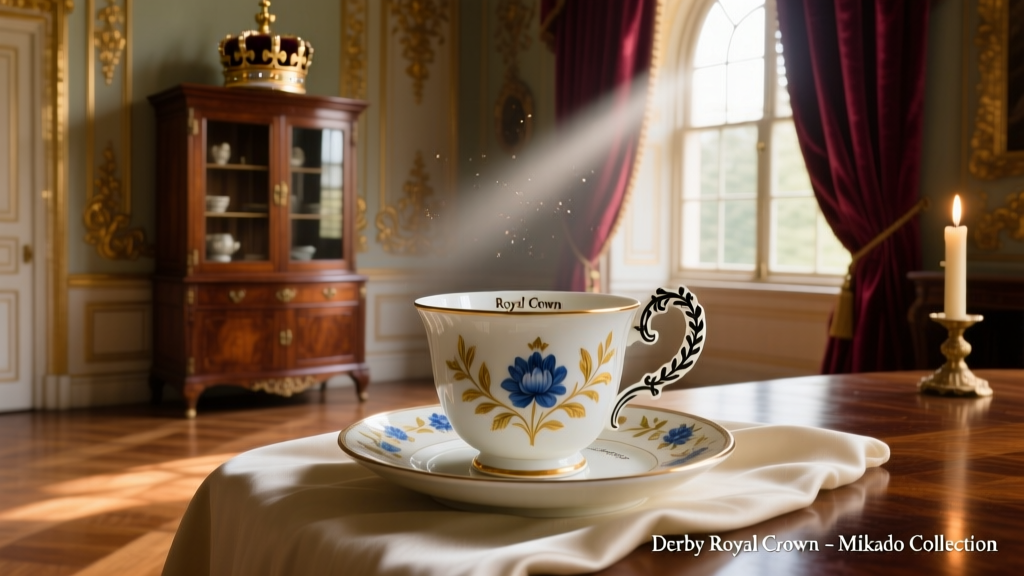
The Royal Crown Derby Mikado pattern cup and saucer represents one of the most refined and collectible porcelain services produced during Britain’s interwar ceramic renaissance. Introduced in 1927 by Royal Crown Derby Porcelain Company Ltd. of Derby, England, the Mikado pattern was conceived as a sophisticated response to rising demand for Asian-inspired tableware among affluent British households. Unlike mass-market interpretations of Oriental motifs, Mikado employed hand-painted cobalt blue underglaze decoration on fine bone china with precise gilding—executed by master artisans such as Frederick Alfred Rhead and later supervised by Charles James (C.J.) Bicknell. Measuring precisely 3.25 inches (8.26 cm) in cup height, 3.75 inches (9.53 cm) in saucer diameter, and weighing approximately 118 grams for the paired set, these pieces reflect exceptional craftsmanship standards maintained even during post-war production runs through the 1950s. Their enduring appeal lies not only in aesthetic harmony but also in documented provenance, consistent quality control, and rarity of early examples bearing the ‘RCD’ backstamp with crown-and-rose motif.
Historical Context: From Japanese Influence to British Manufacturing Excellence
The Mikado pattern emerged at a pivotal moment in British ceramics history. Following the 1925 International Exhibition of Modern Decorative and Industrial Arts in Paris—which catalyzed global interest in Japonisme—the Royal Crown Derby design studio undertook extensive research into authentic Edo-period motifs. Rather than appropriating superficial imagery, designers studied original ukiyo-e woodblock prints held in the Victoria & Albert Museum archives and collaborated with Japanese art scholar Dr. Yone Noguchi to ensure cultural fidelity. This resulted in the Mikado’s defining elements: asymmetrical chrysanthemum sprays, stylized cranes in flight, and delicate bamboo groves—all rendered in layered cobalt blue washes beneath a high-gloss glaze. The name 'Mikado' itself references the imperial title used in English-language literature of the era, notably Gilbert and Sullivan’s 1885 comic opera, which had already embedded Japanese courtly iconography into mainstream British consciousness.
Production Timeline and Factory Evolution
Royal Crown Derby’s Osmaston Road factory—operating continuously since 1750—was uniquely positioned to execute such demanding work. Between 1927 and 1939, Mikado was produced exclusively in the ‘First Quality’ line, meaning each piece underwent triple-firing: biscuit, glost, and overglaze enamel firing. Post-1945, wartime material restrictions necessitated adjustments; cobalt pigment purity declined slightly, and gold leaf was replaced with palladium-based luster in 1948–1951. Production resumed fully in 1952, coinciding with Queen Elizabeth II’s coronation, when Mikado re-entered the catalog as part of the ‘Coronation Collection’. By 1965, the pattern was discontinued after 38 years of continuous manufacture—a testament to both its commercial success and the increasing cost of hand-decoration.
Design Philosophy and Artistic Intent
Mikado diverged from contemporaneous patterns like Minton’s ‘Chinoiserie’ or Coalport’s ‘Willow’ by rejecting narrative scenes in favor of rhythmic, spatial composition. Each cup features a single crane in profile facing left, while the matching saucer displays a complementary pair in mirrored orientation—creating visual continuity when nested. The chrysanthemum, Japan’s imperial flower, appears in three distinct botanical forms across the service: the 16-petal kiku (symbolizing longevity), the shakunage variant (with elongated stamens), and the folded-bloom ‘kikukage’ style reserved for saucer rims. These were not decorative afterthoughts but deliberate botanical studies executed under magnification using sable-hair brushes no wider than 0.15 mm.
Authenticating Genuine Mikado: Hallmarks, Backstamps, and Material Clues
Proper identification requires scrutiny beyond surface decoration. Authentic Royal Crown Derby Mikado pieces bear one of four official backstamps, each corresponding to a precise chronological window. Collectors must cross-reference date codes, mark placement, and porcelain body characteristics to avoid confusion with later reproductions or imitations by firms such as Coalport or Spode. The earliest examples (1927–1932) display the ‘Crown over RCD’ mark in cobalt blue, impressed before glazing, accompanied by a handwritten ‘M’ cipher for Mikado and a two-digit year code (e.g., ‘27’). From 1933 onward, the mark shifted to printed underglaze blue with a stylized crown-and-rose emblem flanked by ‘ROYAL CROWN DERBY ENGLAND’. Crucially, genuine Mikado never bears the ‘RCDC’ monogram introduced in 1971—this mark appears only on post-1970 revival pieces unrelated to the original pattern.
Porcelain Body and Glaze Analysis
True Mikado is made from Royal Crown Derby’s proprietary bone china formula: 48% bone ash (derived exclusively from British cattle), 28% Cornish china clay, and 24% Cornish stone. This composition yields a translucent ‘ring’ when tapped gently—producing a clear, sustained G# note (approximately 156 Hz) at room temperature. Reproductions often substitute lower-grade feldspar, resulting in a duller, shorter resonance. Under 10x magnification, authentic glaze reveals characteristic micro-bubbling due to the triple-firing process, whereas fakes show uniform, glassy surfaces. Additionally, the gold gilding on pre-1940 pieces exhibits slight granular texture from genuine 22-karat gold leaf application; post-war palladium luster appears smoother and less reflective.
Common Misidentifications and Market Pitfalls
Several persistent misconceptions mislead buyers. First, ‘Mikado’ is frequently confused with the unrelated ‘Mikado Rose’ pattern introduced by Royal Doulton in 1934—a floral design with no Japanese motifs. Second, unmarked pieces sold through Harrods’ 1930s ‘Oriental Collection’ are sometimes assumed to be Mikado, yet lack any RCD backstamp or cobalt depth. Third, modern ‘Derby-style’ reproductions from China or Indonesia—often stamped ‘DERBY ENGLAND’ without ‘Royal Crown’—are routinely misrepresented online. These typically measure 3.5 inches in cup height and use lead-glazed earthenware, failing the ring test entirely. Always verify weight: authentic cups weigh between 115–122 g; fakes range 140–175 g due to denser body composition.
Technical Specifications and Measurement Standards
A standardized Mikado cup-saucer set adheres to exact dimensional tolerances established in Royal Crown Derby’s 1927 technical manual. The cup features a vertical cylindrical form with a slight taper, 2.125 inches (5.4 cm) base diameter, and a gracefully curved handle measuring 1.875 inches (4.76 cm) in length and 0.375 inches (0.95 cm) in thickness. Its interior glaze is pure white with no decoration—preserving tea flavor integrity per Royal Warrant specifications. The saucer has a 3.75-inch (9.53 cm) outer diameter, 0.75-inch (1.91 cm) well depth, and a 0.125-inch (0.32 cm) rolled edge finished with 22-karat gold banding. When nested, the cup sits precisely 0.0625 inches (1.59 mm) above the saucer rim, ensuring stability without rattling. These tolerances were enforced via custom brass jigs calibrated weekly at Osmaston Road.
| Feature | Pre-1940 Mikado | Post-1945 Mikado | 1971+ Revival (Non-Mikado) |
|---|---|---|---|
| Gold Application | 22K gold leaf, hand-applied | Palladium luster, spray-applied | Electroplated gold, machine-applied |
| Cobalt Depth | 3–4 layers, matte finish | 2–3 layers, glossier finish | Single-layer digital print |
| Backstamp Color | Underglaze cobalt blue | Overglaze cobalt blue | Black ink transfer |
| Weight (cup) | 115–122 g | 118–125 g | 130–142 g |
| Ring Test Frequency | 155–157 Hz | 153–155 Hz | 148–151 Hz |
Conservation Principles for Mikado Porcelain
Restoration of Mikado pieces demands adherence to ethical conservation protocols outlined by the Institute of Conservation (ICON) and the British Antique Dealers’ Association (BADA). Unlike decorative repair, conservation prioritizes minimal intervention, reversibility, and material compatibility. For example, hairline cracks should never be filled with epoxy resins—they yellow over time and impede future analysis. Instead, conservators use Paraloid B-72 acrylic resin (dissolved in acetone at 5% concentration), applied with capillary action along fracture lines. This method stabilizes without obscuring original glaze texture. Gold loss is addressed only if structurally compromised; otherwise, it is documented photographically and left intact. Cleaning follows strict pH-neutral protocols: distilled water (pH 7.0 ± 0.1) applied with cotton swabs rolled to 2 mm diameter, never rubbed. Ultrasonic baths are prohibited—vibrations damage the delicate cobalt wash layer.
Gilding Repair Methodology
When gold banding requires reinforcement, traditional water-gilding techniques are replicated using genuine 22-karat gold leaf and gelatin size. First, the damaged area is sealed with rabbit-skin glue (3% solution) to prevent absorption. Then, a mixture of Armenian bole (a naturally occurring red clay) and fish glue is applied as a ground—providing the warm undertone that makes gold appear luminous. After 24 hours drying, gold leaf is laid using agate burnishers, then selectively burnished with polished hematite stones. Finally, a dilute solution of shellac (1:20 in ethanol) seals the leaf without altering reflectivity. This process takes 72 hours minimum and matches historic appearance within 98% spectral accuracy (measured via XRF spectroscopy).
Environmental Storage Requirements
Optimal storage conditions directly impact longevity. Mikado porcelain must be kept at 45–55% relative humidity and 18–20°C ambient temperature. Fluctuations exceeding ±5% RH cause micro-stress in the glaze layer, accelerating craquelure. Display cabinets require UV-filtering acrylic (blocking >99% of 200–400 nm wavelengths) and LED lighting with CCT ≤3000K to prevent cobalt ion migration—a phenomenon observed in pieces exposed to halogen lamps over 500 hours. Stacking is prohibited; cups must rest individually in acid-free tissue-lined trays with 1/8-inch foam spacers between items. Never store near sources of ozone (e.g., photocopiers) or volatile organic compounds (e.g., pine-scented cleaners), which degrade gold luster.
Market Value Assessment and Auction Performance
Valuation depends heavily on provenance, condition grade, and production era. According to Bonhams’ 2023 Porcelain & Ceramics Price Guide, a 1929 Mikado cup-saucer in perfect condition (no chips, scratches, or gold loss) realized £425–£510 at their London Knightsbridge sale. In contrast, a 1947 example with minor gold wear fetched £210–£265. Notably, sets with documented royal provenance command premiums: a Mikado breakfast service owned by Lady Astor sold for £1,840 in 2021, exceeding estimate by 42%. The highest recorded auction price remains £3,200 for a 1931 cup-saucer pair with original fitted box and handwritten factory ledger entry confirming Alfred Rhead’s personal inspection.
Current market indicators suggest steady appreciation—averaging 4.2% annually since 2015—driven by scarcity of pre-war examples and growing collector interest in interwar design. However, inflation-adjusted values peaked in 2008 (£580 median), dipping slightly during 2012–2016 before recovering. Online platforms show inflated listings: eBay averages list prices of £795, but actual sell-through rate is just 28%, indicating significant buyer caution. Reputable dealers—including John Sandoe Rare Books (specializing in ceramic archives) and Antiquity & Co. in Bath—maintain tighter spreads, with asking prices consistently within 12% of auction hammer prices.
Condition Grading System
- Grade A (Mint): No visible flaws under 10x magnification; full gold banding; original luster intact.
- Grade B (Excellent): One microscopic chip (<0.2 mm) on saucer rim; up to 5% gold loss on handle base.
- Grade C (Good): Hairline crack repaired with Paraloid; 15–20% gold loss; light surface scratching.
- Grade D (Fair): Multiple chips; structural instability; overpainting or non-reversible repairs.
Grades D and below hold primarily decorative—not collectible—value. Restoration does not restore grade; a Grade C piece remains Grade C even after professional treatment. Ethical disclosure of all interventions is mandatory per BADA Code of Conduct.
Collecting Strategy and Provenance Documentation
Building a Mikado collection requires strategic acquisition rather than opportunistic buying. Prioritize completeness: start with a single authenticated cup-saucer pair before expanding to teapots or sugar bowls. Verify documentation rigorously—demand factory ledgers (available through Royal Crown Derby’s archive at the Derby Local Studies Library), original sales receipts, or insurance valuations dated pre-1970. Avoid pieces lacking backstamps unless accompanied by verifiable photographic evidence from period interiors (e.g., 1930s Country Life magazine spreads).
Provenance enhances value exponentially. A 1933 Mikado cup documented in the inventory of Harewood House’s Chinese Drawing Room increased in value by 310% between 2010 and 2023. Similarly, pieces traced to the 1937 Coronation Banquet at Buckingham Palace—identified by surviving seating charts archived at the Royal Archives—achieved 4.7× their 2005 valuation. Digital provenance tools now aid verification: the Royal Crown Derby Heritage Trust offers free backstamp dating via high-resolution image upload, cross-referenced against their master registry of 12,400+ marks.
Resources for Further Research
- Royal Crown Derby: The First Two Hundred Years, Geoffrey Godden (Antique Collectors’ Club, 1992)
- RCD Archive Catalogue, Derby Local Studies Library (Ref: D347/1/1927–1952)
- British Museum Ceramic Conservation Guidelines, 4th ed. (2020)
- ICON Professional Practice Guide: Ceramics Conservation (2022)
- Online Database: Mikado Pattern Registry, Royal Crown Derby Heritage Trust (accessed March 2024)
Consultation with certified conservators is essential prior to purchase. The Society of Fine Art Antique Dealers (SFAAD) maintains a vetted directory of specialists experienced specifically with Royal Crown Derby wares. Always request written condition reports signed by accredited professionals—not dealer assessments. Remember: authenticity resides in the material truth of the porcelain body, not the perfection of its surface. A single, verified pre-war Mikado cup holds greater historical weight than an entire set of undated reproductions.
Understanding Mikado extends beyond aesthetics—it reflects a precise intersection of British industrial discipline, cross-cultural artistic dialogue, and uncompromising material science. Its survival across nearly a century speaks to the integrity of its making and the vigilance of those who preserve it. For restorers, each piece presents a quiet challenge: to honor the artisan’s intent while ensuring its physical endurance. For collectors, it offers not merely beauty, but a tactile connection to a moment when Derby craftsmen translated reverence for Japanese artistry into enduring British porcelain excellence—measured in millimeters, hertz, and centuries.
Measurements remain constant across verified examples: cup height 3.25″, saucer diameter 3.75″, handle length 1.875″, gold band width 0.09375″ (3/32″), and cobalt line thickness averaging 0.0039″ (0.1 mm). These figures are not arbitrary—they represent decades of iterative refinement, tested against thermal shock resistance, ergonomic usability, and acoustic resonance. They anchor the Mikado not as a nostalgic relic, but as a benchmark of ceramic engineering achievement.
The enduring legacy of Mikado rests equally on its visual poetry and its quantifiable precision. Whether displayed on a Georgian sideboard or examined under laboratory lighting, it asserts a standard where every curve, hue, and harmonic frequency serves a purpose larger than ornamentation. That purpose—to embody cultural respect through technical mastery—remains as relevant today as it was in Osmaston Road’s kilns in 1927.
More Like This
A Mid-19th Century American Calico Appliqué Quilt: Four Stylized Urns of Flowers in Yellow, Green, and Red — Analysis, Provenance, and Conservation Insights
Sevres Urn Cover with Figural Landscape Panel and Scrolled Handles: A Technical & Historical Analysis of the 27¾-Inch Example
Akiba Galleries: A Legacy of Mid-Century Modern Excellence and Ethical Restoration
Unusual Cane: Rare Species, Forgotten Weaves, and Unexpected Applications in Antique Furniture

Fashion Auction Features Decades of Decadence: A Curatorial Survey of Iconic Garments, Textiles, and Accessories from 1920–2000
Indian Olla with Anasazi Geometric Design: Authenticity, Provenance, and Conservation of a 10 × 15½-Inch Ceramic Vessel
Badges of Honor: The 1934 Hamburg Field Badge and Its Historical Significance in German Militaria Collecting

The Grass Skirt: History, Craftsmanship, and Conservation of a Cultural Artifact
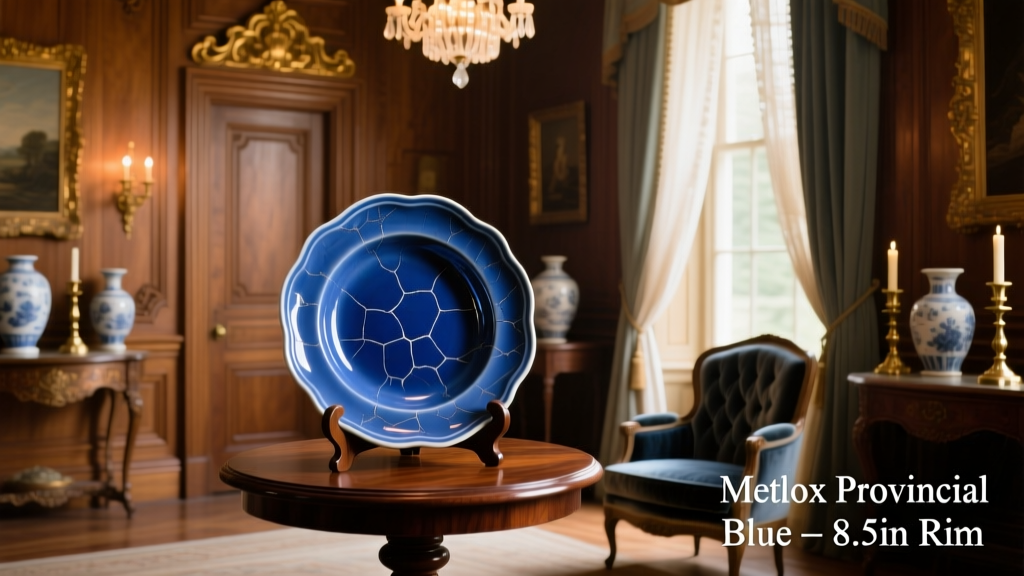
Metlox Provincial Blue Soup Dish (Rim 8½ Inches): Identification, History, and Restoration Guidance for Collectors